
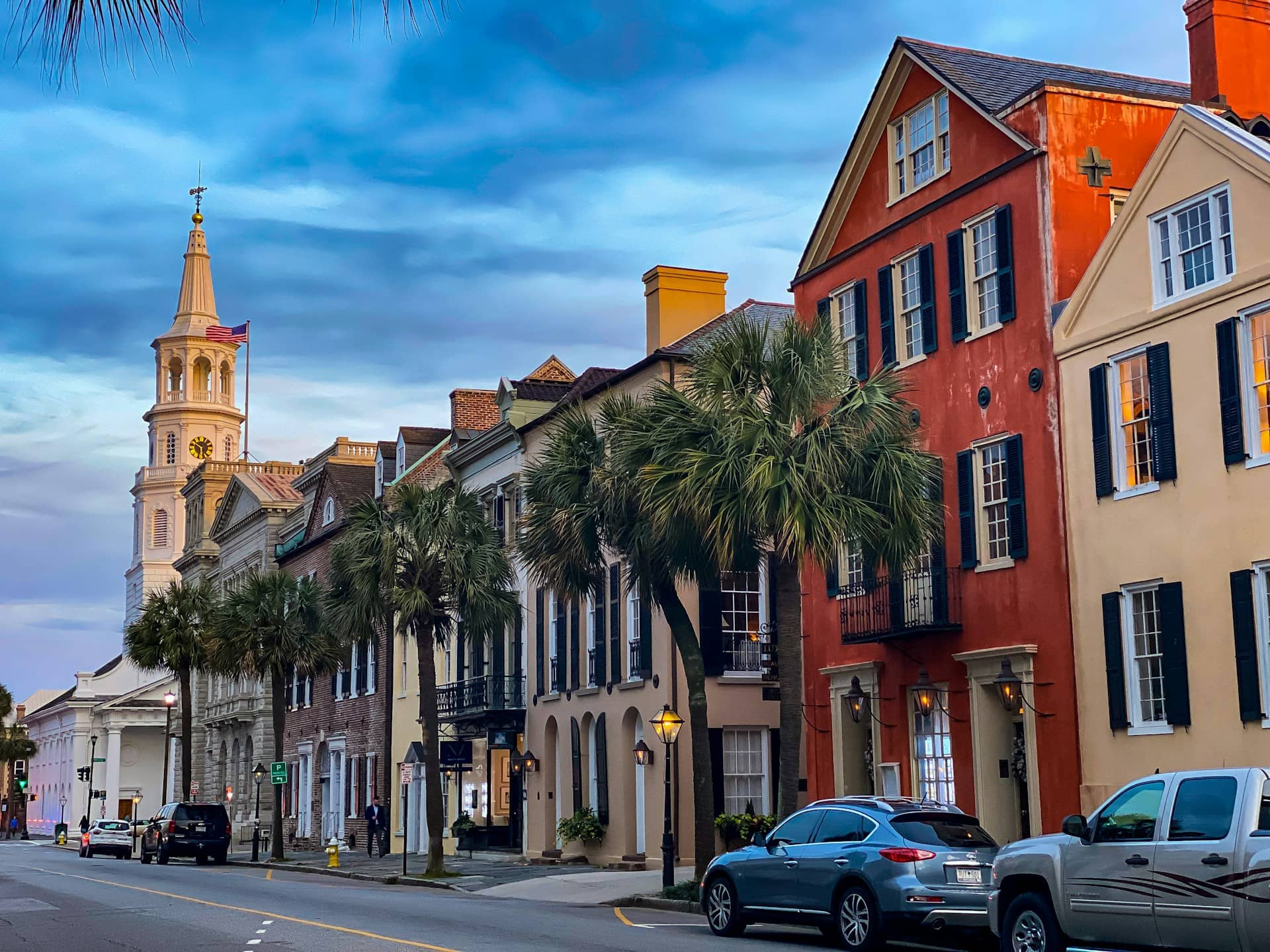
Charleston has a way of slowing you down in the best possible way. Horse-drawn carriages roll past centuries-old homes, church steeples rise above the skyline, and the scent of the sea lingers along the harbor. It’s a city rich in history, character, and Southern charm—and surprisingly, many of its most rewarding experiences don’t cost a thing. You can wander historic streets, admire preserved architecture, and take in waterfront views that have remained largely unchanged for generations, all without spending a dollar.
Whether you’re a first-time visitor or returning to see the city through fresh eyes, Charleston offers countless moments that feel special simply because they’re authentic. From quiet parks and iconic landmarks to vibrant neighborhoods full of local life, free activities here still deliver depth, beauty, and a strong sense of place. This guide highlights 11 free things to do in Charleston, SC that allow you to experience the heart of the Holy City—its stories, scenery, and atmosphere—while keeping your trip budget-friendly and stress-free.
1. Walk Along The Battery
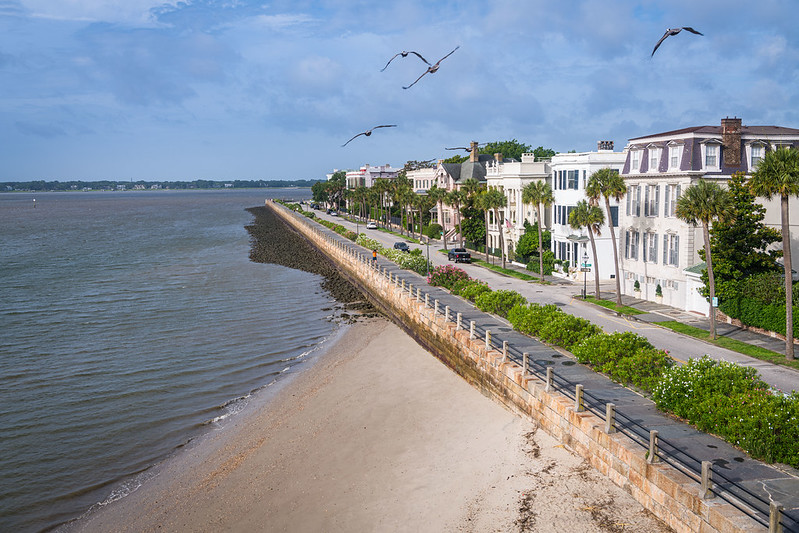
Many locals will tell you that a visit to Charleston feels incomplete without a slow walk along the historic seawall at the city’s southern edge. Known simply as The Battery, this stretch offers sweeping harbor views and a close look at grand homes that reflect Charleston’s past as a major port city. Just across the street sits Rainbow Row, a line of Georgian-style houses painted in soft, eye-catching colors. Once central to merchant life and maritime trade, these homes now draw visitors eager to photograph one of the city’s most recognizable scenes.
A short walk away, White Point Garden offers a welcome pause beneath towering live oaks. Cannons, monuments, and memorials scattered throughout the park mark Charleston’s role during the Civil War, giving the area a strong sense of history without feeling heavy. It’s a place where people sit on benches, watch the water, or simply enjoy the breeze coming off the harbor.
For a longer walk, begin at Waterfront Park and its well-known pineapple fountain, then follow the path along East Battery Street toward White Point Garden. The route spans nearly a mile and passes stately mansions, quiet corners, and uninterrupted views of the water. Visitors staying downtown can reach The Battery on foot, while drivers may find limited street parking or nearby lots closer to the park. The free DASH bus also stops near Waterfront Park, making access easy without a car.
The Battery is open at all hours and free to enjoy, whether you’re stopping by at sunrise, wandering through in the afternoon, or ending the day with a sunset walk along the water.
2. Relax at Waterfront Park
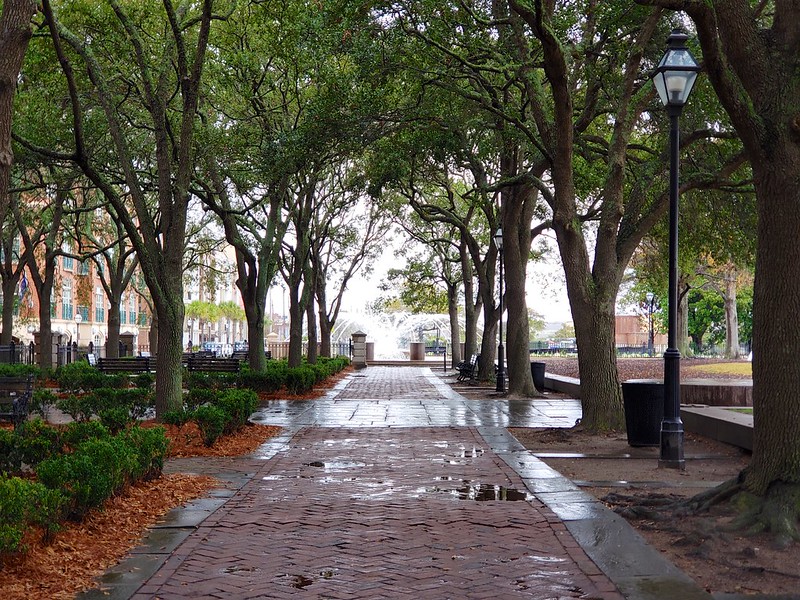
After spending time along the harbor, it’s easy to see why Waterfront Park holds such a special place in Charleston life. Stretching across more than eight acres just north of The Battery, this riverside green space has drawn locals and visitors alike since it opened in 1990. Its most recognizable feature—the pineapple fountain—has become a city icon. During the warmer months, kids splash in the shallow water while adults linger nearby, soaking in views of the harbor and passing boats.
Beyond the fountain, the park invites you to slow your pace. Walk the long pier that reaches out over the Cooper River, wander shaded paths lined with palmettos, or claim a bench to watch daily life drift by. Gazebos offer spots for a casual picnic, and on lucky days, dolphins surface just offshore, drawing quiet excitement from anyone nearby. Daytime visits feel relaxed and open, while evenings bring softer light and a different mood that many people find especially appealing.
Across East Bay Street, the corner of Broad Street adds another layer to the experience. Here you’ll find Brasserie La Banque, an elegant French restaurant set inside a former bank building that dates back to the 1700s. Even if you don’t stop in, the historic surroundings make the short walk worthwhile.
Waterfront Park is open daily and free to enter. Opening times generally start around 7 a.m., with closing hours falling between 9:30 and 10:30 p.m., depending on the season. Nearby parking garages and metered street spots are available, though they can fill up quickly during busy periods.
3. Stroll Past Rainbow Row’s Colorful Historic Homes
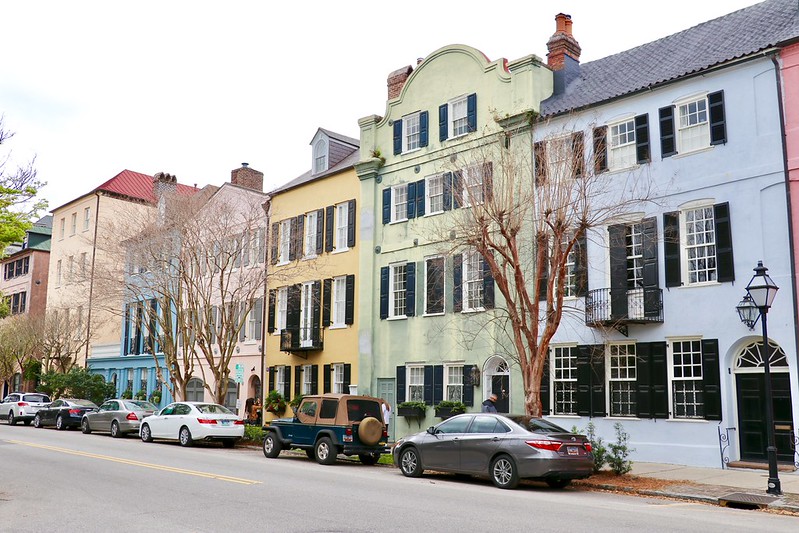
For many Charleston visitors, Rainbow Row is less about checking off a landmark and more about soaking in a scene that feels instantly recognizable. Lined up along East Bay Street near The Battery, these brightly painted historic houses have become a favorite backdrop for photos and casual strolls. While they’re often associated with social media snapshots today, their story stretches back to the mid-1700s, when the buildings played a central role in the city’s early merchant life.
After the Civil War, this part of Charleston fell into decline, with many of the homes left in poor condition. Change began when Susan Pringle Frost, founder of the Preservation Society of Charleston, purchased several of the properties with hopes of restoring them. Though she couldn’t complete the work herself, her efforts set the stage for renewal. In the 1930s, Dorothy Porcher Legge and her husband, Judge Lionel Legge, continued the project, repainting portions of the row in soft pastel tones. Their choices caught attention, encouraged other owners to follow suit, and gradually reshaped the area into one of Charleston’s most recognized streets.
Today, a walk past Rainbow Row offers more than colorful facades. Evening light reflects off Charleston Harbor nearby, making sunset a popular time to pass through. Just steps away, you can also stop by Tavern at Rainbow Row, one of the city’s oldest bars, dating back to 1686. Whether you arrive on foot, as part of a walking tour, or simply slow down for a drive-by look, the row fits easily into any downtown route.
Rainbow Row is open to view at all hours and free year-round. Since the houses are privately owned, visitors should be respectful, especially when stopping for close-up photos or lingering along the sidewalk.
4. Browse the Historic Charleston City Market
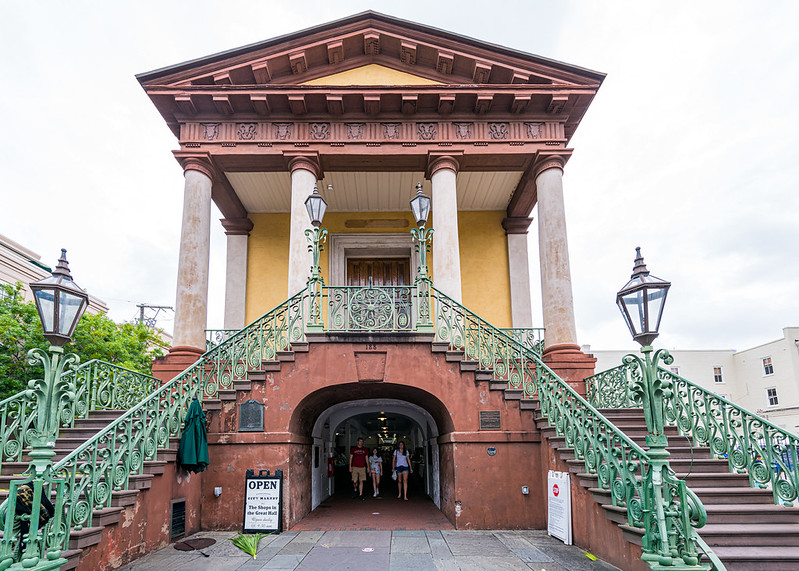
Operating since the early 1800s, Charleston City Market has long served as a commercial and social crossroads for the city. Some visitors view it as a busy stop geared toward travelers, while others appreciate it as a snapshot of Charleston’s past and present intersecting in one place. Inside the open-air sheds and enclosed halls, stalls line the walkways with handmade crafts, artwork, clothing, leather goods, and regional keepsakes. Vendors selling locally produced items display a “Certified Authentic: Handmade in Charleston” tile, making it easy to spot work created close to home.
One of the most meaningful aspects of the market is the strong African American presence woven throughout its offerings. Many longtime locals suggest heading directly to the sweetgrass basket weavers, often called the “basket ladies.” These Gullah artisans continue a tradition rooted in West Africa, passed down through generations. Using materials like sweetgrass and palmetto leaves, they create functional art that reflects history, skill, and cultural memory rather than mass production.
The market sits downtown on Meeting Street, about a 12-minute walk from Broad Street. Limited street parking is available for those arriving by car, and the free DASH bus stops nearby. Several popular city tours also include this area, making it an easy addition to a walking route. Browsing costs nothing, though many visitors end up leaving with a small purchase or snack from one of the food vendors tucked throughout the market.
The Charleston City Market is open daily from 9:30 a.m. until 5 or 5:30 p.m., depending on the season. On Fridays and Saturdays, seasonal night hours typically run from 6:30 to 10:30 p.m. Entry is free, though carrying cash can be helpful if something catches your eye.
5. See Charleston’s Iconic Angel Oak
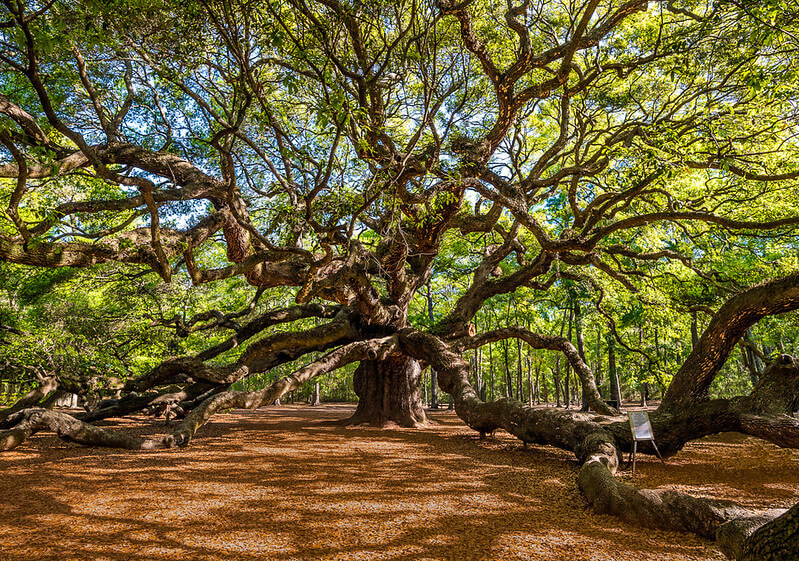
One of Charleston’s most photographed natural landmarks stands quietly on Johns Island: Angel Oak. Often described as the largest live oak east of the Mississippi River, this massive tree rises about 65 feet tall with a trunk measuring more than 25 feet around. Its sprawling limbs stretch outward to shade nearly 20,000 square feet, forming a canopy that feels almost architectural. Estimated to be between 300 and 400 years old, the oak has watched centuries pass and continues to draw hundreds of thousands of visitors each year.
Many people stop briefly to admire the scale of the tree and capture a photo beneath its sweeping branches. While the visit itself is simple, the area is carefully managed to protect the oak’s long-term health. There are clear rules in place, and families are encouraged to keep a close watch on children, who are often tempted to climb the low-hanging limbs. These guidelines help preserve the tree so future generations can experience it as well.
The Angel Oak park is free to enter. Visiting hours run Monday through Saturday from 9 a.m. to 5 p.m., with Sunday access from 1 to 5 p.m. Donations are accepted, and a small gift shop operates on-site. Located about 12 miles southwest of downtown Charleston along a dirt road, the tree is best reached by car and makes for an easy side trip outside the city.
6. Soak Up the Seaside on Sullivan’s Island
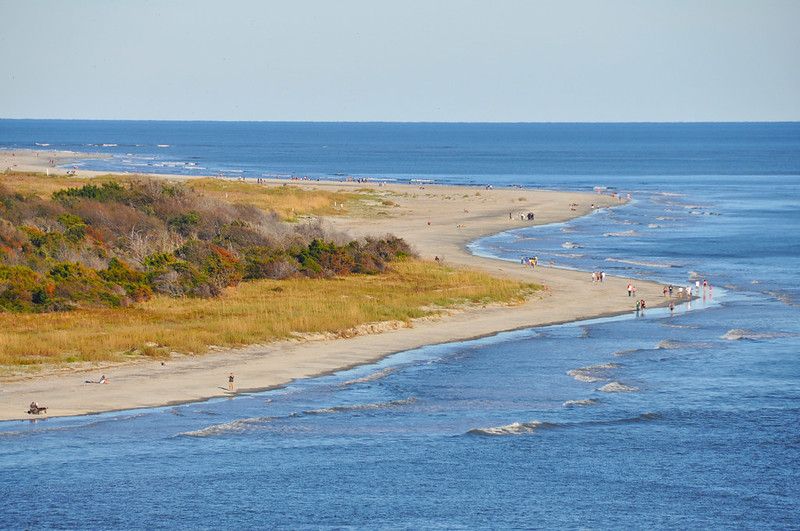
If food ranks high on your travel list, Sullivan’s Island stands out among Charleston’s beach towns. Despite its modest size—just 3.3 square miles—the island offers an impressive mix of dining options. Locals point visitors toward The Longboard for Caribbean-inspired flavors, Sullivan’s Fish Camp for fresh coastal fare, and Co-Op Frosé & Eatery for frozen wine slushies and casual meals that work well for families.
Set just under 10 miles east of downtown Charleston, the island sits where the harbor meets the Atlantic. Its wide shoreline, laid-back pace, and small collection of local shops give it a different rhythm from the city. Many travelers find the beach especially comfortable for families, while vacation rentals offer a quieter option compared to downtown hotels and inns.
History also plays a role here. Fort Moultrie once guarded Charleston during a critical 1776 naval attack. Built with palmetto logs, the fort absorbed cannon fire rather than shattering, allowing it to hold through a nine-hour battle. Years later, the site gained literary ties when Edgar Allan Poe was stationed there between 1827 and 1828. Fans of “The Gold Bug” will recognize the island as the story’s setting. His time here is remembered at Poe’s Tavern, located a short walk from the beach. For a more refined evening meal, The Obstinate Daughter is a popular choice.
Sullivan’s Island is free to access at any hour. Driving is the simplest way to get there, and beach access is typically reached by parking along residential streets and walking down numbered stations, a leftover feature from the island’s former trolley system. While there are no large public parking lots, a small lot sits near Battery Thompson close to both the beach and nearby eateries.
7. Spend the Day Swimming and Lounging at Isle of Palms County Park
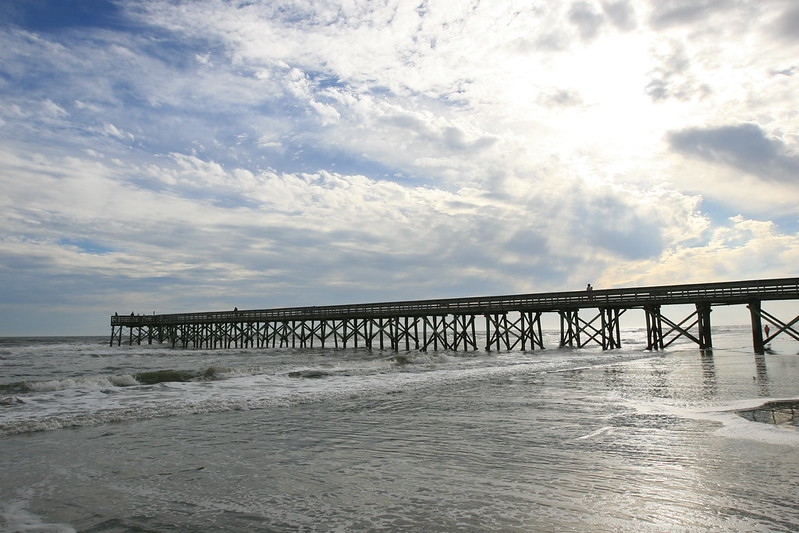
After a few busy days exploring Charleston’s streets, Isle of Palms offers a slower pace and open space to reset. Located about 16 miles east of the city, this coastal town stretches across roughly seven miles of sandy shoreline. Swimming, sunbathing, sailing, and windsurfing are common sights here, and many visitors appreciate how easy it feels to settle in for a full day without an agenda. Compared to Folly Beach, Isle of Palms tends to draw more families and travelers looking for a calmer beach scene rather than late-night crowds.
Dining and nightlife options are limited, which some people see as a drawback—but others see as part of the appeal. Instead of hopping between bars, days here revolve around the water, long walks on the sand, and time spent outdoors. Vacation rentals line much of the beachfront, and larger accommodations are anchored by Wild Dunes Resort, a well-known coastal property that adds amenities without overpowering the area’s relaxed feel.
Golfers also find reason to stop here. Wild Dunes is home to two public courses designed by Tom Fazio, and you don’t need to stay at the resort to book a tee time. It’s one of the few places near Charleston where ocean views and championship-level greens share the same stretch of land.
Beach access is straightforward, with more than 50 entry points scattered along the island. Parking is free at roadside spots within the Beach Parking District between 21st and 40th avenues. Municipal lots closer to restaurants and public facilities typically charge between $5 and $15, depending on the season, while metered spaces along Ocean Boulevard run about $3 per hour. The beach is open year-round, with hours generally falling between 9 or 10 a.m. and sunset. Seasonal lifeguards are usually on duty from 10 a.m. to 6 p.m., adding peace of mind during warmer months.
8. Spend a Day at Folly Beach
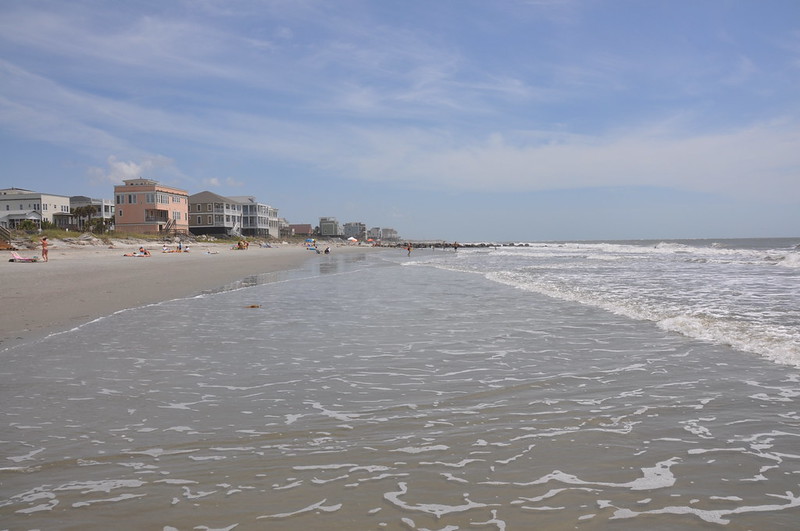
Less than 15 miles south of downtown Charleston, Folly Beach stretches for six miles along the Atlantic, offering an easy escape from city routines. After days filled with historic streets and museums, this shoreline gives visitors room to slow down. Some come for the surf and open water, others settle near the pier to fish or watch waves roll in under the Carolina sun.
Folly Beach draws a wide mix of people, and the atmosphere shifts depending on where you land. Families often stay closer to the main access points, spreading towels and umbrellas near the shore. Adults traveling without kids tend to drift toward the bars and patios near Center Street. Space fills quickly as the day moves on, so arriving earlier helps if you want a prime spot. Walking farther from the central area usually means fewer people. Beach chairs, umbrellas, and nonmotorized water gear are available to rent if you didn’t pack your own.
Off the sand, the island keeps things casual. You’ll find restrooms, outdoor foot showers, and a handful of hotels close to the water. A short walk inland leads to well-known local stops like Taco Boy and Lost Dog Cafe. Surfers and longtime locals often gather at Chico Feo for tacos and beer, while Lowlife is known for cocktails and shrimp rolls dusted with Old Bay.
Access to the beach itself is free, though parking comes at a cost. Lots near the shore typically charge between $5 and $15 for the day, depending on season and demand. Metered street parking runs about $2.50 per hour or $10.50 for a full day. The beach is open daily from 8 a.m. until sunset, except on major holidays. Seasonal lifeguards are usually present on weekends from mid-August through late September. For updates and details, visit the Charleston County Parks website.
9. Pause at White Point Garden
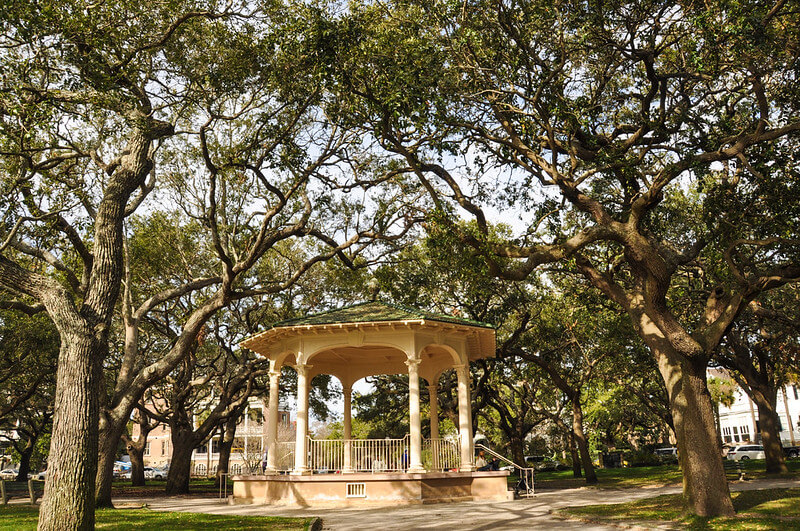
White Point Garden, sometimes called White Point Park, sits at the southern tip of the Charleston Peninsula where the harbor meets the Cooper River. Covering nearly six acres, the park offers open sightlines across the water, broad lawns shaded by live oaks, and a scattering of monuments that speak quietly of earlier chapters in the city’s life. Established in 1837 after the land was acquired by the City of Charleston, the space has served many purposes over time.
Before it became a public green, the area functioned as a defensive position during both the Revolutionary War and the Civil War. Cannons from those periods remain on-site, positioned as reminders rather than displays. During the 19th century, the grounds shifted roles again, hosting public gardens, gatherings, and social events. That layered past gives the park a tone that feels reflective without feeling heavy.
Today, people come here to sit beneath the trees, rest on shaded benches, or linger near the gazebo, which is still used for weddings and small ceremonies. The park sits beside The Battery and is easiest to reach on foot while exploring the surrounding neighborhood. Limited street parking is available nearby, though spots can be scarce in residential areas.
White Point Garden is free to enter and open year-round from 9 a.m. until sunset. With no gates or fencing, visitors often pass through outside posted hours, especially during quiet evenings along the water.
10. Browse Shops and Eat Along King Street
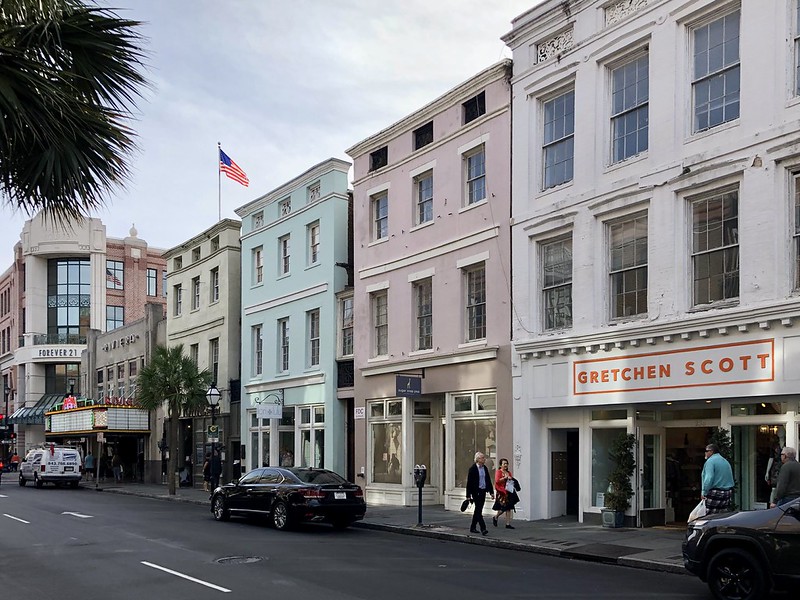
Spend any amount of time downtown and you’ll eventually cross paths with King Street, one of Charleston’s primary corridors. The street carries a steady mix of restaurants, retail storefronts, historic buildings, and hotels, making it both practical and lively. Many visitors end up staying here without planning to, as several well-known hotels line the route, including The Restoration Charleston, Hotel Bennett, and The Pinch Charleston.
King Street runs north from White Point Garden to the city’s upper limits and is commonly divided into three informal sections: Lower, Middle, and Upper. Each stretch carries a different feel, so walking the length of the street feels less repetitive than you might expect.
Lower King Street
Lower King extends from Broad Street to Market Street and is often associated with antiques and galleries. This area earned the nickname “Antique District” thanks to longtime dealers like George C. Birlant & Co., one of the city’s most recognized names in historic furnishings. You’ll also find art spaces and casual dining spots here, including Millers All Day, which draws steady crowds throughout the day.
Middle King Street
Between Market and Calhoun streets, the focus shifts toward fashion and lifestyle shopping. National brands such as Anthropologie, Kate Spade, J.Crew, and Vineyard Vines sit alongside local favorites like Candlefish, Hampden, and M. Dumas & Sons. This section stays busy most days, especially in the afternoon.
Upper King Street
Past Calhoun Street, Upper King leans heavily into dining and nightlife. From Marion Square up to Spring Street, the blocks fill with some of Charleston’s most talked-about restaurants, including The Ordinary, Felix Cocktails et Cuisine, and The Darling Oyster Bar. Evenings here feel energetic without being overwhelming, especially compared to the quieter southern end.
Practical Advice for Visitors
If you’re not staying along King Street, walking is usually the easiest way to explore. Weekend parking is limited, and cobblestones combined with foot traffic can make driving frustrating. Strolling costs nothing and works at any hour, though shops, bars, and restaurants each keep their own schedules.
11. Step Into Civil War History at Fort Sumter
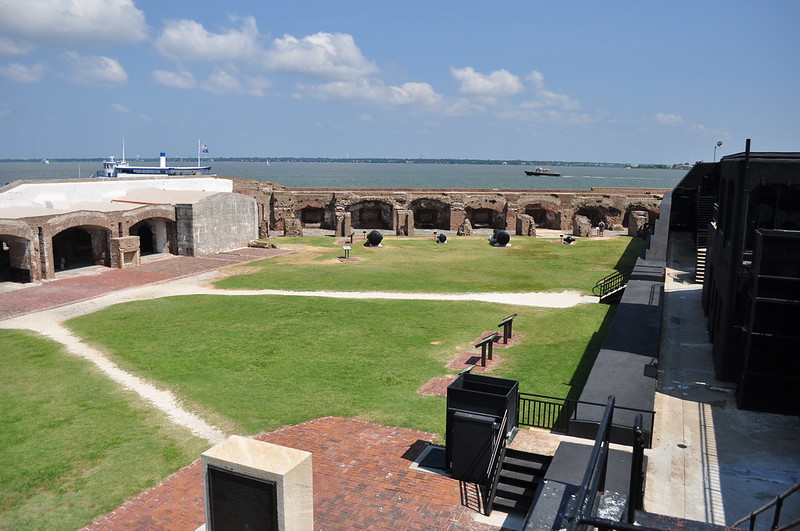
For families and history fans alike, Fort Sumter leaves a lasting impression. This is the site where the first shots of the Civil War were fired in 1861, setting events in motion that reshaped the country. Reaching the fort by boat adds weight to the visit, giving context before you even step onto the island.
Once there, visitors are free to wander through thick stone walls and arched interior spaces where Civil War–era cannons still stand in place. The remains feel stark rather than polished, which helps ground the experience. A small museum on-site fills in details about the fort’s military role, daily life during the conflict, and how the structure endured bombardment early in the war.
Getting There
Fort Sumter sits on a small island in Charleston Harbor, several miles from downtown. Ferries depart from the Fort Sumter Visitor Center in Charleston and from Patriots Point Naval & Maritime Museum, located across the harbor near USS Yorktown. Parking is available at both departure points. While the boat ride itself is brief, many riders enjoy the open-water views and occasional dolphin sightings along the way.
What to Expect on Arrival
There are no guided walking tours on the island, but rangers offer a short introductory talk—about 10 minutes—before visitors begin exploring on their own. Rangers and volunteers remain available throughout the site to answer questions and offer additional context as you move at your own pace.
Access to the fort is free, though ferry service requires a ticket. Adult ferry fares are $40, while children ages 4 to 11 cost $26; kids 3 and under ride free. The National Park Service strongly encourages advance ticket purchases through the official Fort Sumter Tours website. The visitor center typically operates daily from 9 a.m. to 4:30 p.m., with ferry schedules varying by season. For deeper historical background, the National Park Service website offers additional resources.