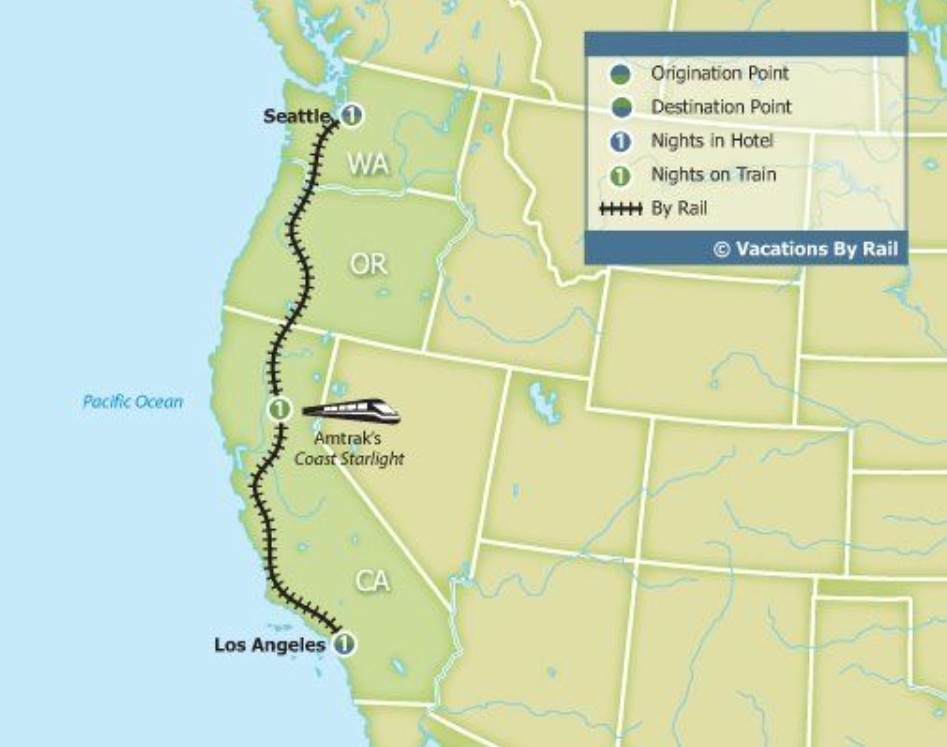
Amtrak’s Coast Starlight route is one of the most scenic long-distance train journeys in the United States, running along the West Coast between Seattle, Washington and Los Angeles, California. Instead of fast travel, it offers a slow-moving experience where passengers can watch the landscape shift gradually over hundreds of miles.
The journey passes through a wide mix of environments, including dense forests in the Pacific Northwest, fertile valleys, mountain ranges, and long stretches of Pacific coastline. As the train moves south, the scenery continues to change, giving travelers a constantly evolving view from their windows.
Unlike flying or driving, this rail trip allows passengers to settle in and enjoy the surroundings without interruption. Large windows and observation cars make it easy to take in the scenery, turning the travel itself into a major part of the experience.
Full Route Overview and Distance
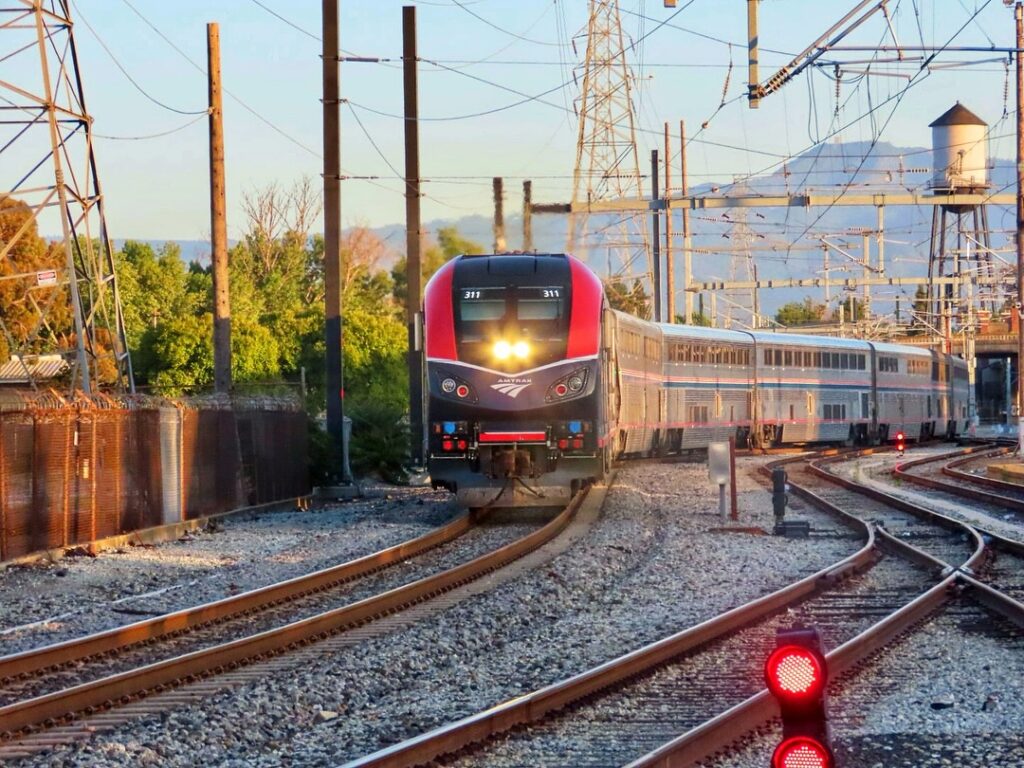
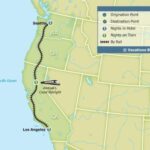
This rail line covers roughly 1,300+ miles of track and takes about 35 hours to complete end-to-end. It passes through three major states—Washington, Oregon, and California—making it one of the most diverse single-route train experiences in the country.
Along the way, the train makes around 30 stops, including key destinations such as:
- Seattle, WA (starting point in the north)
- Portland, OR (major Pacific Northwest hub)
- Sacramento, CA (state capital region)
- San Francisco Bay Area (regional access points)
- Santa Barbara, CA (coastal California charm)
- Los Angeles, CA (final southern destination)
Each stop reflects a different side of the West Coast, from modern cities to quiet coastal towns and agricultural regions.
Scenic Highlights Along the Journey
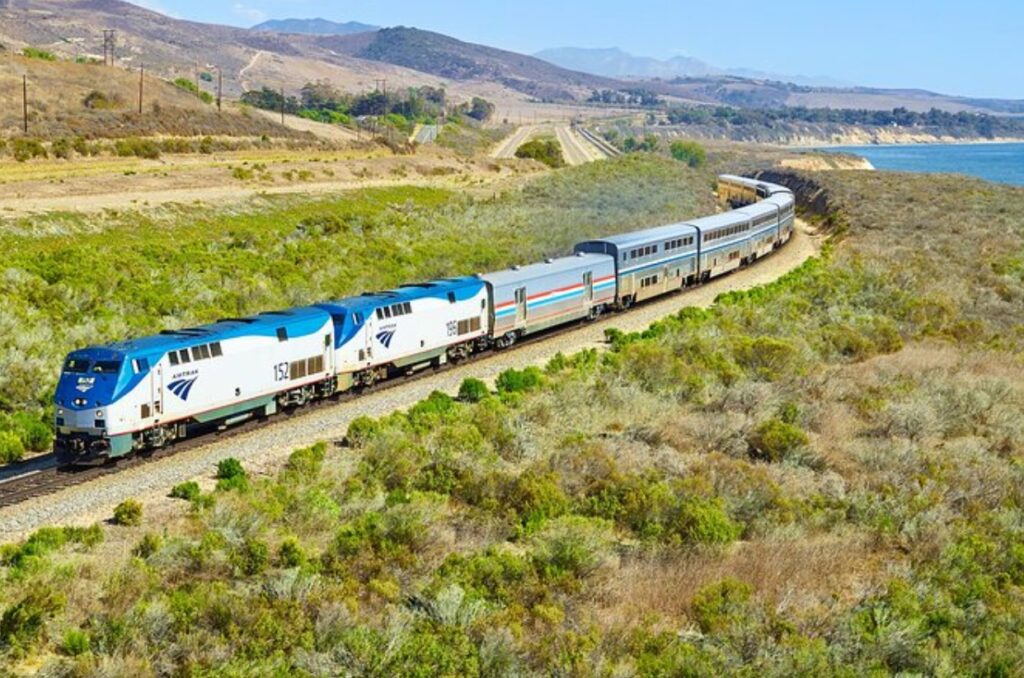
The Coast Starlight is known for constantly changing scenery, which is one of the main reasons travelers choose it over flying.
In Washington and Oregon, passengers pass through thick evergreen forests, river valleys, and misty mountain regions. As the train moves south, the landscape shifts into farmland, rolling hills, and open plains.
In California, the route becomes especially dramatic. Travelers can see sections of rugged coastline, ocean cliffs, and wide beaches near the Pacific Ocean. On clear days, the Big Sur region stands out as one of the most photographed stretches of the journey.
Wildlife sightings are also possible depending on the season—deer, birds of prey, and even coastal marine life can sometimes be spotted near the shoreline.
Onboard Experience and Seating Options
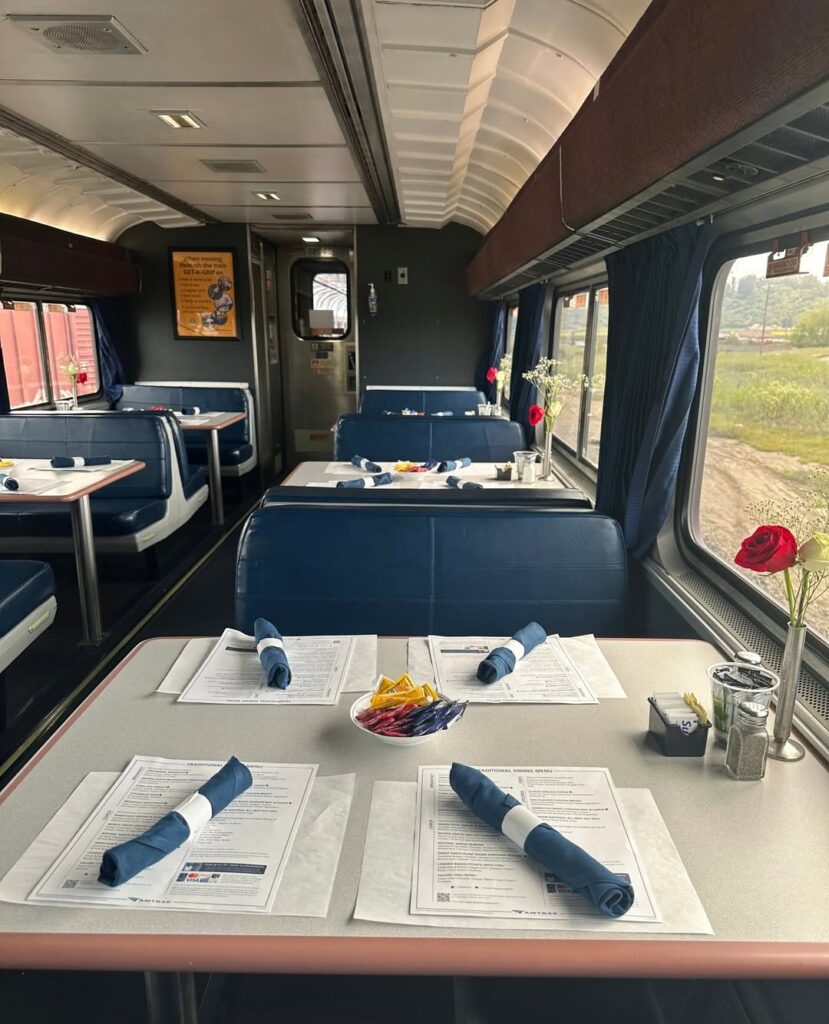
The train is designed to support both short-distance travelers and long-haul passengers. Standard coach seating includes wide reclining chairs with extra legroom compared to most airlines, along with large windows for viewing the scenery.
For better viewing, observation-style lounge cars are a major highlight. These cars feature:
- Panoramic glass windows
- Rotating or lounge-style seats
- Open seating for social or solo viewing
Passengers often move between cars during the trip to get different viewing angles of forests, mountains, and coastline.
Ticket Pricing and Booking Information
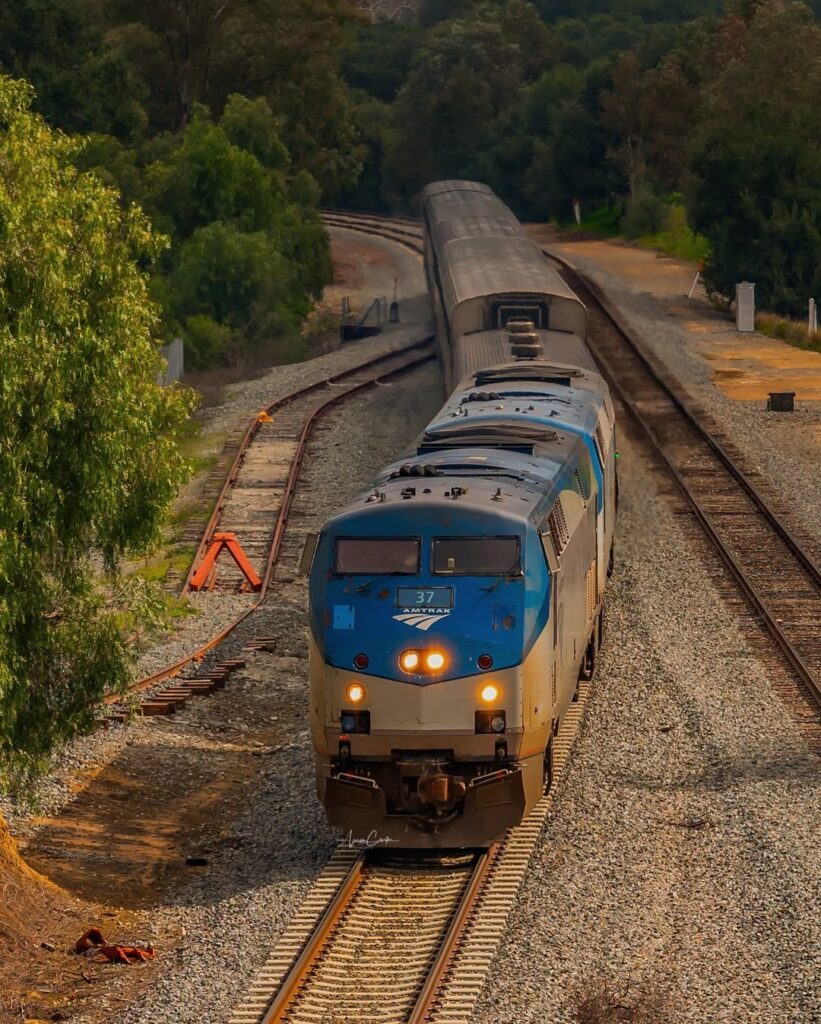
The famous low fare starts at around $101 for a one-way coach ticket, although prices change depending on season, demand, and how early tickets are booked.
Lower fares are usually limited in quantity and tend to sell out quickly. Booking several weeks in advance often improves the chance of finding cheaper seats.
Premium options are also available and may include:
- Private sleeper cabins (Roomettes or Bedrooms)
- Bed-down sleeping arrangements for overnight travel
- Meal service included in higher classes
- Access to upgraded seating and lounge benefits
These upgraded options significantly increase comfort for travelers who want to turn the journey into an overnight rail experience.
Why Travelers Choose This Route
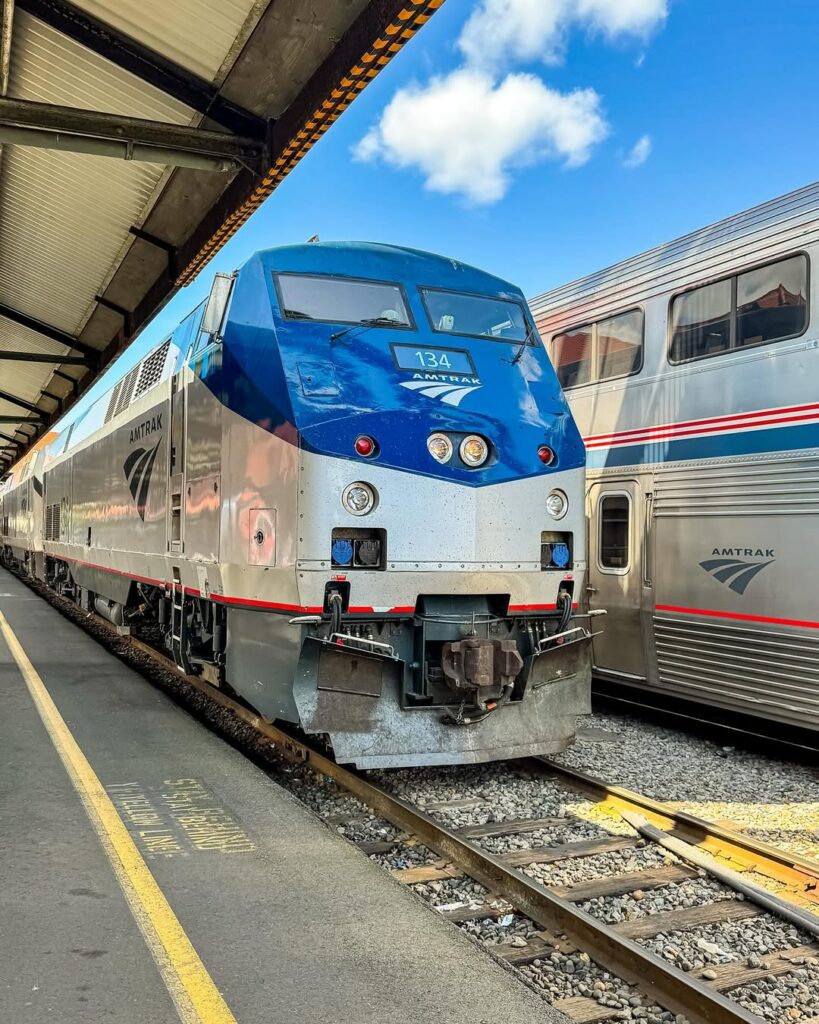
The Coast Starlight is popular because it offers a rare combination of affordability and scenery. Instead of rushing between airports, travelers can spend more than a day moving through changing environments without leaving their seat.
It’s especially appealing for:
- Road trip alternatives without driving fatigue
- Photography-focused travel
- Slow travel enthusiasts
- First-time long-distance train riders in the U.S.
Final Thoughts
This route remains one of Amtrak’s standout scenic journeys, giving travelers a rare chance to experience the West Coast at a slower pace. The changing views—from forests and mountains to coastline—keep the trip visually interesting throughout.
It’s less about speed and more about the experience along the way, which is why many riders remember it long after the journey ends. The long travel time also allows passengers to fully settle in and enjoy the ride without rushing.
Each segment of the route brings a different atmosphere, making the journey feel like multiple trips in one. For many, it becomes a highlight of their travel story rather than just transportation.
You may also like :