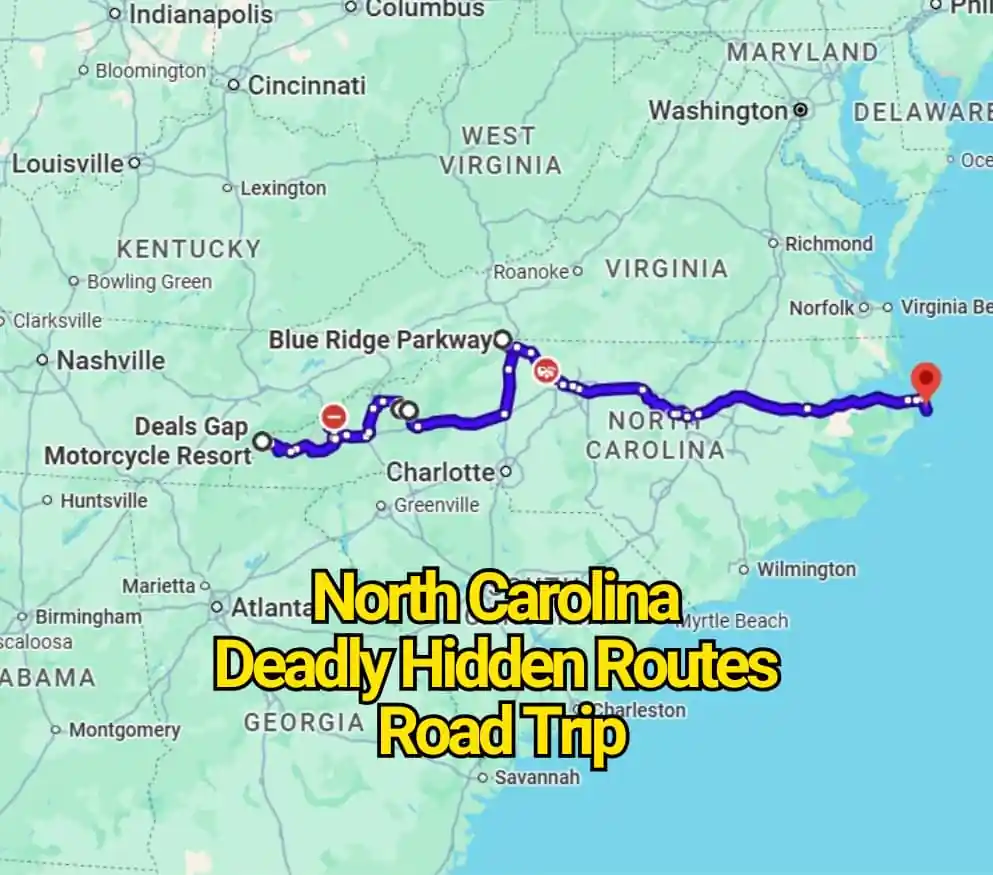
North Carolina looks calm from a distance. The state has beach roads, farm lanes, mountain passes, and highways that slide through forests like they were made for slow weekend drives. But locals know the truth. Some routes here can turn rough fast, especially after dark, during rain, or when tourists treat sharp curves like a game.
The most deadly hidden road trip routes in North Carolina are not always the biggest highways. Some are famous for their views. Some are loved by bikers. Others look harmless on a map until fog, flooding, steep grades, or tight turns start working against the driver. These are the roads where locals tell visitors to slow down, stay alert, and never trust the easy-looking stretch ahead.
U.S. 129 Tail of the Dragon: The Road That Punishes Overconfidence
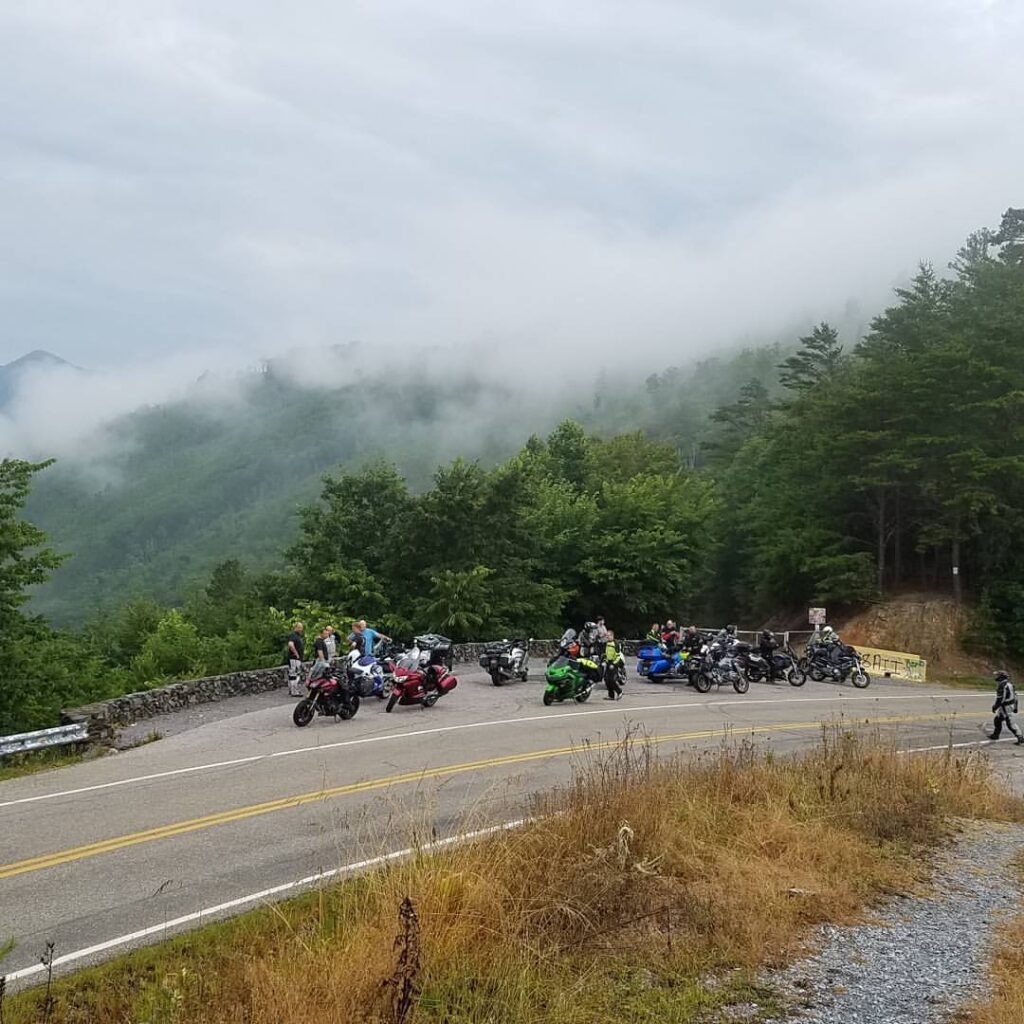
The Tail of the Dragon near Deals Gap is one of North Carolina’s most talked-about drives, but that fame comes with a hard edge. This stretch of U.S. Highway 129 has 318 curves in only 11 miles, making it a magnet for motorcycles, sports cars, and road-trip travelers chasing mountain drama.
That many curves in such a short distance can wear down even a careful driver. The danger is not one single turn. It is the way the road keeps asking for full attention again and again. A driver who enters too fast, drifts across the centerline, or gets distracted for a second can create trouble before there is time to react.
Locals often warn visitors not to treat this road like a trophy. It may look exciting online, but the real drive is narrow, demanding, and unforgiving. For anyone passing through Robbinsville or the Great Smoky Mountains area, this route deserves respect before it deserves bragging rights.
NC 80 Devil’s Whip: A Mountain Road With a Mean Streak
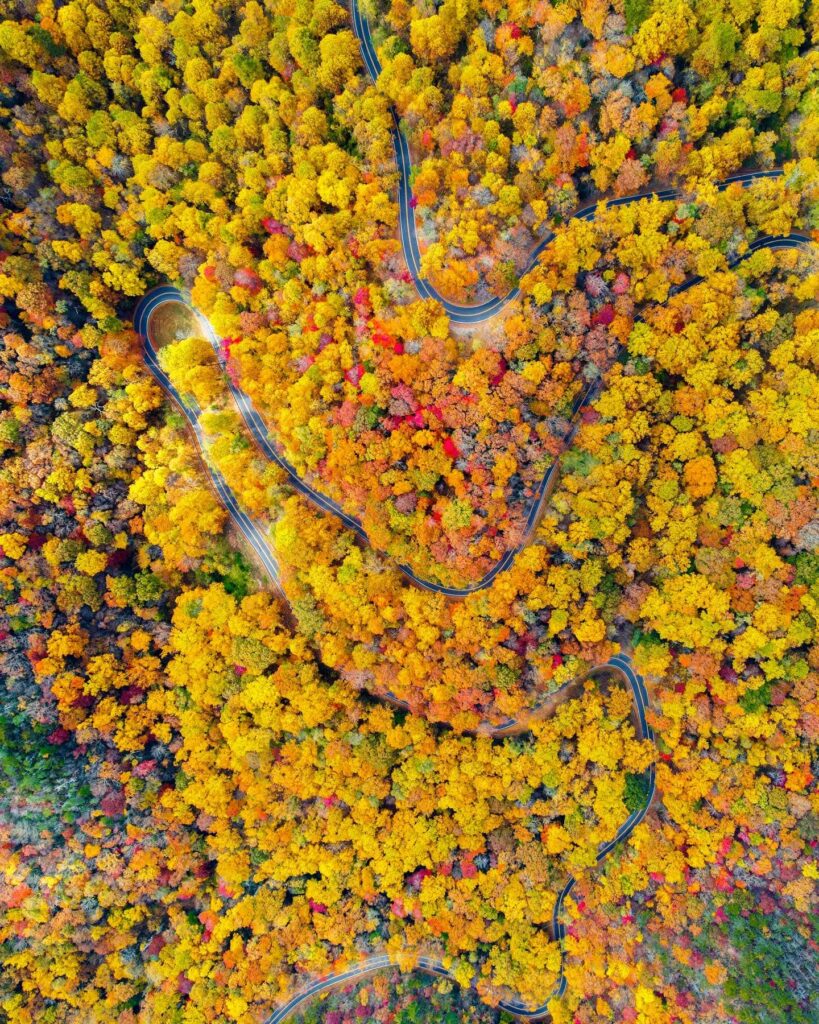
NC 80 has a fitting nickname: Devil’s Whip. The route is known for roughly 12 miles of sharp turns, switchbacks, and steep elevation change, with route guides noting about 160 curves and a 2,000-foot climb.
That sounds thrilling until the road tightens. The lanes can feel squeezed, the drop-offs can feel too close, and the next bend may arrive before your nerves have settled from the last one. In dry daylight, it can be a serious mountain drive. In rain, fog, or fading light, it becomes a much harder test.
This is the kind of road where local advice is simple: do not rush it. NC 80 is not built for careless passing, sudden braking, or sightseeing from behind the wheel. The scenery can wait. The curve in front of you cannot.
NC 226A Diamondback: The Beautiful Drive That Bites Back
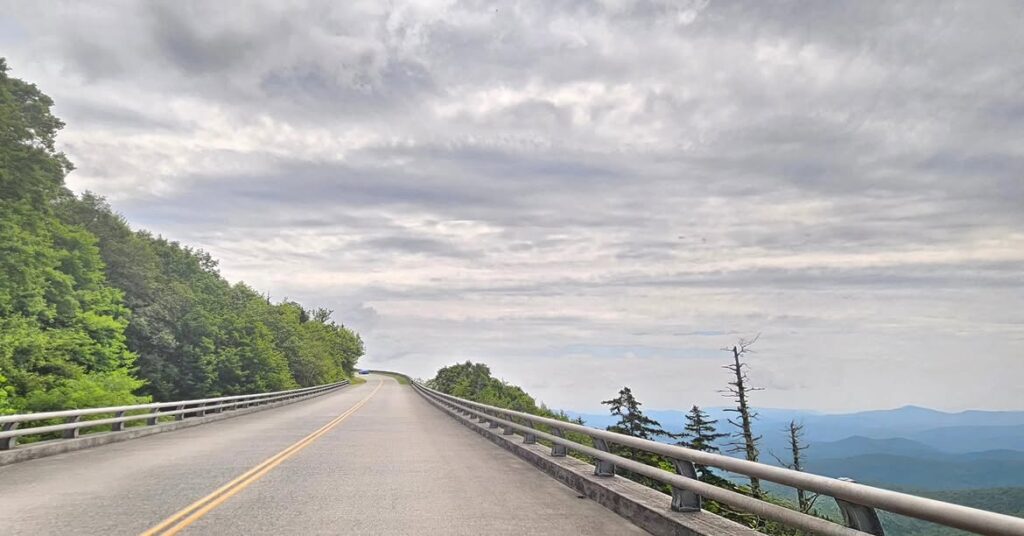
The Diamondback along NC 226A near Little Switzerland has the kind of name that already sounds like a warning. Destination McDowell describes it as a route loaded with switchbacks, S-curves, and steep twists as it climbs near the Blue Ridge Parkway.
Its beauty is part of the trap. Drivers may start relaxed, taking in the trees and mountain air, then suddenly meet a tight curve that demands both hands and a steady speed. The road bends hard enough that a casual drive can quickly become a white-knuckle stretch.
Locals know that the Diamondback is best handled with patience. It is not the place to test brakes, tires, or courage. The route rewards calm drivers, but it has little mercy for anyone who enters those curves with too much confidence.
Blue Ridge Parkway: Calm Views, Sudden Trouble
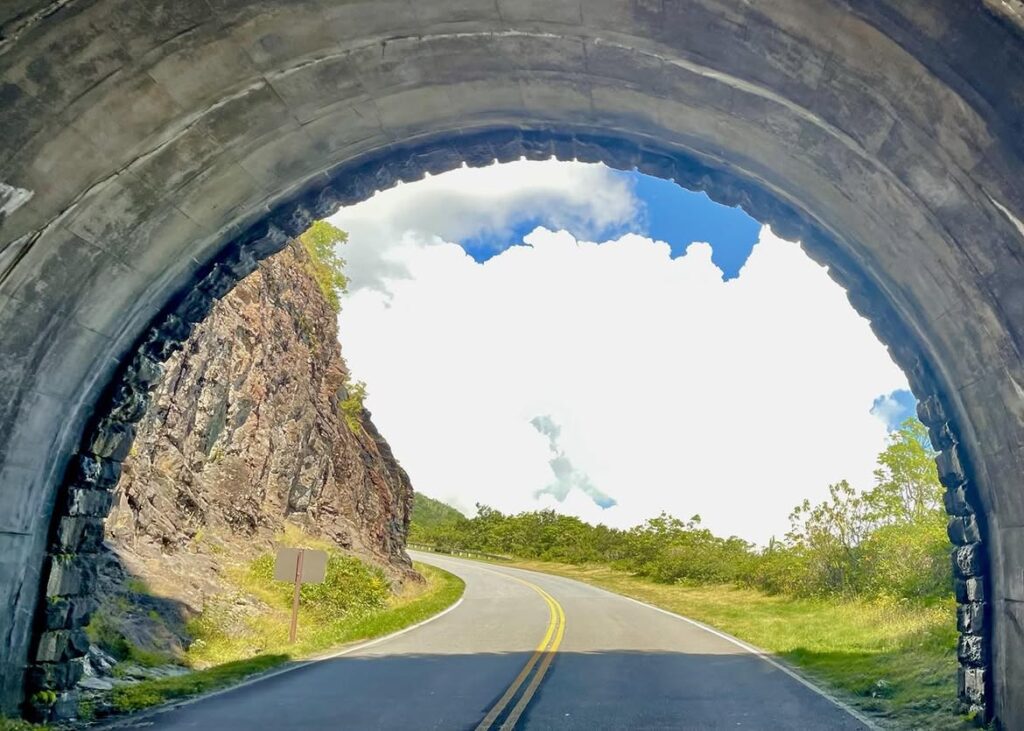
The Blue Ridge Parkway is one of the most loved drives in the country, but its North Carolina sections can be more serious than many travelers expect. The National Park Service says the Parkway is 469 miles long, and sections may close because of weather or maintenance.
That matters because the Parkway can change personality quickly. A clear overlook can lead into fog. A dry stretch can give way to wet pavement under trees. A slow vehicle, cyclist, animal, or sudden closure can appear with little warning.
It is easy to call this road peaceful, but peaceful does not mean simple. In western North Carolina, the Parkway is a mountain road first and a postcard second. Locals who drive it often know to watch the sky, the pavement, and the next blind curve all at once.
NC 12 Outer Banks: The Road the Ocean Keeps Testing

NC 12 may be one of the most fragile road-trip routes in North Carolina. It runs through barrier island communities where wind, sand, tides, and storm surge can reshape travel plans with little notice. Dare County notes that N.C. 12 in Dare and Hyde counties has closed at various times because of ocean overwash, beach erosion, rain flooding, and soundside flooding.
This route can feel open and easy on a calm day. The danger comes when coastal weather changes. Water can cross the road, sand can cover lanes, and a route that looked fine in the morning can become unsafe later.
For Outer Banks travelers, NC 12 is more than a beach drive. It is a reminder that the coast is always in charge. Locals know not to argue with floodwater, high wind, or official closures.
I-40 Pigeon River Gorge: The Interstate That Still Feels Wild
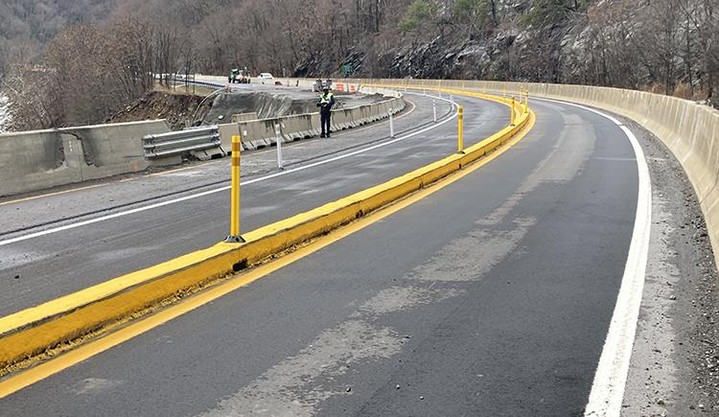
Interstate 40 through the Pigeon River Gorge may look like a normal major road on a map, but the setting tells another story. NCDOT listed a 12-mile I-40 repair project in Haywood County after Hurricane Helene damage, with the Pigeon River Gorge section carrying major reconstruction concerns.
This stretch runs through steep terrain where weather, rock, water, trucks, and tight lanes can turn a routine interstate drive into a tense one. The gorge does not offer the same relaxed feeling as flatter highways elsewhere in the state. Even experienced drivers can feel boxed in.
Locals understand why this road gets respect. It is a key connection between North Carolina and Tennessee, but it has a rough mountain character hiding under the interstate label. Drive it tired or distracted, and it can feel much longer than it looks.
Why Locals Still Warn Drivers About These North Carolina Roads
The most deadly hidden road trip routes in North Carolina are not scary for one reason. Some have steep grades. Some have too many curves. Some fight fog, floodwater, falling rock, or careless traffic. A few are famous because people underestimate them.
That is what makes them dangerous. They look like adventures before they feel like warnings.
A good North Carolina road trip is still worth taking. The mountains, coast, and backroads have a pull that is hard to ignore. But on these routes, the smartest drivers leave room for weather, slow down before the curve, and listen when locals say a road deserves caution.
You may also like :