Some train rides become famous because they are beautiful. Others become famous because people keep repeating the same dreamy version of them until the rough edges disappear. The Oregon-to-California train ride on Amtrak’s Coast Starlight sits somewhere between those two truths. For around $205 on the right date, this long rail trip can carry travelers from Portland, Oregon, down through Northern California, the Bay Area region, the Central Coast, and into Los Angeles without the stress of airport lines or a full day behind the wheel.
That sounds like the kind of slow-travel fantasy people love to share online. A seat by the window, mountain views, café-car coffee, changing light, and the soft rhythm of steel wheels across the West Coast. But here is the part nobody says loudly enough: this trip is also long, unpredictable, and not always as cinematic as the title makes it sound. It can be wonderful, but it is not a perfect shortcut to California.
That is what makes it worth talking about. The Coast Starlight is overhyped only if you expect a luxury rail vacation for the price of a simple coach ticket. If you understand what the ride really gives you, the journey starts to make much more sense.
Why This Oregon to California Train Trip Gets So Much Attention
The Coast Starlight has built its reputation on scenery. It links the Pacific Northwest with California, and the full route runs between Seattle and Los Angeles. For travelers starting in Oregon, Portland is one of the most practical boarding points, giving you a long southbound ride without committing to the entire Seattle-to-LA stretch.
The appeal is easy to understand. You board in a city known for bridges, coffee, old neighborhoods, and rainy charm, then roll south through Oregon’s quieter rail corridors before the landscape begins to change. The route eventually slips into California, where forests, valleys, farm country, cities, hills, and ocean-side sections all become part of the ride.
This is the kind of trip that sounds better the more you summarize it. Oregon to California by train. No airport shuffle. No highway fatigue. No need to stare at traffic for hours. Just sit down, watch the West Coast move past the glass, and let the train do the work. That version is true, but it is also incomplete.
The $205 Fare Sounds Great, But There Is a Catch
The $205 price is the hook, and it works because it feels surprisingly low for such a long journey. In many travel searches, people expect a trip from Oregon to Southern California to involve airfare, baggage fees, rental cars, gas, or hotel costs along the way. A single rail ticket around that price can sound like a hidden bargain.
But Amtrak fares are not fixed forever. The price can change based on date, season, demand, seat availability, and how early you book. A traveler checking one week may see a friendly coach fare, while someone else searching late for a peak travel date may find a much higher number. That is why the $205 figure should be treated as a realistic travel angle, not a guaranteed price printed in stone.
The smarter way to read this trip is simple: it can be a strong-value Oregon-to-California ride when booked with flexible dates and realistic expectations. It is not always the cheapest way to reach California, and it is rarely the fastest. The value comes from the experience, the comfort, and the chance to turn transportation into part of the story.
The Route Is Beautiful, But Not Every Hour Feels Magical
The Coast Starlight has some truly memorable scenery, but travelers should not expect nonstop postcard views from Portland to Los Angeles. Like most long-distance rail journeys, the ride includes quiet stretches, industrial edges, small towns, rail yards, farmland, wooded areas, and long hours where the view is pleasant rather than jaw-dropping.
That does not ruin the trip. In fact, it makes the better sections feel more rewarding. The Oregon portion can feel soft and moody, especially on cloudy days, with trees and muted landscapes giving the ride a slower rhythm. Once the train moves into California, the scenery begins to shift in stages, and that gradual change is part of the charm.
The real mistake is treating the ride like a scenic theme park. It is still public transportation. The train serves real stations, real passengers, and real schedules. Some windows frame gorgeous hills or coastal light. Other windows frame parking lots, back roads, and freight corridors. The route is impressive, but it asks for patience.
Why People Call It Overhyped
People call this train trip overhyped because the online version usually skips the less glamorous parts. A Portland-to-Los-Angeles ride can take a very long time, and delays are possible. If you compare it with a flight, the math becomes almost absurd. A plane can get you between the regions in a few hours, while the train turns the journey into a full travel chapter.
That is either the problem or the whole point. Travelers who only want to arrive quickly may feel trapped by the schedule. After the first burst of excitement fades, coach seats, shared restrooms, snack runs, and long stretches of sitting can start to feel less romantic. The train is comfortable compared to many buses and planes, but it is not the same as having a private hotel room.
This is where the contrarian truth comes in: the trip is not overhyped because it is bad. It is overhyped because people sell it as effortless. The ride is better when you know it will be slow, imperfect, and occasionally tiring. Once you stop expecting constant magic, the journey becomes easier to enjoy.
What Coach Travel Really Feels Like
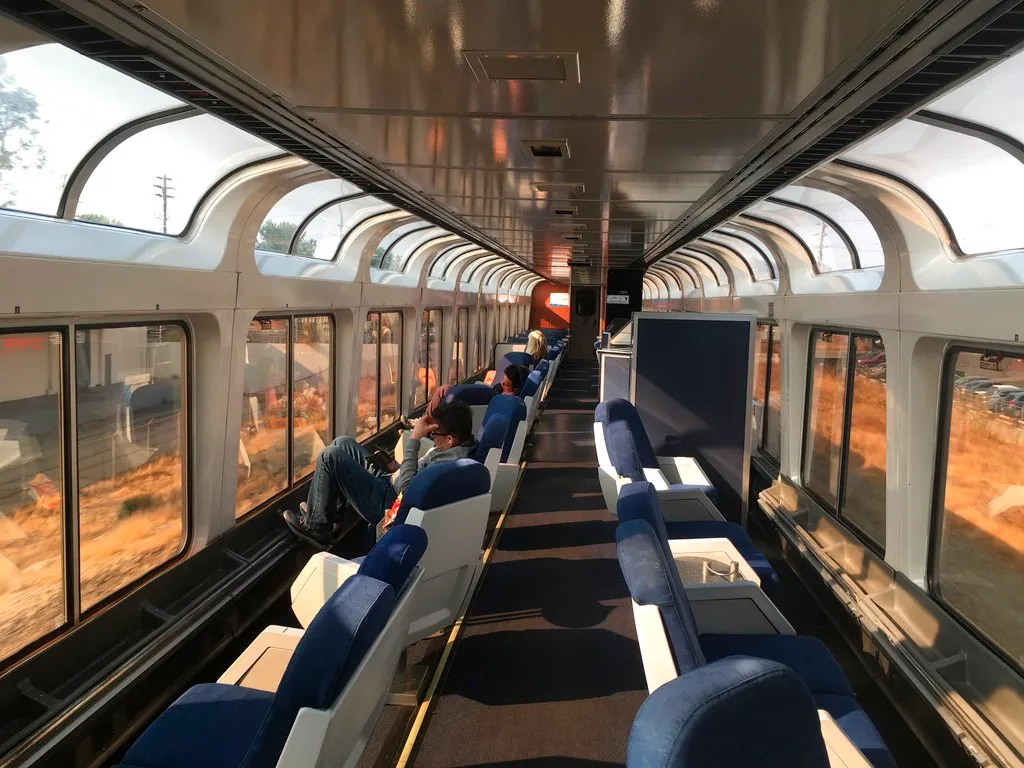
Most budget travelers chasing a fare around $205 will likely be looking at coach. Coach on a long-distance Amtrak train is much more spacious than a standard airplane seat, and being able to walk around matters on a ride this long. You can get up, stretch your legs, visit the café car, or spend time looking out from shared viewing areas when available.
Still, coach is coach. You are sleeping in a seat, sharing space with strangers, and adjusting to train noise through the night. Some people handle that easily. Others wake up stiff and wonder why they did not pay more for a roomette. The lower fare is attractive, but it comes with the tradeoff of limited privacy.
A sleeper can make the trip feel far more relaxed, but it also changes the budget completely. Once private rooms enter the search, the journey may stop feeling like a cheap hack and start feeling like a splurge. That is why this route works best for travelers who either enjoy coach adventure or are willing to pay extra for comfort.
The Best Part Is the Slow Change of the West Coast
The magic of this train trip is not one single view. It is the slow transformation from Oregon into California. The route has a layered feeling, moving through different moods instead of rushing from one airport gate to another. That gradual shift is something flying cannot copy.
By train, California does not appear all at once. It arrives through small signs. The light changes. The towns look different. The land opens, tightens, dries, softens, and expands again. You begin to feel the size of the West Coast rather than treating it as a map line between two cities.
That is the strongest argument for taking the trip. It teaches distance. It turns Oregon and California into lived geography instead of two labels on a booking screen. For travelers who enjoy slow observation, that can be more valuable than speed.
Who This Trip Actually Makes Sense For
This train ride is best for travelers who like the journey as much as the arrival. It suits people who can bring snacks, patience, downloaded entertainment, a charger, and a flexible attitude. It also works well for writers, photographers, students, solo travelers, rail fans, and anyone who wants a different way to see the West Coast.
It is not ideal for travelers with tight plans right after arrival. If you have a concert, cruise, flight connection, wedding, or paid tour waiting in Los Angeles, building in extra time is smart. Long-distance trains can run behind schedule, and treating the arrival time as perfectly guaranteed can create stress.
Families can enjoy it too, but only if everyone understands the length of the ride. Kids who love trains may see it as an adventure. Kids who get restless after a few hours may turn the trip into a test of endurance. The route is beautiful, but it is still a long sit.
What to Bring Before You Board
The easiest way to enjoy this trip is to board prepared. A neck pillow, light blanket, water bottle, snacks, headphones, portable charger, and downloaded shows or music can make the difference between a smooth ride and a frustrating one. Train Wi-Fi and cell service can be uneven on long routes, so offline entertainment matters more than many first-time riders expect.
Food is available on board, but relying only on the café car can get old after many hours. Bringing your own snacks gives you more control and helps keep the budget from creeping upward. A small bag with essentials is also better than digging through larger luggage every time you need something.
The best mindset is simple: pack like you are spending a day and night in motion. You do not need to overpack, but you should not treat it like a short commuter ride either.
The Honest Verdict on This $205 Oregon to California Train Ride
The $205 train trip from Oregon to California is not a secret luxury escape, and it is not the fastest way to reach Los Angeles. It is a slow, scenic, sometimes tiring, often memorable ride that rewards travelers who know what they are buying. The hype is real, but so are the tradeoffs.
If you want quick transportation, fly. If you want total freedom, drive. But if you want a long rail journey that lets the West Coast unfold outside your window, the Coast Starlight can still feel special. The trick is not believing every dreamy caption about it.
This trip is overhyped only when people pretend it is flawless. Taken for what it really is, an affordable long-distance train ride with big views, long hours, and a strong sense of place, it may be one of the most interesting ways to travel from Oregon to California without touching the steering wheel.