
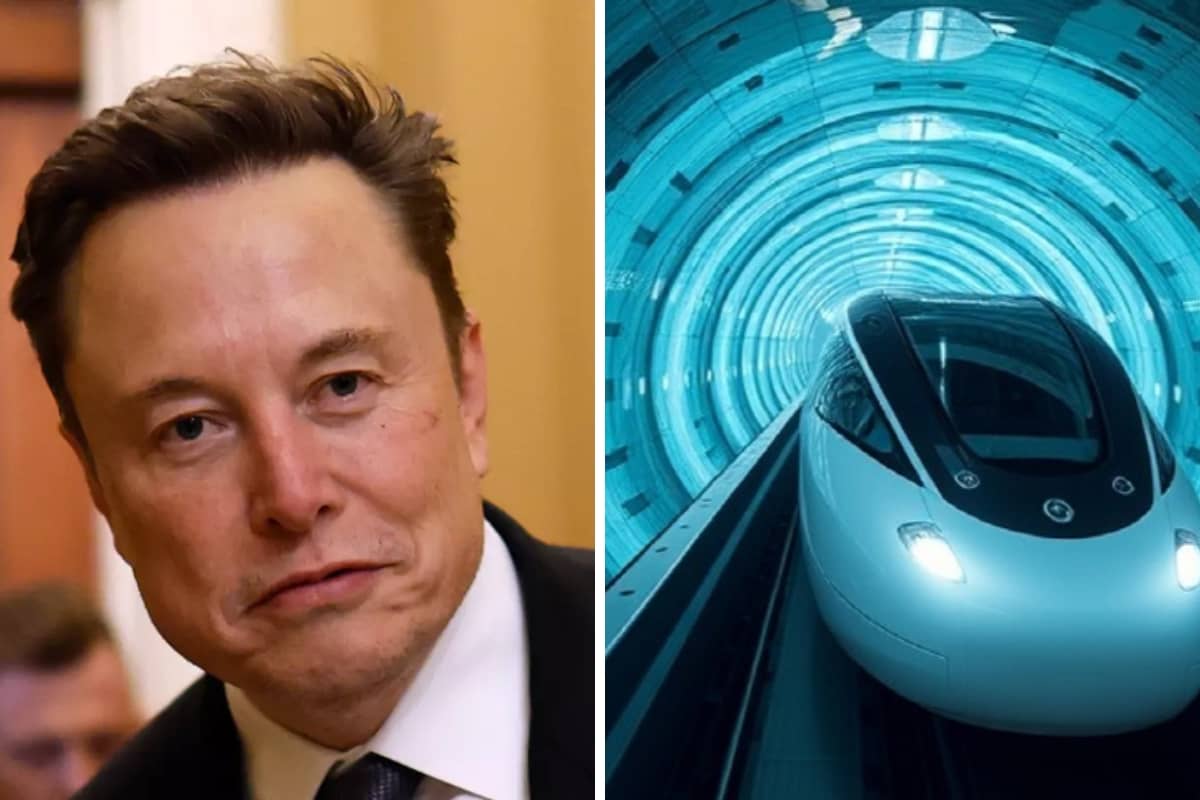
Elon Musk is back with yet another bold and expensive business proposition. This time, the billionaire entrepreneur has floated the idea of a massive £20 billion tunnel stretching from London to New York beneath the Atlantic Ocean. The question remains: could this actually be built, or is it just another outlandish concept?
Recently appointed as the U.S. Head of Efficiency by returning President Donald Trump, Musk believes the tunnel could revolutionize transatlantic travel, allowing passengers to journey between the two cities in under an hour. Currently, a flight between London and New York takes approximately eight hours, making this proposal a game-changer if realized.
The Vision: Trains Over Planes
Rather than relying on air travel, Musk’s tunnel would operate high-speed trains capable of reaching an astonishing 3,000 mph. While the cost estimate is already staggering, Musk has suggested that his company, The Boring Company, could construct it for significantly less than initial projections.
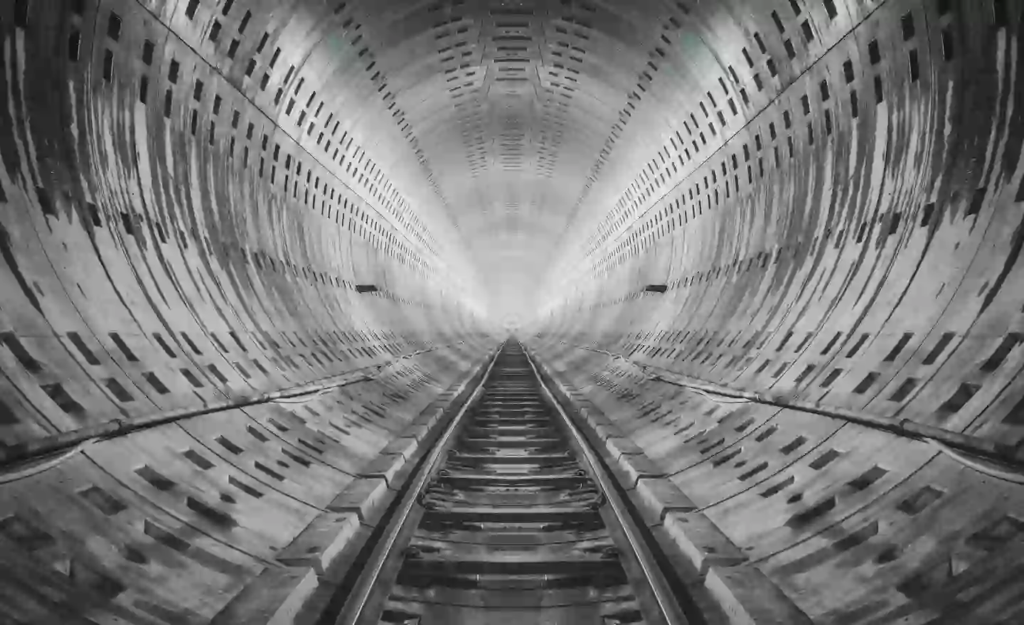
Could Musk really build the huge tunnel? (Getty Stock Images)
Feasibility or Fantasy?
Musk’s ambitious vision has sparked discussions on social media, particularly following an interaction on X (formerly Twitter). One user speculated that SpaceX could secure Federal Aviation Administration (FAA) approval for Earth-to-Earth Starship travel under Trump’s leadership. Musk responded, “This is now possible.”
Regarding the proposed transatlantic tunnel, Musk claimed his company could complete the project at a fraction of a reported $20 trillion. However, is such an engineering feat truly achievable?
Technical Challenges
The Atlantic Ocean’s extreme depths present significant obstacles. One expert on Stack Exchange pointed out the numerous challenges, starting with the ocean floor’s depth of around 5,500 meters. Before construction could even begin, scientists would need to assess the geological conditions of the seabed to determine if it’s structurally viable.

The seabed might not support construction (Getty Stock Images)
The depth alone poses considerable challenges due to immense water pressure, which would complicate excavation. Additionally, the seabed may not be able to support such a large-scale construction project. Other potential issues include deep-sea life, submarines, ships, and the need for extensive ventilation systems to maintain air circulation within the tunnel.
Perhaps the most significant barrier is the Mid-Atlantic Ridge, an active volcanic zone that stretches nearly 40,390 miles and serves as a dividing line between the Americas and Europe/Africa. This geological feature constantly pushes the continental plates apart, making tunnel construction particularly precarious.
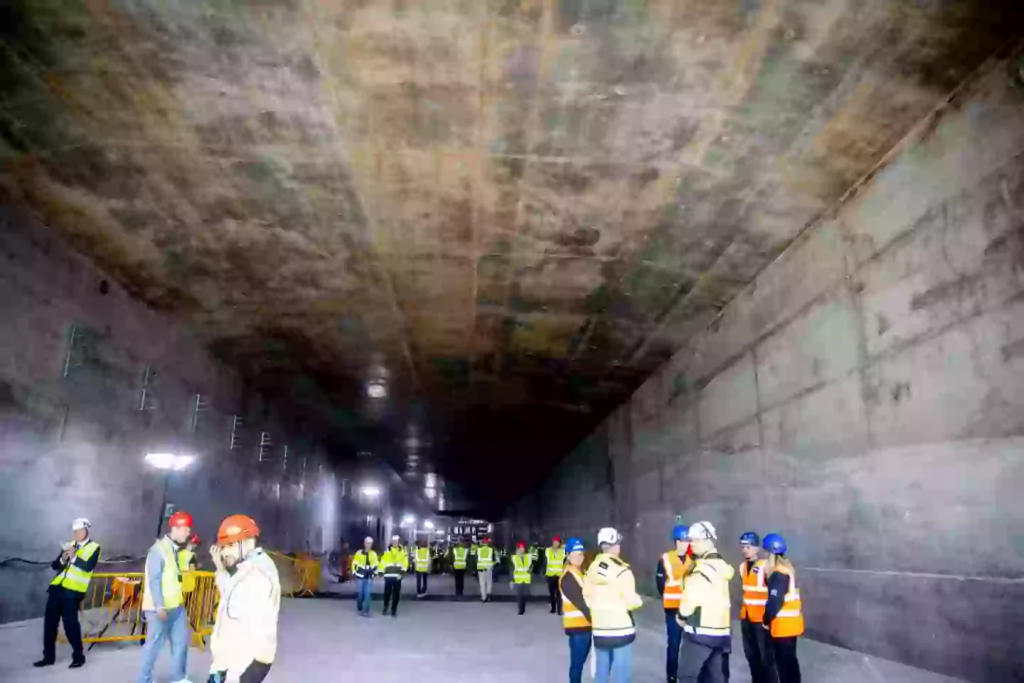
The Fehmarn Tunnel’s entrance point (INGRID RIIS/Ritzau Scanpix/AFP via Getty Images)
Precedents for Success?
Despite these challenges, history provides some hope. The ongoing Fehmarn Tunnel, a project linking northern Germany with southern Denmark under the Baltic Sea, demonstrates that underwater tunnels can be built under the right conditions. Though only 18 kilometers long, it is considered an engineering milestone. According to Denise Juchem, a spokesperson from Femern A/S, the company behind the project, the tunnel was chosen for its environmental benefits, weather resistance, and cost efficiency.
While Musk’s London-to-New York tunnel is an intriguing concept, the extreme technical, environmental, and financial hurdles make it an unlikely reality in the near future. Still, with Musk’s track record of ambitious projects, the idea cannot be entirely dismissed. For now, it remains an exciting, if improbable, vision of the future of transportation.