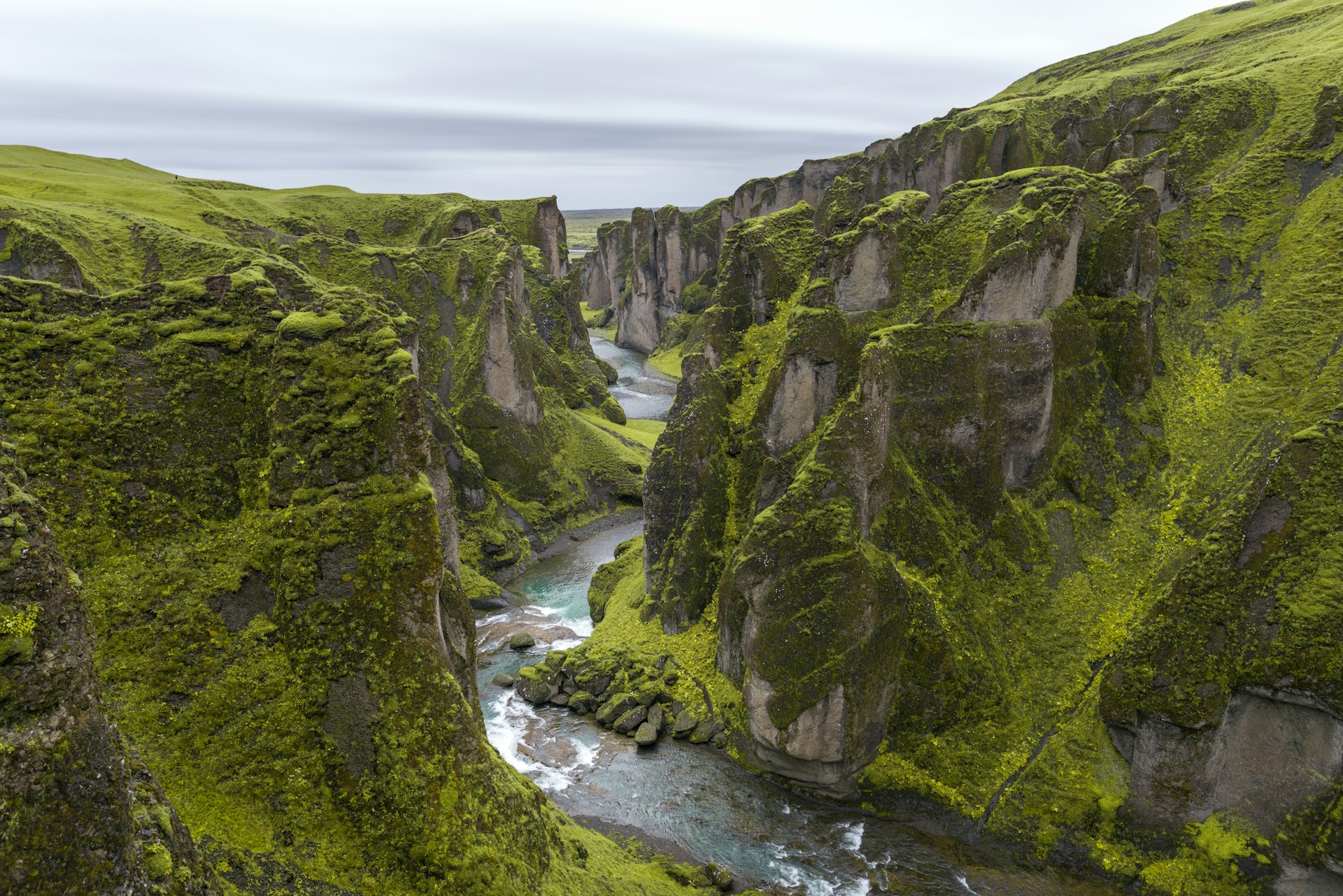
Are you heading to Iceland and hoping to see places that feel quieter and far from the usual crowds? Then you’re in for something special. Beyond the famous waterfalls and busy roadside stops, Iceland hides dramatic canyons, remote glaciers, black sand valleys, and steaming landscapes that many travelers pass right by. Some of these spots feel almost untouched, especially if you visit early in the morning or outside peak season.
Most visitors follow the Ring Road and stop at the best-known attractions along the route. That journey is still incredible, but it often means sharing every viewpoint with buses full of travelers. Iceland’s lesser-known corners offer a different experience entirely. You can stand beside a roaring waterfall with barely another person nearby or hike through lava fields where the silence feels unreal. Those quieter moments often become the most memorable part of the trip.
Of course, landmarks like Skógafoss and Jökulsárlón deserve their reputation. Their scale and scenery are unforgettable. Still, some of Iceland’s hidden glaciers, remote fjords, and canyon trails can feel even more magical simply because they remain less crowded. Imagine watching chunks of ice drift across a glacial lagoon while hearing little more than the wind around you.
This guide highlights some of Iceland’s best secret locations for travelers who want more than the standard itinerary. From isolated coastal roads to hidden hot springs and dramatic mountain passes, these places reveal a quieter side of the country that many people never get to see.
Hidden Gems in Iceland List
1. Kvernufoss – Iceland’s Quiet Canyon Waterfall
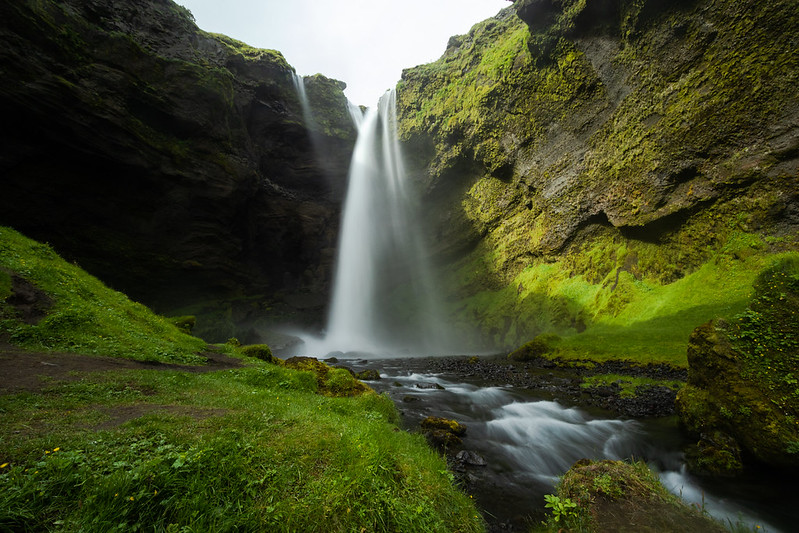
Just a few minutes away from the famous Skógafoss sits one of Iceland’s quieter waterfalls, Kvernufoss. Many travelers drive past it without realizing such an incredible place is nearby. Hidden inside a narrow canyon, this waterfall feels far more peaceful than many of the country’s better-known stops. The short walk alone already feels like stepping into another side of Iceland.
How to Reach Kvernufoss
Park at the Skógar Museum parking area. From there, walk toward the mountains and keep right beside the museum buildings. Continue past the hangar until you reach a ladder crossing over a fence. Although the path passes through private land, visitors are allowed to enter as long as they respect the area and leave everything exactly as they found it.
After crossing the ladder, follow the small river through the canyon trail. The walk takes around ten minutes and is fairly easy for most travelers. Moss-covered cliffs rise on both sides, while the sound of rushing water slowly grows louder with every step.
Why Visit Kvernufoss
One of the best parts about Kvernufoss is that you can walk behind the waterfall, much like at Seljalandsfoss, but with far fewer people around you. Instead of waiting in crowds for photos, you can simply sit near the canyon walls, feel the mist in the air, and enjoy the raw beauty of the landscape at your own pace.
The waterfall drops dramatically into the canyon below, creating an atmosphere that feels calm yet powerful at the same time. For travelers wanting a quieter Iceland experience, this spot easily becomes one of the most memorable stops along the south coast.
2. Kolugljúfur Canyon – A Dramatic Stop Along Iceland’s Ring Road
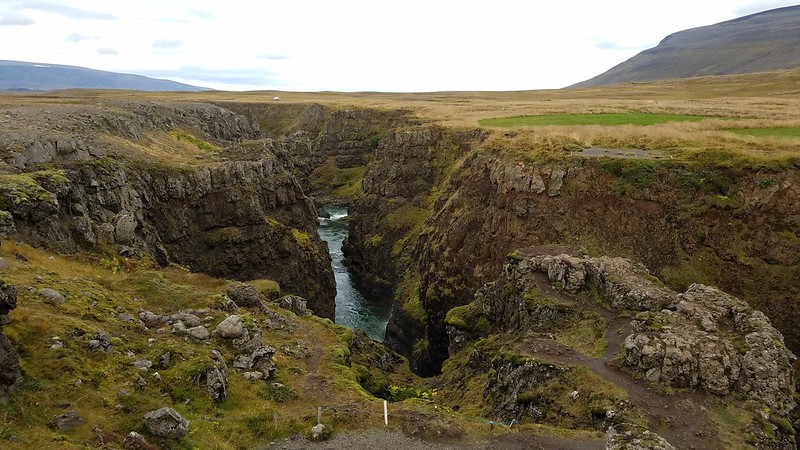
Kolugljúfur Canyon quickly became one of my favorite lesser-known places in Iceland. On one trip, I even added a five-hour detour just to return here again. Located between Reykjavík and Akureyri, this canyon makes a fantastic stop for anyone driving the Ring Road and wanting scenery away from the busiest tourist areas.
How to Reach Kolugljúfur Canyon
Reaching the canyon is fairly simple. Add the location to your GPS and follow the main route until the final stretch of road. The last section can feel rougher than the highways, so driving slowly is a smart idea, especially during wet weather.
You can leave your car near the bridge or continue across and park on the opposite side. From there, walk back across the bridge and head down toward the canyon viewpoints. The paths are uneven in places, and the cliffs can be steep, so paying attention while walking around the edges is important.
Why Visit Kolugljúfur Canyon
Kolugljúfur is more than a canyon. Flowing through the middle is a powerful waterfall system that adds even more drama to the landscape. The river cuts through dark rock walls, creating a wild scene that feels far removed from Iceland’s more crowded attractions.
One of the best things about visiting here is the lack of large crowds. During one November visit, there was nobody else around for nearly two hours. Even during summer, only a small number of people were scattered around the viewpoints. Compared to Iceland’s famous hotspots, that kind of quiet is hard to find.
3. Ingjaldshólskirkja – A Quiet Church on the Snæfellsnes Peninsula
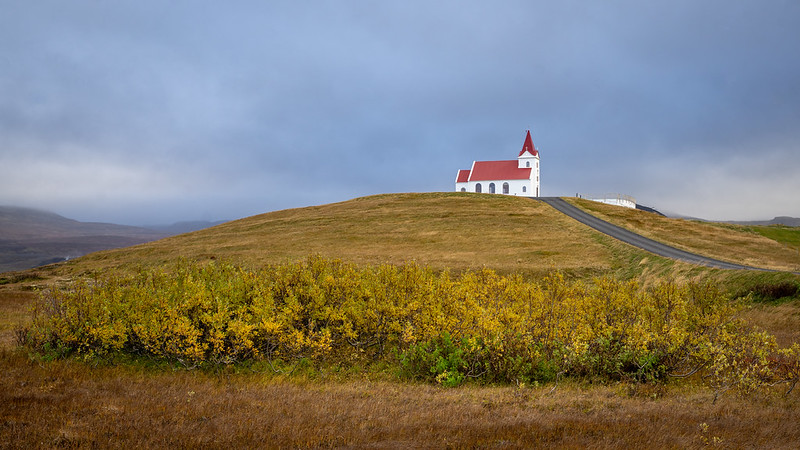
Ingjaldshólskirkja is one of those places many travelers pass without realizing how beautiful it really is. While most visitors on the Snæfellsnes Peninsula head straight to Búðakirkja or Kirkjufellsfoss, this small white church offers a much calmer atmosphere and some incredible surrounding scenery.
The church sits against a backdrop of mountains, open fields, and distant coastline views. On cloudy days, the landscape feels dramatic and moody, while sunny evenings paint the entire area in soft golden light. It’s the kind of stop where many people end up staying longer than planned.
How to Reach Ingjaldshólskirkja
The church is located along the northern side of the peninsula and is easy to reach by car. A long road leads directly up to the church, and this stretch itself makes a fantastic photo location with mountains rising in the distance behind it.
Parking is available beside the church, making it a simple stop during a road trip around the peninsula. If you’re traveling by camper van, staying near Ólafsvík is a great option. The nearby campground offers beautiful coastal views, while the mountain scenery surrounding the town feels absolutely unreal during sunrise and sunset.
Read more : 21 Incredible Places to Explore in Iceland for Epic Scenery and Adventure
4. Lóndrangar – Towering Cliffs on the Snæfellsnes Coast
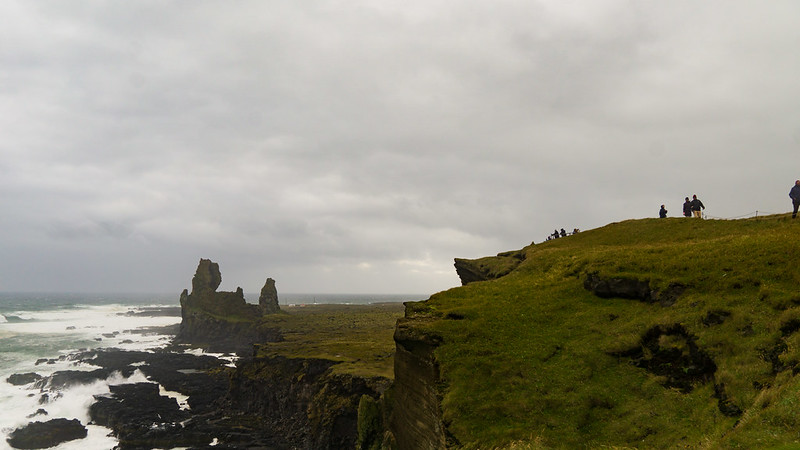
Lóndrangar is one of those places travelers often rush past while heading toward the more famous viewpoints near Arnarstapi. But these dramatic sea cliffs easily deserve a stop of their own. Rising sharply from the coastline, the massive rock formations create one of the wildest ocean views on the peninsula.
The area feels raw and untamed, especially when strong Atlantic waves crash against the cliffs below. Seabirds circle overhead while lava fields stretch across the landscape around you. On foggy days the rock towers almost seem unreal as they slowly appear through the mist.
How to Reach Lóndrangar
Many visitors type Lóndrangar into Google Maps and end up near the lighthouse. While that route still works, there’s a better parking area closer to the main viewpoint. From there, it’s only a short walk before the cliffs suddenly come into view.
As you approach the edge, look for a smaller path heading down on the right-hand side. Following this trail gives you a much closer look at the coastline and the towering rock formations below. The perspective from near the cliffs feels completely different from the upper viewpoint.
The drive to Lóndrangar is also part of the experience. Winding roads cut through lava fields and coastal scenery the entire way, making this stretch of the Snæfellsnes Peninsula one of the most memorable drives in the country.
5. Fjallsárlón – Iceland’s Quiet Glacier Lagoon
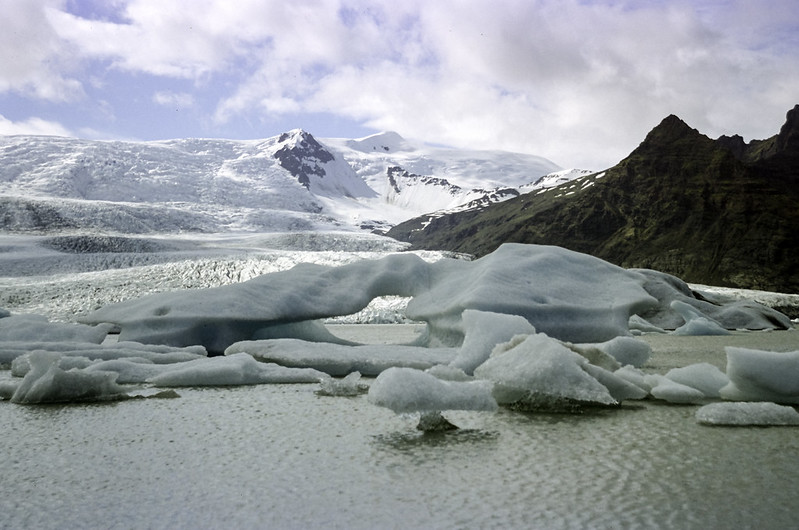
Fjallsárlón completely changed the way I see Iceland. Pulling into the parking area and finding almost nobody there already felt unusual. But the real moment comes after the short walk uphill, when the glacier lagoon suddenly appears in front of you. Massive blocks of ice float silently across the water while the glacier stretches down between dark mountain slopes behind it.
The first time I stood there, the view honestly felt overwhelming. The icy blue tones, the silence, and the scale of the glacier create an atmosphere that photos can barely capture. It’s one of those rare places where you simply stop talking for a minute and take everything in around you.
How to Reach Fjallsárlón
Fjallsárlón sits between Skaftafell and the busy shores of Diamond Beach. Reaching it is very easy if you’re driving Iceland’s Ring Road. A small turnoff from the main road leads directly to the lagoon parking area.
The walk from the parking lot is short and fairly simple, making this stop accessible for most travelers. Even before reaching the viewpoint, you’ll already begin seeing pieces of the glacier appearing between the hills.
Why Visit Fjallsárlón
One of the best parts about Fjallsárlón is how peaceful it can feel compared to nearby glacier attractions. While other famous spots are often packed with visitors, this lagoon still gives many travelers room to slow down and enjoy the landscape without large crowds surrounding them.
During my visit, I had the entire viewpoint almost completely to myself. Sitting beside the lagoon, watching chunks of ice drift slowly through the water, felt like experiencing Iceland in its purest form.
6. Thakgil – A Remote Escape in South Iceland
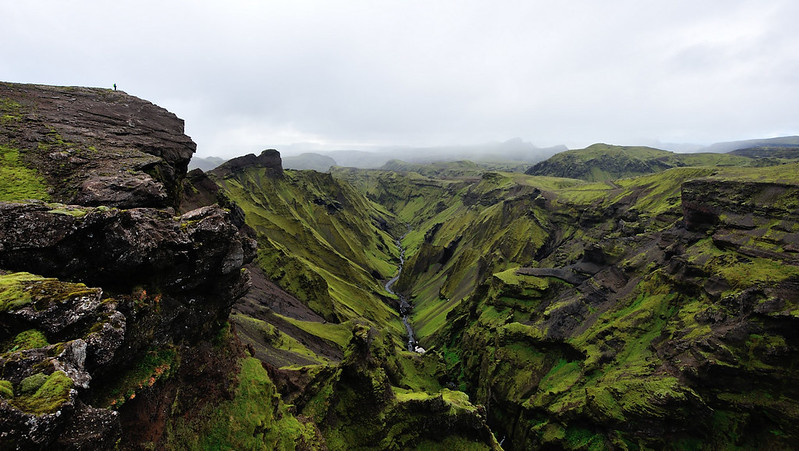
Thakgil is one of those places that somehow still stays off most travelers’ itineraries. After visiting it for the first time, that honestly felt hard to believe. The landscape here is filled with sharp green canyons, icy rivers, black sand valleys, glaciers, and volcanoes all surrounding one dramatic area.
The moment you drive into Thakgil, the scenery completely changes. Tall moss-covered cliffs rise on both sides while narrow canyon passages cut through the mountains ahead. Compared to the crowded stops along Iceland’s Ring Road, this place feels far quieter and far more untouched.
How to Reach Thakgil
One reason Thakgil remains less visited is because there’s no public transportation directly leading here. Driving yourself is the easiest and most affordable option. Travelers coming from Reykjavík should continue along the Ring Road toward Vík í Mýrdal before turning onto Road 214 near Hotel Katla.
After leaving the main road, the route becomes rough and uneven. The gravel road leading into Thakgil can feel extremely bumpy in sections, especially for smaller vehicles. Many travelers still complete the drive with regular cars or camper vans, but driving slowly is very important to avoid damaging the underside of the vehicle.
A 4×4 vehicle makes the journey much easier, especially during poor weather conditions. As you continue deeper into the valley, the scenery grows more dramatic with every kilometer.
Why Visit Thakgil
Thakgil offers a completely different atmosphere from many of Iceland’s better-known attractions nearby. After visiting crowded locations along the Ring Road, arriving here almost feels refreshing.
The steep green canyon walls and winding valleys create incredible scenery in every direction. Compared to Fjaðrárgljúfur, which often fills with visitors, Thakgil still gives travelers plenty of space to walk around freely and enjoy the landscape at their own pace.
7. Sigöldugljúfur – Iceland’s Canyon of Waterfalls
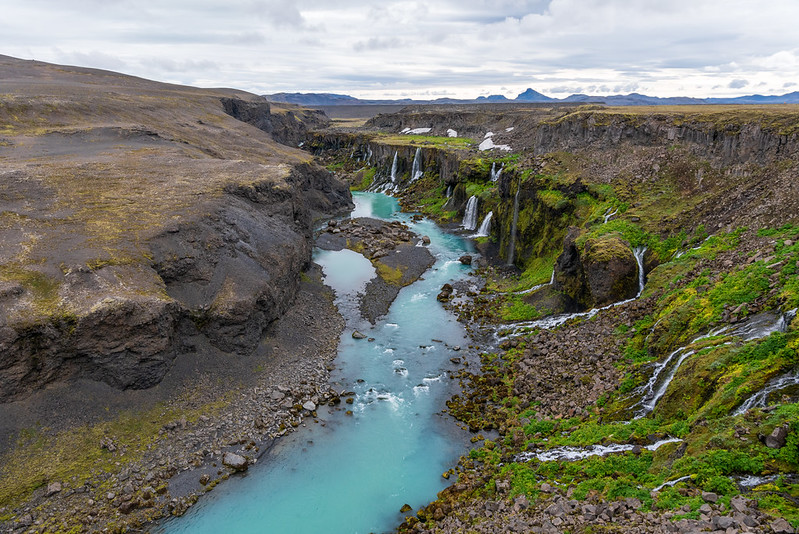
Sigöldugljúfur feels almost unreal the first time you see it. Hidden deep within Iceland’s Highlands, this canyon is filled with bright blue water and countless waterfalls flowing down its cliffs. Photos already look impressive, but standing beside the canyon in person feels completely different.
At first glance, the surrounding Highlands can appear empty and rugged. Then suddenly the canyon opens up beneath you, revealing streams of waterfalls pouring into vivid turquoise water below. The contrast between the dark volcanic landscape and the bright water makes this place unforgettable.
How to Reach Sigöldugljúfur
Sigöldugljúfur is located in the remote Icelandic Highlands, so reaching it requires a 4×4 vehicle. Many travelers combine the trip with a visit to Landmannalaugar since both destinations are located within the same region.
Once you arrive at the parking area, the walk itself is fairly simple. Follow the hiking trail across the road and continue toward the canyon edge. For much of the walk, the landscape can seem flat and empty, almost making you think you’ve taken the wrong path.
Then suddenly the canyon appears beneath your feet. Waterfalls stretch across the cliffs in nearly every direction while the bright blue river cuts through the middle below. The reveal alone makes the hike worth it.
8. Stuðlagil Basalt Canyon – Iceland’s Turquoise Canyon Surprise
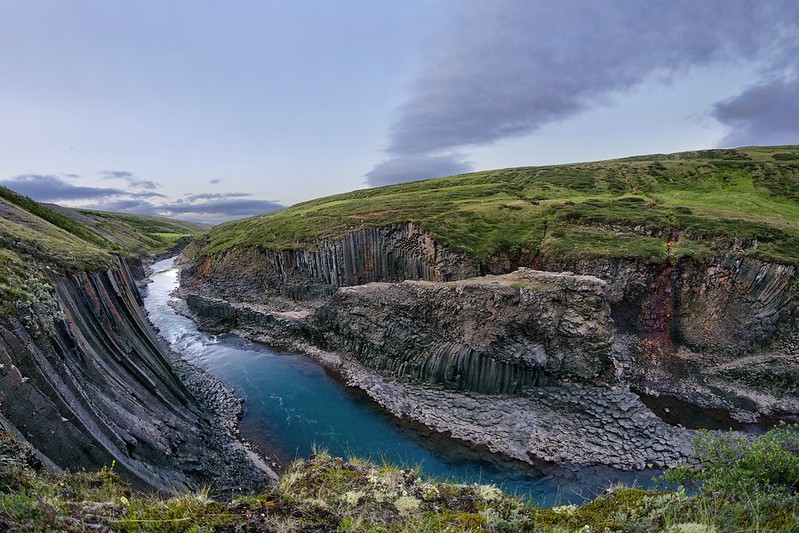
Stuðlagil Canyon has quickly become one of Iceland’s most talked-about natural attractions. What makes this place even more fascinating is that the canyon remained hidden underwater for many years before the river levels changed and exposed the massive basalt formations below.
Today, visitors come here for the towering volcanic columns and the bright blue water running through the canyon. During dry summer periods, the river often turns an intense turquoise color. After heavy rainfall, though, the water can become grey and much stronger, creating a completely different atmosphere.
How to Reach Stuðlagil Canyon
There are two different parking areas for Stuðlagil, but only the eastern side allows direct access down into the canyon itself. The western side offers a viewpoint from above, which is still beautiful but far more limited if you want to experience the canyon up close.
From the eastern parking area near the waterfall, the walk to the canyon takes around forty minutes. The trail is fairly straightforward and passes through open countryside before finally reaching the basalt cliffs and river below.
As you get closer, the canyon walls slowly begin to appear, revealing massive geometric rock formations rising straight from the water.
Why Visit Stuðlagil Canyon
Stuðlagil stands out because of the contrast between the dark basalt columns and the bright river flowing through the canyon. The volcanic rock formations almost look artificial because of their perfect geometric shapes.
The canyon has become more popular over recent years, especially during summer afternoons when tour groups arrive. Visiting early in the morning or later in the evening offers a much quieter experience and softer lighting across the canyon walls.
Read more : The 4 Best Times to Visit Iceland’s Lupine Fields Near Stokksnes
9. Klifbrekkufoss – A Multi-Layered Waterfall in East Iceland
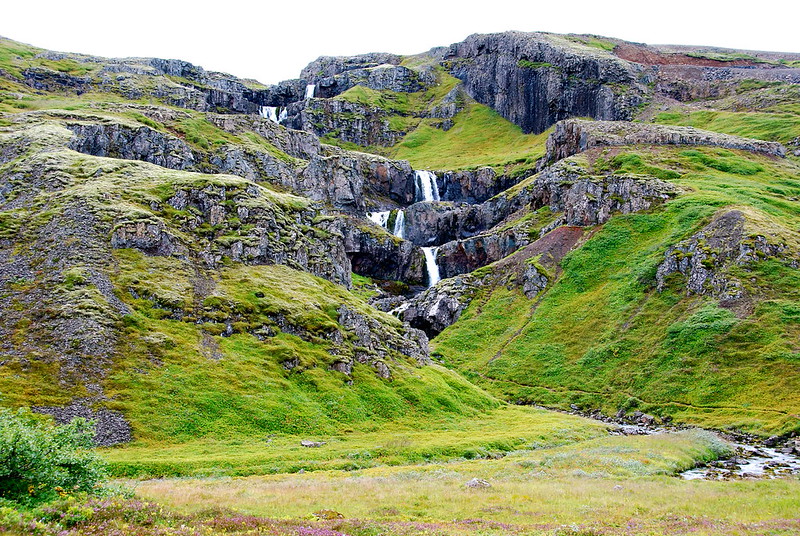
Klifbrekkufoss is one of those waterfalls many travelers accidentally pass without realizing how impressive it actually is. Hidden within Iceland’s eastern fjords, this waterfall sits close enough to the road that visiting it barely requires any extra driving time.
The scenery around the waterfall feels completely different from Iceland’s more famous southern attractions. Steep mountain slopes surround the fjord while long winding roads cut through valleys often covered in mist and low clouds. On quieter days, the area feels almost untouched.
How to Reach Klifbrekkufoss
Klifbrekkufoss is located along one of the roads through Iceland’s Eastfjords and is very easy to access by car. A designated parking area sits close to the waterfall, making this stop simple even during a longer road trip around the country.
One thing drivers should keep in mind is the weather around the fjords. Thick fog can quickly roll over the mountain roads above the waterfall, especially during colder mornings or rainy conditions. Visibility sometimes becomes very limited, so driving carefully through this section is important.
Why Visit Klifbrekkufoss
Klifbrekkufoss may not be Iceland’s tallest waterfall, but its layered appearance makes it stand out from many others across the country. Instead of one massive drop, the waterfall flows down the mountainside through a long series of smaller cascades.
From a distance, the waterfall almost looks like a giant staircase cutting through the green cliffs. Combined with the quiet fjord scenery surrounding it, this stop feels far calmer than many of Iceland’s more heavily visited waterfalls.
10. Aldeyjarfoss – A Basalt-Framed Waterfall in the Highlands
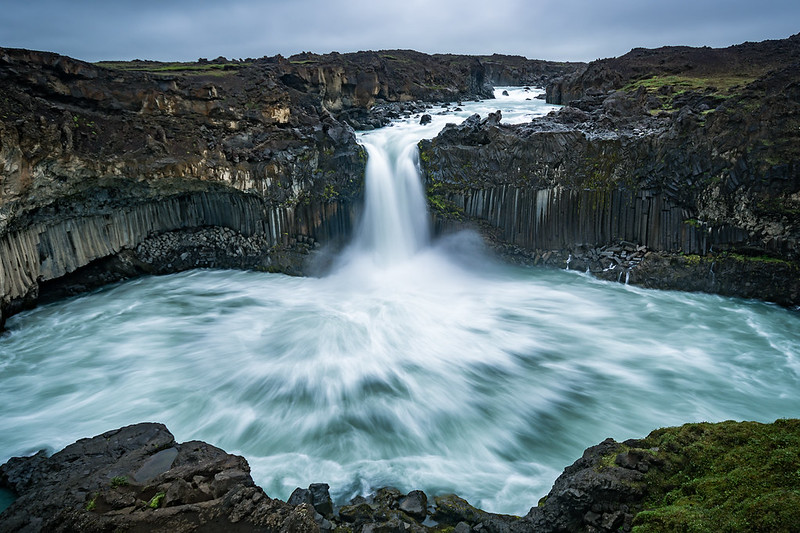
Aldeyjarfoss is one of the most striking waterfalls hidden within Iceland’s Northern Highlands. Surrounded by dark basalt columns, the waterfall creates a dramatic contrast against the bright blue water flowing through the canyon below. Many travelers compare it to Svartifoss, but Aldeyjarfoss feels far quieter and much more remote.
The surrounding landscape feels harsh and rugged, with volcanic rock fields stretching across the Highlands in every direction. Standing near the waterfall, the massive basalt formations almost look carved by hand because of their sharp geometric shapes.
How to Reach Aldeyjarfoss
Aldeyjarfoss is reached via the F26 mountain road, one of Iceland’s famous Highland routes. While parts of F26 can be extremely challenging, the section leading toward this waterfall is still manageable for experienced drivers with a 4×4 vehicle and does not require river crossings.
The road itself remains rough and uneven in many places, with loose rocks and potholes along the way. Driving slowly is important, especially during wet conditions or strong winds in the Highlands.
A small parking area sits near the waterfall trail. From there, it’s a short walk down toward the canyon where the full view of the waterfall and basalt cliffs suddenly opens up in front of you.
Why Visit Aldeyjarfoss
What makes Aldeyjarfoss stand out is the combination of raw Highland scenery and the enormous basalt columns surrounding the falls. The dark volcanic rock creates an incredible backdrop for the rushing water below.
Unlike many waterfalls along Iceland’s southern coast, Aldeyjarfoss still receives relatively few visitors because of its remote location. That extra effort to reach it often rewards travelers with a far quieter experience and uninterrupted views of one of Iceland’s most dramatic waterfalls.
11. Kerlingarfjöll – Iceland’s Remote Geothermal Wonderland
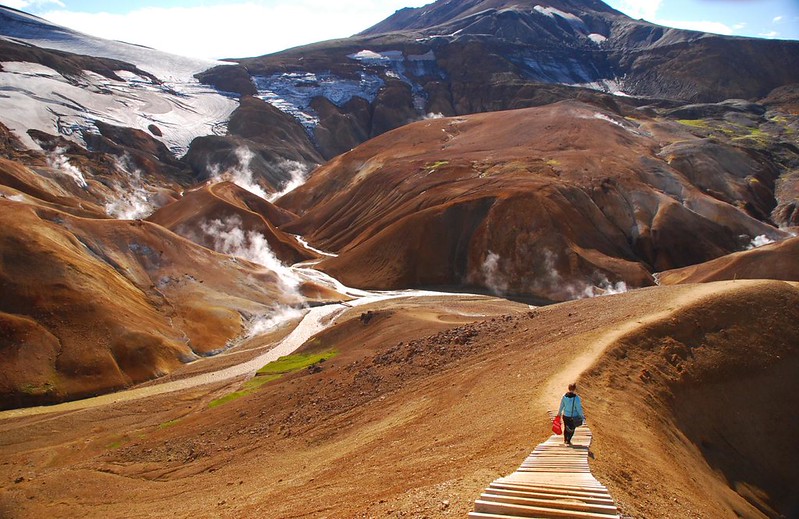
Kerlingarfjöll feels like one of Iceland’s greatest hidden surprises. Considering how incredible the landscape looks, you would expect large crowds everywhere, yet many travelers still skip this part of the Highlands completely. Even during peak summer months, the area can remain surprisingly quiet.
Located deep within central Iceland, Kerlingarfjöll belongs to an active volcanic system filled with steaming vents, colorful mountains, hot springs, and dramatic valleys. The combination of red hills, dark volcanic earth, and rising geothermal steam creates scenery unlike almost anywhere else in the country.
How to Reach Kerlingarfjöll
Kerlingarfjöll is accessed through F35, also known as the Kjölur Route. This Highland road connects both northern and southern Iceland and is considered one of the better-maintained F-roads in the country.
One of the biggest advantages of F35 is that there are no river crossings along the route, making it more manageable than many other Highland roads. The roughest section comes near the end, where the road leading toward the Kerlingarfjöll Mountain Resort and the Hveradalir parking area becomes rocky and uneven.
Although the drive is still demanding in parts, most travelers with a proper 4×4 vehicle can comfortably reach the area during the summer season.
Why Visit Kerlingarfjöll
Kerlingarfjöll stands out because of its incredible geothermal scenery and wide network of hiking trails. Steam rises from the ground in nearly every direction while colorful mountains surround the valleys below.
Some travelers spend several days hiking through the area, while others stop for only a few hours and still leave amazed by the landscape. Whether you choose a short walk or a full-day trek, the scenery here feels completely different from Iceland’s more famous tourist stops along the coast.
12. Brúarfoss – A Bright Blue Waterfall Along the Golden Circle
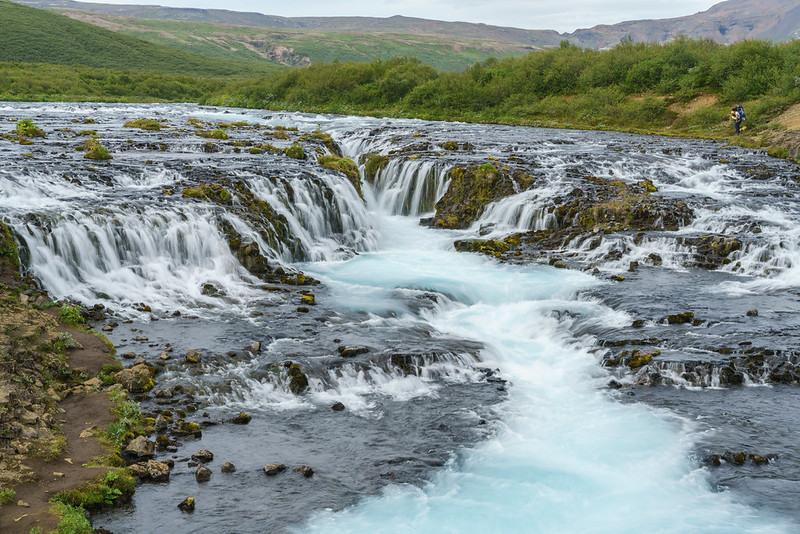
Brúarfoss may not be Iceland’s largest waterfall, but its striking blue water easily makes it one of the most beautiful. Hidden along the famous Golden Circle route, this waterfall still stays quieter than many nearby attractions because reaching it requires a longer walk.
The river flowing through Brúarfoss almost looks unreal with its bright turquoise color cutting through dark volcanic rock. Combined with the smaller surrounding cascades and narrow river channels, the entire area feels calm and far removed from the crowded Golden Circle parking lots nearby.
How to Reach Brúarfoss
Reaching Brúarfoss is fairly straightforward. Drive to the official parking area and follow the trail running alongside the river toward the waterfall. The parking lot is relatively small, with space for only a limited number of vehicles, so arriving earlier in the day is usually a good idea.
The hike itself is around 3.5 kilometers one way and follows mostly flat terrain the entire route. The trail is considered fairly easy and works well for most travelers, including families visiting with younger children.
Along the walk, you’ll pass smaller waterfalls and river viewpoints before finally reaching the main cascade at Brúarfoss.
Why Visit Brúarfoss
What makes Brúarfoss stand out is the incredible color of the water. The vivid blue river rushing through the narrow volcanic rocks creates one of the most photogenic waterfall scenes in Iceland.
Because the waterfall requires a longer walk compared to other Golden Circle attractions, many tourists skip it completely. That extra effort often rewards visitors with a quieter atmosphere and a much more relaxed experience than Iceland’s busiest waterfalls.
Read more : 15 Essential Amazon Items to Grab Before Traveling to Iceland
13. Háifoss – One of Iceland’s Tallest Waterfalls
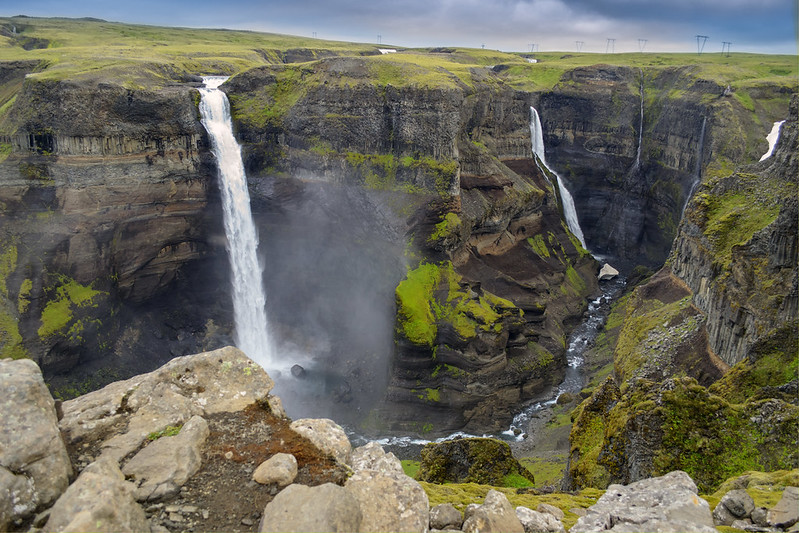
Háifoss is one of Iceland’s tallest waterfalls, plunging roughly 122 meters into a deep canyon below. Located near the powerful Hekla volcano and close to the edge of the Highlands, this waterfall feels far more remote than many of Iceland’s famous southern attractions.
The canyon surrounding Háifoss adds even more drama to the landscape. Dark cliffs stretch across the valley while the waterfall crashes down into the river far below. On clear days, the surrounding Highland scenery seems endless in every direction.
How to Reach Háifoss
Although the road to Háifoss is not officially classified as an F-road, the drive can still feel rough in many sections. The gravel road leading toward the parking area is filled with bumps, loose rocks, and uneven terrain.
Travelers driving smaller rental cars should move slowly and carefully, especially because damage underneath the vehicle is usually not covered by rental insurance. A 4×4 vehicle makes the drive much more comfortable, though many visitors still reach the waterfall using regular cars during dry weather conditions.
Once you arrive at the parking area, the walk to the viewpoint only takes a few minutes. Almost immediately, the canyon opens up in front of you with one of the most dramatic waterfall views in Iceland.
Why Visit Háifoss
What makes Háifoss so impressive is its scale combined with the raw landscape surrounding it. The waterfall drops straight into a massive canyon while smaller rivers and cliffs stretch across the area beside it.
Compared to Iceland’s more crowded waterfalls near the Ring Road, Háifoss still feels far quieter and less commercialized. The remote setting, combined with the enormous canyon views, makes this stop feel especially memorable for travelers wanting something beyond the usual tourist route.
Map of Iceland’s Hidden Gems
How to Use This Map
Select the icons on the map to view details about each location. To save the map to your Google Maps account, click the star beside the map title. You can later access it on both mobile and desktop by opening Google Maps, tapping the menu icon, choosing “Your Places,” then selecting “Maps” to find it in your saved list.