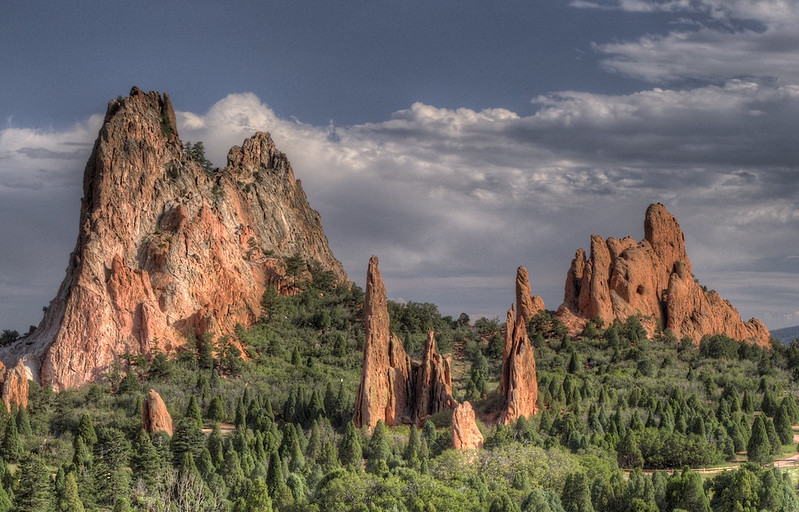
A spot like Garden of the Gods is hard to top. The name just kind of implies something quite fantastic, doesn’t it?
And for what it’s worth, after spending a few days walking an inordinate amount of ground within the park I can tell you that this thing is lived up to the hype.
This public park in Colorado Springs is a National Natural Landmark, and one of the most well-loved areas. Yes, it can be busy at times but this should not put you off venturing to some of the top hikes Garden of Gods.
Get on the trails, and you’ll find those crowds begin to spread pretty thin, especially if you are willing off road a bit more than most.
Check out my personal guide to the best hikes in Garden of the Gods here.
Essential Tips for Your Colorado Adventure
Your Flight:
Colorado Springs Municipal Airport serves the area, but you’ll likely find better flight deals through Denver International Airport. Use Skyscanner to monitor fares from Denver, and if you find a great price, consider subscribing to Going for exclusive deals.
Your Accommodations:
Check out Tripadvisor.com for a variety of lodging options in Colorado Springs. For a more homey experience, Vrbo is a great alternative to Airbnb, offering unique stays.
Your Ride:
A car rental is highly recommended for getting around Colorado Springs. Secure your ride in advance to ensure smooth travel to all the top spots.
Top Spots:
To see some of the park’s most iconic formations, hike the Perkins Central Garden Trail. For panoramic views, try the Scotsman & Buckskin Charlie Trail. Don’t miss the visitor center to learn more about the park’s fascinating dinosaurs.
Hike Through Garden of the Gods
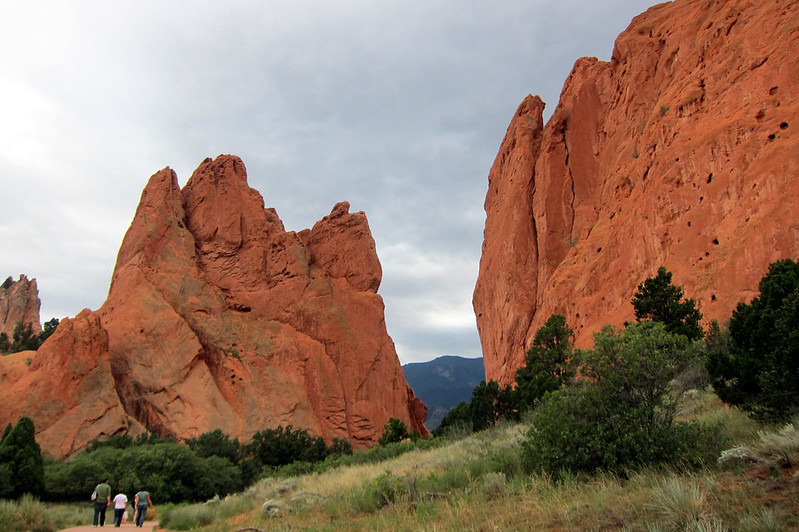
Once known as Red Rock Corral, the park’s name has multiple origin stories, all tied to a similar theme. Many visitors have long compared the beauty of the park to a garden meant for gods.
To fully experience the park, your best option is to explore on foot.
If you’re planning to hike, set aside at least two hours to wander through its trails. For those looking for longer hikes and time to truly enjoy the formations, you can easily spend an entire day here.
There’s no fee to hike in the park—it’s free to visit, as originally intended by its founders. But because of its popularity, expect crowds. Arriving early, bringing plenty of water and sunscreen, and staying patient will help you navigate the busy spots.
Your Hiking Choices at Garden of the Gods
Garden of the Gods boasts 21 miles of trails, offering plenty of options for exploration. You can pick up color maps at the Garden of the Gods Visitor & Nature Center, free of charge.
Even if you think you know the area like the back of your hand, it’s worth grabbing a map. It helps you get a better sense of your surroundings when you’re amidst a crowd of fellow hikers or influencers. Plus, it’ll guide you to the nearest parking areas, so you won’t waste time searching for spots.
1. Perkins Central Garden Trail
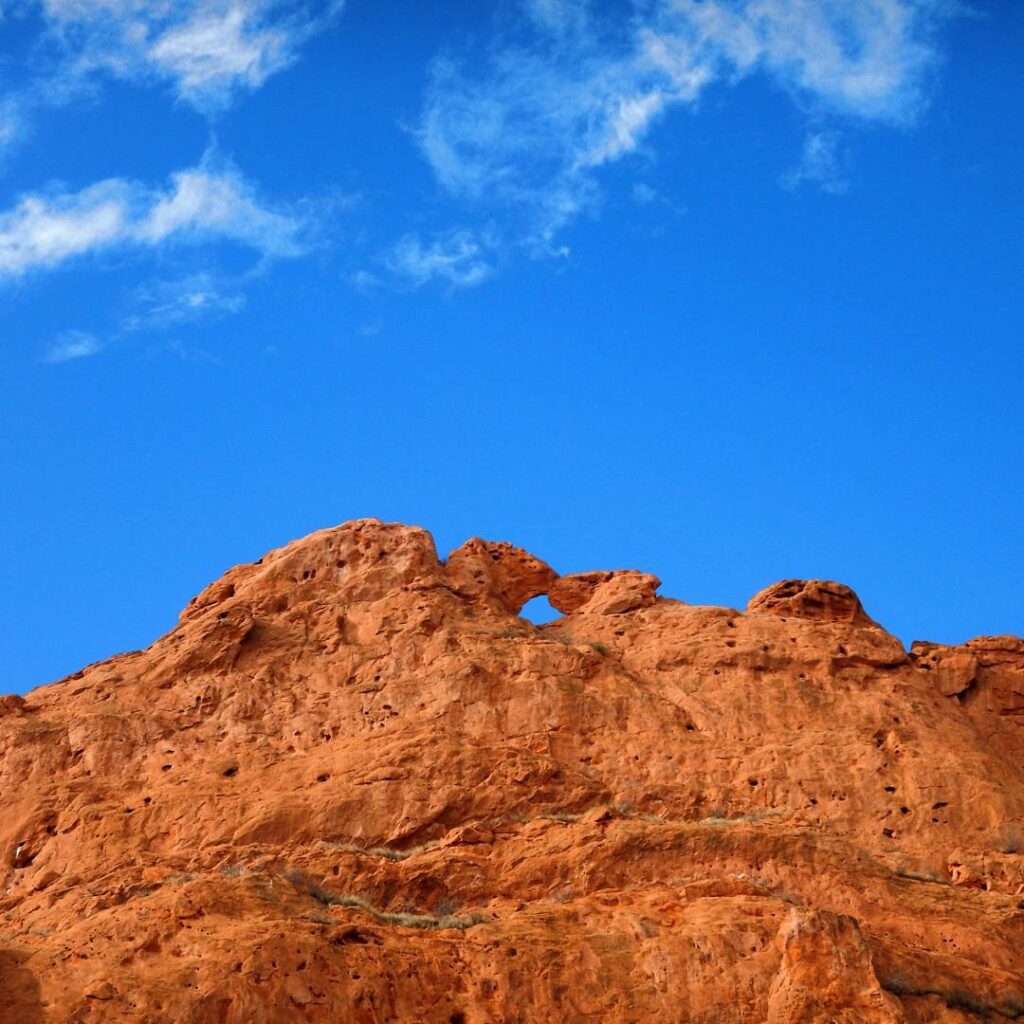
- Distance: 1.1 miles
- Difficulty: Easy
Pressed for time? Park Sentinal Pass, just over 1 mile roundtrip and straight through the center of it all. And when you look at your map, many of the park’s most noteworthy rock formations are found along this path or near central trails.
As you walk, be sure to spot:
- Tower of Babel: The large rock on the left is North Gateway Rock and defines the northern boundary. It is even more bewildering from outside the frame.
- North Gateway Rock: often called Gate Rock which reflects it’s use as the entrance to enter into the park’s northern area. You’ll see climbers on it, but be aware that you need a permit to climb as well.
- Three Graces: Well worth the view, these three skinny rock fins. You may have to wait a bit for that several people less photo of this spot if people are in your shots.
- Cathedral Spires: These razor-sharp spires soar up toward the heavens and are near Three Graces, so also quite crowded.
- Kissing Camels: Circulate this upturned windowpane for the profile of two camels locked in a smooch. The urge never stops so once you see it, impossible to ever unsee.
Fun fact: The trail is named after a noted business man, Charles Elliott Perkins who was urged to include Colorado Springs as one of his train stops That never happened, but the 240 acres he bought in this area turned out to be part of Garden of the Gods. Upon his death and following a plan laid out in Lowell’s will, the family sold what remained of the Mars Hill property to the city of Colorado Springs for one dollar as long as it was made freely accessible and free of charge. The rest they say is history!
2. Siamese Twins Trail
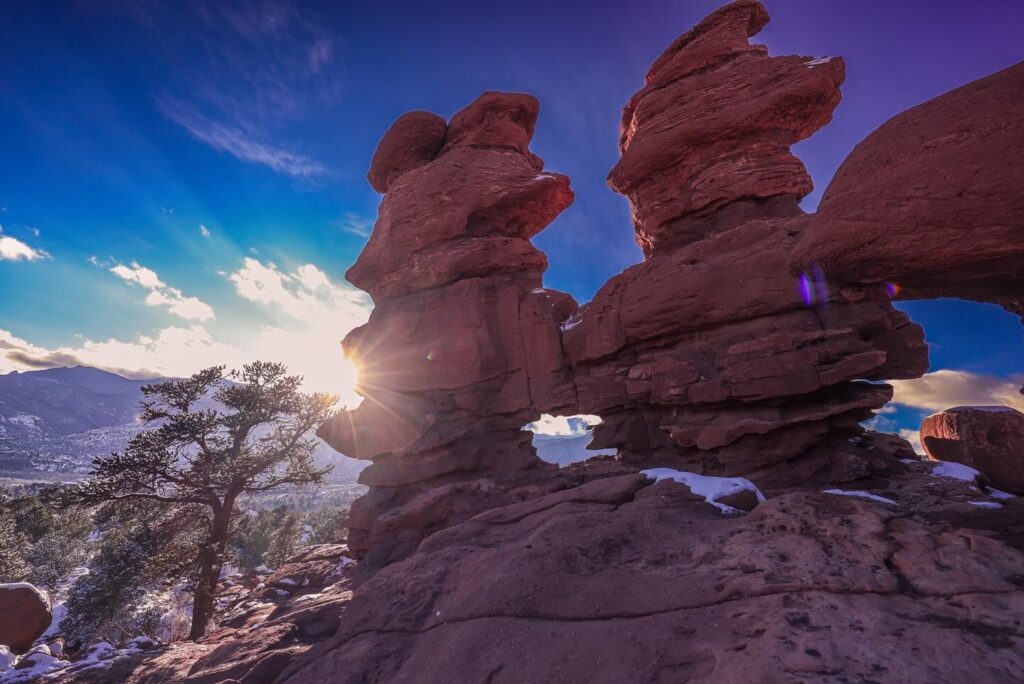
- Distance: 1 mile
- Difficulty: Easy
This easy trail leads to the interesting Siamese Twins rock formation with a good vantage of Pikes Peak along the way. The elevation gain is about 100 making it doable for most visitors and appealing to many families exploring Garden of the Gods.
Head out from Parking Lot 14 to the Siamese Twins formations and take in some of its most iconic views.
3. Ridge Trail
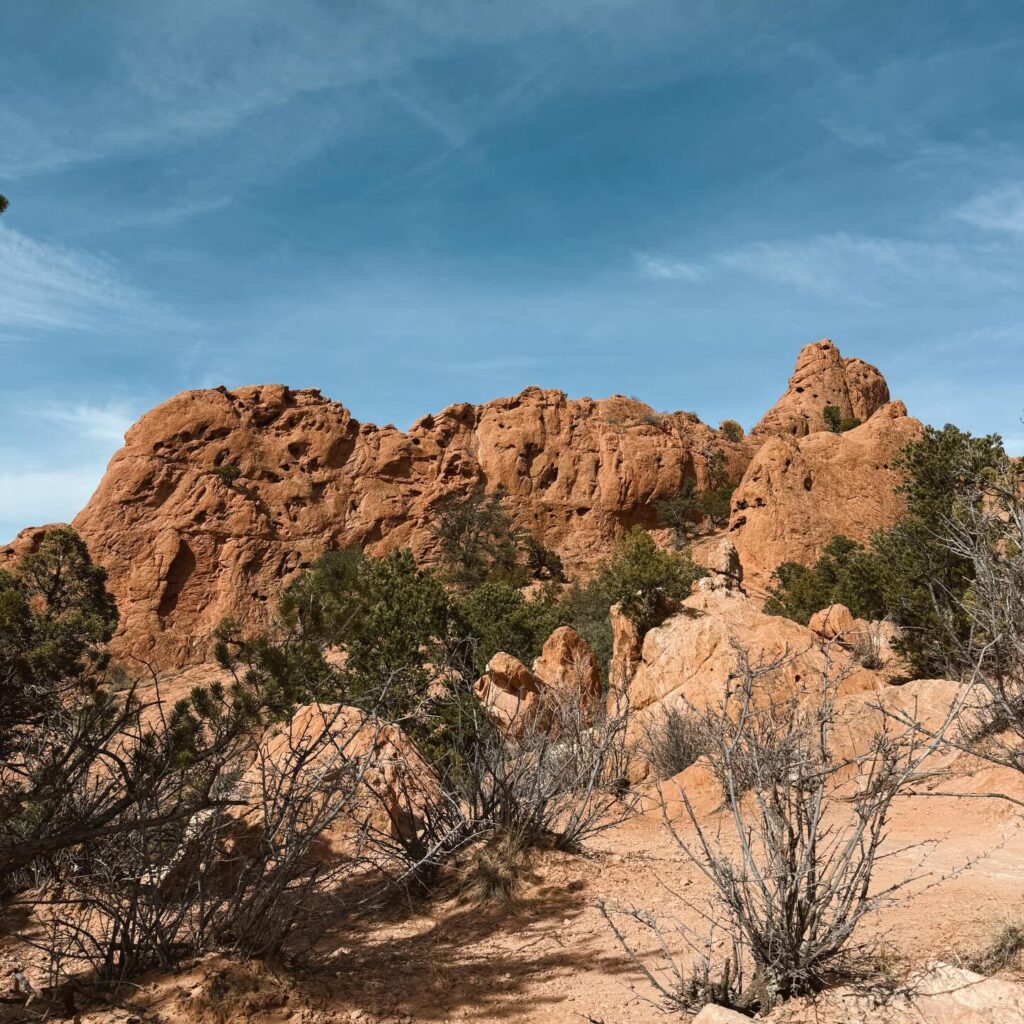
- Distance: 0.5 miles
- Difficulty: Easy
A short half-mile walk to the Sleeping Giant features a series of spires and mesas that are as magical as your imagination might make them seem. This trail is short, and open to public hiking so for those looking to explore it as well.
Children might like to try some rock scrambling on the nearby formations if you are hiking with kids. With one-note climbers as young as toddlers hanging from the wall, just make sure they keep their climbs to less than 10 feet since permits are required for higher bouldering and climbing.
The South Garden Parking Lot is the beginning of this trail.
4. Susan G. Bretag Trail
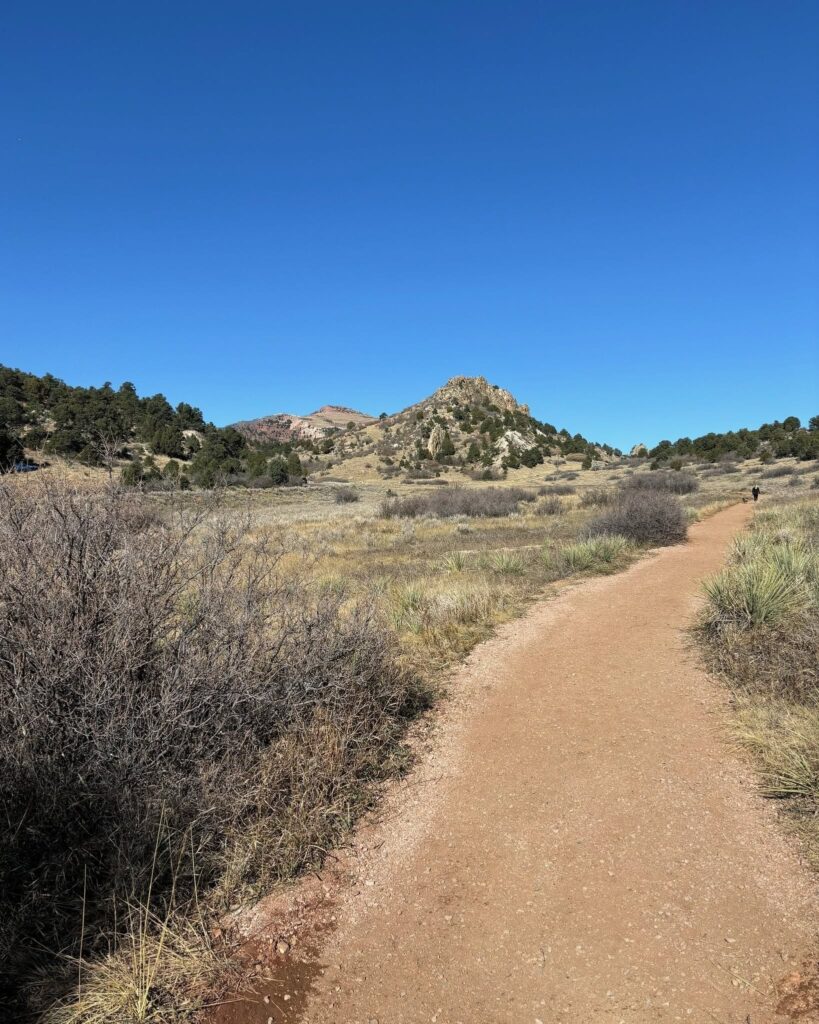
- Distance: 0.5 miles
- Difficulty: Easy
Half-mile loop yield view of white rock. This easygoing half-mile hike grants a last glimpse at White Rock, which contrasts sharply with Garden of the Gods’ characteristic red rocks. It is easy hiking for everyone who wants to discover the beauty of Bohemian Switzerland without breaking a sweat.
Susan G. Bretag Trail, another widely used connector If you link it with the Palmer, Scotsman, Buckskin Charlie and Ute trails to form a short 3.7-mile loop in Castlewood Canyon State Park, then Ponderosa Loop makes for one impressive hike through some of the park’s varied scenery.
5. Ute Trail
- Distance: 1 mile
- Difficulty: Easy
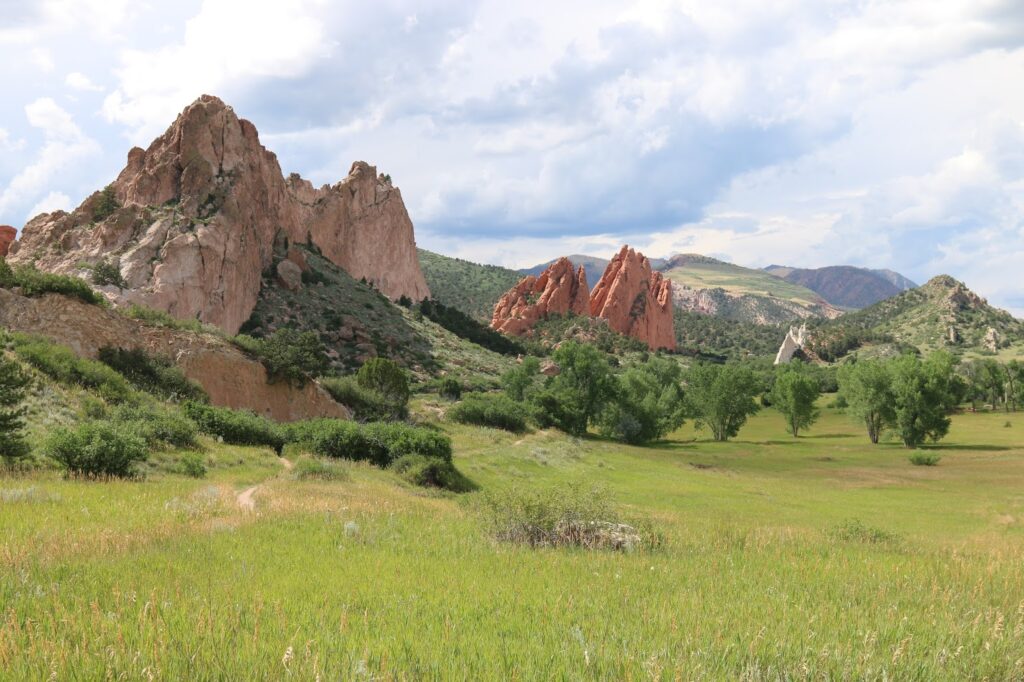
We often connected to other park trails at the Ute Trail. Still, if you want to knock out the whole loop it is a simple dirt path with an enjoyable view of the east side of this park.
However, I would recommend using it more as an access route through the park like we did unless you have been to the park multiple times and know what are its best offerings.
Begin at the South Garden Parking Lot.
6. Scotsman Trail Loop
- Distance: 1 mile
- Difficulty: Easy
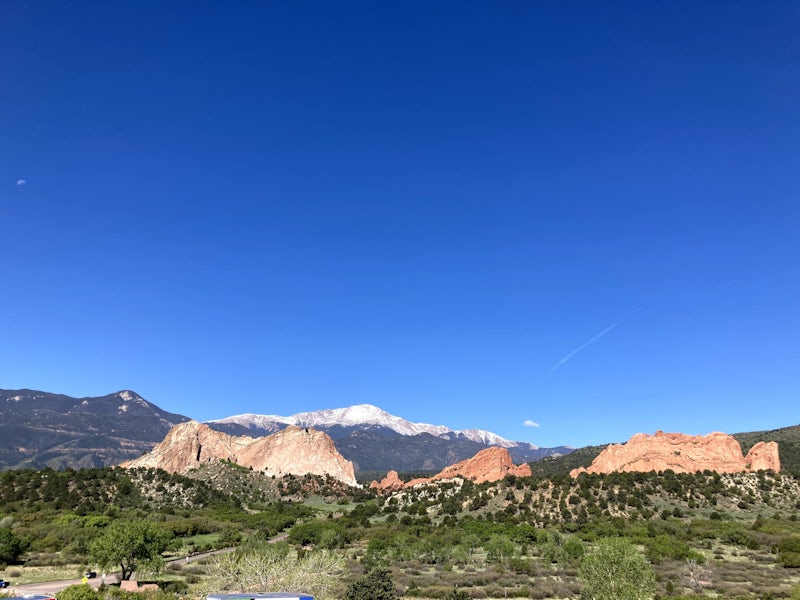
Although the main attraction of this easy loop is The Scotsman rock formation, you’ll visit it very close during your hike. You can also see the Sleeping Giant and Keyhole Window on this route.
The loop can be accesses from a number of spots within the park, but most people will likely begin at Scotsman Picnic Area/sign-posted on you combine map.
7. Scotsman & Buckskin Charlie Trail
- Distance: 1.5-2.2 miles
- Difficulty: Easy
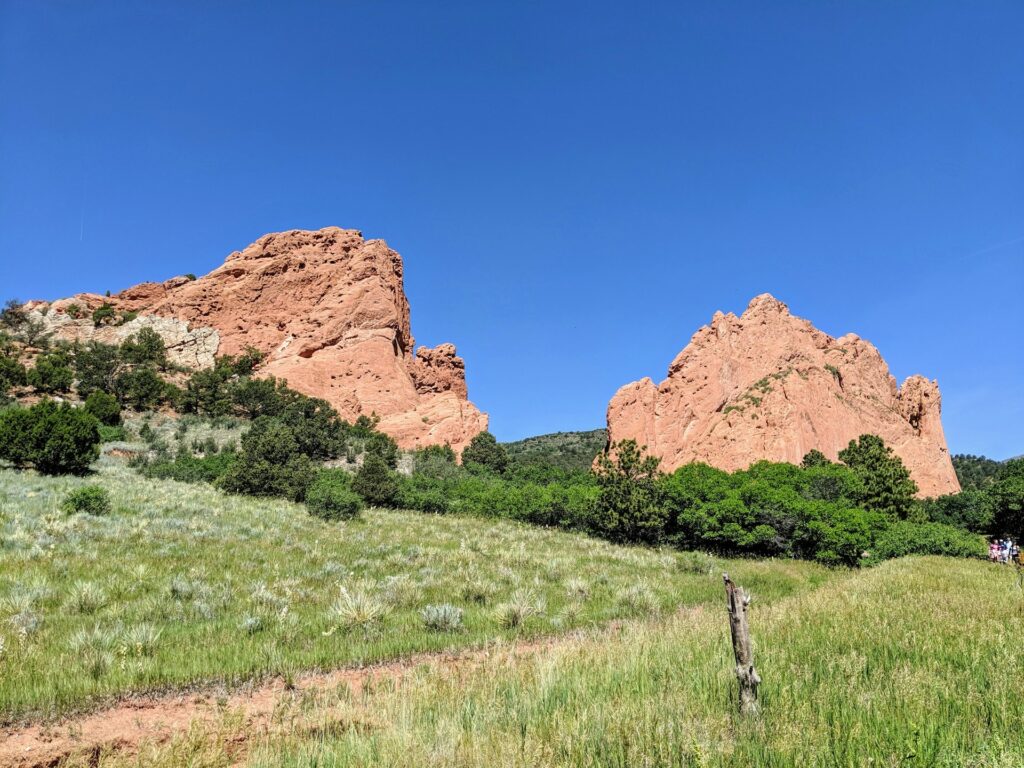
It is some of the best panoramic views further away from the Central Garden formations that can be seen along this trail. Obviously that will change some from person to person since most people shorter loop by combining the Scotsman Trail Loop, while I prefer doing a full complete loop.
Whichever way you decide to come, this is a trail that takes the quiet areas of the park on relatively empty places for people compared with probable congestion in Central Garden area.
Start at the Scotsman Picnic Ground and follow these two connecting trails for a more peaceful way to get into the interior of the park.
8. Palmer Trail
- Distance: 1.8 miles
- Difficulty: Easy
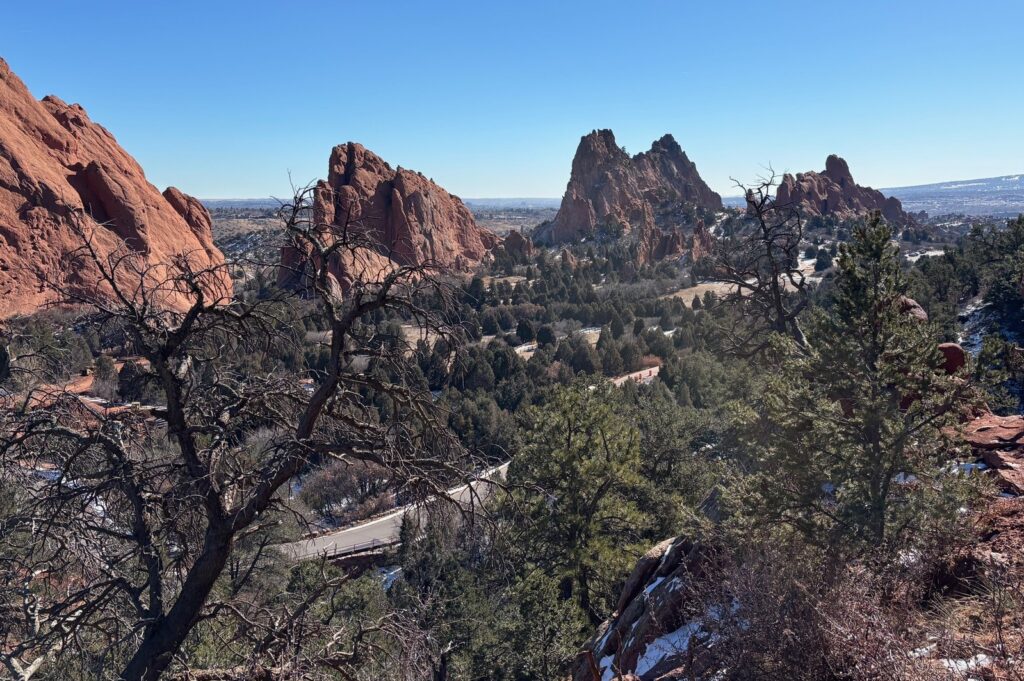
Palmer Trail is a fairly short out and back that can also serve as the connector for making loop with Susan G. Bretag and Chambers trails. Taking the loop, your hike will be at around 3 miles, but it remains relatively flat for them all.
Although if you decide to just stick with the Palmer Trail, it will take you by many interesting rock formations including the famous Kissing Camels.
More hikers are to be expected as you near the Central Garden. The trail can be a way by crossing Juniper Way before heading for the main parking area.
9. Niobrara Loop Trail
- Distance: 1.7 miles
- Difficulty: Easy
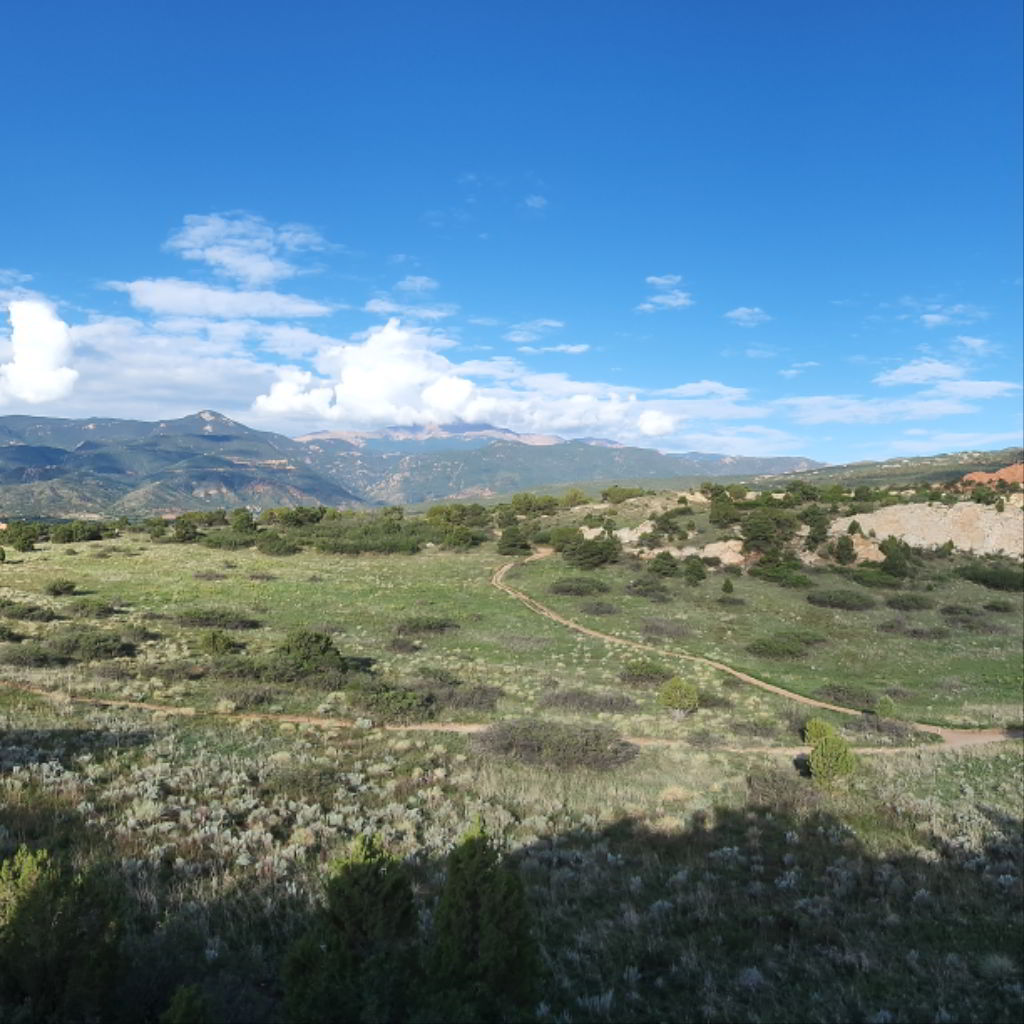
Niobrara Loop Trail providing a nice vista of the Ute Valley and one of those quietest pathways through Garden Of The Gods. Early birds may even meet hinds feeding on this tranquil passage during breakfast time.
Begin your hike from the south garden parking lot for convenience.
10. Cabin Canyon Trail
- Distance: 0.7 miles
- Difficulty: Easy
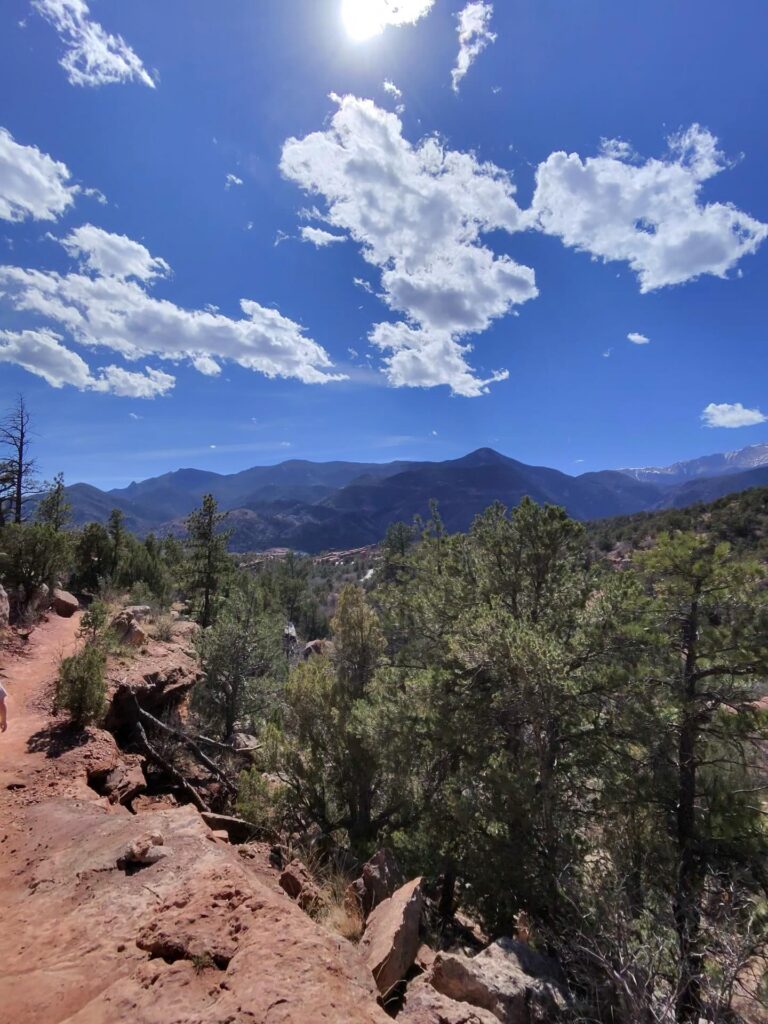
Balanced Rock is a popular stop, but Circle oF Friends and Window Trails also lead into the canyons north., which isolated from Cabin Canyon Trail. Longer Walk- If you want a much longer walk hike to Balanced Rock from here instead of the crowded parking area.
This path also connects with the Siamese Twins footpath, offering lots of opportunities to extend your hike over more park acreage.
More Activities at Garden of the Gods
If hiking isn’t on your agenda or you’ve wrapped up your trek for the day, there’s plenty more to experience at Garden of the Gods.
- Start at Garden of the Gods Visitor & Nature Center: Here you can study up on Theiophytalia kerri, a dinosaur species found in the park back when it was a marshy home to early predators — or discover more about Nuu-ciu (Ute) people who first called this land their sacred ground. The visitor center is also used to be the place you could get a free map which i would encourage anyone to do.
- Check out Balanced Rock: For views of the iconic Balanced Rock, no hiking is required; it lies right next to the road. This would be a good first stop if coming from Manitou Springs. Otherwise, it’s through a three-mile drive southwest of the visitor center. Steamboat Rock is just across the street and it’s a beautiful rock that doesn’t get as crowded.
- Join a guided hike: There are also some more structured experiences such as a guided nature walks for an additional cost in the park. The walks are reservation only, so it is recommended to reserve a tickets online from the park).
- Put your strength to the test with technical climbing: Climbers flock to Garden of the Gods. Permits are required, however they’re free and even available online. These classes extend to guided climbing excursions as well. Chalking up is not allowed in the park even for seasoned climbers who are accustomed to areas like Rocky Mountain National Park.
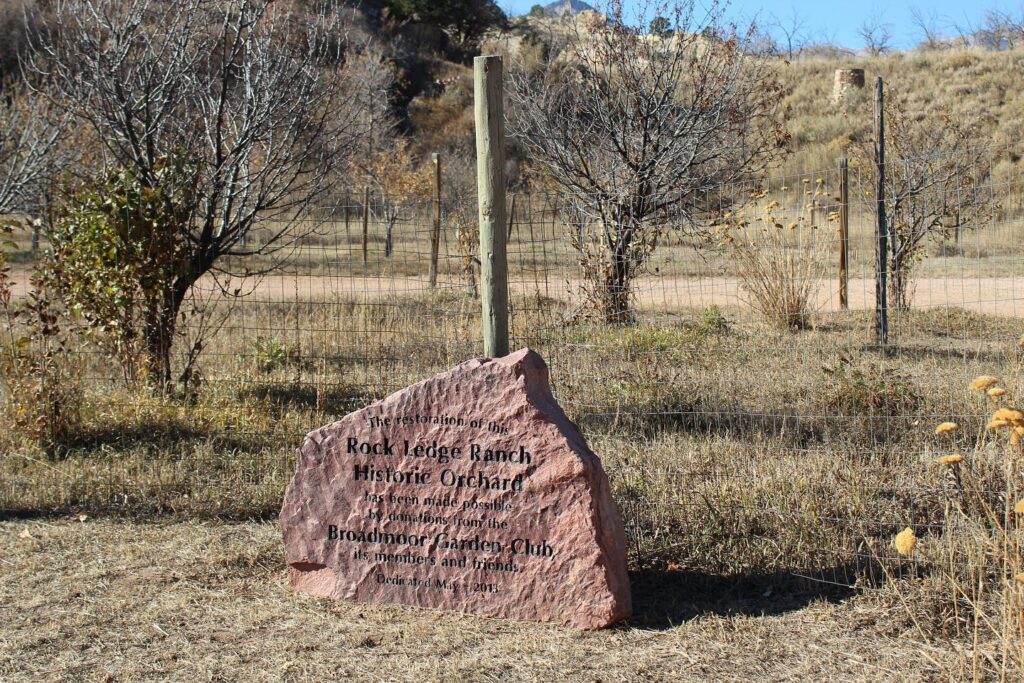
- Best place to visit: Rock Ledge Ranch Historic Site A look into life in the area from 1775-1907 takes place at this living history museum and farm. Visit four houses from different times, an 1860s homestead cabin and wide country estate to see how things changed throughout the centuries.
When is the Best Time to Visit Garden of the Gods?
The ideal time to visit Garden of the Gods is early in the morning. The park’s hours are:
- 5 a.m. to 9 p.m. (November 1 – April 30)
- 5 a.m. to 10 p.m. (May 1 – October 31)
Even if you plan to hike, get there early—though the visitor center may not open until 9 a.m. an arriving earlier can only benefit your trek. On the summer season, it tends to get real hot by 10am. Beginning your day before the heat settles in helps you not only Days become busy rather quickly so hitting up the park early on allows a little breather.
Additional Advice for Exploring Garden of the Gods
When driving to Garden of the Gods from Colorado Springs or Denver, the main parking area is the largest and most convenient for accessing the visitor center.
Here are a few additional pointers to help you make the most of your visit:
If you’re not walking directly from the visitor center, you’ll need to drive to the nearest parking lot for the trail you want to hike. Arriving early is key to finding a spot. We arrived mid-morning, and parking lots were already packed. We ended up parking near the Buckskin Charlie Trail, which added some extra distance to our journey.
Dogs are welcome at Garden of the Gods, but make sure to bring plenty of water for them, especially during hot months. We brought our dog Kimmy along, and despite the crowds, she enjoyed herself. She’s a bit of an introvert, though!
For your own comfort, make sure you bring enough water—there’s not much shade in the park. In fact, I can’t recall any shaded spots at all. Sun protection is also a must, particularly if you’re visiting in the summer.
And for climbers, be aware that despite your experience, chalk is not allowed in the park. So, prepare accordingly if you’re planning to scale any of the formations.
Accommodation Options Near Garden of the Gods
Although Garden of the Gods is located in Colorado Springs, we visited it as a day trip from Fairplay. If your trip is focused solely on the park, Colorado Springs offers a wide variety of accommodation options to suit your needs. From cozy hotels to vacation rentals, you’ll find plenty of places to stay that are just a short drive away from the park.
Read More Hiking Related Articles :