
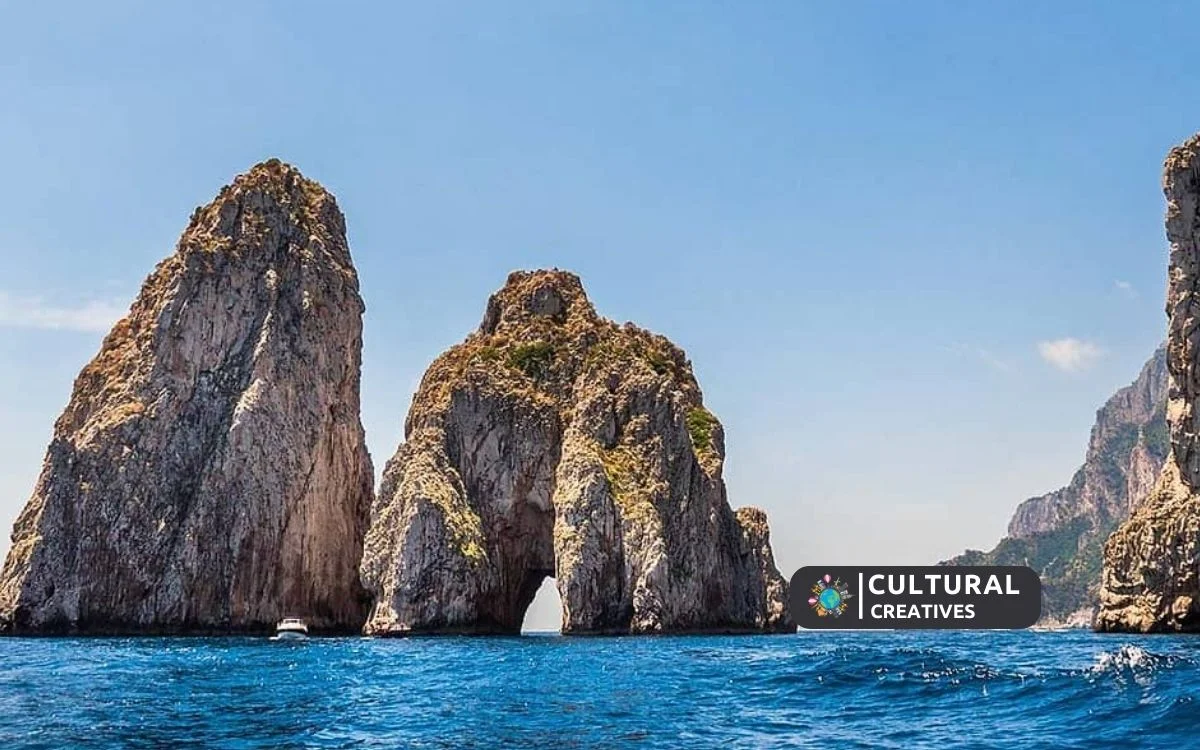
The Island of Capri spans an area of about 10.4 square kilometers (4 square miles). This picturesque island sits in the Tyrrhenian Sea off the Sorrentine Peninsula in Italy.
Capri is a gem of natural beauty and historical significance, drawing visitors from around the globe. It’s celebrated for its rugged landscape, upscale hotels, and endless shopping opportunities from high-end boutiques to local artisanal shops.
Tourists flock to Capri for its extraordinary blue grotto, a sea cave that shimmers with a magical blue light, as well as its charming villas and panoramic views of the Mediterranean. Despite its modest size, Capri’s rich cultural tapestry and luxurious ambience make it a must-visit destination on any Italian itinerary.
The Geography Of Capri
An enchanting speck in the Tyrrhenian Sea, the island of Capri lays off the Italian coast. Dazzling visitors with its rugged landscape and pristine shores, Capri’s geography invites intrigue and admiration. Its quaint size – just 10.4 square kilometers – belies its grandeur.
Island Topography
Capri rises majestically from the blue sea with cliffs that boast dramatic elevation changes. The island’s highest point, Monte Solaro, reaches 589 meters into the sky.
- Monte Solaro – 589 meters
- Anacapri – Second highest region, offering panoramic views
- Capri town – Filled with streets
Coastal Features And Beaches
The coast of Capri is a tapestry of coves and cliffs, with pebbled shores and secluded bays.
| Feature | Description |
|---|---|
| Marina Grande | Main port with a beach |
| Marina Piccola | Sun-soaked haven, facing the Faraglioni rocks |
| Grotta Azzurra | Famous sea cave, glowing with blue light |
| I Faraglioni | Iconic rock formations rising from the sea |
Capri’s Sizing Up
The picturesque island of Capri, a jewel in the Tyrrhenian Sea, is known for its rugged landscape, upscale hotels, and shopping, from designer fashions to limoncello. While its beauty overshadows its size, Capri still has impressive dimensions worth noting. Let’s dive into the specifics and compare Capri to some other famous islands to truly understand its scale.
Area In Square Kilometers
Capri spans a relatively compact area. In square kilometers, this enchanting island covers approximately 10.4 km². Despite its modest size, Capri’s terrain is dense with enchanting beauty, from the Blue Grotto to panoramic views atop Monte Solaro.
Comparisons With Other Islands
To visualize Capri’s scale, consider these comparisons:
- Manhattan, New York: Capri is about one-fifth the size of Manhattan.
- Santorini, Greece: Capri is smaller than Santorini, which is around 76 km².
- Boracay, Philippines: With an area of 10.32 km², Boracay is nearly identical in size to Capri.
Capri may be small, but its grandeur is limitless. This tiny island packs a punch with its stunning beauty and cultural richness. Visitors are sure to find this size comparison helpful when planning their travel itinerary.
The Population Dilemma
The island of Capri, famed for its rugged landscape and picturesque coastlines, faces a unique challenge. Its population numbers wax and wane dramatically with the seasons. A quiet winter resident community transforms into a hub with summer tourists. This ebb and flow bring to light the population dilemma Capri grapples with yearly.
Resident Numbers
Capri’s year-round inhabitants are relatively few. The island spans only about 10 square kilometers, making space a premium commodity. As such, the resident population stays modest, ensuring a tight-knit community feel.
Impact Of Tourism On Population Density
Diving deeper into the population dynamics, we see tourism as a double-edged sword. Visitors increase population density manifold during peak months, putting pressure on local resources and infrastructure.
Capri’s Cultural Landscape
The stunning island of Capri is more than just breathtaking views and crystal-clear waters. Capri’s rich cultural tapestry weaves together centuries of history and architectural wonders, creating a unique and mosaic that attracts visitors from around the globe.
Historical Significance
Capri’s past is as intriguing as its landscapes are beautiful. The island bears the marks of many civilizations – from the ancient Greeks to the Romans, and from the Middle Ages to modern Italy.
- The ruins of Villa Jovis, the Roman emperor Tiberius’ palace,
- The Phoenician Steps, an ancient path connecting Capri to Anacapri.
Architectural Marvels
Capri’s buildings are more than just structures; they are a testament to the ingenuity of past and present peoples.
| Marvel | Era | Significance |
|---|---|---|
| Charterhouse of San Giacomo | 14th Century | A former monastery now holding art exhibitions |
| Villa San Michele | 20th Century | Swedish physician Axel Munthe’s spectacular home and gardens |
Each building on the island narrates a unique story, blending into the landscape and creating a harmonious balance between nature and man-made wonders.
Navigating The Island
Capri, a jewel in the Tyrrhenian Sea, boasts breathtaking beauty compressed into a 10.4 square kilometers island. Exploring its splendor promises adventure and serenity. While small, Capri offers varied choices in navigation, each offering unique perspectives of the island’s charm.
Transportation Modes
Moving across Capri means choosing from several transport modes. Each option caters to different experiences and preferences.
- Funicular: From Marina Grande, the funicular swiftly takes visitors to Capri town.
- Taxis and Buses: Open-top taxis and small buses reach major spots, offering scenic views en route.
- Chairlift: For stunning sights, the chairlift to Mount Solaro is a must-try.
- Boats: Boats let you embrace the coastal beauty and visit the famous Blue Grotto.
- Rental Scooters: For the daring, scooters zip through the roads with exhilarating freedom.
Footpaths And Trails
Walking allows a slow, detailed exploration of Capri. With rich flora and archaeological sites, trails lead to hidden corners of paradise.
| Trail | Starting Point | Destination | Duration |
|---|---|---|---|
| Path of the Gods | Anacapri | Belvedere of Migliera | 2 hours |
| Phoenician Steps | Capri town | Anacapri | 1 hour |
| Fortini Coastal Path | Blue Grotto | Faraglioni | 3 hours |
Strolling these paths, visitors encounter lemon groves, vineyards, and whitewashed villas—all whispering the island’s ancient stories.
Conclusion
Discovering the splendor of Capri’s compact size is part of its charm. With just 10. 4 square kilometers to explore, every visit promises intimate encounters with natural beauty and cultural wealth. On this enchanting isle, the grandeur isn’t measured in square meters, but rather in unforgettable experiences that beckon travelers from far and wide.