
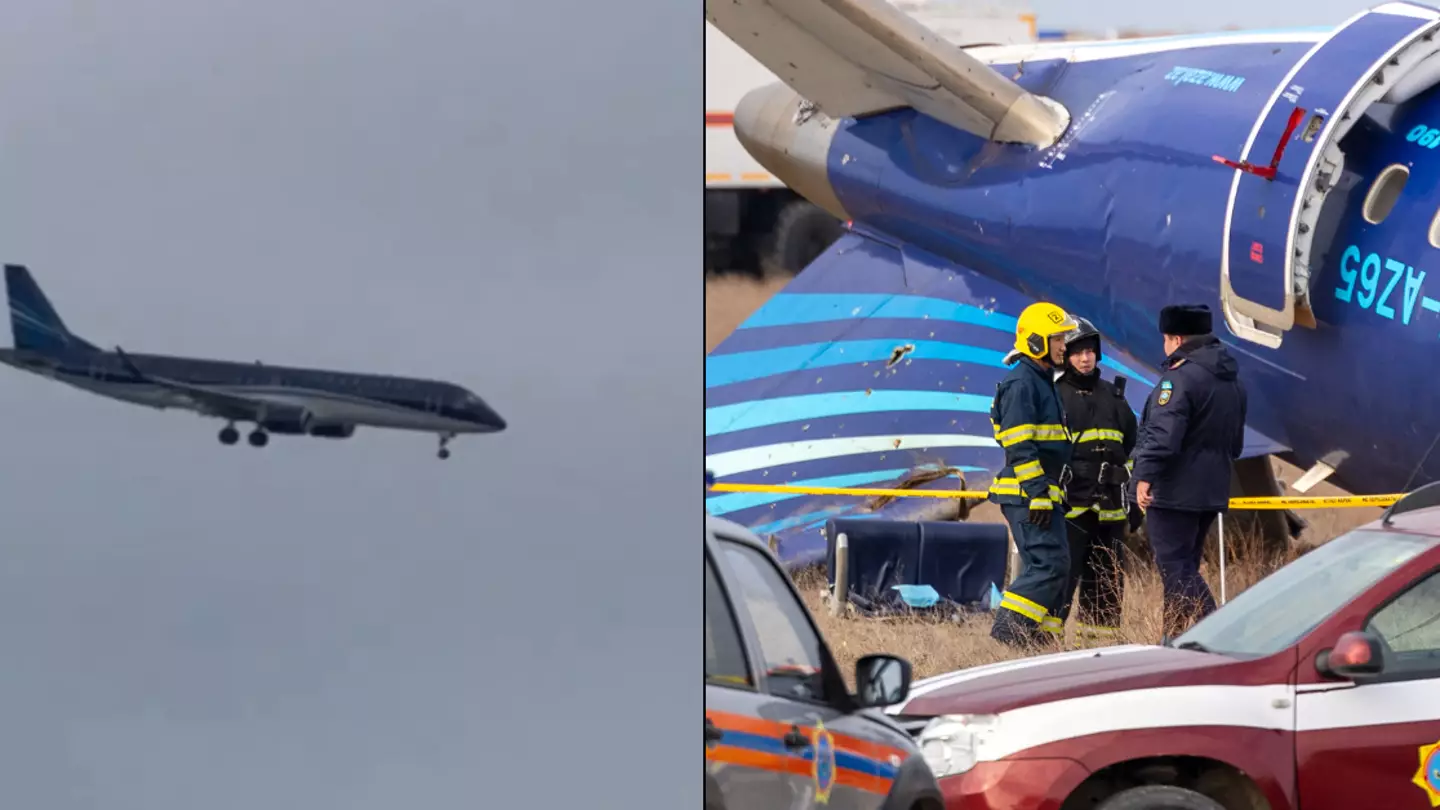
The devastating crash of Azerbaijan Airlines Flight 8243 on December 25, 2024, has sent shockwaves across the globe, leaving 38 people dead and a lingering cloud of unanswered questions. What began as a routine flight from Baku, Azerbaijan, to Grozny, Russia, quickly spiraled into chaos, ending in flames near Aktau, Kazakhstan. This article examines the timeline, key findings, and emerging theories surrounding the incident, aiming to shed light on one of the most tragic aviation disasters in recent history.
The Flight and Its Fateful Journey
Azerbaijan Airlines Flight 8243, an Embraer 190, departed from Heydar Aliyev International Airport in Baku with 67 people onboard, including passengers and crew. The destination was Grozny, the capital of Chechnya, Russia. However, dense fog blanketed Grozny, making a safe landing impossible. The flight was rerouted to Aktau, Kazakhstan, where the tragic series of events would unfold.
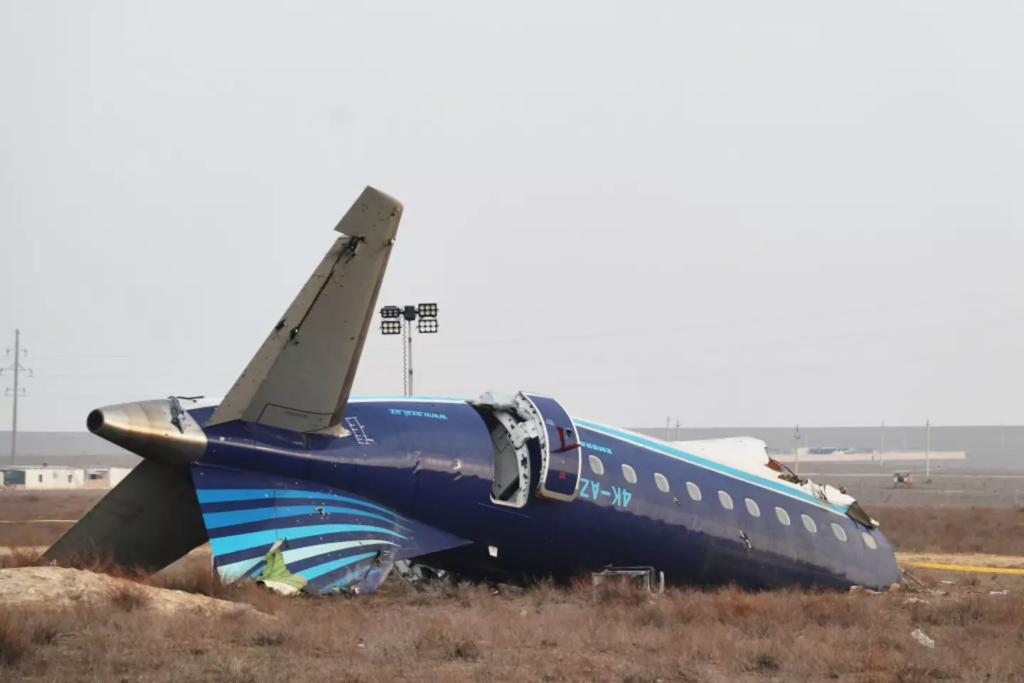
Source: Meiramgul Kussainova/Anadolu via Getty Images
Footage from eyewitnesses and cabin recordings later surfaced online, capturing the horrifying final moments. Passengers were seen clutching oxygen masks, praying, and bracing for impact. The plane attempted an emergency landing in Aktau, but reports suggest it burst into flames moments after touching down.
The Human Toll
Of the 67 onboard, 38 lives were lost in the crash. Among the survivors, 11 people remain in critical condition, and one survivor’s identity is still unconfirmed. Passengers included Azerbaijani, Russian, Kazakhstani, and Kyrgyzstani citizens, adding an international dimension to the tragedy.
Kazakhstan’s Deputy Prime Minister Kanat Bozumbayev described the aftermath as harrowing, with charred remains and scattered wreckage complicating the identification process. The nation declared a day of mourning in solidarity with Azerbaijan.
Preliminary Investigations and Theories
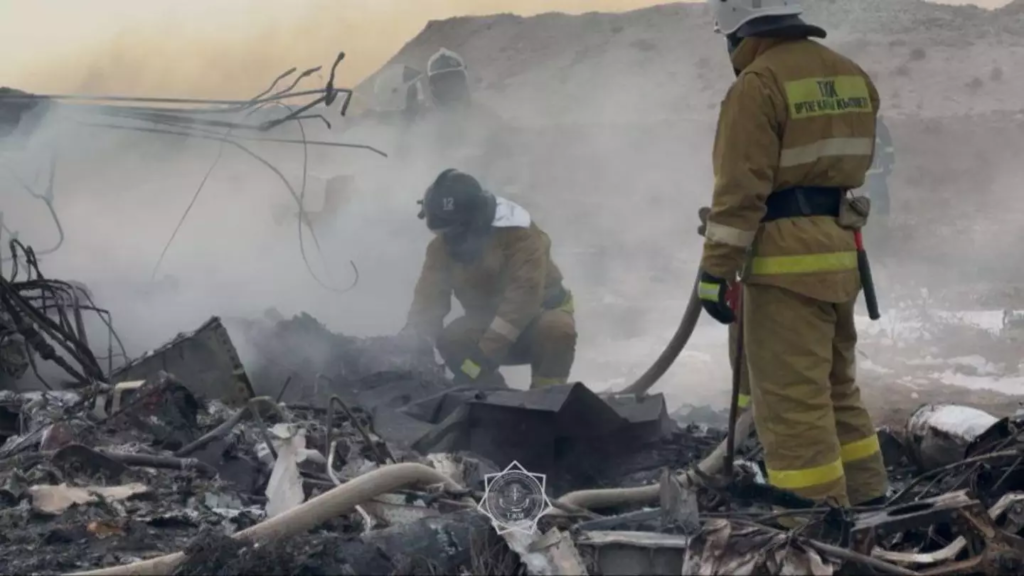
Source: Emergency Situations of Kazakhstan/Anadolu via Getty Images
The investigation into the crash is ongoing, but early findings point towards external physical and technical interference. Azerbaijan Airlines has hinted at the possibility of an external attack, raising eyebrows globally.
One leading theory suggests the plane may have been mistakenly targeted by Russian air defense systems. Heightened geopolitical tensions in the region have created a volatile airspace, where miscommunications or misidentifications can have catastrophic consequences. Puncture holes on the fuselage, consistent with missile shrapnel, further fuel this theory.
Additionally, US military sources have reportedly backed the claim that Russian defense systems could be responsible for the crash. However, no official confirmation has been provided.
Political Ramifications and Apologies
The aftermath of the crash quickly turned political. Russian President Vladimir Putin issued an apology to Azerbaijani President Ilham Aliyev, referring to the event as a “tragic incident.” However, he stopped short of admitting responsibility for the suspected missile strike.
Aliyev, in turn, ordered a full-scale investigation into the incident, emphasizing transparency and accountability. A commission was established to investigate every aspect of the crash, from technical failures to geopolitical implications.
Meanwhile, Azerbaijan Airlines has suspended flights to multiple Russian airports, citing safety concerns and ongoing risks in the region.
Eyewitness Accounts and Survivor Testimonies
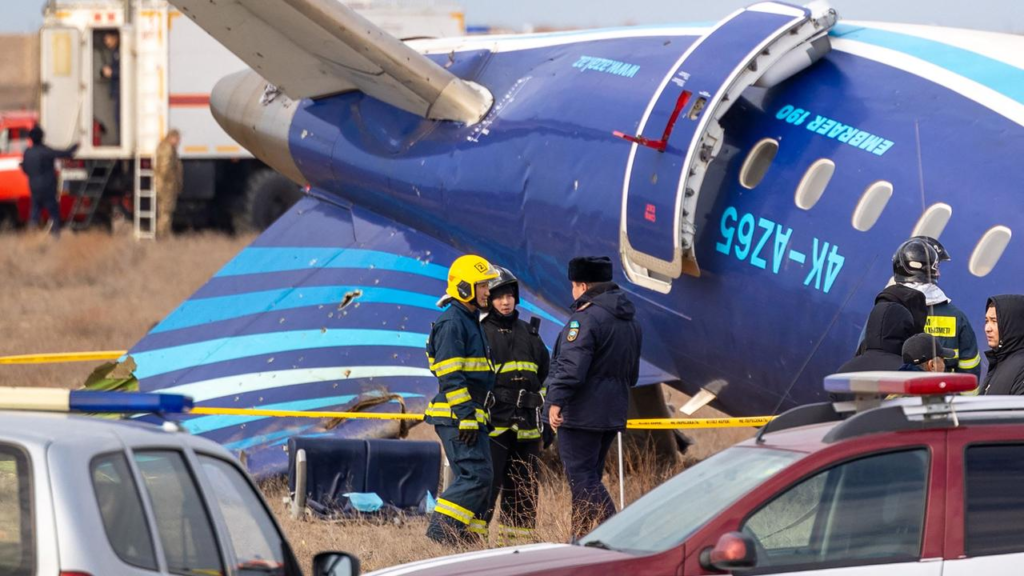
Source: The Australian
Survivors of the crash have described a chaotic scene onboard. Passengers reported loud explosions mid-flight, followed by a sudden loss of control. Oxygen masks deployed, and many braced for impact as the plane descended rapidly.
One survivor recounted the moment of realization that they had survived: “The plane was in flames. I could hear people screaming, but somehow, I was still alive.”
Eyewitnesses on the ground also described seeing a fiery trail as the plane approached Aktau, hinting at possible structural damage or an onboard fire before landing.
Safety and Aviation Protocols in Question
The crash raises several pressing questions about aviation safety in politically tense regions. Airlines operating in conflict-adjacent zones often face heightened risks, including potential misidentification by defense systems.
In response to the incident, aviation experts have called for enhanced communication protocols between civil aviation authorities and military defense systems. Additionally, airlines are being urged to reconsider flight paths over geopolitically unstable areas.
Media and Public Reaction
The crash and the chilling footage shared online have sparked outrage, fear, and a call for accountability. Social media has been flooded with tributes to the victims, as well as heated debates about the safety of air travel in regions prone to geopolitical conflicts.
The international community has also voiced its concern. Aviation authorities worldwide are monitoring the investigation closely, with expectations for actionable recommendations to prevent similar tragedies in the future.
The Bigger Picture: Aviation in Conflict Zones
This tragedy is not an isolated incident. Previous air disasters, such as Malaysia Airlines Flight MH17 and Ukraine International Airlines Flight PS752, also occurred in conflict-heavy regions, with devastating consequences.
These incidents highlight the ongoing risks of civilian aircraft operating in militarized airspaces. Despite international regulations, lapses in communication and protocol enforcement continue to endanger passenger safety.
Moving Forward: What Comes Next?
The investigation into Azerbaijan Airlines Flight 8243 will likely be long and complex. Experts will examine everything from technical data to geopolitical circumstances to determine the root cause.
President Aliyev’s commission is expected to deliver an interim report in the coming weeks. Meanwhile, families of the victims are demanding transparency, justice, and accountability from all parties involved.
Conclusion
The Azerbaijan Airlines Flight 8243 tragedy is a chilling reminder of the fragility of human life in the face of technological and political failures. While investigators continue their work, the victims’ families are left to grieve, and survivors are tasked with rebuilding their lives.
In an era where aviation remains one of the safest modes of transport, incidents like this serve as stark reminders of the need for vigilance, communication, and cooperation among nations. The hope now lies in uncovering the truth and implementing measures to ensure that such a tragedy never happens again.