Many travelers first see well-known Nebraska landmarks through heavily edited images online. These photos can shape expectations that feel quite different once you arrive in person.
Images shared on social platforms often rely on filters, selective angles, and ideal lighting. Because of that, real-world scenes may appear more ordinary or grounded compared to what is presented online. This gap between edited visuals and reality is more common than many visitors expect.
Several popular sites across Nebraska tend to reflect this contrast. They still carry historical value, local interest, or natural appeal, but the experience on the ground can feel less dramatic than the polished versions seen online before the trip.
This difference does not reduce their importance. It simply highlights how presentation can shift perception, and why keeping flexible expectations can lead to a more balanced travel experience.
1. The Archway in Kearney: Online Views vs Real Experience
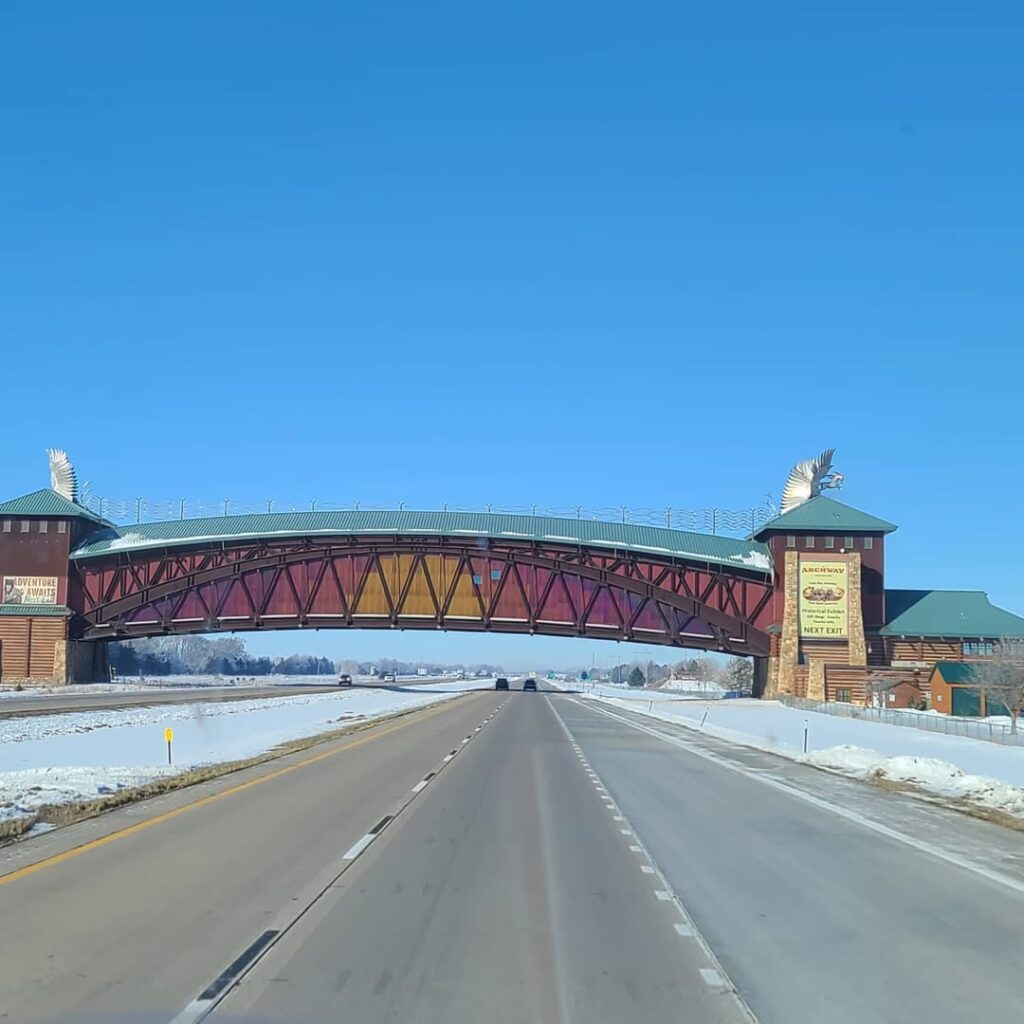
In many online photos, the Archway in Kearney appears as a sweeping structure that dramatically spans across Interstate 80. Low camera angles and wide framing often make it seem far larger and more striking than what drivers actually see while passing through the area. These edited perspectives can set expectations that feel slightly exaggerated compared to the real roadside view.
Once you arrive in person, the structure still stands out, but its exterior impression is more modest. Instead of the grand visual impact suggested online, it can resemble a themed roadside monument that blends into the surrounding highway environment. The difference is mostly about scale perception and presentation rather than the structure itself.
Inside the Archway, the experience shifts noticeably. The exhibits on pioneer travel, westward migration, and the Oregon Trail provide a strong historical narrative that holds attention far better than the exterior might suggest. The interior spaces are engaging, informative, and well-presented, offering a deeper understanding of Nebraska’s role in westward expansion.
Overall, the visit works best when expectations are balanced. The outside view may feel less dramatic than expected, but the historical exhibits inside create a meaningful stop for travelers along I-80.
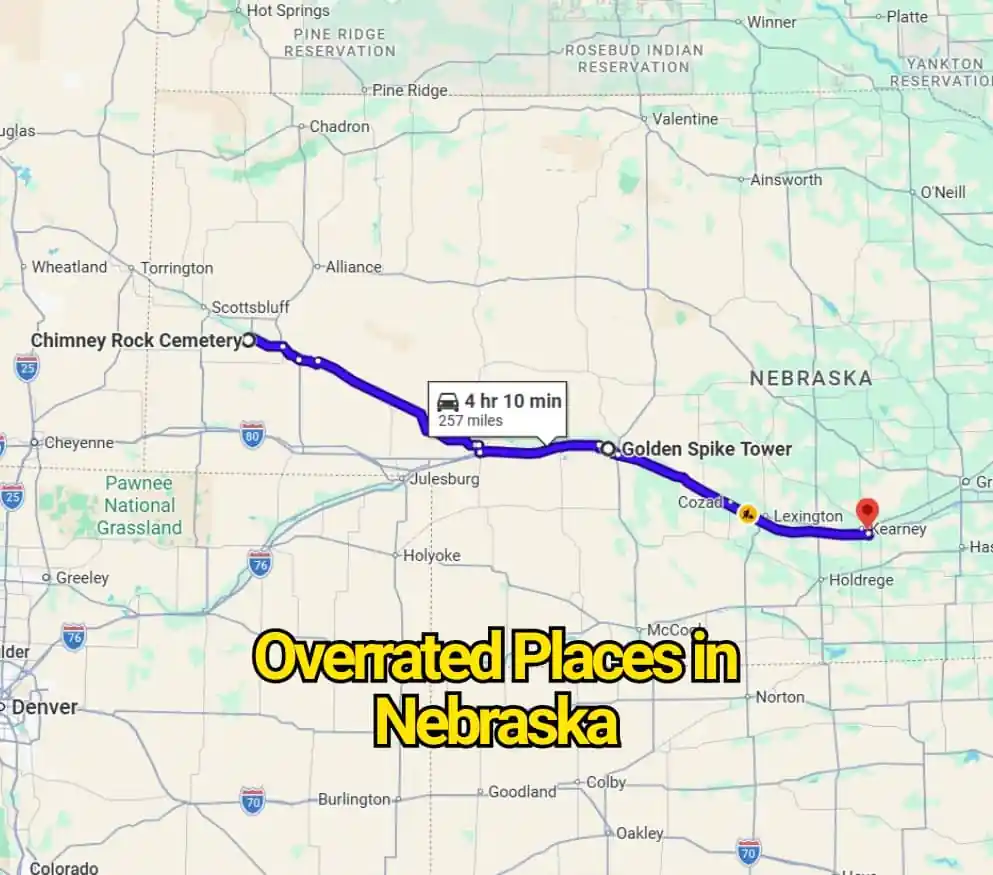
2. Chimney Rock Near Bayard: Photo Impressions vs Reality
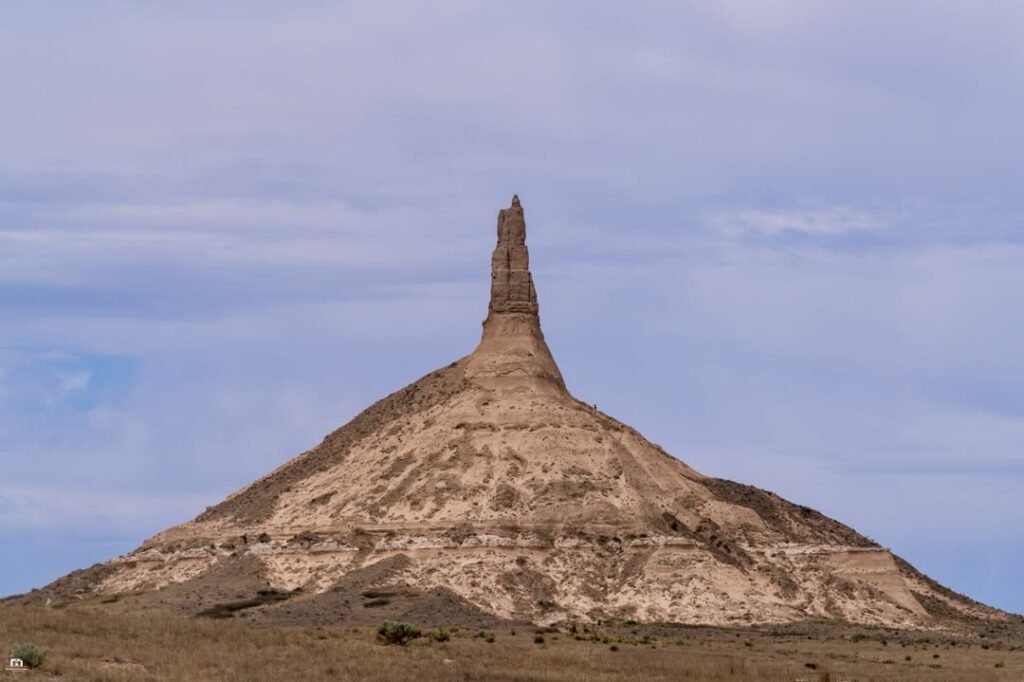
Chimney Rock, located within its national historic site near Bayard, is one of those landmarks that often feels larger in photographs than in person. Online images frequently use zoomed perspectives and wide prairie backdrops, making the formation appear far more dramatic against the open landscape. These visual choices can shape expectations before you ever arrive.
Standing on site, the rock still rises clearly above the surrounding plains, reaching about 350 feet in height. However, its actual scale can feel less imposing than expected, especially for visitors coming from the towering landscapes of nearby mountain regions. The contrast between prairie flatness and the formation itself is what gives it prominence rather than sheer size.
Beyond the visual impression, the historic value of Chimney Rock adds depth to the visit. It served as a major reference point for travelers on the Oregon and California Trails, as well as migration routes used during westward expansion. The interpretive displays at the site help connect that history to the landscape in a clear and meaningful way.
A short walking path allows visitors to view the formation from different angles, offering a better sense of its place in the terrain. While the scale may feel different than expected from online photos, the historical significance and setting still make it a worthwhile stop.
3. Golden Spike Tower in North Platte: Expectations vs Ground Reality
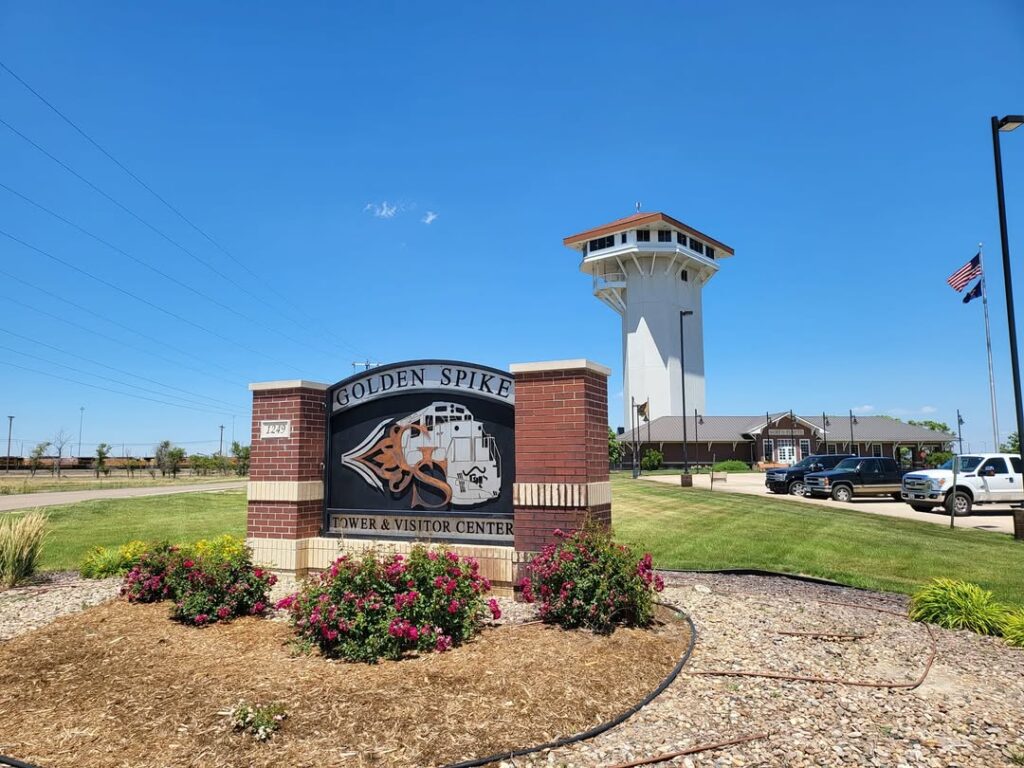
The Golden Spike Tower in North Platte often appears in online photos as a striking rail landmark rising above the plains. Wide-angle shots and selective framing tend to highlight the tower itself while downplaying its surroundings, which can lead visitors to imagine a more dramatic or iconic structure than what is immediately seen on arrival.
A common point of confusion comes from the name. The historic golden spike associated with the completion of the transcontinental railroad was actually driven in Promontory, Utah, not Nebraska. The tower’s connection is symbolic rather than literal, as it overlooks one of the largest rail yards in the world. That massive rail yard is a key part of the site, yet it is frequently missing or minimized in many online images, leaving only the tower in focus.
Inside the visitor center, the experience becomes more grounded and educational. There are rail exhibits, a gift shop, and an observation deck spread across multiple levels, including both indoor and outdoor viewing areas. From the top, long rows of trains and tracks stretch across the landscape, offering a clear look at the scale of rail operations. It appeals most to those with a strong interest in rail systems and logistics.
For general travelers, the stop may feel more specialized than expected, especially if the visit is based solely on photos. Still, it provides a rare perspective on a working rail yard at an enormous scale. Have you come across any places in Nebraska that felt different from their online images, or similar spots that didn’t match expectations once you arrived?
More Related Articles :