The rail corridor running from Chicago toward the Pacific Northwest moves through a constantly shifting mix of urban skylines, wide natural landscapes, lakes, and small communities. It offers a continuous window into changing geography, where industrial edges gradually give way to open country, river valleys, and forested terrain.
One of the strongest advantages of long-distance rail travel is the ability to move freely during the journey. Passengers can stand, walk through different cars, and spend time watching the scenery without worrying about driving duties, fuel stops, or arranging overnight breaks along the way. The experience feels steady and unhurried compared to road or air travel.
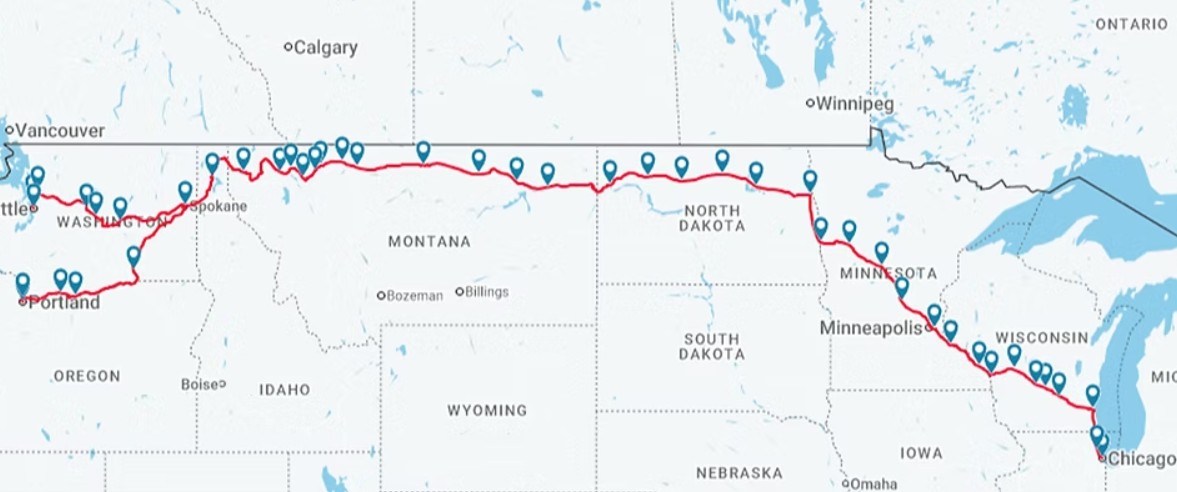
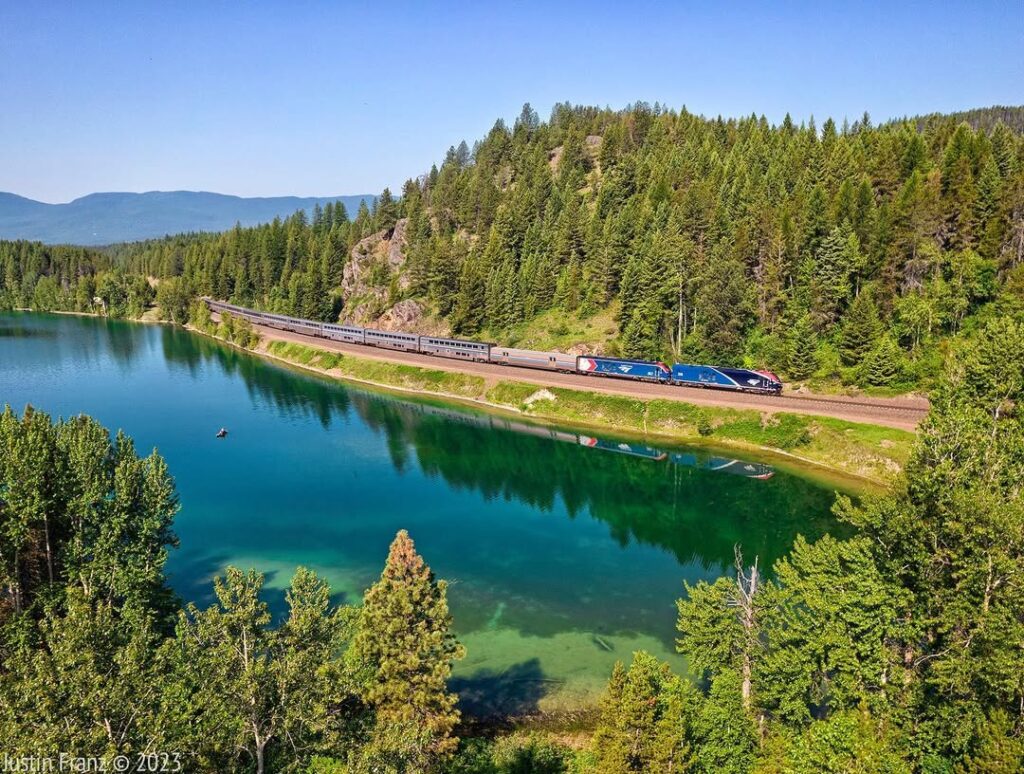
Amtrak’s Empire Builder covers more than 2,200 miles and typically takes around 46 hours from end to end. Along this stretch, the train passes major metropolitan areas, quiet rural towns, broad plains, and winding waterways. A standout portion of the journey runs near Glacier National Park, a segment widely regarded as one of the most visually striking parts of the route.
A key feature of this service is its split in Spokane, Washington. From there, travelers can continue west to Portland, Oregon, or head northwest toward Seattle, Washington. This branching option adds flexibility to the trip and allows passengers to choose their final destination based on preference. Onboard amenities, seating options, and travel tips further shape the experience, making this route a compelling way to move across the northern United States.
Highlights Along the Empire Builder Route
The Empire Builder can be experienced in either direction, though this overview follows the westbound journey. It departs Chicago and gradually moves away from the dense city skyline, entering Wisconsin and Minnesota where early stretches run close to the Mississippi River near La Crosse. This riverside segment is especially engaging from the observation car, where wide views open up along the water.
As the train continues through Minnesota, the scenery transitions into a mix of lakes, wooded areas, and small towns, with key stops including the St. Paul–Minneapolis area before heading into quieter northern regions. Beyond this point, the surroundings become more open, and across North Dakota the route expands into vast farmland and broad skies that dominate the horizon.
A widely praised portion of the trip begins in Montana. This is where the journey becomes especially striking, particularly near Glacier National Park. Stops such as East Glacier Park, Essex, and West Glacier offer views of rugged mountains, flowing rivers, and dense forest areas that define this section of the route.
After passing through a short segment of northern Idaho, the train arrives in Spokane, where it divides into two directions. One branch continues west into Oregon, following the Columbia River toward Portland Union Station, while the other moves north through Washington State, passing scenic towns like Leavenworth before reaching King Street Station in Seattle.
Both endings offer a relaxed travel experience with strong visual variety, allowing passengers to move across the northern United States without the stress of driving, while still experiencing a wide range of landscapes along the way.
Sleeping and Seating Options on the Empire Builder
Coach seating is the most budget-friendly way to travel on the Empire Builder, yet it still provides a comfortable setup for long-distance travel. Seats are arranged across upper and lower levels, with wide recliners and no middle seats. Each place includes a tray table, reading light, power outlet, overhead storage, and free Wi-Fi, allowing passengers to read, work, or simply watch the passing landscape.
A standout shared space on board is the observation car, which offers a more open viewing experience compared to standard seating areas. With glass panels and outward-facing seats, it is built for uninterrupted sightseeing along the route. Views are especially striking near Glacier National Park. Seating here is open to all passengers, but demand is high, so arriving early helps secure a better spot.
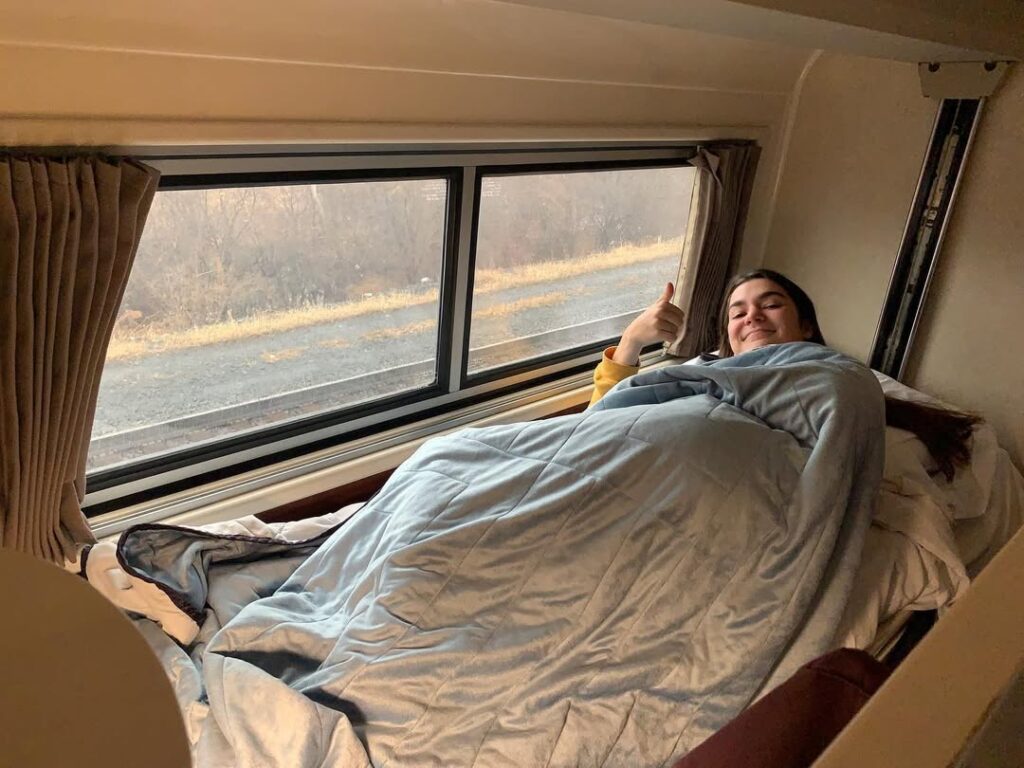
For those wanting a more private experience, first-class sleeper accommodations provide upgraded comfort. Each option includes bedding, towels, meals, lounge access, priority boarding, and onboard service from a dedicated attendant. The differences mainly come down to space, privacy level, and sleeping layout, allowing travelers to select what best fits their needs.
The Superliner Roomette is a compact choice ideal for solo travelers or couples. It features two seats that convert into upper and lower beds at night. While restroom and shower facilities are shared, the roomette still offers a quiet, enclosed space for rest without requiring a large footprint.
For added space, the Superliner Bedroom provides nearly double the area of a roomette. Inside, there is a sofa and chair that convert into sleeping beds, along with a private sink, toilet, and shower. This option suits travelers who prefer extra comfort and more personal space during the journey.
At the higher end, the Superliner Bedroom Suite delivers one of the largest accommodations available on board. It includes multiple seating areas, dual sofas, and flexible sleeping arrangements, along with two private sinks, restrooms, and showers. This setup works well for those who want maximum space or are traveling together.
Families often choose the Superliner Family Room, designed for two adults and two children. It offers seating that converts into two upper and two lower beds, with shared bathroom access nearby. The layout provides enough room for group travel while keeping everyone in one shared space.
The Accessible Bedroom is also available for passengers requiring additional mobility support or extra space. It includes convertible seating, a private sink and restroom, and convenient access to a nearby shower, all arranged to support easier movement and comfort throughout the trip.
Dining Onboard the Empire Builder
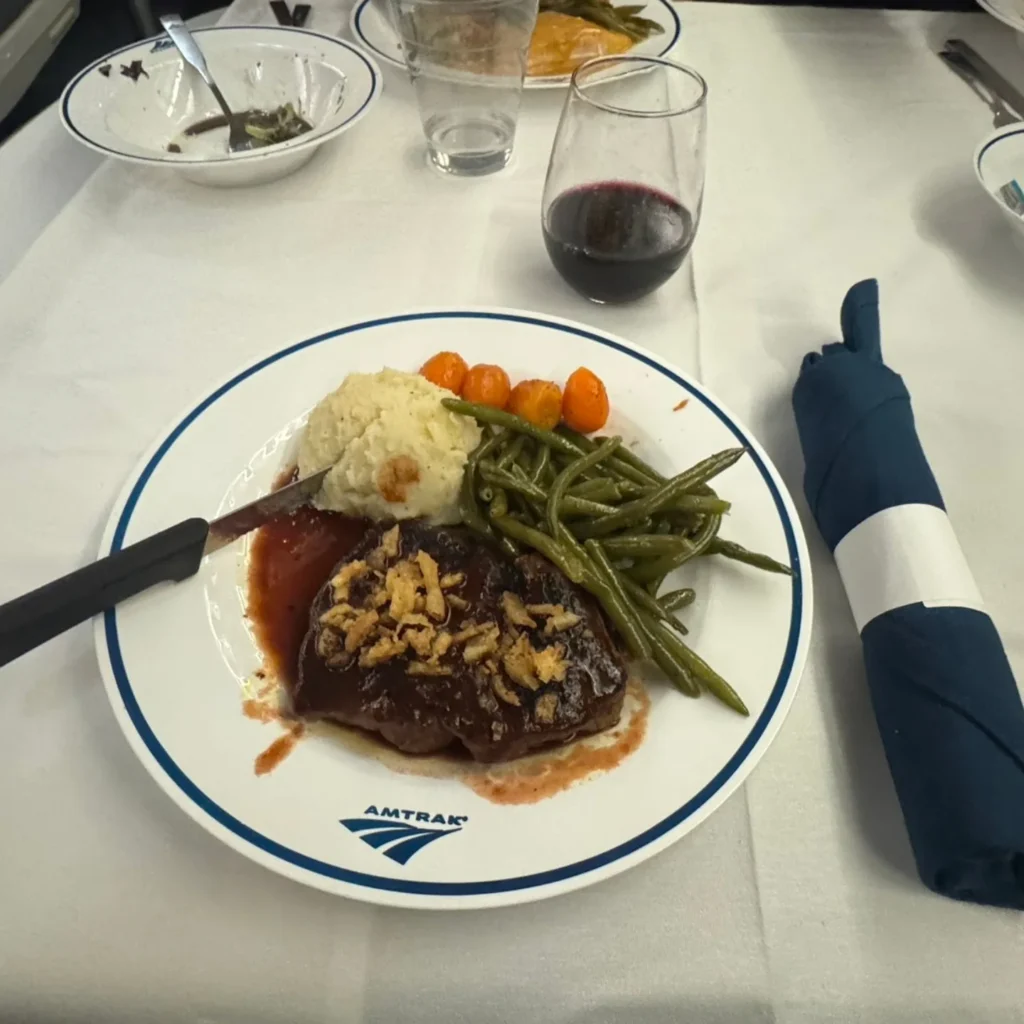
Travelers on the Empire Builder can visit an onboard café that offers a rotating selection of breakfast, lunch, and dinner options. Alongside warm meals and light snacks, the café also serves beer, wine, spirits, and non-alcoholic beverages. This setup makes it easy for passengers to grab food or drinks at almost any point during the trip without fixed meal times.
A separate dining car is available for first-class guests, where meals are included in the ticket. Morning service typically features simple choices like scrambled eggs and continental breakfast items. Midday menus shift to more filling options such as sandwiches, salads, and chili. In the evening, dinner is presented as a multi-course experience, including one complimentary alcoholic drink. Younger travelers are also accommodated with a dedicated kids’ menu featuring familiar meals like hot dogs and mac and cheese, making the dining experience more accessible for families.
Onboard Perks of the Empire Builder
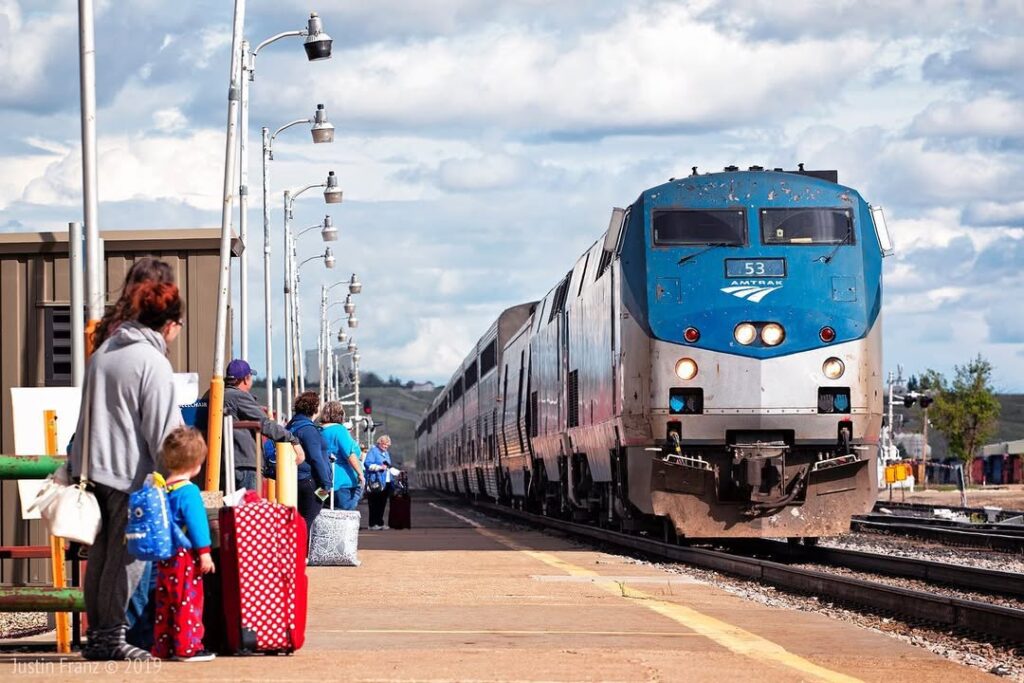
A journey on the Empire Builder turns travel time into part of the overall experience. With no road traffic or driving duties, passengers can freely walk through the train, spend time in the observation car, and watch scenery shift gradually from one region to another as the miles pass.
Choosing first-class service adds a higher level of comfort, especially with private sleeping spaces that make overnight sections of the trip feel more relaxed and less tiring. These accommodations offer a quieter environment for rest compared to standard seating.
The train also includes several useful services that support a smoother journey for all passengers. Two checked bags are allowed at no additional cost, onboard Wi-Fi helps with basic connectivity, and the café provides meals, snacks, and drinks throughout the trip, making essentials easy to access during long-distance travel.
You may also like :
- The Longest Train Journeys in the USA: A 65-Hour Cross-Country Rail Experience That Feels Like a Rolling Adventure
- Epic Oregon Train Routes That Will Make You Fall in Love With the State’s Scenic Beauty
- A $2,195 Montana Train Journey Across the West That Will Change Your Perspective on America’s Landscapes