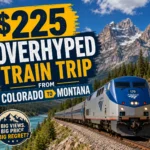
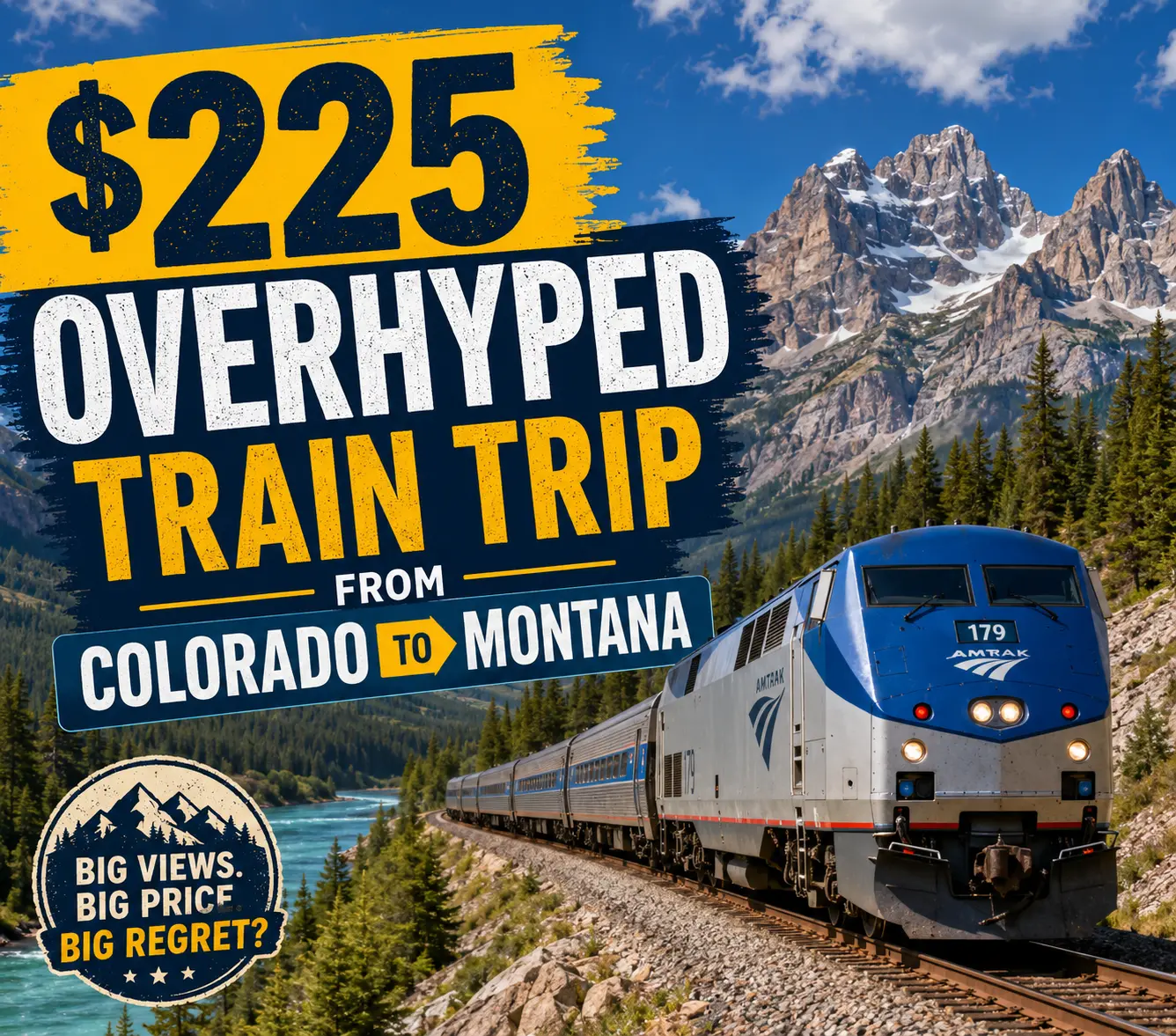
A $225 train ticket from Colorado to Montana sounds like one of the great American travel bargains. You board in Denver, settle beside a wide window, cross the Rocky Mountains, and arrive in Montana surrounded by open plains and snow-covered peaks. At least, that is how the trip sounds when it appears in a headline or social media post.
Then you look at the actual route.
There is no direct Amtrak train running north from Colorado into Montana. Instead of traveling along the most obvious path, passengers may need to ride east from Denver to Chicago and then board another train heading west toward Montana. A destination that sits roughly north of Colorado can require a sweeping journey across Nebraska, Iowa, Illinois, Wisconsin, Minnesota, North Dakota, and much of Montana.
The scenery can be memorable, and some passengers will love the slow pace. However, the Colorado to Montana train trip is not the simple mountain escape the low ticket price suggests. It is a long-distance endurance test built around an awkward rail connection, unpredictable pricing, overnight coach travel, and a surprising amount of time spent moving away from the destination.
Why the $225 Fare Gets So Much Attention
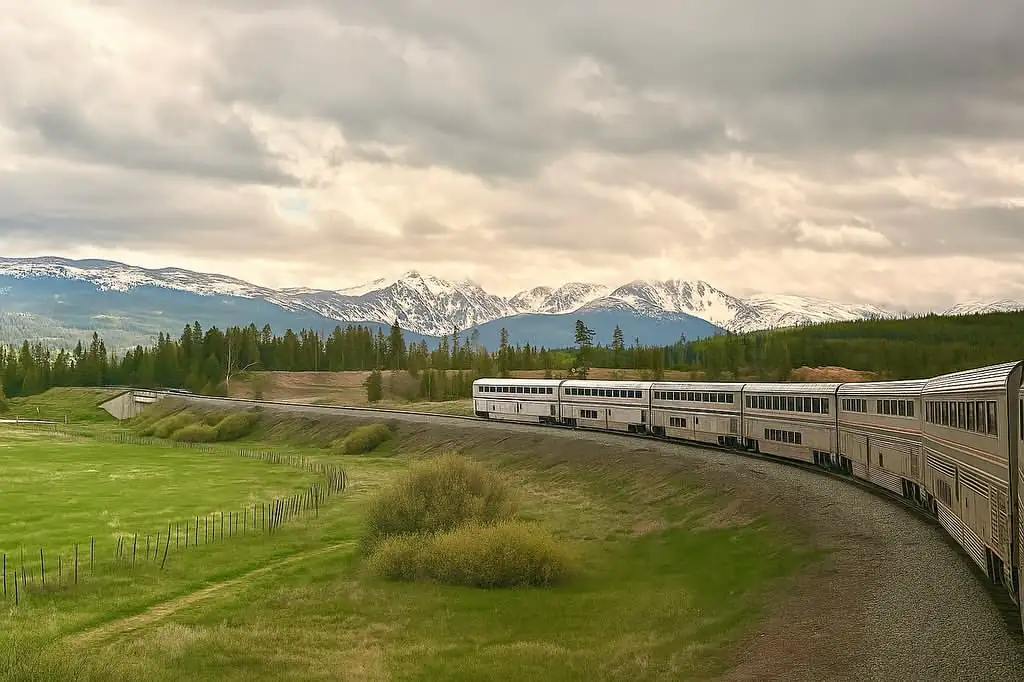
The price is the strongest part of the story. Flying from Denver to a Montana destination can become expensive during summer, ski season, holidays, and major events. A $225 coach ticket appears to offer transportation, sightseeing, and accommodation for several nights in one purchase.
That comparison makes the train look almost impossible to resist. Travelers picture a comfortable seat, changing scenery, generous baggage allowances, and no need to drive for hours across remote highways. The ticket seems to provide a complete American rail adventure for less than the price of some short flights.
The problem is that $225 is better understood as a possible low fare than a standard cost. Amtrak uses variable pricing, so the amount can change considerably according to the departure date, destination, demand, and how early the reservation is made. Whitefish, West Glacier, Shelby, Havre, Glasgow, and Wolf Point can all produce different prices even though they are in the same state.
A traveler who finds the advertised fare may feel lucky. Someone searching for popular summer dates could see a much higher total. The headline remains attractive because it focuses on the lowest possible number rather than the price most passengers are likely to find.
The Colorado to Montana Train Route Makes Almost No Geographic Sense
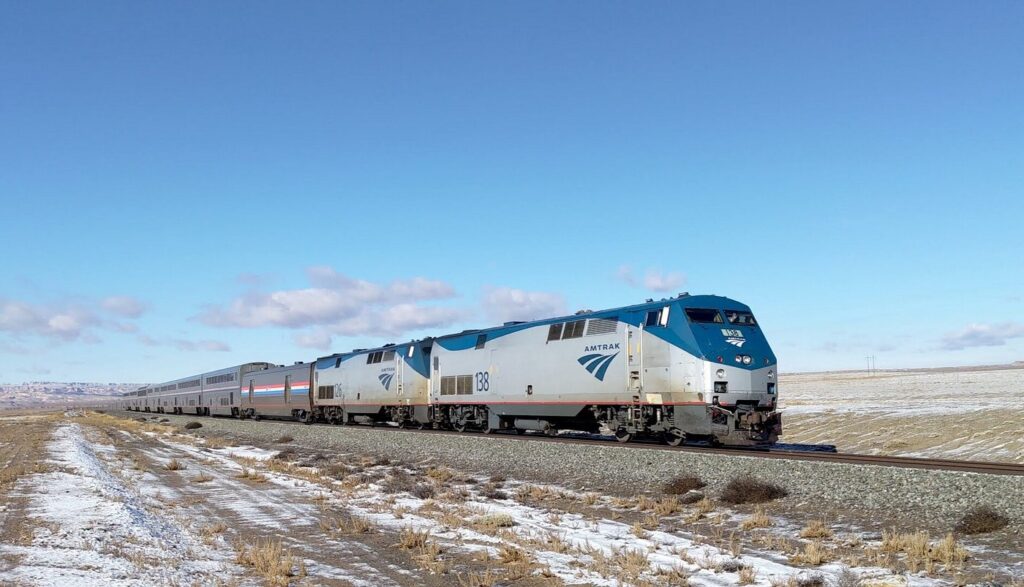
The strangest part of traveling from Denver to Montana by train is the direction. Montana sits north of Colorado, but Amtrak does not operate a passenger route connecting the two states through Wyoming. Denver belongs to the California Zephyr route, while Montana belongs to the Empire Builder route.
To connect those services, passengers travel from Denver to Chicago on the California Zephyr. After reaching Chicago Union Station, they transfer to the westbound Empire Builder, which runs through Wisconsin, Minnesota, North Dakota, and Montana before continuing toward Spokane, Seattle, or Portland.
On a map, the journey looks less like a direct trip and more like a giant sideways loop. The train carries passengers hundreds of miles east, only to bring them back across the northern United States. A drive from Denver to parts of Montana may take roughly a day, while the rail itinerary can consume several days.
This does not make the train automatically bad. Long-distance rail travel has never been only about efficiency. Yet travelers should understand that they are booking a broad tour of the Midwest and northern plains, not a straightforward ride between two neighboring western states.
The First Leg Trades Mountain Drama for Plains and Farmland
Mountain Drama
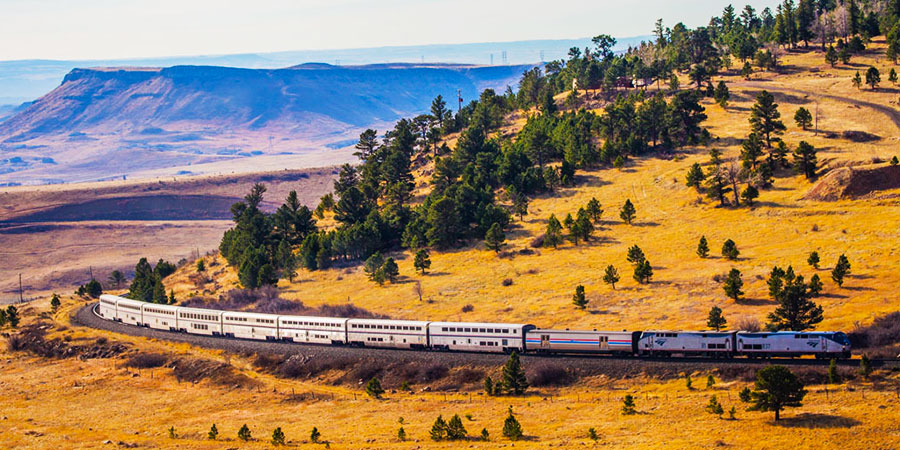
Denver Union Station gives the journey an impressive beginning. The historic building, restaurants, hotel, and busy platforms create the feeling that a grand rail trip is about to begin. Once the California Zephyr leaves Denver for Chicago, however, it heads east rather than west into Colorado’s most famous mountain scenery.
That detail matters. The section of the California Zephyr praised most often by rail travelers lies west of Denver. That route climbs through the Front Range, passes through the Moffat Tunnel, follows the Colorado River, and continues toward Glenwood Springs, Utah, Nevada, and California.
Passengers traveling from Denver toward Chicago miss that celebrated section. Instead, the eastbound journey crosses northeastern Colorado, Nebraska, Iowa, and Illinois. There can still be beautiful sunsets, broad skies, agricultural landscapes, and quiet towns. The scenery has a calm rhythm, but it may disappoint travelers expecting one dramatic mountain view after another.
The first night also changes the mood. Watching the plains through a large window can feel peaceful for several hours. Sleeping in the same coach seat is different. The reality of the journey begins to replace the romantic image as passengers adjust pillows, search for a comfortable position, and listen to movement throughout the car.
Chicago Becomes the Unexpected Center of the Trip
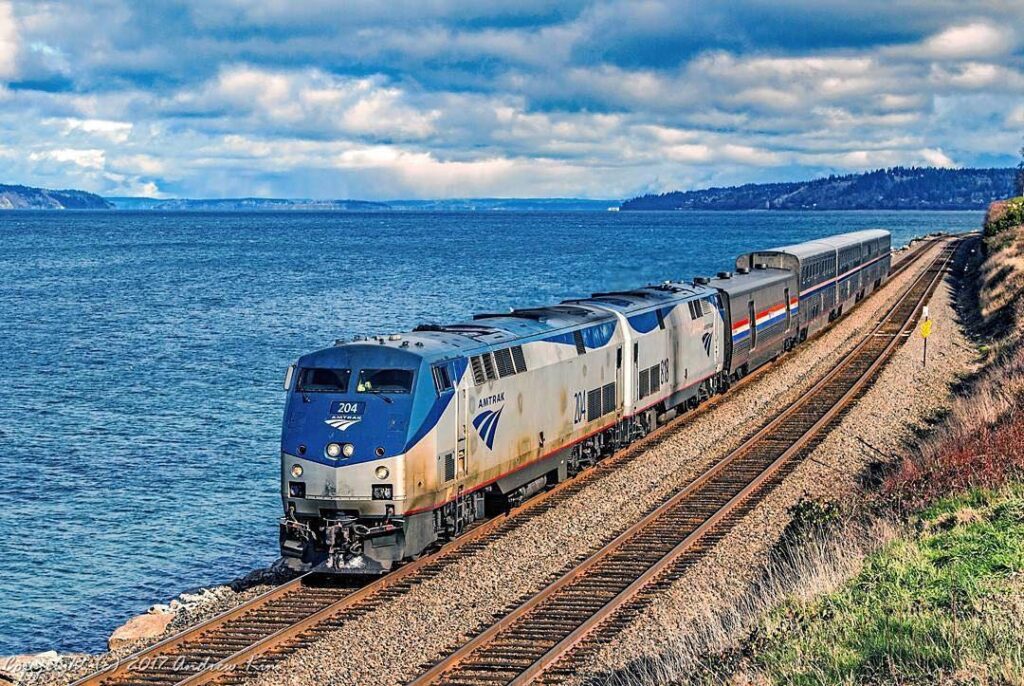
Chicago is not a small transfer point hidden between Colorado and Montana. It is the place where the entire itinerary changes direction. Passengers leave the California Zephyr, enter one of the busiest rail stations in the country, and wait for the Empire Builder.
A well-timed connection may provide enough time to eat, stretch, and reset before the next overnight train. A longer transfer can make the journey feel divided into two separate trips. Delays on the California Zephyr may also create uncertainty, particularly when the scheduled connection is close.
Booking the journey on one reservation can offer more protection than purchasing unrelated tickets, but it cannot remove the disruption of a missed train. Since the Empire Builder normally operates once a day, a failed connection may lead to a substantial delay.
This is the part rarely shown in dreamy videos. The polished version jumps from a Denver departure to Montana scenery. The real version includes station announcements, luggage handling, crowded waiting areas, charging devices, buying food, and watching the departure board.
The Empire Builder Finally Delivers the Montana Experience
Once the Empire Builder leaves Chicago, the trip begins to feel more closely connected to the destination. The train passes Milwaukee, moves through Wisconsin, reaches the Twin Cities, and continues across Minnesota and North Dakota.
The landscape gradually becomes wider and less crowded. Cities give way to farms, open grasslands, distant grain elevators, and small communities built around the railroad. This section does not offer constant visual drama, but it creates a strong sense of scale. The northern plains appear enormous from a train window.
Eastern Montana stations such as Wolf Point and Glasgow arrive sooner than the mountain destinations farther west. Havre and Shelby sit deeper into the state, while East Glacier Park, West Glacier, and Whitefish bring passengers closer to the scenery most people associate with a Montana vacation.
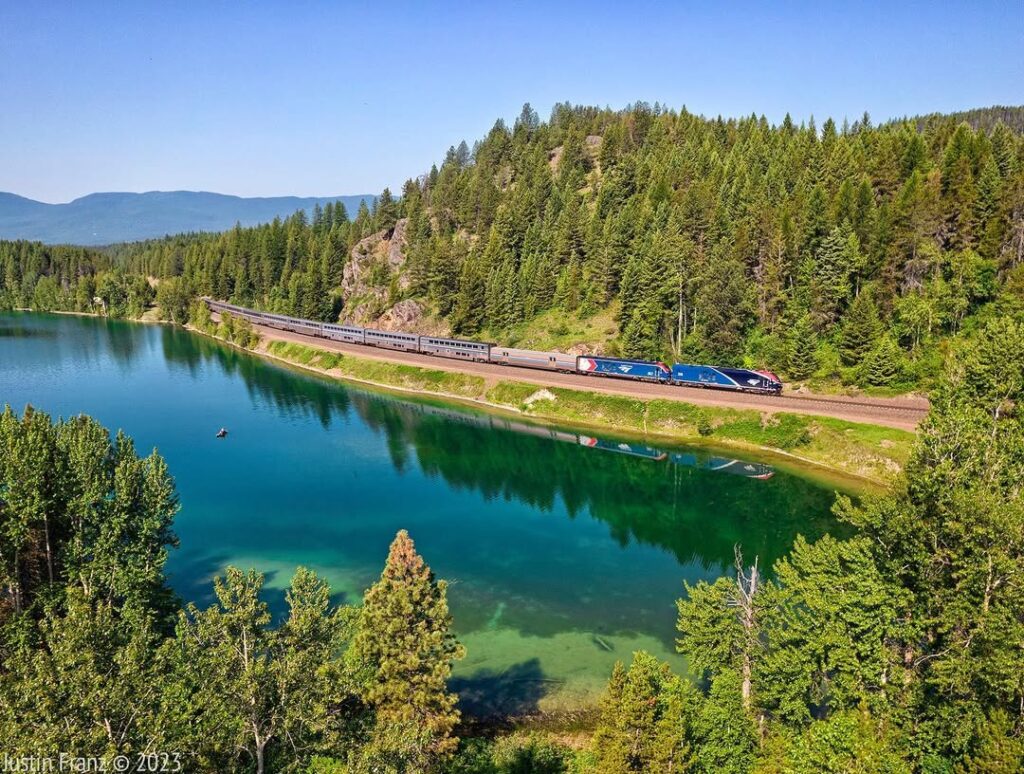
The western section is the reward. Depending on daylight, season, weather, and arrival time, passengers may see mountain ridges, forests, rivers, and areas near Glacier National Park. These views can be impressive enough to explain why travelers continue recommending the Empire Builder.
Yet even here, timing controls the experience. Some of the best scenery may pass before sunrise, after sunset, or during cloudy weather. A scenic railway does not guarantee that every passenger will see every famous view.
Coach Class Is Comfortable Until It Becomes Your Bedroom
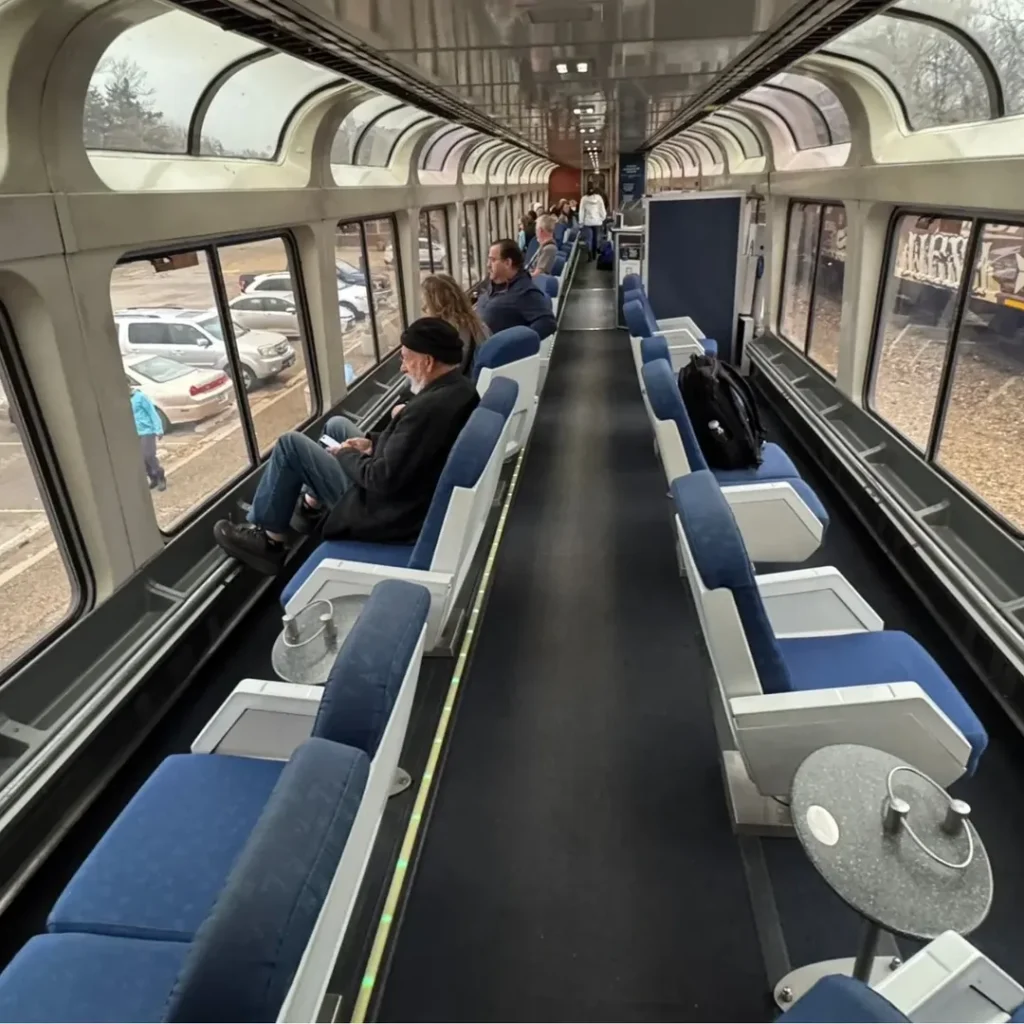
Amtrak coach seats are generally wider and roomier than standard airline seats. Passengers can recline, use a leg rest, walk through the train, visit the café, and spend time in a lounge car when one is available. For a daytime journey, the space can feel generous.
The challenge appears after the first night. A coach seat remains a seat, even when it reclines. Lights, announcements, station stops, movement, and nearby conversations can make deep sleep difficult. By the second overnight stretch, the low fare may begin to feel less impressive.
A private room changes the trip considerably. Roomettes provide beds, privacy, meal service on qualifying long-distance trains, and access to shared showers. Bedrooms offer more space and a private restroom. Those improvements make a multi-day journey easier, but they can also raise the price far beyond the amount advertised in the title.
This creates the central contradiction. The Colorado to Montana train trip is promoted as an affordable adventure, but the comfort level many travelers expect often requires a much larger budget. The cheapest version and the comfortable version are not the same product.
Food Can Quietly Increase the Total Cost
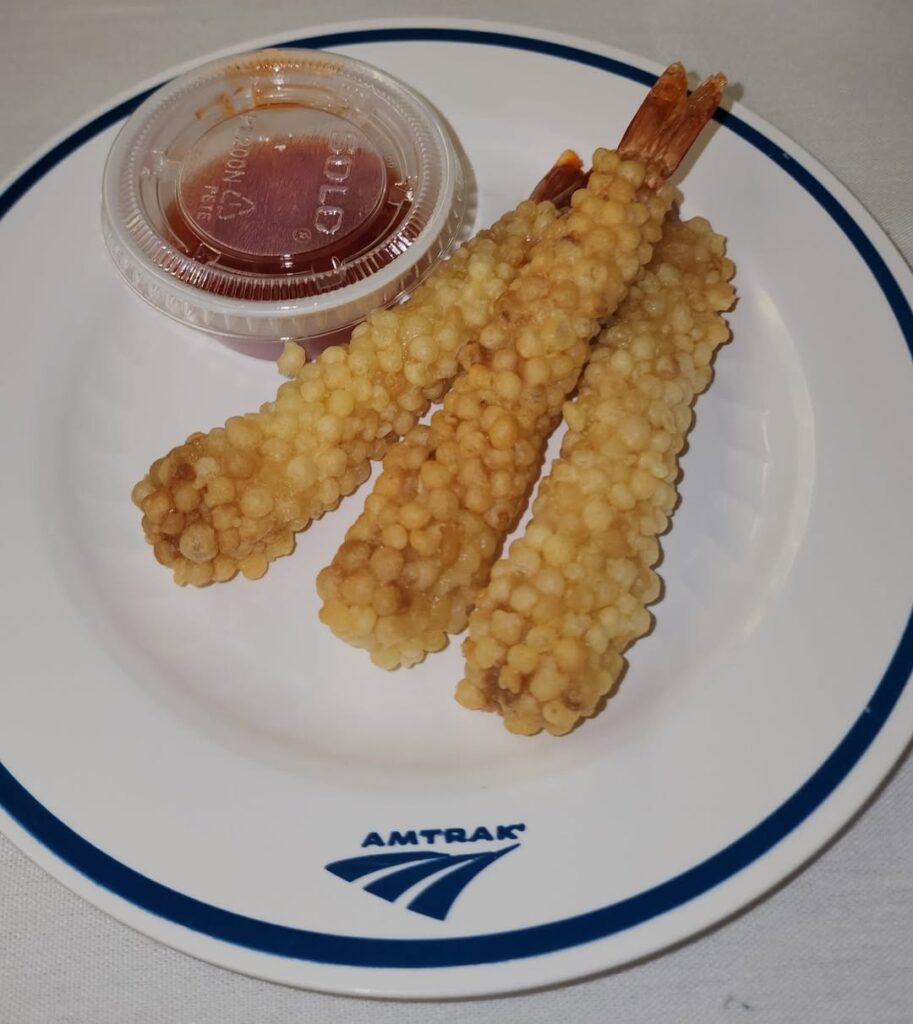
A $225 ticket does not represent the full cost of the journey. Coach passengers need to account for food during multiple days of travel. Café purchases can add up quickly, particularly when every meal, drink, and snack is bought onboard.
Bringing food from home reduces expenses, but a long journey requires more than a few granola bars. Passengers need items that travel well, do not require complicated preparation, and can remain safe without refrigeration. Water, fruit, sandwiches, crackers, and other simple foods can help, although carrying enough for several days takes planning.
Chicago can also become a spending point. A long layover may lead to restaurant meals, coffee, luggage storage, or transportation into the city. A missed connection could add a hotel stay and more meals, depending on how the reservation is handled.
The train may still be affordable, but the ticket should never be confused with the complete trip budget. Transportation is only one part of the expense.
Delays Feel Different on a Journey This Long
A delay of one hour on a short train trip is irritating. The same delay on a multi-day itinerary may seem minor until it threatens the Chicago connection or pushes Montana scenery into darkness.
Long-distance Amtrak trains share much of their track with freight operations. Weather, mechanical issues, traffic, and track conditions can affect arrival times. The farther a train travels, the more opportunities there are for small delays to accumulate.
Travelers with hotel reservations, rental cars, park tours, or fixed check-in times should leave room in the schedule. Arriving in Montana and immediately joining a tightly timed activity can create unnecessary stress.
The journey works better when the first day after arrival remains flexible. That may require paying for an additional hotel night or shortening another part of the vacation, which again weakens the idea that the train is automatically the cheapest option.
The Trip Is Not Entirely Overrated
Calling the journey overhyped does not mean it has no value. It can be an excellent choice for someone who enjoys trains, has several free days, and wants the ride itself to be a major part of the vacation.
The route offers a broad view of the country that flying cannot provide. Passengers watch urban areas fade into farmland, cross the Mississippi region, travel through the northern plains, and finally reach Montana. The slow transition gives each region more presence.
The train can also encourage conversations. Dining cars, observation areas, and long hours create opportunities to meet retirees, families, international visitors, students, and other rail fans. Those interactions often become more memorable than the scenery.
For the right traveler, spending several days aboard two famous Amtrak routes is not wasted time. It is the experience. The disappointment begins when someone books it as cheap transportation and expects speed, privacy, perfect sleep, and uninterrupted mountain views.
Who Will Probably Regret Booking It
Travelers with a short vacation may struggle to justify losing several days to transportation. A five-day Montana getaway can become mostly a train trip, leaving little time for Glacier National Park, Whitefish, or other destinations.
People who sleep poorly in public spaces may also find coach travel exhausting. The novelty of reclining seats and lounge windows fades quickly when fatigue builds. Families with young children may face another challenge, especially when delays extend the trip.
Anyone expecting a direct scenic ride north through Wyoming will be surprised by the Chicago detour. The route is far less intuitive than the title suggests, and that surprise can turn curiosity into frustration.
The experience becomes especially difficult for travelers who book the cheapest fare without researching meals, overnight comfort, connection times, arrival hours, and transportation from the Montana station. A low ticket price cannot compensate for an itinerary that does not fit the traveler.
How to Make the Journey More Enjoyable
The best way to approach this trip is to stop treating it as transportation between Colorado and Montana. It makes more sense as a two-route rail vacation with Montana at the end.
A planned Chicago stop can remove much of the connection anxiety. Spending one or two nights in the city turns the detour into a destination rather than an inconvenience. Travelers can rest in a real bed, enjoy a proper meal, and board the Empire Builder refreshed.
Choosing the Montana station carefully also changes the experience. Wolf Point, Glasgow, Havre, Shelby, East Glacier Park, West Glacier, and Whitefish serve very different travel plans. A station near Glacier National Park may sound ideal, but seasonal transportation, rental-car availability, lodging prices, and arrival times should be checked before booking.
Packing for sleep is equally important. A neck pillow, light blanket, eye mask, earplugs, comfortable layers, charging cables, water, and enough food can make coach travel more manageable. Downloaded entertainment helps during areas with weak mobile service.
Most importantly, travelers should search several dates and compare the complete cost with flights, buses, driving, hotels, meals, and rental cars. The lowest ticket is not always the cheapest vacation.
Is the $225 Colorado to Montana Train Trip Worth It?
The answer depends on what the passenger believes they are buying.
As a fast and practical way to travel from Colorado to Montana, the train is difficult to recommend. The indirect route, Chicago transfer, overnight coach travel, uncertain fare, possible delays, and added food expenses make it less convenient than the headline implies.
As a slow American rail adventure, it has far more appeal. The journey combines two famous Amtrak services and crosses a remarkable portion of the country. It offers time to read, think, watch landscapes change, and experience distances that air travel makes easy to forget.
The $225 price is what earns the click, but it is not the whole story. This trip asks travelers to pay with time, flexibility, sleep, and patience as well as money.
That trade may feel worthwhile to dedicated train travelers. For everyone else, the Colorado to Montana train trip could become an exhausting detour disguised as a bargain.
You may also like :