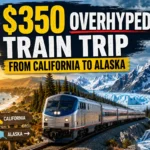
A $350 train trip from California to Alaska sounds almost too good to ignore. The headline brings to mind one continuous rail journey beside the Pacific Ocean, through evergreen forests, across the Canadian wilderness, and directly into Alaska. You might imagine boarding in Los Angeles or the San Francisco Bay Area, settling into a window seat, and stepping off several days later beneath Alaska’s snow-covered mountains.
That is the version people want to believe. It is also where the story becomes misleading.
There is no direct passenger train from California to Alaska. The journey combines Amtrak, a ferry or flight, several transfers, and a completely separate Alaska Railroad ticket. The famous $350 price may cover part of the transportation under favorable conditions, but it rarely represents the full cost of traveling all the way from California into Alaska by rail and sea.
That does not make the journey worthless. In fact, the real trip can be remarkable. Travelers simply need to understand what they are buying before an inexpensive train fare turns into a vacation costing several times more than expected.
Why the $350 California-to-Alaska Train Trip Sounds So Tempting
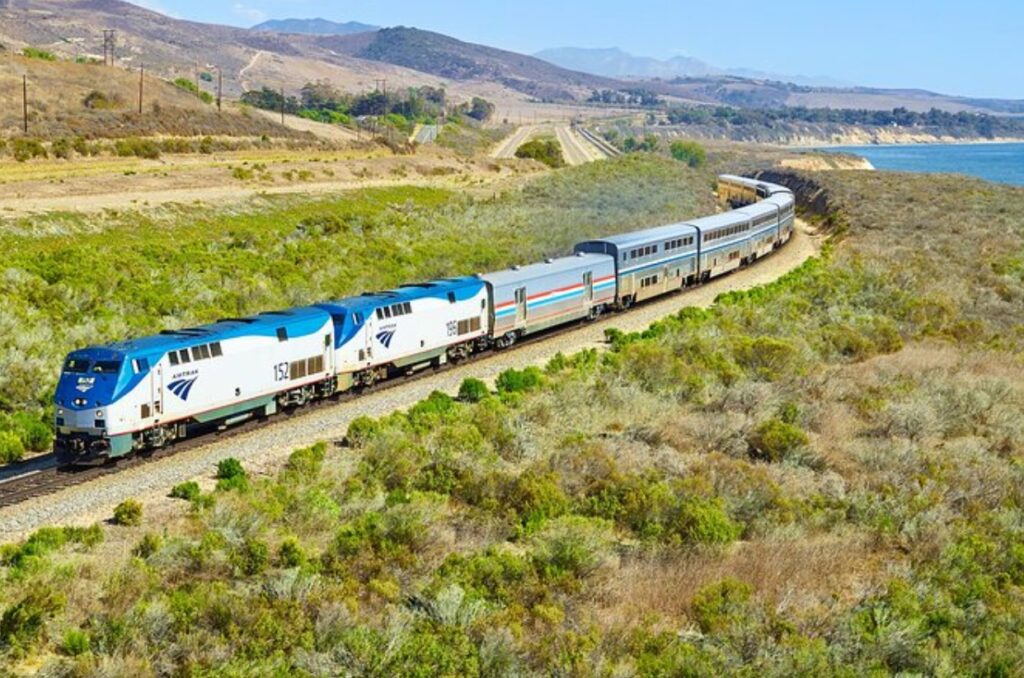
The idea spreads easily because every part of it sounds believable. Amtrak operates a celebrated route along the West Coast. Alaska has its own famous passenger railroad. Both trains pass through scenery that looks made for travel magazines. Put the two systems together in a headline, attach a low fare, and it appears that America has a hidden rail route reaching all the way to Alaska.
The $350 figure also feels possible because Amtrak coach fares can be reasonable when booked early. Promotional sales sometimes reduce long-distance tickets even further. A traveler starting in Northern California may find a lower fare than someone boarding in Los Angeles, especially with flexible dates.
The problem is that the inexpensive Amtrak ticket only reaches Washington. Alaska is still hundreds of miles away, with Canada and a large gap in the passenger rail network sitting between the two train systems. The cheap ticket gets the journey started, but it does not finish it.
The California Journey Begins on the Coast Starlight
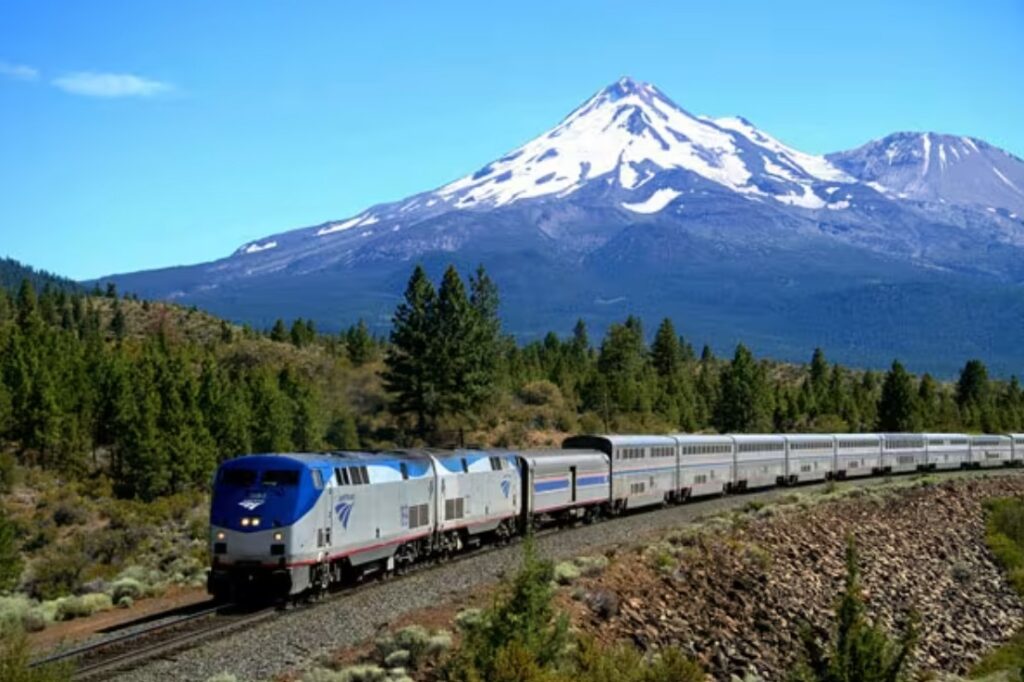
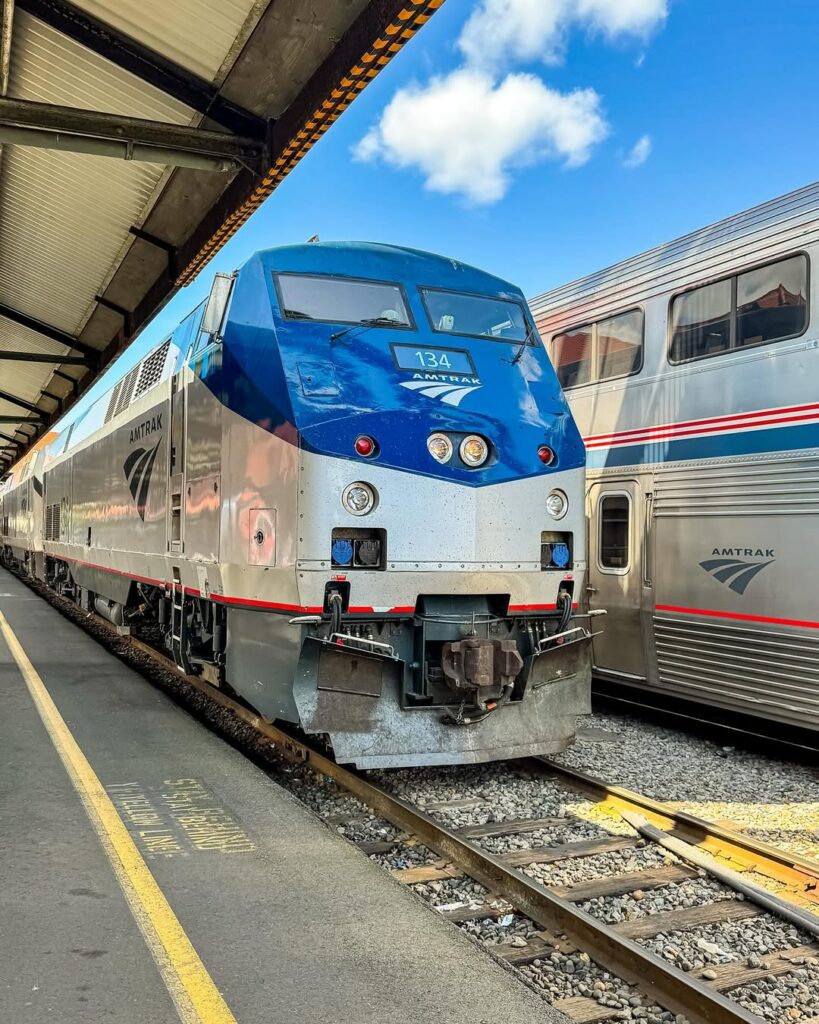
The first major section is genuinely one of America’s most memorable long-distance train rides. Amtrak’s Coast Starlight travels between Los Angeles and Seattle, passing through Santa Barbara, the San Francisco Bay Area, Sacramento, Portland, and several smaller communities along the way.
The complete journey takes about 35 hours. During that time, the landscape changes repeatedly. Southern California brings dry hills and glimpses of the Pacific. Central California offers farmland, coastal cliffs, and wide valleys. Northern California introduces forests and views near Mount Shasta before the route continues into Oregon and Washington.
This is the section that gives the headline most of its appeal. Passengers can sit in coach, move around the train, visit the café, and spend time in the Sightseer Lounge when it is available. Large windows turn the passing landscape into the main entertainment.
Yet even this celebrated route has limitations. Some coastal sections may pass during darkness depending on the season and direction of travel. Delays can change the timing further. A traveler who books the journey expecting nonstop ocean views may spend long stretches watching farmland, industrial areas, stations, and darkened countryside.
The Train Tracks Do Not Continue From Seattle to Alaska
Seattle is where the simple version of the trip ends. The Coast Starlight reaches King Street Station, but there is no passenger train waiting to carry travelers through Canada and into Alaska.
The Alaska Railroad operates an isolated system within Alaska. Its passenger routes connect places such as Seward, Whittier, Anchorage, Talkeetna, Denali National Park, and Fairbanks. Those tracks do not connect with Amtrak or Canada’s passenger rail network.
This missing connection is the most important detail left out of many viral descriptions. Calling the journey a California-to-Alaska train trip makes it sound like one railway adventure. In reality, it is a multi-stage trip involving separate companies, separate reservations, separate baggage rules, and potentially long gaps between departures.
A traveler who reaches Seattle without arranging the next stage could face expensive last-minute transportation or several nights of unplanned accommodation.
How Travelers Actually Continue From Washington to Alaska
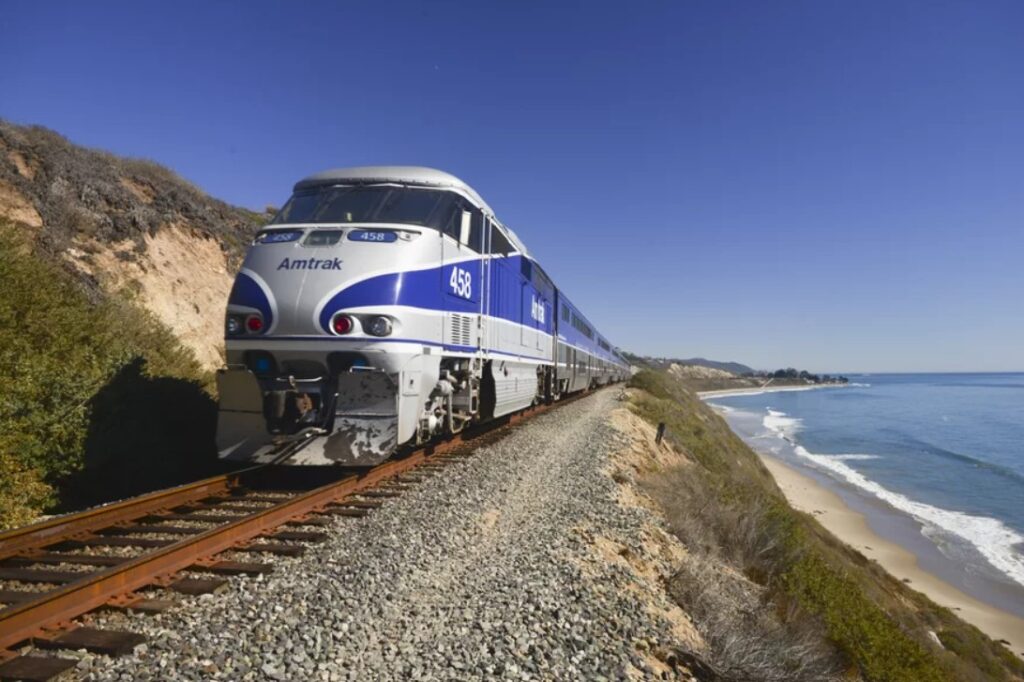
Travelers who want to avoid flying can continue north to Bellingham, Washington, and board an Alaska Marine Highway ferry. Depending on the schedule, ferries may connect Bellingham with communities such as Ketchikan, Wrangell, Petersburg, Juneau, Haines, Skagway, and, on certain sailings, Whittier.
This is not a quick transfer. The sailing from Bellingham to Ketchikan alone takes about 38 hours. Continuing farther through Southeast Alaska can add days. Reaching a port connected to the Alaska Railroad may require a much longer sailing and careful coordination with seasonal ferry service.
The ferry can become one of the trip’s best experiences. Passengers travel through narrow channels, past forested islands, small coastal communities, and mountain-lined waterways. However, it also breaks the promise of a continuous train ride. For a large portion of the journey, there are no rails beneath you at all.
Flying from Seattle to Anchorage is faster and often simpler. It turns the journey into a train-and-flight vacation rather than an overland rail adventure, but it reduces travel time and makes it easier to connect with the Alaska Railroad.
What the $350 Price Really Buys
The headline price is best understood as a starting point. It might cover a discounted coach fare from California to Seattle and part of an onward connection. Under unusually favorable conditions, it could come close to covering Amtrak and a low-priced flight. It should not be treated as a dependable price for the entire rail-and-ferry journey.
Ferry fares depend on the destination, travel date, passenger count, accommodation choice, and whether a vehicle is included. A private cabin costs more than using public seating areas. Meals, transfers, hotels, and baggage charges can raise the total further.
The Alaska Railroad is another separate expense. A ticket between Anchorage and Fairbanks is not included in the California fare, ferry booking, or flight. Premium dome service can be especially costly, while standard Adventure Class is the more economical choice.
The $350 claim becomes overhyped when it is presented as the final cost. A more accurate description would be a California-to-Alaska journey that begins with a train fare near that amount but requires additional transportation before reaching Alaska’s rail network.
What the Coast Starlight Is Like in Coach
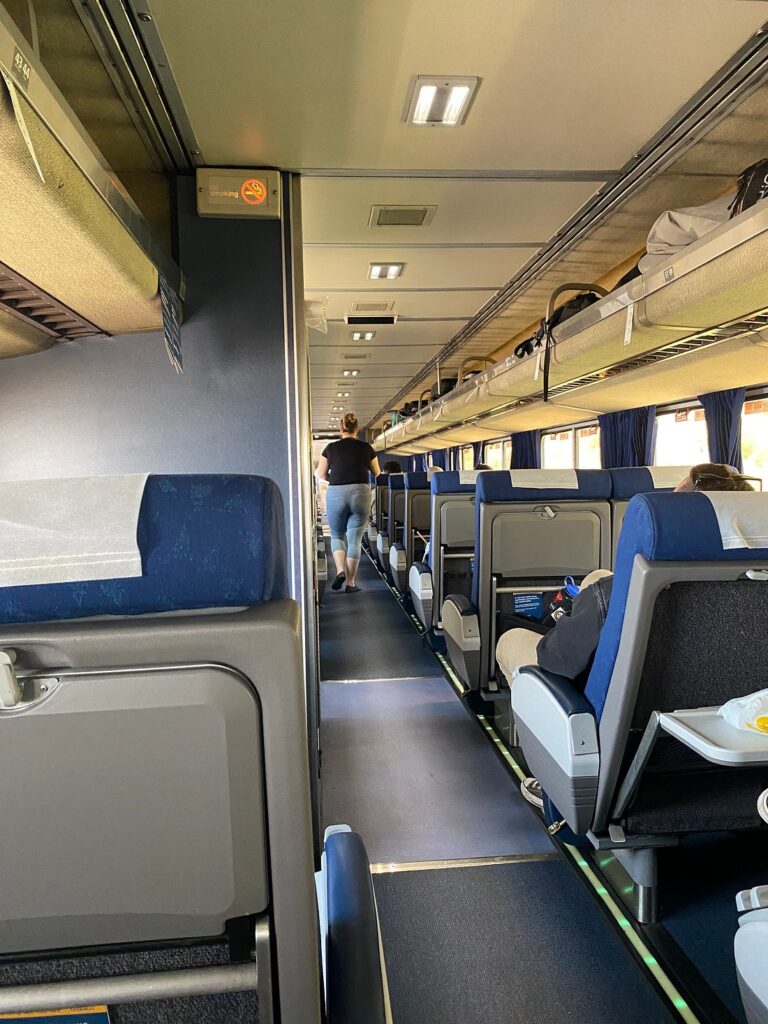
Coach is the most realistic choice for travelers trying to stay near the advertised budget. The seats are wider and generally provide more legroom than a standard airline seat. Passengers can recline, stand up, walk through the train, and visit shared areas during the journey.
Sleeping in coach for a night is manageable for some people but uncomfortable for others. The seat does not become a flat bed, and the car remains a shared space. Conversations, station announcements, movement in the aisle, and changing temperatures may make deep sleep difficult.
A neck pillow, light blanket, eye mask, headphones, and downloaded entertainment can make the overnight section easier. Food from the café is convenient, though buying every meal onboard can become expensive. Bringing suitable snacks helps protect the budget without carrying an excessive amount of luggage.
A roomette offers privacy, bedding, attendant service, access to shared shower facilities, and included meals. It also changes the price dramatically. Anyone attracted by the $350 headline should understand that the low figure is connected to coach travel, not a private sleeping compartment.
The Scenery Is Beautiful, but the Marketing Skips the Ordinary Parts
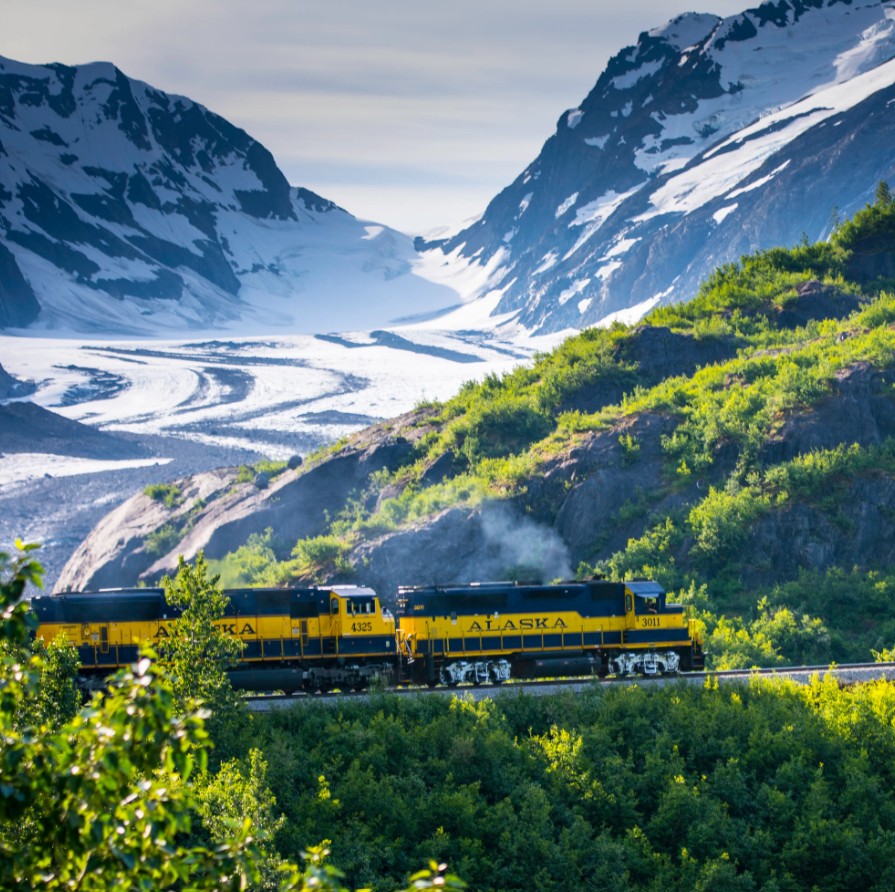
The route earns much of its reputation. California’s coastline can be striking, especially where the tracks run near the Pacific. Northern California and Oregon bring mountain views, dense forests, rivers, and stretches near the Cascade Range. Washington adds greener surroundings as the train approaches Seattle.
Still, this is a working passenger train rather than a sightseeing ride created solely for tourists. The route also passes warehouses, rail yards, highways, suburbs, dry farmland, and ordinary neighborhoods. Weather can hide mountains, while darkness can cover portions that looked spectacular on a route map.
Travel videos often compress the most impressive moments into a few minutes. A 35-hour ride feels different. The journey includes quiet periods, delays, meals, naps, station stops, and many hours when the view is pleasant rather than dramatic.
Travelers who enjoy slow movement and changing landscapes may love this rhythm. Those expecting constant cinematic scenery could find the trip less exciting than its online reputation suggests.
The Alaska Ferry Can Be More Demanding Than the Train
The ferry section often receives less attention, yet it requires more preparation. Sailings are not as frequent as city-to-city trains, and routes can change by season. A missed connection may not mean waiting a few hours for the next departure. It could mean waiting several days.
Private cabins provide greater comfort on longer sailings, but they add a major expense. Passengers using public areas need to prepare for limited privacy and an experience closer to long-distance communal travel. Food is available on many vessels, although services vary, and purchasing meals throughout a multi-day sailing can push the budget higher.
Weather also matters. The protected waterways of Southeast Alaska can be calm, but conditions vary. Travelers who are sensitive to motion may find the ferry less relaxing than the train.
The marine portion can still be memorable. It offers a closer view of Alaska’s coastal geography than a flight. The mistake is treating it as a small connection rather than a major stage of the vacation.
Alaska’s Famous Train Ride Is a Separate Adventure
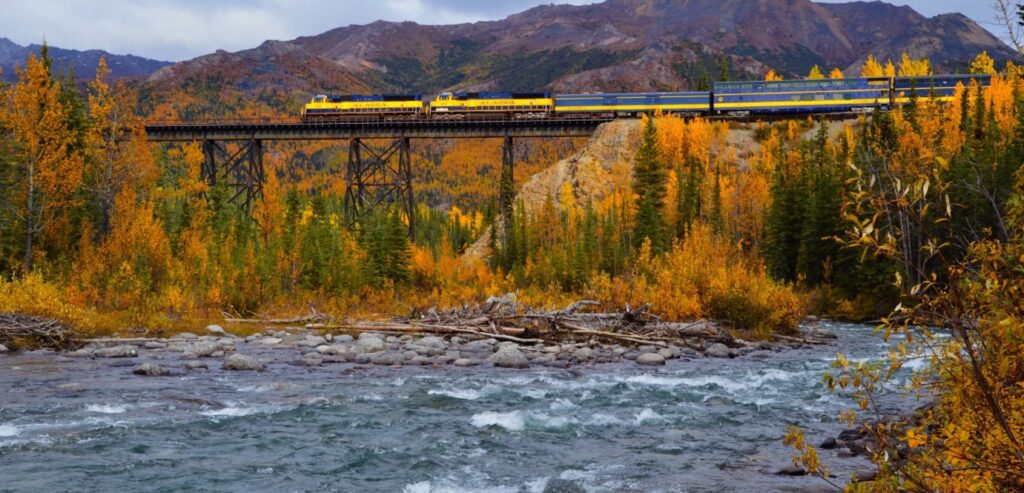
Reaching Alaska does not automatically place travelers on the Alaska Railroad. Southeast Alaska communities such as Ketchikan and Juneau are not connected to Anchorage by passenger rail. Travelers must reach Anchorage, Whittier, Seward, or another station on the Alaska Railroad system before the rail portion can begin.
The Denali Star is the route many people picture when they hear “Alaska train.” It travels between Anchorage and Fairbanks, stopping in Wasilla, Talkeetna, and Denali National Park during the summer season. The complete ride takes around 12 hours and crosses more than 350 miles of Alaska.
Adventure Class provides standard seating and access to shared viewing spaces. GoldStar Service offers premium dome seating and additional benefits at a much higher price. Both can provide excellent views, but neither is part of an Amtrak ticket purchased in California.
The Coastal Classic between Anchorage and Seward is another popular option. It follows Turnagain Arm and continues through mountain country before reaching Resurrection Bay. For travelers more interested in coastal scenery than reaching Fairbanks, this route may be a better fit.
Hidden Costs Can Quickly Change the Trip
The biggest budgeting mistake is focusing only on transportation tickets. A long journey creates expenses between the tickets. Travelers may need a hotel in Seattle or Bellingham while waiting for the ferry. Another overnight stay may be necessary after arriving in Alaska, especially if the train leaves the following morning.
Local transfers also add up. The Coast Starlight arrives in Seattle, while the Alaska ferry departs from Bellingham. Reaching Anchorage after arriving elsewhere in Alaska may require another ferry, flight, bus, or rental vehicle.
Food becomes a serious expense during a trip lasting several days. Even modest café meals can accumulate quickly. Alaska accommodation prices can also be high during the main summer season, particularly near Denali, Seward, and other heavily visited areas.
Travel insurance may be worth considering because one late arrival can affect several independently booked reservations. Separate tickets usually provide less protection than a single itinerary issued by one company.
Is the California-to-Alaska Train Trip Really Overhyped?
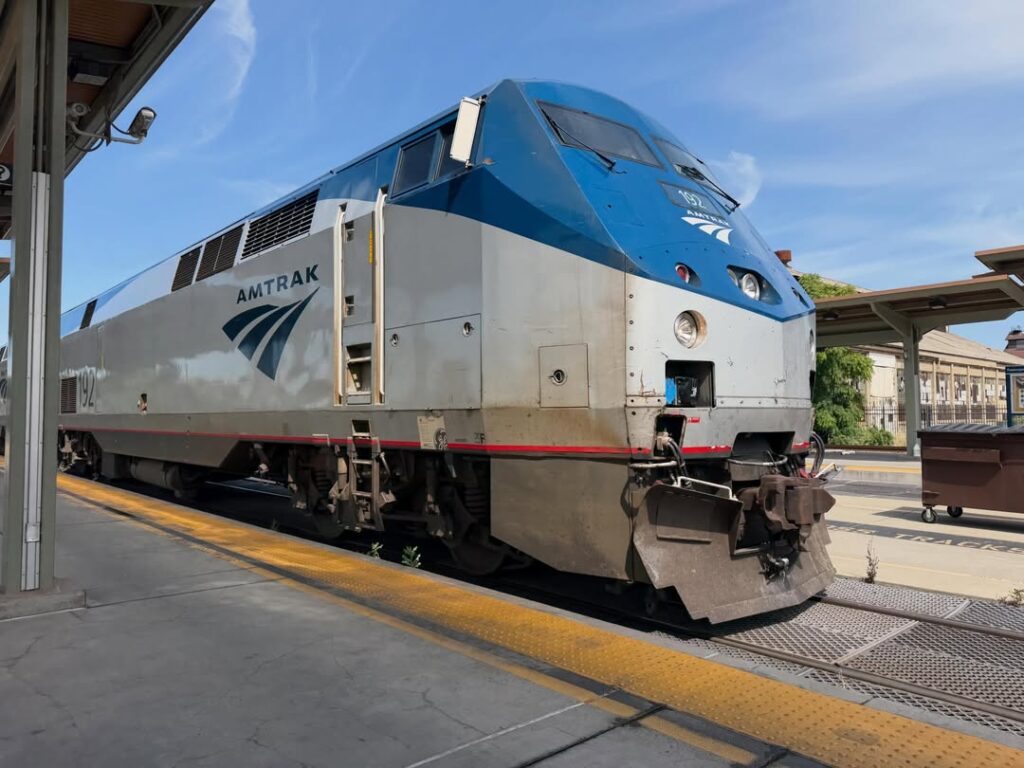
It is overhyped as a $350 train ride. The price suggests a complete journey that does not truly exist, and the word “train” hides the ferry, flight, transfers, waiting time, and separate Alaska Railroad fare.
It is not overhyped as a slow northern adventure. The combination of the Coast Starlight, the Pacific Northwest, the Alaska Marine Highway, and the Alaska Railroad can create a trip few travelers forget. The experience moves gradually from California’s coastline to the forests of Oregon and Washington, then into Alaska’s island passages and mountain country.
The difference lies in expectations. Someone who expects a cheap and simple train ride may feel misled. Someone prepared for a complicated rail-and-sea itinerary may consider the effort worthwhile.
Who Will Enjoy This Journey Most?
This route works best for travelers who care about the journey as much as the destination. It suits people who can handle flexible schedules, long periods in shared spaces, and transportation that may not operate exactly as planned.
It is less suitable for anyone with a strict vacation window. A short delay on the Coast Starlight could threaten a ferry departure, while limited sailing dates make recovery difficult. Travelers who need predictable arrival times may be happier flying directly to Anchorage and taking the Alaska Railroad from there.
The trip also favors people willing to research every transfer. It is not a single booking. Each stage must fit with the next, and seasonal schedules can change the route completely.
How to Keep the Journey Closer to a Realistic Budget
Start by treating the Amtrak fare, ferry or flight, and Alaska Railroad ticket as three separate purchases. Check all three before paying for any nonrefundable reservation. A cheap train fare is not useful if the only matching ferry costs far more than expected or leaves several days later.
Coach travel keeps the Amtrak price lower, but calculate the value of a hotel before forcing yourself through several uncomfortable nights. Sometimes one well-placed overnight stay makes the entire journey easier without destroying the budget.
Traveling outside the busiest summer weeks may reduce some expenses, although ferry and Alaska Railroad schedules can be more limited. Flexibility remains the strongest advantage. Comparing departures from Los Angeles, the Bay Area, Sacramento, and other California stations may reveal meaningful fare differences.
Above all, build extra time into the schedule. A same-day connection between independently operated services is risky. One delay can erase every dollar saved by choosing the cheapest ticket.
Final Thoughts
The $350 California-to-Alaska train trip is a brilliant headline wrapped around a much more complicated journey. There is no continuous passenger railway connecting the two states, and the low price rarely covers every stage required to reach Alaska and ride its famous trains.
The first part aboard the Coast Starlight can still be exceptional. The ferry north can feel like a voyage through another side of America. The Alaska Railroad can deliver the mountain views and remote scenery that inspired the trip in the first place.
The experience becomes disappointing only when travelers expect a seamless bargain. Viewed honestly, it is a multi-part rail-and-sea expedition that requires time, flexibility, and a larger budget than the headline admits.
The $350 fare may get the adventure moving. It probably will not get you all the way to Alaska. That missing detail is exactly what nobody tells you until you start trying to book it.
You may also like :