
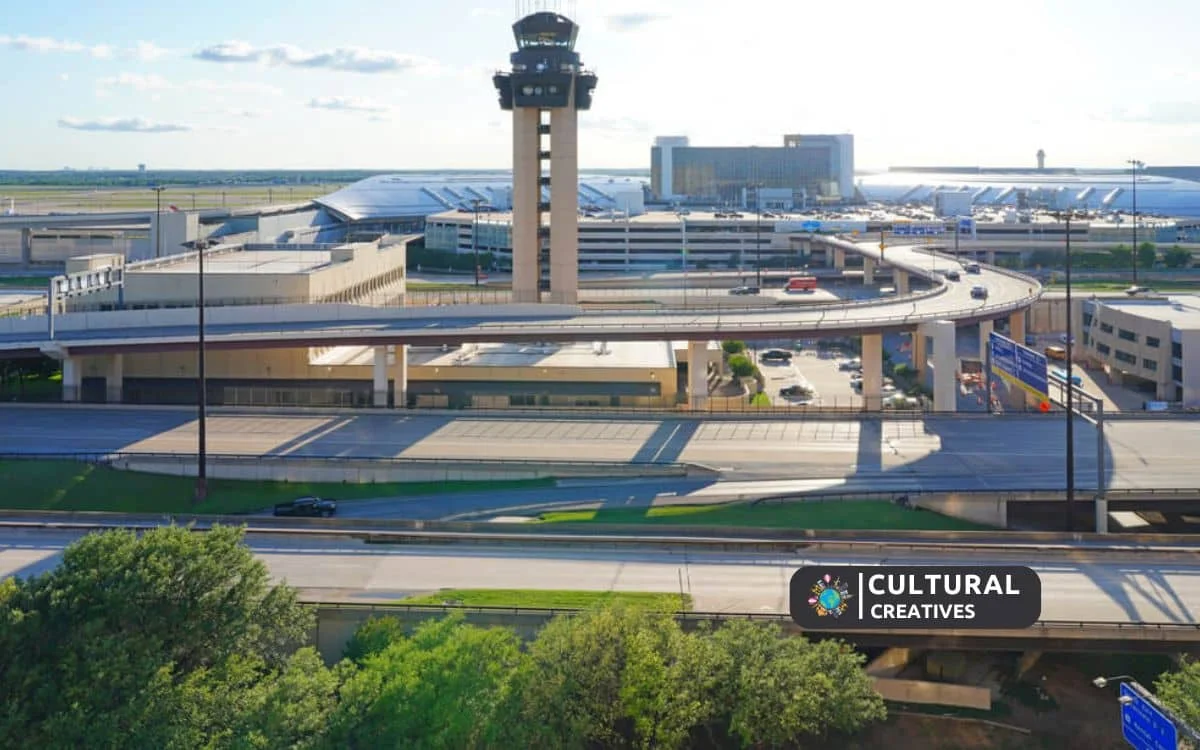
Dallas/Fort Worth International Airport covers over 17,000 acres, making it the second largest airport in the United States by area. It ranks behind Denver International Airport in size.
Dallas Airport, known as DFW Airport, serves as a major hub for travel throughout the Southern U. S. And the world. It’s a bustling center for both domestic and international flights, with its vast expanse featuring five terminals, multiple runways, and a host of amenities and services for travelers.
DFW Airport is strategically located between the cities of Dallas and Fort Worth, providing convenient access for millions of passengers each year. This airport plays a pivotal role in the aviation industry, contributing significantly to the local economy. With its impressive infrastructure and continual expansion, Dallas Airport remains a key player in global air travel.
The Vastness Of Dallas Airport
Dallas Airport stands as a testimonial to human engineering. This immense structure is more than just runways and terminals. It’s a hub of activity, connecting millions of passengers to destinations all over the globe. To understand its scale, let’s dive into the details of its square footage and terminal capacity.
Comparing Square Footage
Dallas/Fort Worth International Airport (DFW) is so vast, it spans a total of 17,207 acres. This space makes it the second-largest airport in the United States, right after Denver. For comparison:
- Manhattan could fit inside DFW with room to spare.
- The ground space of DFW could house 27 football stadiums.
- At 27 square miles, it dwarfs both the island of Manhattan and the city of San Francisco.
Terminal Sizes And Gate Capacity
DFW boasts five terminals in total. Here are some key figures:
| Terminal | Size | Number of Gates |
|---|---|---|
| A | 885,000 sq ft | 26 Gates |
| B | 1,173,000 sq ft | 47 Gates |
| C | 770,000 sq ft | 28 Gates |
| D | 2,000,000 sq ft | 31 Gates |
| E | 1,661,000 sq ft | 36 Gates |
Each terminal is designed with convenience and efficiency in mind. Passengers find spacious facilities and ample gates to smooth their journey.
Dallas Airport In Numbers
Peek into the massive world of Dallas Airport with these jaw-dropping numbers. From vast runways to bustling terminals, discover what makes this airport a global giant.
Runways And Flight Operations
Dallas Airport, also known as Dallas/Fort Worth International Airport (DFW), boasts an impressive infrastructure. Its numbers are a testament to its size and efficiency.
- Seven runways cater to flights.
- Aircraft movements: Over 650,000 yearly.
- Ranked fourth worldwide for operations.
Passenger Traffic Statistics
Dallas Airport is not just large but also teeming with life. Millions of passengers pass through its gates each year. Let’s look at the stats:
- In 2021, about 62.5 million travelers visited.
- International visits: nearly 7 million.
- Terminal space spans over 17 million square feet.
Exploring The Terminals
Dallas/Fort Worth International Airport (DFW) stands as a giant among airports. With five terminals stretching over 17,000 acres, DFW is the second-largest airport in the United States. The vast space houses a complex network of runways, facilities, and services. Each terminal reveals its own world of amenities and operations. Travelers navigate through Terminals A to E to find flights, food, and fun. Let’s whisk through these terminals and discover what makes each one unique.
Terminal Designs And Facilities
Terminal A caters primarily to American Airlines passengers. Its sleek design and modern amenities ensure a pleasant experience. Interactive walkways and play areas are available for families. Terminal B houses 35 gates and offers a range of services for business and leisure travelers. Terminal C features state-of-the-art technology and comfort-oriented spaces. Terminal D is an international gateway with luxury lounges. Lastly, Terminal E functions as a hub for regional flights, complete with upgraded waiting areas. Each terminal sports free Wi-Fi, charging stations, and adequate seating.
Shopping And Dining Spaces
Shopping and dining in DFW’s terminals is like visiting a mini-metropolis filled with options. With over 200 stores and restaurants, travelers can enjoy a diverse selection. Terminal A offers designer brands and tech stores. Terminal B has a range of Texas-themed mementos. Restaurants in Terminal C serve barbecue and international cuisine. For fine dining and high-end shopping, head to Terminal D. Terminal E’s grab-and-go kiosks cater to quick bites. You will find coffee shops, bookstores, and duty-free shops across all terminals.
Ground Transportation Scale
The Dallas Airport, known for its vastness, epitomizes the term ‘giant’. With a massive flux of passengers daily, the ground transportation services are equally grand. Various modes of transportation stand ready to whisk travelers to their destinations. Let’s explore the robust network that keeps this airport ticking around the clock.
Shuttle Services And Car Rentals
Dallas Airport provides ample options for on-the-go travelers. Shuttle services and car rentals are a breeze here.
- Multiple shuttle services connect passengers to hotels, business centers, and other key locations.
- Car rental agencies are available within the airport for quick and convenient bookings.
| Service Type | Location | Operating Hours |
|---|---|---|
| Shuttle Services | Ground Transportation Center | 24/7 |
| Car Rentals | Rental Car Facility | 24/7 |
Road Connectivity And Parking Lots
Road connectivity at Dallas Airport is second to none. Seamless access meets travelers looking to navigate the vicinity.
- Direct access to major highways ensures a quick exit from the airport.
- Well-signposted routes guide drivers to their desired locations.
Parking lots are designed to accommodate thousands of vehicles. Convenience meets capacity.
| Parking Option | Capacity | Proximity to Terminal |
|---|---|---|
| Short-term Parking | Large | Close |
| Long-term Parking | Extensive | Shuttle Service |
Behind The Scenes At Dallas Airport
Dallas Airport stretches far beyond the hustle of terminals and runways. A world of intricate operations hums behind the scenes. This inside look reveals the airport’s vast scale.
Cargo And Freighting Operations
Cargo operations are the unseen lifeline of Dallas Airport. A network of facilities operates 24/7, shifting goods worldwide. The sheer volume of cargo that passes through is staggering.
- Multiple cargo hubs distribute goods efficiently.
- Advanced tracking systems keep cargo secure.
- Home to leading freight companies, facilitating vast logistics.
Maintenance And Hangar Space
Maintenance at Dallas Airport ensures every plane is safe for flight. Massive hangars shelter aircrafts for routine checks and repairs.
| Hangar Facilities | Services Offered |
|---|---|
| State-of-the-art hangars | Engineering and overhaul |
| Specialized maintenance areas | Painting and cleaning |
| Secure storage | Parts and equipment |
Teams of technicians work round-the-clock in these spaces, making up the heart of Dallas Airport’s operations.
Comparative Analysis
Size matters when we talk about airports. Dallas Airport, or Dallas/Fort Worth International Airport (DFW), is formidable in scale. Let’s compare it to other major airports and peek into its future growth.
Dallas Vs. Other Major Airports
Dallas Airport is a giant among giants. It spans an impressive 27 square miles. That’s almost three times the size of Manhattan! Here’s how it stands next to other key players:
| Airport | Area | Notable Feature |
|---|---|---|
| DFW | 27 square miles | World’s second largest airport by land area |
| Atlanta (ATL) | 4,700 acres | World’s busiest by passenger traffic |
| Chicago O’Hare (ORD) | 7,627 acres | Renowned for its high number of takeoffs and landings |
| Beijing (PEK) | 3,700 acres | Enormous terminal buildings |
Dallas Airport not only covers a vast area but also offers multiple facilities. These include air travel, parking, and friendly services.
Future Expansion Plans
So, what’s next for Dallas Airport? Future plans are exciting. They promise to make this airport even bigger and better. Here’s a list of upcoming features:
- Terminal F: A sixth terminal will add new gates.
- Technology Upgrades: For faster, smoother travel.
- Sustainability Investments: To reduce environmental impact.
These plans aim to enhance the user experience and accommodate more passengers. They also show DFW’s commitment to innovation and eco-friendliness.
Economic Impact
The Dallas Airport is not just a hub for travelers. The airport’s operations fuel significant economic activity. This impact benefits workers, businesses, and the broader economy.
Jobs And Revenue Generation
Dallas Airport creates numerous jobs. It is a pivotal employer in the region. Thousands of people work hard every day to keep the airport running smoothly. These jobs are diverse, including:
- Pilots and cabin crew,
- Airport security,
- Maintenance staff,
- Retail workers in airport shops.
Every job generates revenue. Not just through salaries, but also via taxes. Thus, boosting the city’s income.
Contribution To Local Economy
The airport’s contribution extends beyond its perimeter. Its reach touches local businesses. Hotels, restaurants, and transport services thrive because of airport activity.
Here’s how the airport aids the local economy:
- Boosts tourism, bringing more spenders to the region.
- It helps local products reach global markets quickly.
- Attracts international businesses to set up in Dallas.
In summary, Dallas Airport is a powerful economic engine. It drives job creation and fuels growth in the local economy.
Navigating The Expanse
Imagine a city within a city; that’s Dallas Airport for you! With its massive size, navigating through Dallas Airport is like exploring a bustling metropolis. The airport sprawls over a large area teeming with terminals, gates, restaurants, shops, and services. Knowing your way ahead of time smooths out the travel bumps, ensuring a seamless transit or departure. Whether it’s your first visit or you’re a frequent flyer, grasping the layout is key to a stress-free journey.
Wayfinding And Signage
Clear signs guide you from check-in to boarding. Dallas Airport ensures no traveler is left puzzled. Here’s how:
- Color-coded signs make terminals easy to spot.
- Interactive directories at strategic spots help you locate amenities.
- Digital screens show flight updates in real-time.
Maps are available at information desks too. They point you to your gate without the guesswork. Follow the signs and you’ll find your way – simple and straightforward!
Technology And Passenger Experience
Dallas Airport embraces cutting-edge technology for a smooth experience. Here’s what they offer:
- Free Wi-Fi helps passengers stay connected.
- Mobile apps provide real-time information.
- Charging stations keep your devices powered up.
Self-service kiosks mean quick check-ins. Automated baggage systems keep your luggage on track. Touchpoints throughout the airport ensure tech aids your journey, getting you to your destination with ease and comfort.
Conclusion
Spanning an impressive 27 square miles, Dallas Airport stands as a behemoth of air travel, dwarfing many city skylines. Its vastness caters to millions, ensuring connectivity across continents. As you depart or touch down, take a moment to marvel at this modern marvel—truly, a gateway of grand scale.