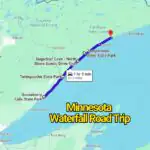
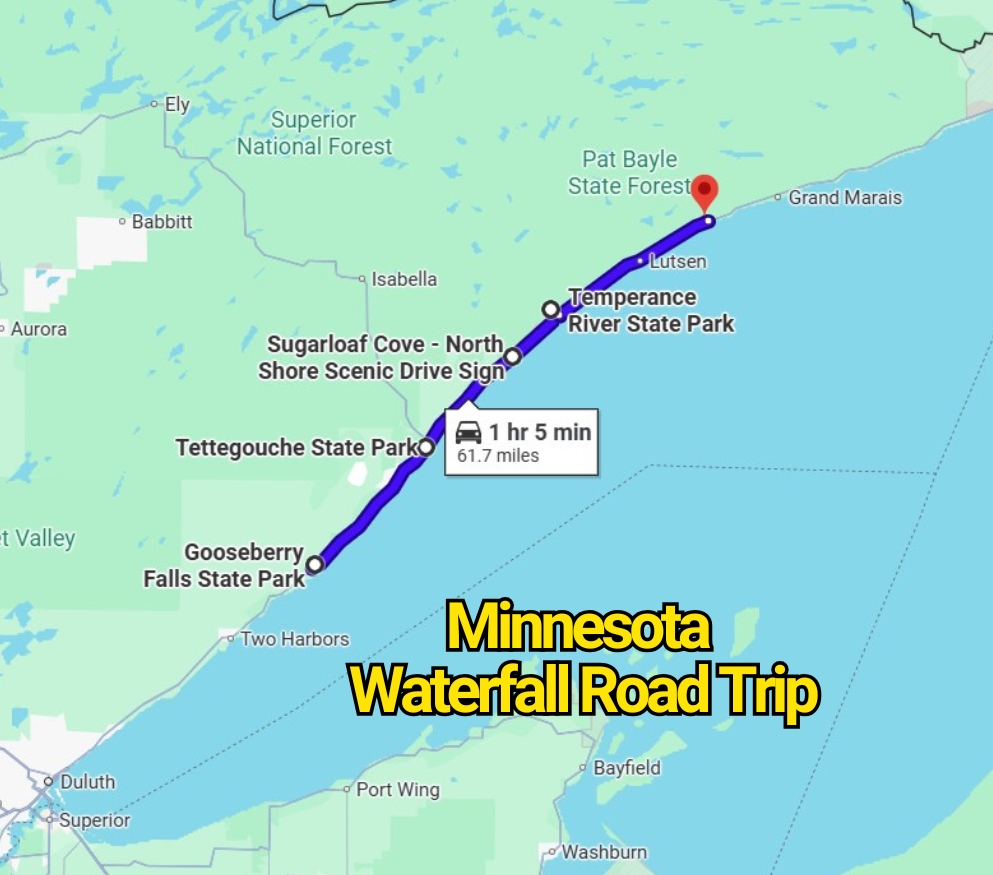
From Gooseberry Falls to the rugged landscape near Grand Portage, this Minnesota waterfalls road trip links seven remarkable stops along the North Shore. The route pairs roaring cascades with Lake Superior overlooks, rocky river valleys, forest trails, and one of Minnesota’s most celebrated scenic drives. Every stop brings a different view, from wide drops beside well-marked paths to quieter falls hidden deeper inside northern woodlands.
The full drive takes a little over three hours without extended stops, making it possible to visit all seven waterfalls during one long outing. Still, rushing would mean missing much of what makes the journey worthwhile. Begin in Duluth and travel northeast, or reverse the route from Grand Portage. Leave time for short hikes, photographs, picnic breaks, and scenic pullouts overlooking Lake Superior.
For a slower trip, stay overnight near either end or camp midway along the North Shore. This gives you more time at the waterfalls and removes the pressure of completing every stop before sunset. A single-day journey works best during warmer months when daylight lasts longer and roads are easier to travel. Winter can bring ice, snow, reduced trail access, and difficult driving conditions, so avoid attempting the entire out-and-back route in one day during that season.
1. Gooseberry Falls State Park: Middle and Lower Falls
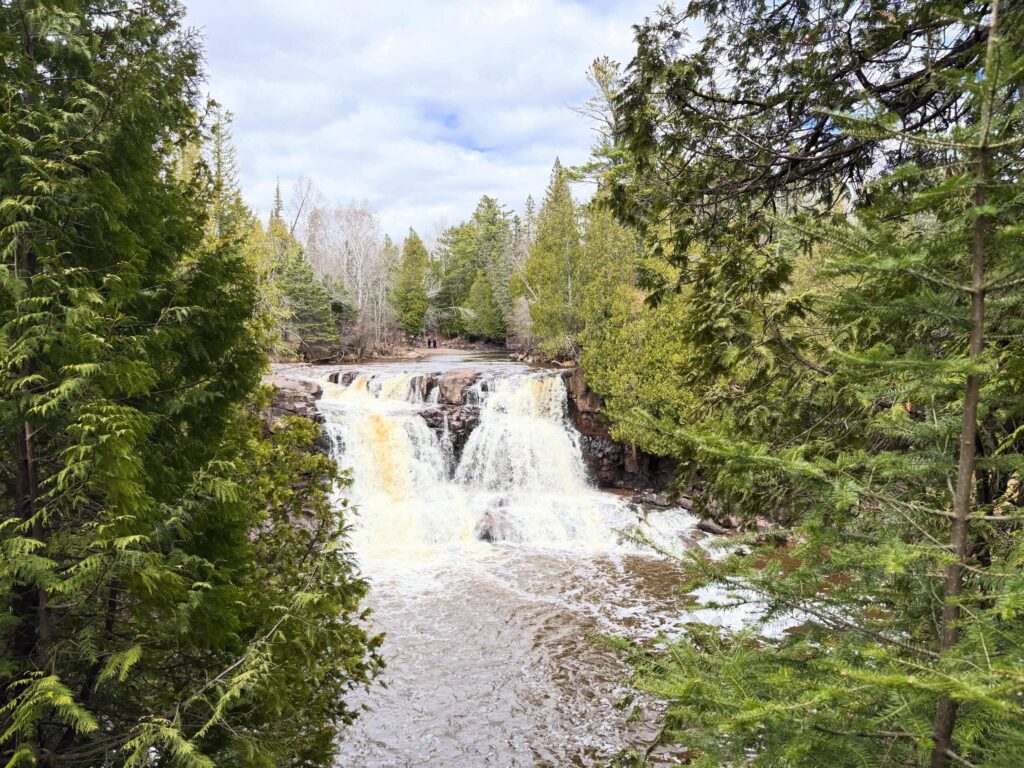
Gooseberry Falls State Park makes a dramatic opening stop on this northern Minnesota road trip. The river tumbles through several rocky levels, creating a powerful series of cascades that can look completely different depending on the season and recent rainfall. Spring often brings a louder, fuller rush, while colder months may coat sections of the falls in sculpted ice.
The Middle and Lower Falls are especially popular because reaching them requires very little effort. A short path from the parking area leads visitors close to the water, making this an easy stop for families, casual walkers, and travelers who do not want a lengthy hike. Several viewing spots provide broad angles of the rushing river and dark volcanic rock.
Spend time walking between the different levels rather than viewing the falls from a single point. Each section has its own shape, sound, and surrounding scenery. Since access is convenient, Gooseberry Falls can become crowded during weekends and peak travel months, so an earlier arrival may offer a calmer experience and clearer views.
2. Tettegouche State Park: High Falls and Illgen Falls
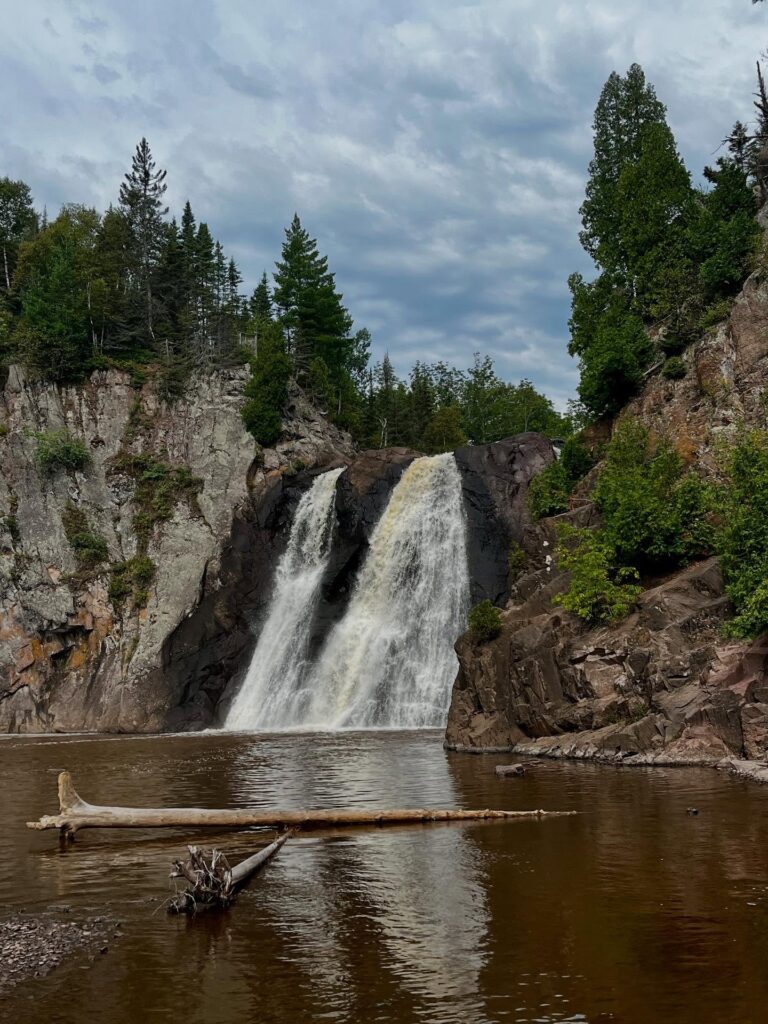
Tettegouche State Park brings two impressive waterfalls to this Minnesota road trip. High Falls draws most of the attention as the Baptism River plunges over a tall rocky ledge, producing a forceful curtain of water after heavy rain or spring snowmelt. Forested slopes and dark cliffs add a wild character to the scene.
Illgen Falls offers a smaller but equally rewarding stop. Water pours into a broad pool bordered by trees and exposed stone, creating a fine place to pause before continuing along the North Shore. Its setting often feels less hurried than the park’s better-known waterfall areas.
Although both falls sit within the same state park, they have separate access points and should be treated as individual stops. Allow enough time for parking, walking, and taking in each viewpoint without rushing. Trail surfaces may be uneven or slippery near the river, particularly after rainfall, so sturdy footwear can make the visit safer and more comfortable.
3. George H. Crosby Manitou State Park: Manitou Cascades
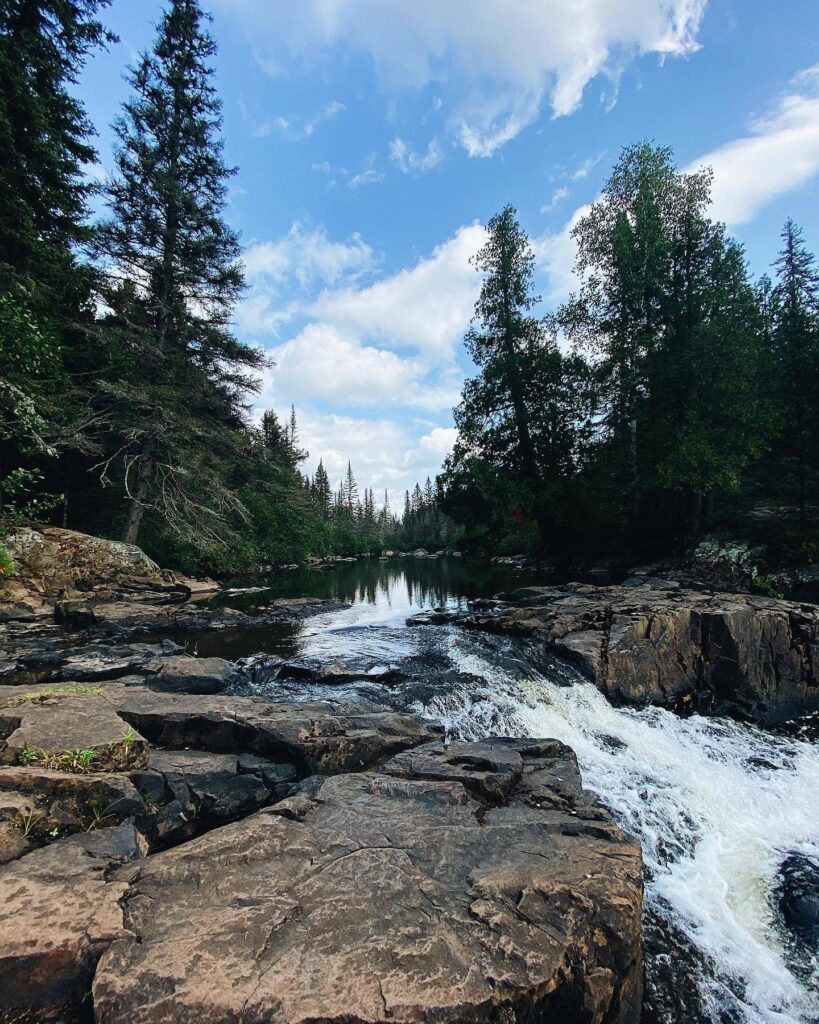
George H. Crosby Manitou State Park carries this waterfall road trip away from the Lake Superior shoreline and into Minnesota’s wooded backcountry. The park feels rougher and less developed than many North Shore stops, with narrow trails, rocky ground, and dense forest surrounding the Manitou River.
Reaching Manitou Cascades requires roughly a mile of hiking, though the uneven terrain can make the walk feel longer. Along the route, the river races through dark rock channels before breaking into a series of energetic drops and churning pools. The natural setting gives the cascades a remote atmosphere that rewards travelers willing to leave the roadside behind.
Wear sturdy shoes and allow extra time after rain, since roots, stones, and damp trail sections may become slippery. Carry water and check the trail map before setting out, as this backcountry park has fewer facilities than other stops on the route. The added effort makes Manitou Cascades one of the more adventurous visits on the journey.
4. Temperance River State Park: Temperance River Gorge
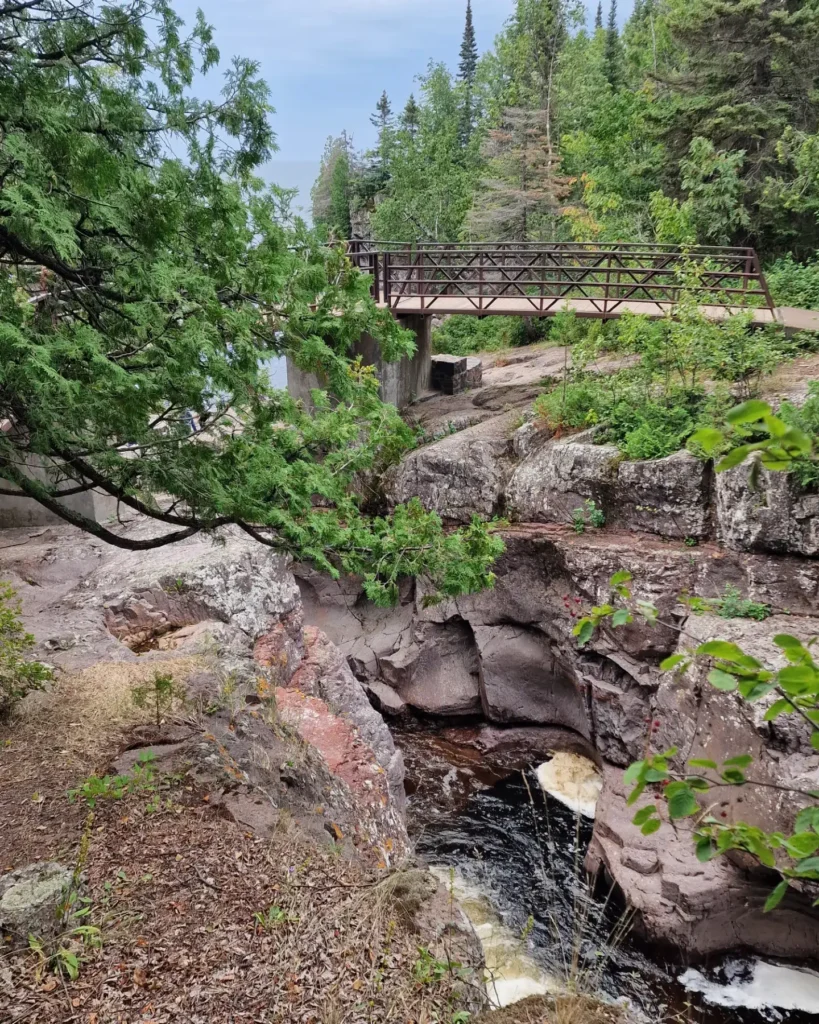
Temperance River State Park adds a dramatic roadside break to this Minnesota waterfall journey. Here, the river squeezes through a deep volcanic-rock gorge, forming churning rapids, narrow cascades, and shadowed pools before flowing beneath Highway 61. The confined channel makes the water appear especially forceful after rainfall or during spring runoff.
One of the biggest advantages of this stop is its easy access. Visitors can reach several gorge overlooks after a short walk from the parking area, so there is no need to commit to a long trail. Footbridges and viewing points provide different angles of the water cutting through the rock below.
Although the visit can be brief, taking a few extra minutes pays off. Walk along the gorge rim, listen to the river echo between the stone walls, and watch how the current changes around each bend. Remain behind railings and marked barriers, as the cliffs are steep and wet surfaces near the gorge can become slippery.
5. Cascade River State Park: Cascade River Falls
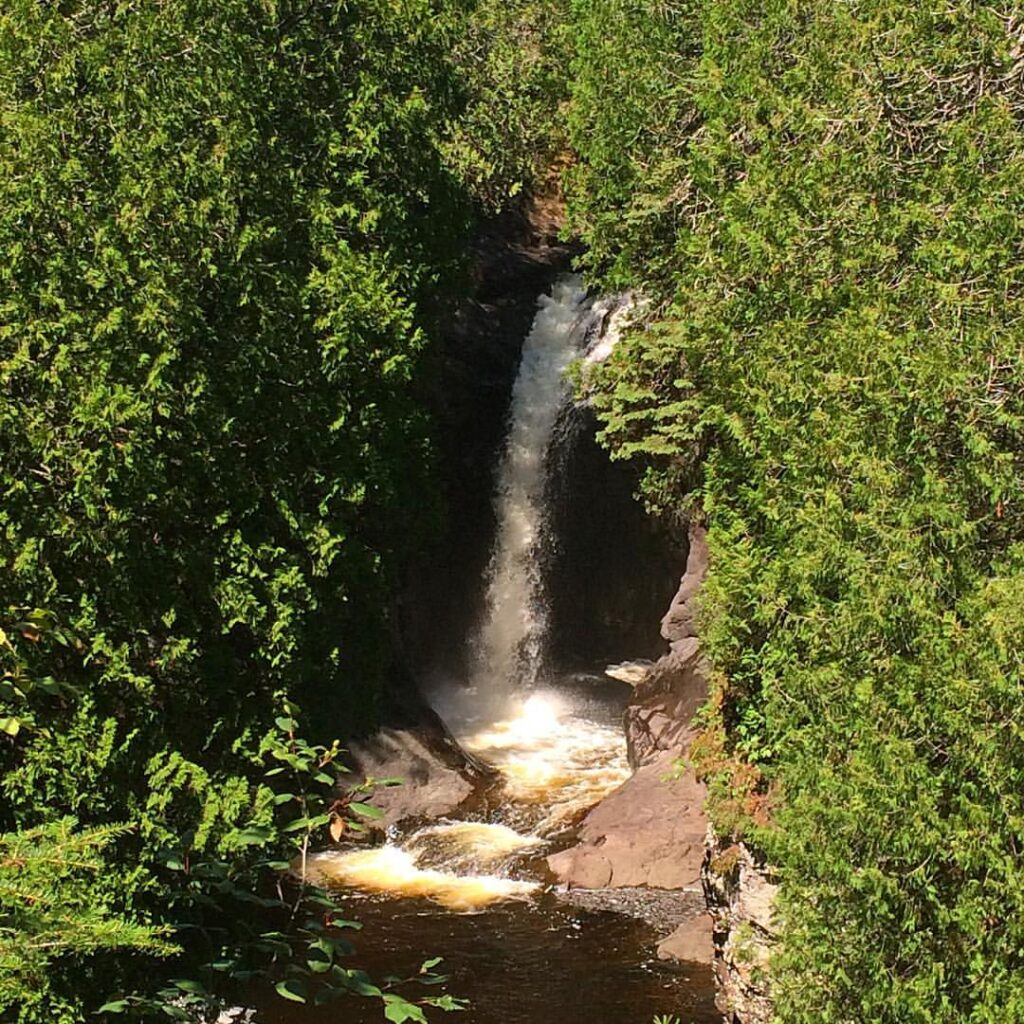
Cascade River State Park earns its place as one of the strongest stops on this northern Minnesota waterfall route. The river drops rapidly through a rocky canyon, producing a chain of rushing falls, foamy chutes, and smaller cascades framed by thick forest. Rather than offering one isolated viewpoint, the park presents moving water around nearly every bend.
Several trails follow the river and lead to overlooks above the canyon. Some viewpoints require only a brief walk, while longer paths let visitors spend hours tracing the water upstream. Wooden bridges, stone steps, exposed roots, and steep sections add variety to the hike, so comfortable footwear is useful.
This is a stop worth giving more time than expected. Water levels often appear strongest during spring runoff or after steady rainfall, though the carved gorge remains impressive throughout the warmer seasons. Pause at several overlooks instead of hurrying to one main fall, since each section of the Cascade River brings a different combination of drops, pools, and rugged rock walls.
You may also like :