
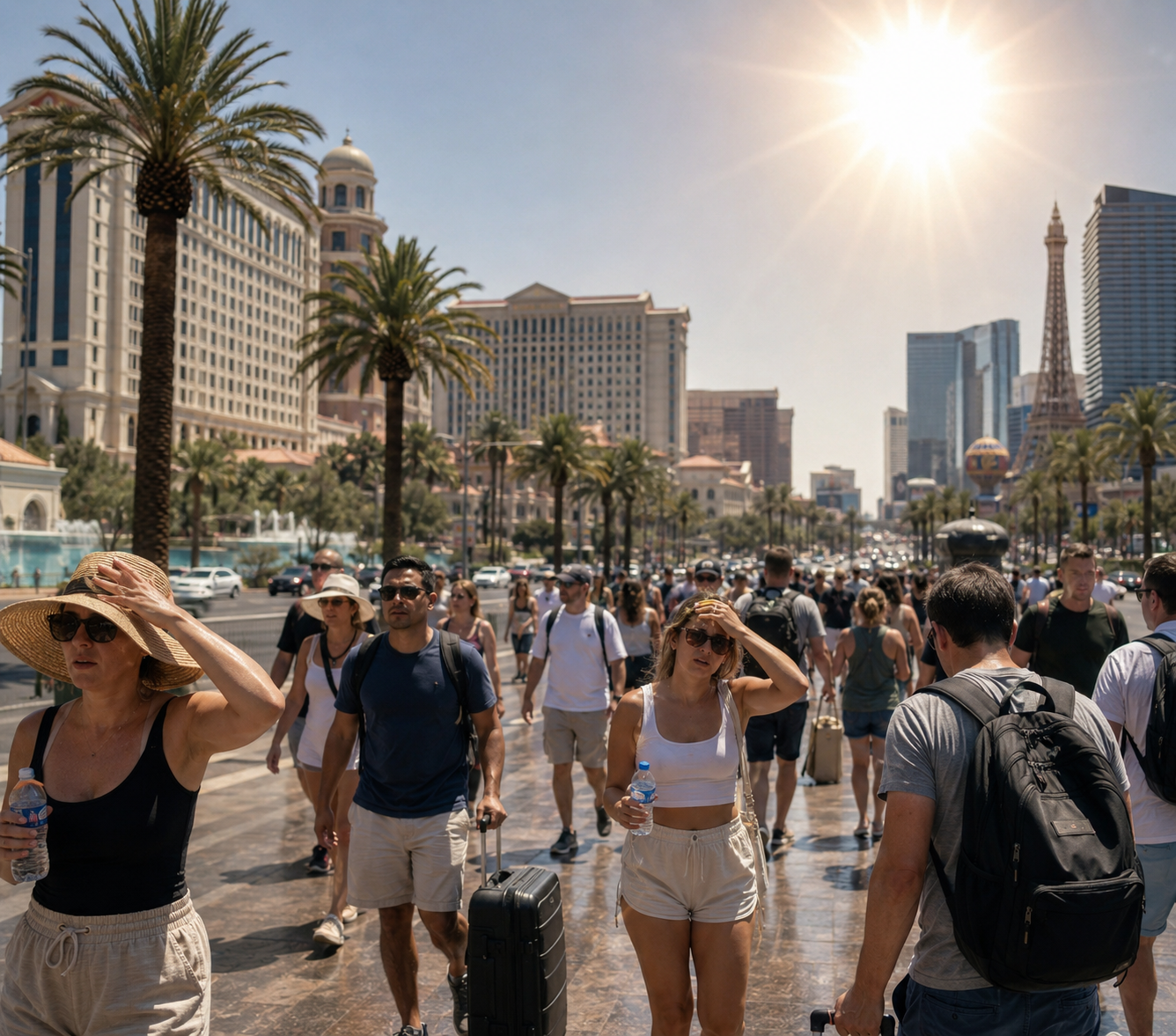
A stretch of dangerous summer heat is putting Las Vegas visitors on alert as Nevada enters one of its hottest travel periods of the season. Forecasts show temperatures in Las Vegas climbing from about 104°F on Sunday, June 21, to near 107°F to 110°F through the coming week, raising concerns for tourists walking the Strip, visiting outdoor attractions, or waiting outside for transportation.
The heat arrives as Las Vegas continues to draw heavy visitor traffic, with many travelers spending long hours outdoors between hotels, pools, tours, restaurants, and entertainment venues. While triple-digit temperatures are common in the desert, officials and weather forecasters continue to warn that extended exposure can become dangerous quickly, especially during the afternoon.
Las Vegas Braces for Several Days of Triple-Digit Heat

Las Vegas is expected to stay under intense heat for several days, with daytime highs forecast near 107°F on Monday, 109°F on Tuesday and Wednesday, and close to 110°F by Friday. The heat will be paired with dry desert conditions, making dehydration a serious risk for visitors who are not prepared.
Even short walks can feel much longer under direct sun. Tourists often underestimate the distance between major resorts, casinos, parking areas, and attractions along Las Vegas Boulevard. A walk that seems easy indoors or at night can become uncomfortable and risky during peak afternoon heat.
Why This Heat Is Especially Risky for Visitors
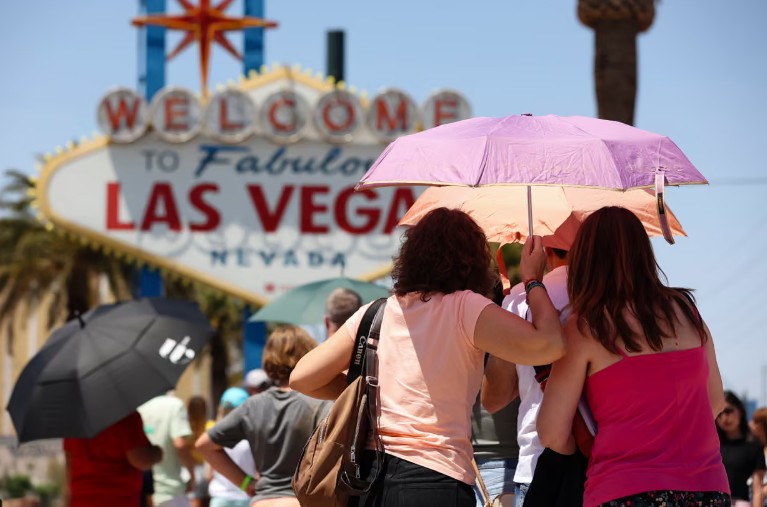
Travelers are often more vulnerable during Las Vegas heat waves because they may be outside longer than locals, carry luggage, walk between hotels, or join tours in exposed areas. Visitors from cooler regions may also need more time to adjust to the desert climate.
The hottest part of the day usually falls from late morning through the afternoon. During that period, pavement, sidewalks, vehicles, and outdoor waiting areas can feel much hotter than the official air temperature.
Tourists Urged to Plan Around the Heat

Visitors are being urged to plan outdoor activities early in the morning or later in the evening when temperatures are lower. Indoor attractions, shows, shopping centers, museums, and resort activities may be safer choices during the hottest hours of the day.
Travelers should also allow extra time for transportation. Waiting outside for rideshares, taxis, buses, or tour pickups can become uncomfortable in extreme heat, especially in areas with limited shade.
Simple Safety Steps for Las Vegas Travelers
Tourists should drink water regularly, wear light clothing, use sunscreen, and take frequent breaks inside air-conditioned spaces. Alcohol and long periods in direct sun can increase the risk of dehydration, so visitors should be careful during pool parties, outdoor dining, and daytime events.
Anyone feeling dizzy, unusually tired, confused, or overheated should move indoors immediately and seek help if symptoms continue.
Outdoor Attractions May Feel More Dangerous Than Expected

The heat wave may also affect visitors planning trips outside the city, including desert viewpoints, hiking areas, Hoover Dam, Red Rock Canyon, and other open-air destinations in Southern Nevada. These areas often have limited shade, long walking routes, and fewer places to cool down.
Travelers planning day trips should check the latest weather conditions before leaving, carry extra water, and avoid strenuous activity during the hottest part of the day.
Desert Heat Can Turn Serious Quickly
Unlike humid heat, desert heat can sometimes feel deceptively dry at first. Sweat may evaporate quickly, which can make dehydration harder to notice. By the time someone feels very thirsty or weak, the body may already be under stress.
This is why visitors are encouraged to drink water before they feel thirsty and avoid pushing through outdoor plans just to stay on schedule.
Busy Travel Season Adds to Heat Concerns
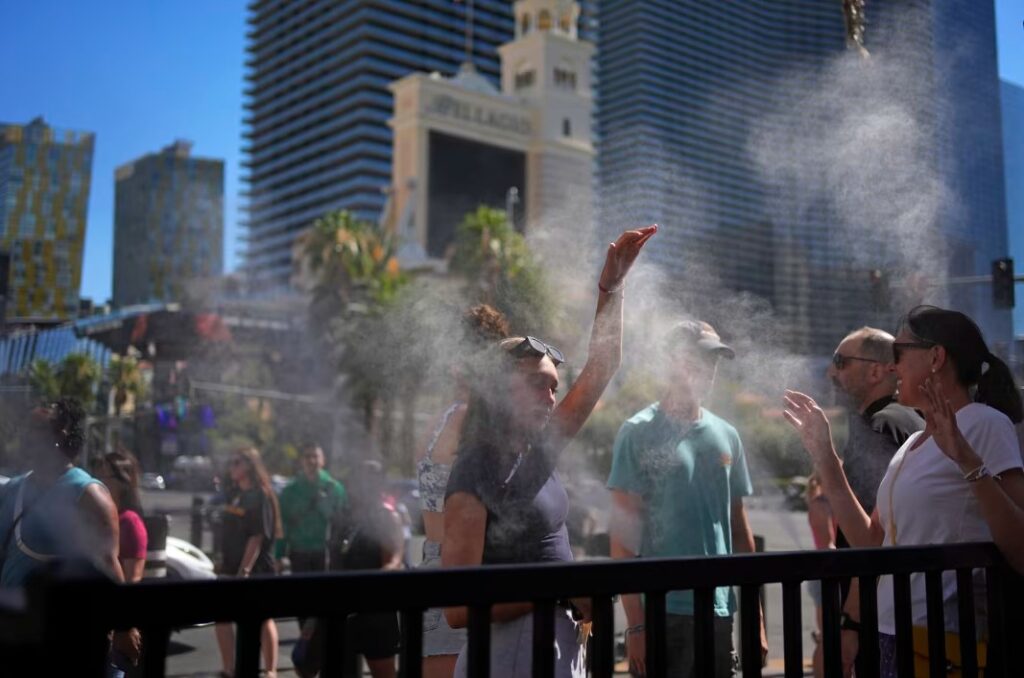
The timing of the heat wave is important because Las Vegas remains a major summer destination. Tourists may be arriving for vacations, concerts, conferences, casino trips, family travel, and regional road trips across Nevada and the Southwest.
Hotels, resorts, and attractions are built for hot weather, but the risk rises when visitors spend extended time outside or try to fit too much into one afternoon.
What Travelers Should Know Before Heading Out
Before leaving a hotel, visitors should check the forecast, bring water, charge their phone, and know where nearby indoor cooling areas are located. Families traveling with children or older adults should be especially cautious, as heat can affect them faster.
Pets should never be left in vehicles, and travelers should avoid leaving belongings such as electronics, medication, or food in hot cars for long periods.
Las Vegas Heat Wave Expected to Continue Through the Week
The current forecast suggests Las Vegas will remain very hot through much of the week, with highs staying above 105°F for several days. Conditions may also become breezy later in the week, which could raise fire weather concerns in dry areas around Southern Nevada.
For tourists, the message is simple: Las Vegas is still open and active, but outdoor plans need extra caution. Visitors who adjust their schedules, stay hydrated, and use indoor breaks can reduce their risk while still enjoying the city.
Bottom Line
The Nevada heat wave is creating serious travel concerns for Las Vegas visitors during a busy period. With temperatures expected to remain in the upper 100s and possibly reach 110°F, tourists should treat the heat as a major part of their travel planning.
Las Vegas may be built for summer, but the desert heat can still become dangerous fast. Smart timing, water, shade, and air-conditioned breaks can make a major difference for anyone visiting this week.