
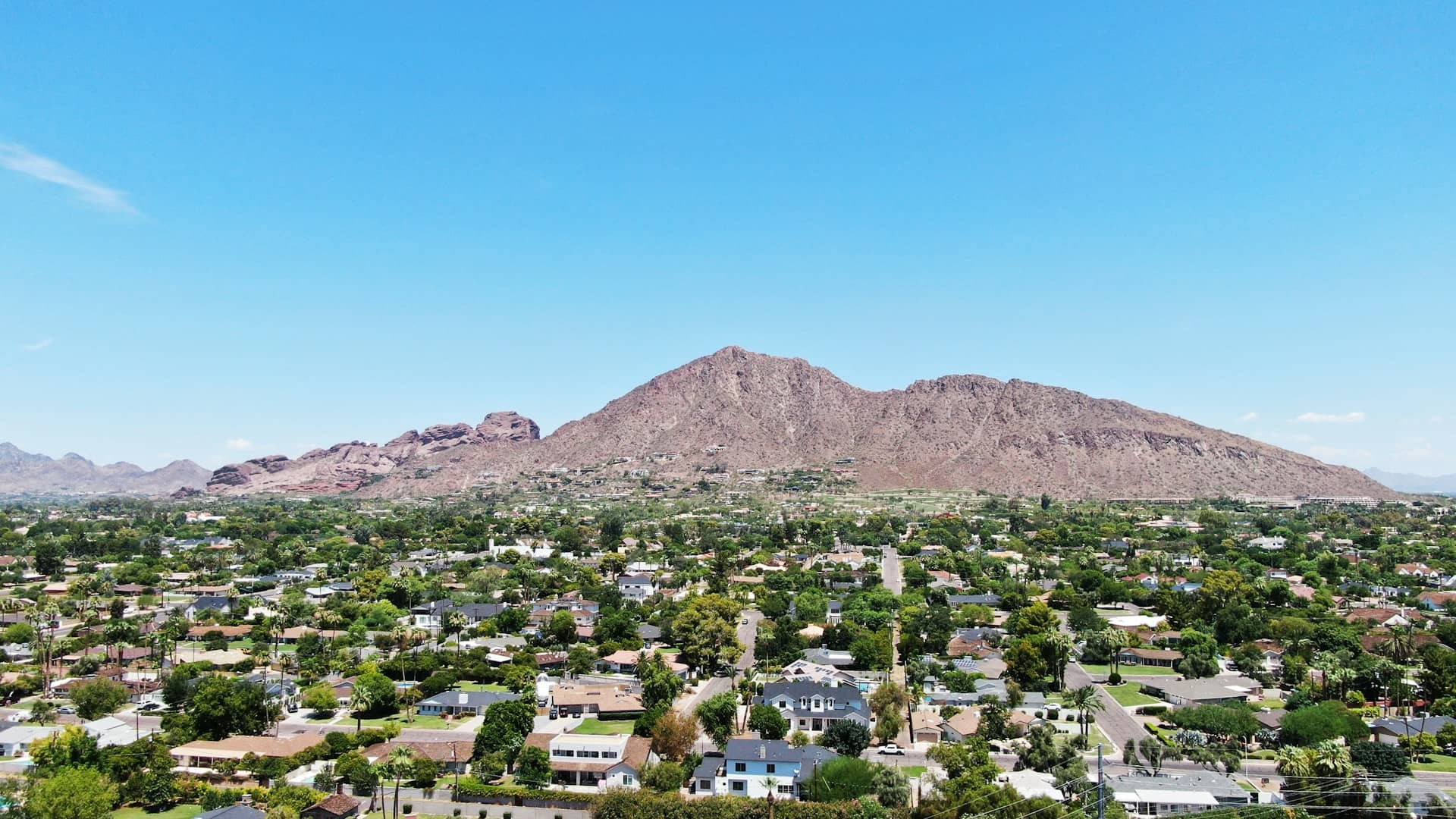
Phoenix is a large desert city that can feel expensive at first glance, especially around the downtown core. Still, many budget-friendly and no-cost options are spread across the metro area. From desert trails and public art to markets and cultural stops, it’s possible to fill your schedule without draining your wallet.
Start with the city’s trail systems and mountain parks. Public hiking areas like Papago Park and South Mountain Park offer wide paths, city overlooks, and desert plant life at no entry cost. Early mornings and sunset hours bring cooler air and better views. Bring water, wear solid shoes, and you’re set for a half-day outing.
Phoenix also has several museums and galleries that offer free admission days each month. Local art spaces, university galleries, and small history centers often open their doors at no charge on select dates. Check schedules in advance and group a few stops together to build a low-cost culture loop.
Add in public gardens, neighborhood murals, and self-guided architecture walks, and you’ll find that Phoenix offers plenty to do at little to no cost — if you know where to look.
1. Explore State History at the Arizona Capitol Museum
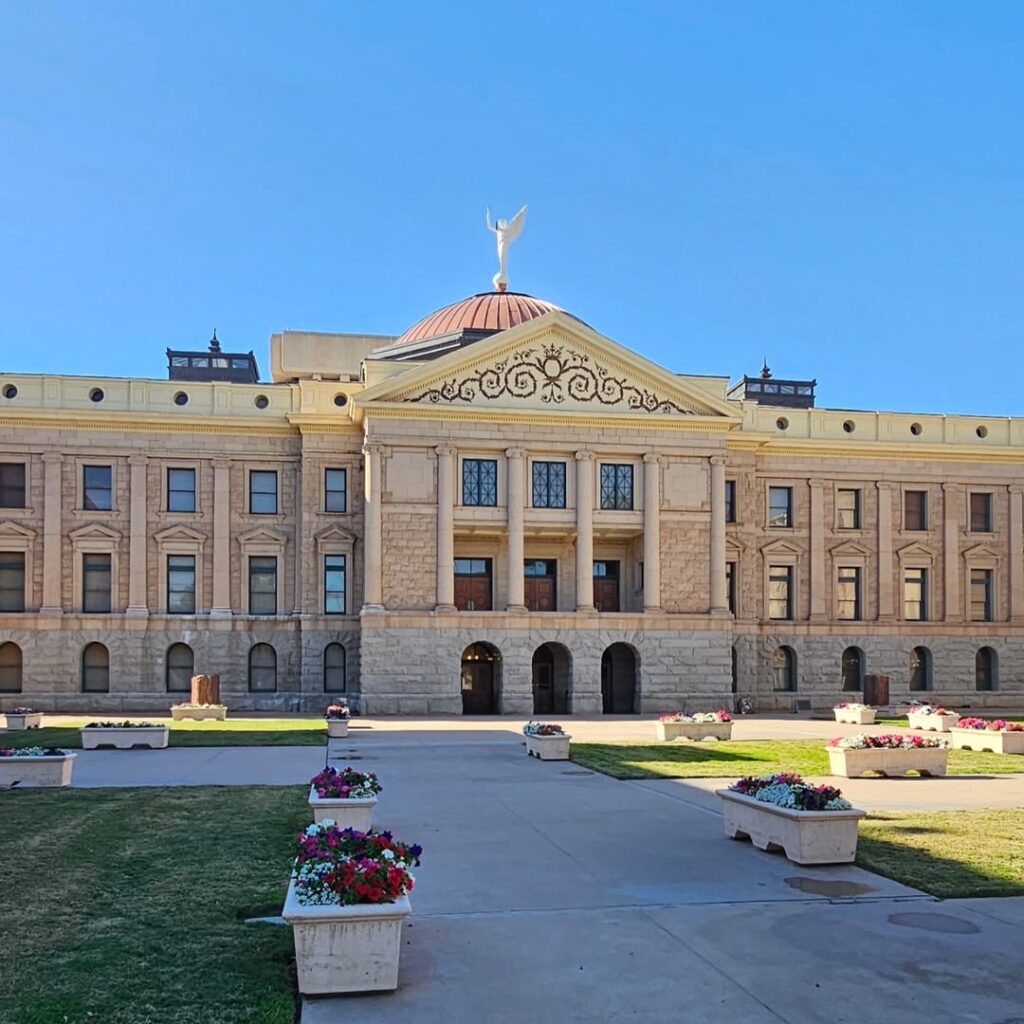
The Arizona Capitol Museum stands as a public history site where visitors can study how the state developed over time. The building itself once served as the working capitol, and today it operates as a museum open to guests at no charge. It gives a clear look at how laws, leadership, and daily life shaped Arizona across different eras.
Inside, galleries cover government structure, major policy changes, and social shifts that affected local communities. Displays include documents, restored rooms, period furniture, and multimedia presentations that explain key moments in plain language. The layout is easy to follow, so you can move at your own pace without a guided tour.
Several sections focus on civic education, voting, and public service. These areas help visitors understand how state government functions and how decisions are made. Short videos and labeled exhibits make the topics approachable for both adults and students.
Outdoor grounds around the museum also feature memorials and monuments connected to regional events and public figures. A visit here works well as a low-cost stop near downtown, especially when paired with a short walking route around nearby historic buildings.
2. See Old-Meets-New Sides of Phoenix at Heritage Square
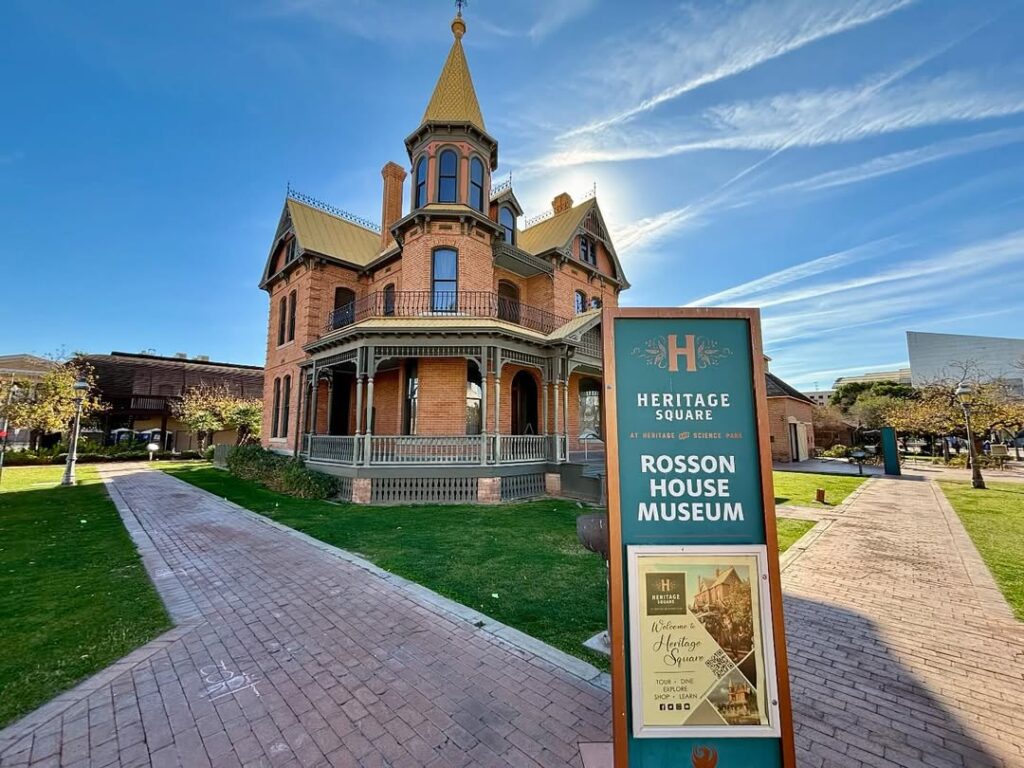
Heritage Square presents a sharp visual break from the glass towers and steel lines of downtown Phoenix. This preserved block holds a group of late-Victorian and early-20th-century houses that show how the city looked in its earlier growth period. The site is listed on the National Register of Historic Places and remains one of the few surviving historic clusters in the central area.
Several of the buildings now operate as small businesses, eateries, and exhibit spaces. Visitors can walk the grounds at no cost, read posted markers, and study architectural details from the sidewalk and garden paths. It’s a good stop for slow browsing and photo breaks between busier city attractions.
The standout structure here is the Rosson House Museum, a carefully restored 1890s home with period rooms and guided tours. Entry to this house is ticketed, while the rest of the square stays open for casual visits.
Planning note: General access to the square is free, but Rosson House Museum tours typically require about a $15 admission ticket. Check current hours before you go, as tour slots can be limited.
3. See Major Art Collections at the Phoenix Art Museum for Low or No Cost
The Phoenix Art Museum is the state’s largest fine art museum and holds a wide range of paintings, sculpture, photography, and design works. Pieces linked to artists such as Claude Monet, Diego Rivera, and Georgia O’Keeffe appear in its rotating and permanent collections. The layout mixes classic and modern styles, so each gallery section feels different as you move through the building.
Visitors who want a lower-cost visit should time their trip around special access periods. On Pay-What-You-Wish Wednesday, entry after 3pm is based on voluntary donation instead of a fixed ticket price. First Friday evening sessions also open the doors with free entry, plus short tours, music, and gallery talks that change by month.
Family Fundays run on select Sundays during the year and focus on hands-on activities for kids and adults. These dates include free admission and guided creative sessions, which makes the museum more interactive than a standard walk-through visit.
Planning note: Head straight to the Western Gallery. This section tracks how Arizona’s landforms and desert scenes influenced painters and modern artists across different decades. The contrast in styles is easy to spot and worth extra time.
4. Take on a Tough Climb at Camelback Mountain
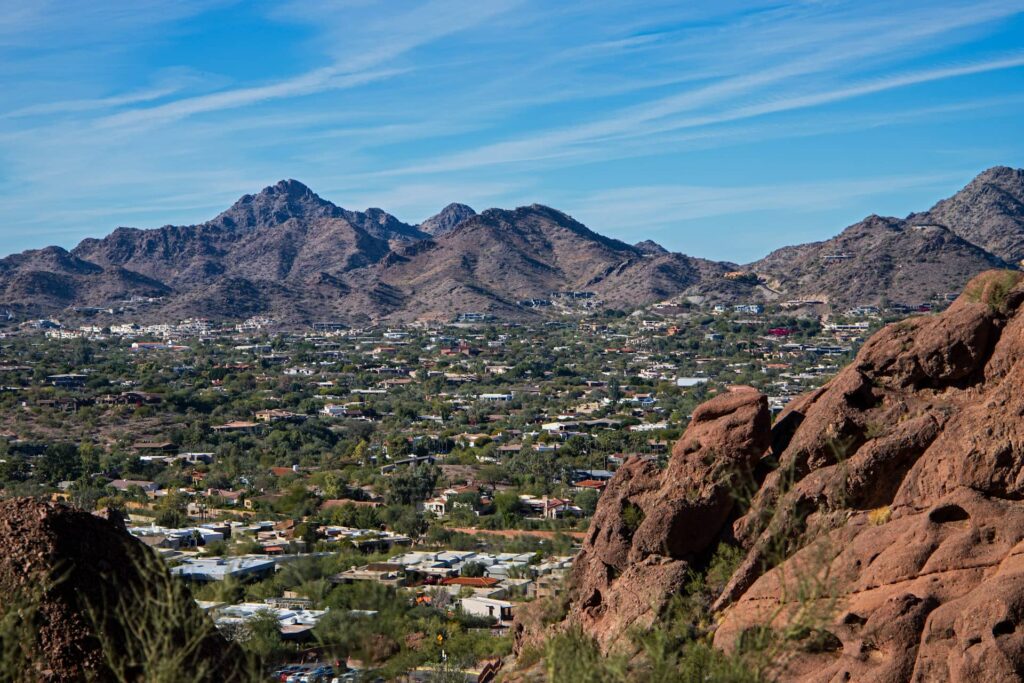
Camelback Mountain ranks among the most demanding urban hikes in the United States. Rising to about 2,704 feet, this twin-peaked formation sits near central Phoenix and draws hikers who want a steep, physical route rather than a casual walk. The terrain is dry, exposed, and often crowded during peak hours.
The two primary trails both carry a very difficult rating. Hikers face fast elevation gain, loose rock, and long stretches without shade. Weather plays a big role here. Heat builds quickly after mid-morning, so early starts are common. Carry more water than you think you need and pause often on the ascent.
The Echo Canyon Trail, located near 4925 E McDonald Dr, is short in distance but heavy in effort. It climbs roughly 1,264 feet over about 1.2 miles each way. Several sections require hand-and-foot movement across rock slabs and boulder steps, which slows the pace.
The reward at the top is a wide view over the Valley of the Sun. City blocks, desert flats, and distant ranges spread out in every direction. It’s a hard push, but many hikers count it as one of Phoenix’s standout outdoor challenges.
5. Learn Southwest Tribal History at the Heard Museum
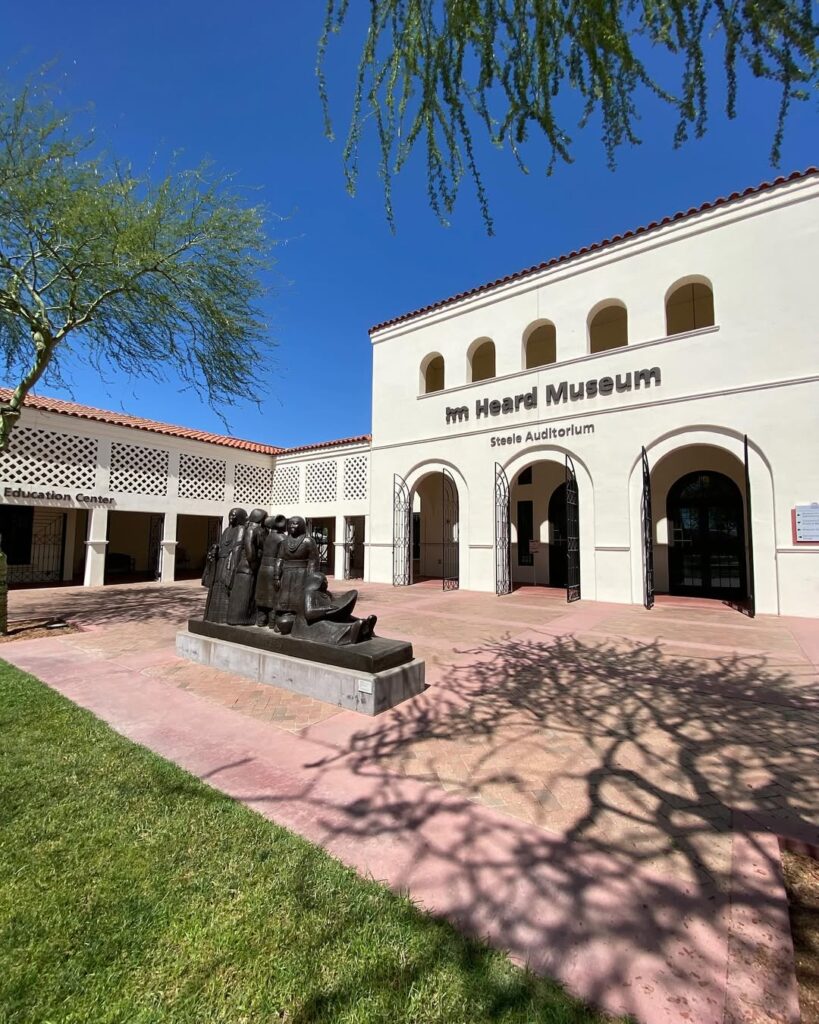
The Heard Museum is a leading cultural site in Phoenix focused on Native American tribes of the Southwest. Its exhibits cover daily life, artistic traditions, and historical records through objects, photos, and recorded stories. The presentation style is clear and direct, which makes it approachable even for first-time visitors.
Inside the galleries, guests will see painting, jewelry, textiles, pottery, and ethnographic displays. Film rooms and rotating exhibits add context and voices from tribal communities. A creative space for children gives younger visitors hands-on art activities tied to regional traditions.
One of the museum’s best-known holdings is its large collection of Hopi kachinas — carved spirit figures used for teaching and ceremony. Many pieces came from the personal collection of Barry Goldwater and show a wide range of carving styles and symbolism.
Planning note: Admission is free on the first Friday of each month (except March) from 5–9 pm. Special event days sometimes include Native art markets and hoop dance contests. Most visitors spend about two to three hours moving through the exhibits and outdoor areas.
6. Join the Monthly Art Walk at Phoenix First Friday
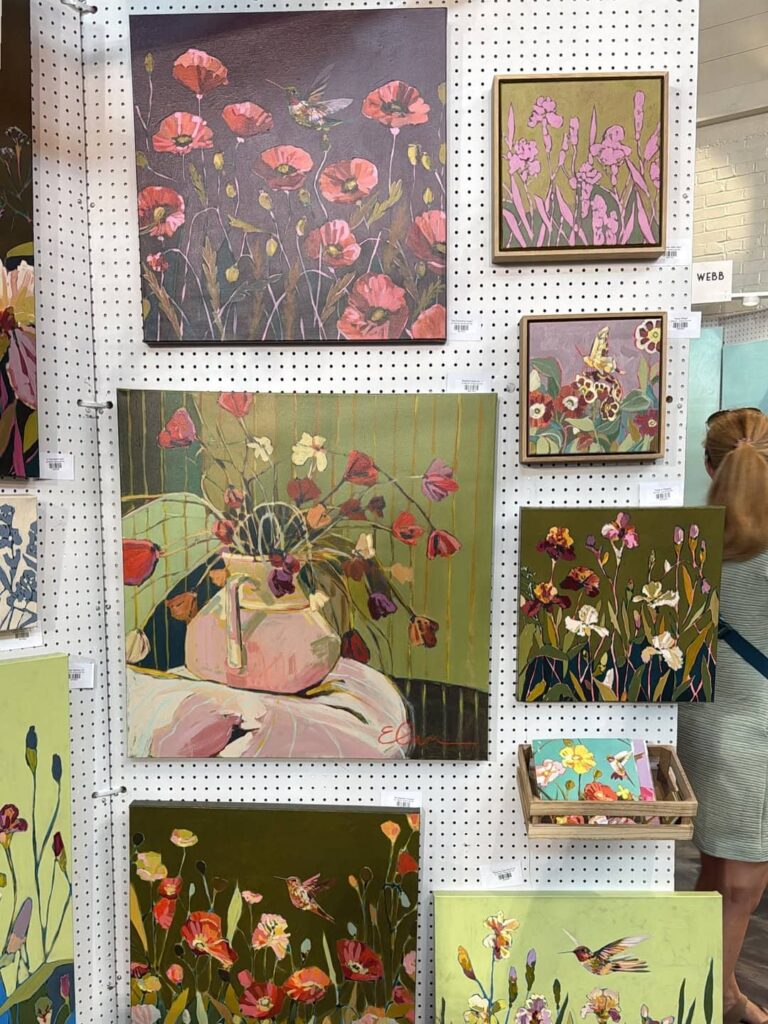
Phoenix First Friday takes place on the first Friday of each month from 6–10 pm and ranks among the largest self-guided art walks in the country. During these evening hours, large sections of the city open their doors for public viewing, with galleries, studios, and pop-up spaces welcoming foot traffic.
More than 70 locations usually take part, including art rooms, maker spaces, and creative venues. Visitors can walk block by block, step inside exhibits, talk with artists, and view new works without paying entry fees at most stops. Street performers and small vendors often line nearby routes, adding extra activity along the way.
Each district brings a different mood. Some areas lean toward modern pieces and experimental work, while others focus on painting, photography, or handcrafted items. Because it is self-paced, you can stay in one zone or move across several in a single evening.
Planning note: Use the Valley Metro light rail through downtown Phoenix to move between art districts. It cuts travel time and removes the hassle of parking on busy event nights.
7. Visit Desert Botanical Garden on Free Community Day
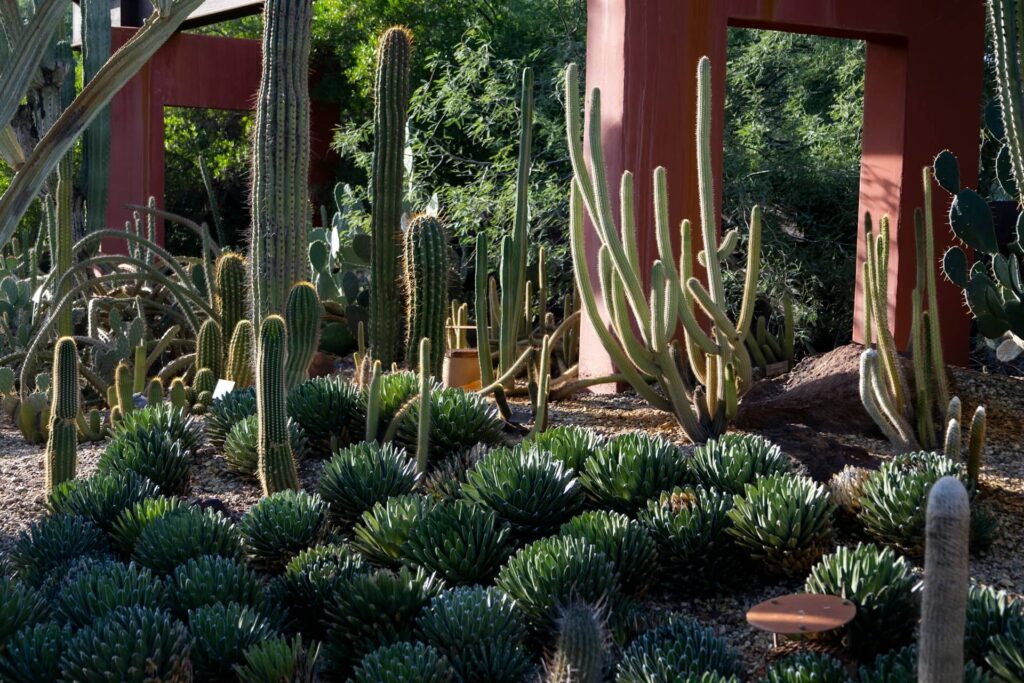
Community Day at the Desert Botanical Garden gives visitors free entry every second Tuesday of the month, with advance ticket reservations required. This large outdoor garden covers about 55 acres and holds thousands of desert plant species, including cacti, flowering shrubs, and dry-climate trees from several regions of the globe.
Marked walking loops guide guests through plant zones grouped by theme. You’ll pass through Sonoran Desert habitats, edible desert plant sections, and research plots that explain how species adapt to heat and low rainfall. Signboards keep explanations short and practical, so the visit never feels like a lecture.
From March through May, seasonal color peaks along the Desert Wildflower Loop Trail. Bluebells, Mexican gold poppies, and other spring blooms appear in rotating waves depending on rainfall and temperature. Outside spring, the garden still offers strong visual contrast through cactus shapes and rock layouts.
Planning note: Map your walking route before arrival to make good use of your time. Spring draws the largest crowds and the brightest flower displays, while early morning visits in other months offer cooler air and quieter paths.
8. Hands-On Play and Learning at the Children’s Museum of Phoenix

The Children’s Museum of Phoenix ranks among the top children’s museums in the United States and focuses on active, physical learning. The setup encourages kids to move, build, test ideas, and use their senses instead of just looking at displays. It works best for children up to about age 10, with parent participation built into many stations.
Inside, more than 300 play and learning activities fill three floors. Areas include climbing structures, mini markets, craft tables, water play zones, and simple engineering challenges. Each section supports problem-solving and creativity through direct action rather than passive viewing.
The layout is open and high-energy, so families can move between stations at their own pace. Short visits work well, but many groups stay for several hours because children tend to rotate back to favorite spots.
Planning note: Admission is free on the first Friday of each month from 5–9 pm. Entry during those hours runs on a first-come, first-served basis, so arriving early helps avoid long waits.
9. Walk the Murals and Local Spots at Roosevelt Row
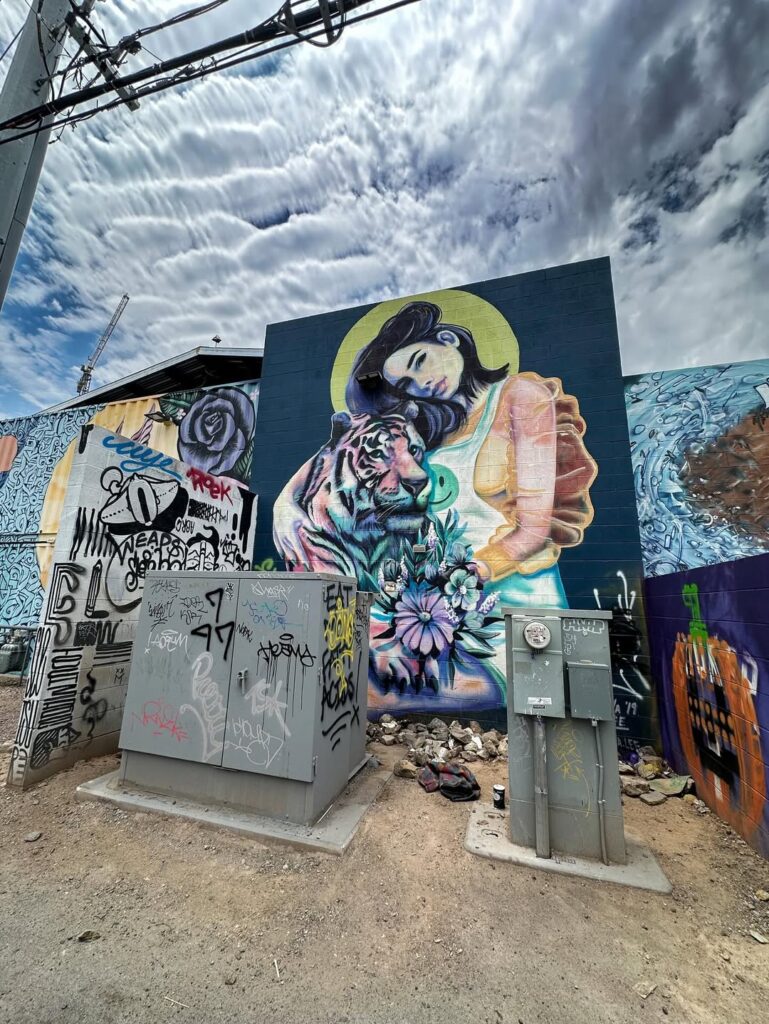
Roosevelt Row is a downtown Phoenix arts district known for large-scale street murals and independent creative businesses. The area supports working artists, small founders, and neighborhood groups by keeping public art and shared spaces active. It feels open-air and walkable, with new wall paintings appearing as older ones rotate out.
A slow walk along the main blocks reveals dozens of murals in different styles, from bold graphic work to detailed portrait pieces. Many walls change over time, so repeat visits rarely look the same. Between mural stops, you’ll pass locally owned shops, casual eateries, and small bars that give the district its steady foot traffic.
The streets are easy to cover without a fixed route. Visitors often move block by block, pause for photos, then continue toward the next painted wall or gallery door. Evening hours bring more activity, especially on art event nights.
Planning note: If you’re open to a small spend, visit From the Rooftop at Cambria Hotel Downtown Phoenix for a drink and a wide skyline view across central Phoenix. It’s a simple add-on after your mural walk.
10. Walk or Run the Loop Around Tempe Town Lake

Walkers, cyclists, and runners often head to Tempe Town Lake for its full 7-mile loop trail that circles the water. The reservoir, built in 1999, acts as a main recreation hub for a city of more than 180,000 residents. The paved route supports steady movement and works for both short exercise sessions and longer distance workouts.
The path follows both the north and south shores, giving changing views as you move around the lake edge. Bridges at Priest Drive and Mural Road connect the sides, so switching direction is simple. The surface is mostly smooth, which helps with bikes, strollers, and jogging.
For a shorter route, use the pedestrian bridge near the Tempe Center for the Arts to cut across the water and reduce total distance. This option is useful during hot weather or quick evening outings.
Public art pieces appear at intervals along both sides of the walkway. Sculptures and installations break up the route and give you natural pause points without leaving the trail.
11. Climb to the Summit of Piestewa Peak
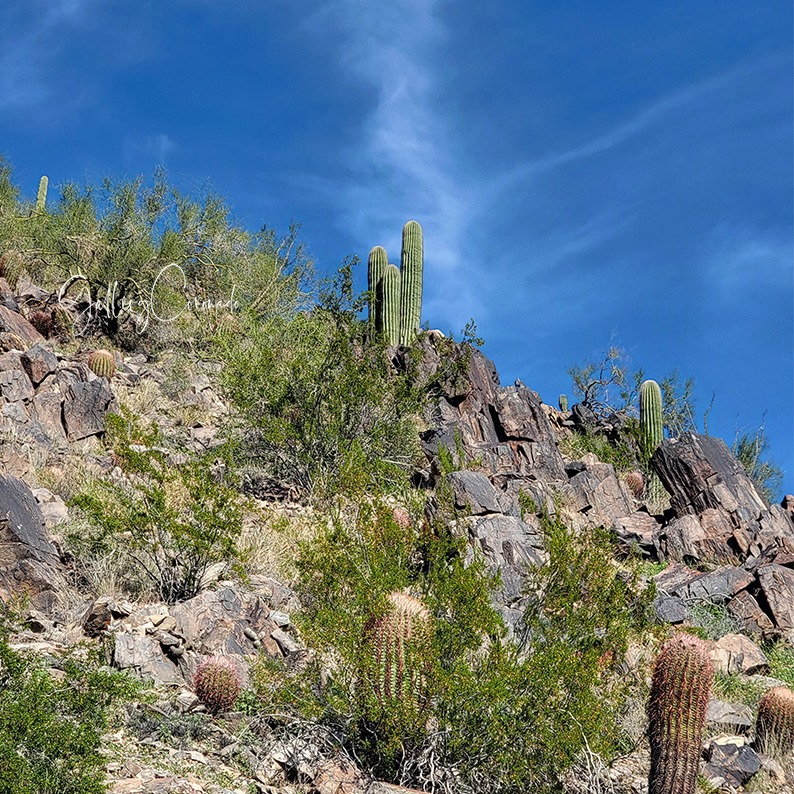
Hike up Piestewa Peak through desert slopes filled with saguaro cactus, ocotillo, and teddy bear cholla. The route leads to the second-highest point in the Phoenix Mountains, just below Camelback Mountain. From the upper sections, wide city and range views open up in every direction, making the steady climb worth the effort.
The peak honors Lori Piestewa, an Arizona local and Native American soldier who became the first Native American woman to die while serving in the US Armed Forces during the Iraq War in 2003. Trail signs and park information points share background on her legacy and the name change.
The main summit trail runs about 1.1 miles to the top, reaching roughly 2,600 feet in elevation. The path is steep, rocky, and direct, with long uphill stretches and limited shade. Many hikers treat it as a fitness climb rather than a casual walk.
Planning note: Winter weekends draw heavy crowds, and parking lots often fill early. Arrive near sunrise or later in the afternoon to find a space more easily and avoid peak trail traffic. Bring extra water due to the exposed terrain.