
Want a true festive adventure hopping between Europe’s best Christmas markets without the hassle of flying during the busiest season? This Europe Christmas market train itinerary reveals how to explore the continent’s most enchanting holiday destinations—Germany, France, Austria, and beyond—entirely by rail.
As winter sets in and daylight shortens, towns and cities across Europe transform into storybook scenes. Market squares glow under strings of lights, carol choirs fill the air, and stalls brim with handmade crafts, ornaments, and warm mugs of Glühwein. The smell of roasted nuts and spiced pastries wraps around you, instantly putting you in that holiday spirit.
The roots of this festive tradition trace back to medieval Germany, but today, Christmas markets have spread across Europe in countless forms. Some shimmer with fairytale charm, while others feel overly commercial. Choosing where to go—and how to connect them all—can be overwhelming for first-timers.
After visiting more than 40 markets in 20 cities across 13 countries, I’ve pieced together the ultimate itinerary. This route links 14 cities across five nations, each destination celebrated for its atmosphere, local traditions, and effortless train connections.
Here’s what you’ll find inside this complete guide:
- A curated list of top markets in every country, with confirmed dates and official sources
- Flexible route options for 7 to 21 days, ideal for travelers short on time or ready for a full holiday odyssey
- Exact train routes with scenic stopovers worth adding to your journey
- Budget advice including Eurail/Interrail pass recommendations, eSIM options, and more practical travel tools
- Extra experiences beyond the markets—think castles, historic cafés, thermal spas, and river walks
- Honest insights on which markets live up to the hype and which to skip
- Handpicked hotel suggestions near central stations or market squares for maximum convenience
This itinerary brings together Europe’s most magical Christmas scenes, connected by cozy, scenic train rides that make the journey just as joyful as the destination.
At a Glance: Europe Christmas Market Train Route
Overview of the Christmas Market Train Adventure
- Arrive in Frankfurt
- Take a day trip to Cologne
- Take a day trip to Nuremberg
- Travel from Frankfurt to Strasbourg
- Take a day trip to Colmar
- Journey from Strasbourg to Basel via Mulhouse
- Continue from Basel to Innsbruck through Zurich
- Travel onward from Innsbruck to Salzburg
- Head from Salzburg to Vienna
- Take a day trip to Bratislava
- Travel from Vienna to Prague
- Continue from Prague to Dresden
- Depart from Dresden or circle back to Frankfurt for your flight
Europe Christmas Market Itinerary Map
The Complete European Christmas Market Rail Itinerary
How Much Time Should You Plan for This Trip?
The ideal duration for this European Christmas market route is around two and a half weeks. That timeframe gives you the chance to spend a full day exploring at least twelve festive cities, while still leaving space for restful breaks and spontaneous detours for non-Christmas experiences along the way.
If you’re working with a tighter schedule, you can easily trim this itinerary by choosing a single section—perhaps focusing on Germany and France, or Austria and the Czech Republic. Below the full route, you’ll find detailed ideas for one-week versions that capture the holiday magic without feeling rushed.
For those blessed with extra time, extend the journey by slowing down in select destinations or adding more cities to your loop. At the end of the guide, you’ll find optional extensions and add-on ideas, including connections to my longer three-month Europe itinerary, allowing you to weave this festive route into a grand continental adventure.
Who is This Christmas Market Journey Best Suited For?
This Europe Christmas market itinerary is for:
- Travellers from outside Europe who want to make the most of visiting Europe in winter
- Christmas lovers who thrive on festive cheer and don’t mind the chill or the crowds
- Food enthusiasts eager to taste regional winter treats and local delicacies
- Train travel fans who prefer a scenic, flight-free adventure across countries
This Europe Christmas market itinerary is not for:
- People with very limited time — if you only have a weekend or a few days, it’s better to pick one base city such as Strasbourg, Frankfurt, or Salzburg and take a short day trip from there (for instance, Colmar, Cologne, or Innsbruck)
- Travellers who dislike crowds, cold temperatures, or the busy energy that comes with holiday markets
Where Does This European Christmas Markets Train Itinerary Start?
This festive train journey can conveniently form a loop by linking Dresden and Frankfurt, allowing you to begin and end your trip wherever it suits you best. The flexibility means you can shape your route based on flight deals, timing, or your preferred pace of travel.
A smart approach is to look into which cities offer the most affordable entry and exit points before finalizing your plan. Major hubs such as Frankfurt, Vienna, and Prague often provide the best-value flights, making them practical starting points for an enchanting circuit through Europe’s Christmas markets. From there, you can weave your way through charming towns, snow-dusted squares, and candlelit stalls before circling back to your starting destination.
Is a Eurail or Interrail Pass Necessary for This Route?
You don’t absolutely need one, but if you’re following this full Christmas market route, a rail pass might help you cut costs while giving you far greater freedom. Having a Eurail or Interrail Pass allows you to hop on most trains—particularly those without seat reservations—without needing to pre-book. That means you can arrive at the station whenever you’re ready and catch the next train that fits your timing.
Some routes, especially high-speed trains in France, still require a reservation. Even so, the additional fee is typically lower than buying a standard ticket during peak travel periods. I’ve included all seat reservation details within this itinerary so you can plan confidently. To decide whether a pass truly benefits you, compare the total price of individual tickets with the combined cost of a pass plus any required reservations.
If you do decide to purchase, booking through Klook often provides a more flexible cancellation policy—free cancellation until you activate your pass—unlike Eurail’s direct 10% cancellation fee.
If you’re unfamiliar with how the passes work, start with these detailed guides to make the process easier:
European Christmas Market Itinerary: Day by Day Journey
Day 1: Frankfurt
Frankfurt Christmas Market 2025 Dates: 25 November – 22 December (official details available on the city’s tourism site)
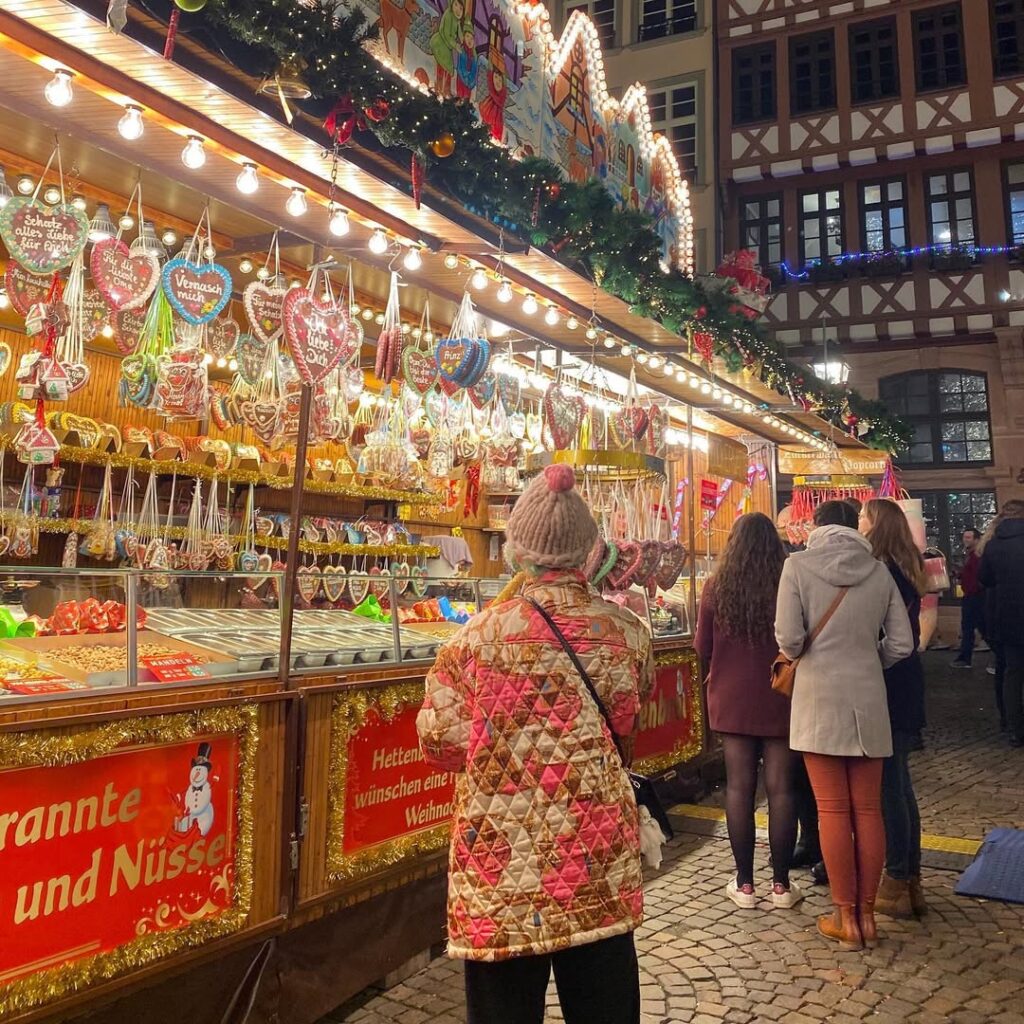
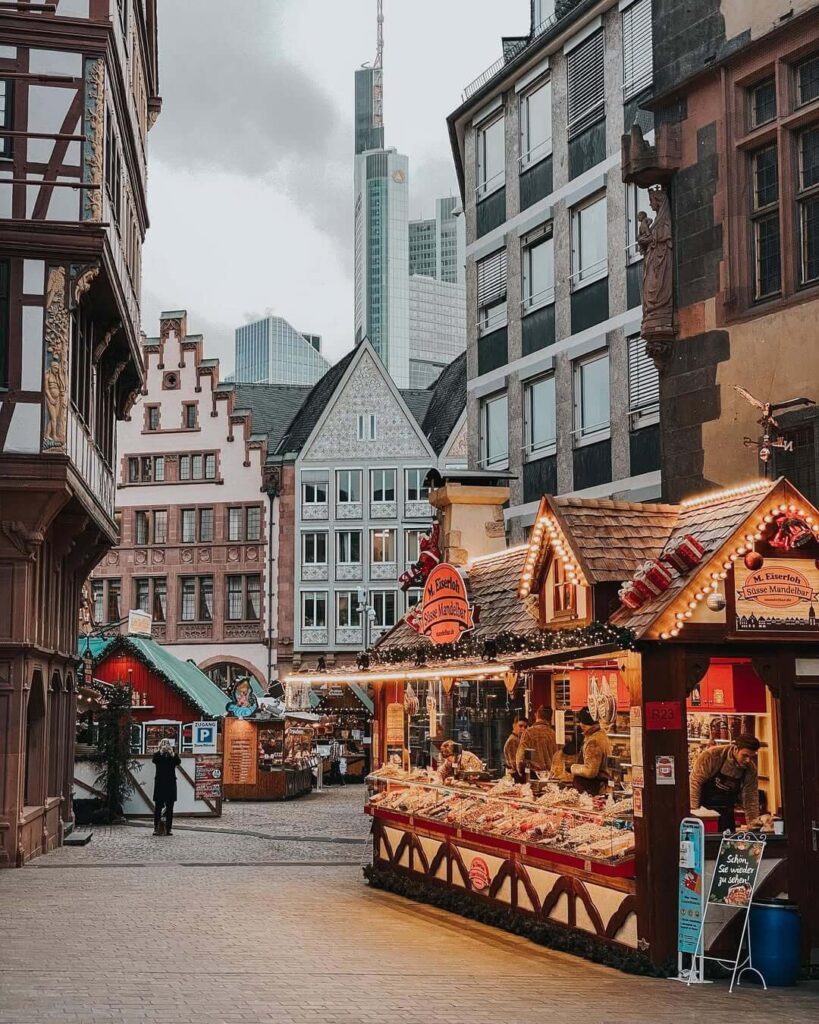
Frankfurt might be recognized globally as Germany’s financial powerhouse, but during the festive season, the city reveals a completely different side. The historic Römerberg square turns into a glittering Christmas hub where tradition and modern culture blend seamlessly. Wooden stalls overflow with handcrafted gifts, baked treats, and the rich aroma of roasted chestnuts fills the crisp winter air. At the center, an enormous Christmas tree towers above the crowd, surrounded by the hum of laughter and carols drifting through the evening.
A highlight here is the grand two-tiered carousel that brings a joyful swirl of nostalgia — though perhaps steer clear if you’ve enjoyed one too many cups of Glühwein or spiked cocoa! Beyond Römerberg, other nearby markets are easily walkable, though some take a more global twist, offering dishes like bao buns, Peruvian tamales, or fragrant curries alongside traditional German fare.
Christmas Market Tip: Throughout Europe’s festive markets, hot drinks are served in themed mugs — some shaped like Santa boots, others painted with charming Christmas motifs. You’ll pay a small deposit (usually €3–5), refundable upon return. Many visitors, however, keep the mugs as cherished souvenirs — just rinse them, wrap them up, and tuck them safely in your bag.
Other Things to Do in Frankfurt
- Explore the Museum District, home to galleries on natural history, fine arts, and cultural heritage
- Join a food tour to sample the city’s evolving culinary scene
- Take a river cruise for a panoramic view of Frankfurt’s skyline glittering against the winter dusk
Where to Stay in Frankfurt
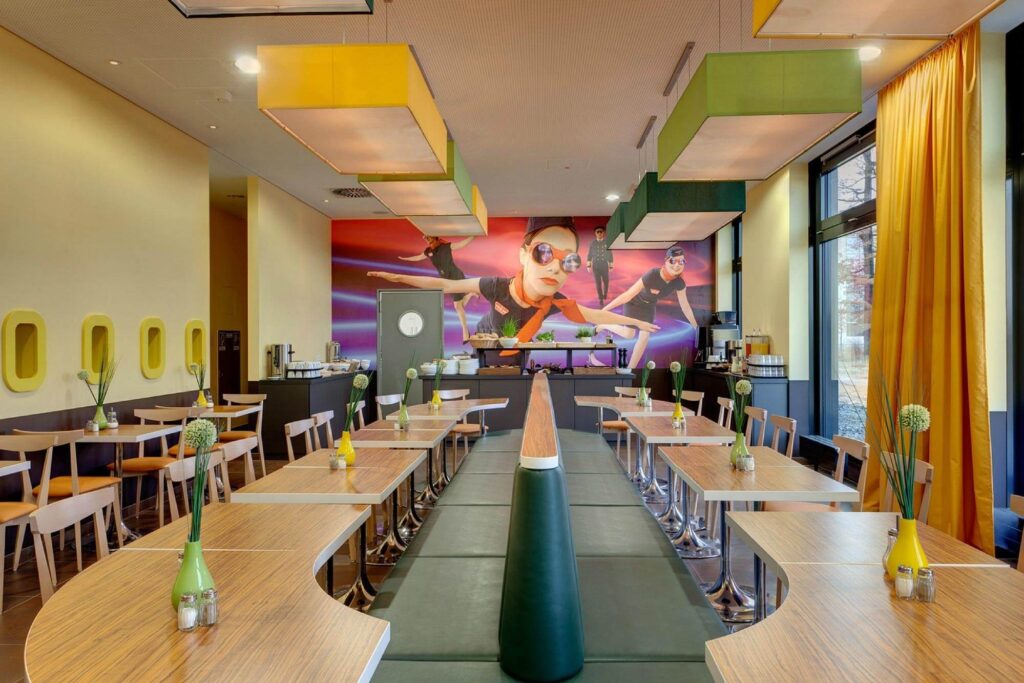
- Budget: MEININGER Frankfurt Airport – A modern, budget-friendly option blending hostel and hotel features, complete with a shared kitchen, laundry area, and work-friendly spaces. It’s just a short walk from the S-Bahn station, only ten minutes from the city center.
- Mid-range: Motel One Frankfurt-Römer sits right by the market, while The Blasky adds a creative edge. Melia Frankfurt offers a touch more polish, and Studiohouse provides stylish self-contained apartments for added comfort.
- Luxury: Sofitel Frankfurt Opera, Roomers, Steigenberger Icon, and JW Marriott all promise refined stays, impeccable service, and prime access to the city’s festive charm.
Day 2: Cologne Day Trip from Frankfurt
Cologne Christmas Market 2025 Dates: 17 November – 23 December for the main market at the Cathedral (smaller ones vary; check the official site for details)
How to Get to Cologne from Frankfurt
Frequent direct trains link Frankfurt and Cologne throughout the day, with travel times ranging from 1 hour 5 minutes to 1 hour 25 minutes. If you’re travelling with a Eurail or Interrail Pass, you can board without a seat reservation—simply hop on the next available train and enjoy the scenic ride through western Germany.
About Cologne
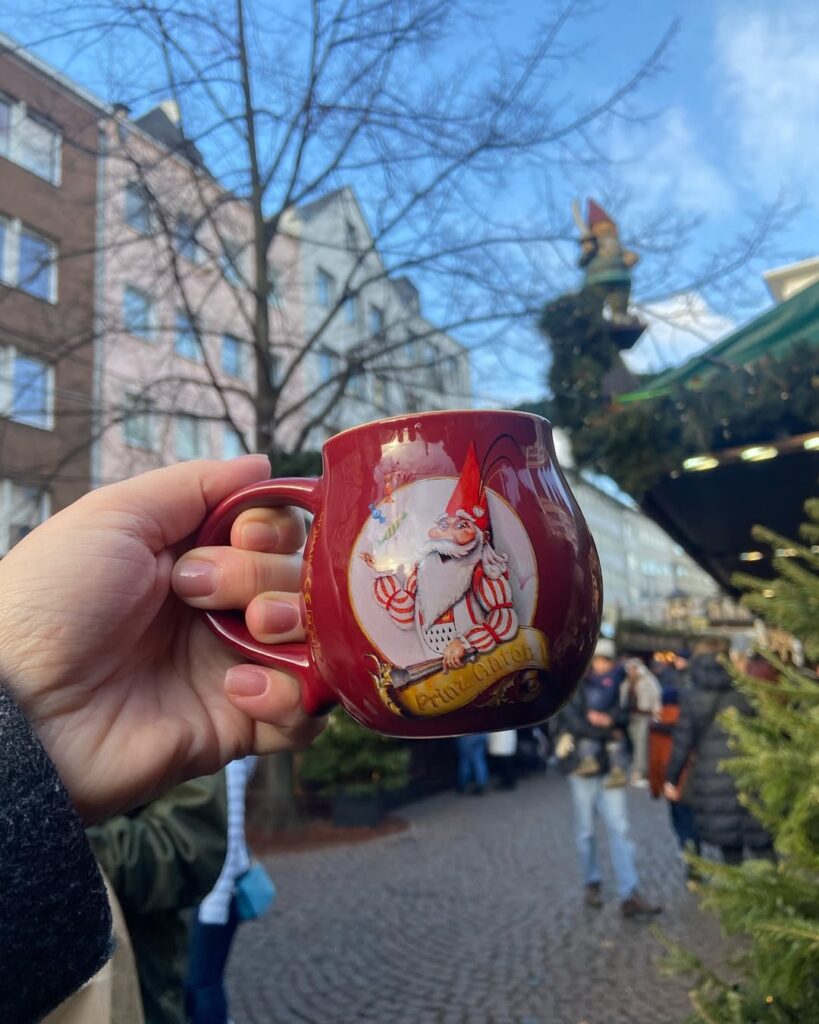
Cologne’s Christmas celebrations easily fill a full day, so start early and plan to stay until after dinner to experience the city in its full festive glow. The main market unfolds beside the towering Cologne Cathedral—Northern Europe’s largest Gothic church—and brims with the aromas of roasted nuts, spiced Glühwein, and sizzling currywurst. Strings of golden lights hang overhead, while live bands and choirs perform beneath the cathedral’s shadow, giving the whole square an almost cinematic charm.
Beyond the main market, Cologne is scattered with several themed fairs, all within easy walking distance. Just follow the flow of visitors through the streets, and you’ll stumble upon one cheerful gathering after another.
- Markt der Engel (Angels’ Market): A whimsical setting filled with rustic wooden stalls, paper star lanterns, and actors dressed as angels gliding through the crowd.
- Nikolausdorf (St. Nicholas Village): Located at Rudolfplatz through the medieval Hahnentor gate, this family-oriented market charms with gingerbread, candies, and warm smiles.
- Heinzels Winter Fairytale: My personal favorite—complete with an ice rink, artisans carving wooden ornaments, and mouthwatering specialties. Be sure to try feuerzangenbowle, a dramatic flaming punch made by drizzling rum over a burning sugar cone into hot wine.
While you could stay overnight, accommodation costs rise sharply in December. A day trip from Frankfurt keeps things affordable and stress-free.
Other Things to Do in Cologne
- Join a street art or cycling tour to explore Cologne’s creative corners
- Visit local breweries for a taste of Kölsch beer or take part in a guided brewery crawl
- Enjoy a harbour cruise to see the city lights reflected on the Rhine
Travel Tip: Need cash for the markets? Skip the ATMs inside Cologne’s main train station—they often charge around €4 for foreign cards. Instead, head to the BB Bank on the corner just outside the station (front-right exit). Their machines don’t charge international withdrawal fees. A small move that can save you a few warm mugs of Glühwein!
Day 3: Nuremberg Day Trip from Frankfurt
Nuremberg Christmas Market 2025 Dates: 28 November – 24 December (see official site for confirmation)
How to Get to Nuremberg from Frankfurt
Frequent direct trains connect Frankfurt and Nuremberg, taking just over two hours. If you’re travelling with a Eurail or Interrail Pass, you won’t need to make a reservation—simply board any available train and enjoy a relaxed journey through Bavaria’s wintry landscapes.
About Nuremberg
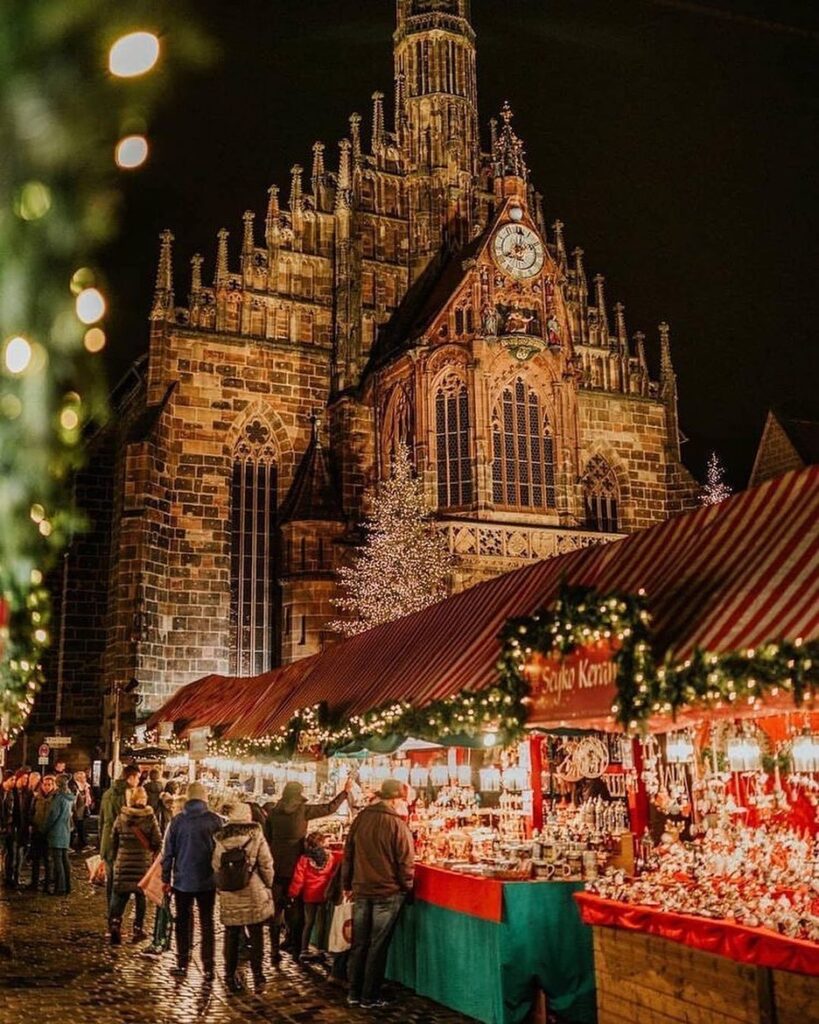
Nuremberg’s Christkindlesmarkt is one of Europe’s oldest and most renowned festive markets, tracing its history back to the 16th century. Each year, it draws millions of visitors eager to experience its traditional atmosphere and timeless charm. The square glimmers with rows of red-and-white striped stalls, each brimming with handcrafted gifts, ornaments, and warm treats that fill the air with comforting aromas.
A visit here isn’t complete without sampling Nuremberg’s signature Lebkuchen, the city’s famous spiced gingerbread, or a Weggla, a hearty roll filled with three miniature Nuremberg sausages—a simple yet satisfying bite.
If time allows, staying overnight gives you a chance to experience the market both by daylight and under the evening glow. However, rooms sell quickly during this season, so advance booking is wise. For those continuing on to Strasbourg, the next stop on this itinerary, connections run conveniently via Frankfurt or Karlsruhe.
Other Things to Do in Nuremberg
- Join a Christmas culinary tour to taste seasonal specialties and local sweets
- Step into history with a visit to Nuremberg’s medieval dungeons
- Go beneath the surface on a WWII bunker tour, offering insight into the city’s past and its preservation efforts
Day 4–5: Strasbourg
Strasbourg Christmas Market 2025 Dates: 26 November – 24 December (see official site for details)
How to Get from Frankfurt to Strasbourg
Direct trains operate several times daily, with travel times ranging from 1 hour 55 minutes to just over 2 hours. As this route includes a high-speed train into France, Eurail and Interrail Pass holders are required to pay a €19 seat reservation fee.
If you prefer to avoid that cost, an alternative is the slightly longer route via Offenburg — a comfortable two-train journey taking around 2 hours 15 minutes. It uses regional services that do not require reservations and often offer a more relaxed, scenic ride through the Rhine Valley.
About Strasbourg
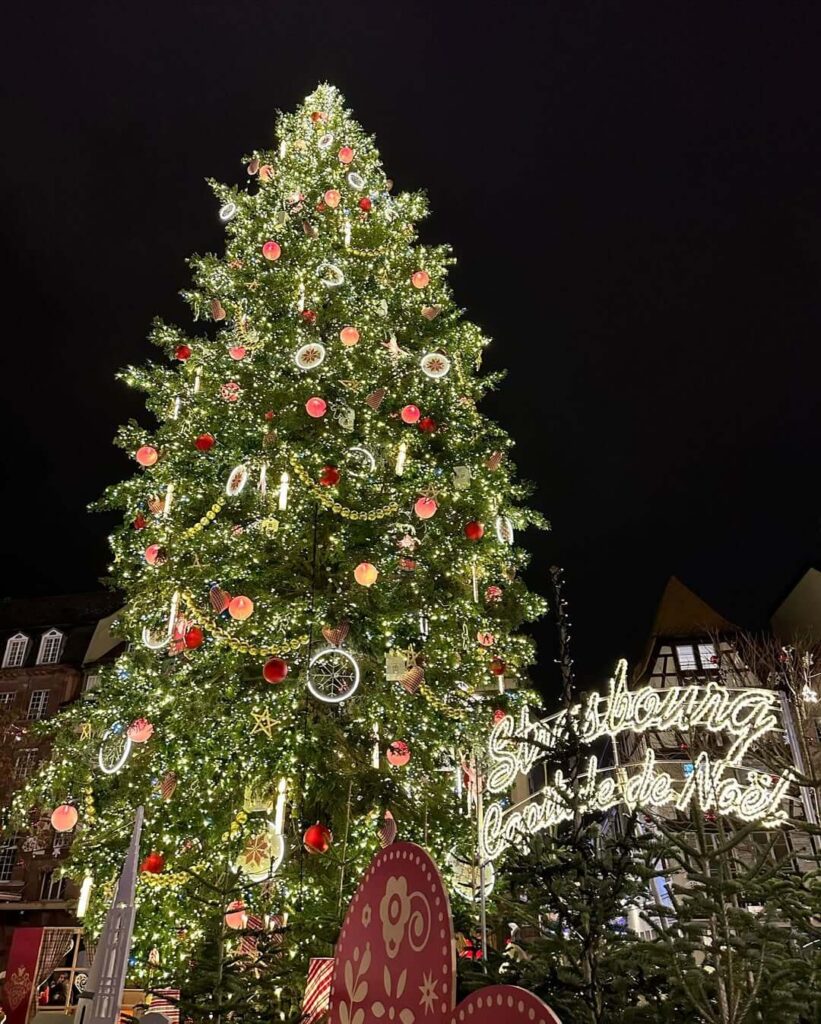
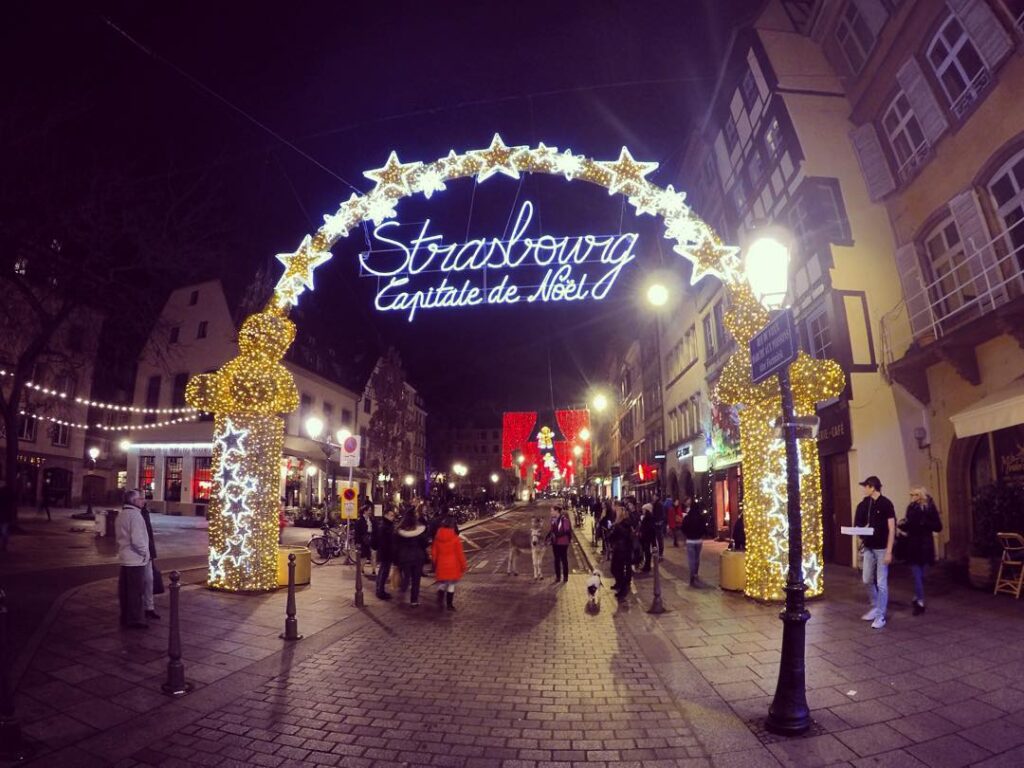
Often called the Capital of Christmas — and rightfully so — Strasbourg hosts the oldest Christmas market in France, dating back to 1570. The historic Grande Île, encircled by canals, transforms into a festive wonderland of twinkling lights, music, and aromas drifting from over a dozen themed markets. It’s a captivating fusion of French elegance and German coziness, reflected in everything from the architecture to the cuisine.
Strasbourg’s light displays are spellbinding. The majestic Cathedral of Notre-Dame glows above the main market, while Petite France bursts with creative decorations along its narrow lanes. Don’t miss the 30-metre Christmas tree at Place Kléber, the centerpiece of the season, or the charming Teddy Bear House, adorned with oversized plush figures gazing out from every window.
Food is a highlight here — from warm, cheese-topped bretzels and crisp flammekueche (known locally as tarte flambée) to sweet chouquettes, airy pastry puffs dusted with sugar. Each bite carries the warmth of Alsace’s festive traditions.
Where to Stay in Strasbourg
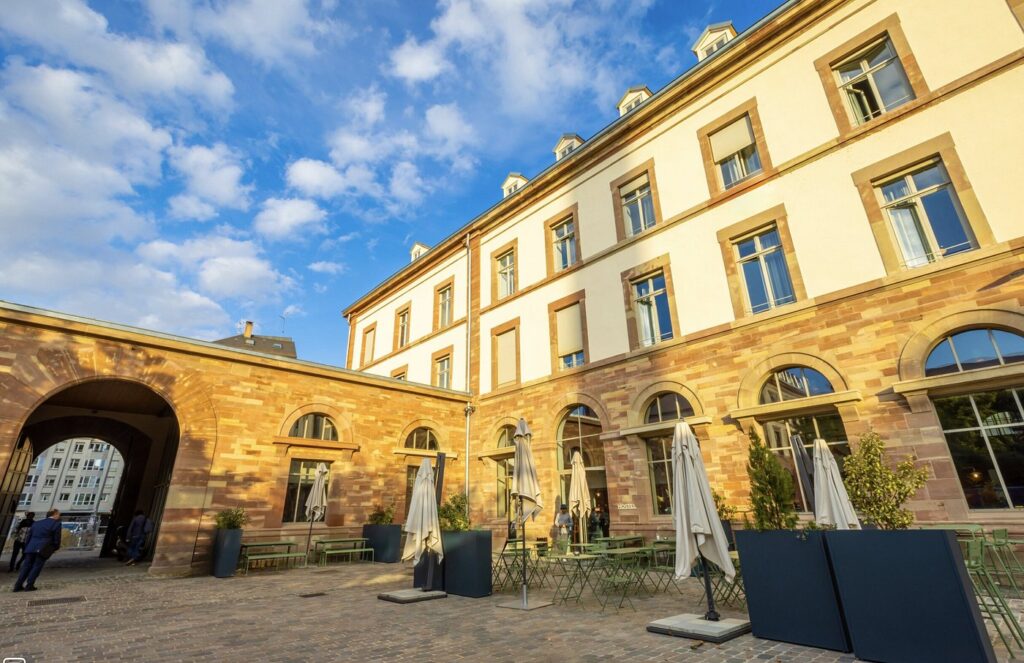
- Budget: People Strasbourg offers a chic, modern hostel experience just seven minutes from the main market. Pod-style beds provide comfort and privacy, though the absence of a kitchen may increase your food expenses. For budget-friendly hotels, Hotel F1 and Néméa Appart-Hôtel Elypséo are decent alternatives slightly outside the city center.
- Mid-range: Citadines Eurometropole, K Hotel, and Best Western Plus Monopole Métropole deliver comfort, good locations, and great value for money.
- Luxury: For an indulgent stay, Maison Rouge Strasbourg, Hôtel LÉONOR, and Hotel Cour du Corbeau stand out with refined interiors, excellent service, and easy access to the main festivities.
Day 6: Colmar Day Trip
Colmar Christmas Market 2025 Dates: 25 November – 29 December (see official website for updates)
How to Get from Strasbourg to Colmar
Regional trains between Strasbourg and Colmar run frequently throughout the day, taking just around 30 minutes. No seat reservation is required for Eurail or Interrail Pass holders. However, with one-way fares priced at only €14.10, it’s often more cost-effective to purchase a standard ticket instead of using a Eurail travel day if you’re on a flexi pass.
About Colmar
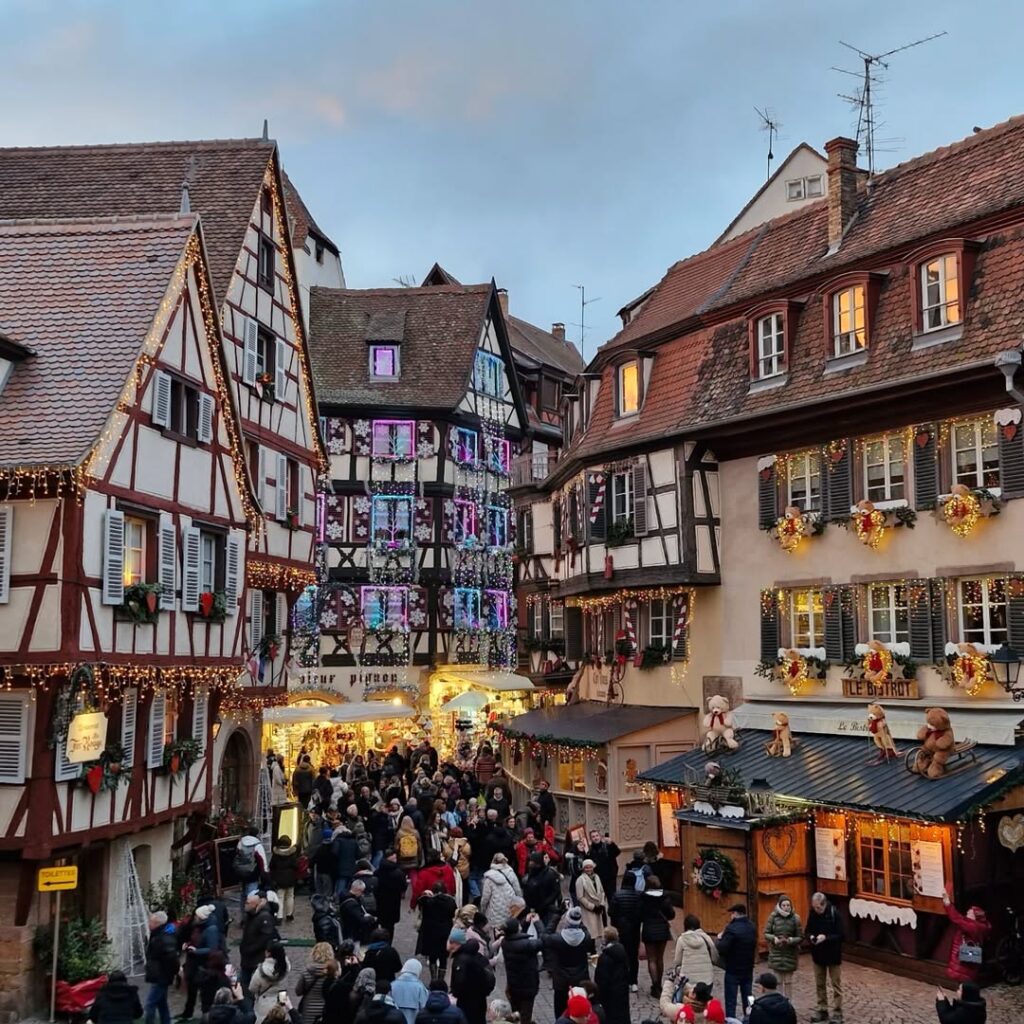
Colmar’s Christmas markets feel like a living fairy tale — a dreamy mix of timber-framed houses adorned with garlands, glowing lights mirrored in canals, and handcrafted displays that bring festive stories to life. The city’s historic centre hosts six Christmas markets with nearly 180 stalls, each brimming with handmade ornaments, artisanal treats, and seasonal specialties that celebrate Alsatian craftsmanship.
The highlight for many visitors is the Marché Gourmand at Place de la Cathédrale. Here, acclaimed local chefs prepare gourmet dishes at surprisingly affordable prices. Imagine a creamy truffle risotto for €11 or a fine duck confit for under €15 — all served al fresco, surrounded by twinkling lights and the comforting aroma of mulled wine. Despite its immense beauty, Colmar remains one of the most budget-friendly destinations on this route. Expect to pay roughly €2.50–€3 for vin chaud, €2.50 for a sugar crêpe, and around €6 for a hearty sausage in a bun.
About Eguisheim and Riquewihr
If you crave a quieter experience, consider visiting smaller nearby markets in Eguisheim or Riquewihr, two Alsatian villages that seem frozen in time. Though there are no direct train stations, both are easily reachable by bus from Colmar — roughly 16 minutes to Eguisheim and 28 minutes to Riquewihr. Their compact squares, decorated cottages, and traditional stalls offer a more local, intimate feel away from the main crowds.
Colmar’s accommodation fills up quickly during the festive period, and choices are limited. It’s usually best to return to Strasbourg after your visit — the short train ride back allows you to rest comfortably and prepare for the next leg of your European Christmas market journey.
Day 7–8: Basel via Mulhouse
Mulhouse Christmas Market 2025 Dates: 24 November – 27 December (see official site for updates)
Basel Christmas Market 2025 Dates: 27 November – 23 December (see official site for confirmation)
How to Get from Strasbourg to Basel
Frequent regional trains connect Strasbourg to Basel in around 1 hour and 20 minutes, running roughly every half hour. There’s no need for seat reservations if you’re travelling with a Eurail or Interrail Pass. The route conveniently passes through Mulhouse, offering a great chance to experience another festive stop on the way.
About Mulhouse
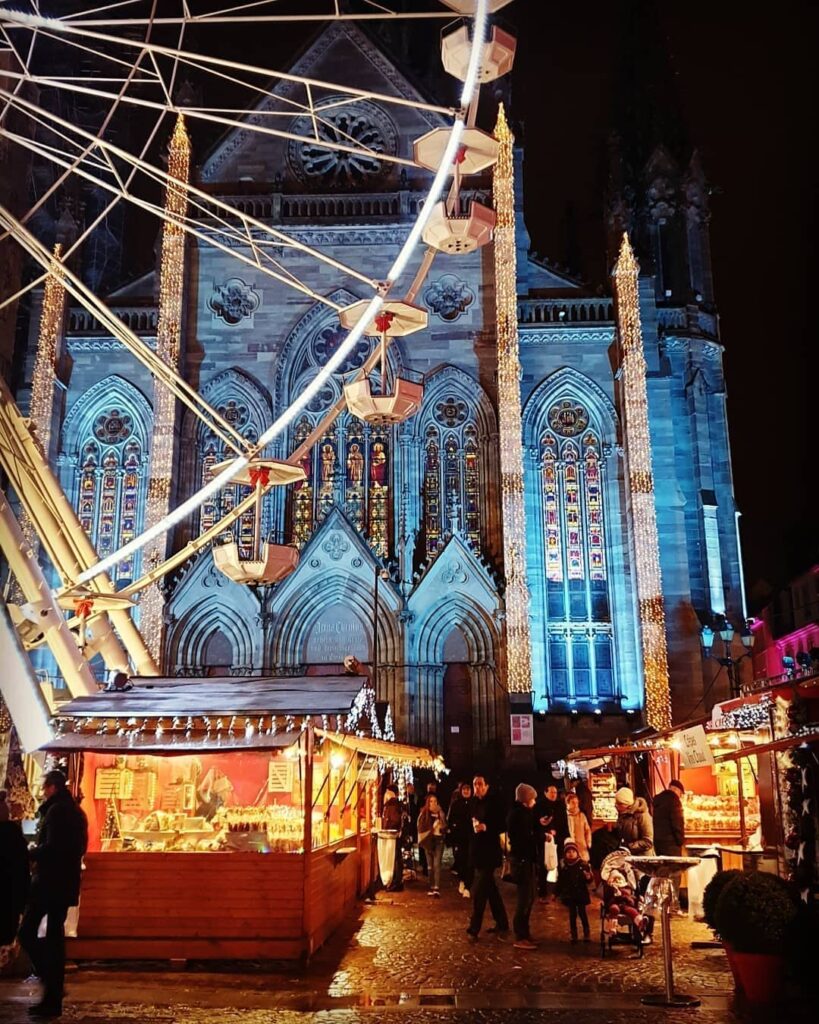
Mulhouse’s Marché de Noël is a celebration of the city’s textile heritage, weaving its artistic spirit into the festive atmosphere. Fabrics designed and printed locally adorn buildings across the old town, creating a patchwork of color and warmth. Take a stroll through its compact centre and admire the detailed craftsmanship that defines the market — stalls brimming with handmade accessories, jewelry, scarves, and other thoughtful gifts.
If you have time between trains, it’s well worth hopping off here. The station has luggage storage, allowing you to wander freely before continuing on to Switzerland. Mulhouse offers a more laid-back Christmas experience — smaller, charming, and steeped in cultural flair.
About Basel
Crossing into Switzerland, you’ll find Basel’s Christmas celebrations among the country’s finest. The market radiates warmth and grandeur, stretching through Barfüsserplatz and Münsterplatz. Wooden chalets glow beneath ornate garlands, and the air fills with the scent of roasted nuts, cinnamon, and melting cheese.
Don’t miss Basel’s culinary highlights: steaming cups of Glühwein, creamy spiced hot chocolate, or the irresistible chäsbängel — a crusty baguette stuffed with fondue cheese. For a perfect view over the glowing market lights, climb the stairwell of St. Martin’s Tower (tickets cost 6 CHF, last entry at 5:30 p.m.). The panorama from above captures Basel’s festive beauty in one breathtaking sweep.
Other Things to Do in Basel
- Explore the city’s emerging craft beer scene, where local breweries experiment with seasonal blends.
- Join a walking tour of the Old Town to admire Basel’s Gothic spires, medieval squares, and art-filled alleys.
Where to Stay in Basel
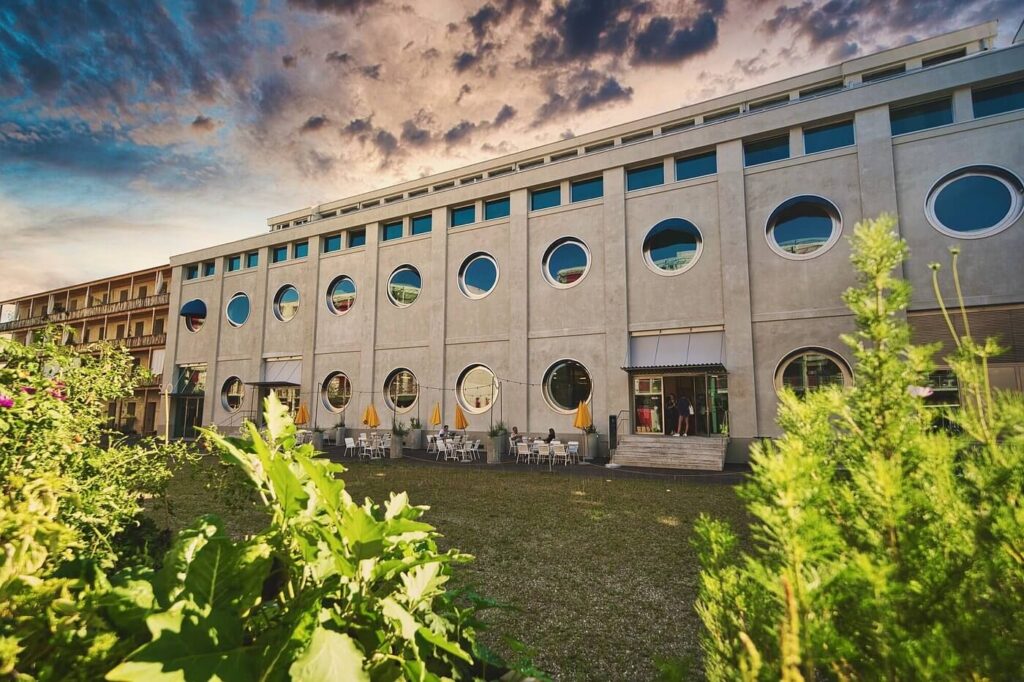
- Budget: SILO Design Hostel is an exceptional choice for digital nomads and creative travellers, located near Bad station. It offers open, design-forward spaces perfect for working or relaxing. Basel Youth Hostel provides a sociable environment, while Guesthouse Casa Esperanza is a modest but much-loved option for budget-conscious visitors.
- Mid-range: BLOOM Boutique Hotel, GAIA Hotel, and HYVE Hotel & Lounge each offer modern comfort, thoughtful service, and convenient locations.
- Luxury: For refined stays, Grand Hotel Les Trois Rois, Hotel Märthof Basel, and ART HOUSE Basel combine timeless architecture, impeccable amenities, and close proximity to the markets.
Day 9–10: Innsbruck via Zurich
Zurich Christmas Market 2025 Dates: 20 November – 23 December (official site here)
Innsbruck Christmas Market 2025 Dates: 15 November – 23 December (official site here)
How to Get from Basel to Innsbruck
Begin with a direct train from Basel to Zurich, a comfortable journey taking between 55 minutes and 1 hour 10 minutes. Eurail and Interrail Pass holders do not need seat reservations for this leg. From Zurich, you can either spend a few hours exploring the city and its festive markets or continue straight on a direct train to Innsbruck. The Zurich–Innsbruck route operates roughly every two hours, takes about 3 hours 30 minutes, and also requires no reservation.
About Zurich
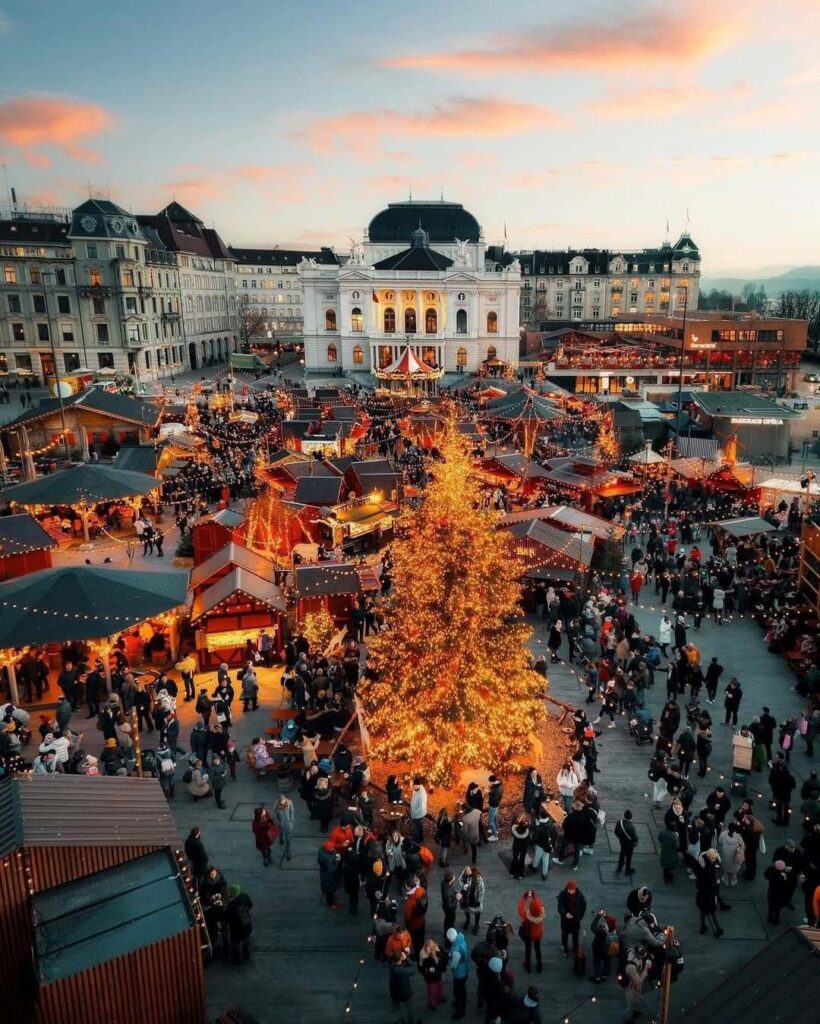
Zurich offers a graceful mix of alpine charm and urban elegance — and during winter, its festive spirit shines brilliantly. The city’s Christmas markets are scattered around the Old Town and main station, filling the air with the scent of roasted almonds, melted cheese, and sweet pastries. Be sure to try Swiss specialties like chocolate truffles, cheese raclette, and mulled wine, best enjoyed beneath the glittering lights reflected on the Limmat River.
Cheese lovers will adore the fondue chalet, a snug wooden cabin where bubbling pots of melted cheese await. A day trip to Zurich allows you to experience its markets without breaking the bank — accommodation here can be among Europe’s most expensive. However, if you choose to stay overnight, B2 Design Hotel is a standout option, particularly for its famous library lounge that feels like a storybook come to life.
Why Innsbruck
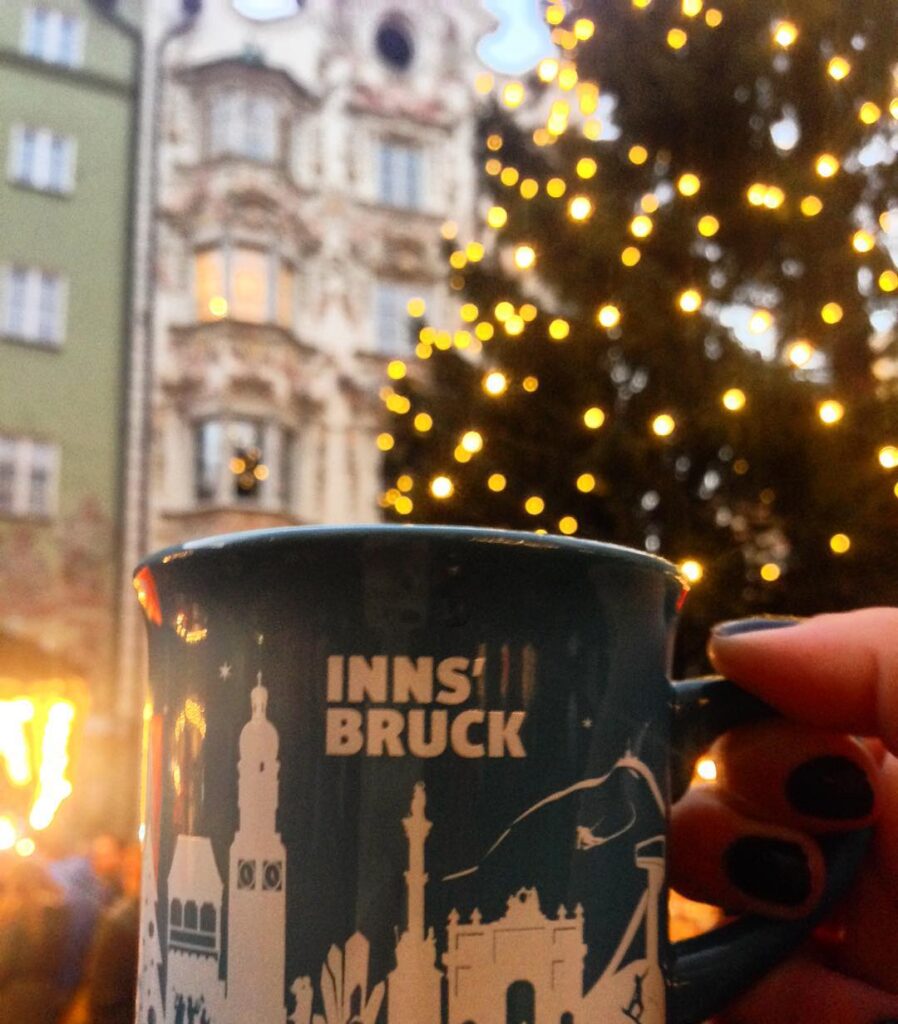
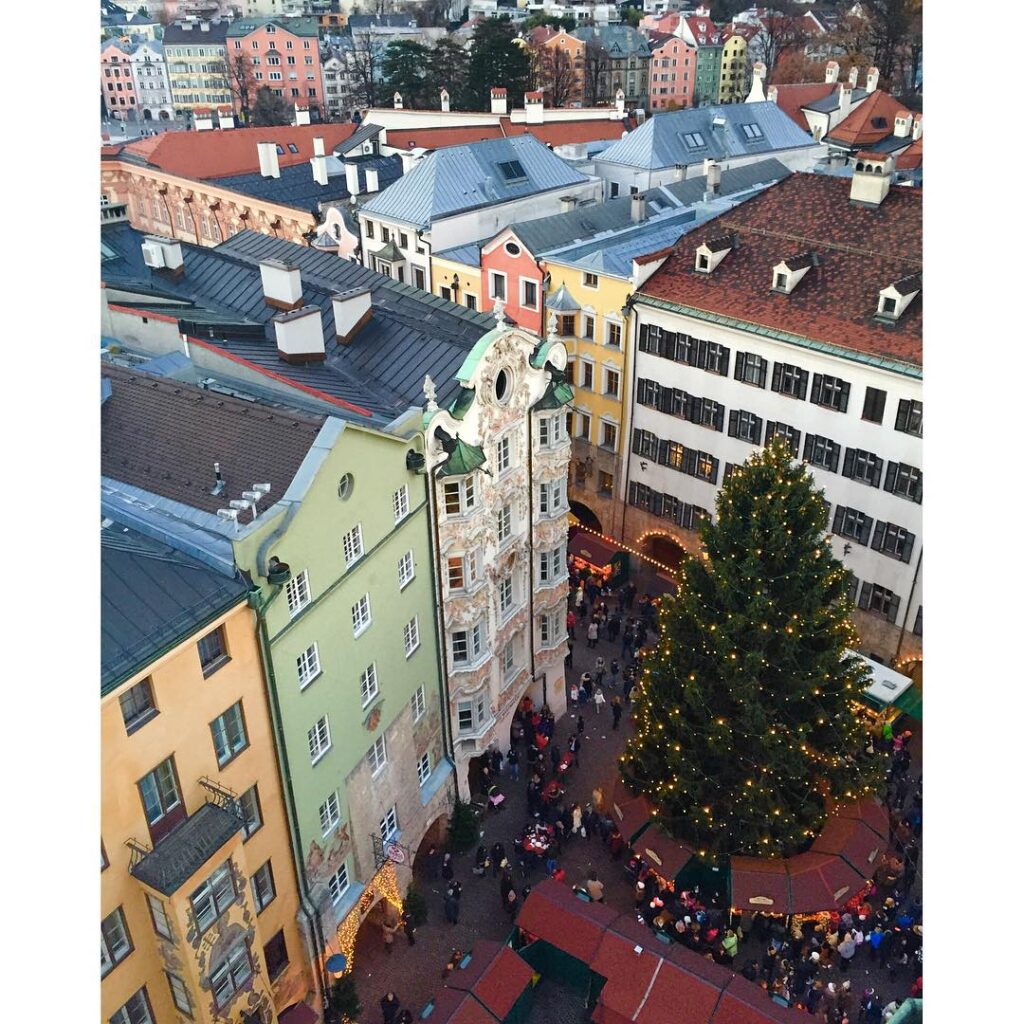
Crossing into Austria, Innsbruck welcomes you with snow-capped peaks and centuries of festive tradition. The city hosts six Christmas markets, each offering its own distinct charm — from classic stalls in the Old Town to creative arts markets and even one perched high above the city.
Start at the Old Town Market, where a towering Christmas tree gleams beside the Gothic Golden Roof. Arrive by 5:30 p.m. to catch the live brass music echoing through the square and watch as lights dance across the ornate façades. Climb the City Tower (entry €4.50) for sweeping views of both the market below and the Tyrolean Alps beyond.
Next, stroll to Market Square, home to the dazzling Swarovski Christmas tree, glittering with tens of thousands of crystals. And for a breathtaking panorama, ride the Hungerburg cable car to the mountainside markets — smaller and quieter, yet offering an unforgettable vantage point of Innsbruck’s lights glowing beneath the snowy peaks.
Other Things to Do in Innsbruck
- Visit Swarovski Crystal Worlds, a 30-minute train ride from the city
- Tour Schloss Ambras, once home to Archduke Ferdinand II
- Attend a Tyrolean evening show featuring folk music, dance, and hearty cuisine
- Take the Nordkette cable car to 2,256 metres for panoramic views across the Alps
Where to Stay in Innsbruck
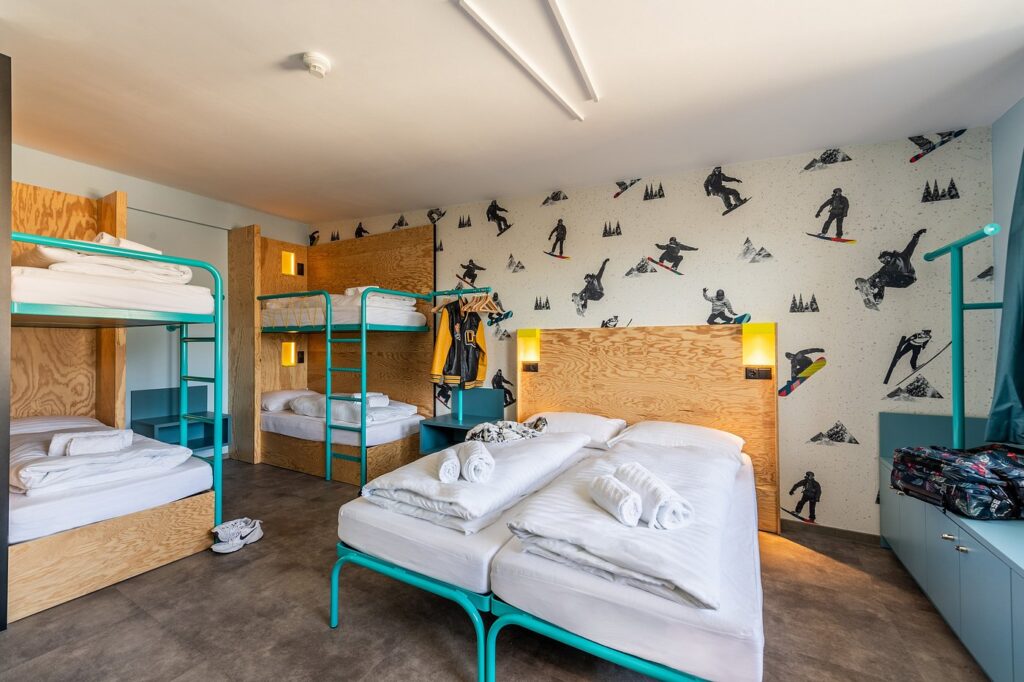
- Budget: Montagu Hostel, MEININGER Innsbruck Zentrum, and Pension Stoi offer affordable comfort and central locations.
- Mid-range: Hotel Neue Post, Hotel Mondschein, NALA Individuellhotel, and Faktorei deliver stylish stays at reasonable prices.
- Luxury: Hotel Maximilian, The PENZ Hotel, aDLERS Hotel Innsbruck, and Altstadthotel Weißes Kreuz provide elevated experiences with alpine flair.
- Self-contained: Kaiser Max Design Apartments, Apartment Mischa, Quartier 99, and Prada Elf Apartment are ideal for travellers who prefer a homely, independent stay.
Day 11: Salzburg
Salzburg Christmas Market 2025 Dates: 20 November 2025 – 1 January 2026 (official site here)
How to Get from Innsbruck to Salzburg
Direct trains run frequently between Innsbruck and Salzburg, with travel times averaging 1 hour 50 minutes. If you’re travelling with a Eurail or Interrail Pass, you won’t need to reserve a seat—simply board and enjoy the scenic ride through the Austrian Alps.
About Salzburg
Salzburg during winter is pure holiday theatre. The city glows with twinkling lights and the sweet aroma of roasted chestnuts and cinnamon drifting through its cobblestone streets. At the main Christmas market in Domplatz, strands of lights stretch above the crowd like a starry night, while rows of wooden stalls offer baked treats, hot drinks, ornaments, and handmade decorations. Set against a backdrop of Baroque buildings, an ice rink, and the imposing Hohensalzburg Fortress towering above, this market is one of Europe’s most atmospheric festive experiences.
Beyond the main market, Salzburg hosts several others worth exploring. Mirabellplatz is popular with locals, offering a warm and welcoming feel. Schloss Hellbrunn has a family-friendly market with whimsical displays. Stern Market features artisanal food and distinctive gifts, while the Fortress Market adds dramatic views to the mix. A great route is to ride the funicular up to Hohensalzburg Fortress, wander the market, and stroll back down to Domplatz as the city glows in the evening light.
Travel Tip: Keep an eye out for the Krampus Run, typically held on 5 December. This centuries-old Alpine tradition sees people dressed as Krampus—a terrifying, half-goat figure—parading through the streets, chasing and playfully striking spectators with bundles of sticks. It’s both chaotic and hilarious, adding a mischievous twist to the festive season.
Other Things to Do in Salzburg
- Join a Sound of Music tour and see filming locations through Maria’s perspective
- Take a guided tour of Salzburg Cathedral for a glimpse into its rich history
- Enjoy a Mozart concert at Mirabell Palace, an experience steeped in the city’s musical legacy
Where to Stay in Salzburg
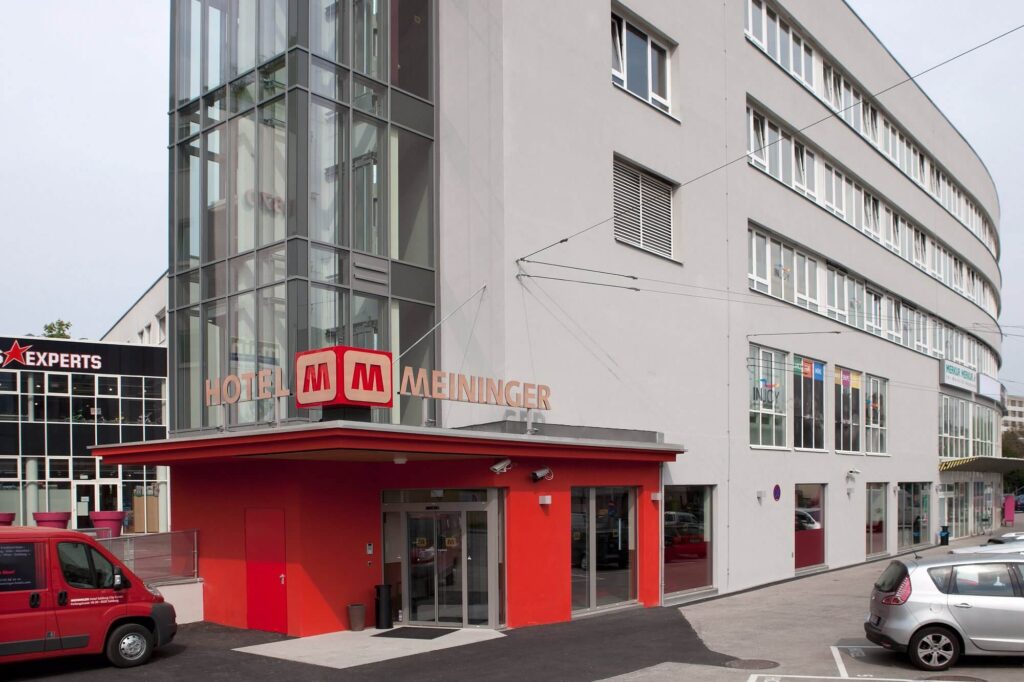
- Budget: MEININGER Salzburg blends hostel and hotel comfort, offering dorms, private rooms, a guest kitchen, laundry, bike rentals, and a bar. It’s slightly outside the centre but right by a bus stop. Other budget-friendly options include YoHo Youth Hostel, Stadtalm Naturfreundehaus, and The Keep Eco Rooms.
- Mid-range: Gästehaus im Priesterseminar Salzburg, Hotel Max 70, B&B Villa Verde, and Boutiquehotel am Dom combine comfort with excellent locations.
- Luxury: Hotel Bristol, Goldgasse, Hotel Goldener Hirsch, and Hotel Sacher Salzburg are some of the city’s most celebrated addresses.
- Self-contained: Villa Leopoldskron, Villa Maxglen, Mozart’s Garden Villa, and Villa Salzburg are great options for a more private, homely stay.
Day 12–13: Vienna
Vienna Christmas Market 2025 Dates: 14 November – 26 December for most markets. Schönbrunn opens 7 November and Karlsplatz opens 21 November (official site here)
How to Get from Salzburg to Vienna
Direct trains operate frequently between Salzburg and Vienna, taking around 2 hours 25 minutes. Seat reservations are not required, making it an easy and flexible journey.
About Vienna
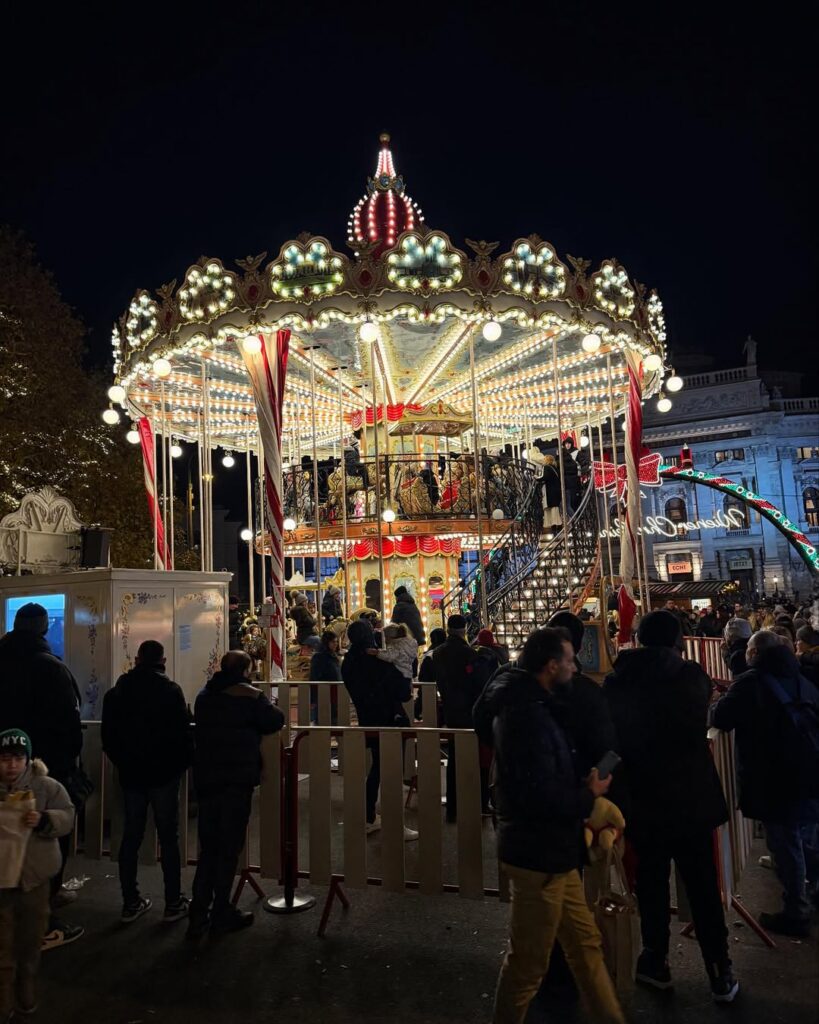
Vienna, long celebrated for its cultural heritage, transforms into a dazzling winter stage during the Christmas season. The city is dressed in glowing lights, creative installations, and festive stalls scattered across grand squares and historic streets. Because the markets are spread throughout the city, plan to spend two full days exploring. If you have extra time in your itinerary, consider adding a third day to appreciate more of what Vienna has to offer.
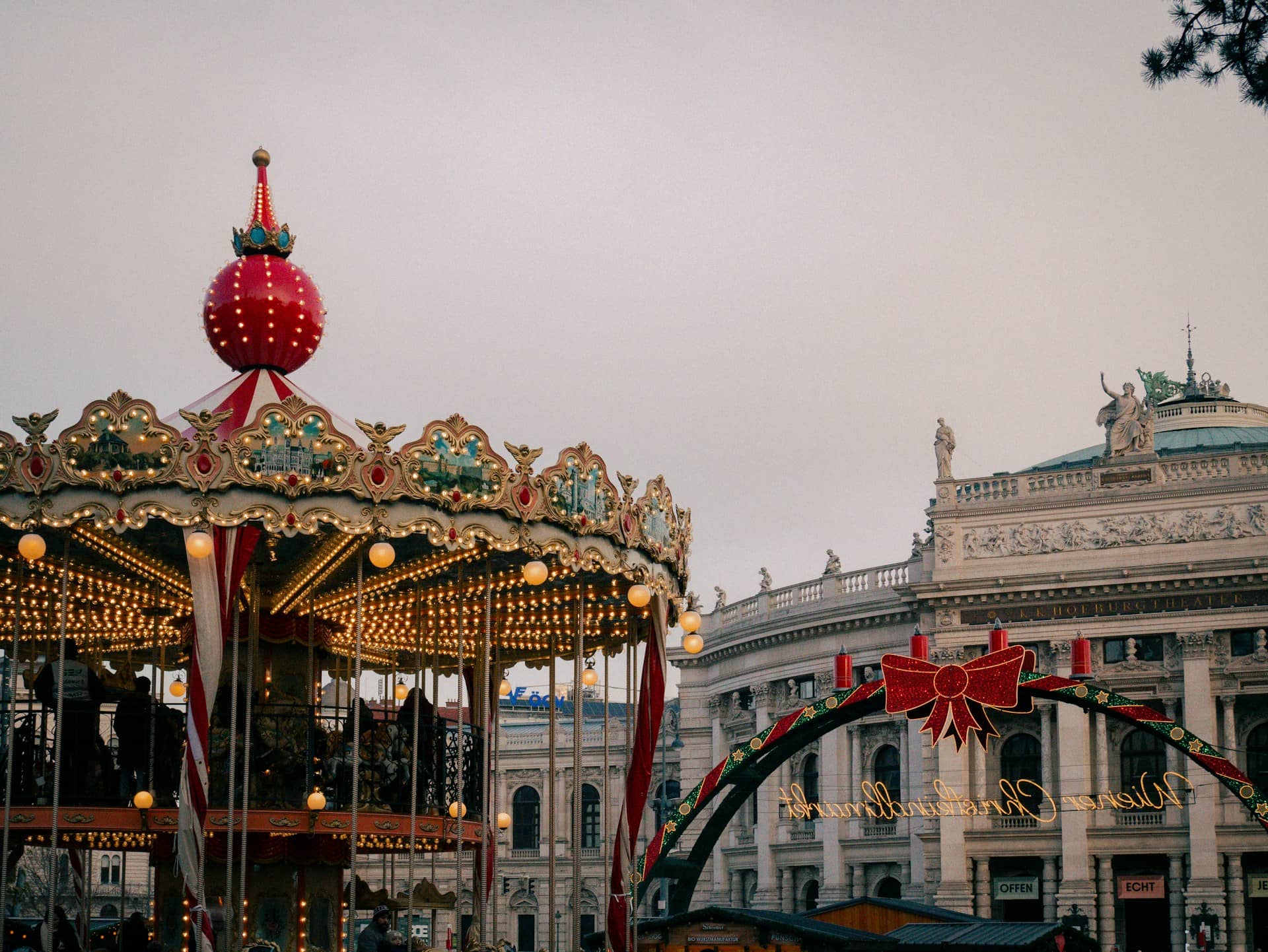
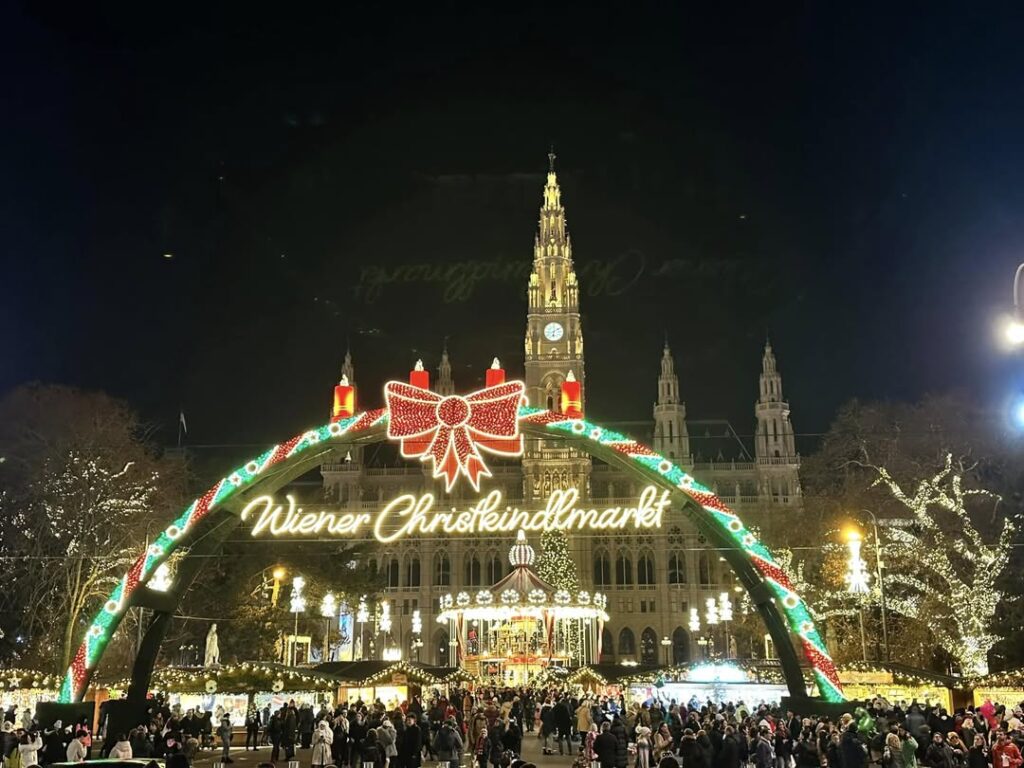
The main Christmas market at Rathausplatz is the centerpiece of the season. A giant archway draped in lights welcomes visitors, while the skating rink, sparkling decorations, and nearby park with its larger-than-life light displays make it a truly immersive experience.
Beyond Rathausplatz, Christmas Village Belvedere sets a magical scene in front of the palace’s grand Baroque façade. Spittelberg Market focuses on local craftsmanship and small-scale creators, offering a different, more intimate vibe. Maria Theresien Square hosts a smaller yet equally charming market, and MuseumsQuartier takes a modern turn with light projections, live music, and street food.
Other Things to Do in Vienna
- Join a food tour around Vienna’s historic coffee houses and the bustling Naschmarkt
- Take a Historical Crimes walking tour to see a more curious side of the city
- Climb the St. Stephen’s Cathedral rooftop for sunset views across Vienna
- Explore Schönbrunn Palace & Gardens, a highlight during the festive season
Where to Stay in Vienna
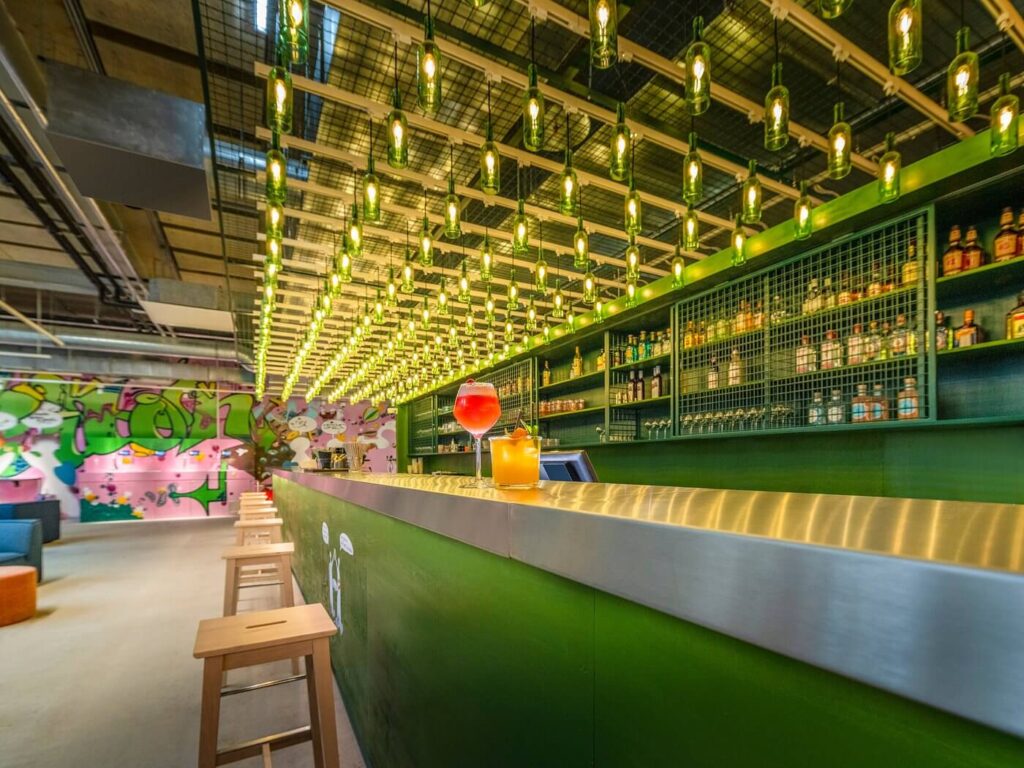
- Budget: JO&JOE Vienna is a standout for budget-conscious travellers, featuring kitchen facilities, a rooftop terrace, an onsite diner, co-working spaces, fun events, and both dorm and private rooms.
- Mid-range: Boutiquehotel Das Tyrol, Rioca Vienna Posto 2, Superbude Prater, and ARTIST Boutique Hotel provide comfort, style, and excellent locations.
- Luxury: Rosewood Vienna, The Leo Grand, Hotel Sans Souci, and Hotel Sacher offer elegant stays with exceptional service.
- Self-contained: Karl und Anton Boutique Apartments, Oliver Apartments, and URBM Rise are ideal for those preferring a more independent, homelike setting.
Day 14: Bratislava Day Trip from Vienna
Bratislava Christmas Market 2025 Dates: 21 November – 31 December (official site here)
How to Get from Vienna to Bratislava
Reaching Bratislava from Vienna is quick and inexpensive. Buses operated by RegioJet and FlixBus run regularly, with fares starting from just €4. The journey typically takes between 40 minutes and 1 hour 20 minutes, making it one of the easiest day trips on this itinerary.
About Bratislava
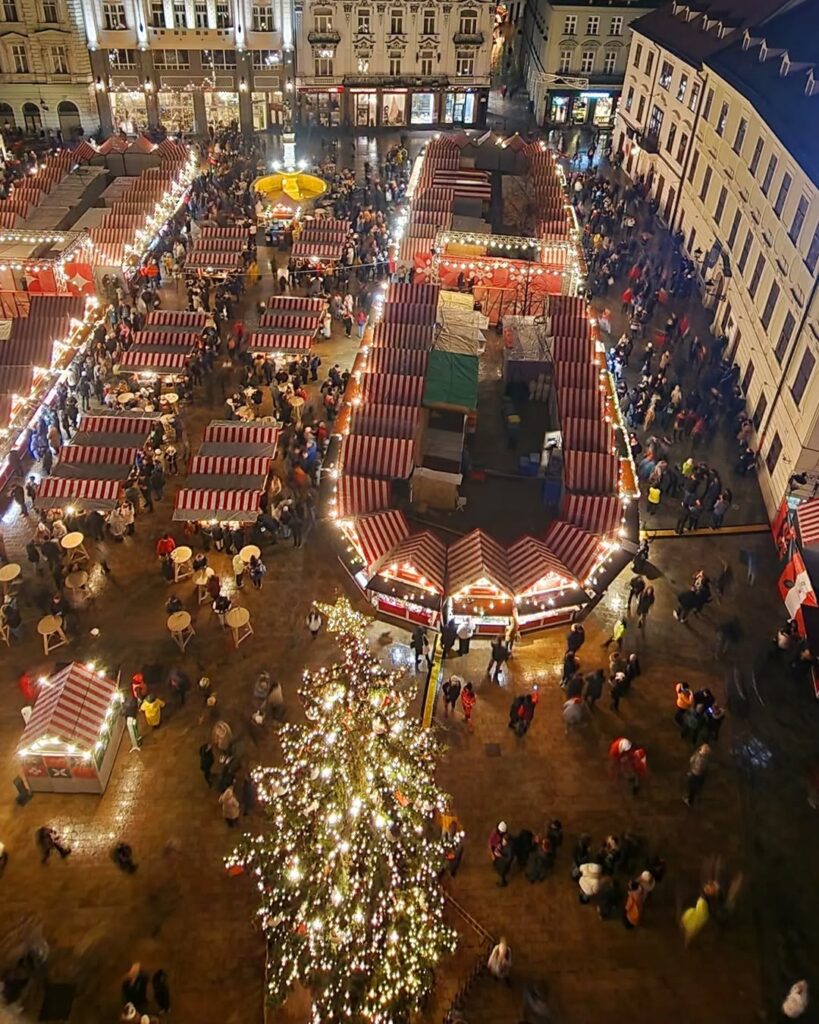
Bratislava offers a refreshing contrast to the grand markets of Germany, France, and Austria. Slovakia’s capital has a warm, welcoming feel — and it’s far more budget-friendly, making it a smart stop for souvenir shopping and food indulgence. The Christmas markets here are compact and close together, so you can explore everything on foot without rushing.
Local delicacies are a big part of the experience. Try cigánska, a bun stuffed with seasoned pork or chicken, lokše, a fried potato flatbread served with sweet or savoury toppings, and medovina, a honey-based mead that’s especially comforting on a cold winter day.
Other Things to Do in Bratislava
- Join a local wine tasting for an affordable introduction to Slovak wines
- Walk up to Bratislava Castle for panoramic views over the city and Danube
- Visit the Blue Church, a whimsical architectural gem that looks straight out of a storybook
- Hunt for the quirky statues scattered across the old town, each with its own story and character
Day 15–16: Prague
Prague Christmas Market 2025 Dates: 29 November – 6 January (official site here)
How to Get from Vienna to Prague
The longest travel segment on this route, the direct train from Vienna to Prague runs roughly every two hours and takes around 4 hours 25 minutes. Most trains don’t require seat reservations for Eurail or Interrail Pass holders, making this an easy and comfortable ride between two of Central Europe’s most festive capitals.
About Prague
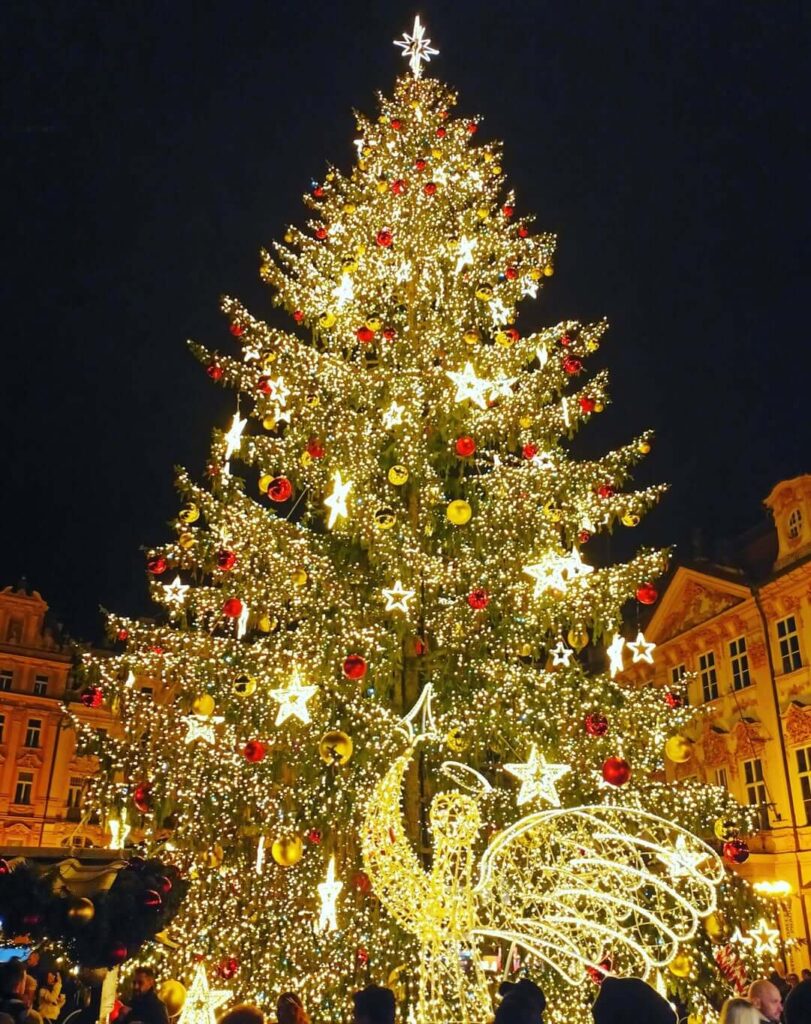
Prague is a dream for budget-conscious travellers — its Christmas markets combine magical atmosphere with excellent value. Accommodation prices stay reasonable even in December, market food is affordable, and many of the city’s most famous sights are free to enjoy.
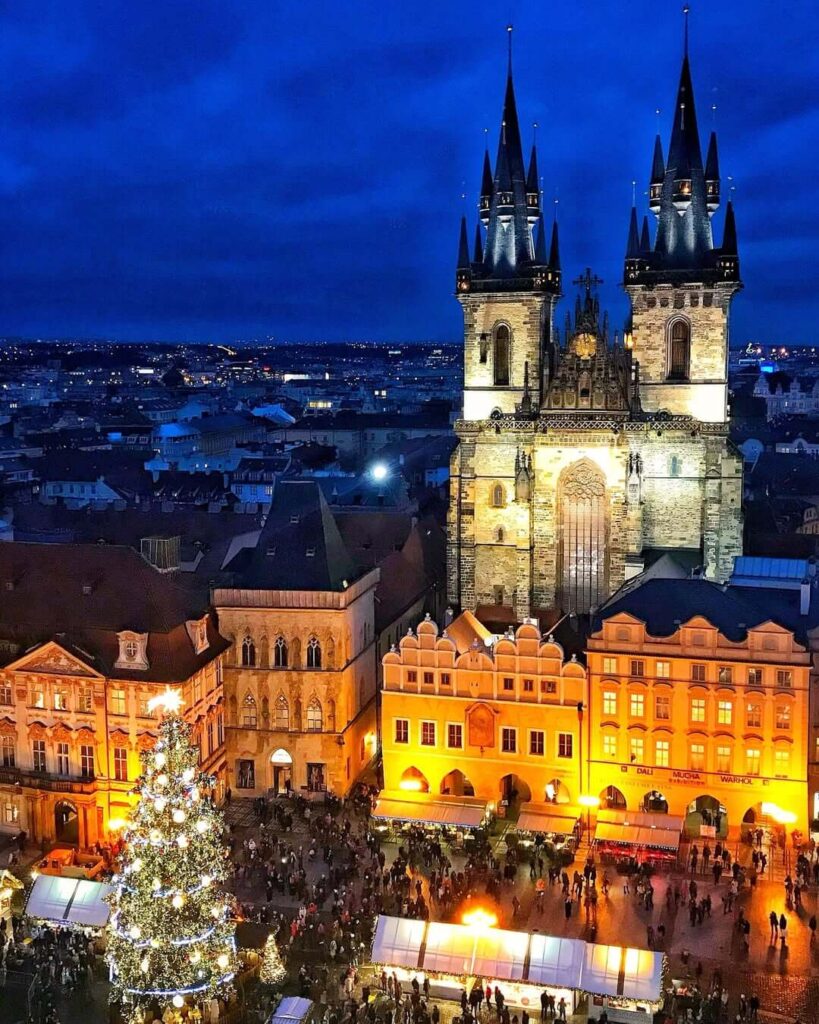
The Old Town Square is the centerpiece of Prague’s holiday celebrations. A glowing wired angel stands before the Gothic Church of Our Lady before Týn, while dozens of stalls fill the square with the aromas of roasted pork, sausages, mulled wine, and sweet trdelník (chimney cakes). A stage near the tree features live music and traditional dance performances throughout the season.
A short stroll away, Wenceslas Square offers a slightly quieter but equally charming market, with a focus on handmade arts and crafts. Meanwhile, the Prague Castle Christmas market transforms the courtyards into a fairytale setting — complete with artisan stands, hearty Czech dishes, and sweeping views over the city. From here, walking across Charles Bridge at dusk is a perfect way to return to the Old Town.
Other Things to Do in Prague
- Watch the Astronomical Clock strike the hour from 9 a.m. to 9 p.m.
- Climb the Old Town Hall Tower for a sweeping view over the Christmas tree and market
- Take a day trip to Sedlec Ossuary (the Bone Church), a haunting yet fascinating site
- Join a pub crawl to sample Prague’s famous nightlife
- Take a guided tour of Prague Castle for deeper insight into its history
Where to Stay in Prague
- Budget: Brix Hostel is ideal for social travellers, while Hostel Little Quarter, Sophie’s Hostel, Giotto Apartments, Hostel One Miru, and Prague Dream Hostel are other great low-cost options.
- Mid-range: Revelton Studios Prague, Hotel Residence Agnes, Hotel CUBE Prague, Allure Hotel Prague, and Unitas Hotel provide stylish comfort without breaking the bank.
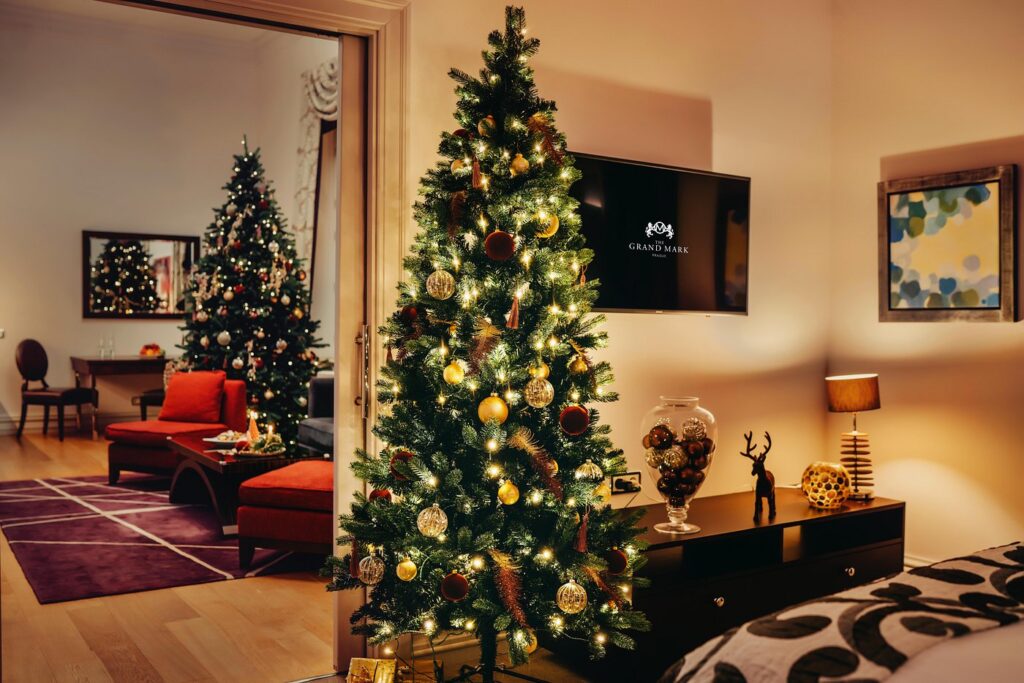
- Luxury: The Julius, Four Seasons, The Grand Mark, Alchymist Grand Hotel, and Hotel Republika are top-tier choices for a refined stay.
- Self-contained: Mooo by the Castle, Hotel Diana, and Malostranska Residence offer apartment-style stays with kitchens and extra space.
Day 17–18: Dresden
Dresden Christmas Market 2025 Dates: 26 November – 24 December (official site here)
How to Get from Prague to Dresden
Direct trains operate every couple of hours between Prague and Dresden, taking around 2 hours 27 minutes. Eurail and Interrail Pass holders do not need seat reservations for this route, making it an easy and scenic ride into Saxony.
About Dresden
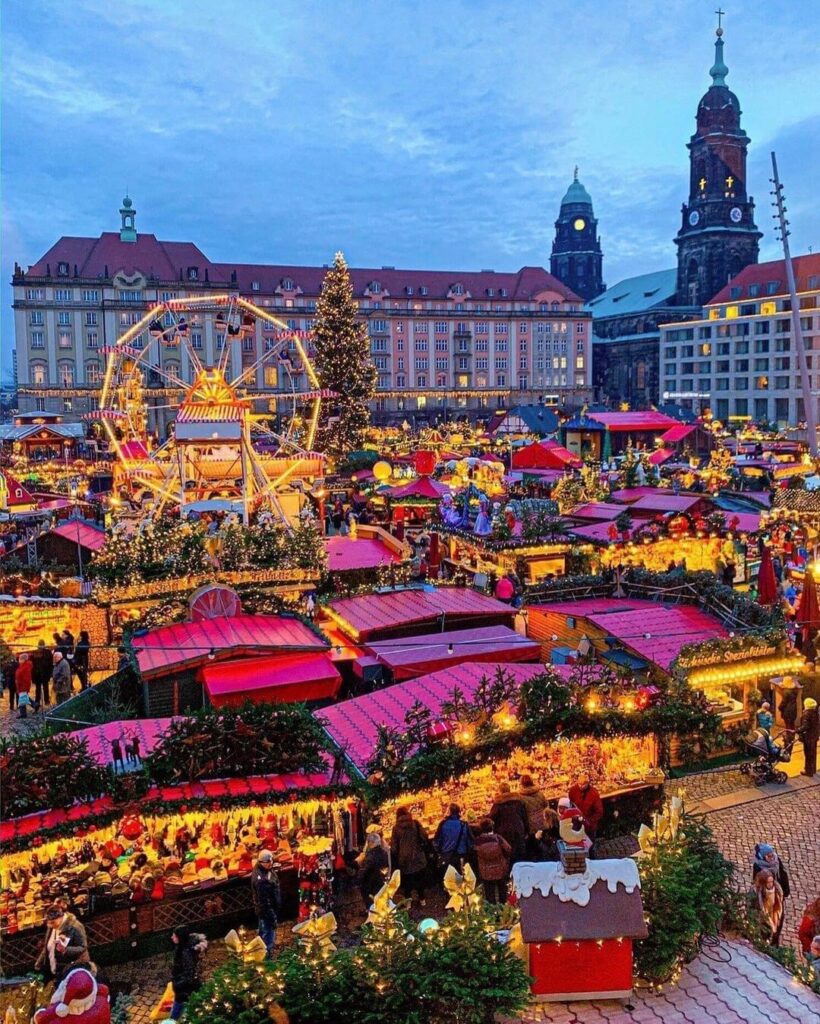
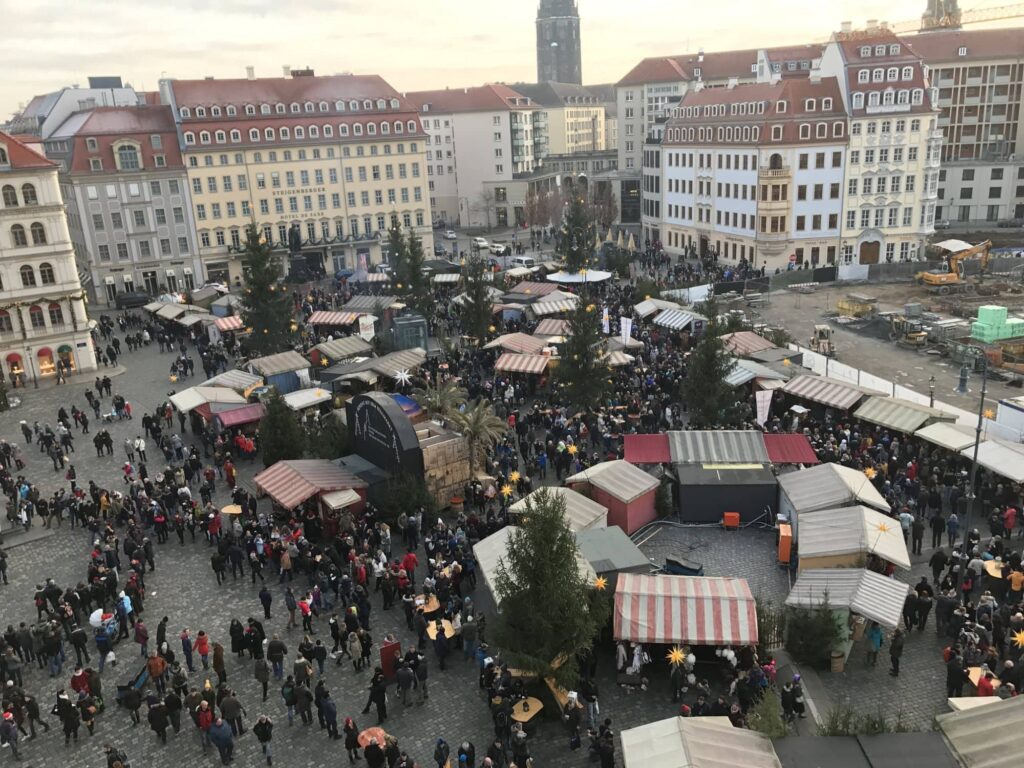
No European Christmas market journey would feel complete without Dresden. This city is home to Striezelmarkt, Germany’s oldest Christmas market, dating all the way back to 1434. Over the centuries, it’s grown into one of Europe’s most celebrated holiday events, welcoming more than 2.5 million visitors each year.
The star of the show is striezel—also called stollen—a spiced bread packed with candied fruits and dusted with powdered sugar. It’s a Dresden tradition to enjoy a slice of this sweet treat right at the Striezelmarkt itself. The market is a feast for the senses, filled with hand-carved decorations, warm drinks, twinkling lights, and a festive buzz that’s hard to replicate elsewhere.
Beyond the main square, Dresden embraces Christmas with traditional craft markets, glowing light displays, alpine huts, and even curling rinks, creating a celebratory atmosphere that stretches through the city.
Other Things to Do in Dresden
- Join a Trabi tour to see the city from a fun and quirky perspective
- Enjoy a wine tasting cruise on the Elbe River
- Visit the elegant Pillnitz Castle, an architectural gem on the riverbank
- Take part in a Night Watchman tour, a theatrical evening walk through Dresden’s Old Town
Where to Stay in Dresden
- Budget: MEININGER Dresden Zentrum, Pension Dresdener Panorama, B&B Trobisch, and Gästezimmer Richter are affordable and well-located.
- Mid-range: mightyTwice Hotel, ARCOTEL HafenCity, and Schloss Hotel Dresden Pillnitz offer comfort and good value.
- Luxury: Townhouse Dresden, Relais & Châteaux Bülow Palais, and Felix Suiten am Zwinger provide refined stays with a festive touch.
To close the loop of this Christmas market itinerary, take the direct train from Dresden to Frankfurt. The journey takes about 4 hours 25 minutes, and no seat reservation is needed for rail pass holders — a smooth ride to wrap up your festive adventure.
If You’re Short on Time
If your schedule only allows for a one-week European Christmas market itinerary, you can still experience some of the continent’s most enchanting festive destinations by focusing on a single route. Each of these combinations offers a well-paced journey with a mix of larger cities and charming day-trip options.
Here are a few streamlined itineraries to consider:
- Frankfurt → Cologne (day trip) → Nuremberg (day trip) → Strasbourg → Colmar (day trip)
- Dresden → Frankfurt → Cologne & Nuremberg (day trips)
- Innsbruck → Salzburg → Vienna → Bratislava (day trip)
- Strasbourg → Basel → Innsbruck → Salzburg
These shorter routes give you a festive snapshot of Europe without rushing through every destination. Whether you prefer grand Christmas markets, smaller town celebrations, or scenic train rides through winter landscapes, each option delivers a memorable holiday experience.
If You Have Extra Time
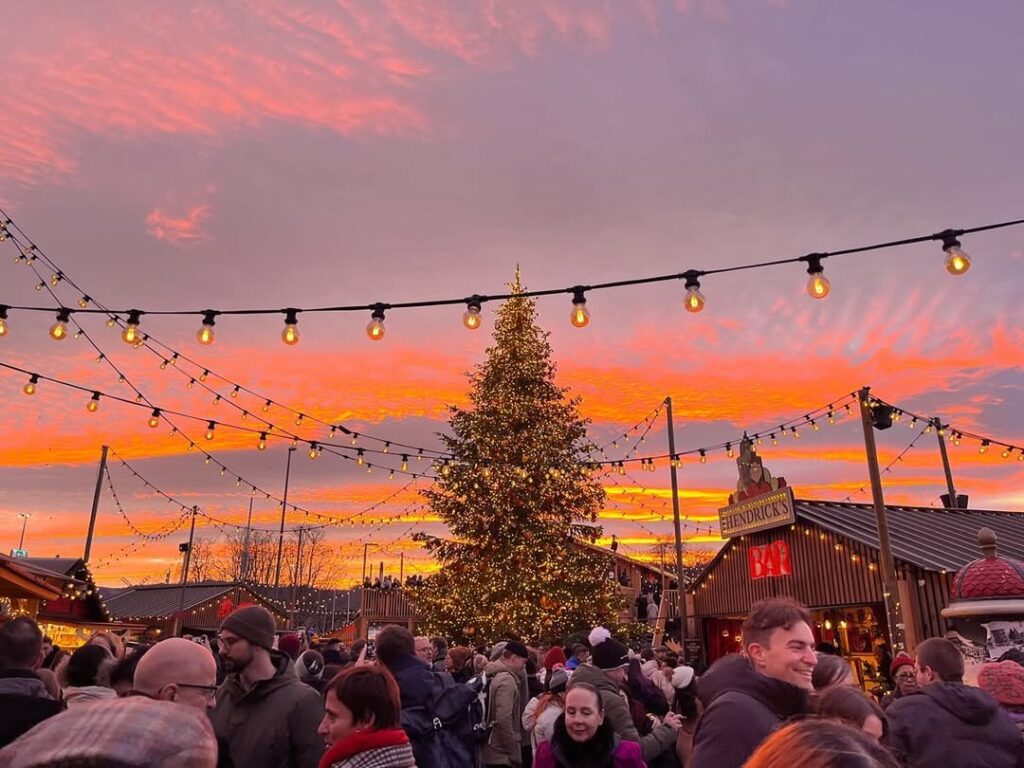
If your schedule allows for a longer journey, exploring Europe’s Christmas markets by train can be even more rewarding. You could slow the pace and spend extra days in cities like Strasbourg, Vienna, or Prague to enjoy sightseeing beyond the markets. This gives you time to soak in local traditions, visit museums, or simply wander through charming winter streets at your own rhythm.
Alternatively, you might extend the trip by adding a few overnight stops to experience additional festive destinations along the way. Here are some excellent add-ons to consider:
- Zurich – between Basel and Innsbruck for Swiss holiday charm
- Bolzano – Italy’s most famous Christmas market (2 hours direct from Innsbruck)
- Budapest – between Vienna and Prague for a different cultural twist
- Berlin or Munich – ideal German cities to expand your route
- Ski getaway – Switzerland’s Ski Hostel offers affordable packages if you want to combine Christmas markets with winter sports
And if you have plenty of time — perhaps several months — you can use a comprehensive three-month Europe itinerary to create a longer, more immersive Christmas market adventure that blends major cities, smaller towns, and scenic train journeys.
Your Ultimate Guide to European Christmas Markets
What Are Europe’s Christmas Markets All About?
European Christmas markets are traditional seasonal fairs held across cities and towns throughout the festive period. These open-air gatherings bring together stalls serving Glühwein (mulled wine), handmade ornaments, festive decorations, and a wide variety of winter treats that fill the air with warm, comforting aromas.
Their exact origins are debated, with several cities laying claim to being the first. What we do know is that German markets date back to at least the 15th century, with the tradition later spreading through Austria, parts of France, Switzerland, and Italy. Over time, these markets became beloved holiday fixtures, blending local customs with shared European winter traditions.
Today, Christmas markets can be found in nearly every major European city — though their atmosphere, size, and quality vary widely. Some focus on traditional craftsmanship, while others lean into entertainment and modern attractions.
Most markets are free to enter, so even without spending much, you can experience sparkling light displays, live music, and the unmistakable festive buzz. If your budget allows, you might sip a lumumba (hot chocolate with rum), enjoy a bratwurst, lace up for some ice skating, ride a carousel, or pick up handcrafted gifts to bring home.
When Do European Christmas Markets Open and Close?
Christmas market dates vary by location, so it’s essential to check official opening announcements before locking in your plans. Most major markets across Europe begin in mid to late November, though smaller neighborhood markets often have their own schedules. Some stay open well into early January, while others wrap up just before Christmas Eve.
In the itinerary above, I’ve included the confirmed 2025 dates along with links to each market’s official website. Always double-check these before booking transport or accommodation, as relying on outdated or unofficial sources can lead to scheduling headaches.
On my first Christmas market trip, I learned this the hard way. I trusted a random blog for the Strasbourg opening date, only to discover after booking that the market began the day after I was scheduled to leave. I ended up rearranging my entire route, doubling back and creating a mess of a schedule. It worked out in the end, but it was an avoidable hassle — one quick fact-check could have saved a lot of stress.
The Best Time to Visit Europe’s Christmas Markets
If your schedule is flexible, the ideal time to visit is in late November, right at the beginning of the market season. The lights are up, the stalls are stocked, and the atmosphere is already festive — but the crowds are still more manageable than in the weeks that follow.
During this period, most local children are still in school, which means you’ll mostly be sharing the markets with other travellers during the day rather than huge family groups. While it can still get busy, the overall flow feels far less overwhelming.
Everything shifts dramatically the week before Christmas. The markets hit peak attendance, accommodation rates soar, and the queues for Glühwein and food stalls can stretch endlessly. Visiting earlier allows you to enjoy the atmosphere with a bit more breathing room — and often at a better price.
How Much Should You Budget for a Christmas Market Trip?
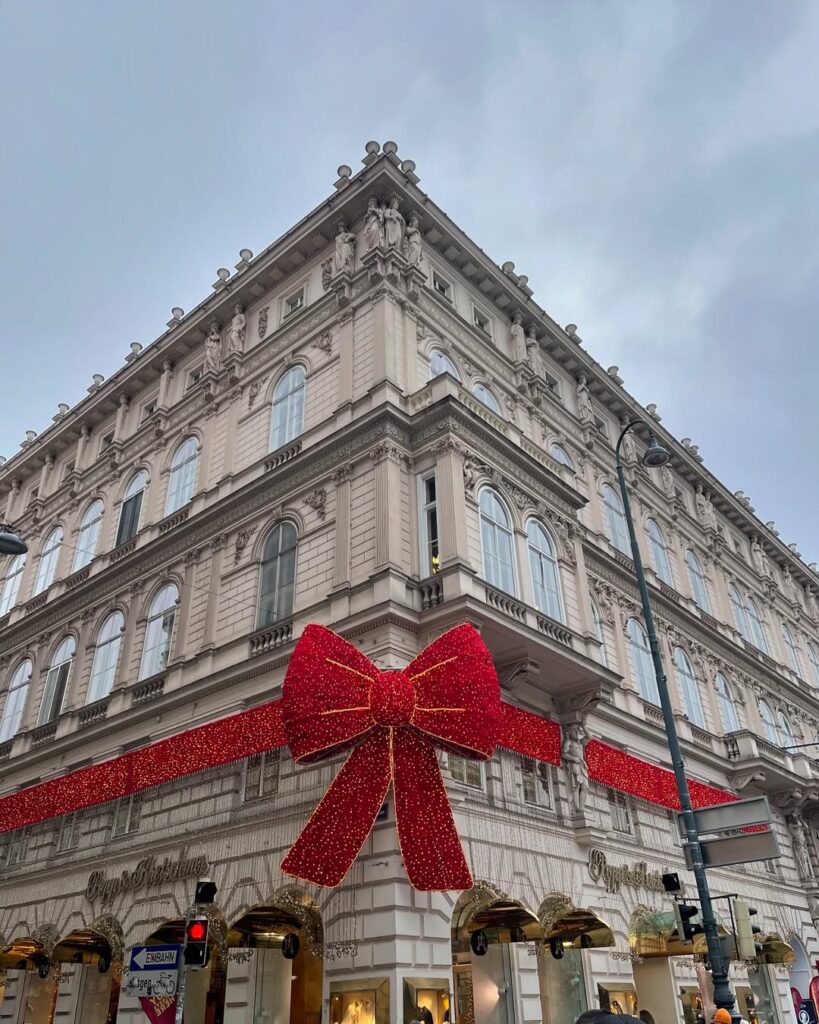
Your biggest expense on a European Christmas markets trip will almost certainly be accommodation. Smaller destinations that thrive on festive tourism — like Strasbourg, Innsbruck, Colmar, and Nuremberg — see prices climb sharply during the market season due to limited availability. If you want to stay overnight in these spots, securing your room well in advance is essential.
Here’s a general pricing guide for accommodation in popular Christmas market cities:
- Hostel dorm beds: from €50–60 per night, increasing on weekends and closer to Christmas
- Basic private rooms: from around €80 per night in central locations
- Mid-range hotels: typically €120–150 per night
Larger cities such as Vienna, Prague, and Cologne tend to have more accommodation options, which can help keep costs from soaring quite as high. However, early booking still gives you the best rates and flexibility.
Beyond accommodation and train tickets, your daily budget should also account for food, activities, and transportation.
- Transport: Costs are generally low since most markets are centrally located and easily reached on foot.
- Activities: Entry to Christmas markets is free, but extras like ice skating, palace visits, light festivals, or guided tours may add up depending on your preferences.
- Food: Market prices vary by location — €3 for a bretzel, €10 for tarte flambée, and around €20 for a heartier meal with meat and sides. A smart tip is to grab snacks from a supermarket to stretch your budget between market splurges.
Travel Tip: I often use Tripadvisor.com to secure accommodation with free cancellation. It lets me lock in a good price early while keeping my plans flexible. Booking directly with hotels can occasionally be cheaper, but cancellation terms are often stricter, so compare carefully before committing.
Essential Travel Tips for Your Christmas Market Adventure
The Top eSIM for Europe (Spoiler: It’s Not Airalo!)
eSIMs have become a game-changer for travellers — no physical SIM cards, no roaming surprises, and no waiting in airport queues. But here’s the catch: the most advertised brands are often the priciest. Big names like Airalo, Holafly, Saily, and Maya may be easy to find, but they’re rarely the best deal.
I’ve spent far too many hours comparing plans, and the clear winner for value has consistently been MobiMatter. Rather than selling its own eSIMs, MobiMatter works with local network providers, which typically means prices that are 30–40% lower than the major brands. You can also snag extra cashback on your first purchase with the code FINDINGALEXX (I don’t earn anything from it — just happy to share the savings).
While it’s sometimes possible to find slightly cheaper local eSIMs at airport kiosks, setting it up ahead of time makes life simpler, especially if you want to top up easily while on the move. In the past two years, the only places where I’ve opted for a local eSIM over MobiMatter were Morocco and the Maldives, purely because local deals were unbeatable. For over 30 other countries, MobiMatter has consistently come out on top.
eSIM prices can fluctuate, so double-check before your trip. But here’s a snapshot of current Europe pricing (10GB, 30 days — in USD):
- MobiMatter: $11.99
- Jetpac: $14
- Maya: $17
- Nomad: $22
- Saily: $35.99
- Airalo: $37
- aloSIM: $37
And if you’re a heavy data user, here are some high-data and unlimited options:
- MobiMatter: 50GB / 30 days — $43.99
- Maya: 10 days unlimited — $29
- Holafly: 10 days unlimited — $36.90
- Saily: 100GB — $180
- Airalo: 100GB — $185
- aloSIM: 100GB — $185
Choosing the right eSIM means you’ll stay connected throughout your Christmas market trip without draining your travel budget.
The Best Travel Cards for Your European Trip
I’ve been using Wise as my main travel debit card since 2019, and it’s been one of my most practical tools on the road. The app is straightforward, the fees are low and clearly displayed, and the exchange rates are consistently better than what most banks offer. It’s simple, reliable, and saves a noticeable amount over time.
Your best card option will depend on where you live. Travellers from the U.S. often have access to excellent travel credit cards that come with valuable perks, like strong rewards programs and travel insurance. For many other countries, though, credit card benefits can be more limited, making a Wise debit card a strong choice for everyday use.
I also keep an Amex for larger purchases to earn points, but between the higher fees, less favorable exchange rates, and its patchy acceptance in some places, it’s far from ideal for daily expenses abroad. Wise remains my go-to for easy, transparent spending across Europe.
The Most Cost-Effective Rail Pass for Europe
If you’re planning to follow this Christmas market itinerary by train, a Eurail (for non-Europeans) or Interrail (for Europeans) Pass can be an excellent way to cut down on travel costs while giving you more flexibility. Instead of booking individual train tickets, the pass allows you to hop between cities and countries with ease — especially on routes that don’t require seat reservations.
I recommend booking your pass through Klook, as it offers free cancellation at no extra cost. The price is the same as buying directly from Eurail, but Eurail charges a 10% cancellation fee. Having that flexibility can make a big difference if your plans change along the way.
How to Save Big on European Activities and Attractions
If you’re planning to book tours, transfers, or experiences during your Christmas market trip, there are a few easy ways to cut your costs without missing out on the fun. I’ve rounded up a few promocodes that can make a noticeable difference to your travel budget:
- Klook: Save 10% on your first booking with code FINDINGALEXXKLOOK
- KKDay: Save 10% on your first booking with code FINDINGALEXX
- TourRadar: Save €100 on any group tours over €1250 with code ALEXX100
The Klook and KKDay codes apply to multiple activities in a single booking, so if you’re planning a few experiences, it’s smart to bundle them. Each code works once per account — though setting up a new account can give you another shot if needed.
Before you confirm, it’s always worth comparing prices directly on the operator’s website. In my experience, Klook often matches or beats the direct price, and with the discount on top, you can save even more. This is especially handy for pricier experiences like day trips, guided tours, or transfers between cities.
Why Take the Train to Europe’s Christmas Markets?
Europe’s rail system is impressively well connected, especially in countries renowned for their Christmas markets such as Germany, Austria, and France. Travelling by train allows you to move smoothly between cities without the hassle of airport security lines or baggage restrictions.
It’s often more affordable than flying, and it saves precious time by taking you directly from city centre to city centre. Plus, winter train rides through snow-covered landscapes add their own kind of festive magic, making the journey just as memorable as the destination.
It’s Budget-Friendly
Low-cost airlines in Europe often advertise tempting fares between major cities, but the true cost of flying can climb quickly. Extras like checked baggage, seat selection, airport transfers, and overpriced snacks add up fast. And during winter, travelling with only a small carry-on can be tricky — bulky jackets, scarves, and boots don’t exactly fit into a 7kg allowance.
Trains, on the other hand, keep things simpler and cheaper. You can bring your luggage without paying extra, stations are well connected to city centres, and you’re free to pack your own food and drinks without worrying about liquid restrictions or weight limits. All of this makes train travel a practical and budget-friendly choice for a Christmas market trip.
It’s Quick and Convenient
Even though a train ride can sometimes take longer than a flight on paper, the overall travel time often ends up being shorter. That’s because you can skip the usual airport chaos — no lengthy check-in lines, no security queues, and no waiting around at departure gates.
Train stations are typically located much closer to the city centre, which means less time spent on transfers. You also only need to arrive about 20 minutes before departure, rather than the two-hour buffer required for most international flights.
For this Christmas market route, the majority of train journeys take just a few hours, with only a couple stretching to around 4.5 to 5 hours — making train travel an efficient and far less stressful option.
It’s Less Stressful Than Flying
Airports during the festive rush can feel overwhelming — long lines, flight delays, and the constant background noise of hurried travellers. Train stations may still be busy, but they’re generally far easier to manage and less chaotic.
Rail travel is also less vulnerable to weather disruptions, meaning cancellations are less common. Every route on this itinerary is well serviced throughout the day, so if a delay causes you to miss a connection, catching the next train is usually straightforward.
Plus, train journeys let you relax more comfortably: there’s space to move around, scenic views to enjoy through the window, and no seatbelt sign keeping you stuck in your chair. It’s a calmer, smoother way to travel between Christmas markets.
Top Christmas Markets Across Europe
On my very first Christmas market trip through Europe, I squeezed in 15 markets across nine countries in just two weeks. It was exciting — and admittedly a bit too fast-paced. Since then, I’ve returned for two more winter adventures, bringing my total to 40 markets in 20 cities across 13 countries. Not bad for someone who usually prefers warmer weather.
Some of those markets were pure magic, filled with incredible atmosphere, great food, and a genuine festive spirit. Others, however, felt overhyped and left me a little underwhelmed. Below, I’ve highlighted the Christmas markets that truly stood out — the ones that are worth going out of your way for — along with a few that didn’t quite live up to expectations.
Top Christmas Markets in Germany
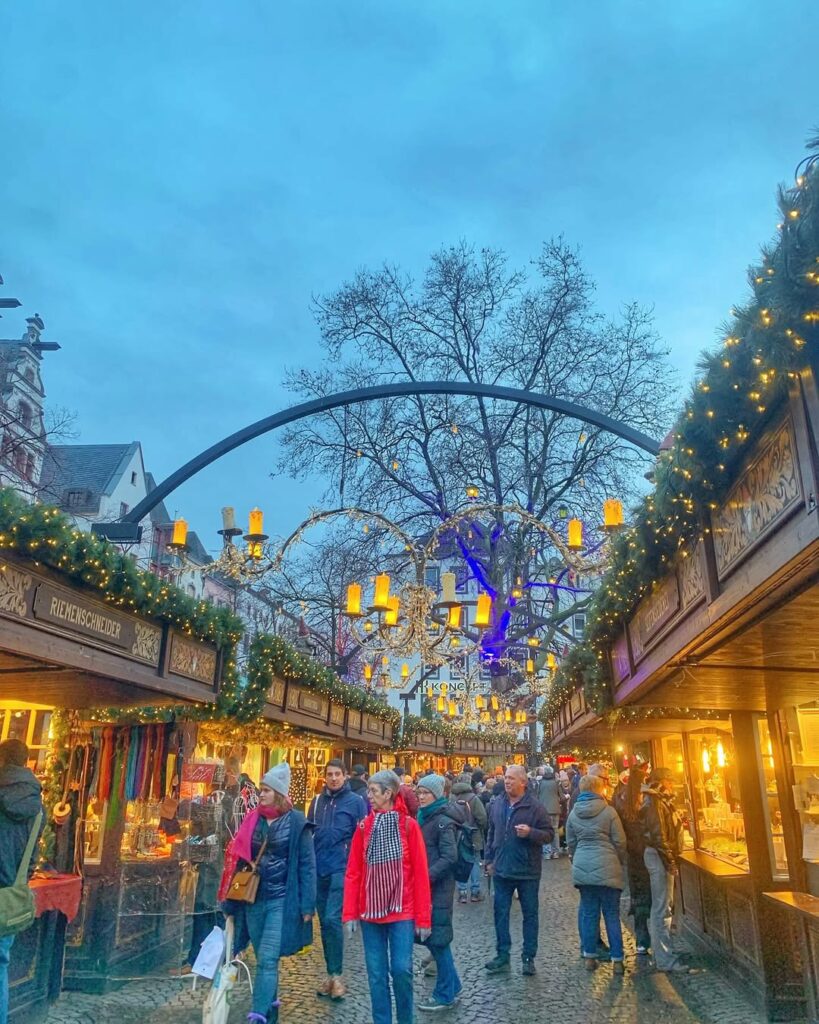
During my Christmas market travels, Cologne and Frankfurt stood out for their festive energy and accessibility. Both cities host several large markets within easy walking distance of each other, making them perfect for a full day (or two) of holiday wandering. Cologne delivers the classic German Christmas market atmosphere — twinkling lights, the scent of spiced wine, and wooden chalets brimming with festive treats. Frankfurt, on the other hand, offers a slightly more modern feel, with food stalls featuring flavors from around the world alongside traditional specialties.
Other German cities are just as enchanting during the season. Dresden claims the title of Germany’s oldest Christmas market, with records dating back to 1434. Nuremberg is famous for its Christkindlesmarkt and festive traditions, while Rothenburg ob der Tauber provides a more storybook-style experience with a historic backdrop that feels timeless.
Top Christmas Markets in Austria
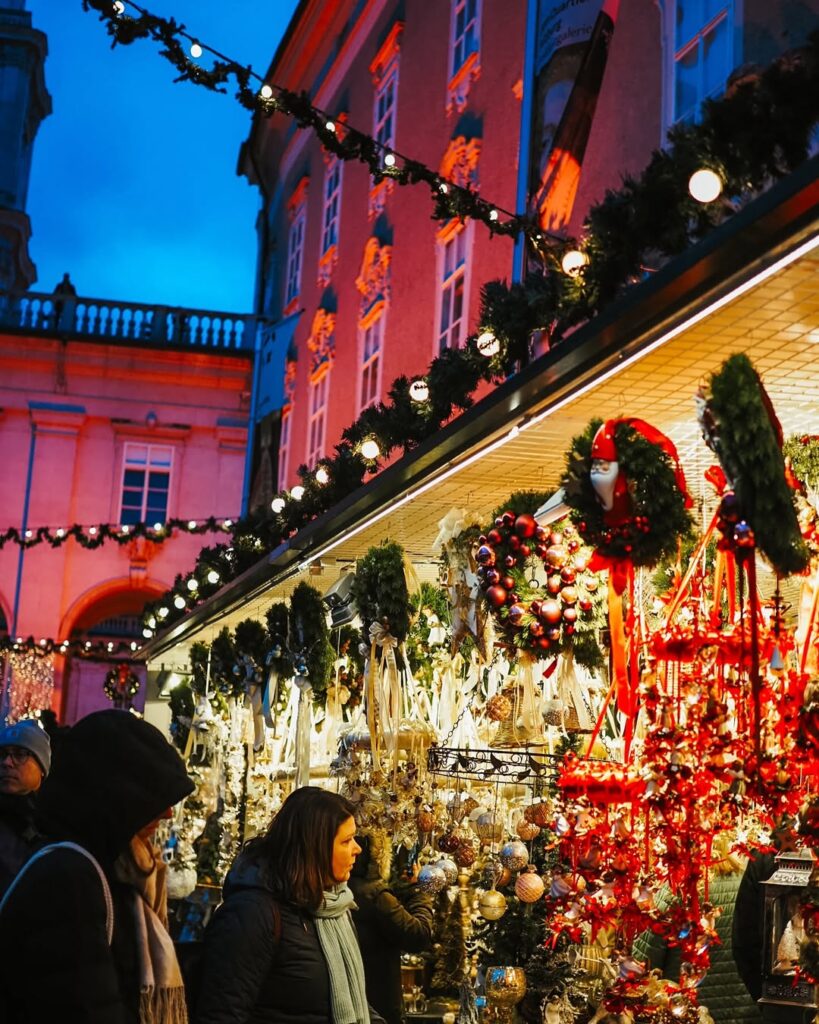
Austria shines brightly during the festive season, and its top Christmas markets are found in Vienna, Salzburg, and Innsbruck.
Vienna’s markets are scattered throughout the city, each offering a different atmosphere — from elegant and grand settings near historic buildings to more traditional stalls filled with crafts and sweet treats, and even modern spaces with art installations and live music.
Meanwhile, Salzburg and Innsbruck embody that classic Christmas market charm. Their old towns transform into cheerful winter scenes, where twinkling lights, warm drinks, and the scent of roasted chestnuts fill the air. These two cities offer a more intimate, storybook-style festive experience that perfectly complements Vienna’s larger, more varied celebrations.
Top Christmas Markets in France
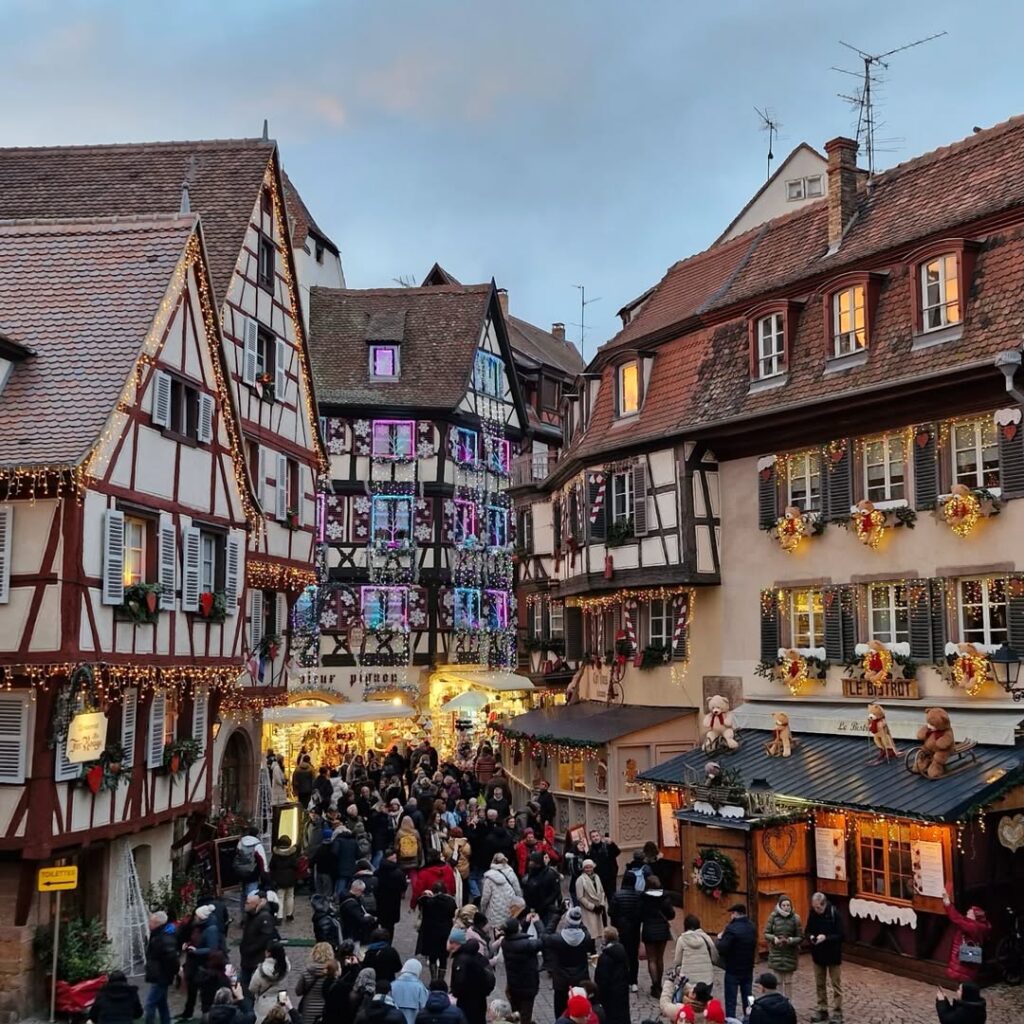
France’s most enchanting Christmas markets are concentrated in the Alsace region, an area with deep festive roots shaped by its proximity to Germany. This blend of cultural influences has made Alsace a holiday favourite for both locals and travellers.
Strasbourg, the region’s largest city, hosted France’s very first Christmas market in 1570. Today it proudly calls itself the “Capital of Christmas.” The market is a dazzling experience, with imaginative light displays, hundreds of independent stalls, and an unmistakable festive atmosphere that fills the historic streets.
Just a short train ride away, Colmar offers a more small-town feel, where timber-framed houses and decorated squares create a storybook setting. Mulhouse is well known for its textile-inspired gifts, while Eguisheim and Riquewihr charm visitors with their smaller markets, local wines, and a warm, welcoming seasonal spirit.
Affordable Christmas Markets to Visit in Europe
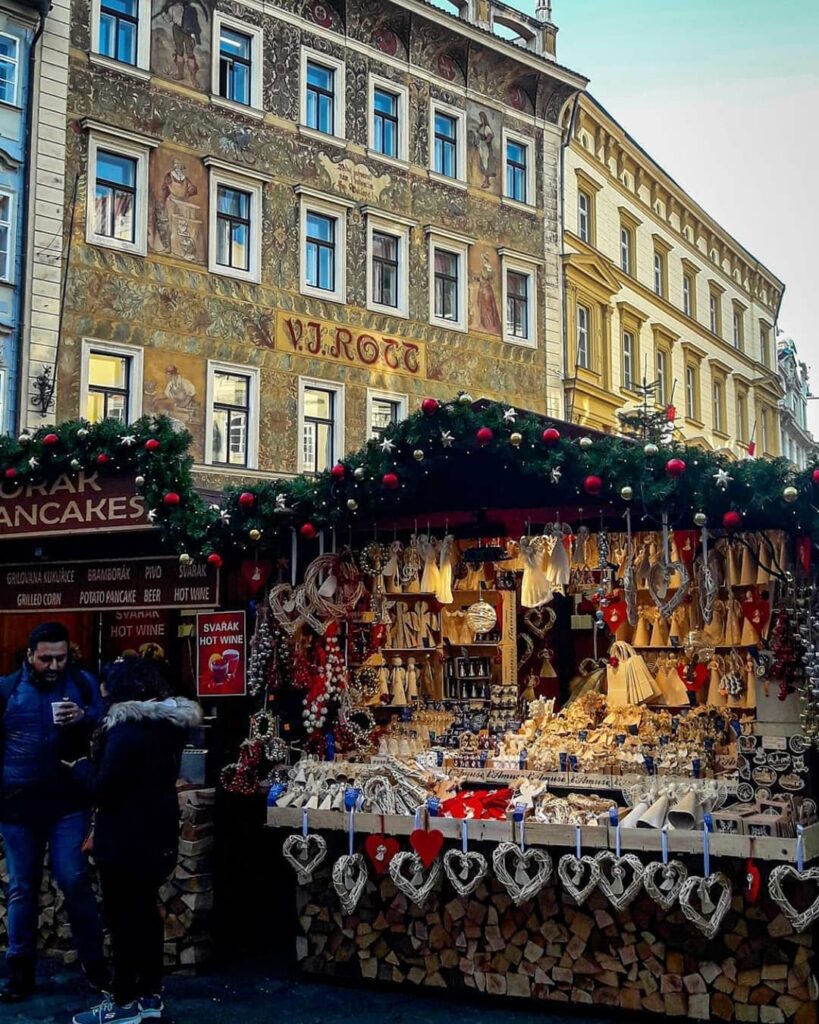
If you’re looking to experience Europe’s Christmas markets without draining your savings, Prague, Czechia, is my top recommendation. Accommodation is affordable compared to other major cities, food and drink are reasonably priced, and some of Prague’s most iconic sights — like Charles Bridge and Prague Castle — can be enjoyed completely free. It’s the perfect mix of festive spirit and great value.
Another strong budget contender is Poland. Although I haven’t visited during the Christmas season yet, its markets are known to be wallet-friendly. If you’re already exploring Central Europe, it’s easy to add on a Poland route after Prague or Dresden.
You might see Budapest frequently recommended in older travel blogs as a cheap Christmas market destination. However, after visiting in 2022, I found this was no longer entirely accurate. Hungary’s post-COVID inflation caused a significant jump in prices for market food and drinks — items like mulled wine, lángos, and chimney cakes were on par with, or even more expensive than, cities like Frankfurt or Berlin. Accommodation remains budget-friendly, but it’s wise to factor in higher food costs than expected.
I haven’t been back to Budapest since, so prices for the 2025 Christmas market season may shift again. Still, if you’re looking for excellent value right now, Prague remains the standout for a festive European getaway on a budget.
Other Unmissable Christmas Markets Around Europe
If you’re looking to expand your Christmas market itinerary beyond the classic German and Austrian cities, there are a few standout options worth considering.
London’s Winter Wonderland is a major seasonal event, transforming Hyde Park into a festive playground filled with rides, entertainment, and endless food stalls. Copenhagen’s Tivoli Gardens offers a fairytale setting with its beautifully decorated park and warm Nordic charm. And in Basel, Switzerland, the markets bring an elegant, storybook atmosphere, making it one of the most admired festive destinations in the country.
Each of these markets offers a different flavour of the holiday season, adding extra sparkle to a European Christmas trip.
Christmas Markets That Didn’t Make the Cut
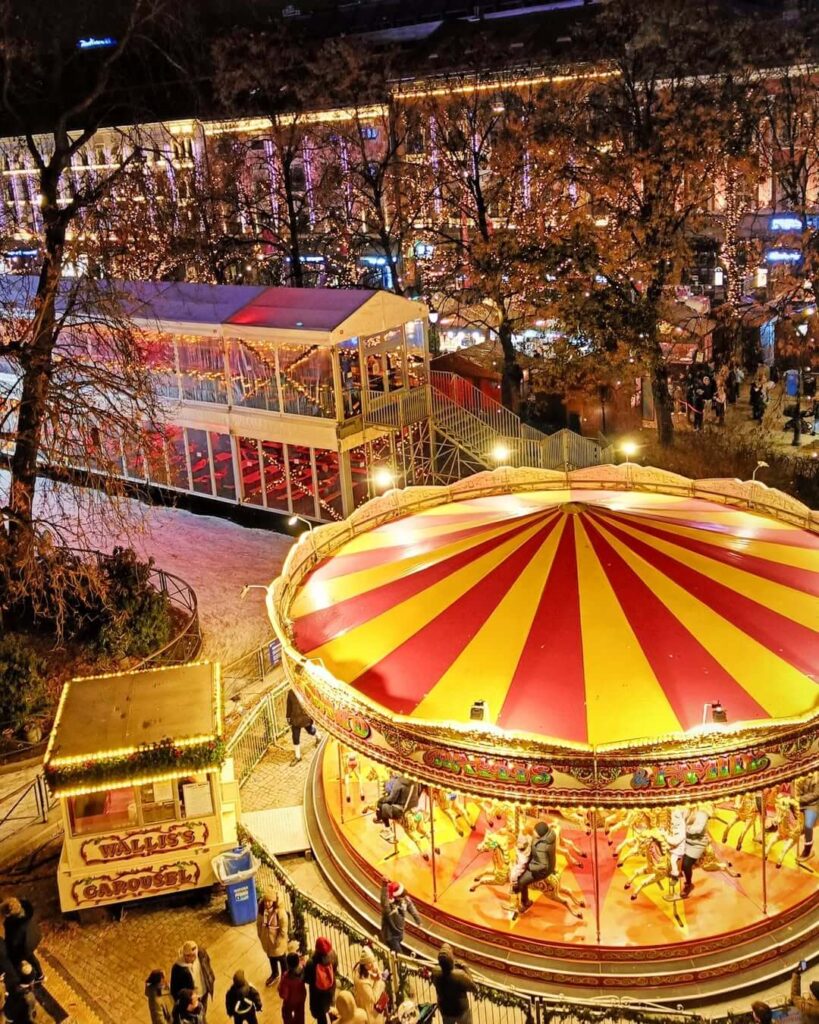
Not every Christmas market in Europe delivers the same festive charm. A few felt more like commercial setups than authentic holiday experiences. Here are the ones that left me underwhelmed:
- Amsterdam, Netherlands: It looked cheerful at first glance, but the atmosphere didn’t match the magic of more established markets. It felt overly commercial and lacked the inviting warmth that makes these events special.
- Florence, Italy: The German-style market in Piazza Santa Croce gets full marks for enthusiasm, but Christmas markets aren’t deeply tied to Italian tradition, and that shows. It simply didn’t have the same festive depth as markets in Germany, Austria, or France.
- Oslo, Norway: Predictably expensive and underwhelming overall. It’s fine if you’re already passing through the city, but it’s not worth building an entire trip around.
Wrapping Up Your Ultimate European Christmas Market Journey by Train
From sipping Glühwein in Cologne to ice skating in Salzburg, finding great bargains in Prague, or marvelling at dazzling window displays in Strasbourg, this itinerary brings together some of the most festive experiences Europe has to offer.
Whether you’re in it for the food, the atmosphere, or the chance to soak up some winter magic, travelling by train makes the journey as memorable as the destinations themselves. I hope this guide gives you the clarity and inspiration you need to map out your own unforgettable Christmas market adventure.