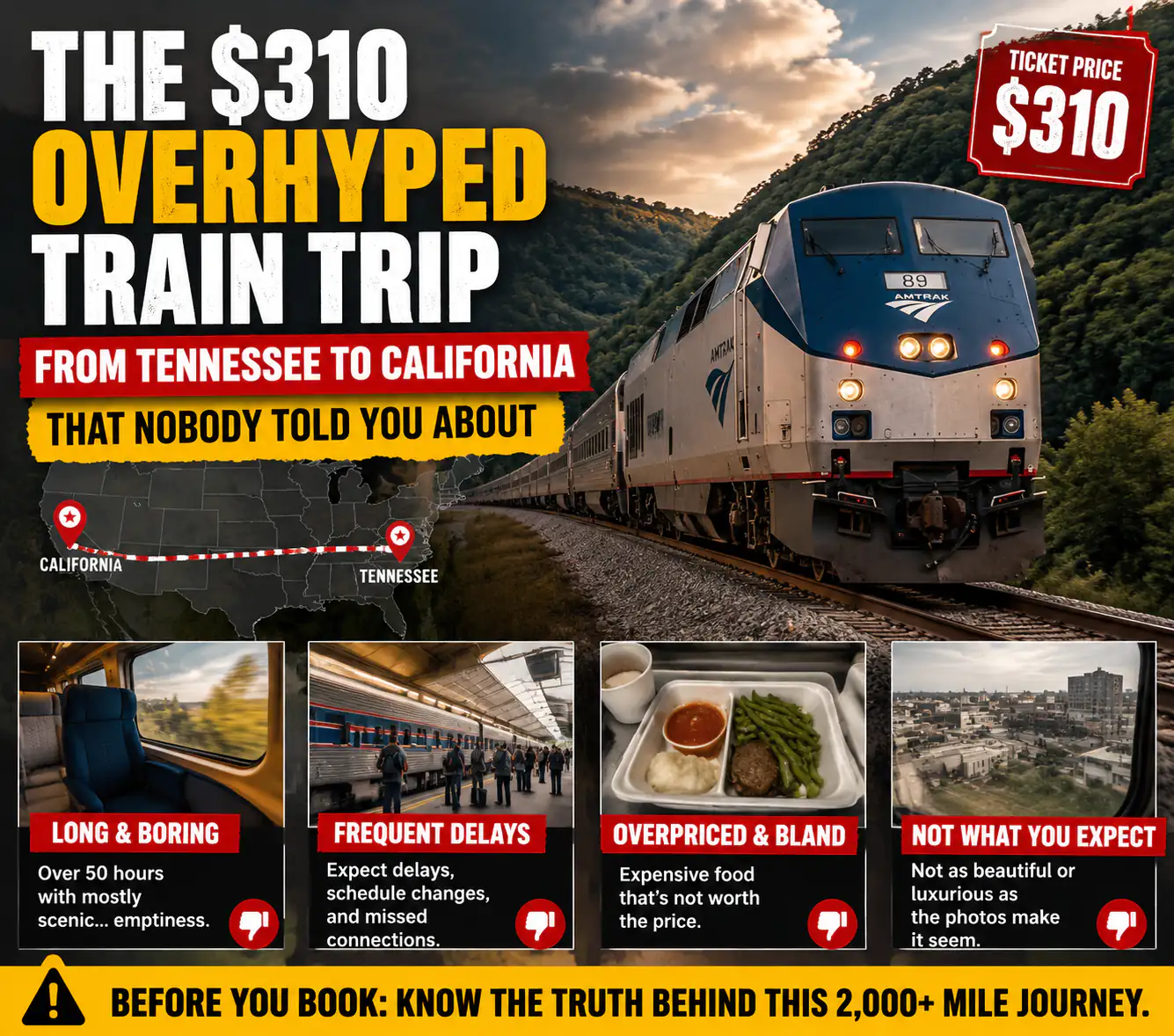
It sounds almost unrealistic at first. A cross-country train ride from Tennessee to California for around $310? In a time when flights spike overnight and road trips burn through fuel budgets, this number feels like one of those travel myths that circulates online but rarely survives reality.
Yet this journey does exist in a different form—just not in the simplified way people imagine. It’s not a single ticket, not a luxury package, and not a hidden Amtrak secret. It’s something more interesting: a stitched-together rail route that turns America into a slow-moving film you sit inside for nearly two days.
The contradiction is what makes it compelling. Cheap on paper, expensive in time. Simple in structure, complex in execution. A “budget trip” that quietly demands patience instead of money.
Why the $310 Train Trip Is Real… and Not Real at the Same Time
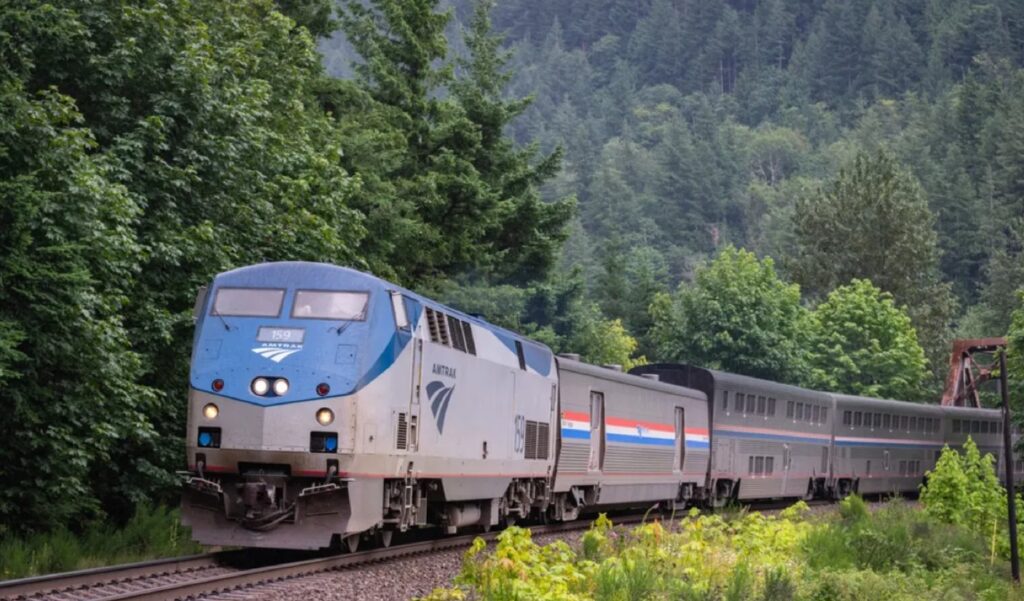
The first misunderstanding is assuming there is a fixed Tennessee-to-California train fare. There isn’t. What people call the “$310 trip” is usually a lucky combination of discounted coach fares across multiple Amtrak segments booked at the right time.
In reality, Amtrak pricing works like airline pricing but with fewer predictable patterns. Seats are sold in fare buckets, and early bookings often unlock unusually low coach prices. When someone combines multiple legs—typically Tennessee to Chicago, then Chicago to Los Angeles—the total can occasionally land near the $300–$350 range.
But this only happens under specific conditions: low-demand travel days, advance booking, and flexible routing. Miss one of those, and the price shifts quickly upward.
So the myth isn’t entirely wrong. It’s just incomplete.
The Hidden Route Behind the Viral Price Tag
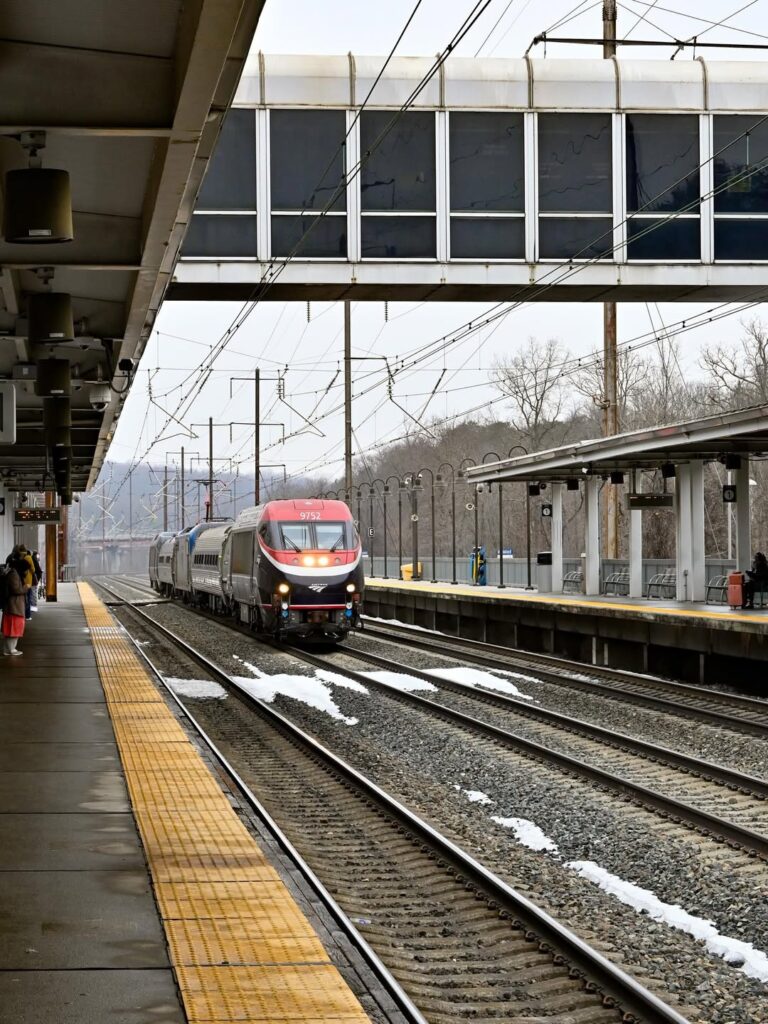
The journey usually begins in Tennessee, but not always from a major rail hub. Depending on the city, travelers often connect through bus links or nearby stations before entering the main Amtrak network.
From there, the first leg typically moves toward Chicago, a major rail junction where nearly all long-distance U.S. routes intersect. This segment is functional rather than scenic—more about connection than experience.
The real transformation begins in Chicago.
From Chicago, travelers board the Southwest Chief, one of Amtrak’s most iconic long-distance routes, stretching all the way to Los Angeles. This is where the journey stops feeling like transportation and starts feeling like geography unfolding in real time.
The train moves from Midwestern flatlands into open prairie, then into desert landscapes, and finally toward the mountains of the Southwest before reaching California’s edge.
This second half is what people remember. Not the price—but the shift in landscape.
What the Experience Actually Feels Like Inside the Train
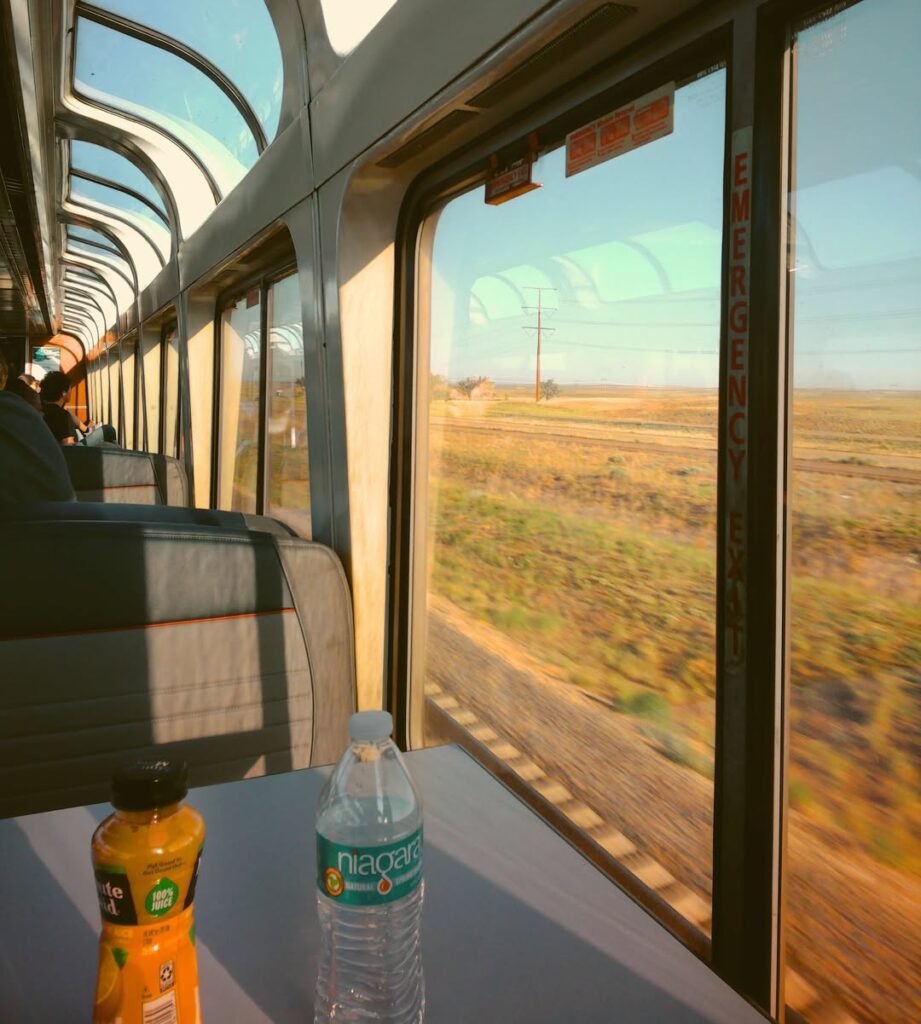
There is a moment, usually after the first few hours, when the concept of “destination” starts to fade. Coach seats on long-distance trains are not luxurious, but they are designed for endurance. Large windows dominate your view, and the rhythm of the train becomes part of the background noise.
People read, sleep in intervals, or simply stare outside as the scenery changes without warning. A town passes in seconds. Then nothing for miles. Then suddenly mountains.
Unlike flying, where travel compresses distance into invisibility, rail travel does the opposite. It expands geography. You don’t just arrive in another state—you witness the transition.
That is the part no price tag fully explains.
The Real Price Nobody Mentions
This is where the $310 story changes shape completely.
Yes, the fare can sometimes appear around $310—but that number is only the base coach fare under ideal booking conditions. It does not represent the full financial reality most travelers experience.
A more realistic breakdown looks like this:
A Tennessee-to-Chicago segment might cost anywhere from $80 to $150 depending on departure city and timing. The Chicago-to-Los Angeles Southwest Chief segment typically ranges from $120 to $250 in coach when booked early. When these two align during low-demand pricing windows, the combined total can briefly touch the $300–$350 range.
But here’s the catch: the same trip, booked closer to departure or during peak travel periods, often jumps to $450–$700 in coach. And if you upgrade even slightly—extra legroom seating options, flexible tickets, or sleeper accommodations—the price can rise sharply into four figures.
So the “$310 trip” is not the average cost. It is the lowest visible edge of a pricing system designed around timing, demand, and availability.
What people don’t tell you is that the price is not stable—it behaves more like a fluctuating window than a fixed ticket.
The Contrarian Truth About the “Budget” Narrative
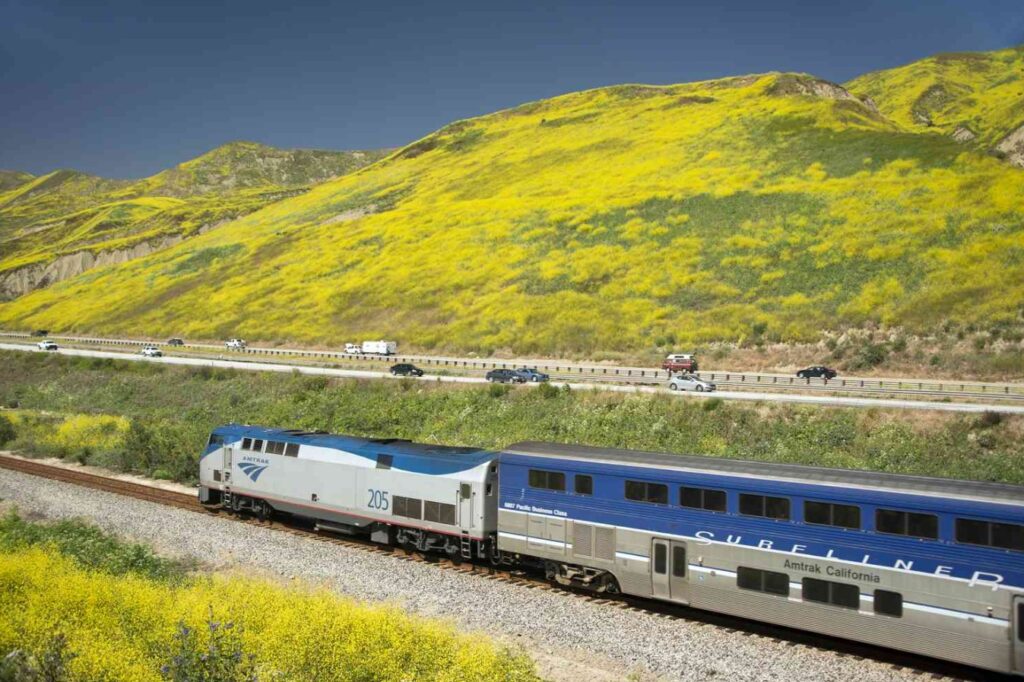
The biggest misconception about this trip is that it is a cheap way to cross America. In truth, it is only cheap in money—not in time, energy, or flexibility.
A flight from Tennessee to California might take 5–7 hours. This journey can stretch into 40–55 hours depending on transfers and delays. You are not buying transportation efficiency. You are buying exposure to distance itself.
And Amtrak, unlike airlines, operates on shared freight tracks in many regions. That means delays are not rare—they are part of the system. The train does not always control its own schedule.
So the $310 story becomes less about affordability and more about trade-offs. You save money, but you spend time. You gain scenery, but lose speed. You reduce stress, but increase unpredictability.
Why People Still Chase This Journey Anyway
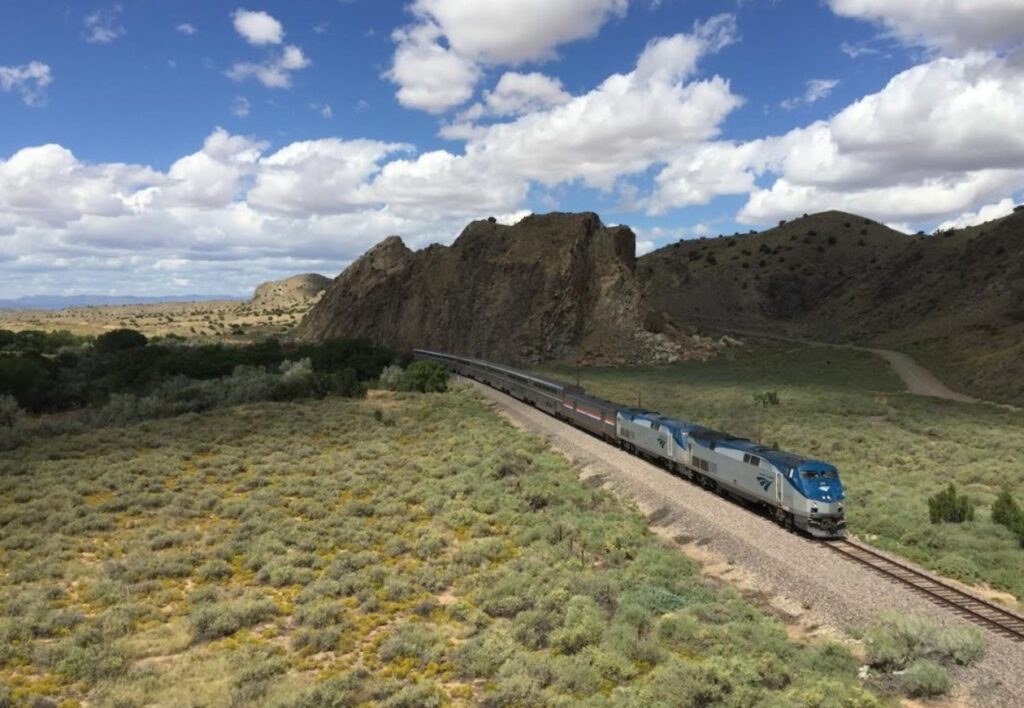
Despite its limitations, the route continues to gain attention because it offers something modern travel rarely does: continuity.
Flights break the world into departure and arrival. Roads isolate you inside a vehicle. But trains keep you in one long, uninterrupted line across states, climates, and time zones.
There is also a psychological appeal to the price itself. “$310 coast-to-cross-country” feels like a loophole in an expensive world, even if the reality is more complicated.
People aren’t just buying a ticket. They are buying a story they can sit inside.
Final Takeaway
The $310 Tennessee to California train trip is not a fixed deal waiting to be booked—it is a timing-based coincidence wrapped inside a real rail network. It exists, but only for travelers willing to assemble it, accept its limitations, and trade speed for distance.
What looks like a budget hack is actually something more unusual: a slow-motion version of America, stitched together by rails, schedules, and patience.
And that is why it spreads online so easily. Not because it is the cheapest way to travel—but because it feels like a secret way to experience the country without rushing through it.
You may also like :