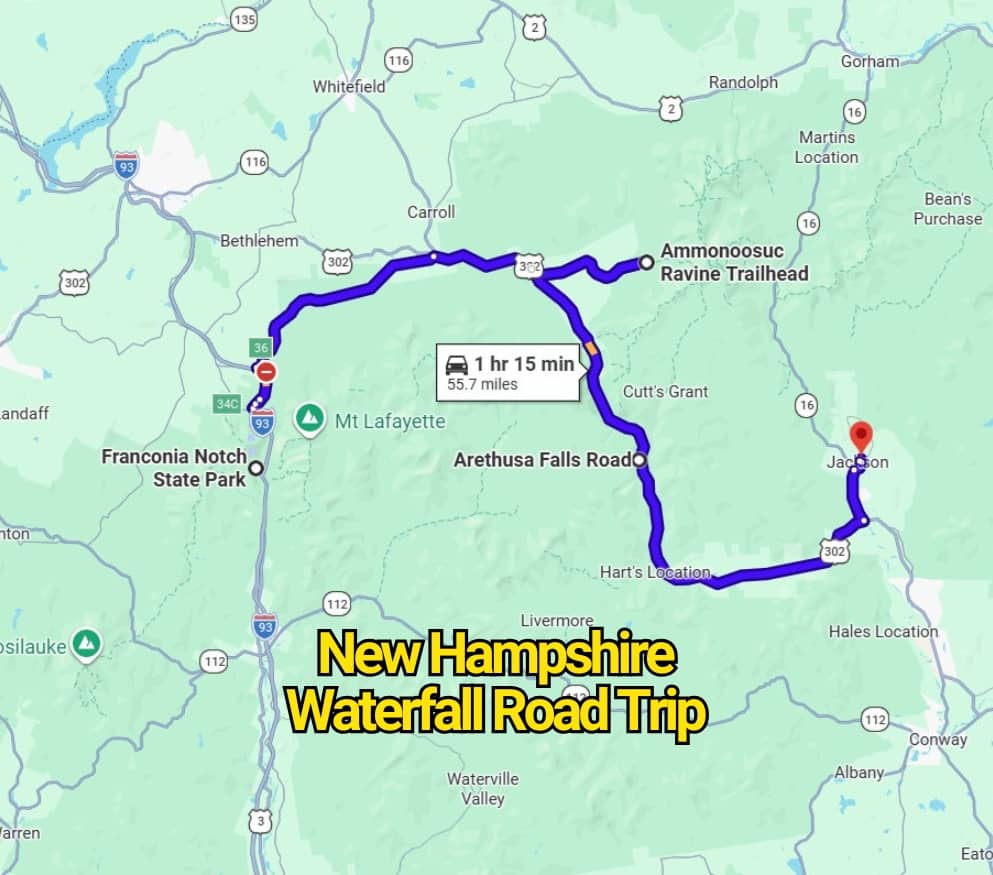
New Hampshire’s rugged mountains, forest roads, and rushing rivers make it an ideal place for a waterfall road trip. From tall cascades hidden beside woodland trails to roadside falls that require only a short walk, the state offers plenty of rewarding stops. This New Hampshire waterfall road trip map connects several memorable locations, giving travelers a fresh way to experience the Granite State.
The route winds through scenic areas where rocky gorges, covered bridges, and mountain viewpoints appear around nearly every bend. Some waterfalls thunder after spring snowmelt, while others flow gently through quiet pools during the warmer months. Each stop brings a different atmosphere, making the drive feel varied from beginning to end.
Whether you are traveling for a full weekend or building a shorter day trip, this map makes it easier to organize the journey. Bring sturdy shoes, pack a camera, and leave time for unexpected roadside stops along the way. By the end of the route, you may see New Hampshire as far more than a mountain destination—it is also a state shaped by water, stone, and wild forest scenery.
1. Franconia Notch State Park, Lincoln: Waterfalls Beneath the White Mountains
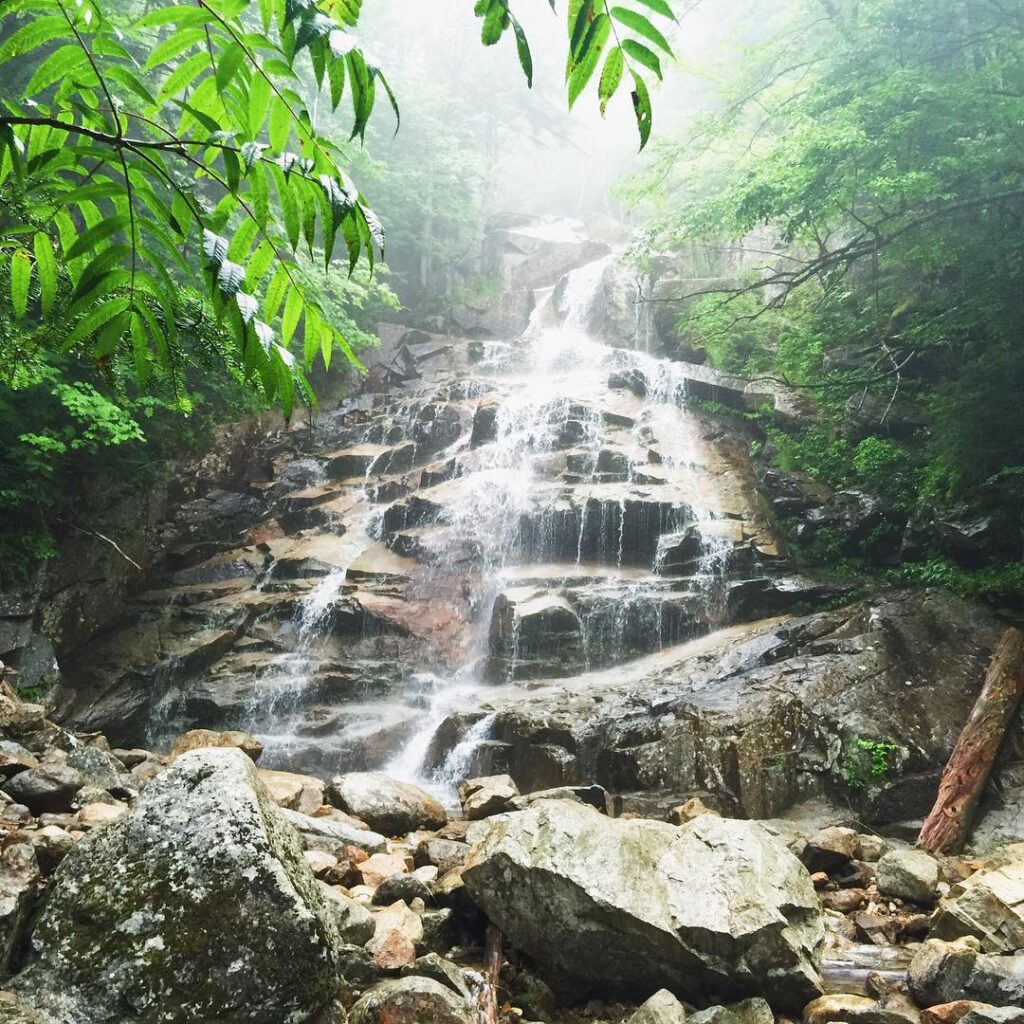
Franconia Notch State Park makes a memorable first stop on a New Hampshire waterfall road trip. Surrounded by steep mountain walls and dense woodland, the park holds several rushing cascades, rocky streams, and natural pools. Its easy access from Interstate 93 also makes it convenient for travelers heading through Lincoln and the White Mountains.
The Basin is one of the park’s most striking water features. For thousands of years, the Pemigewasset River has swirled through the granite, forming a smooth, bowl-shaped pool beneath a small cascade. A short paved walk leads from the parking area to the viewing point, so visitors can enjoy the scene without committing to a long hike.
More waterfalls and cascades can be found along nearby trails, especially after spring snowmelt or periods of steady rain. Autumn brings colorful foliage around the rushing water, while winter covers the rocks with dramatic layers of snow and ice. Leave extra time here, as the park offers far more than a single waterfall stop.
2. Beecher and Pearl Cascades, Carroll: A Short Woodland Hike to Twin Falls
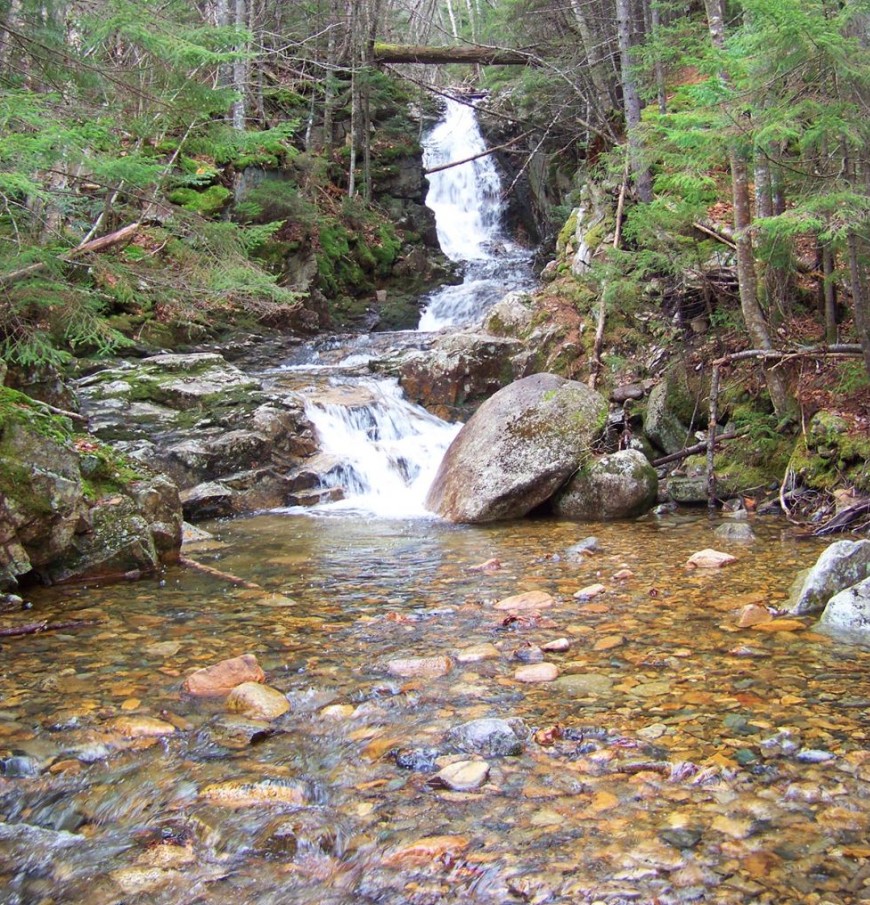
Beecher and Pearl Cascades reward travelers with two graceful waterfalls tucked along a wooded trail near Crawford Notch. The walk begins behind Crawford Depot, a historic railroad station beside the Appalachian Mountain Club’s Highland Center. This convenient starting point makes the cascades an easy addition to a longer New Hampshire waterfall route.
The trail is relatively short, though several steep and rocky sections call for sturdy footwear. Beecher Cascade drops roughly 25 feet over dark stone, while Pearl Cascade flows nearby in a narrower ribbon. Mossy boulders, tree roots, and forest sounds give the hike a secluded character despite its proximity to the highway.
Water levels tend to be strongest during spring or after periods of rain, creating a livelier display across the rocks. In autumn, gold and red leaves frame the cascades and add striking color to the path. Allow enough time to enjoy both falls, take photographs, and visit Crawford Depot before continuing through the White Mountains.
3. Ammonoosuc Ravine, Sargent’s Purchase: A Strenuous Hike to a 100-Foot Waterfall
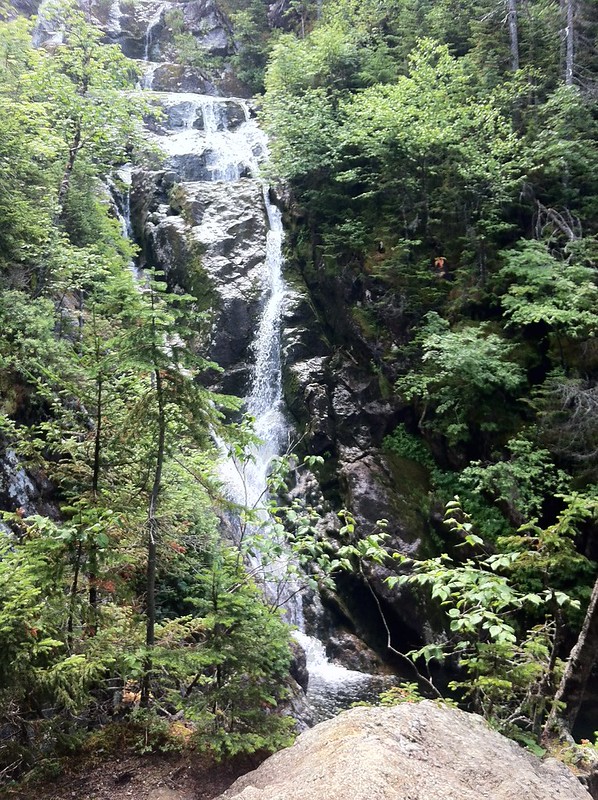
Ammonoosuc Ravine delivers one of the more dramatic waterfall stops on this New Hampshire road trip. The roughly 100-foot cascade tumbles through a steep mountain corridor near Mount Washington, sending cold water across dark ledges and scattered boulders. Reaching it takes effort, but the forest setting and forceful drop make the journey worthwhile.
The hike covers about 2.3 miles to the falls and includes rocky, uneven ground with steady elevation gain. Tree roots, wet stones, and narrow trail sections can slow the pace, especially after rain. Proper hiking shoes, drinking water, and extra time are helpful for travelers who want to complete the route without rushing.
Spring runoff often brings the strongest water flow, while autumn frames the ravine with gold, orange, and deep red leaves. Weather can shift quickly at higher elevations, so checking conditions before setting out is important. This stop suits experienced walkers looking for a more demanding waterfall hike rather than a quick roadside view.
4. Arethusa Falls, Hart’s Location: New Hampshire’s Towering Single-Drop Cascade
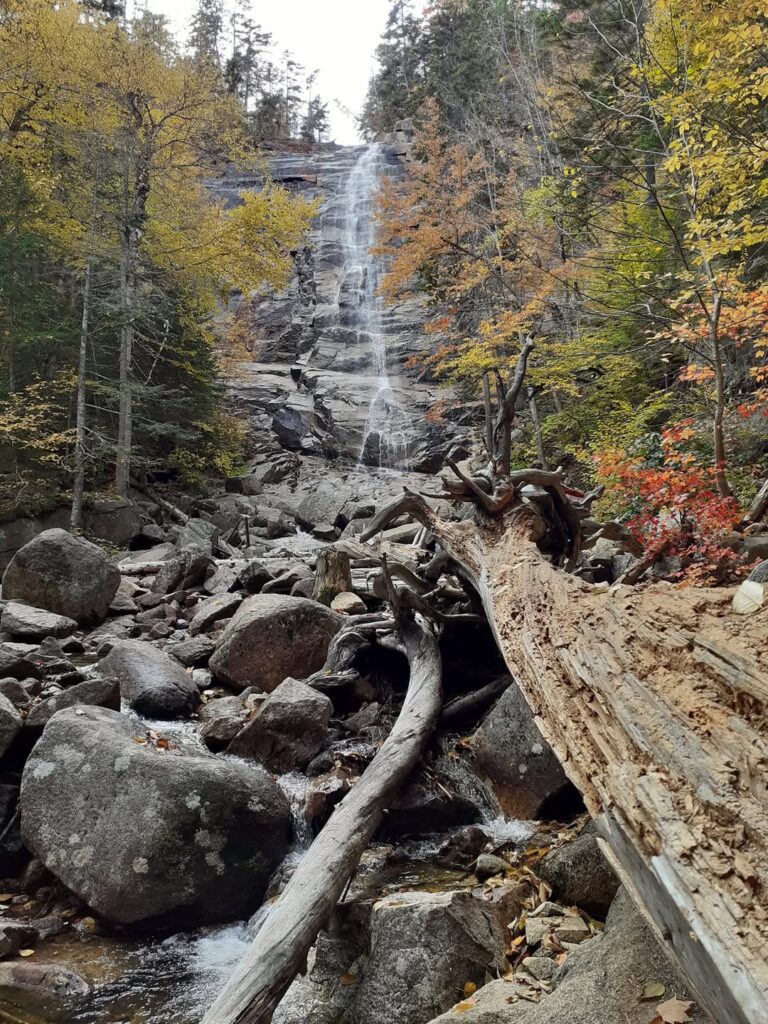
Arethusa Falls stands as one of the grandest sights along this New Hampshire waterfall road trip. Water plunges nearly 140 feet down a steep granite wall, creating a commanding scene framed by thick White Mountain forest. Its height and rugged surroundings make it a rewarding stop for travelers willing to trade roadside convenience for a woodland hike.
Several routes lead to the falls, but the roughly three-mile out-and-back trail remains a popular choice. The path climbs steadily through hardwood forest, crossing rocky sections and exposed roots before reaching the base. Although the mileage may sound modest, the incline can feel demanding, so supportive footwear and drinking water are worth carrying.
Spring runoff often produces the strongest flow, while early autumn adds copper, gold, and crimson foliage around the cascade. Mist can make nearby rocks slippery, so visitors should remain on marked paths and avoid stepping too close to wet ledges. Take time to rest near the viewing area before beginning the descent to the trailhead.
5. Jackson Falls, Jackson: An Easy Roadside Stop After the Longer Hikes
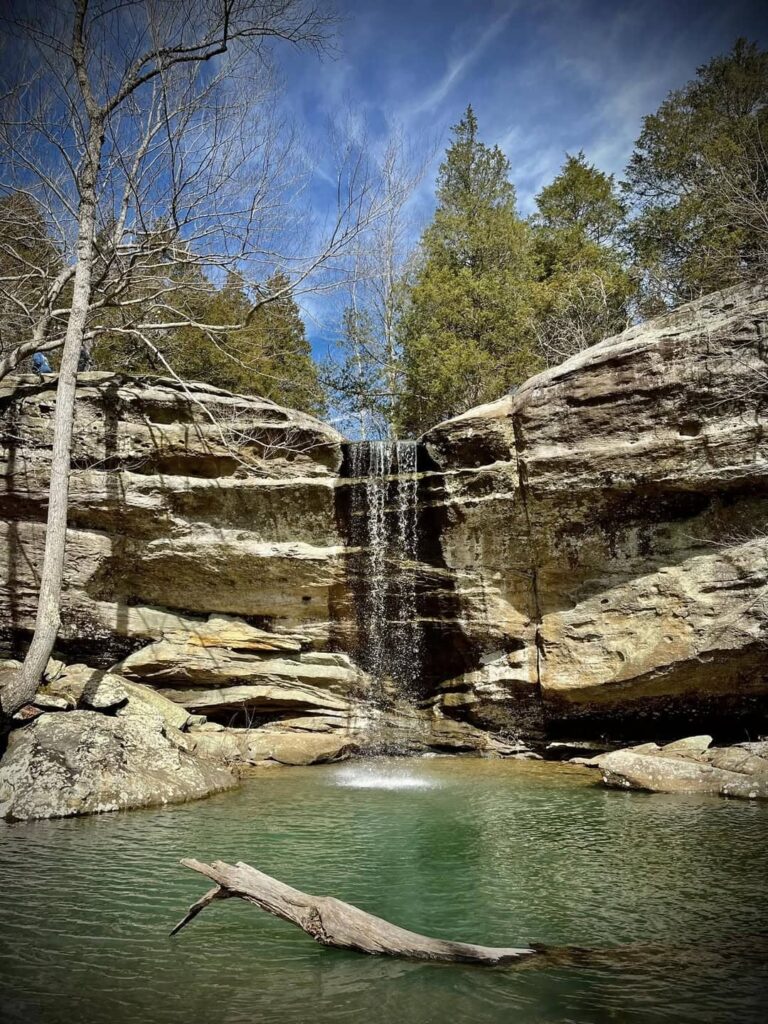
Jackson Falls offers a gentler pause after the more demanding trails earlier on this New Hampshire waterfall route. The cascades sit close to the road, allowing visitors to reach the water with very little walking. That easy access makes the stop especially appealing for families, casual travelers, or anyone ready to rest tired legs.
Water slips over broad rock shelves and gathers in shallow pools, creating several pleasant viewing spots along the stream. Depending on recent rainfall, the current may move softly or rush with much greater force. The layered rocks also give the falls a different appearance from the taller, single-drop cascades found elsewhere in the White Mountains.
Because the area is simple to reach, it can become busy during warm weekends and peak foliage season. Arriving earlier in the day may provide a calmer visit and easier parking. Spend a few moments beside the water, enjoy the surrounding woodland, and recharge before continuing to the final stops on the road trip.
You may also like :