Hawaii seems almost unfairly blessed with waterfalls. Across the islands, streams spill over jungle cliffs, tumble into misty valleys, and plunge into pools framed by dense tropical greenery. Some falls are easy to reach from the roadside, while others appear only after a hike, boat ride, or scenic helicopter flight.
Choosing the best waterfalls in the Aloha State is no simple task. Kauai alone is said to hold thousands of cascades, many hidden deep within remote valleys and rain-soaked mountains. Maui, Hawaii Island, Oahu, and Molokai add even more dramatic drops, ribbon-like falls, and powerful multi-tiered flows to the mix.
Still, a few places rise above the rest through their beauty, setting, size, or cultural significance. The following waterfalls include famous landmarks and beloved natural attractions that capture Hawaii at its wildest. Pack a rain jacket, charge your camera, and get ready to follow the sound of rushing water across the islands.
1. Hiilawe Falls: A Towering Cascade Hidden in Waipio Valley
- Location: Waipio Valley, Big Island, Hawaii
- Popularity: Rarely visited because access is heavily restricted
- Need to Know: Entry rules for Waipio Valley may change due to hazardous road conditions. Visitors who are not Hawaii County residents must enter with a licensed tour company. Walking into the valley, including along the Waipio Valley Trail, is prohibited. Severe weather may also lead officials to close the road entirely, so check local access notices before reserving a tour.
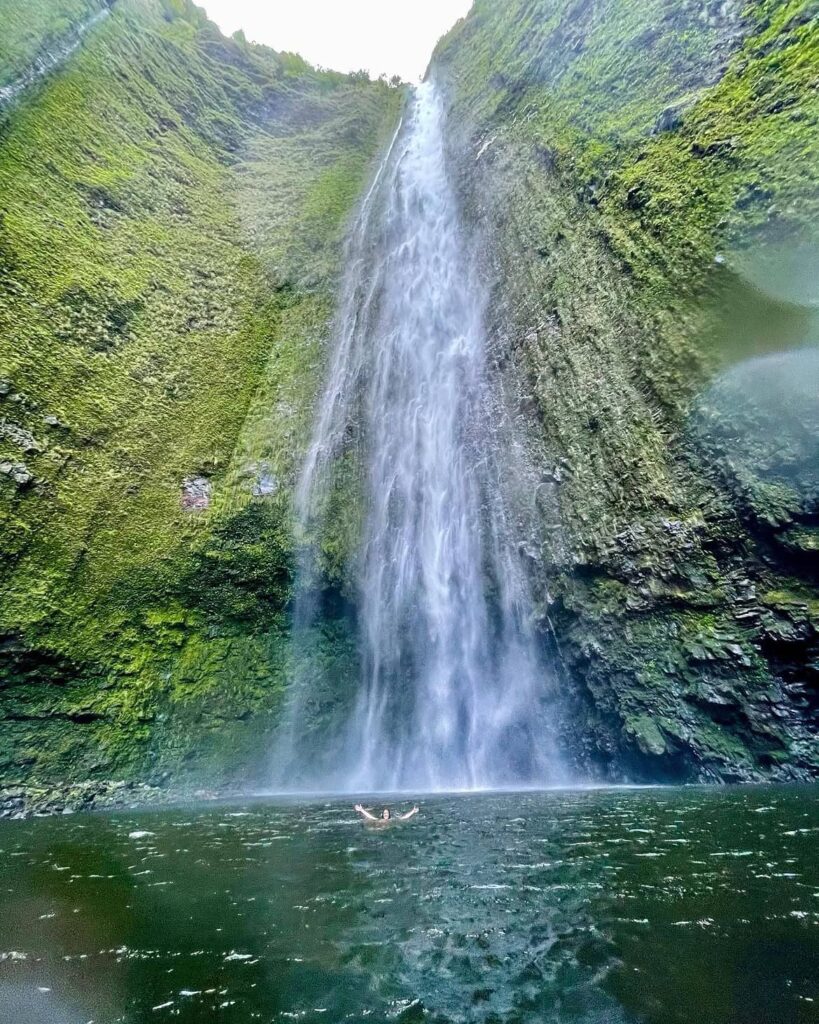
Hiilawe Falls drops roughly 1,450 feet along the back wall of Waipio Valley, making it one of Hawaii’s tallest waterfalls. The surrounding landscape feels raw and formidable, with steep green cliffs, thick vegetation, and streams cutting across the valley floor. Its isolated position on the Big Island’s Hamakua Coast adds to the waterfall’s elusive character.
Seeing Hiilawe Falls up close is difficult, even for travelers entering with an approved guide. A public lookout sits near the top of Waipio Valley Road, offering broad views across the valley and ocean. Hiilawe itself cannot usually be seen from this viewpoint, though several smaller cascades may appear along the immense cliff walls, especially after periods of heavy rain.
2. Waipo’o Falls: An 800-Foot Drop Inside Waimea Canyon
- Location: Waimea Canyon, Kauai, Hawaii
- Popularity: Frequently visited by hikers
- Need to Know: Reaching the upper section of the falls requires a moderately demanding three-mile, out-and-back hike through Kōkeʻe State Park. An entrance fee applies to nonresident visitors.
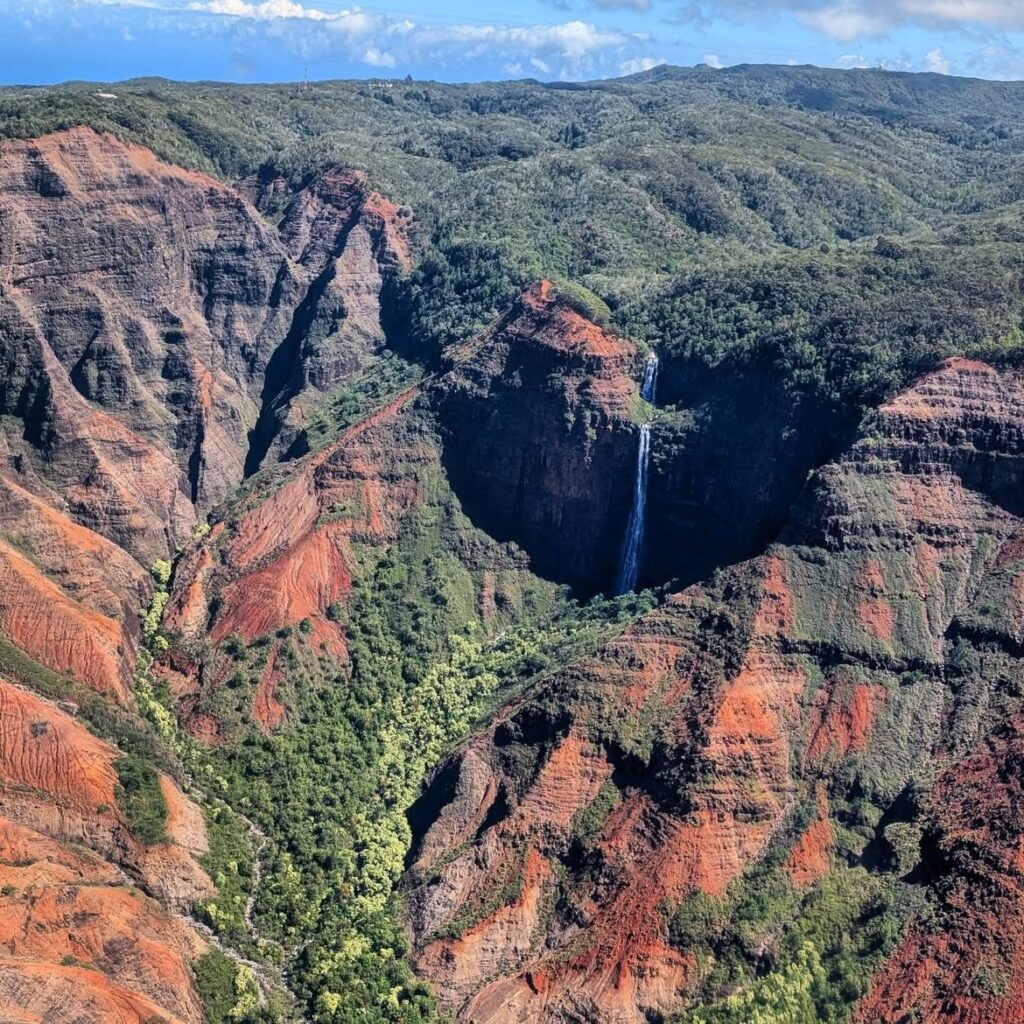
Waipo’o Falls plunges more than 800 feet from the rim of Waimea Canyon, a vast geological landmark often called the Grand Canyon of the Pacific. Red-and-brown canyon walls, deep ravines, and layers of tropical vegetation surround the waterfall, creating one of Kauai’s most dramatic natural settings. Its flow can vary with rainfall, so the cascade may look especially powerful after wet weather.
The trail leads hikers close to the upper edge of Waipo’o Falls rather than offering a full frontal view of the entire drop. Along the route, several lookout points reveal sweeping portions of the canyon and distant ridgelines. Slippery sections, exposed roots, and uneven ground make the hike more demanding than its distance might suggest.
Rain falls regularly across this elevated part of Kauai, leaving the path muddy even when nearby coastal areas are dry. Wear hiking shoes with reliable traction and carry rain protection. Trekking poles can also help with balance during steep or slick stretches of the route.
3. Manawaiopuna Falls: Kauai’s Famous Jurassic Park Waterfall
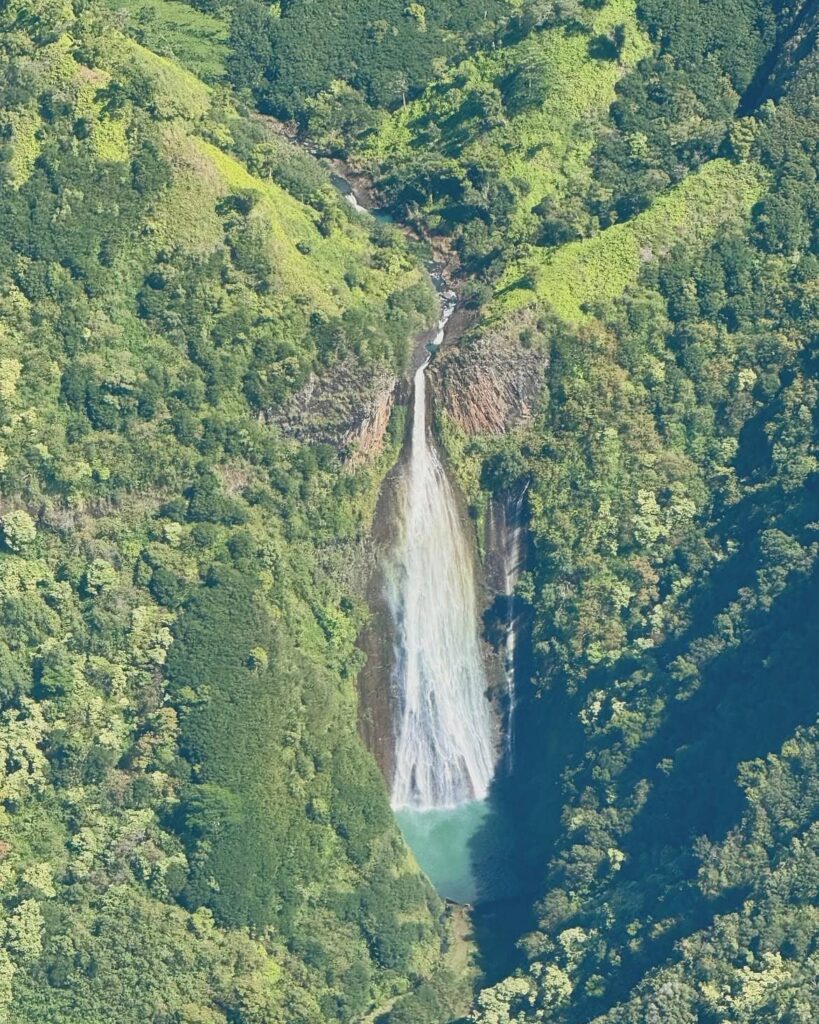
- Location: Kauai, Hawaii
- Popularity: Widely recognized, though rarely visited as a standalone attraction
- Need to Know: Manawaiopuna Falls can be reached only by helicopter tour.
Dropping roughly 400 feet through Kauai’s dense interior, Manawaiopuna Falls may not rank among Hawaii’s tallest cascades, yet its setting gives it tremendous visual impact. The water pours down a steep, vegetation-covered cliff in an isolated valley that cannot be reached by ordinary roads or public hiking trails.
The waterfall became internationally famous after appearing in an early scene from Steven Spielberg’s Jurassic Park. That brief movie moment transformed the secluded cascade into one of Kauai’s most recognizable natural landmarks, often earning it the nickname “Jurassic Falls.”
Because the surrounding land is privately owned and extremely remote, travelers generally see Manawaiopuna Falls during an aerial excursion. Many Kauai helicopter operators include a flyover on their routes, while certain authorized tours may offer a landing experience nearby. Weather, visibility, and tour permissions can affect each itinerary, so the view is never completely guaranteed.
4. Akaka Falls: A Towering Big Island Cascade Near Hilo
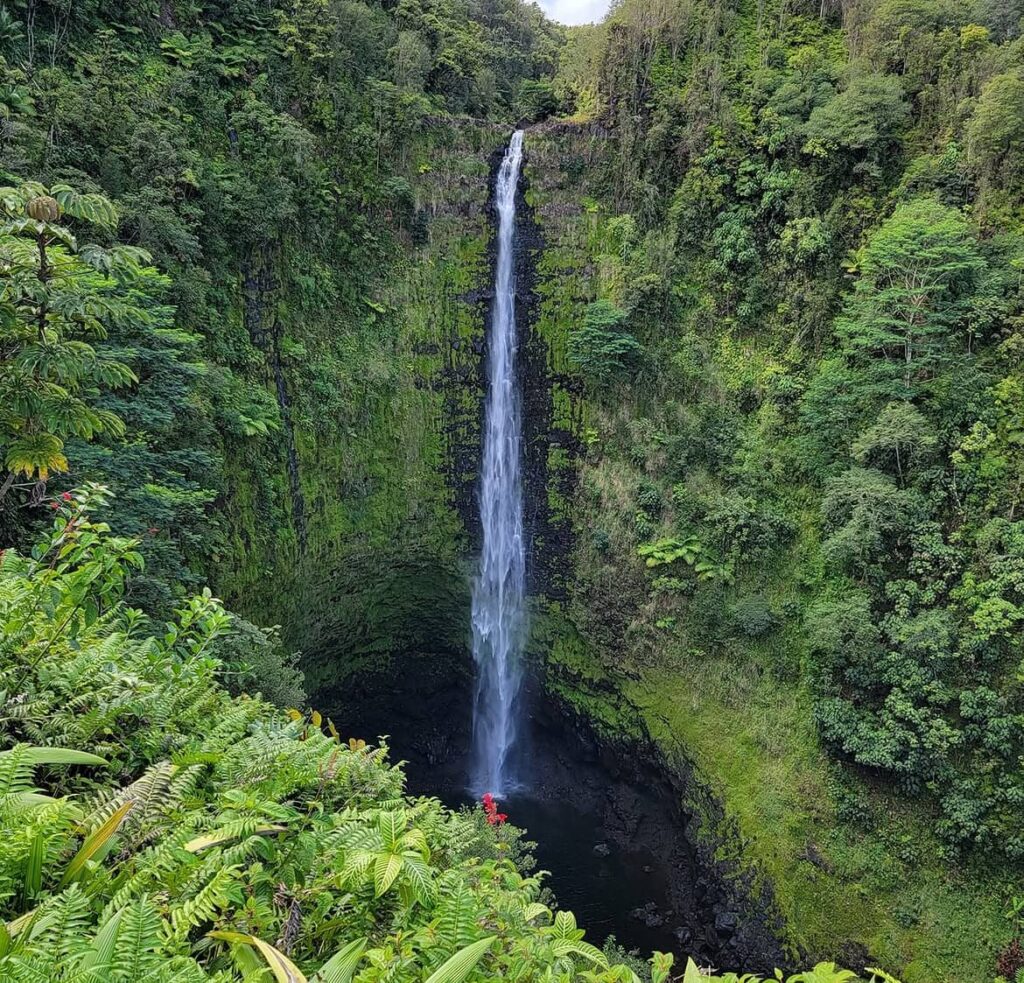
- Location: Hilo side of the Big Island, Hawaii
- Popularity: Heavily visited, with parking spaces often filling quickly
- Need to Know: Nonresidents pay a $5 admission fee per person and a $10 parking fee. Payment is accepted by credit or debit card only. Hawaii residents with valid identification can enter without charge.
Akaka Falls plunges 442 feet into a deep, vegetation-covered gorge inside Akaka Falls State Park. Located a short drive north of Hilo, this commanding waterfall is one of the Big Island’s best-known natural landmarks. Rainfall feeds the surrounding streams, while thick ferns, bamboo, and tropical plants give the entire route a dense, jungle-like character.
Visitors reach the main viewing area by following a paved loop measuring about half a mile. The distance is brief, but numerous stairs and steep sections can make the walk moderately strenuous. Moist conditions may leave parts of the pavement slick, so shoes with dependable grip are a sensible choice.
The loop also provides a glimpse of Kahuna Falls, a separate 100-foot cascade partly concealed by heavy foliage. Both waterfalls descend from waterways flowing along the slopes of Mauna Kea before continuing across the northeastern side of the island and eventually reaching the Pacific Ocean.
5. Hanakapiai Falls: A Demanding Hike to a 300-Foot Kauai Cascade
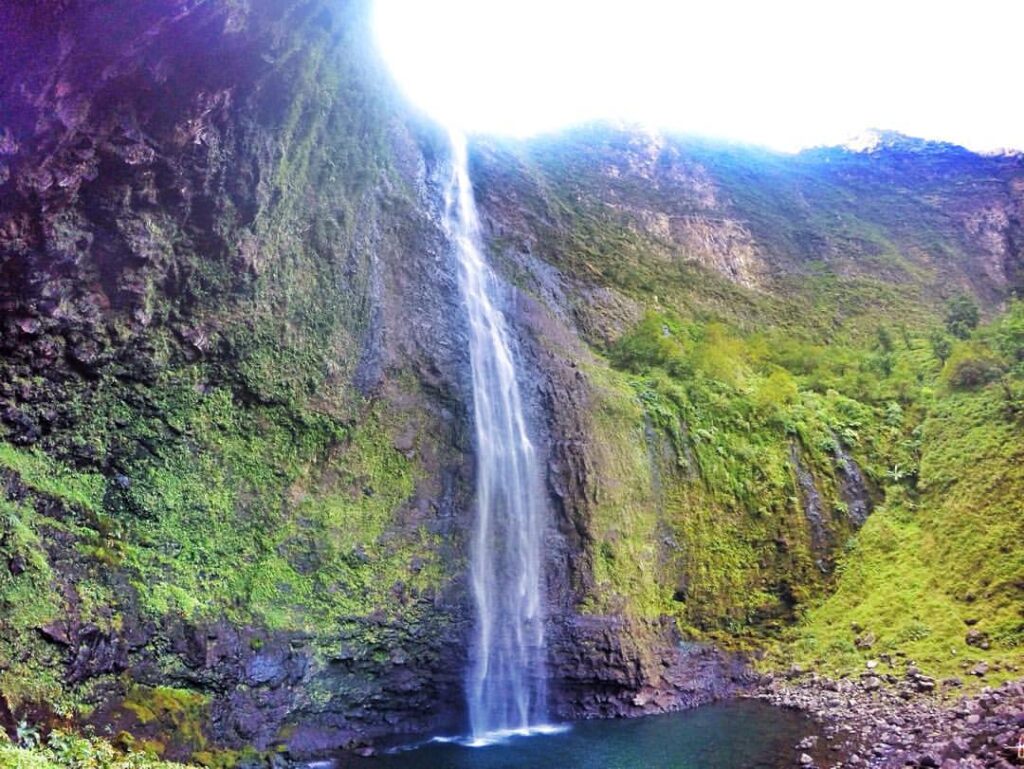
- Location: Nā Pali Coast, Kauai, Hawaii
- Popularity: Frequently crowded, especially along the first portion of the trail
- Need to Know: Advance reservations are required to enter Hāʻena State Park, and visitors must pay for parking or shuttle access. A state permit is also required for travel farther along the Kalalau Trail beyond the permitted day-use area, so review the latest park rules before departure.
Hanakapiai Falls plunges roughly 300 feet down a sheer cliff deep within Kauai’s rugged Nā Pali Coast. Reaching it requires an out-and-back journey of nearly eight miles, beginning on the Kalalau Trail and continuing inland from Hanakapiai Beach. The towering cascade, enclosed by steep rock walls and thick tropical growth, provides a dramatic reward after hours of strenuous hiking.
The route is regarded as difficult because of slippery stones, muddy inclines, stream crossings, exposed roots, and rapidly changing weather. Rain can cause water levels to rise with little warning, making crossings more hazardous. Strong footwear, adequate drinking water, rain protection, and an early start are important for anyone attempting the full trek.
Permit requirements, park reservations, and limited transportation options mean this outing demands advance preparation. Hikers must also save enough energy and daylight for the return to the Kalalau Trailhead. The scenery may feel almost otherworldly, but the demanding route should never be treated as a casual waterfall walk.
You may also like :