
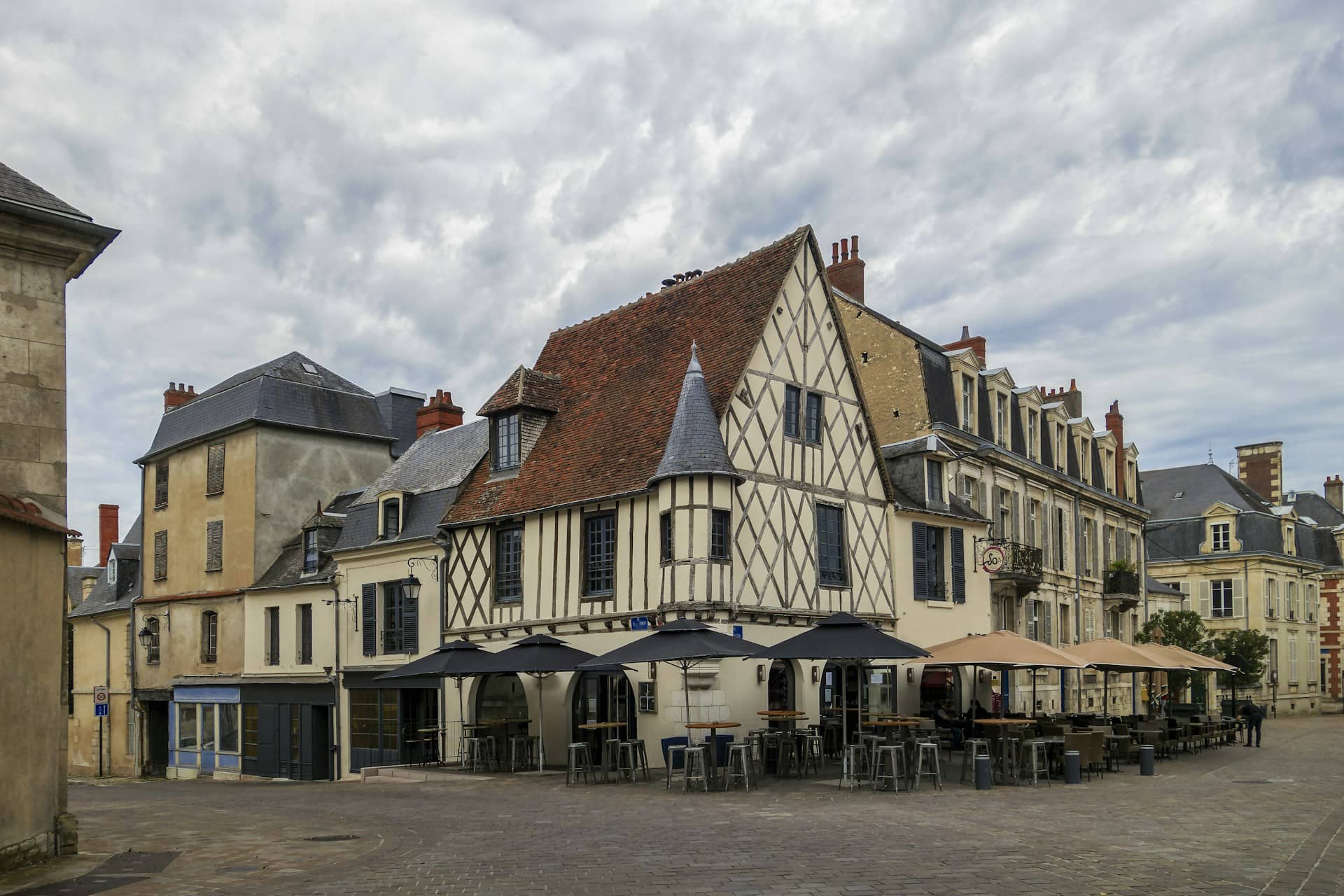
Most trips to France orbit around Paris, but the country’s quieter corners often leave the strongest impression. I’d urge travelers to wander away from the usual routes and spend time in France’s lesser-known towns. During a summer month on the road, I moved slowly through villages where daily life felt gently paused, as if modern time had loosened its grip. Stone houses, church bells, and flower-lined windows created scenes that felt straight out of a classic storybook—moments where imagination runs ahead of reality.
Big cities like Paris or Bordeaux carry their own appeal, but small-town France offers something different altogether. Long walks along uneven cobblestone lanes, timber-framed homes leaning with age, and cafés where conversations linger longer than planned create a deeper sense of place. These villages invite wandering without an agenda, where every turn hints at history rather than spectacle.
This journey highlights some of the most charming villages scattered across Burgundy, Alsace, the Bordeaux countryside, Languedoc-Roussillon in Occitanie, and along the Basque Coast. There’s still far more of France waiting beyond these regions, but these towns provide a meaningful starting point for anyone wanting to experience the country at a slower, more personal pace.
Favorite Small Villages Across France
You likely won’t have room on one trip to cover every town worth seeing, so this list focuses on my top pick in each region. These places stood out for atmosphere, history, and the simple feeling of being somewhere that moves at its own pace.
- Alsace – Colmar
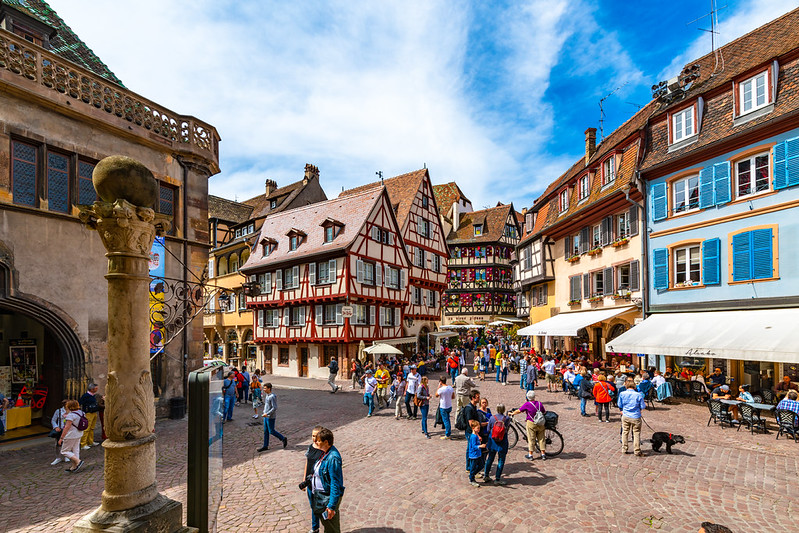
I already admired Strasbourg, but Colmar felt almost unreal once I arrived. Timber-framed homes lean over narrow stone lanes, canals slip quietly through town, and the Petite Venise area feels closer to a painting than a living neighborhood. It’s the kind of place where you pause often, just to look again. - Basque Coast – Biarritz
Once favored by Napoleon III as a seaside escape, Biarritz blends dramatic cliffs with wide Atlantic beaches. Surfboards, ocean air, and grand old buildings coexist easily here, giving the town a relaxed confidence that sets it apart from more traditional inland villages. - Bordeaux Region – Saint-Émilion
Saint-Émilion feels layered with time. Its medieval streets sit above an intricate web of underground passages, while vineyards stretch outward in every direction. Walking through town, history and landscape feel tightly connected rather than staged for visitors. - Burgundy – Auxerre
Auxerre unfolds slowly along the river, with sloping streets, weathered houses, and a powerful Gothic cathedral anchoring the skyline. Local markets bring everyday life into view, making the town feel lived-in rather than preserved behind glass. - Languedoc – Pézenas
Pézenas carries an easy rhythm shaped by its weekly market and old town lanes. Antique shops, small ateliers, and shaded squares invite lingering, and the town rewards those who wander without a checklist.
Together, these villages offer a strong cross-section of regional character, each revealing a different side of France beyond its major cities.
Charming Villages of Burgundy
Set in eastern France, Burgundy is shaped by centuries of tradition, long meals, and a deep connection to the land. The region is celebrated for Pinot Noir and Chardonnay, grown on gentle slopes marked by limestone soils. These conditions have shaped wines that carry depth and reputation far beyond France, while the countryside itself feels quietly grounded rather than showy.
Cities such as Dijon and Beaune often serve as gateways, yet much of Burgundy’s character lives outside their borders. Small towns, Romanesque abbeys, and age-worn villages tell stories through stone walls and narrow streets. The region rarely feels rushed, which makes it especially appealing to travelers drawn to food culture, local customs, and places that reveal themselves slowly.
For those who enjoy unhurried journeys paired with memorable meals and excellent wine, drifting along the canals offers a refreshing way to see Burgundy. Traveling by water allows villages to appear gradually, one bend at a time. I experienced this style of travel aboard the Hotel Barge Elisabeth, which provided a relaxed lens into the region’s villages, vineyards, and everyday rhythms.
1. Auxerre: A Storybook Stop in Burgundy
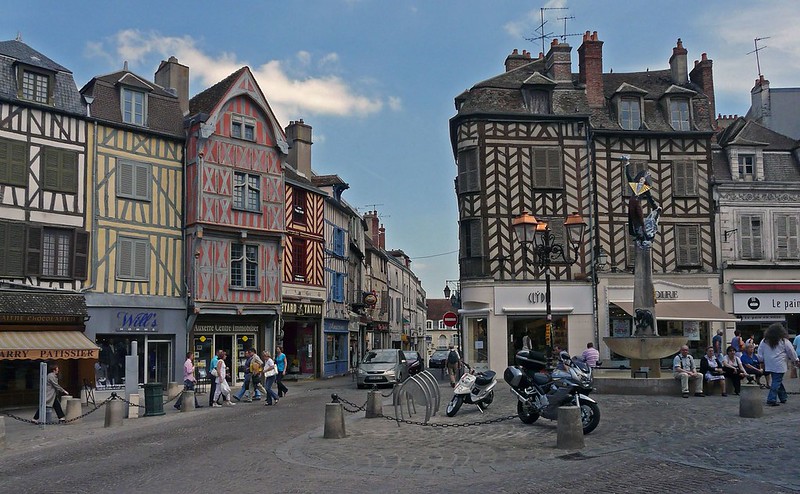
Auxerre caught me completely off guard. Of all the places I visited in Burgundy, this town left the strongest impression. Everything about it feels almost imagined—like a version of France lifted from a storybook or a carefully crafted film set. Walking along its twisting stone streets, bordered by half-timbered houses and balconies overflowing with color, it’s easy to forget what century you’re standing in.
Auxerre is larger than many nearby villages, so giving it at least half a day feels right. There’s plenty to see, and you’ll want time to wander without rushing. The standout landmark is the Tour de l’Horloge, a 15th-century clock tower that looks almost theatrical, as if it belongs in a fantasy park rather than a working town. It’s the kind of place that quietly demands far too many photos.
History runs deep here, especially at the Abbaye Saint-Germain. Once a Benedictine monastery, it now houses the Musée d’Art et d’Histoire d’Auxerre. Beyond the striking stonework, the collection traces the town’s story back to Roman times, adding real context to the streets outside. Nearby, the Cathédrale Saint-Étienne d’Auxerre rises with classic Gothic drama and is well worth stepping inside.
Around the clock tower, daily life slows pleasantly. Small shops and cafés spill onto the sidewalks, making it an easy place to sit with a drink and watch the town move around you. If you’re craving something sweet, a visit to Chocolaterie Olivier Vidal is a must—an ideal final stop before drifting back through Auxerre’s winding streets once more.
2. Chablis: Wine Country at an Unhurried Pace
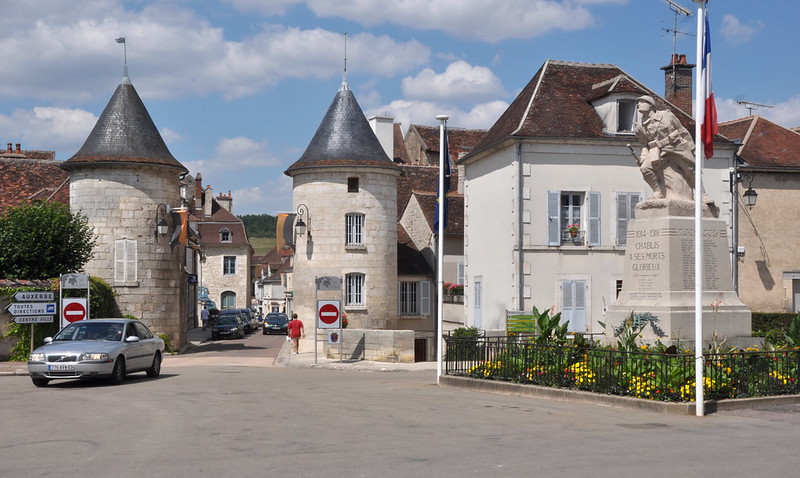
Chablis sits among soft hills and long rows of vines, a setting shaped by centuries of winemaking rather than spectacle. The town’s name is closely tied to Chardonnay, and for good reason—these vineyards produce bottles poured across the globe. A short drive up to the overlook above the Grand Cru slopes offers a broad view across the vines and the small settlements scattered beyond them.
Food and wine anchor daily life here. Dining options range from refined plates at Hostellerie des Clos to simpler fare at the restaurant inside Hôtel de la Poste. Several producers welcome visitors for tastings right in town, including Domaine Servin. Outside peak hours, Chablis can feel almost empty, lending the streets a calm, personal mood that’s hard to rush.
Much of the pleasure comes from walking without a plan. Pause at the Collégiale Saint-Martin de Chablis, pass by the Hôtel de Ville de Chablis, and follow the path along the Serein River. Stone bridges trimmed with flower boxes cross the water, and the old lavoir—once used for washing clothes—adds a quiet reminder of everyday life from another era.
Just outside town, a detour to Bailly Lapierre adds a memorable twist. Here, tastings take place inside vast underground cellars carved into the rock, reached by car. It’s an unexpected contrast to the open vineyards above—and a fitting finale to time spent in Chablis.
3. Joigny: Layers of History Along the Yonne
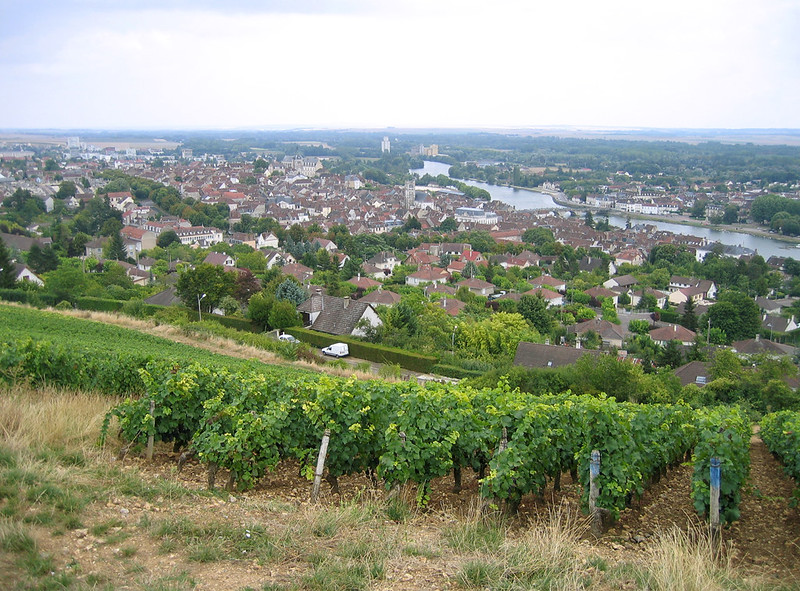
Joigny sits beside the slow-moving Yonne River and carries the official title of City of Art and History. Its old quarter feels compact yet dense with detail, where narrow stone lanes twist past half-timbered houses that lean with age. Walking here feels less like sightseeing and more like drifting through a lived-in past.
Many of these homes trace their origins back to the Middle Ages, their wooden frames and upper stories hinting at centuries of daily life layered one on top of another. Flower boxes soften the sharp lines of the buildings, adding warmth without turning the streets into a staged display. The town rewards slow wandering, especially when you let the streets pull you in unexpected directions.
A stop at the Église Saint-Jean is well worth the pause. This Gothic church holds striking stained-glass windows that cast shifting color across the interior, offering a quiet moment of reflection and a deeper sense of Joigny’s long artistic and spiritual roots.
4. Vézelay: A Hilltop Shaped by Faith and History
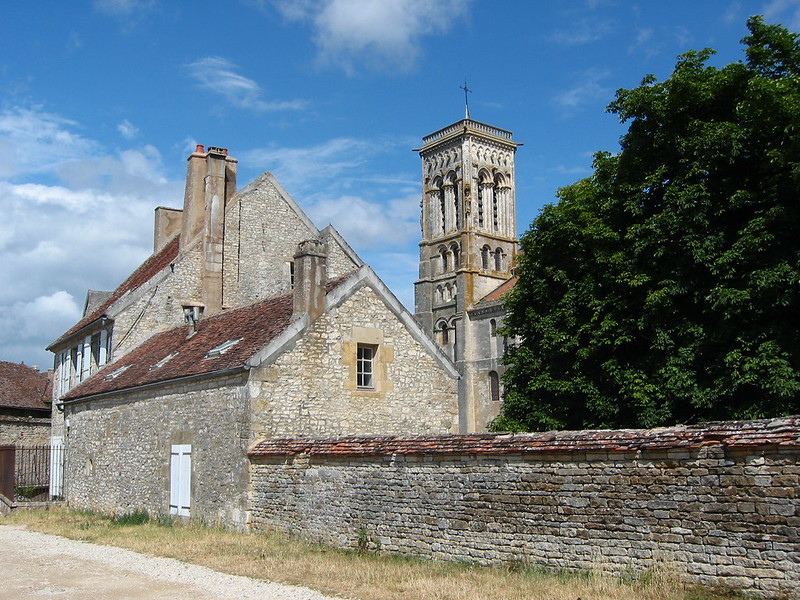
Vézelay holds UNESCO World Heritage status, a recognition tied to its long spiritual and historical role. Rising above the countryside, this medieval settlement has drawn pilgrims for centuries. At its summit stands the Basilica of Sainte‑Madeleine, built in the 12th century. Here, St. Bernard once addressed crowds ahead of the Second Crusade in 1147, and in 1190, Richard the Lionheart met King Philip II of France before departing for the Third Crusade. Beneath the basilica, the crypt is believed to hold relics associated with the Virgin Mary.
From the edges of town, the view stretches across vineyards and softly contoured hills, giving a strong sense of how isolated and commanding this site once felt. The elevation shapes the experience, with light and landscape shifting as you move along the ridge.
Vézelay’s main street carries a quieter energy today. Art galleries, small shops, and cafés line the stone-paved route leading uphill. One wine shop offers tastings inside a 12th-century cellar carved beneath the town, blending local vintages with the weight of history in a way that feels entirely natural here.
Standout Villages of Southwestern France
Languedoc is one of those areas many American travelers overlook entirely. Positioned between Spain, the former Midi-Pyrénées to the southwest, and Provence to the east, this stretch of Occitanie blends coastline, countryside, and history with very little pretense. Beaches meet old fortresses tied to the Cathars, while gardens and small towns thrive under steady Mediterranean light. Cities like Montpellier and Toulouse act as anchors, but the real appeal often lies beyond them, in villages rarely highlighted on standard itineraries.
When planning time in southern France, many people instinctively gravitate toward Provence or the French Riviera. Languedoc offers a different equation. Prices tend to be gentler, movement feels less constrained, and daily life hasn’t been fully reshaped around visitors. You’ll still encounter old abbeys, thoughtful cooking, expressive local wines, and long sunny afternoons—just without the pressure of packed streets or inflated menus. My first introduction came through a wine-focused trip with my husband, followed later by a slower return via a barge journey along the Canal du Midi with a close friend.
Beyond Languedoc itself, southwestern France also extends westward to the vineyards surrounding Bordeaux and south to the Atlantic edge of the Basque Coast. Together, these areas form a broad, varied corner of the country—one that rewards travelers willing to look past the usual highlights and spend time where routines still feel rooted in place rather than performance.
5. Pézenas: Market Rhythms and Old-Stone Streets
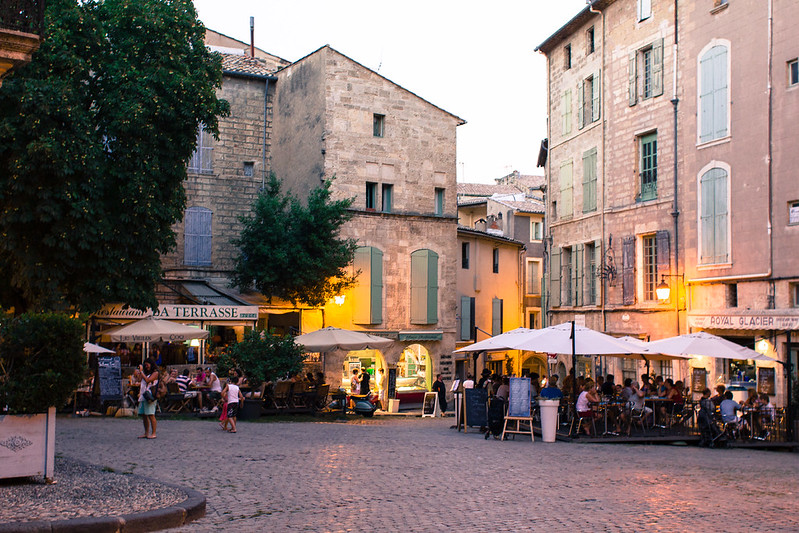
Of all the places I’ve spent time in the Languedoc, Pézenas left the strongest impression. I’ve returned more than once, and each visit felt just as engaging as the first. Saturdays bring a noticeable shift in energy as market day draws both residents and visitors into the streets. Arriving early—around mid-morning—helps you see the town before the crowds fully settle in.
Parking is available within town limits, though spaces fill quickly on busy days. When that happens, an overflow lot just outside town offers an easy alternative, with a short walk leading straight into the historic core. Once inside, the layout feels intentionally tangled: narrow stone lanes weave past old buildings fitted with painted shutters and weathered doors. Window boxes spill over with flowers, and café tables fill with animated conversation that drifts into the streets.
Pézenas has long been known for craft and trade, and that legacy still shows. Independent shops feature handmade goods, antiques, and small-batch creations that reward unhurried browsing. When it’s time to eat, a table at Café Brasserie Chez Hansi makes for a relaxed pause, while tapas at La Mamita offer a lively end to time spent wandering this character-filled town near Montpellier.
6. Mirepoix: A Living Page From the Past
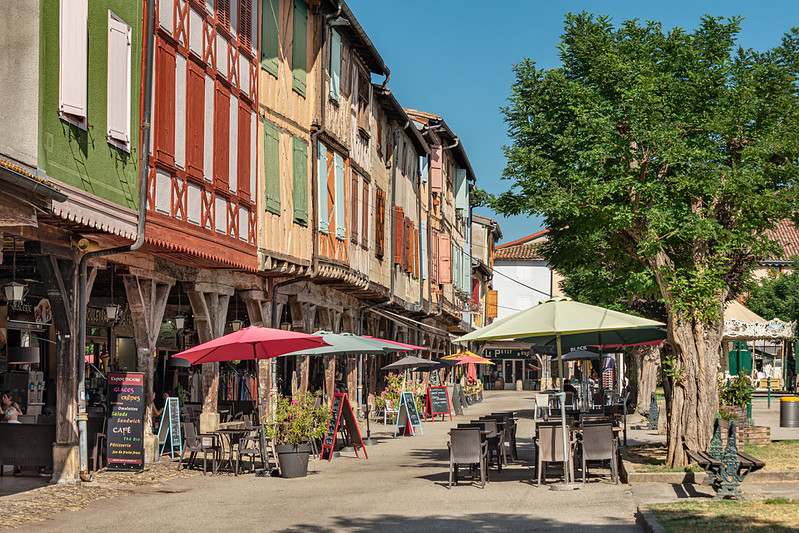
The moment I arrived in Mirepoix, it felt as if fiction had spilled into real space. The central square, framed by buildings propped up with centuries-old wooden beams, appears almost exaggerated in its Frenchness—so precise it borders on unreal. It’s difficult to believe this town wasn’t assembled as a set, built to match an idea rather than shaped by everyday life.
Souvenir stalls ring the square, and a small carousel turns nearby, yet the place never tips into parody. Life continues around the edges: locals crossing the plaza, café tables filling and emptying, conversations echoing under covered walkways. In summer, cyclists gather here as well, partly because the Tour de France rolls through the area, inspiring riders to trace bits of the route on their own terms.
Timing matters in Mirepoix. Monday brings market day, when the square shifts from calm to animated, with stalls, voices, and movement layered under the medieval structures. It’s the best moment to see the town fully awake—less like a preserved scene, more like a place still very much in motion.
7. Limoux: Where Bubbles Began Before Champagne
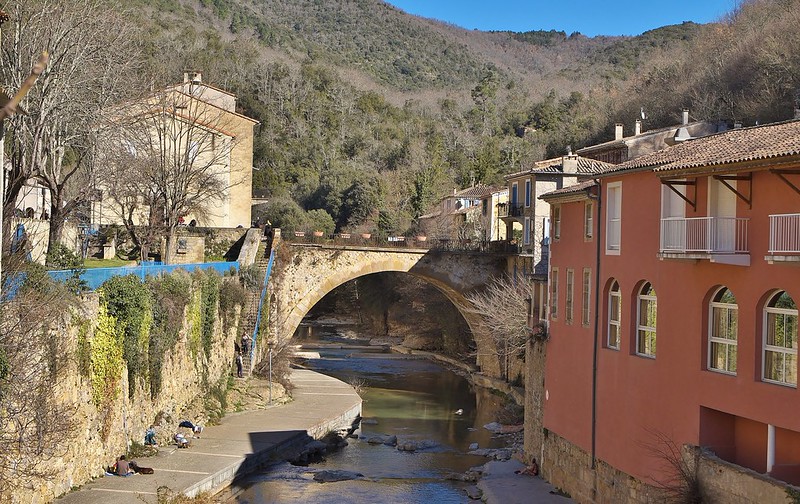
Continuing south from Mirepoix leads you into the landscape that gave rise to France’s earliest sparkling wine. Long before Champagne built its reputation, this area produced Blanquette de Limoux, a local sparkler with deep roots. Today, the surrounding vineyards are better known for Chardonnay, Chenin Blanc, and Crémant de Limoux, all shaped by cooler air drifting down from the hills. Several estates welcome visitors during the week, and if you’re short on time, a stop at Antech Limoux just outside town offers an easy introduction.
Limoux itself opens around a broad central square, Place de la République, where cafés and restaurants cluster under plane trees. This is where we settled in for lunch at Chez Stephan. One thing to keep in mind: village lunch hours run on a fixed rhythm. Kitchens typically close by early afternoon, and arriving too late can mean empty tables and locked doors.
After eating, a walk along the Aude River offers a calmer view of town life. Cross one of the bridges to reach the Petite Ville on the eastern side, where the river curves gently past old buildings. The scene carries a faint echo of the Arno in Florence—less grand, perhaps, but quietly memorable in its own way.
8. Lagrasse: Stone Streets and River Breaks
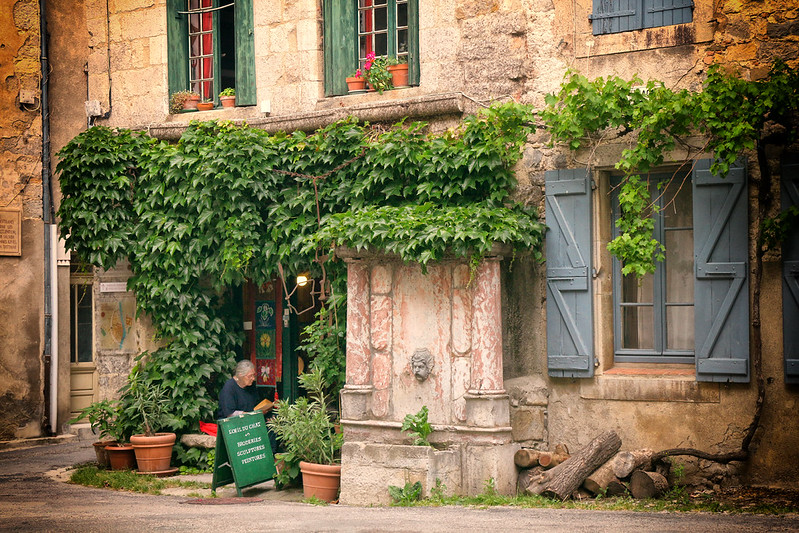
Midway between Narbonne and Carcassonne sits Lagrasse, a compact medieval town that fits easily into a broader day on the road. It pairs well with nearby stops like Mirepoix and Limoux, or works just as well as a slower morning visit before pushing on to Peyrepertuse Castle later in the day.
Parking sits outside the old town and runs on a ticket system—pay at the meter and place the receipt on your dashboard. Inside the walls, walking does most of the work, so sturdy shoes help. Summer heat can linger, and water is worth carrying. Locals often cool off at a small rocky stretch along the Orbieu River, where wading and swimming are common, making a towel or swimsuit a smart addition.
Seasonal book and pottery fairs bring extra life to the covered market, and the lanes hold plenty of small shops for browsing. Across the river stands the town’s main landmark, the Abbey of Sainte-Marie de Lagrasse, long tied to the area’s religious past.
Today, the abbey is split into two separately managed sections, each requiring its own ticket. While interesting, the structures don’t rival the scale of the nearby Abbaye de Fontfroide. With limited time, it’s easy to choose selectively—or skip the interiors altogether and focus on wandering Lagrasse’s streets and riverbanks instead.
9. Minerve: Stone Perched Above the Gorges
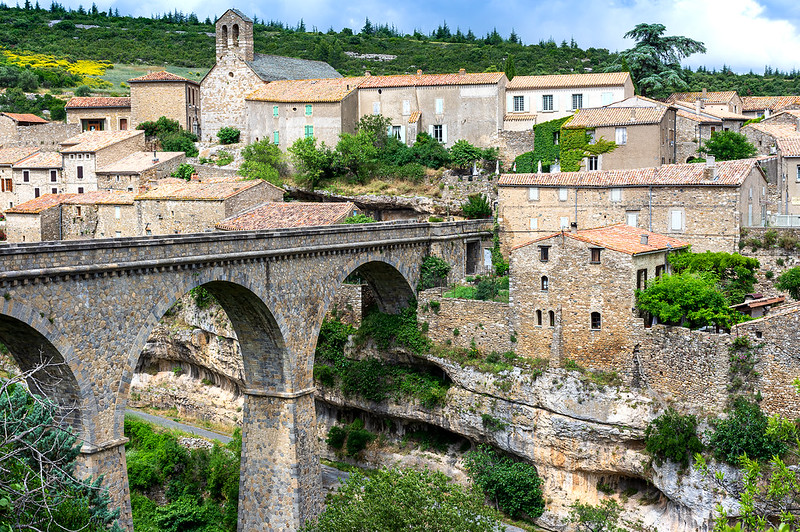
Minerve is often mentioned among France’s most striking villages, yet its dramatic position keeps foot traffic lighter than you might expect. The town sits atop a rocky outcrop, ringed by steep gorges that drop sharply on all sides. Its setting feels exposed and commanding, which adds to the experience but also explains why some travelers skip it altogether. Time here is brief, though the views alone justify the detour.
Access requires a short walk from the parking area outside town, and the return climb back up is noticeable. Once inside, the layout is compact. You can trace remnants of medieval defenses, step into small local shops, and wander through the 12th-century Église Saint-Étienne de Minerve, which reflects the village’s long religious past.
Before leaving, pause at the double-arched stone bridge crossing the River Cesse. From here, the depth of the gorge and the isolation of Minerve come into full view, offering one last look at a place shaped as much by geography as by history.
10. Carcassonne: Fortress Walls and Crowded Lanes
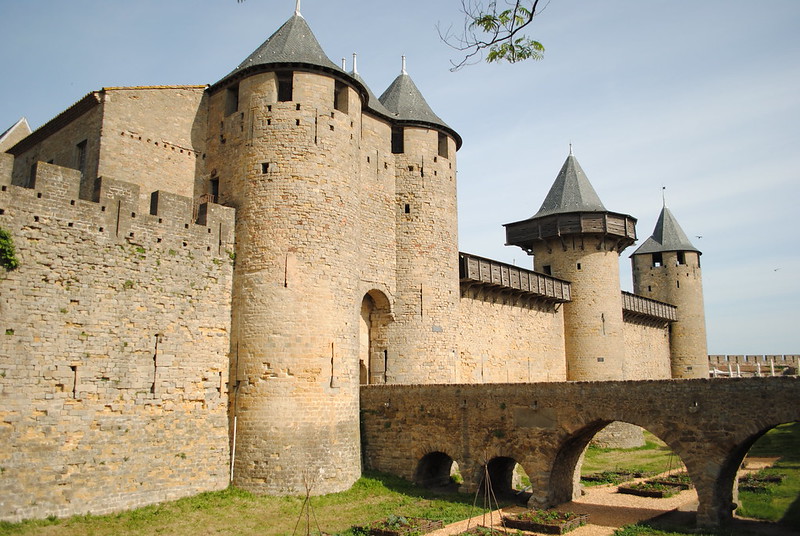
Carcassonne ranks just behind Paris among France’s most visited places. With more than two millennia behind it, the fortified city rises like a storybook vision—ringed by heavy stone walls and punctuated with cone-topped towers that read as pure fantasy from a distance.
Up close, the scale tightens. Streets inside the walls are narrower than expected, and during peak months they fill quickly. Parking outside the main entrance at Porte Narbonnaise makes entry simpler. Arriving roughly an hour before opening gives you space to wander early—time enough to see the basilica and lanes before crowds thicken and parking becomes scarce.
Roaming the old city costs nothing, but entry to the central stronghold—the Château Comtal—requires a ticket. Lining up early pays off, especially before tour groups roll in. A walk along the ramparts adds perspective, opening views across the valley and reinforcing just how strategic this site once was. Don’t miss the Basilica of Saints Nazarius and Celsus, whose interior offers a quieter counterpoint to the busy streets.
After finishing inside the walls, head downhill to the Lower City for a break. Shops and cafés spread out more comfortably there, and a tasting at Comptoir de la Cité makes a relaxed way to close out time spent in this heavily guarded corner of southern France.
11. Narbonne and Fontfroide: Roman Roots and Quiet Cloisters
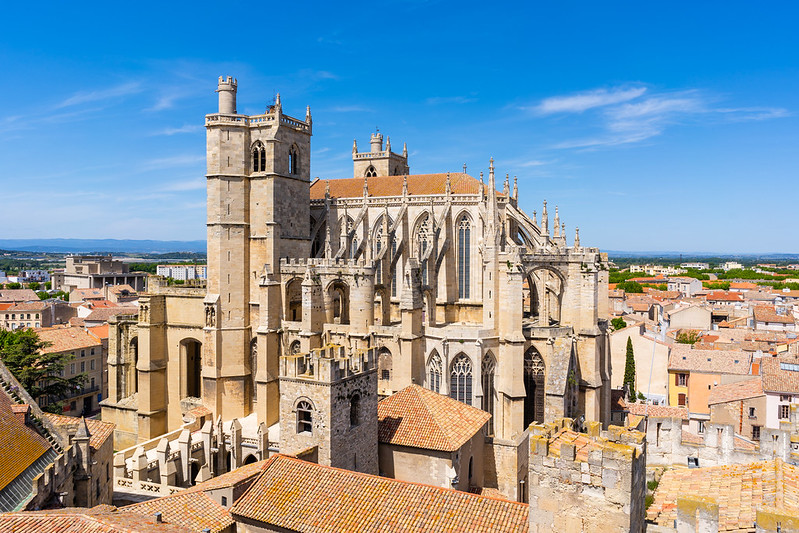
If a small city stop appeals to you, spending half a day in Narbonne pairs well with an afternoon by the sea. The historic center carries a graceful feel, shaped by canals and stone crossings. One standout is the Pont des Marchands, an arched bridge stretching over the canal, edged with flowers and everyday foot traffic.
Several landmarks deserve time. The Donjon Gilles Aycelin rises above the old streets, while the Cathédrale Saint-Just-et-Saint-Pasteur and its treasury reflect the city’s religious weight. For something more grounded, Les Halles de Narbonne offers a lively look at local food culture. Narbonne once sat on the road to Rome, and traces of that era remain visible, including scattered ruins and the underground Horreum Romain dating back to the first century BCE.
A short drive—around twenty minutes—leads to the Abbaye de Fontfroide. Set against low hills near the Pyrenees, this former Cistercian abbey feels removed from the pace of the coast. Private ownership has preserved the site carefully, and cloisters and courtyards remain strikingly intact. Outside, the rose garden provides a soft counterpoint to the stone architecture, making Fontfroide a rewarding contrast to Narbonne’s urban layers.
12. Le Somail: A Pause Along the Canal
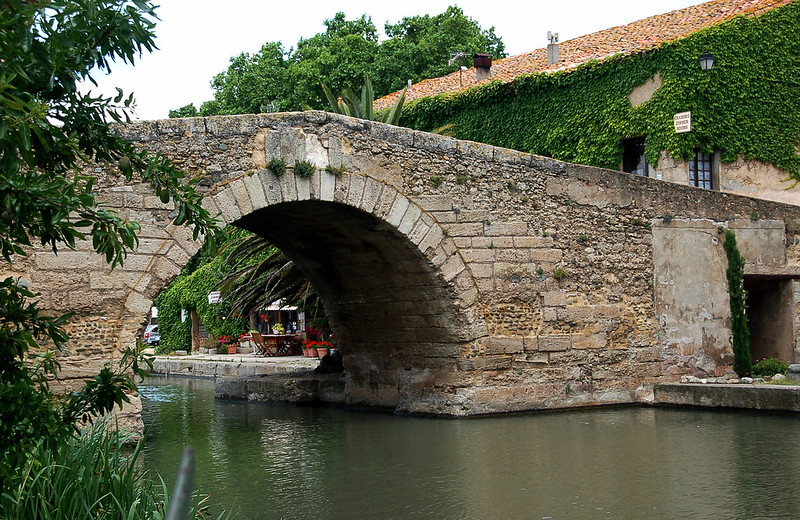
Le Somail is a tiny stop along the Canal du Midi, yet it leaves a lasting impression. There’s little on a checklist here, and that’s part of the appeal. A short walk through the village feels casual and familiar, as if you’ve slipped briefly into local routine rather than arrived as a visitor.
Life unfolds slowly beside the water. Restaurants line the canal, making it easy to settle in for a relaxed meal while boats drift past. A stroll along the towpath adds to the sense of ease, with plane trees, reflections on the canal, and quiet conversation filling the air.
For book lovers, one stop stands out: Le Trouve Tout du Livre. This well-known bookshop holds shelves of volumes in French and several other languages, turning Le Somail into a gentle surprise for readers who didn’t expect to find a literary haven in such a small village.
13. Marseillan: Lagoon Light and Coastal History
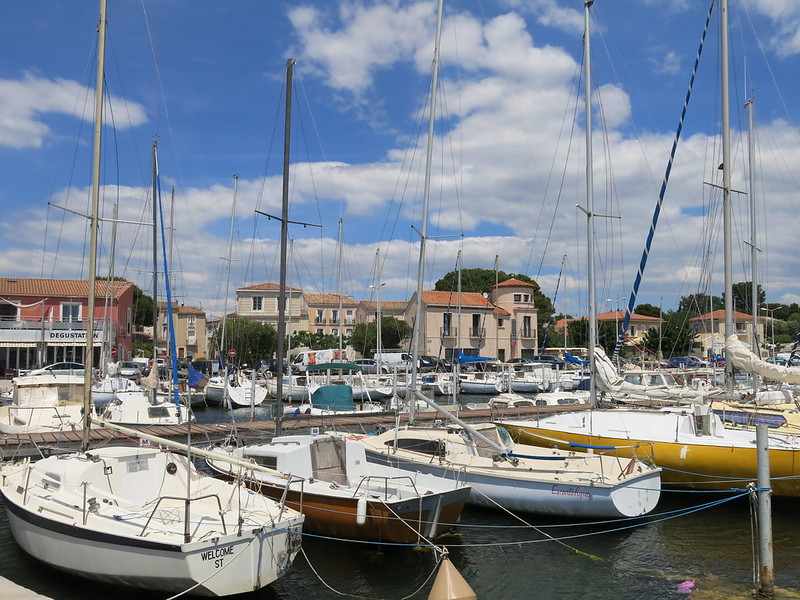
Marseillan sits at the gateway to the saltwater lagoon known as Étang de Thau, a stretch of water associated with oyster farming and frequent sightings of pink flamingos. The lagoon supports easygoing water time—kayaks, sails, and boards skim its surface—while the nearby shoreline opens to swimming, sun time, and the wider Mediterranean. Marseillan’s layout circles a working harbor, where small restaurants and shops line the quay and daily life feels tied to the tide.
Moving inland, the streets tighten into stone lanes that hint at much older chapters. Traces of Cathar influence appear in the town’s fabric, subtle but present if you linger long enough. The harbor energy fades as you walk, replaced by quieter corners where history shows through worn steps and weathered walls.
Several landmarks anchor that past. The Église Saint-Étienne de Marseillan dates to the 12th century and reflects Romanesque strength in its design, while the 16th-century Tour de Guiral once served as a lookout along the coast. Marseillan is also home to Noilly Prat, a vermouth house with nearly two centuries behind it, where tours and tastings connect the town’s maritime setting with its long-standing role in French aperitif culture.
14. Saint-Émilion: Stone Streets and Subterranean Stories
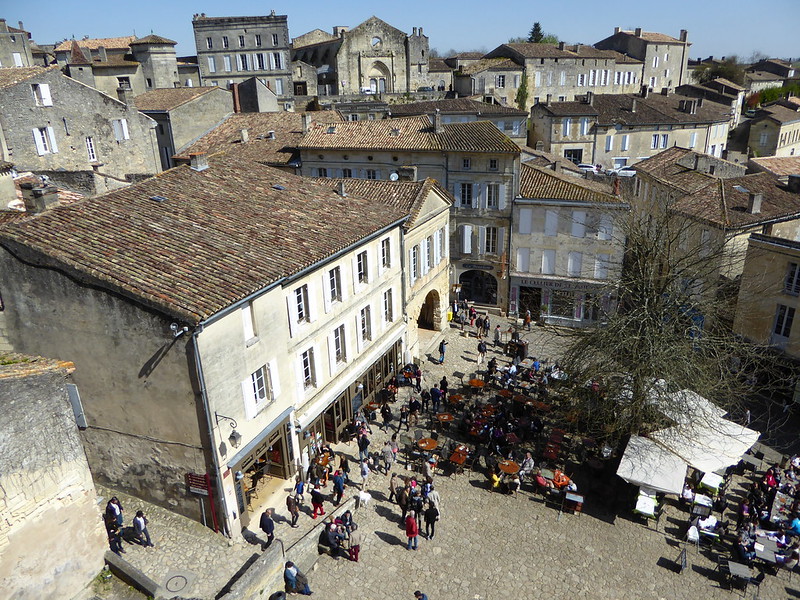
During a Bordeaux river cruise, Saint-Émilion topped my list, and the visit matched the anticipation. Its historic core holds UNESCO World Heritage status, and wandering through town feels like moving through a tightly woven puzzle of narrow lanes, timbered façades, and small storefronts that invite lingering rather than rushing.
The town’s most talked-about landmark is the Église Monolithe, an extraordinary church carved directly from a single mass of limestone. Beneath the streets lies an extensive network of underground passages, shaped over centuries by local hands. These tunnels once served practical and spiritual roles—storage, refuge, even ceremony—and today they reveal another layer of the town during guided visits.
Wine culture permeates daily life here. Along the main routes, tasting rooms and cellars sit side by side, pouring bottles that have carried Saint-Émilion’s name far beyond France. Sampling a few glasses feels like a natural extension of time spent above and below ground, rounding out a visit shaped equally by stone, history, and the vine.
15. Biarritz: Cliffs, Waves, and Belle Époque Bones
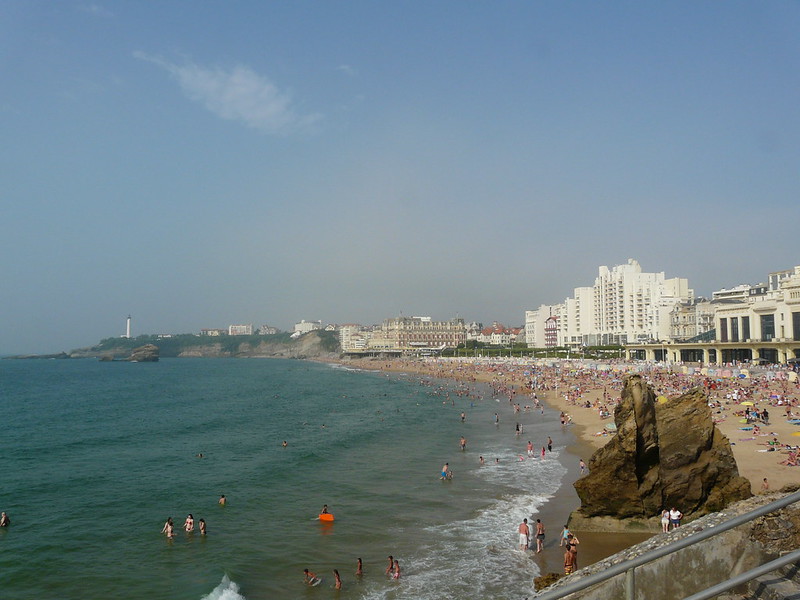
After finishing our Bordeaux river cruise, we spent a few slower days along the Basque Coast in Biarritz. Long before surf culture claimed the shoreline, this seaside town drew Napoleon III and European royalty, who came for open beaches and dramatic scenery. The streets still carry traces of that era through Belle Époque façades, though it’s the raw coastline that leaves the strongest impression.
A walk out to the Phare de Biarritz opens wide views across the cliffs and the Grande Plage below, where waves roll in with steady force. Head the other way and a narrow footbridge leads to the Rocher de la Vierge, a stone outcrop reaching into the Atlantic. From there, the town and coastline stretch out in every direction, shaped by wind and water more than design.
Back in the historic center, the mood shifts again. Stone lanes curve past shops and cafés, mixing designer labels with local crafts. Restaurants lean heavily into seafood and Basque cooking, making it easy to settle in for a long meal and let Biarritz’s coastal rhythm set the pace.
Related Post:
- 15 Secret Spots in France That Deserve More Attention
- 11 Amazing Activities You Can’t Miss in Lyon, France
- 21 Breathtaking Locations in France to Fall in Love With
Practical Tips for Visiting Small Towns in France
- Weekly markets are common in smaller French towns, often bringing together growers, bakers, and craftspeople from the surrounding area. Market days vary by location, so a quick check ahead of time can save you from arriving just after everything has packed up.
- Parking can feel tight once you reach the historic core. Most towns provide a designated lot nearby with paid spaces, usually operated by a ticket machine. Keep an eye out for signage as you approach, and don’t expect much room for street parking inside older neighborhoods.
- English is spoken more widely than many travelers expect, even outside major cities. Still, knowing a handful of French phrases—or keeping a translation app handy—can smooth everyday interactions and is generally appreciated.
- Cards and mobile payments are widely accepted, though smaller cafés and bakeries sometimes prefer cash. Carrying a few bills and coins is useful, and it’s best to have a Visa or Mastercard, as American Express is often declined.
- Public restrooms exist in some towns, but conditions vary and access may require coins. Many travelers opt to stop for a coffee or drink at a café and use the facilities there instead, which tends to be more comfortable.
- Dining runs on a different rhythm than in some other countries. Once seated, you’re welcome to linger and watch life pass by, but service won’t be rushed. If you want the check, more water, or anything else, you’ll need to ask. Occasionally, bread or bottled water may appear with a small extra charge, so it’s worth glancing at the menu details.





Can I visit all these towns by train?