
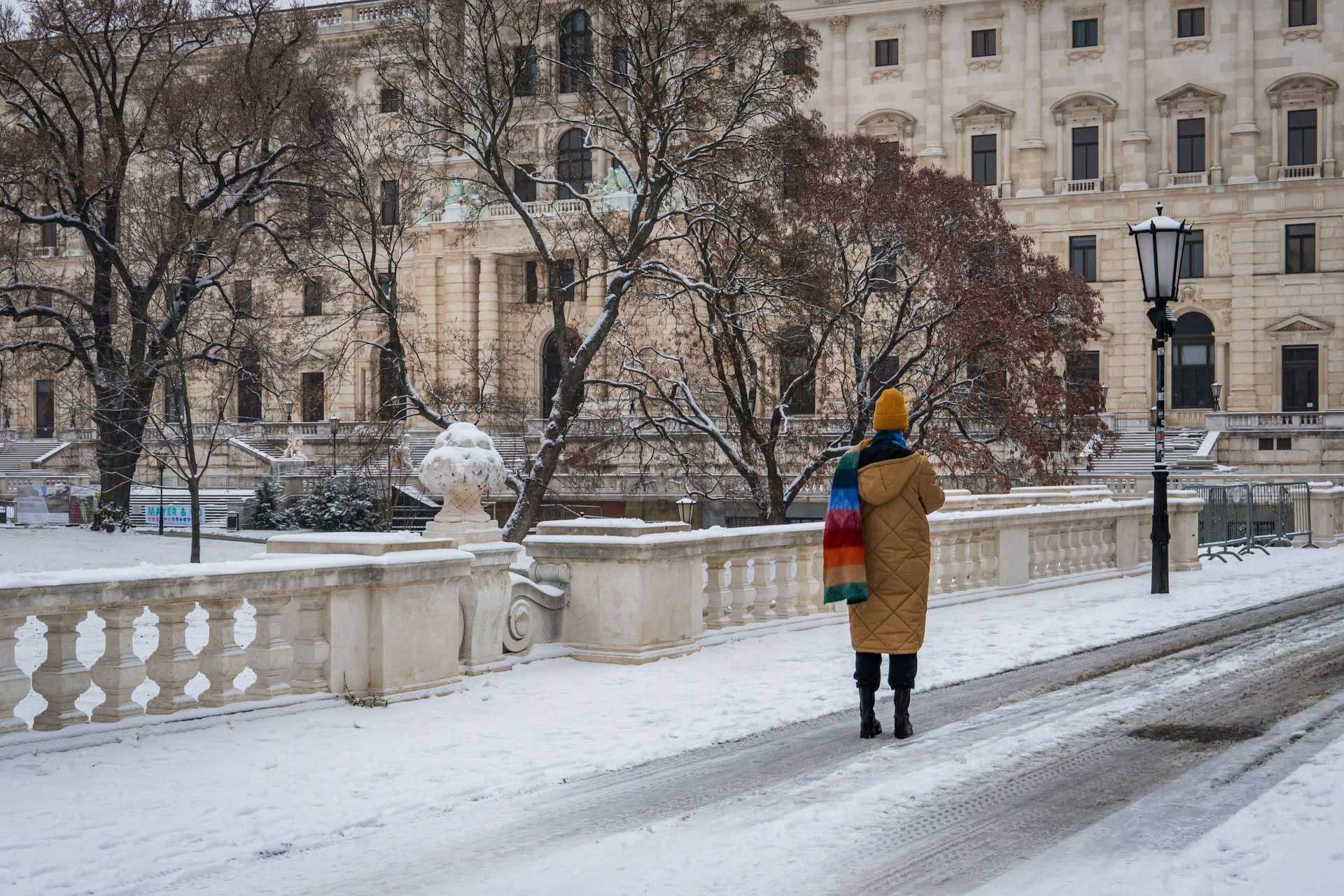
Vienna in winter feels like a grand stage set with lights, choirs, and the scent of spiced drinks drifting through the air. Christmas markets spread across major squares, lined with wooden stalls selling sweets, ornaments, candles, and hot punch. The chill is real, but the glow of lamps and music from nearby performers keeps the mood warm.
Walk the older districts and you pass stone lanes, royal palaces, and formal courtyards that reflect centuries of empire and ceremony. History is visible at street level — statues, arches, and concert buildings tied to famous composers and rulers. A mug of Glühwein or Viennese coffee paired with a fresh krapfen fits perfectly between stops.
Seasonal food is a highlight. Expect roasted chestnuts, sugared nuts, sausages, and thick slices of cake. Each market has a slightly different layout and crowd, so visiting more than one gives variety without extra effort. If this kind of snowy, lights-at-night travel is your thing, here are more winter-wonderland destinations worth adding to your list.
Music plays a steady role throughout December. Churches and concert halls host regular classical and choral programs, many held at night. Combine a market visit, a palace interior tour, and an evening performance, and you get a full Christmas experience in Vienna without rushing from place to place.
Key Facts to Know Before a Christmas Trip to Vienna
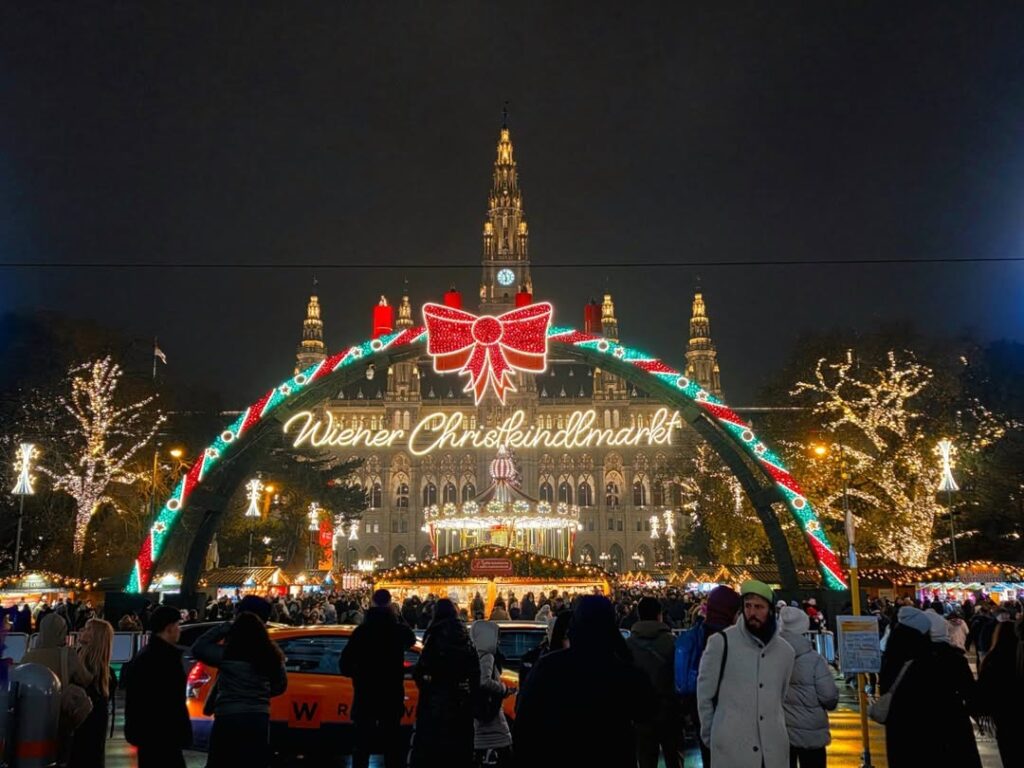
When we picked Vienna, Austria for a Christmas trip last year, we had a clear mission: Christmas markets first, everything else second. We planned to taste and sip our way through the season. That part worked out perfectly — but the city added more to the experience. We spent three full days walking through Old Town streets, sitting too long in traditional coffee cafés, stepping inside grand palaces, and ordering more desserts than we could justify. Winter here makes simple wandering feel special.
Here’s your guide to what you should know before visiting Vienna at Christmas. And to start properly: ”Frohe Weihnachten” — that’s Merry Christmas in German.
- Getting Around the City: Vienna is large and fairly spread out, so expect long stretches on foot. Much of the central area is car-free, which helps walkers but also means you’ll likely use public transport between areas. Trams, buses, and the metro cover most routes visitors need. Tickets are charged at a flat rate per ride, and inspections are common, with heavy fines for riding without one. If you’ll be moving around a lot for several days, a Vienna Card can lower costs with unlimited rides and attraction discounts.
- Tipping Etiquette in Vienna: Tipping is low-key. If the service feels very good, about 5% is standard. Give it directly to your server when you pay. If service is average, leaving nothing extra is completely fine.
- The Proper Way to Eat Dumplings: This matters because dumplings show up everywhere in winter menus. Local dining habits say you should cut them with your fork, not your knife. It feels unusual at first, but it keeps you in line with table customs.
- Christmas Eve Is the Main Celebration Day in Austria: Expect calmer streets and limited public activity as most people stay home with family.
- Holiday Restaurant Closures Are Common : Many restaurants close around Christmas, including some popular spots. Early December visits give you more dining options, but from Christmas Eve through the days after, closures are common. Checking schedules ahead of time helps avoid last-minute changes. Market stalls often become the main food option during this period.
- Sunday Shop Closures in Vienna: This applies every Sunday plus public holidays. Some larger stores may open briefly in the morning, but most remain closed — especially from the 24th onward. Plan your shopping before the weekend.
Top Activities to Try in Vienna During Winter
Vienna in winter feels bright, theatrical, and slightly over-the-top in the best way. Grand buildings glow under strings of lights, squares turn into holiday gathering spots, and music drifts through the cold evening air. The city leans fully into the season with decorations, choirs, and rows of festive stalls that make nighttime walks feel like part of a show.
Expect to stand outside with a hot mug of mulled wine while staring at oversized Christmas trees and perfectly arranged light displays that look almost unreal. Markets stay busy, cameras stay out, and snack counters stay crowded. It’s the kind of setting that can raise anyone’s holiday expectations a few levels higher than normal.
1. Take a Walking Tour of Vienna

The best way to get to know Vienna is by walking it step by step. Dress warm and head outside. Large parts of the central district are pedestrian zones, so you can cover a lot without traffic getting in the way. If you’re out on Christmas Eve or Christmas Day, you may find the streets unusually empty — great for photos, though the quiet can feel a bit surreal.
There are several strong options for self-guided Vienna walking tours available online. One of the most popular routes focuses on Old Town, leading you through historic streets, church squares, and palace areas. Many of these guides include map links and turn-by-turn directions you can follow on your phone.
If you’d rather learn while you walk, a guided tour is a good pick. A local guide explains the background, key events, and cultural details that are easy to miss on your own. You get stories, timelines, and context instead of just buildings and dates. Below are a few tour styles that many visitors find interesting:
- Classic Vienna Past & Power Walk: Covers rulers, dynasties, political shifts, and major turning points from different eras of the city’s past. It’s a solid starting choice for first-time visitors. Expect plenty of stops at major landmarks.
- After-Dark Legends & Strange Stories Route: An evening walk focused on eerie tales, unusual events, and lesser-known stories tied to older neighborhoods. Best taken after sunset for the right mood. Group sizes are usually smaller at night.
- Imperial Life & Empress Sisi Route: Centers on royal daily life, imperial apartments, and locations connected to Empress Sisi and court history. Good for travelers interested in palace culture and royal figures. Often includes exterior palace courtyards and key buildings.
2. Learn About Vienna’s History & Culture
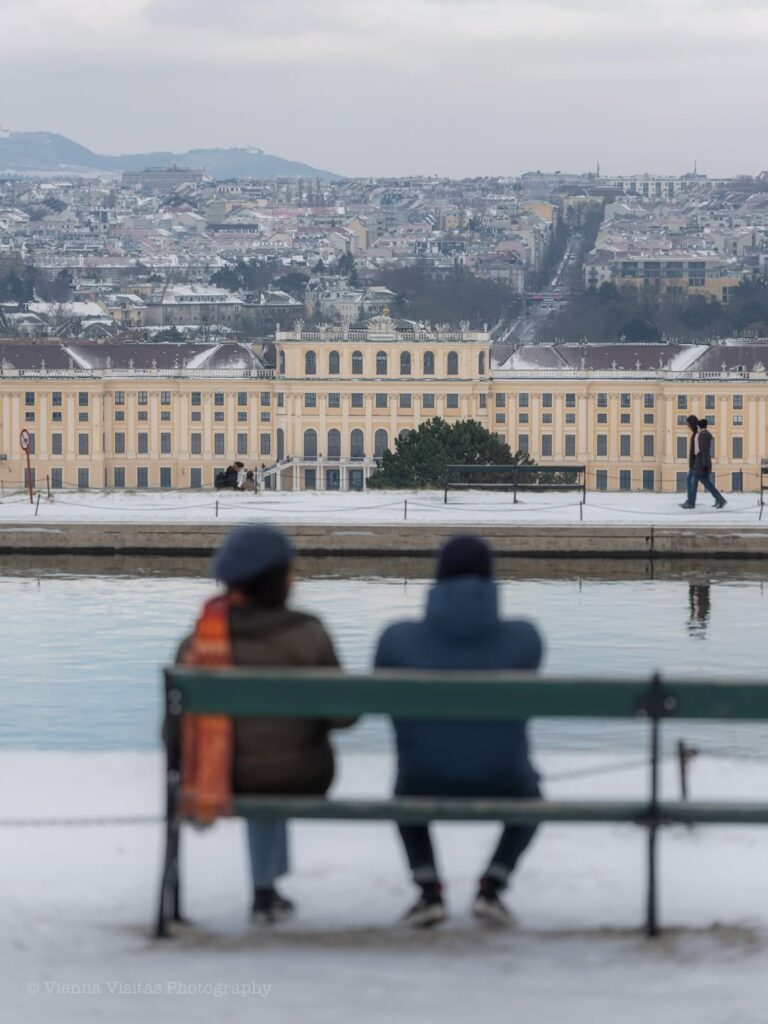
Vienna’s history is genuinely fascinating — allow me to put on my imaginary nerd glasses and flip on the mental slideshow for a moment. Think of this as your quick, high-energy history break, minus the classroom boredom. If there were a theme song playing, now would be the time.
Here are the quick notes:
If you enjoy going full history-fan mode, you’ll want to visit Schönbrunn Palace and Hofburg Palace for the inside story on the Habsburg imperial family drama. Power struggles, royal habits, strange decisions — it’s all there. Learning how wealthy rulers behaved — and how their choices changed entire regions — is like watching elite-level drama with real consequences.
If you’re not familiar with the Habsburg family, you’re in for some unbelievable stories. Expect tales of close-family marriages, serious health issues, and rulers with very unstable behavior. One frequently repeated story tells of Joanna of Castile, often called “Joanna the Mad,” who reportedly stayed with her husband’s body long after his death. It’s one of those rare cases where the record is as extreme as the nickname.
Travel Tip: To get more from your palace visit, book a guided tour — skip-the-line options help during the holiday season. Without a guide, you’re looking at decorated rooms and objects. With one, you hear motives, conflicts, and personal details that make the setting easier to understand. The added context changes the whole visit.
Extra Travel Tip: Schönbrunn sits outside the central area, but there’s usually a Christmas market set up nearby in winter. Plan a food break there between palace sections.
For something lighter than royal scandals and court politics, head to the Kunsthistorisches Museum to view major art collections gathered by the Habsburg rulers over centuries. The range says a lot about their taste and priorities.
If you want a headline artwork stop, visit the Belvedere Gallery, home to the largest collection of Gustav Klimt paintings, including The Kiss. Even visitors with zero art background tend to recognize it. The gold details and subject make it easy to remember — and easy to photograph after you step back.
3. Hear Classical Music in Vienna
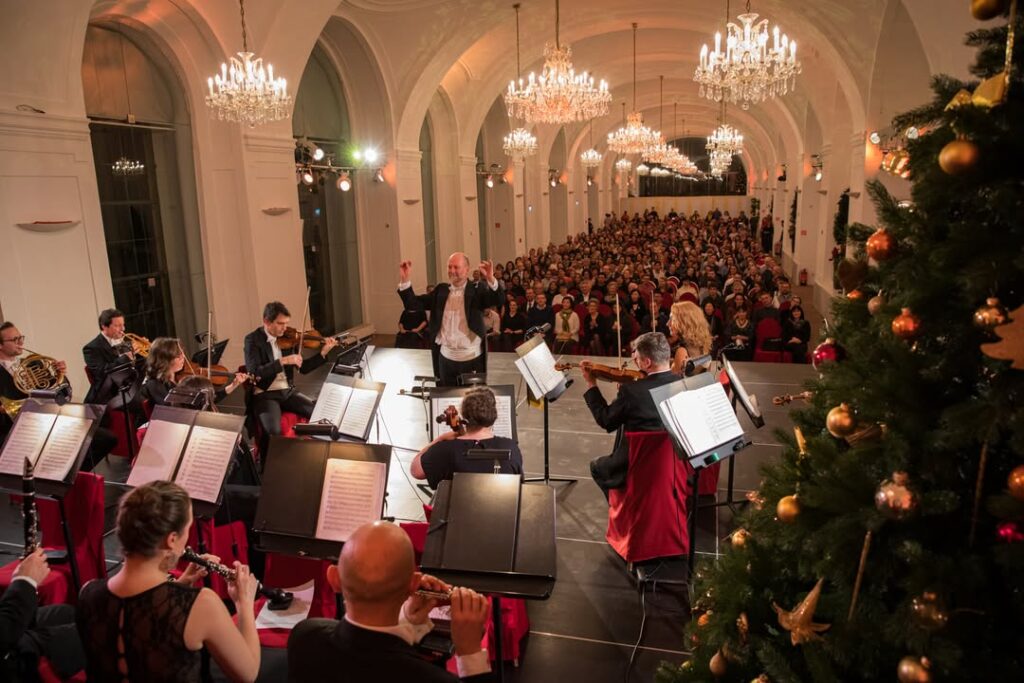
Vienna is often called the music capital of the world, and the title isn’t random. More well-known composers lived and worked here than in any other European city. Names like Mozart and Beethoven are tied closely to Vienna’s concert halls and history. Beethoven’s funeral reportedly drew tens of thousands of people, and he was buried near the city with full public attention.
Mozart’s ending was very different. Because of debt and money trouble, he was buried in a common grave at St. Marx Cemetery without a marked headstone at the time. A memorial marker stands there now. It’s a strange contrast — global fame later, modest burial then. Before your trip, watching the film Amadeus can add extra context and make the city’s music sites more meaningful.
I’ll admit I’m a serious classical music fan. I started cello very young, and music talk can pull me into long side notes fast. Many of the strongest pieces come from composers who wrote during difficult periods of their lives — you can hear that tension and emotion in the sound. I’ll step down from the music soapbox now.
Buying concert tickets in the Old Town area can feel confusing at first. You’ll see many street sellers offering “discount” tickets, but it’s hard to judge quality on the spot. A safer move is booking ahead with known venues and scheduled programs. Some shows are built for visitors, but still take place in grand halls with strong acoustics and solid performers, which makes the experience worthwhile.
Travel Tip: First time at a classical concert? Basic etiquette helps. Dress a bit formal, switch your phone fully off, and stay quiet during the performance. Applause usually starts when the conductor turns to the audience. And if you doze off, it happens — just try not to snore.
Here are our picks:
- Mozart and Strauss at the Golden Hall: This show presents well-known pieces by Mozart and Johann Strauss, played by the Mozart Orchestra of Vienna with opera vocalists joining in. Musicians appear in Baroque-era outfits, wigs included, which gives the night a staged historical feel. It’s a crowd-friendly program in one of the city’s most recognized halls.
- Vivaldi’s Four Seasons in Karlskirche: Expect highlights from The Four Seasons along with added works by Mozart, Bach, and others. The church setting changes how the music carries through the space. When the concert ends, nearby Christmas market stalls make it easy to grab a late snack or hot drink.
- Vienna Hofburg Orchestra at Hofburg Palace: Performed inside palace rooms, this concert features a full orchestra plus several vocal soloists. The set list usually centers on Strauss waltzes and popular Mozart opera numbers. The scale, sound, and surroundings all lean formal.
- Classic Ensemble Vienna at St. Peter’s Church: This option uses a smaller ensemble instead of a full orchestra, with arrangements adjusted to fit fewer players. The church interior adds character, and ticket prices are usually lower than big-hall concerts. A practical pick for travelers watching costs.
- Attend an Opera Performance: Vienna is a strong place to try opera, especially works with local history like Mozart’s The Magic Flute. It mixes comedy with technically demanding vocal parts. Many opera houses offer budget standing-room tickets if you’re okay being on your feet.
- The Vienna Philharmonic ranks among the most respected orchestras worldwide according to classical music circles. They’ve been active since the 19th century and still perform regularly. Check their calendar before your trip to see if dates line up.
Planning another cold-weather city trip next? Helsinki has a great first-timer winter checklist that’s easy to follow.
4. Where to Get Panoramic Views of Vienna
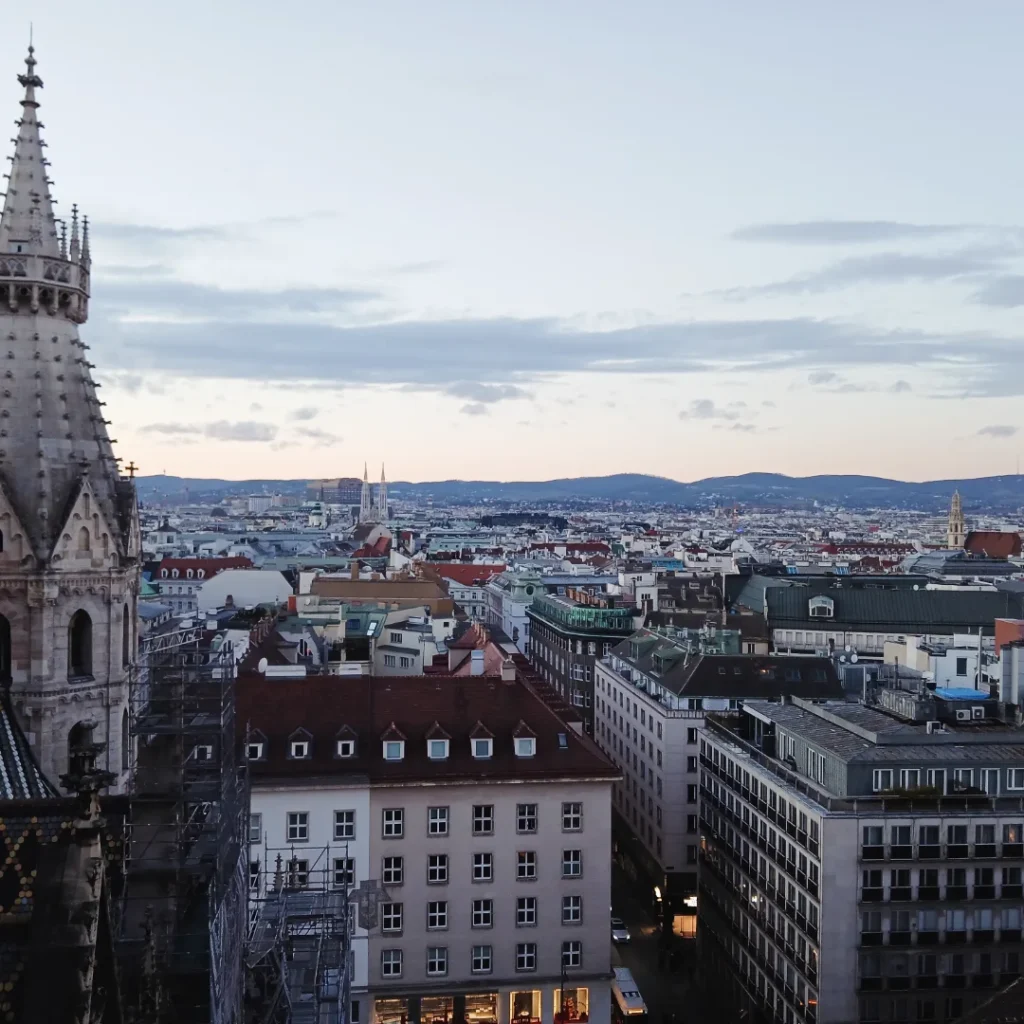
If you leave Vienna without a skyline photo, did the trip even happen? The city has several high points where you can shoot wide, sweeping views across rooftops and towers. In winter, a light layer of snow sometimes settles on the buildings below, which makes the whole scene look extra sharp from above.
One of the top photo spots is the tower of St. Stephen’s Cathedral. You can’t miss it — it sits in the city center with a large structure and a patterned tile roof. For the higher viewing point, take the South Tower stairs. There are 343 steps to the top, and yes, you will feel them. Consider it cardio with a camera reward at the end.
If the stair climb sounds like a bad deal, use the elevator to reach the North Tower platform. It’s a bit lower but still gives a wide city view and saves your knees. Some visitors try both towers and compare angles.
Travel Tip: After your tower visit, walk along Ringstrasse toward the lit-up Rathaus building. The route passes major landmarks, and winter markets nearby make a good snack stop after the climb.
- St. Stephen’s Cathedral | Address: Stephansplatz 3, 1010 Wien | Entrance Fee: €3.50
A slower, sit-down way to take in Vienna’s skyline is from the Riesenrad Ferris Wheel. This giant wheel dates back to 1897 and ranks among the earliest Ferris wheels ever built. The original developer didn’t profit much and reportedly died in debt — not a great business ending, but a lasting landmark for the city.
For the best photos, plan your ride around golden hour, when the light hits rooftops and towers at a softer angle. If you care more about the view than the camera, go after dark instead. The city grid lights up below, and the height gives a wide, calm look across the skyline.
Travel Tip: You can buy tickets online or at the entrance. There’s also a private candlelight dinner option inside one of the cabins, with a multi-course Viennese meal served during the rotation. It’s a bold pick for a proposal or special night — and definitely more memorable than a normal restaurant table.
- Riesenrad Ferris Wheel | Address: Riesenradplatz 1, 1022 Vienna | Entrance Fee: €10
5. Vienna’s Christmas Streets & Holiday Customs
Vienna’s streets in winter are loaded with Christmas decor — but the style stays restrained rather than flashy. You won’t see many oversized inflatable figures. Instead, expect white string lights, evergreen garlands, and clean, classic displays overhead. It creates that camera-ready holiday backdrop where people somehow laugh naturally while holding hot cocoa. Very staged. Still fun.
If you’re curious how the Viennese handle the Christmas season, here’s the short version. A few traditions are easy to spot once you know them.
- Christmas Eve known locally as Heiligenabend: the main celebration day, not December 25th. Many families wait until the 24th to put up and decorate their tree. That evening is also when the Christkind — pictured as a childlike angel — brings gifts. Think a younger, gentler gift-bringer instead of the usual Santa image.
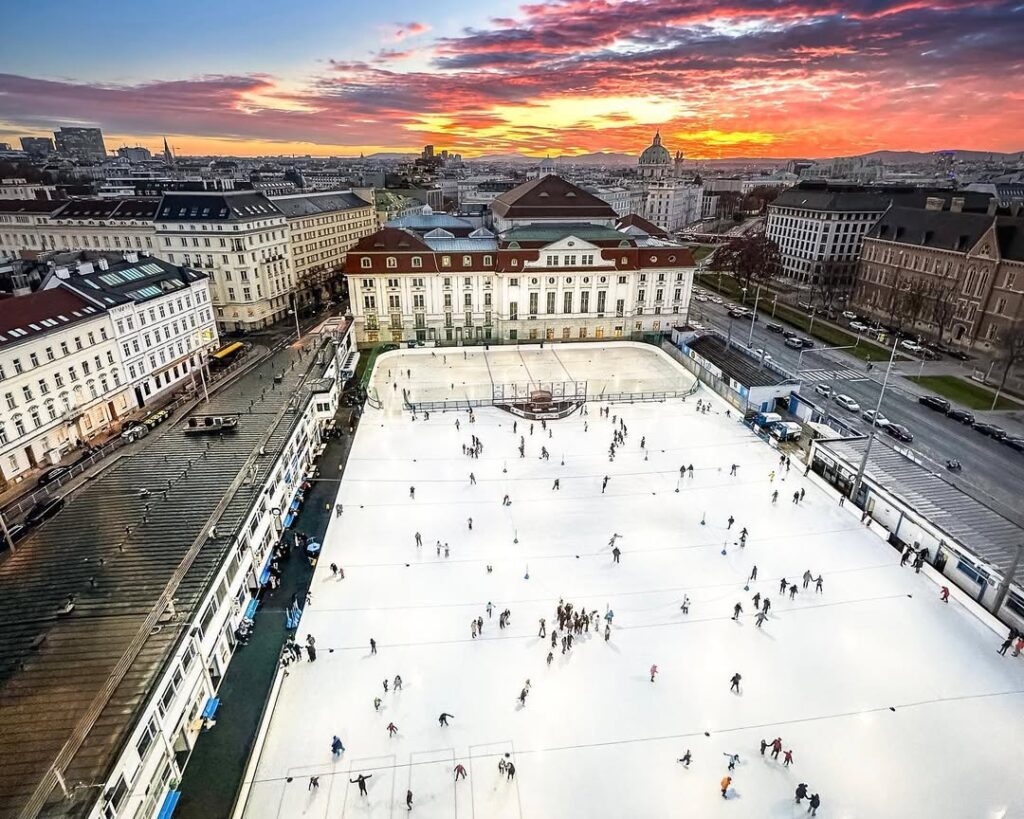
- Go Ice Skating: In the winter months, the Eistraum turns Rathausplatz into a large ice skating zone. The roughly 8,000 square meters of ice are divided so beginners get room to practice. Good news if you skate like you’re trying not to fall — which is a valid style.
- See a Concert: Yes, mentioned before — but this one stands out. The biggest concert of the season happens right after Christmas on New Year’s Day. The Vienna Philharmonic performs Strauss family waltzes, closing with The Blue Danube. The audience claps along and welcomes the new year in sync with the music. A strong finish to the holiday period.
6. Best Christmas Markets to Visit in Vienna
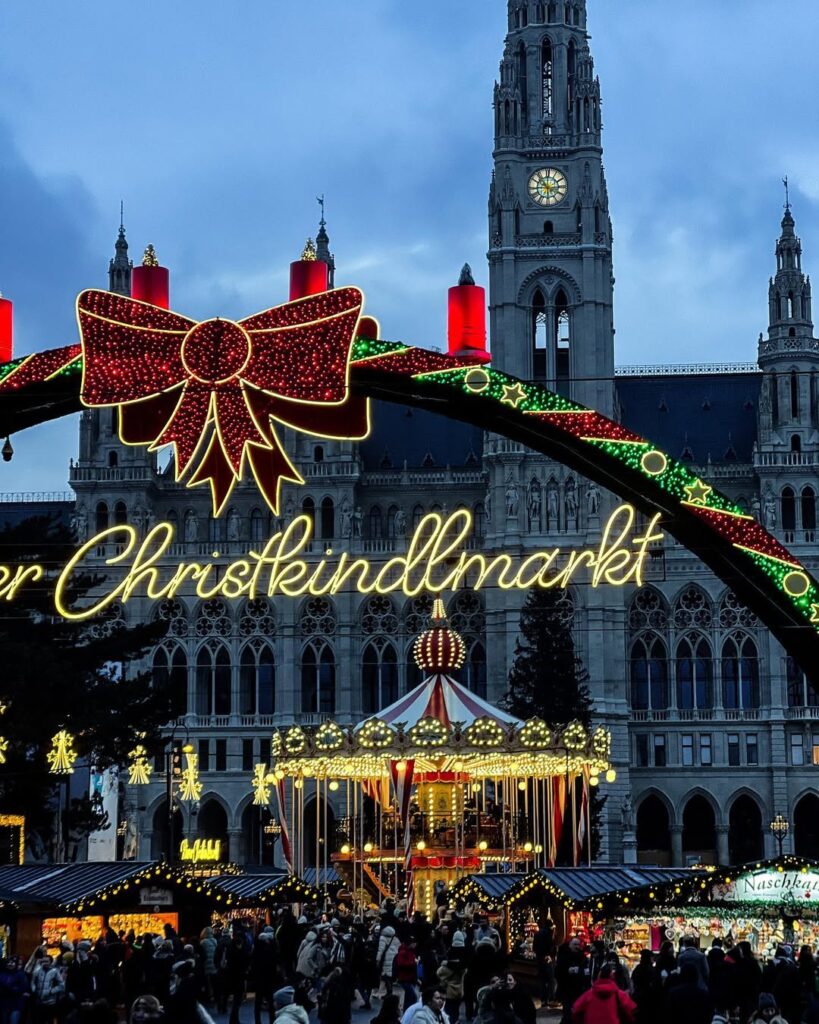
Christmas markets are a long-running tradition in Vienna — records show one was held here as early as 1294. Today, the city runs many markets each season, and each one feels a bit different in layout, food focus, and stall style. Some are large and busy, others smaller and calmer, so it’s worth visiting more than one.
Travel Tip: Bring cash when visiting the markets. Many stalls still do not take cards. Like any crowded city event, keep your money secured and out of easy reach. Money belts or hidden pockets help reduce risk. Basic street awareness goes a long way in busy areas.
Here are a few of the top Christmas markets in Vienna:
- Christkindlmarkt at Rathausplatz: The largest market in the city. It draws heavy crowds, but the city hall backdrop and lighting displays make it one of the most photographed spots. Central location makes it easy to reach.
- Weihnachtsmarkt am Spittelberg: Smaller streets, older buildings, and vendor booths selling handmade goods. The setting feels more local and less commercial than the big squares.
- Karlsplatz Art Advent: Vendors here are selected by a review panel, so product quality is taken seriously. The market sits in front of Karlskirche, and the evening view is excellent. Also known for strong food stalls — especially melted-cheese dishes.
- Altwiener Christkindlmarkt at Freyung: One of the oldest running markets, with roots going back to the 18th century. Traditional stalls and a large nativity display stand out here.
- Christmas Market Am Hof: Just a short walk from Freyung, so you can visit both easily. Known for good food stands and carefully selected craft sellers. Try a local beer, bratwurst, and a hot Bauernkrapfen donut while you’re here.
- Weihnachtsdorf at Maria-Theresien-Platz: Set between two major museums, this market often has lighter crowds. It stays open longer than many others and shifts into a New Year market after Christmas. A good stop for seasonal drinks.
- Stephansplatz Christmas Market: Small but well placed right by St. Stephen’s Cathedral. You’ll likely pass it anyway while moving through the center.
- Winter Market at Riesenradplatz: Located in the Prater amusement area near the giant Ferris wheel. You can mix rides and food stops in one visit. It also runs into January for post-Christmas visits.
For deeper details and maps, local Vienna travel blogs publish updated seasonal guides and market layouts each year. If you’re chasing Christmas-market energy across the continent, here are more European Christmas destinations with serious holiday magic.
7. What to Eat at Vienna Christmas Markets
We didn’t travel to Vienna at Christmas to count calories. The goal was simple: try the market food, repeat often, and warm up with cup after cup of Glühwein — preferably from a funny little boot-shaped mug. Market stalls also double as budget meal stops, and during the Christmas–New Year period they may be the most reliable food source when many restaurants are shut. Here’s a straight guide to the tastiest market snacks.
Travel Tip: Christmas market drink stalls use a deposit mug system. You pay extra for the mug, carry it around for refills, and return it later to get the deposit back. Or keep it as a cheap trip keepsake from your very cheerful evening.
- Maroni: Hot roasted chestnuts sold from metal drums. The smell travels across the square before the stall comes into view. Served in paper cones that warm your hands. Best eaten right away while still steaming.
- Käsekrainer & Bratwurst: Käsekrainer is a sausage filled with bits of melted cheese, while bratwurst is the standard grilled version. Both show up at nearly every market.
Usually topped with mustard or horseradish. Bread rolls make them easier to handle in the cold. - Kaiserschmarrn: Torn pancake pieces cooked on a hot plate and dusted with sugar. Sweet, soft, and slightly caramelized at the edges. Often paired with plum or apple sauce. Large trays are common, so sharing works well.
- Lebkuchen: Spiced gingerbread biscuits that lean more decorative than flavorful. Popular as edible gifts. Frequently iced with patterns and messages. Holds up well during travel.
- Bratkartoffel: Pan-roasted potato slices with browned edges and soft centers. Simple and filling.
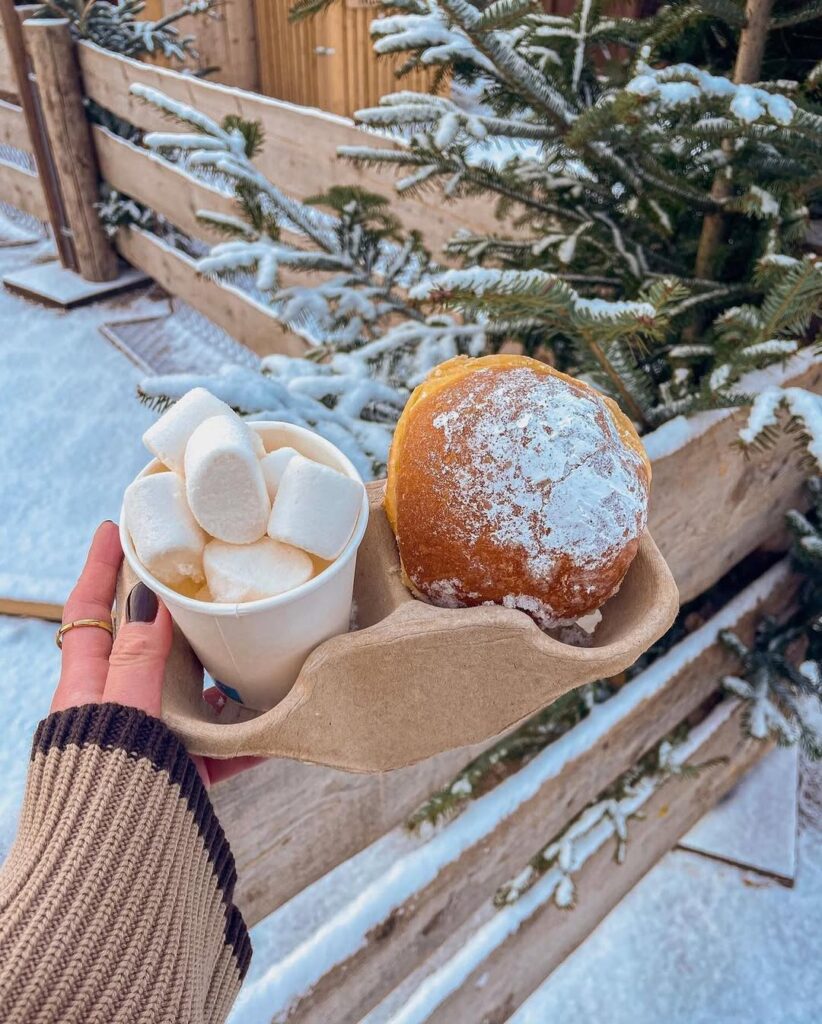
Sometimes mixed with onions or bacon. Great side dish with sausage plates. - Krapfen: Round filled donuts, usually packed with apricot jam or chocolate cream. Bigger and heavier than they look. Covered with powdered sugar on top. One is often enough for two people.
- Glühwein: Hot spiced wine poured fresh at each stall. Built for cold hands and slow sipping.
Spice blends vary from vendor to vendor. You’ll notice the warmth immediately. - Schaumrollen: Crisp pastry tubes stuffed with cream or meringue filling. Sweet and airy inside.
The shell flakes easily when you bite in. Best eaten quickly before it softens. - Lombomba: Thick hot chocolate with whipped cream, cinnamon, and a rum shot mixed in. Rich and heavy. Feels closer to dessert than a drink. Good pick for late evening market rounds.
- Weihnachtspunsch: Holiday punch offered in many fruit and spice versions. A common alternative to mulled wine. Non-alcohol Kinderpunsch is widely available. Trying several flavors becomes part of the fun.
8. Take a Vienna Food Tour and Eat Like It’s the Holidays
Holiday travel and heavy eating go hand in hand. Vienna at Christmas comes with stacks of sweets, fried classics, café desserts, and sausage stands — and this is not the moment to act restrained. Seasonal dishes here tend to feel lighter than some big holiday meals elsewhere, or at least that’s what we tell ourselves before ordering again.
Let’s be direct: you will want to eat a serious amount of schnitzel while you’re here. The smart move is pacing it across several stops instead of one giant meal. That’s why a guided food tour works so well. You move, you snack, you move again — repeat — instead of sitting in one place and tapping out early.
Food tours also save decision energy. Rather than guessing where to go, you follow a route that lines up tastings across markets, cafés, and specialty shops. Walking between stops helps with digestion, and guides usually explain what you’re eating and why it matters locally.
Many Vienna food tours include stops at a traditional coffee house, the Naschmarkt, sausage counters, cheese sellers, wine tastings, chocolate shops, and more. Come hungry, wear comfortable shoes, and don’t schedule a big dinner afterward.
One must-try dish in Vienna is the traditional Wiener Schnitzel — a thin cut of meat, originally veal, breaded and fried until golden. Austrian food rules are strict here: if it’s labeled Wiener Schnitzel, it must be veal. If pork is used, the name has to state that clearly. Locals take this dish seriously. It’s usually served with a lemon slice and cranberries to balance the rich, fried crust.
- Where to Try It: Blauensteiner Wien | Josefstädter Str. 4, 1080 Vienna | €11–20
Another classic is Tafelspitz, Austria’s well-known boiled beef dish. The meat turns very tender through slow cooking, though mild in flavor on its own. That’s why it comes with Semmelkren — bread crumbs cooked in broth and mixed with fresh horseradish. The topping adds heat and texture to the plate. It’s a traditional meal with a long history in Viennese kitchens.
- Where to Try It: Plachutta | Auhofstrasse 1, 1130 Vienna | €21–40
Leberkäse looks plain at first glance and often gets compared to bologna or meatloaf. The texture is smooth, and it’s usually sliced thick and served hot in a bread roll. Flavor options vary, including versions with cheese, onions, or bacon mixed in. It works well as a fast, filling street-style meal.
- Where to Try It: Leberkas-Pepi | Operngasse 12, 1010 Vienna | under €10
Sausages are a daily staple across Austria and show up everywhere from stands to small shops. One popular version is the Bosna — a grilled sausage in a bun with onions and a curry-style sauce. It’s simple, hot, and budget friendly. Onion-heavy versions tend to be the most satisfying.
- Where to Try It: Zum Kleinen Sacher | Operngasse 12, 1010 Vienna | under €10
Geröstete Knödel are roasted dumplings and a favorite comfort dish across Austria. These large dumplings are built from potato or bread bases, then sliced and pan-fried. Yes — it’s carbs built on more carbs, and nobody is apologizing. The best versions are roasted and then cooked again with eggs and onions for extra flavor. There are many styles around the city, but this preparation is the one most locals point to first.
Gansl is the traditional holiday goose meal. It usually comes plated with bread dumplings, braised red cabbage, and cranberries on the side. You’ll mostly see it on menus during the Christmas season and nearby winter weeks. It’s a seasonal dish rather than an everyday order, which makes timing important. Portions are often large enough to split.
Cordon Bleu in Vienna means a very large schnitzel stuffed with ham and cheese, then breaded and fried. It arrives hot, heavy, and filling. Plan this meal for a day when you don’t need to eat again soon. It’s the kind of plate that slows your walking speed afterward — but in a good way.
- Where to Try Them: Gasthaus Josefstadt | Florianigasse 43, 1080 Vienna | €11–20
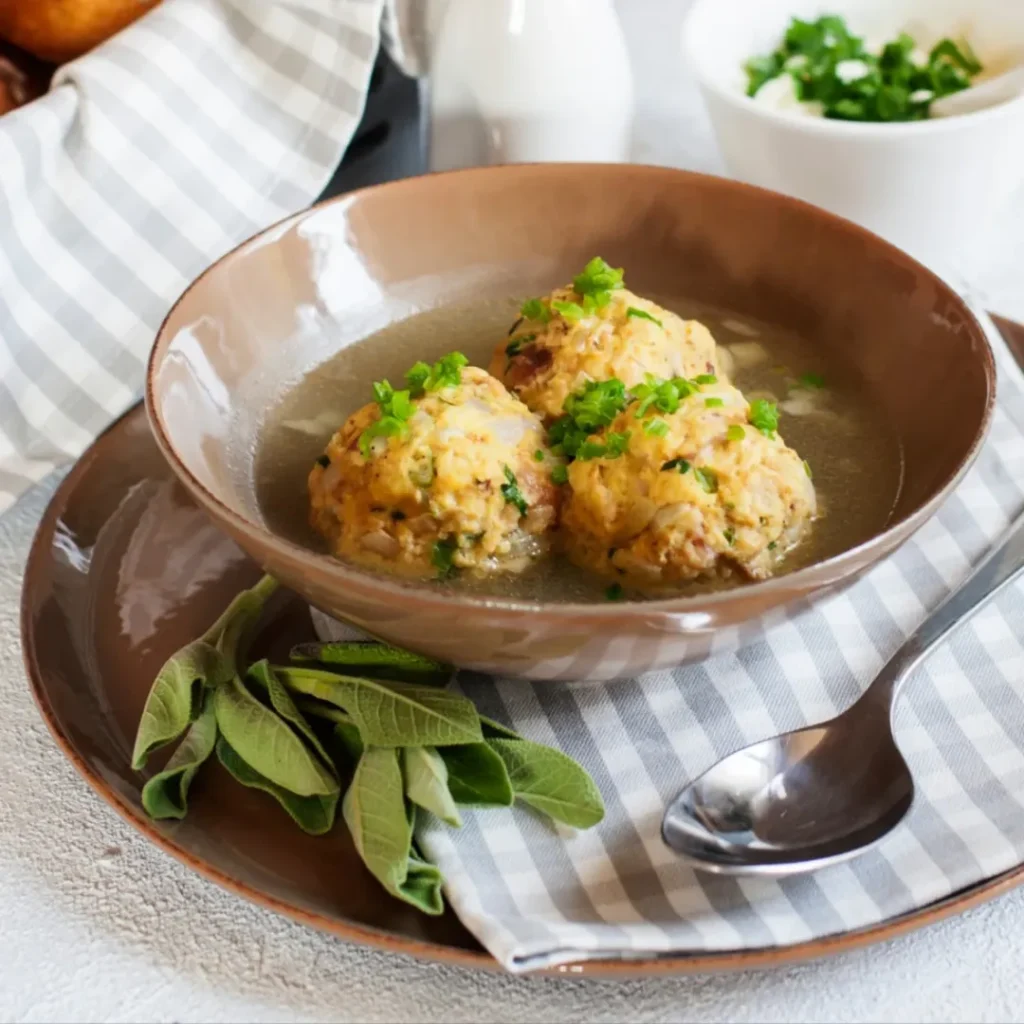
Grießnockerlsuppe is a beef-broth soup served with soft semolina dumplings. The broth is usually finished with chives, nutmeg, and butter, giving it a deep, comforting taste. It often appears as the first course before heavier plates arrive. In cold weather, this bowl does a solid job of warming you up before the main meal.
Erdäpfelnockerl mit Fenchel-Oberssauce und Räucherlachs is a potato-based gnocchi dish served with fennel, cream sauce, and smoked salmon. You’ll see many kitchen versions across the city, with small changes in sauce thickness and seasoning. It sits somewhere between pasta and dumplings in texture. Good pick if you want something creamy but not fried.
Austrian Goulash lands between stew and soup, usually built on slow-cooked beef in a tomato and paprika base. Hungarian paprika gives it a mild heat and deep color. Bread is often served alongside for dipping. It’s filling without being overly heavy.
- Where to Try Them: Nordpol 3 | Nordwestbahnstr 17, Leopoldstadt, Vienna | €11–20
Sachertorte is one of Austria’s best-known cakes, built from dense chocolate layers with apricot jam in the middle. The outside is covered with a smooth chocolate glaze and usually served with a side of unsweetened whipped cream. The flavor leans rich rather than sugary. It pairs well with strong coffee and a slow café break.
- Where to Try It: Cafe Sacher | Philharmonikerstrasse 4, A-1010 Vienna | under €10
Strudel is a regional staple and shows up in bakeries and cafés across the city. Apple strudel is the standard order, filled with spiced fruit and thin pastry layers. Topfenstrudel — the curd or soft cheese version — is also widely loved and worth a try. Order one of each and share, or keep both and call it a decision.
- Where to Try It: Cafe Korb | Brandstätte 9, 1010 Vienna | under €10
9. Vienna Coffee Houses & What to Order
Many cities claim strong coffee culture, but Vienna has serious history behind the claim. Coffee reached the city in 1683, and one of Europe’s earliest coffee houses opened here in 1684. Since then, café habits and drink styles have grown into a defining part of daily life. You could call Vienna an early coffee trendsetter — long before modern café fashion showed up.
Don’t expect the same setup you see in global chain cafés or minimalist specialty bars. Viennese coffee houses run on table service, slower pacing, and formal presentation. You sit, order, and a server brings your drink on a tray. Interiors often include chandeliers, upholstered seating, newspapers, and long conversation tables. Some even have card tables or billiards rooms.
The atmosphere inside these cafés feels more like a lounge than a grab-and-go counter. People stay awhile, talk, read, and order second rounds without hurry. Coffee breaks here are treated like a daily ritual rather than a quick caffeine stop.
Drink names also differ from standard menu terms. Asking for plain drip coffee may lead to confusion. A good starting order is a Melange, which is close to a cappuccino — espresso with steamed milk and light foam. It’s one of the most common café drinks in the city.
You may also see Vienna Coffee listed, though ordering it can be oddly inconsistent depending on the café. The usual version combines espresso with whipped cream and chocolate on top. Results vary, but when done right, it drinks more like dessert than coffee.
Travel Tip: If the menu feels unclear, look up a Viennese coffee drink chart before you go. It helps decode the names fast. Also — order cake with your coffee. Afternoon coffee-and-cake is a long-standing Vienna habit, and cafés expect it.
There are many places across Vienna where you can sit down and try traditional coffee house drinks and desserts. Some cafés lean historic and formal, others focus more on pastries and chocolate work. If you want the full table-service café experience, these spots are strong starting picks.
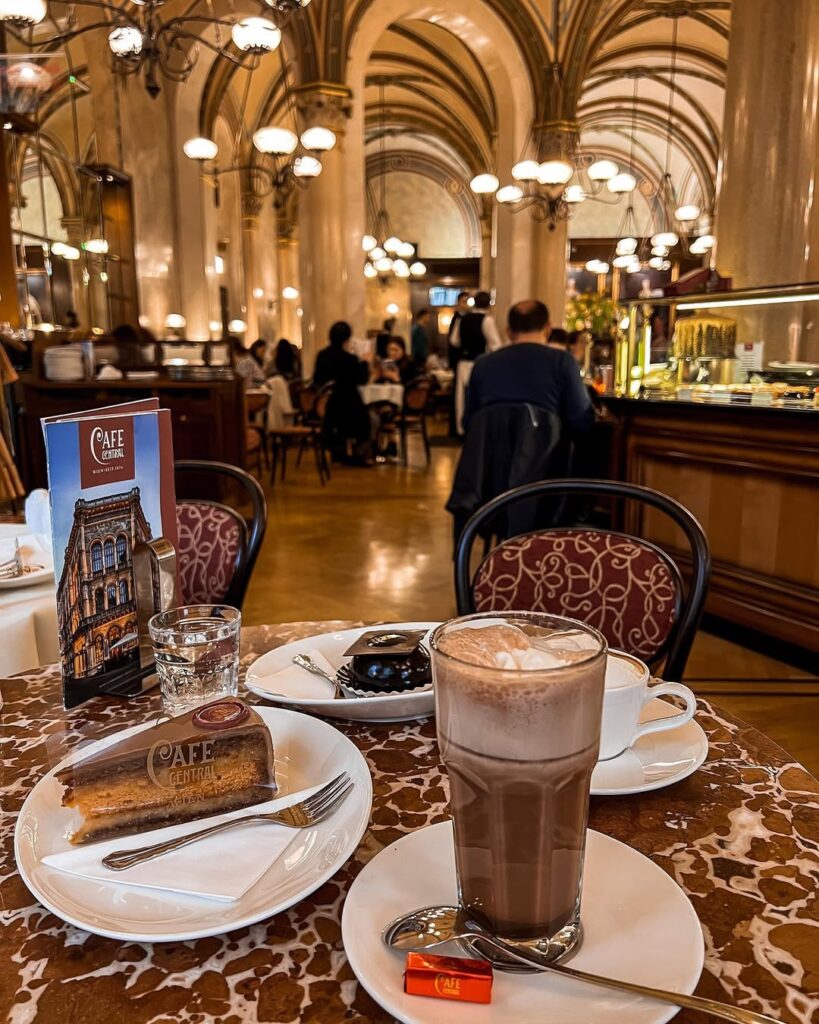
Café Central is one of the city’s most recognized coffee houses. The interior features high ceilings, arches, and formal seating, with a menu full of classic cakes and hot drinks. It also has a long literary history, with past regulars including well-known writers and thinkers. Expect a grand room, polished service, and a steady line at peak hours.
- Café Central | Address: Herrengasse/Strauchgasse, 1010 Wien | Price Range: under €10
Demel is a historic pastry and chocolate shop that once supplied the imperial court. The ground floor focuses on sweets and gift boxes, while the upper level runs a café area for seated orders. It’s a good stop for boxed treats to carry home, along with plated desserts and coffee service. Window displays alone are worth a look.
- Demel | Address: Kohlmarkt 14, 1010 Wien | Price Range: under €10
Café Sacher is known first for its chocolate cake and then for its formal style of service. The famous Sachertorte draws most visitors, usually served with cream on the side. Staff presentation and table manners here follow an old luxury pattern, with attentive pacing and polished delivery. Come for cake, stay for the ceremony around it.
- Café Sacher | Address: Philharmoniker Str. 4, 1010 Wien | Price Range: under €10
For deeper reading and café maps, specialty coffee publications often publish Vienna coffee house guides with updated lists and locations.
10. Best Day Trips from Vienna in Winter
Vienna makes a great base city, and there are several excellent day trips within reach. If you’re ready to step outside the capital for a day, you’ll find mountain towns, music cities, and storybook villages nearby. Here are a few of our top picks — tested by appetite, camera roll, and snack quality.
If you’re building a Europe winter bucket list, these snowy escapes are some of the best places to start.
- Salzburg, Austria: Salzburg is Austria’s other major city and best known as Mozart’s birthplace and a filming location for The Sound of Music (yes, the earlier joke barely survives fact-checking). A guided Salzburg day trip usually rolls through lake districts and smaller towns like St. Gilgen before reaching the city. Most tours include a walking route through Salzburg Old Town, a UNESCO World Heritage site, plus stops at well-known film locations. Expect fortress views, church domes, and music references at every corner. It’s a long day — but a packed one.
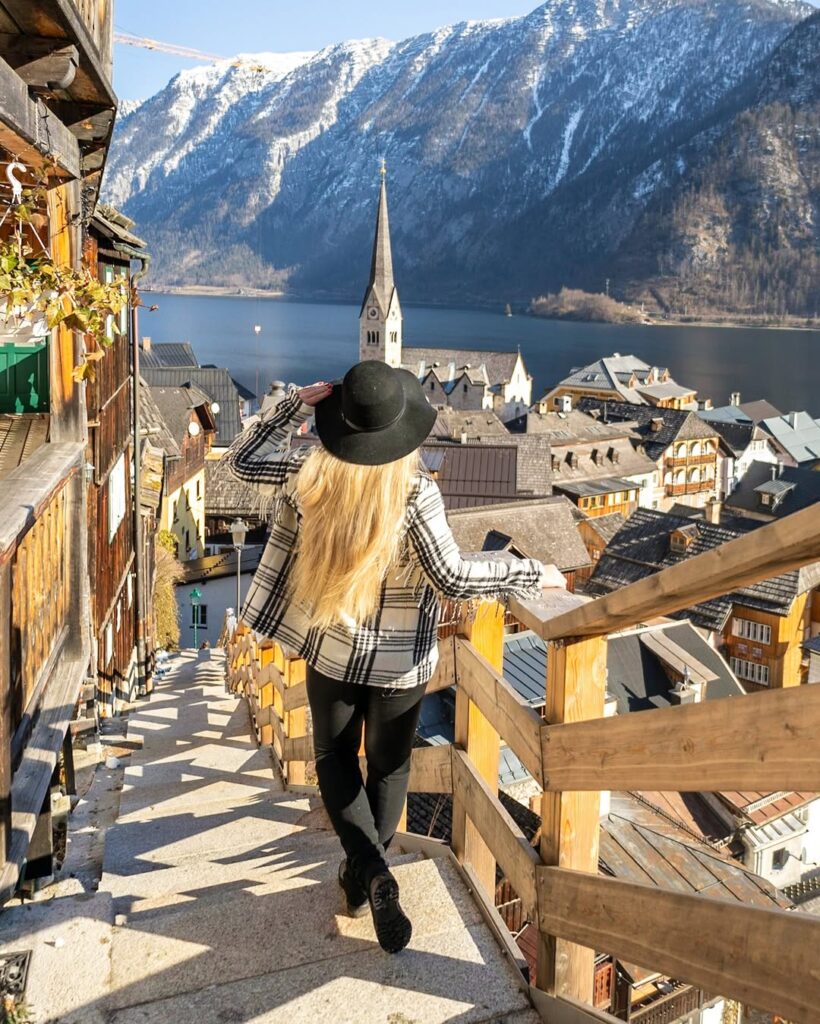
- Hallstatt, Austria: Honestly, this place deserves an overnight stay rather than a rushed visit — Hallstatt is the kind of town people stare at in silence for several minutes before speaking. Still, if your schedule is tight, a day trip works. The village sits beside a lake with alpine peaks rising behind it, and winter adds snow and fog to the scene. Guided tours usually include hotel pickup and round-trip mountain transport, which saves planning effort. Expect photo stops, slow walks, and frequent “is this even real?” comments.
- Prague, Czech Republic: Prague feels very different from Austrian cities in layout and building style, which makes it a strong contrast trip. You could spend several days here, but a long day visit still covers headline sights. Many tours run a roughly 3.5-hour drive through the Bohemian mountain region before arriving in the city. Common stops include Charles Bridge, the Astronomical Clock, and Old Town Square — which hosts one of the best Christmas markets in the region. Bonus reward: Czech market snacks like trdelník usually appear somewhere along the route, and yes, that matters.
If you’re craving a quieter winter vibe after the city lights, these cozy small-town winter getaways are perfect for a slower, storybook break.
Where to Stay in Vienna — Picks by Budget Level
We stayed in two different places during our Vienna trip, so we’ve got two solid recommendations depending on how much you want to spend. One leans mid-range with extra comfort and personality. The other keeps costs lower while still covering what travelers actually need.
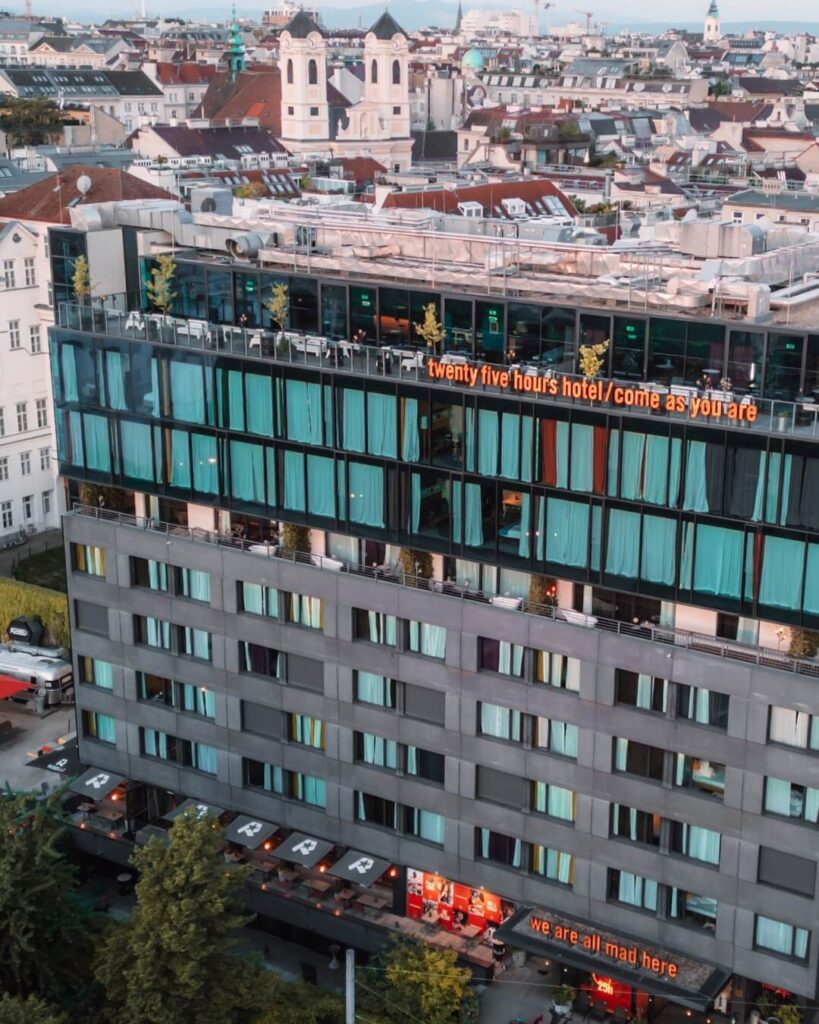
- Mid-Range Hotel: 25 Hours Hotel. We decided to spend a bit more for our Christmas stay and booked 25 hours. The property has a quirky, off-center design style instead of the usual business-hotel look. Rooms feel playful, and the atmosphere stays relaxed rather than formal. The breakfast buffet alone makes it worth a look — large spread, hot dishes, and strong coffee. You can read a full review or check room prices before locking it in.
- Budget Hostel: Hostel Ruthensteiner. For the rest of the trip, we moved to Hostel Ruthensteiner, one of the oldest hostels in Vienna and still running strong. It offers dorms and private rooms, plus common spaces where travelers actually hang out. Location works well for transit and city access. Fun coincidence: a family member had stayed here more than 50 years ago, which made the booking feel extra personal. Full reviews and current rates are available online.
- Vacation Rentals: Apartment rentals are a good fit if you want more room or a kitchen setup. Some flats sit just minutes from the opera house and cathedral area, while others place you near subway stops and shopping streets. VRBO bookings often come with lower platform fees and more flexible cancellation terms than Airbnb, which many travelers prefer.
If your checkout is early and you need somewhere to leave your bags, short-term luggage storage services can help. Companies like LuggageHero connect you with nearby shops and hotels that hold luggage for a few hours, so you can keep exploring without dragging suitcases around.
What to Wear in Vienna in Winter
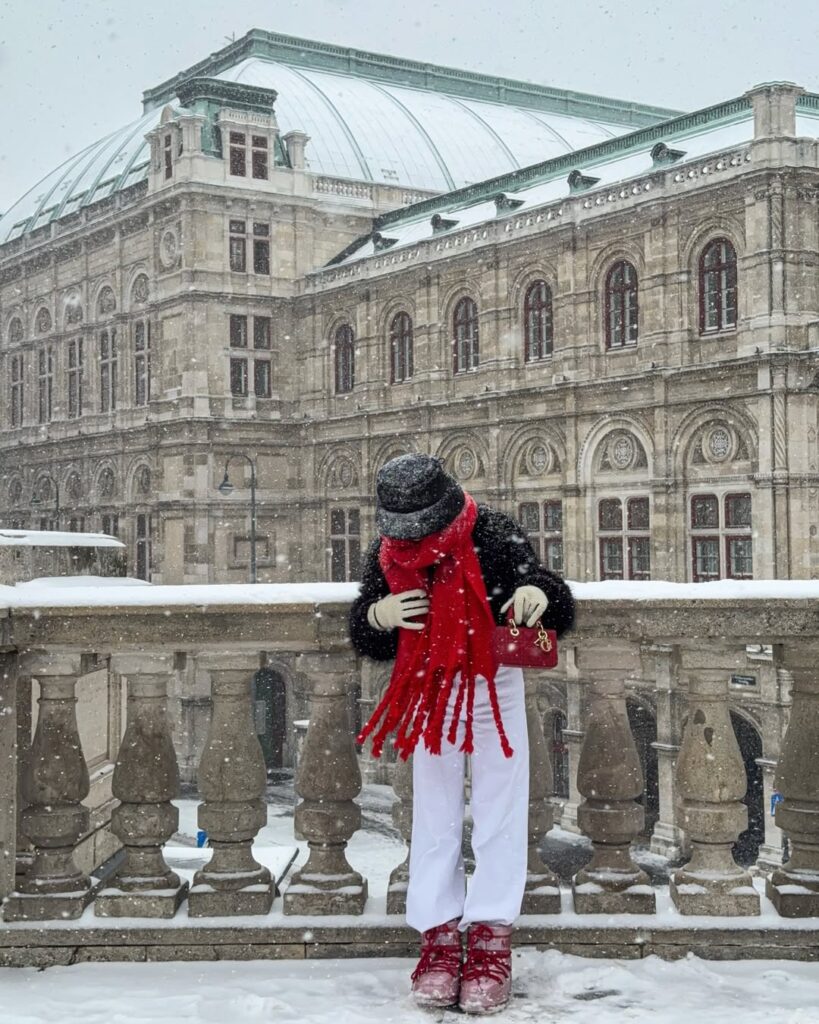
You’ll be layering up every day in Vienna during winter. Cold air, wind, and long walking routes make warm clothing non-negotiable. The upside: winter layers give you an excuse to bring scarves, hats, and textured coats that actually look good in photos. Here are clothing picks that balance warmth and style. If you want deeper detail, a full Europe-in-winter packing guide helps with planning.
- Warm Walking Boots: Don’t cut corners on footwear for a winter Vienna trip. You’ll walk a lot, often on uneven cobblestones, sometimes with ice or slush. Look for boots that are waterproof, insulated, and built for long hours on foot. Lightweight models with flexible soles and warm lining work well for city travel. Good pairs handle cold streets all day without wrecking your feet.
- Wool Socks: Basic synthetic socks won’t do much in low temperatures. Go with wool-blend socks that hold heat even when slightly damp. They also reduce friction inside boots during long walks. Pack several pairs so you can rotate daily.
- Travel Jeans: Travel-focused jeans solve common problems like lack of pockets and stiff fabric. Many come with extra or hidden zip pockets, which help in crowded areas. Stretch fabric also makes flights and long days more comfortable. Quick-dry material is a bonus in wet weather.
- Wool Leggings: These work like thermal base layers under your pants. Wool versions trap heat better than standard polyester options. They add warmth without bulky layering. Ideal for full days outside at markets and on walking routes.
- Warm Leggings with Pockets: A thicker pair of regular leggings also helps, especially on milder winter days. Styles that look closer to pants than gym wear are easier to pair with coats and boots. Versions with zip pockets are practical for carrying a phone or cards. Small detail, big convenience.
- Warm Flannel Shirt: A stretch flannel blended with merino wool works well as a daily top layer or mid-layer. It holds heat, breathes well, and doesn’t smell fast after repeated wear. Look for versions that resist wrinkles and include a hidden zip pocket. Flexible fabric also helps with movement instead of that stiff button-down feel.
- Wool Undershirt: Base layers do most of the heat work. A wool cami or wool t-shirt worn under everything else keeps body warmth in place throughout the day. Thin wool layers trap heat without adding bulk. Put this on first and build the rest of your outfit over it.
- Day Bag: A medium day bag is useful for carrying extra layers while you’re out. Pack a foldable down jacket, spare gloves, snacks, and a water bottle. If you carry camera gear, choose a bag with padding and compartments. You’ll open it often, so easy access matters.
- Warm Hat: A winter hat is required gear in Vienna’s cold months. Knit beanies stay on better in wind than stiff fashion hats. Wool or recycled-fiber blends hold warmth well. Pom-top or plain — both work, just pick one that fits snugly.
- Warm Jacket: Bring a heavier outer coat plus a light packable down jacket. A wool or wool-blend overcoat works well for city wear and photos. A compressible down jacket adds backup warmth and fits easily in your bag. Two-layer outerwear beats one thick piece.
- Scarves: Thick scarves help more than most people expect. Large wool-blend scarves can wrap around your neck or spread like a shawl. Oversized styles can double as travel blankets on trains. Buttons or loop designs make them easier to secure.
- Gloves: Gloves are not optional in freezing weather. Wool or insulated pairs keep fingers usable during long outdoor stretches. Touchscreen-compatible fingertips save you from removing them every time you check your phone. Small feature, big relief.
Want outfit inspiration that still works for cold European city walks? These winter looks are practical and photo-friendly.
After a few hours of classical music, it’s almost impossible not to start thinking about cake, coffee, and a hot plate of schnitzel. Vienna in winter has that effect — music in your ears, sugar on your mind, and travel plans forming fast. Between concerts, café stops, and Christmas markets, the city makes cold days feel busy and full.
If you’re turning this into a multi-city winter trip, this 3-day Paris winter plan pairs well with Vienna.
If Vienna is calling your name right now, you’re not alone. Winter lights, orchestra halls, pastry counters, and market mugs tend to pull people back for round two.
Which Christmassy activity in Vienna would send you straight to the airport — the markets, the concerts, or the café crawls? Tell us your pick below.