Want to leave the house without watching your bank balance flinch? You’re in the right spot. I live in Portland on a tight budget and staying home too long makes me restless. This city quietly offers a long list of zero-cost places and experiences that still feel worth your time.
Some options work perfectly for spur-of-the-moment afternoons. Others fit better on a planned day off. Indoor stops earned extra attention here, because free activities matter most when rain decides to hang around longer than expected. You’ll find museums, quiet corners, and spaces that let your mind slow down without spending a dollar.
Yes, parks appear more than once. That’s unavoidable in a city like this. Still, they don’t run the show. Each outdoor pick offers something different—views, walking paths, or room to sit with a coffee and do absolutely nothing.
Near the end, you’ll also see a few easy day trips close to Portland. They cost nothing to enter and pair well with a packed lunch or a borrowed book. Think of them as low-effort escapes rather than full travel days.
If your calendar feels empty and your wallet feels protective, these ideas can fill the gap. No pressure. No tickets. Just reasons to step outside and enjoy what’s already there.
Portland Experiences That Don’t Cost a Thing
1. Forest Park: Big, Quiet, and Completely Free
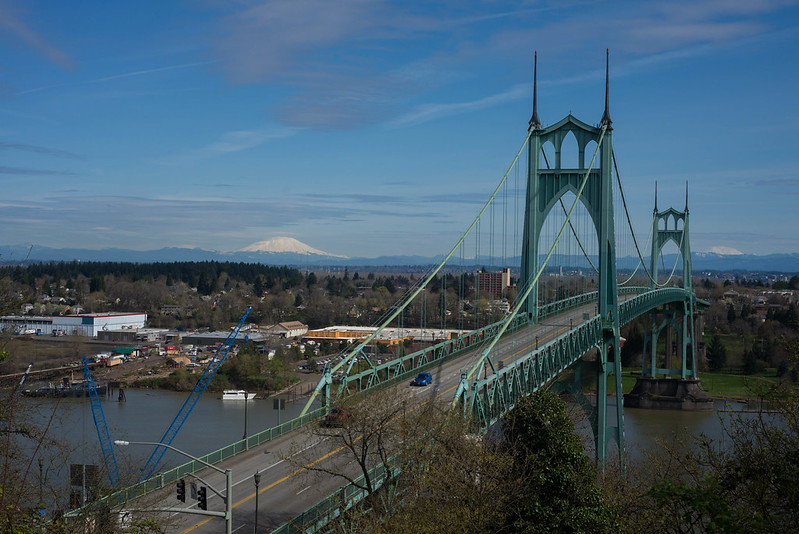
I said I wouldn’t overload this list with parks, but Forest Park earns its spot—even when the sky stays gray. Spanning roughly 5,200 acres across the Tualatin Mountains, it ranks among the largest urban forests in the country. The scale alone changes how the city feels once you step inside.
More than 80 miles of trails cut through thick trees and shaded ridgelines, which means repetition is hard to come by. Popular paths see traffic, but lesser-used trailheads tell a different story. A short walk away from the obvious entrances, the noise drops off and space opens up, even during busy summer weekends.
Access is simple. Entry costs nothing, and trailhead parking is also free. A solid starting point is Lower Macleay Park, where the path follows Balch Creek through mossy ground and old stonework. In under a mile, you reach Portland’s well-known Stone House, often called the Witch’s Castle, tucked quietly along the trail.
Keep moving and the walk links naturally to other no-cost stops, including the Bird Alliance of Oregon and the overlook near Pittock Mansion. For routes that feel more raw and less traveled, head north and try the fire lanes. They trade polish for space and make Forest Park feel almost private.
2. Meet Ole Bolle, Portland’s Watchful Troll
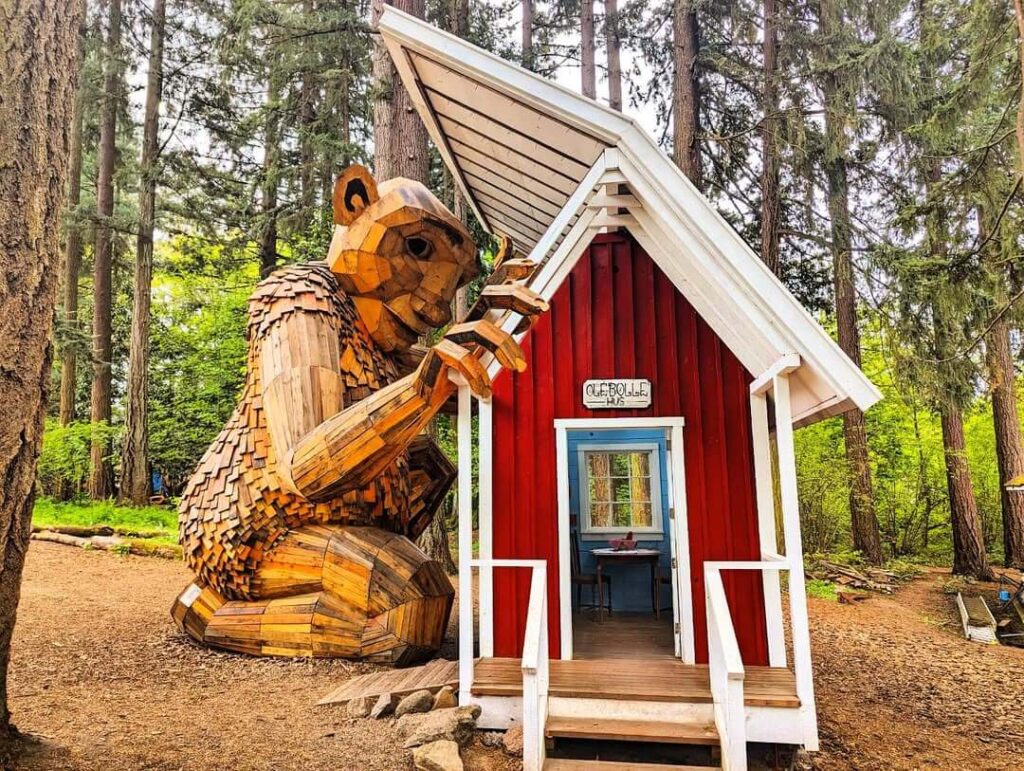
One of Portland’s newer free sights comes in an unexpected form: a giant troll named Ole Bolle. He resides on the grounds of Nordic Northwest, the city’s hub for Scandinavian culture. Even on one knee, the figure rises an impressive 19 feet and commands attention the moment you spot him.
Ole Bolle appears mid-investigation, peering into a cluster of small cabins behind Fogelbo, a Swedish-style log house listed on the National Register of Historic Places. Standing near him feels playful and slightly eerie at the same time. His expression carries curiosity and humor, with just enough edge to make you pause before stepping closer.
This troll belongs to a wider project called Way of the Bird King by Danish artist Thomas Dambo. He is one of six Pacific Northwest trolls built entirely from reused materials. The goal is simple and clever: show how discarded objects can take on new life through creativity and teamwork.
After spending time outside, step into Nordia House. The building includes a small gift shop and rotating gallery space, both open to the public. If you’re willing to spend a little, Broder Sud inside Nordia House serves Scandinavian-inspired meals that work well for lunch.
Parking at Nordic Northwest does not cost anything, and public restrooms are available inside Nordia House.
3. Exploring the Rose Garden Inside Washington Park
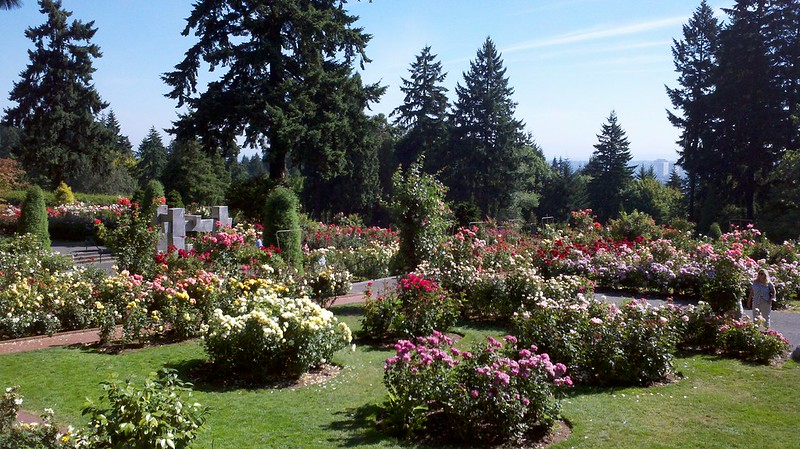
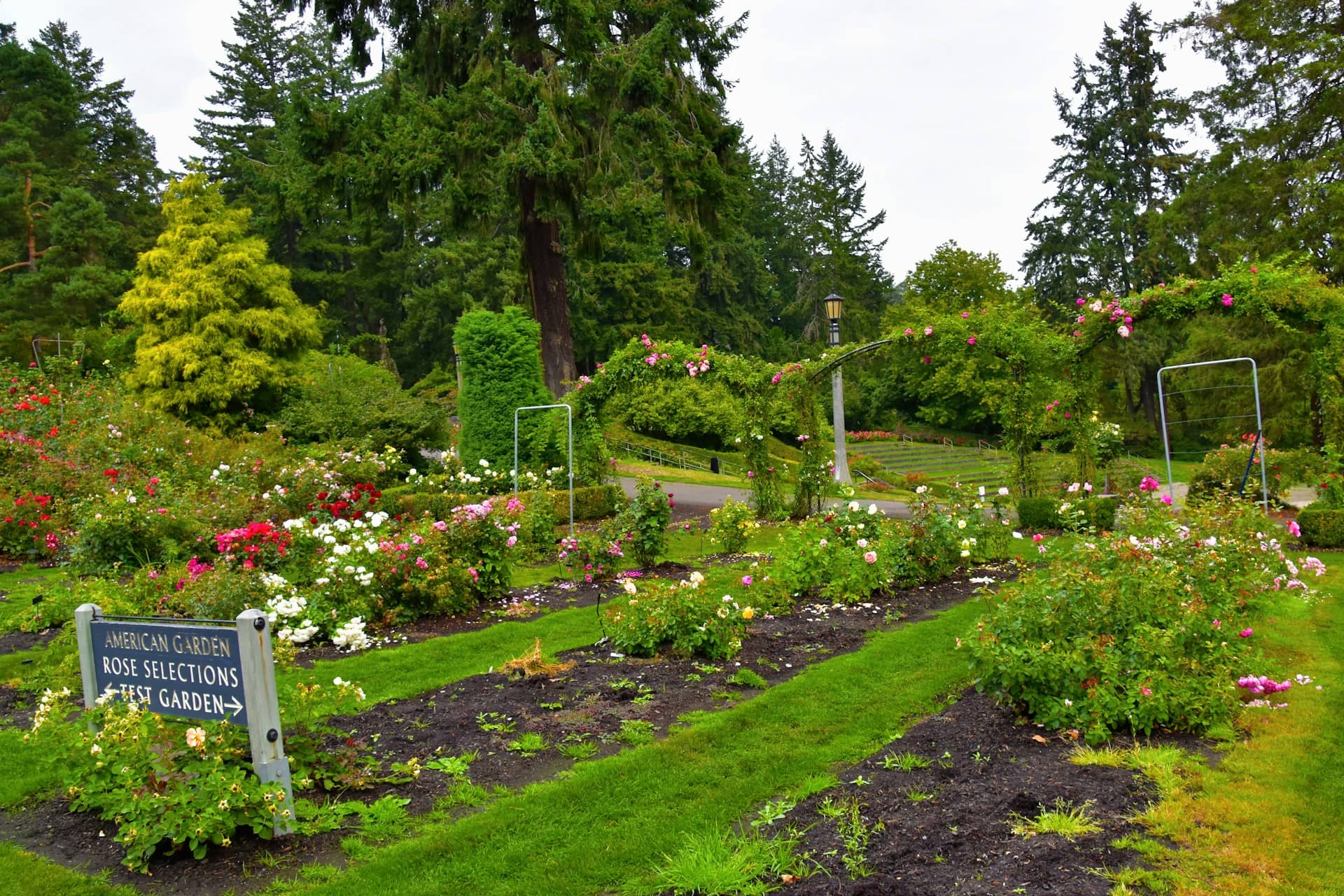
The International Rose Test Garden ranks high among Portland’s no-cost experiences throughout the year. From late spring through early fall, when the roses are in full color, the grounds feel almost unreal. More than 10,000 bushes grow here, ranging from tiny miniature varieties to oversized blooms streaked with multiple shades.
Flowers climb trellises, wind around old lampposts, and line carefully arranged beds that stretch across the hillside. Even outside peak bloom, the setting holds its appeal. Downtown Portland spreads out below, and on clear days Mount Hood rises in the distance, steady and unmistakable.
The garden sits inside Washington Park, which packs several free stops into one area. Nearby, you’ll find the Vietnam Veterans Memorial, the Holocaust Memorial, wooded paths similar in feel to Forest Park, and the Hoyt Arboretum—a living tree museum with trails that change character as you move through them.
Parking near the Rose Garden uses meters, averaging about $2.40 per hour. A complimentary shuttle links Washington Park’s major sites, making it easy to move around without a car. Public restrooms are available on-site.
4. Hoyt Arboretum: A Woodland Walk Inside Washington Park
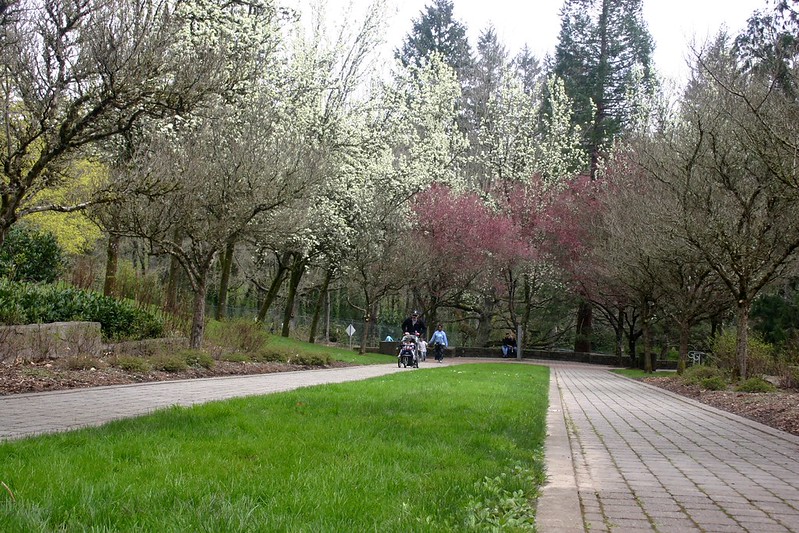
Still within Washington Park, the Hoyt Arboretum offers a sharp contrast to the Rose Garden. Instead of formal beds and open terraces, the space leans wooded and informal, closer in feel to Forest Park than a classic garden setting.
More than 2,300 tree species grow here, giving the trails a different mood as the seasons change. Fall brings color from larches and Japanese maples. Winter favors quieter routes like the Winter Garden, Holly Trail, and Redwood Trail, which stay walkable even during colder months. Spring adds low bursts of color, with violets and trillium lining the paths. By April, the Magnolia Trail stands out for its brief but striking display. Summer settles into deep greens across every section.
The collection mixes Pacific Northwest natives with trees from far beyond the region, made possible by Portland’s mild weather patterns. Many specimens include name labels, which makes wandering the paths feel like an open-air lesson for anyone curious about trees.
Entry to the Hoyt Arboretum costs nothing. Parking nearby uses meters, averaging about $2.40 per hour. Restrooms are located inside the Visitor Center, which operates daily from 10 AM to 4 PM.
5. Portland Saturday Market and the Waterfront Loop
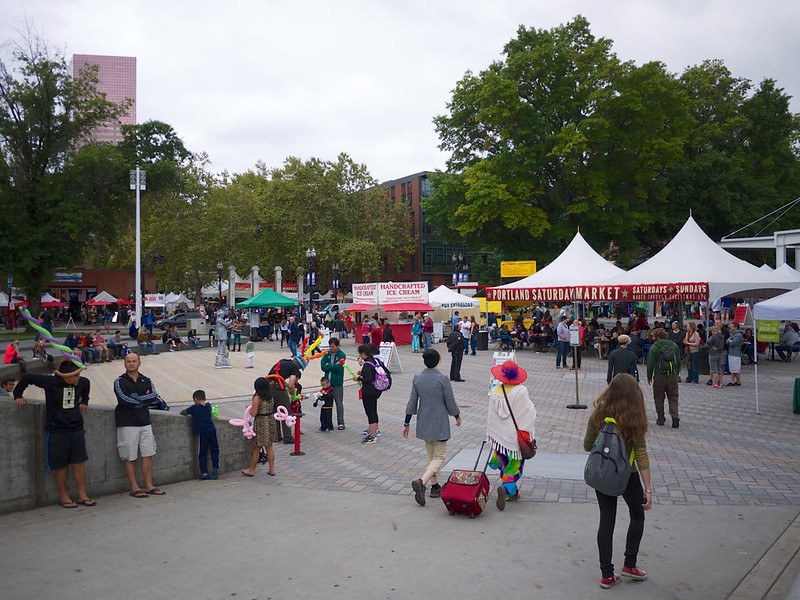
The Portland Saturday Market works just as well for wandering as it does for shopping. Each weekend, the downtown waterfront fills with stalls selling locally made art, jewelry, clothing, and small gift items. The market runs on Saturdays from March through December and feels lively without requiring you to open your wallet.
A small stage rotates through live music sets, adding background sound as you move between booths. Food carts line the edges, making it easy to grab something simple and eat near the river. Nearby, a fountain draws kids in warm weather and still sees plenty of splashing on cooler days.
Once you’ve seen the vendors, the walk continues naturally along the Willamette River through Tom McCall Waterfront Park. Spring brings cherry blossoms, while other seasons offer open paths and water views. A little farther out, downtown murals and the well-known white stag sign turn a casual walk into a self-guided scavenger hunt.
Street parking around the market uses meters, but public transit is the easiest option. The MAX stops close by. Spend at least $25 at the market and you can pick up a free ride ticket or parking validation for SmartPark garages at the information booth.
6. Powell’s Books and the Rare Book Room

Powell’s Books is admittedly more tempting when you plan to buy something. Still, it holds plenty of appeal even if your wallet stays closed. The sheer scale makes it worth stepping inside. With more than a million new and used titles, Powell’s claims the title of the largest bookstore of its kind anywhere.
The building takes up an entire city block and stretches across multiple levels, with rooms that feel like their own small neighborhoods. Wandering the shelves turns into an activity all by itself, especially if you let yourself drift without a list or deadline.
If you’re only browsing, timing matters. The Rare Book Room is open daily from 10 AM to 5 PM and adds a different layer to the visit. To enter, stop by the information counter in the Pearl Room and ask for a pass. Access is limited, which keeps the space calm and unhurried.
Inside, the room feels like a private library from another century. Dark wood shelves hold delicate volumes that look better suited to glass cases than backpacks. Some titles spark pure curiosity, others genuine surprise—like stumbling across an antique cookbook filled with recipes for dormouse soup and roasted sparrows.
7. Powell Butte: Wide Skies and Quiet Trails
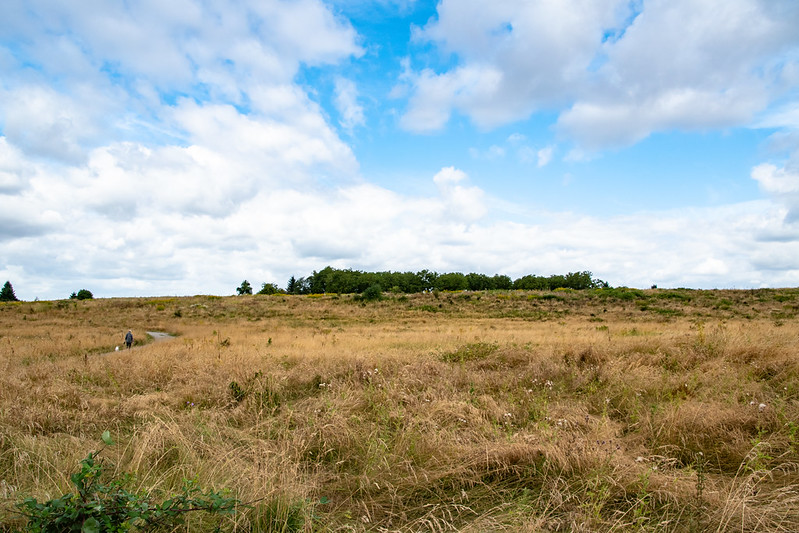
I’d rank Powell Butte as one of Portland’s most overlooked parks. When I lived in southeast Portland, it became a weekly habit. Even now, with a longer drive, I still return when I want space and a slower pace. The approach might test your confidence—strip malls and busy roads don’t hint at what’s ahead—but that feeling fades once the road starts climbing.
Powell Butte rises 614 feet as an extinct volcanic cinder cone, and the change in atmosphere is immediate. The summit opens into broad prairie, where grasses bend with the wind and wildflowers appear through spring and summer. Lower down, the terrain shifts into wooded sections, letting you pass between open ground and forest in a single walk.
Wildlife sightings are common and unforced. Deer move across the trails without urgency. Songbirds flicker between berry bushes. Hawks trace slow circles overhead. The setting invites observation rather than motion.
On clear days, the views stretch far beyond the city. Mount Hood anchors the horizon, joined by Mount Adams, Mount St. Helens, Mount Jefferson, Rocky Butte, and Larch Mountain. It feels expansive without being remote.
Parking at Powell Butte does not cost anything. Avoid leaving valuables in your car, as break-ins do happen. A restroom building sits near the main parking area.
8. Eastside Stores That Reward Curiosity
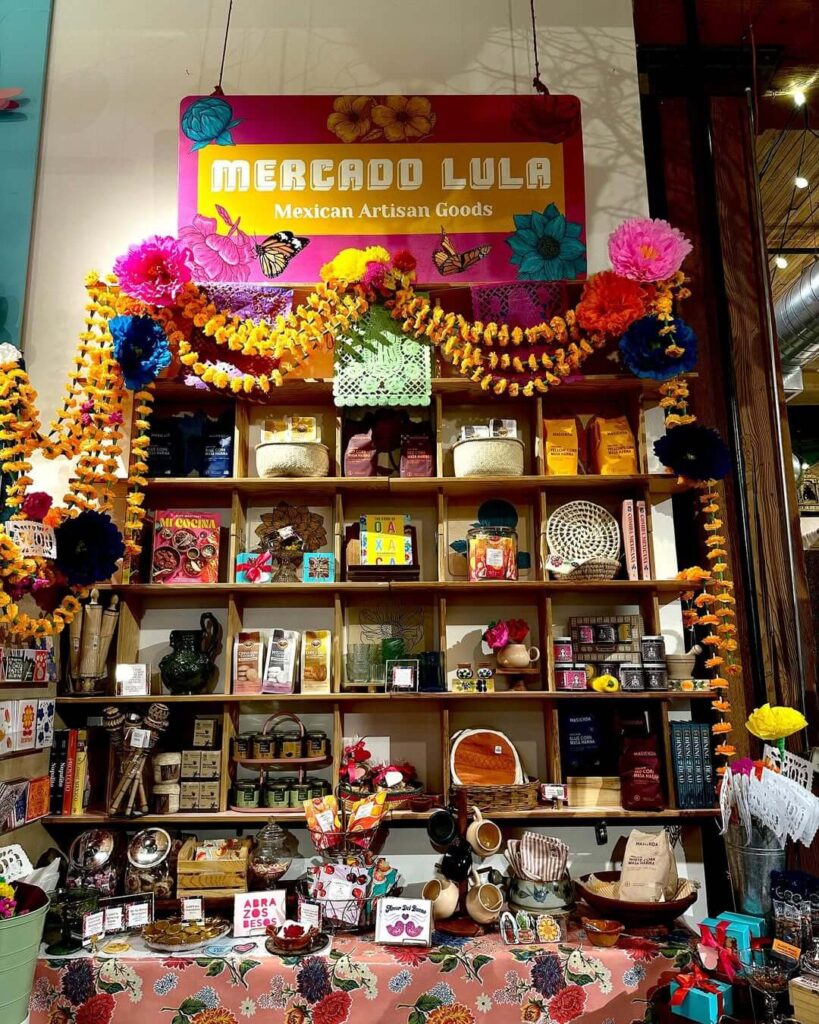
Most stores lose their charm when spending money isn’t part of the plan. Window shopping can feel like a setup. Portland, however, has a handful of spots where looking around is genuinely entertaining, even if you leave empty-handed.
In the Central Eastside District, Cargo stands out as a multi-level maze of objects pulled from across the globe. The mix resists predictability. One corner might hold antique pharmacy signs lettered in Sanskrit, while another focuses entirely on kimonos and textiles. The appeal comes from contrast rather than order.
Just a block away, Asia America leans closer to an exhibition space than a standard shop. Art pieces and furniture sit with enough room to breathe, which makes wandering feel unhurried. Nearby, Memory Den adds a different energy. This vintage mall houses more than 100 vendors and also includes a tattoo studio, a small library, and a bar, turning a simple browse into an extended stop.
Outside the Central Eastside, Mississippi Avenue delivers more chances to look without buying. Paxton Gate is the highlight here, where oddities take center stage. It’s the kind of place where a taxidermy ibex can sit beside shelves of crystals, and the surprise factor does most of the work.
9. Pittock Mansion Grounds and Skyline Views
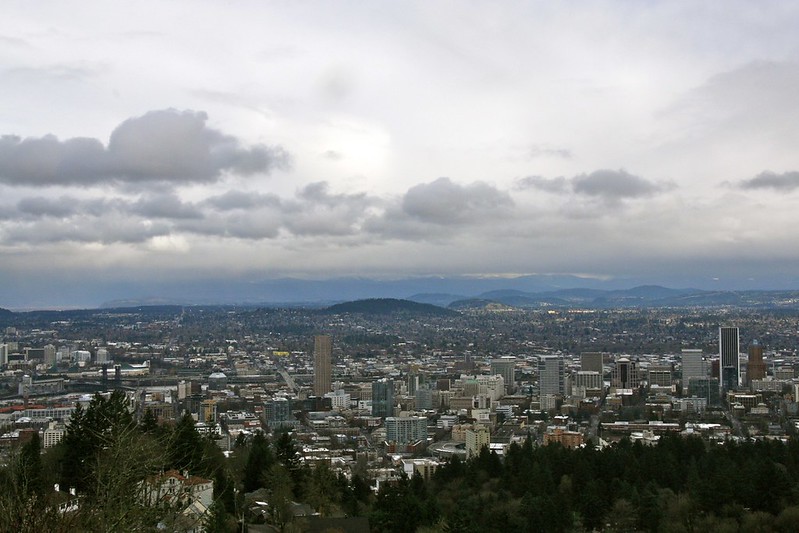
Set high above downtown, Pittock Mansion offers one of the broadest outlooks in Portland. Built in 1914, the manor once belonged to the Pittock family, figures tied to the city’s early wealth. Today, it draws a steady mix of locals and visitors curious about both its history and its position on the hillside.
Touring the interior requires a ticket, but the outdoor grounds remain open to everyone. That’s where the visit pays off. The building itself carries presence, yet the space behind it steals the attention. From the back lawn, the landscape shifts in layers, moving from the tree-covered slopes of Forest Park into the dense grid of downtown.
Clear days add another layer. Mount Hood rises behind the city, anchoring the view and making the contrast feel sharper. Walking the paths around the mansion gives you multiple angles, each one slightly different from the last.
Parking near Pittock Mansion uses meters, averaging about $2.40 per hour. Parking costs nothing if you hike up from Forest Park instead. Avoid leaving valuables—or loose items of any kind—in your car. Bus routes stop within walking distance, and public restrooms are available on-site.
10. Bird Alliance of Oregon Trails and Wildlife Care
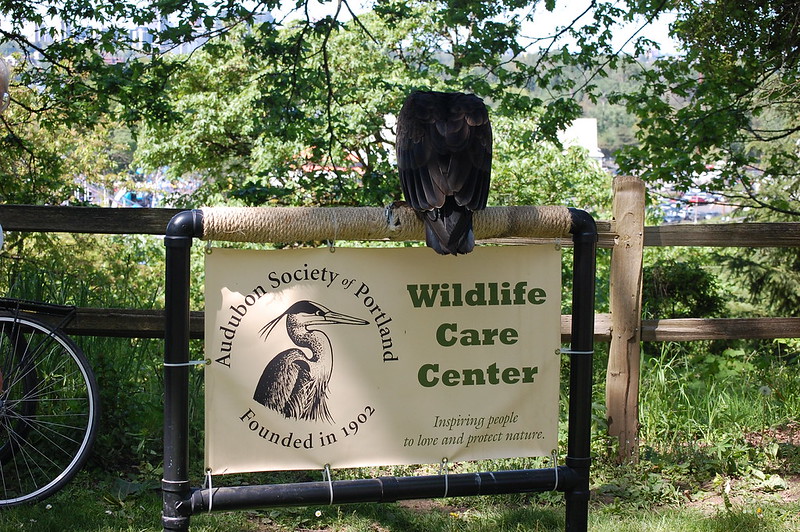
Formerly known as the Portland Audubon Society, the Bird Alliance of Oregon flies a bit under the radar. The 172-acre sanctuary feels removed from city noise, even though it sits close to familiar neighborhoods. Four miles of forest paths wind through the property, making it a solid spot for birdwatching without an entry fee.
The visit begins at the Wildlife Care Center. Here, injured and recovering birds rest in outdoor enclosures while staff work behind the scenes. Inside, a small nature shop and an interpretive space offer context about local species and seasonal patterns, adding depth without overwhelming the experience.
Beyond the main loop, the sanctuary links directly to Forest Park’s larger trail system. From here, longer walks unfold naturally, including the route that climbs toward Pittock Mansion. You can shape the visit to match your energy, whether that means a short loop or a longer uphill stretch.
Dogs are not permitted on the grounds. Public restrooms are available, and parking, facilities, and indoor areas meet ADA standards. Trail conditions vary—paths are unpaved, uneven, and occasionally steep—so sturdy footwear helps.
11. Smith and Bybee Wetlands Natural Area for Birdwatching and Easy Walks
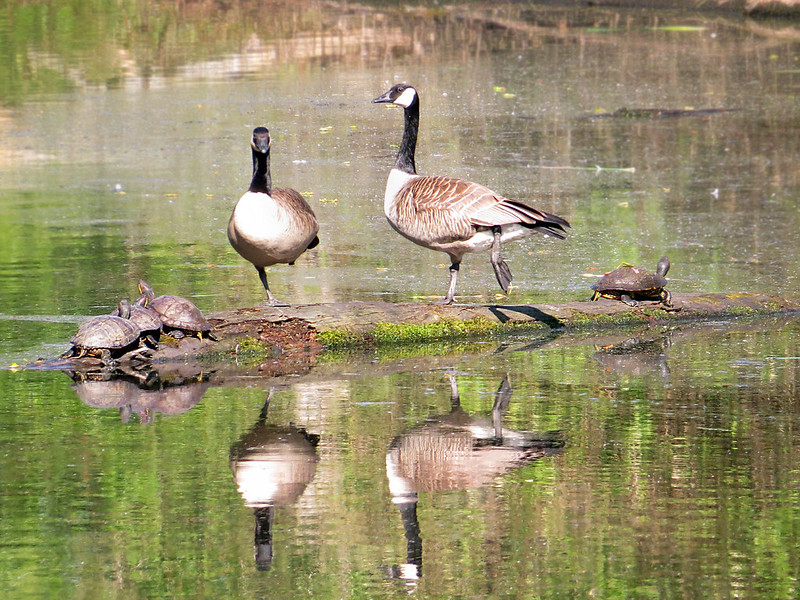
The Bird Alliance of Oregon isn’t the city’s only place to spot birds. Smith and Bybee Wetlands Natural Area flies under the radar and rewards patience. Raptors glide overhead. Songbirds move through reeds. Ducks, herons, egrets, and even white pelicans appear more often than you might expect.
A calm, two-mile loop called the Interlakes Trail links Smith Lake and Bybee Lake. The path stays level and unhurried, making it easy to focus on what’s happening around you rather than your footing. Both lakes include marshy edges that draw wildlife year-round, from turtles and frogs to beavers and river otters.
This area works in every season and doesn’t charge admission, which makes it a strong option when you want fresh air without a plan. From April through June, paddlers can take kayaks or canoes onto the water, adding a different angle to the visit.
Dogs are not permitted at Smith and Bybee. Free parking sits near the trailhead, with restrooms close by. The Interlakes Trail is wide and smooth, and ramps lead out to the wildlife viewing platforms.
12. Portland Art Museum and First-Thursday Free Nights
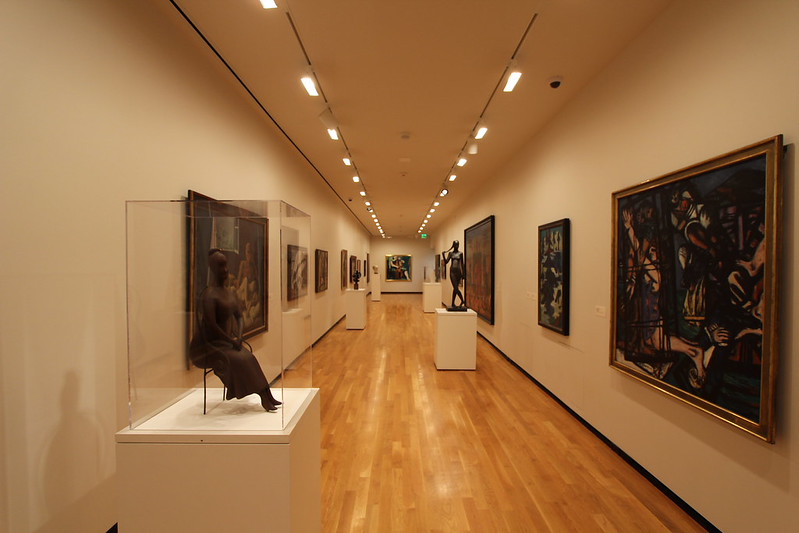
The Portland Art Museum usually charges admission, but the doors open at no cost on the first Thursday of each month from 10 AM to 7 PM. Some visitors never pay at all. Anyone 17 and under gets in free every day, along with veterans and active-duty military members.
Inside, the collection moves across long stretches of time and geography. Ancient objects sit far from modern pieces, and the shift between eras keeps the visit from feeling repetitive. You can move quickly or linger, depending on your mood, without pressure to see everything in one go.
The museum also connects to a second space across town. Its partner venue, Tomorrow Theater in southeast Portland, follows the same first-Thursday free policy. Screenings fill up fast, and tickets are released about a month in advance, so grabbing a seat early helps.
If you prefer a gallery that never charges admission, head to the Jordan Schnitzer Museum of Art at Portland State University. It offers rotating exhibitions and a quieter atmosphere, making it an easy stop between classes, errands, or walks downtown.
13. The Grotto: A Quiet Pause Above the City
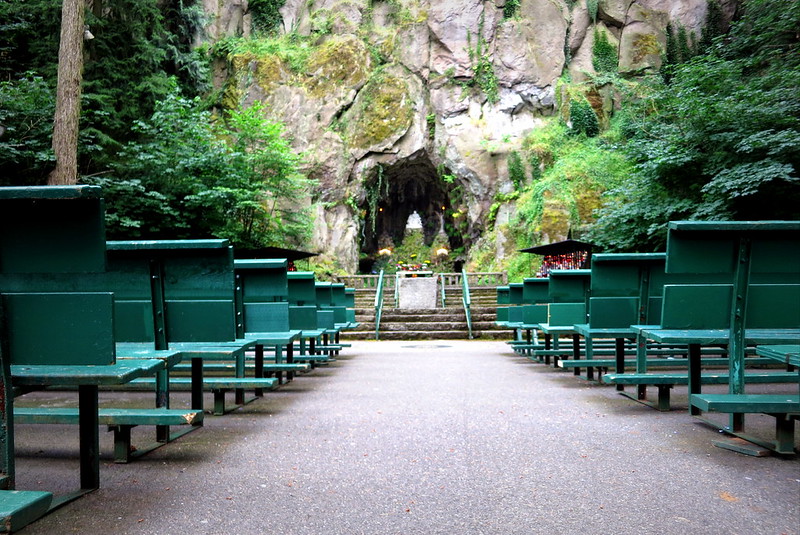
The Grotto in northeast Portland offers a calm break from daily noise and tight schedules. Run by a Catholic ministry, the grounds are open to visitors of any belief, and the atmosphere leans reflective rather than formal. It’s a place where slowing down feels natural.
At the center sits a stone altar set into a sheer basalt cliff. In 1923, workers carved a recess directly into the rock to hold it, creating a space that feels grounded and permanent. The lower level of the site is open to the public at no cost and includes the altar, a small chapel, wooded walking paths, outdoor religious art, and a modest gift shop.
An elevator provides access to the upper level for a fee. From there, visitors reach gardens, shrines, walking paths, and an observatory that looks out over the surrounding area. The shift in elevation adds a different tone, but the lower grounds hold plenty on their own.
Parking at The Grotto does not cost anything. Public restrooms are available on-site. Dogs on leashes are allowed in the outdoor areas of the lower level but are not permitted in the upper gardens.
Address: 8840 NE Skidmore St, Portland, OR 97220
14. Laurelhurst Park
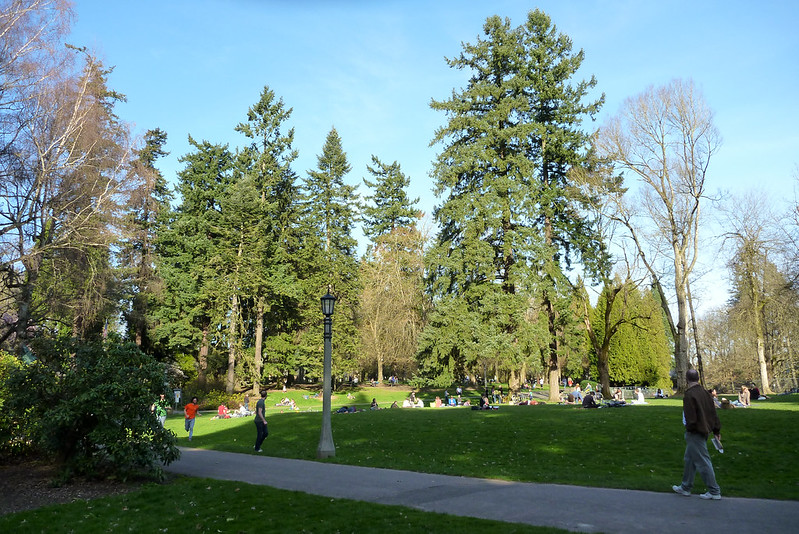
Laurelhurst Park in southeast Portland offers plenty to do without spending anything, no matter the season. It works especially well for spur-of-the-moment plans when the weather cooperates. Tall, established trees cast wide shade over the walking paths, and the landscape shifts throughout the year—from flowering shrubs in warmer months to rich leaf color once fall settles in.
A small pond draws ducks and regular visitors who linger nearby. The south end of the park leans more active, with courts for basketball and volleyball, a soccer field, and a playground that stays busy on weekends. The mix of quiet areas and open space makes the park easy to enjoy at your own pace.
One of Laurelhurst’s best summer features is Comedy in the Park. Free stand-up shows begin at 6:30 PM every Friday starting in June and bring a relaxed crowd to the lawn. Pack snacks, grab a blanket, and settle in for an easy night out that doesn’t ask much beyond showing up.
15. Free Art Events to Mark on Your Portland Calendar

Portland fills its calendar with no-cost art events that spotlight local talent across different neighborhoods. These gatherings shift by season and scale, giving you plenty of options without buying a ticket.
- First Thursday in the Pearl happens on the first Thursday of each month from April through October. Galleries across the Pearl District open their doors for evening hours, often adding casual extras like drinks, light snacks, and time to talk with the artists behind the work.
- Last Thursday on Alberta Street turns the street into a loose, walkable art fair on the final Thursdays of June, July, and August. Booths line the sidewalks, galleries stay open late, and the mood stays relaxed. Both browsing and vending come without a fee, which sets it apart from many summer fairs.
- Portland Open Studios takes place each October and spreads across the city. More than 100 working studios open to the public, offering a look at where art actually gets made and the chance to speak directly with the people doing it.
- The biggest event of the group is Art in the Pearl, held every Labor Day weekend. The fair takes over North Blocks Park and features fine art across many forms, including glass, painting, and metalwork. Even if you’re just walking through, the range makes it worth the time.
16. Zymoglyphic Museum: A Place That Refuses Easy Answers

The Zymoglyphic Museum feels like it slipped into Portland by accident—and stayed. It occupies the upper level of a converted garage tucked along a residential street. The first visit often comes with doubt. You may double-check the address. That uncertainty fades once you’re standing at the door.
Inside, a narrow stairway leads to a dim, unsettling interior that feels closer to a waking dream than a gallery. The exhibits revolve around the imagined Zymoglyphic Region, a fabricated landscape used to examine ideas like progress, collapse, and social drift. Objects feel intentional but unexplained, inviting interpretation rather than instruction.
This is not a place for quick answers. Each room adds another layer of unease or curiosity, depending on how long you linger. The experience works best if you arrive open-minded and leave without trying to resolve everything you’ve seen.
The Zymoglyphic Museum opens on the second and fourth Sundays of each month from 11 AM to 3 PM. Admission costs nothing.
Address: 6225 SE Alder St, Portland, OR
Note: No public restrooms are available.
17. Sellwood: A Neighborhood That Feels Like a Getaway
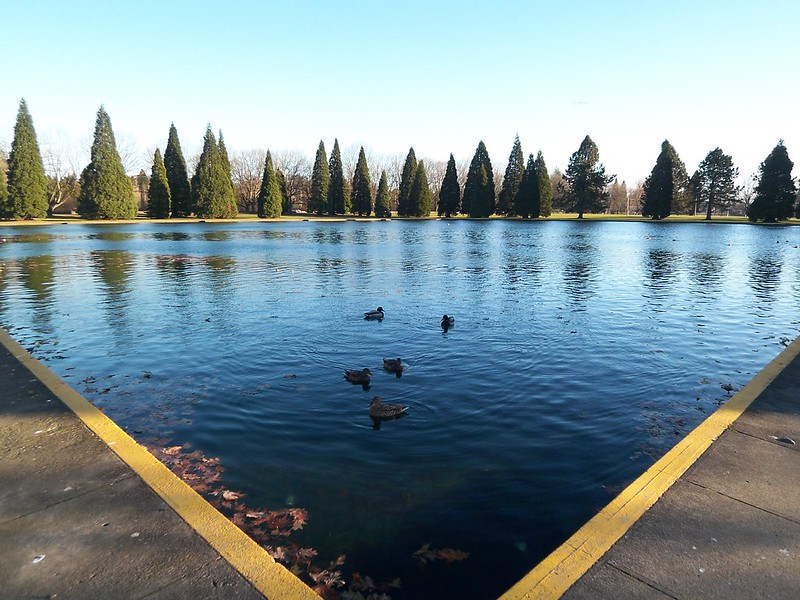
Portland’s Sellwood neighborhood carries the mood of a small town, even though it sits well within city limits. For anyone living elsewhere in Portland, a visit can feel like a short escape without packing a bag or checking traffic reports. The area offers plenty to do, and much of it doesn’t cost anything.
On clear days, the parks do most of the work. Oaks Bottom Wildlife Refuge features an easy loop trail that circles wetlands where birds, frogs, and turtles regularly appear. A few blocks away, Sellwood Riverfront Park provides direct access to the water, which feels especially welcome during warmer stretches.
Movement ties everything together. The Springwater Corridor runs for 21 miles and links Sellwood to places as far apart as downtown Portland and Boring, Oregon. Whether you walk, bike, or just watch others pass through, the trail adds a steady sense of motion.
When rain shows up, Sellwood still holds interest. Vintage shops line the streets, and the Portland Puppet Museum offers something offbeat indoors. If spending a little is an option, the Sellwood food carts make an easy stop for a filling lunch without much damage to your budget.