
Waterproof hiking boots are a reliable choice for muddy trails, wet-weather hikes, and multi-day backpacking adventures where keeping your feet dry matters most. While factors like breathability and weight still play an important role in overall comfort, waterproof protection becomes especially valuable when hiking through rain, snow, shallow streams, or consistently damp terrain. After extensive testing across challenging conditions — from glacier routes in Patagonia to rainy shoulder-season trails in the Pacific Northwest — the La Sportiva TX Hike Mid Leather GTX stood out as one of the best waterproof hiking boots available for both men and women thanks to its strong balance of comfort, traction, support, and weather protection.
This guide highlights top waterproof hiking boots along with detailed comparisons, buying considerations, and testing insights to help hikers find the best option for their adventures. For those wanting even more choices, broader hiking boot roundups also include lightweight non-waterproof models designed for dry climates and fast-moving trail use.
Our Team’s Hiking Boot Picks
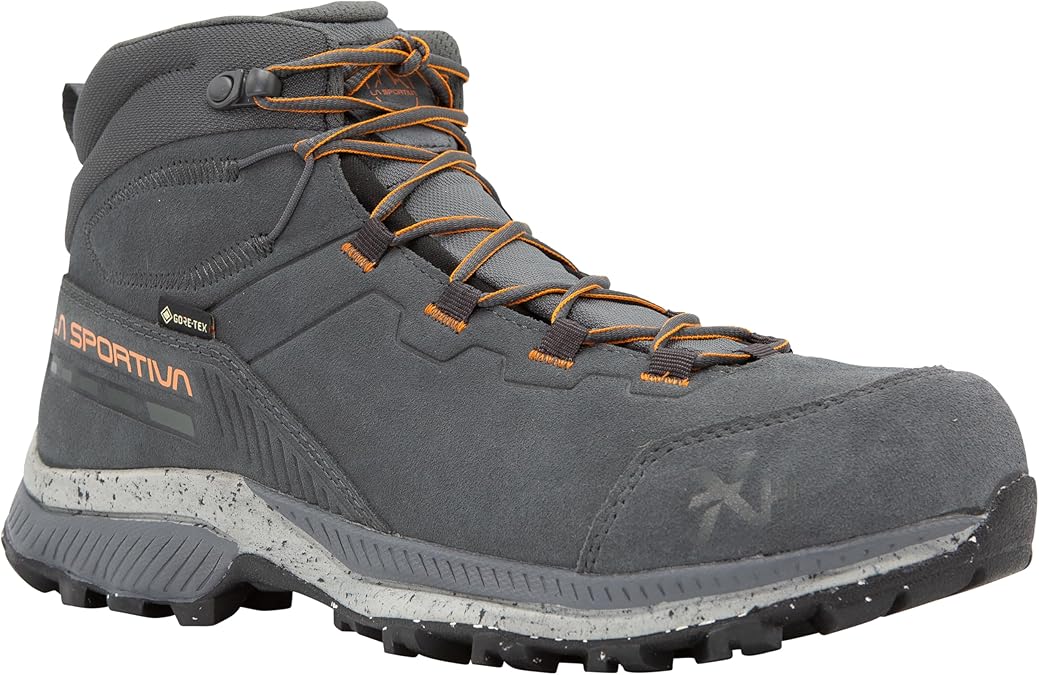
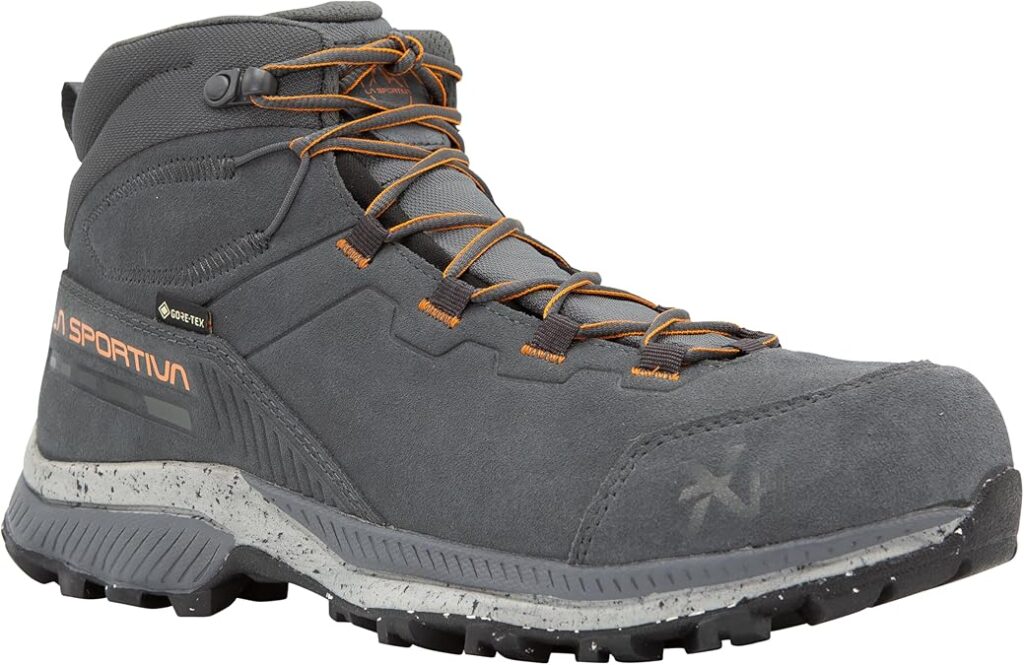
1. Men’s La Sportiva TX Hike Mid Leather GTX & Women’s La Sportiva TX Hike Mid Leather GTX
Specifications
- Category: Light/Midweight
- Upper: Leather
- Waterproofing: Gore-Tex
The La Sportiva TX Hike Mid Leather GTX blends the agility of an approach shoe with the protection and stability of a lightweight hiking boot. Designed for hikers who move between maintained trails, rocky scrambles, and technical terrain, this model stands out for its confident grip, lightweight feel, and excellent all-around versatility. It feels nimble enough for boulder hopping while still providing more ankle coverage and trail protection than most lightweight hikers.
One of the biggest strengths of the TX Hike is how comfortable it feels during long days outdoors. The leather upper is soft and flexible right out of the box, while the Gore-Tex lining keeps feet dry through muddy trails, slushy snowfields, and shallow stream crossings. The outsole grips exceptionally well on rock and loose terrain, making this boot a strong choice for scrambling routes and mountain hikes where traction matters. The durable leather construction also holds up surprisingly well against rough use, including occasional crampon compatibility for light alpine travel.
The taller collar and secure lacing system add stability compared to many lightweight hiking shoes, but this still leans more toward agility than heavy-load support. Backpackers carrying large packs may find the support lacking on extended trips, especially as the upper softens over time. Hikers with narrow feet should also pay attention to fit, as this model has a roomier shape than many other La Sportiva designs.
For hikers who want one boot that can comfortably handle day hikes, scrambling, alpine terrain, and fast-moving adventures, the TX Hike Mid Leather GTX is one of the most versatile lightweight waterproof boots available right now.
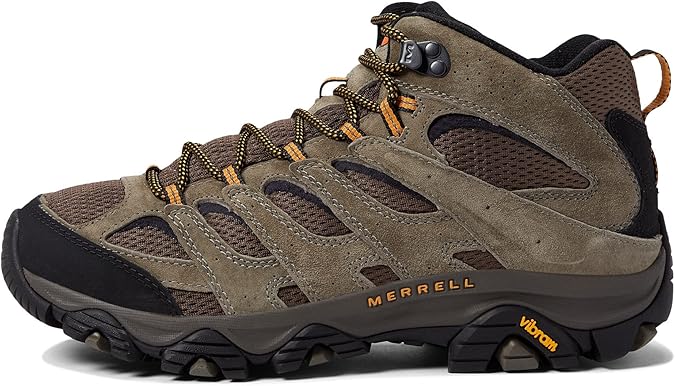
2. Men’s Merrell Moab 3 Mid WP & Women’s Merrell Moab 3 Mid WP
Specifications
- Category: Light/Midweight
- Upper: Leather/Mesh
- Waterproofing: Merrell DRY
The Merrell Moab 3 Mid WP continues to be one of the most dependable and affordable waterproof hiking boots for casual hikers and weekend adventurers. Even with its budget-friendly price, this boot delivers impressive comfort, durability, and reliable trail performance that easily competes with more expensive options. Whether you’re tackling local trails, wet forest paths, or light backpacking trips, the Moab 3 remains a trusted favorite for all-around hiking use.
One of the biggest highlights is the instant comfort right out of the box. The generous cushioning, soft interior lining, and roomy toe box create a relaxed fit that works well for long hikes and wider feet. The leather and mesh upper balances protection with breathability, helping the boot feel supportive without becoming overly hot on warmer hikes. During wet trail testing along rainy coastal terrain, the Merrell DRY waterproof membrane performed surprisingly well, keeping feet dry through puddles, mud, and damp conditions without needing a premium Gore-Tex liner.
Durability is another area where the Moab 3 consistently performs well. Merrell updated the latest version with recycled materials in the laces and interior mesh, but the boot still feels rugged enough for regular trail use. The outsole grips confidently on dirt, loose rock, and uneven terrain, while the sturdy midsole helps reduce fatigue during long days outdoors.
That said, the Moab 3 is better suited for day hikes and lighter backpacking rather than demanding mountain trips with heavy loads. The lower ankle collar and simpler support structure do not provide the locked-in stability of more technical backpacking boots. It also carries a slightly bulkier feel compared to newer athletic-style hikers trending toward lightweight and minimalist designs. Still, most hikers will appreciate the balance of comfort, protection, and value that the Moab 3 offers.
For hikers looking for a comfortable, dependable, and affordable waterproof hiking boot that performs well across a wide range of trails, the Merrell Moab 3 Mid WP remains one of the strongest options in its category.
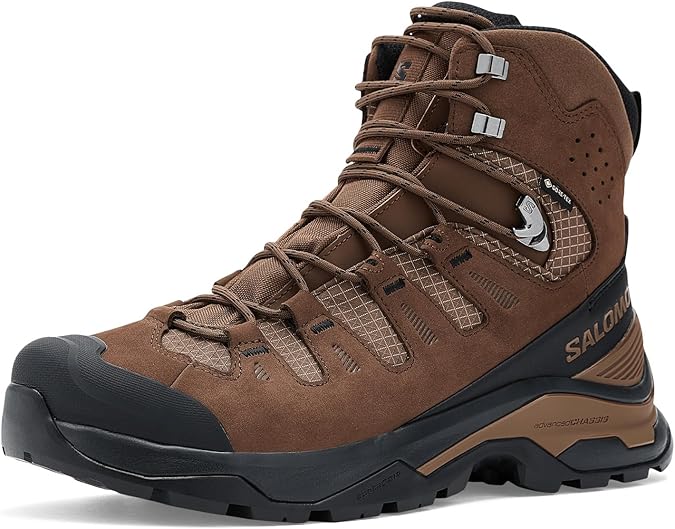
3. Men’s Salomon Quest 4 GTX & Women’s Salomon Quest 4 GTX
Specifications
- Category: Mid/Heavyweight
- Upper: Leather/Textile
- Waterproofing: Gore-Tex
The Salomon Quest 4 GTX is built for hikers and backpackers who need maximum support, stability, and protection on demanding terrain. Designed with long-distance backpacking and technical trails in mind, this boot stands out for its rugged construction and confidence-inspiring support under heavy loads. From rocky mountain routes to off-trail adventures and wet stream crossings, the Quest 4 feels ready for serious backcountry use.
One of the strongest features of the Quest 4 is its highly supportive design. The tall ankle collar, secure lacing system, and generous ankle padding create a locked-in fit that helps reduce fatigue and improve stability when carrying a heavy pack. The cushioned interior and shock-absorbing midsole also make long days on rough trails feel more manageable, even when the terrain becomes uneven or unpredictable.
Traction is another major strength. The aggressive Contragrip outsole grips confidently on loose dirt, wet rocks, muddy trails, and steep descents. During stream crossings and off-trail hikes, the Gore-Tex membrane and water-resistant collar helped keep moisture out while maintaining solid comfort in wet conditions. Despite its rugged construction, the Quest 4 still offers enough forefoot flexibility to feel reasonably comfortable on smoother sections of trail.
Durability has also impressed many hikers. While some users have mentioned concerns about long-term sole durability, the Quest 4 has continued to perform well during demanding testing and rough trail conditions. The leather and textile upper feels sturdy and protective, making this a dependable option for backpackers who spend a lot of time on difficult terrain.
That said, the Quest 4 can feel excessive for casual hikers or shorter day hikes. Its heavier build and rugged support system are best appreciated when carrying heavier loads or hiking technical trails for extended periods. Hikers sticking mostly to maintained paths may prefer lighter and more agile alternatives that save both weight and money.
For backpackers and serious hikers looking for a durable, supportive, and highly capable waterproof hiking boot, the Salomon Quest 4 GTX remains one of the strongest choices available today.
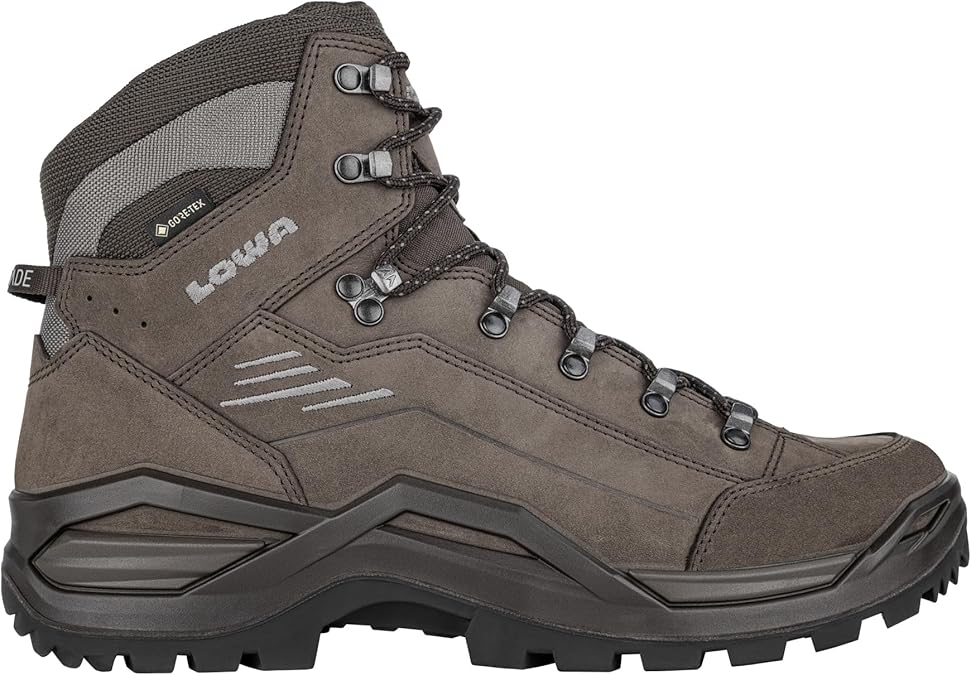
4. Men’s Lowa Renegade Evo GTX Mid & Women’s Lowa Renegade Evo GTX Mid
Specifications
- Category: Midweight
- Upper: Nubuck Leather
- Waterproofing: Gore-Tex
The Lowa Renegade Evo GTX Mid is a premium leather hiking boot designed for hikers and backpackers who need dependable support, long-lasting durability, and all-day comfort on rugged trails. Combining a traditional leather construction with a more modern and agile feel, the Renegade Evo stands out as one of the strongest options for carrying heavier loads across challenging terrain.
Compared to bulkier backpacking boots, the Renegade Evo feels noticeably lighter and more nimble underfoot while still delivering excellent stability. The supportive midsole, secure ankle design, and well-cushioned interior create a balanced ride that works well for everything from demanding day hikes to multi-day backcountry treks. The boot feels stable without becoming overly stiff, making it more comfortable on maintained trails and long-distance hikes than many heavier-duty alternatives.
The nubuck leather upper adds both durability and a classic hiking boot appearance. During extended backpacking use, the leather construction held up impressively well against abrasion, rough terrain, and repeated trail abuse. Despite being fully waterproof with a Gore-Tex lining, the thinner leather build still allows better breathability than many traditional leather boots, helping improve comfort during warmer summer hikes.
Traction is another strong point. The outsole grips confidently on loose dirt, rocky trails, mud, and uneven surfaces, while the cushioning underfoot helps reduce fatigue over long miles. Whether hiking through alpine terrain or carrying a loaded backpack deep into the backcountry, the Renegade Evo maintains a stable and secure feel throughout the day.
The biggest drawback is the premium price. Casual hikers or those focused on ultralight gear may find the Renegade more boot than they actually need. The lacing system is also fairly straightforward compared to more advanced locking systems found on some competitors, which may limit heel lockdown slightly for certain foot shapes.
Still, for hikers who value durability, support, comfort, and reliable waterproof performance, the Lowa Renegade Evo GTX Mid remains one of the best all-around leather hiking boots available.
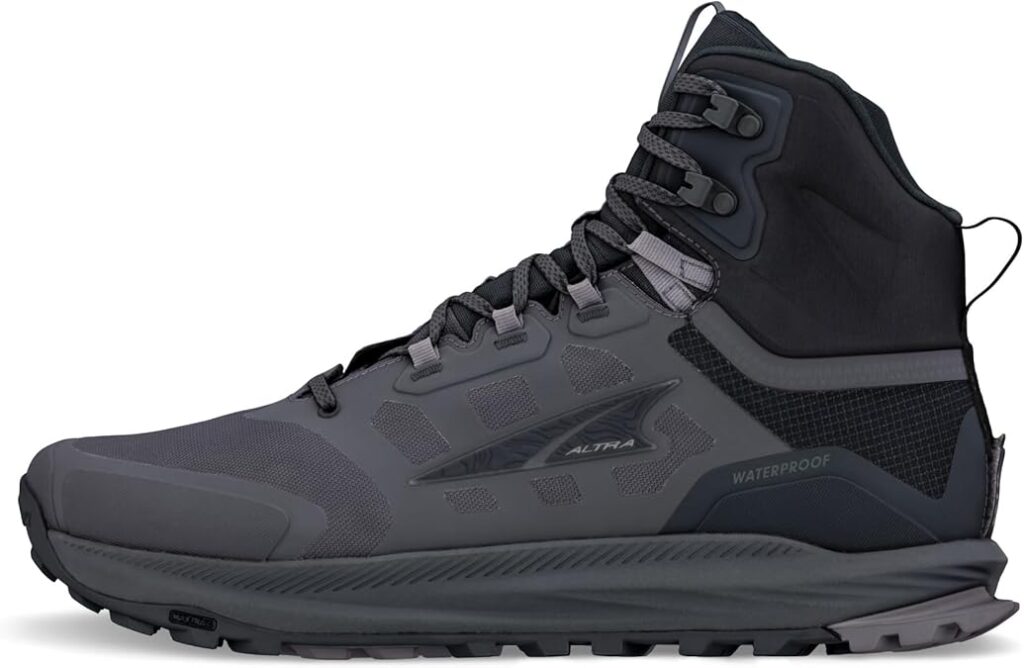
5. Men’s Altra Lone Peak 9 Waterproof Mid & Women’s Altra Lone Peak 9 Waterproof Mid
Specifications
- Category: Lightweight
- Upper: Recycled Mesh
- Waterproofing: Cosmo Lining
The Altra Lone Peak 9 Waterproof Mid is a lightweight hiking boot built for hikers who prioritize comfort, natural foot movement, and trail-running agility. Known for its roomy toe box and zero-drop platform, the Lone Peak has become especially popular among fastpackers, thru-hikers, and anyone looking for a more natural feel on the trail.
The standout feature is the spacious forefoot design, which allows your toes to spread naturally while hiking. Combined with the zero-drop midsole, where the heel and toe sit at the same height, the boot promotes a more balanced stride and encourages a natural walking motion. While the zero-drop setup can take some adjustment for hikers used to traditional hiking boots, many users find it more comfortable and less fatiguing over time.
On the trail, the Lone Peak 9 Waterproof Mid feels much more like a trail runner than a traditional hiking boot. The lightweight construction and flexible upper make it ideal for quick day hikes, fast-moving adventures, and well-maintained trails. The moderate cushioning handles rocky terrain surprisingly well while still maintaining a connected feel with the ground beneath your feet.
The integrated waterproof bootie provides dependable protection from wet grass, muddy paths, shallow puddles, and light rain. It performs especially well during shoulder-season hikes and damp weather conditions without adding excessive weight to the design. The breathable recycled mesh upper also helps the boot remain relatively comfortable during longer hikes.
That said, the Lone Peak is not designed for heavy backpacking or highly technical terrain. The flexible collar and softer underfoot feel do not provide the same ankle support or stability as traditional backpacking boots. Traction on wet rocks and slippery surfaces can also be inconsistent, especially in rainy conditions. Hikers transitioning from highly supportive boots may want to ease into the zero-drop platform gradually to allow their feet and calves to adjust.
Style can also be somewhat polarizing due to the noticeably wide toe box, but many hikers quickly grow to appreciate the comfort-focused design. For lightweight hiking, fastpacking, and everyday trail use, the Lone Peak 9 Waterproof Mid offers a refreshing alternative to bulky hiking boots.
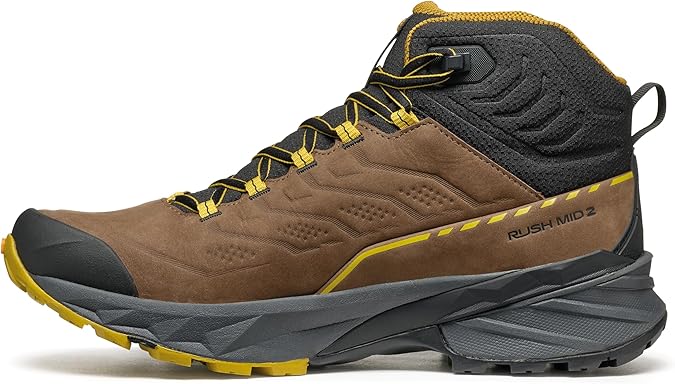
6. Men’s Scarpa Rush 2 Pro Mid GTX & Women’s Scarpa Rush 2 Pro Mid GTX
Specifications
- Category: Lightweight
- Upper: Nubuck Leather
- Waterproofing: Gore-Tex
The Scarpa Rush 2 Pro Mid GTX is a lightweight hiking boot designed for hikers who want the speed and agility of a trail runner combined with the protection and stability of a hiking boot. Built for covering long distances efficiently, the Rush 2 Pro stands out with its comfortable fit, supportive platform, and versatile trail performance.
Despite its lightweight construction, the Rush 2 Pro feels surprisingly stable on uneven and technical terrain. The TPU support frame, moderately stiff midsole, and ankle-height collar work together to provide more support than many lightweight hiking boots in the same category. Whether moving through rocky trails, steep descents, or rough backcountry terrain, the boot maintains a balanced and secure feel without becoming overly rigid or heavy.
Comfort is another major strength. The boot feels agile and responsive underfoot, making it ideal for hikers who prefer a quicker pace on the trail. The nubuck leather upper adds durability while mesh panels improve airflow and help reduce overheating during warmer hikes. Combined with the Gore-Tex membrane, the Rush 2 Pro handles muddy trails, wet grass, shallow stream crossings, and changing weather conditions very well while still remaining reasonably breathable.
Traction is dependable thanks to Scarpa’s grippy outsole, which performs confidently on dirt, rock, loose terrain, and damp surfaces. The lightweight build also makes the boot feel nimble during scrambling sections and fast-moving hikes where heavier backpacking boots can feel cumbersome.
While the Rush 2 Pro offers better support than many lightweight hikers, it still cannot fully match the ankle stability and load-carrying ability of heavier backpacking boots. The lower collar limits ankle reinforcement on difficult terrain with heavy packs, making it better suited for day hikes, fastpacking, and lighter overnight trips rather than extended heavy-load backpacking adventures.
Compared to bulkier alternatives, the Scarpa Rush 2 Pro Mid GTX delivers an excellent balance of comfort, agility, support, and waterproof performance. For hikers who want a lightweight waterproof boot that feels quick and capable across a wide variety of trails, it remains one of the strongest options in the category.
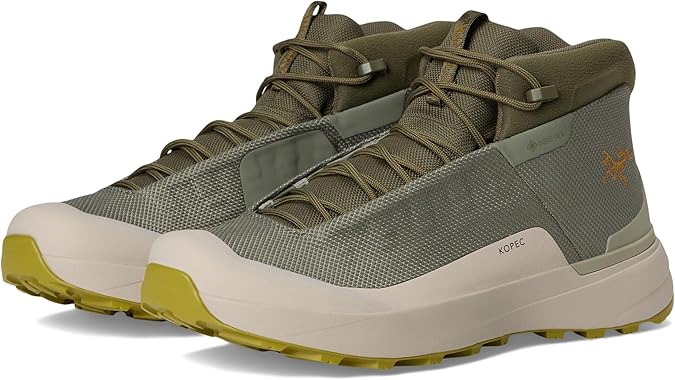
7. Men’s Arc’teryx Kopec Mid GTX & Women’s Arc’teryx Kopec Mid GTX
Specifications
- Category: Lightweight
- Upper: Synthetic
- Waterproofing: Gore-Tex
The Arc’teryx Kopec Mid GTX is a lightweight hiking boot that blends modern trail performance with a clean, everyday style. Designed for hikers who want one boot capable of handling both outdoor adventures and casual daily wear, the Kopec stands out with its sleek appearance, lightweight comfort, and versatile all-around feel.
On the trail, the Kopec feels agile and comfortable straight out of the box. The lightweight synthetic construction allows natural movement without the stiff break-in period often associated with traditional hiking boots. During multi-day hikes and rough terrain testing, the boot remained comfortable over long miles without creating pressure points or hot spots, making it a great option for day hikes, fast-moving adventures, and lighter backpacking trips.
The Cordura upper adds impressive durability for such a lightweight design. Combined with the Gore-Tex membrane, the Kopec handles wet grass, shallow stream crossings, damp trails, and changing weather conditions with confidence. The outsole also performs well on rock, dirt, and mixed terrain, providing a secure and stable feel during scrambles and uneven trail sections.
One of the biggest advantages of the Kopec Mid GTX is its balanced personality. It feels sporty and lightweight on the trail while maintaining a casual appearance that transitions naturally into town, travel, or everyday use. Hikers who prefer minimalist and modern-looking outdoor footwear will likely appreciate the streamlined design.
However, the lightweight construction comes with some trade-offs. The ankle collar is fairly low and flexible, which limits support for heavier backpacks or more demanding backpacking trips. The single ankle eyelet also does not provide the same locked-in support found in more rugged hiking boots. While the outsole grips well overall, deeper lugs would perform better in thick mud and loose terrain.
Another minor drawback is that lighter color options tend to collect stains quickly, especially around the toe bumper and midsole. Hikers who spend a lot of time off-trail may prefer darker colorways for easier maintenance.
For hikers looking for a stylish, lightweight, and comfortable waterproof hiking boot that performs well both on the trail and around town, the Arc’teryx Kopec Mid GTX is an excellent modern crossover option.
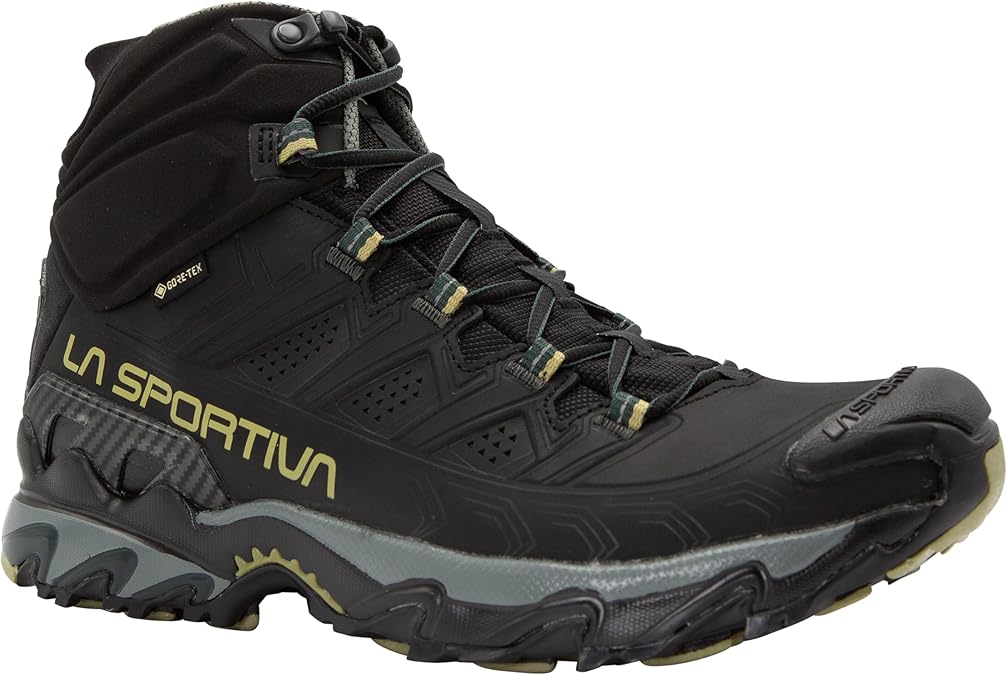
8. Men’s La Sportiva Ultra Raptor II Mid Leather GTX & Women’s La Sportiva Ultra Raptor II Mid Leather GTX
Specifications
- Category: Lightweight
- Upper: Leather
- Waterproofing: Gore-Tex
The La Sportiva Ultra Raptor II Mid Leather GTX is a lightweight mountain-focused hiking boot built for hikers who move fast through technical terrain. Combining the agility of a trail runner with the protection and support of a hiking boot, the Ultra Raptor II stands out as one of the strongest options for above-treeline adventures, rocky routes, and demanding alpine hikes.
One of the biggest strengths of this boot is how efficiently it handles rough terrain without feeling bulky. The lightweight construction and rockered sole help maintain a smooth, fast-moving stride, while the supportive mid-height collar and dual-eyelet lacing system lock the foot securely into place. This combination creates excellent stability on uneven trails, loose rock, and steep mountain terrain without sacrificing comfort or mobility.
Protection is another area where the Ultra Raptor II excels. The reinforced heel structure, aggressive outsole, and durable rubber toe bumper shield your feet from sharp rocks, roots, and trail debris. The supple collar wraps comfortably around the ankle and helps block dirt, gravel, and small debris from entering the boot, giving it an almost gaiter-like feel during technical hikes.
Traction is particularly impressive on rocky and mixed terrain. The outsole grips confidently during scrambles, steep descents, and loose alpine surfaces, making the boot especially well-suited for hikers spending time above treeline or navigating rugged mountain routes. The Gore-Tex membrane also provides dependable waterproof protection for muddy trails, stream crossings, wet conditions, and lingering snow patches.
That said, the Ultra Raptor II can feel more aggressive and protective than many casual hikers actually need. For maintained trails and easy day hikes, the rugged build, stiff outsole, and technical focus may feel excessive compared to more relaxed lightweight hikers. The fit also feels more performance-oriented and slightly narrower than roomier alternatives designed for casual comfort.
For mountain hikers, fastpackers, and adventurers tackling technical terrain, the La Sportiva Ultra Raptor II Mid Leather GTX offers an outstanding mix of lightweight agility, support, traction, and trail protection.
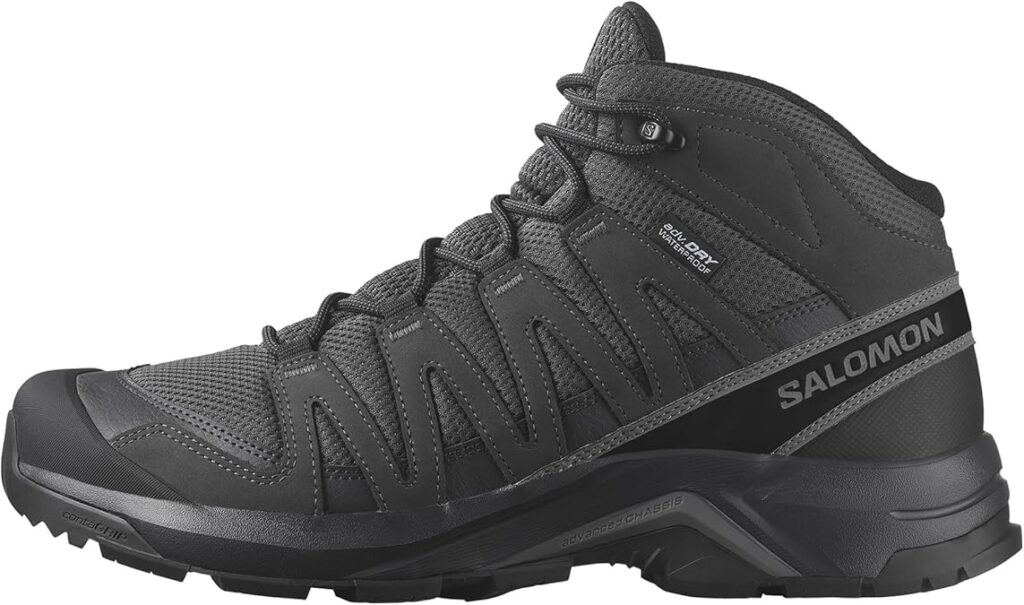
9. Men’s Salomon X Ultra 5 Mid Gore-Tex & Women’s Salomon X Ultra 5 Mid Gore-Tex
Specifications
- Category: Light/Midweight
- Upper: Leather/Textile
- Waterproofing: Gore-Tex
The Salomon X Ultra 5 Mid Gore-Tex continues the reputation of the X Ultra line as one of the most dependable and versatile hiking boots for day hikes and lightweight backpacking. Combining lightweight agility with dependable traction and trail-ready support, this boot performs well across a wide variety of hiking conditions without feeling overly bulky or stiff.
One of the strongest features of the X Ultra 5 is its balanced design. It feels nimble and quick underfoot like a hiking shoe, but the mid-height collar, reinforced toe protection, and secure lacing system add enough support and protection for rougher terrain and longer hikes. The winged lacing system helps create a snug and secure fit, improving stability while moving through rocky trails, steep descents, and uneven ground.
Traction is another standout feature. Salomon’s Contragrip outsole performs exceptionally well across mixed terrain, gripping confidently on wet rocks, muddy trails, loose dirt, slippery roots, and uneven surfaces. Whether crossing streams or navigating damp mountain trails, the outsole provides dependable confidence and stability. The Gore-Tex membrane also performs very well in wet weather, helping keep feet dry during muddy hikes, rain, and shallow creek crossings.
The lightweight construction makes the X Ultra 5 especially appealing for hikers who prioritize speed, comfort, and efficiency on the trail. It works particularly well for day hikes, fast-moving adventures, and lightweight overnight trips where heavier backpacking boots may feel excessive.
However, the lighter design does come with some trade-offs. The boot lacks the stiff support and underfoot protection found in more rugged backpacking models like the Salomon Quest 4 GTX. Hikers carrying heavier loads over rough terrain may eventually notice foot fatigue and reduced ankle stability during long trips. Cushioning underfoot is also more moderate, which can lead to soreness on especially rocky terrain.
Some users have also experienced fit issues, particularly with the women’s version, which may require sizing adjustments for the best comfort. Despite these minor drawbacks, the latest version improves on previous generations with better durability in both the upper and outsole construction.
For hikers wanting a lightweight, grippy, and versatile waterproof hiking boot that handles everything from local trails to light backpacking trips, the Salomon X Ultra 5 Mid Gore-Tex remains one of the best all-around options in its class.
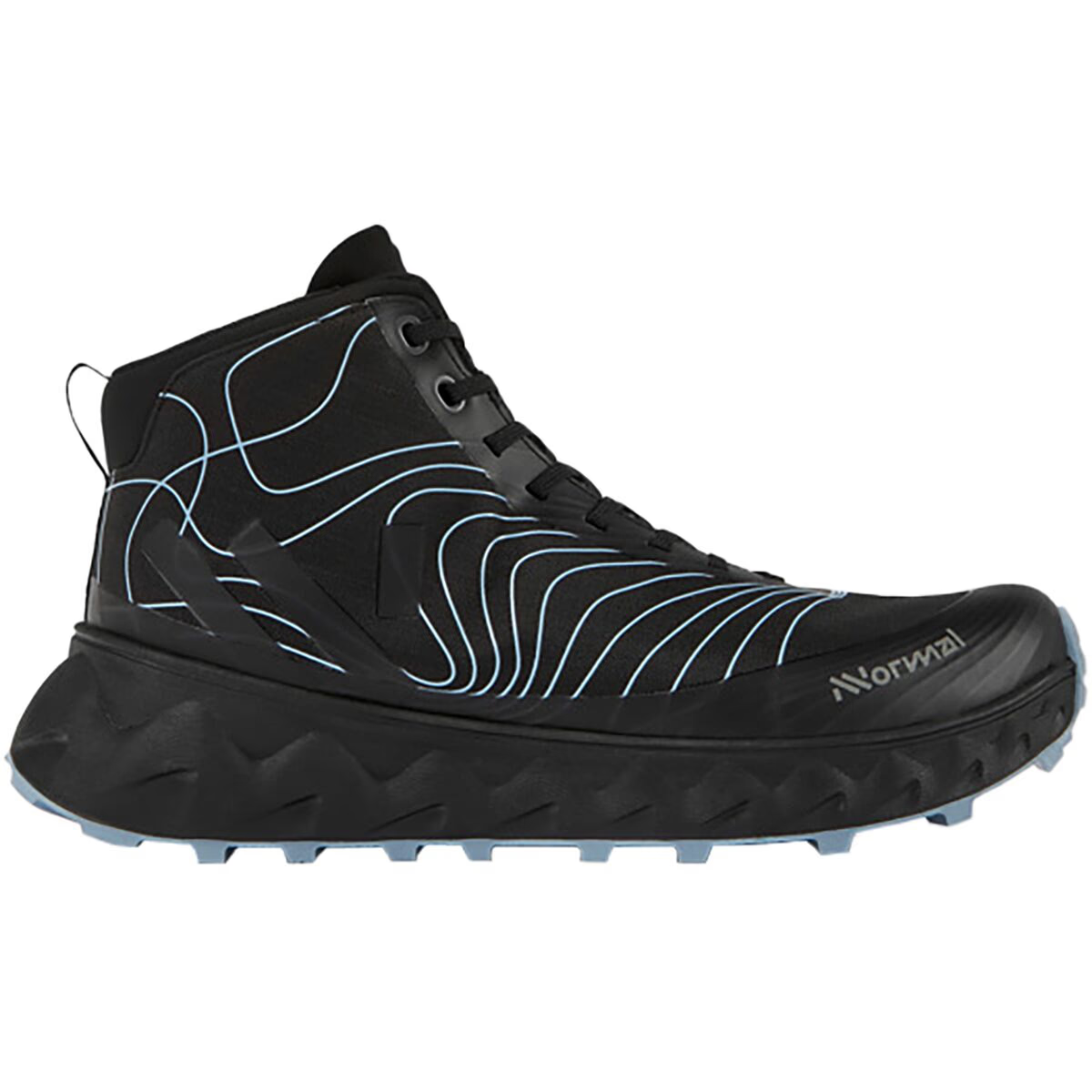
10. NNormal Tomir Waterproof Boot
Specifications
- Category: Lightweight
- Upper: Synthetic
- Waterproofing: Sympatex
The NNormal Tomir Waterproof Boot is one of the lightest hiking boots currently available, blending trail-runner agility with the stability and protection of a hiking boot. Created in partnership with legendary endurance athlete Kilian Jornet, the Tomir is designed for hikers and fastpackers who want to move quickly across technical terrain without sacrificing too much support.
At just over one pound per pair, the Tomir feels exceptionally light and nimble on the trail. Despite the minimalist weight, the boot provides a surprising amount of stability through the midsole and ankle structure, making it far more capable than many lightweight trail-inspired hikers. During technical multi-day treks through rugged backcountry terrain, the Tomir handled steep trails, rocky surfaces, and uneven ground with impressive confidence.
The lightweight synthetic upper helps the boot maintain a flexible and responsive feel while still offering decent protection against trail debris and rough terrain. The Sympatex waterproof membrane also performs very well in wet conditions, handling rain, muddy trails, wet grass, and stream crossings similarly to many Gore-Tex-equipped competitors.
One of the standout strengths of the Tomir is how naturally it moves on the trail. The boot feels quick, agile, and efficient during long-distance hikes, making it especially appealing for fast-moving hikers, thru-hikers, and endurance-focused adventures where saving weight matters.
However, breathability is not a strong point. Like many waterproof hiking boots, the Tomir traps heat, but testers found it warmer and sweatier than most lightweight competitors, especially on hot and exposed trails. Cushioning underfoot is also slightly firmer and thinner than some hikers may prefer for rocky terrain or extremely long mileage days.
Fit is another thing to consider. Because the Tomir uses a unisex design, it may not fit every foot shape perfectly. Some users, especially women, may notice the sizing runs slightly large compared to traditional hiking boots.
Still, for hikers who want an ultralight waterproof boot that combines trail-runner speed with surprising stability and technical trail capability, the NNormal Tomir Waterproof Boot is an exciting and highly capable option.
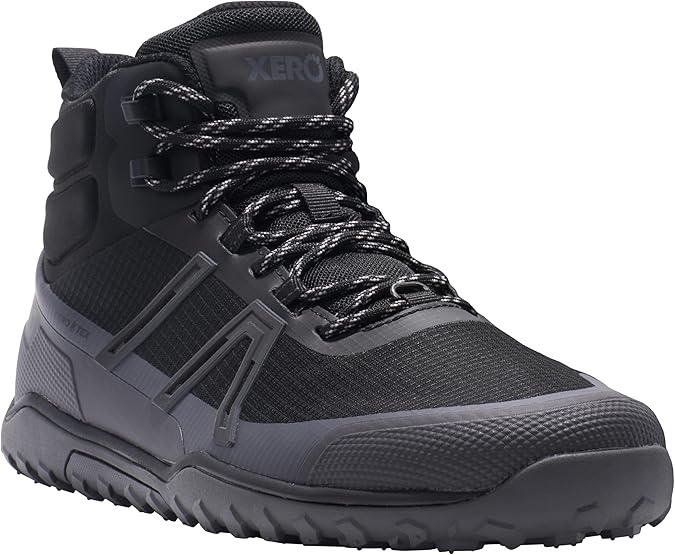
11. Xero Scrambler Trail Mid WP
Specifications
- Category: Lightweight
- Upper: Textile
- Waterproofing: XeroTex
The Xero Scrambler Trail Mid WP is built for hikers who want the closest thing possible to a barefoot hiking experience while still getting some trail protection and waterproof coverage. Unlike traditional hiking boots that focus on thick cushioning and rigid support, the Scrambler Trail Mid keeps things flexible, lightweight, and highly natural-feeling underfoot.
This boot features a zero-drop platform and a very thin EVA midsole, allowing your feet to move naturally while maintaining close contact with the ground. Every root, stone, and contour of the trail can be felt beneath your feet, which many barefoot enthusiasts prefer for improved balance, posture, and natural foot movement.
The lightweight textile upper feels soft and flexible from the start, almost more like a sock than a traditional hiking boot. Despite the minimalist build, the boot still offers a decent amount of ankle security thanks to the mid-height collar and dual lace hooks that help lock the foot into place. The gusseted tongue is another useful feature, helping block debris and adding extra protection during shallow creek crossings and muddy hikes.
During testing on early-season backpacking trips in wet conditions, the XeroTex waterproof membrane performed surprisingly well, keeping feet dry through damp trails and stream crossings. The outsole also showed good durability and traction for a barefoot-style design, handling dirt, rocks, and uneven surfaces confidently.
That said, the Scrambler Trail Mid WP is definitely not designed for everyone. Hikers used to thick cushioning, rockered midsoles, and heavy ankle support may find these boots uncomfortable or fatiguing at first. The minimal cushioning means your feet absorb much more impact from rocky terrain, and the flexible upper does not provide enough support for carrying heavy backpacking loads unless your feet and ankles are already conditioned for barefoot footwear.
The flat profile can also feel less efficient on long climbs or extended mileage days compared to more aggressive hiking boots with supportive midsoles and rocker geometry.
Still, for hikers interested in barefoot hiking footwear, the Xero Scrambler Trail Mid WP does a better job than most at balancing natural movement with enough protection and waterproof performance for real trail use.
12. Forsake Patch Mid II WP
Specifications
- Weight: 18 oz.
- Materials: Leather, textile, and rubber
- Women’s Sizing: 5–11
The Forsake Patch Mid II WP stands out as one of the most balanced waterproof hiking boots for women, blending rugged durability with all-day comfort in a stylish, sneaker-inspired design. During testing across multiple Pacific Northwest trails — from paved paths to demanding mountain hikes in the Alpine Lakes Wilderness — these boots consistently delivered dependable performance in wet and uneven conditions.
Comfort was one of the biggest highlights. Right out of the box, the boots provided a snug and secure fit without causing hot spots, rubbing, or blisters when paired with quality hiking socks. The roomy toe box added extra comfort during longer hikes, allowing toes enough space without feeling sloppy or oversized. Hikers who typically size up in hiking boots may still prefer going up half a size for additional toe room, though the standard fit remained comfortable during testing.
The support level is impressive considering the casual sneaker-like appearance. While the arch support is fairly moderate, the thick cushioned sole, padded tongue, and stable lacing system create a supportive and secure feel on the trail. The full-grain leather upper also adds extra protection around the foot and ankle while giving the boots a rugged, long-lasting construction.
One of the strongest features of the Patch Mid II WP is its durability. The boots feel substantially tougher than many lightweight hiking shoes while remaining comfortable enough for full-day wear. The sturdy leather exterior handled wet conditions exceptionally well, drying quickly after exposure to moisture while preventing water from leaking into the interior.
Traction also performed confidently across a wide range of surfaces, including pavement, gravel, packed dirt, and slick wet terrain. Whether hiking through muddy sections or damp trail systems, the outsole maintained reliable grip and stability.
The biggest drawback is breathability. Like many leather waterproof hiking boots, these can become warm during hotter weather or summer hikes. However, for cooler climates, wet trails, rainy conditions, and shoulder-season adventures, the waterproof protection and durable construction make this tradeoff worthwhile.
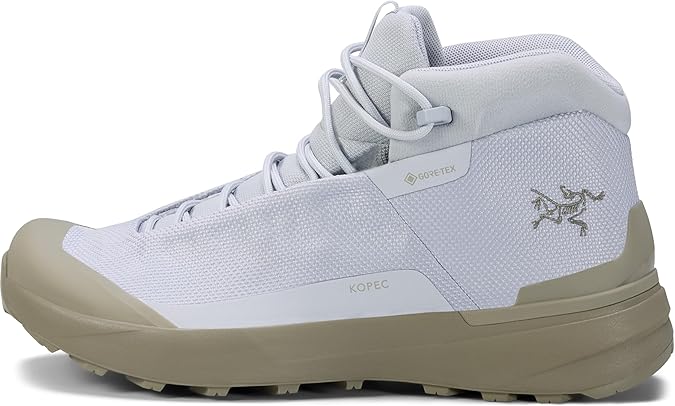
13. Arc’teryx Kopec Mid GTX
Specifications
- Weight: 12.3 oz. (women’s), 12 oz. (men’s)
- Materials: Ultralon 3D, Gore-Tex, textile, and TPU rubber
- Sizing: Women’s 5–10 | Men’s 7–13
The Arc’teryx Kopec Mid GTX is an excellent choice for hikers who prioritize comfort, lightweight performance, and modern styling in a waterproof hiking boot. Designed with a sleek profile and flexible construction, these boots feel far less bulky than traditional hiking footwear while still offering enough protection and stability for demanding trails.
During testing across Washington State trails, the Kopec Mid GTX handled everything from steep summit hikes and rocky inclines to gravel paths, stream crossings, and everyday urban walking. One of the standout qualities was how naturally the boots fit, especially for hikers with narrow feet and higher arches. Rather than feeling stiff or restrictive, the boots moved naturally with the foot while maintaining a secure fit.
Comfort is where the Kopec Mid GTX truly shines. The roomy toe box allows natural toe movement without feeling sloppy, while the flexible arch support helps reduce foot fatigue over longer distances. Even after hours of hiking, testers experienced no blisters, rubbing, or pressure points, making these boots comfortable enough for both trail use and everyday wear.
The Gore-Tex upper delivered dependable waterproof protection throughout testing. Feet stayed dry during wet trail conditions and direct stream exposure, while the grippy outsole maintained excellent traction on slick rocks, wet logs, packed dirt, and loose gravel. Despite their lightweight feel, the boots still provide enough structure and stability for uneven terrain and moderate backpacking trips.
The mid-cut design offers moderate ankle support, though hikers carrying heavier backpacks or tackling extremely rugged terrain may prefer a taller and more supportive hiking boot. Still, the Kopec strikes an impressive balance between flexibility, comfort, and trail capability.
Another advantage is the stylish, modern design that transitions well from hiking trails to casual daily use. The only real downside is the limited color selection available in the women’s version.
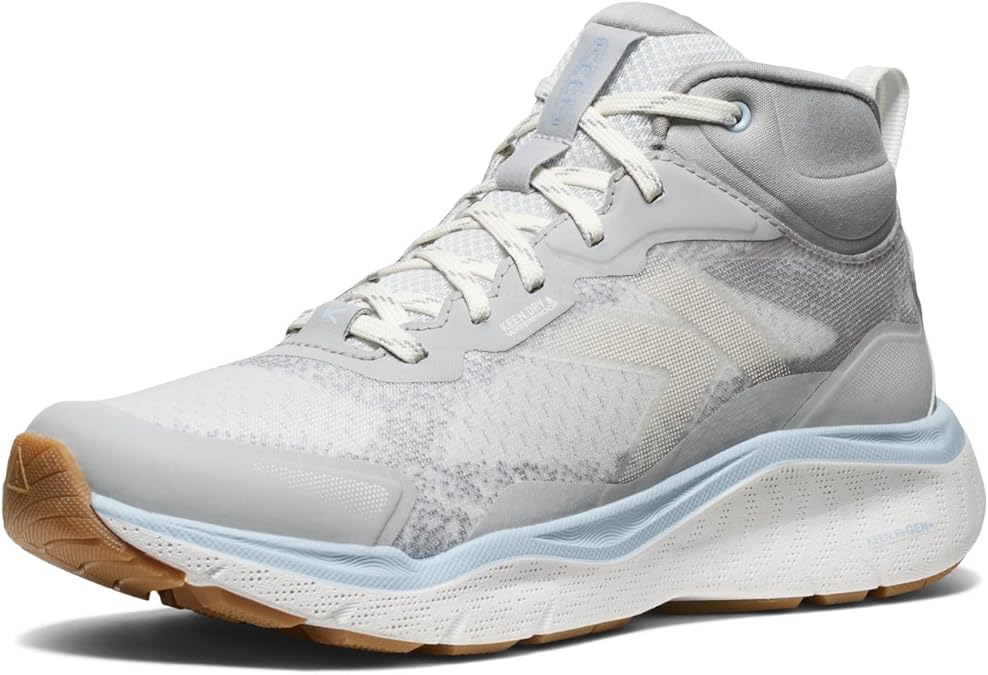
14. KEEN Women’s Leiki Waterproof Hiking Boot
Specifications
- Weight: 12.17 oz.
- Materials: Rubber, foam, and textile
- Sizing: Women’s 5–12
The KEEN Leiki Waterproof Hiking Boot stands out as one of the most versatile waterproof hiking boots for women, performing well across everything from beginner-friendly paths to more rugged terrain. Built with a supportive structure and breathable waterproof design, this boot balances comfort, traction, and durability surprisingly well.
During testing on muddy trails, rocky climbs, loose gravel, and wet conditions, the Leiki consistently provided a stable and secure feel underfoot. The ankle support helped maintain confidence on uneven surfaces, especially while climbing steeper hills or navigating rocky terrain. Although the boots required a short break-in period, they became noticeably more comfortable after several hikes.
One of the strongest features is the balance between breathability and waterproofing. Even hikers prone to sweaty feet found the boots relatively breathable compared to many fully waterproof leather models. Wet and muddy trails were no issue, as the waterproof membrane effectively kept moisture out while the exterior materials dried reasonably fast afterward.
Traction was dependable on dirt, gravel, pavement, and loose trail surfaces. However, the grip was slightly less confidence-inspiring on slick rocks, slushy snow, and icy conditions compared to more aggressive hiking boots. Hikers with higher arches may also find the support somewhat limited depending on their preferred fit.
Overall, the KEEN Leiki Waterproof Hiking Boot is a dependable all-around option for hikers who want comfort, waterproof protection, and versatility without stepping into the heavier backpacking boot category.
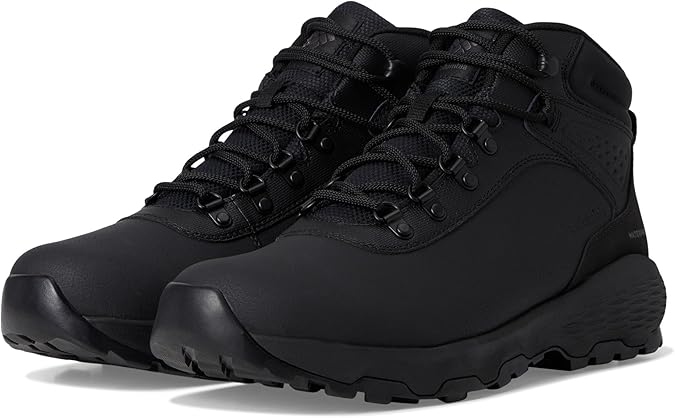
15. Columbia Men’s Newton Wander LTR Boot
Specifications
- Weight: 12.9 oz. (women’s), 15.5 oz. (men’s)
- Materials: Waterproof suede, Omni-Grip, Omni-Max
- Sizing: Women’s 5–12, Men’s 7–15
The Columbia Newton Wander LTR Boot blends the casual comfort of a sneaker with the protection and grip of a lightweight hiking boot. Designed for casual hikes, everyday outdoor wear, and moderate trails, this boot delivers a comfortable and easygoing experience without feeling bulky or stiff on the feet.
During testing, the Newton Wander stood out for its all-day comfort. The lightweight construction helped reduce foot fatigue, while the interior cushioning prevented hot spots and blisters even after long hours of wear. The fit felt relaxed and flexible, making these boots a strong choice for hikers who prefer comfort over aggressive support.
On the trail, the Omni-Grip outsole performed well in rainy and muddy conditions. The traction handled packed dirt, slick rocks, puddles, and moderate inclines with confidence. While the waterproof suede upper kept feet dry during shallow creek crossings and wet-weather hikes, the shorter waterproof coverage means deeper water can eventually seep in over the collar.
These boots are better suited for maintained trails, casual outdoor adventures, and travel rather than technical backpacking routes. The ankle support is more limited compared to heavier hiking boots, so hikers carrying heavier loads or tackling rough backcountry terrain may want a more supportive option.
One of the biggest highlights is the versatile design. The sneaker-inspired styling makes the Newton Wander easy to wear beyond the trail, transitioning naturally from hiking paths to town, travel days, or casual everyday use.
About Our Waterproof Hiking Boot Testing Process
Wet trails, muddy switchbacks, lingering snowfields, and creek crossings are exactly why waterproof hiking boots continue to earn a permanent place in our gear lineup. Over the years, we’ve logged hundreds of miles testing waterproof hiking boots across mountain ranges, forests, alpine basins, and rainy coastal trails to determine which models actually keep feet dry while still delivering comfort, support, traction, and long-term durability.
Our testing process goes far beyond simply splashing through puddles. We evaluate how each boot performs during fast-moving day hikes, multi-day backpacking missions, rocky scrambles, and wet shoulder-season adventures. Lightweight models are tested for agility, breathability, and efficiency on fast-paced treks, while heavier leather boots are pushed through rugged backpacking routes carrying heavier loads to evaluate ankle support, stability, and protection under pressure.
Durability also plays a major role in our evaluations. After months of regular trail use, we carefully inspect each boot for sole separation, outsole wear, lacing failures, waterproof breakdown, and upper material damage. We pay close attention to how waterproof membranes hold up over time, especially after repeated exposure to mud, wet brush, snowfields, and stream crossings.
Much of our waterproof hiking boot testing takes place in naturally wet environments, including the Pacific Northwest, Patagonia, and high alpine terrain where changing weather is common. These conditions allow us to evaluate real-world waterproof performance rather than relying solely on controlled testing.
Waterproof Hiking Boot Buying Advice
Waterproofing
For many hikers, waterproofing is one of the most important features in a hiking boot. A quality waterproof liner helps keep feet dry during rainstorms, muddy trails, snow travel, and shallow stream crossings. Most waterproof hiking boots use an internal waterproof membrane positioned beneath the outer upper material to block moisture while still allowing limited airflow.
The most recognized waterproof membrane remains Gore-Tex, though many brands now use their own alternatives, including KEEN.DRY, eVent, BDry, and proprietary waterproof liners. Most of these technologies perform similarly in wet conditions, though long-term consistency and breathability can vary depending on the brand and construction.
Many boots also include a DWR (Durable Water Repellent) coating that helps moisture bead off the upper rather than soaking into the fabric or leather.
That said, waterproofing is not always the ideal solution. In extremely hot and dry climates, waterproof boots can trap heat and sweat, making feet feel hot and uncomfortable during summer hikes. Some experienced hikers prefer non-waterproof footwear paired with gaiters in desert environments because non-waterproof shoes dry much faster once wet.
Still, for most mountain hikes and unpredictable weather conditions, waterproof hiking boots remain the better all-around choice. They add protection during cold weather, rainy conditions, muddy trails, and spring runoff while helping reduce the chance of blisters caused by soaked socks.
Breathability
Every waterproof hiking boot sacrifices some breathability in exchange for water protection. Even the most advanced waterproof membranes still trap more heat and moisture than non-waterproof footwear.
Generally, heavier leather boots tend to breathe the least because thick leather and waterproof membranes limit airflow. Midweight boots balance durability and ventilation reasonably well, while lightweight models with mesh panels usually provide the best airflow.
Boots like the Arc’teryx Kopec Mid GTX and La Sportiva Ultra Raptor II Mid GTX offer noticeably better breathability than heavy leather backpacking boots, making them easier to wear during warmer seasons while still providing solid waterproof performance.
Hiking Boot Categories
Lightweight Hiking Boots
Lightweight hiking boots focus on speed, flexibility, and comfort. They work especially well for day hikes, fastpacking trips, and lightweight backpacking adventures.
Popular lightweight models include the NNormal Tomir Waterproof Boot, Scarpa Rush 2 Pro Mid GTX, and La Sportiva Ultra Raptor II Mid GTX. These boots typically use mesh or synthetic uppers to reduce weight while maintaining decent support and waterproof protection.
A growing number of lightweight boots now blur the line between hiking boot and trail runner. Models like the Altra Lone Peak 9 Waterproof Mid provide a soft, flexible ride with lightweight support and roomy toe boxes that appeal to hikers who prefer natural foot movement.
The tradeoff is reduced durability, less toe protection, and lower support under heavy loads.
Midweight Hiking Boots
Midweight hiking boots strike one of the best balances between support, comfort, and agility. These boots are stable enough for backpacking trips while remaining comfortable for regular hiking.
Excellent examples include the La Sportiva TX Hike Mid Leather GTX and Lowa Renegade Evo GTX Mid. Midweight models often feature premium waterproof membranes, more durable construction, and improved support without the stiffness of traditional mountaineering-style boots.
This category continues to be one of the most versatile choices for hikers who want one boot capable of handling most trail conditions.
Heavyweight Hiking Boots
Heavyweight hiking boots are designed for demanding backpacking trips, rugged terrain, snow travel, and heavier loads. These boots feature thick uppers, stiff midsoles, aggressive outsoles, and substantial ankle support.
While the market has shifted toward lighter footwear in recent years, heavyweight boots still remain valuable for hikers carrying heavy backpacks or traveling through rough terrain.
The Salomon Quest 4 GTX remains one of the best examples of a supportive backpacking boot that bridges the gap between midweight and heavyweight categories.
Weight
Weight plays a major role in overall hiking comfort and trail efficiency. Lighter boots reduce fatigue, improve agility, and make long-distance hiking feel easier, especially during fast-moving adventures.
Ultralight designs like the NNormal Tomir Waterproof Boot weigh significantly less than traditional backpacking boots, making them excellent choices for hikers prioritizing speed and efficiency.
Heavier boots, however, provide better protection, improved support, and greater durability for rough terrain and heavy backpacking loads.
In general, the ideal approach is to choose the lightest boot that still provides enough support, stability, and protection for the terrain and pack weight you expect to carry.
Support and Stability
Support is one of the biggest reasons hikers choose boots over trail running shoes, especially for rough terrain and heavy backpacking trips. A major part of that support comes from the shank, a stiff insert hidden between the outsole and midsole that helps stabilize the foot and reduce fatigue on uneven ground. More supportive boots often use longer and stiffer shanks, while lightweight hiking boots usually reduce or remove them to improve flexibility and comfort.
For casual day hikes and smoother trails, lightweight models like the Altra Lone Peak 9 Waterproof Mid provide enough stability while maintaining a flexible, natural ride. Minimalist hikers may even prefer barefoot-style footwear such as the Xero Scrambler Trail Mid WP, which focuses on unrestricted foot movement and ground feel.
When carrying heavier backpacks or hiking through technical terrain, more supportive boots become extremely valuable. Boots like the Lowa Renegade Evo GTX Mid offer better ankle support, a stiffer platform, and more protection for long days under load. For rugged off-trail adventures, scree fields, or demanding backpacking trips, the Salomon Quest 4 GTX stands out for its exceptional stability and protective structure.
Lacing Systems
A hiking boot’s lacing system has a major impact on comfort and fit. Poor laces or weak hardware can loosen during hikes, create pressure points, or force constant adjustments on the trail.
Traditional lacing systems continue to provide the best fit customization, especially during longer hikes and backpacking trips. Quick-pull systems may save time, but they often lack the fine-tuning needed for heavy loads or technical terrain.
Many higher-end hiking boots now include locking eyelets near the ankle to improve heel hold and prevent lace slippage. Models like the La Sportiva TX Hike Mid Leather GTX and Lowa Renegade Evo GTX Mid use these locking systems effectively to keep the foot secure during steep climbs and descents.
The Salomon X Ultra 5 Mid Gore-Tex also performs particularly well here thanks to its supportive chassis wing system that helps stabilize the heel as the boot tightens.
Upper Materials
The upper material of a hiking boot strongly affects durability, weight, breathability, flexibility, and water resistance. Most hiking boots use a mix of synthetic fabrics, mesh panels, and leather depending on their intended purpose.
Synthetic Nylon and Mesh
Synthetic nylon and mesh uppers are commonly found on lightweight hiking boots because they reduce weight and improve airflow. These materials work especially well for warm-weather hikes and fast-moving adventures.
The tradeoff is long-term durability. Mesh uppers tend to wear faster and absorb moisture more easily than leather alternatives. However, some models use tightly woven synthetic fabrics that improve durability considerably.
The Salomon Quest 4 GTX is a good example of a synthetic-heavy boot that still delivers impressive toughness for demanding terrain.
Nubuck and Suede Leather
Nubuck leather offers a balance between durability and flexibility. It is softer and lighter than full-grain leather while remaining tougher than mesh-heavy designs.
Many midweight hiking boots combine Nubuck leather with mesh panels to improve both structure and breathability. The Merrell Moab 3 Mid WP uses this type of construction effectively for comfort and durability at a more approachable price point.
Full-Grain Leather
Full-grain leather remains the most durable upper material available in hiking boots. These boots require more break-in time and regular care, but they offer exceptional longevity and weather protection.
Heavy-duty leather boots are often favored for rugged backpacking trips, cold-weather hiking, and long-term durability. Many can also be resoled to extend their lifespan even further.
Midsole Types
The midsole is responsible for cushioning, support, and shock absorption underfoot. Most hiking boots use either EVA foam, polyurethane (PU), or a combination of both.
EVA
EVA midsoles are lightweight, soft, and comfortable. They absorb trail impact well and are commonly used in lightweight hiking boots focused on comfort and agility.
Boots like the La Sportiva TX Hike Mid Leather GTX use EVA midsoles to provide cushioning while keeping overall weight low.
Softer EVA compounds may compress faster over time, especially during heavy backpacking use.
PU
Polyurethane midsoles are firmer, heavier, and much more durable than EVA. They provide better support for heavy loads and maintain their shape longer during extended use.
Boots like the Lowa Renegade Evo GTX Mid rely on PU midsoles to deliver stability and long-term support for backpacking and technical terrain.
Outsoles and Traction
Traction is one of the most important differences between hiking boots and standard athletic shoes. A high-quality outsole improves grip on mud, wet rock, loose dirt, roots, and uneven terrain.
Vibram remains one of the most respected outsole manufacturers in the hiking industry. Different Vibram compounds and lug patterns are designed for different terrain types, from aggressive mud traction to sticky rock scrambling performance.
Boots using Vibram Megagrip compounds tend to perform especially well on wet and rocky terrain.
Not all excellent outsoles come from Vibram, however. Salomon’s proprietary Contagrip outsole technology continues to deliver excellent grip and durability in models like the Salomon X Ultra 5 Mid Gore-Tex and Salomon Quest 4 GTX.
Toe Protection
Toe protection becomes extremely important once trails become rocky, technical, or steep. Rubber toe caps and reinforced toe rands help shield feet from roots, rocks, and accidental impacts.
More rugged boots like the Salomon Quest 4 GTX provide substantial toe protection for demanding terrain, while ultralight boots often reduce toe protection to save weight.
Even minimalist options like the Xero Scrambler Trail Mid WP include lightweight rubber reinforcement around the toe area to provide some basic trail protection.
Insoles
Many stock hiking boot insoles provide only basic cushioning and support. Replacing factory insoles with aftermarket options can significantly improve comfort, fit, and arch support.
Brands like Superfeet produce replacement insoles designed for different arch heights, foot shapes, and cushioning preferences. A quality insole can also help improve heel lockdown and reduce foot fatigue during long hikes.
Sustainability
Sustainability has become increasingly important in hiking footwear. Many brands now use recycled materials, bio-based fabrics, and environmentally conscious manufacturing processes in their boots.
Choosing durable hiking boots can also reduce environmental impact by extending the lifespan of your footwear and reducing waste over time.
Several brands now offer repair and resoling programs that help keep boots on the trail for years instead of replacing them frequently.
Hiking Boots vs. Hiking Shoes
Choosing between hiking boots and hiking shoes largely depends on terrain, pack weight, and personal preference.
Hiking boots provide better ankle support, protection, waterproofing, and stability, making them ideal for rough terrain, backpacking trips, snow travel, and heavy loads.
Hiking shoes and trail runners are lighter, more flexible, and less fatiguing over long distances. Many experienced hikers now prefer low-top hiking shoes for maintained trails and lightweight adventures because of their agility and comfort.
Ultimately, both options have strengths. Boots excel in technical and demanding conditions, while hiking shoes work exceptionally well for speed, comfort, and lighter loads.
Related Post: