
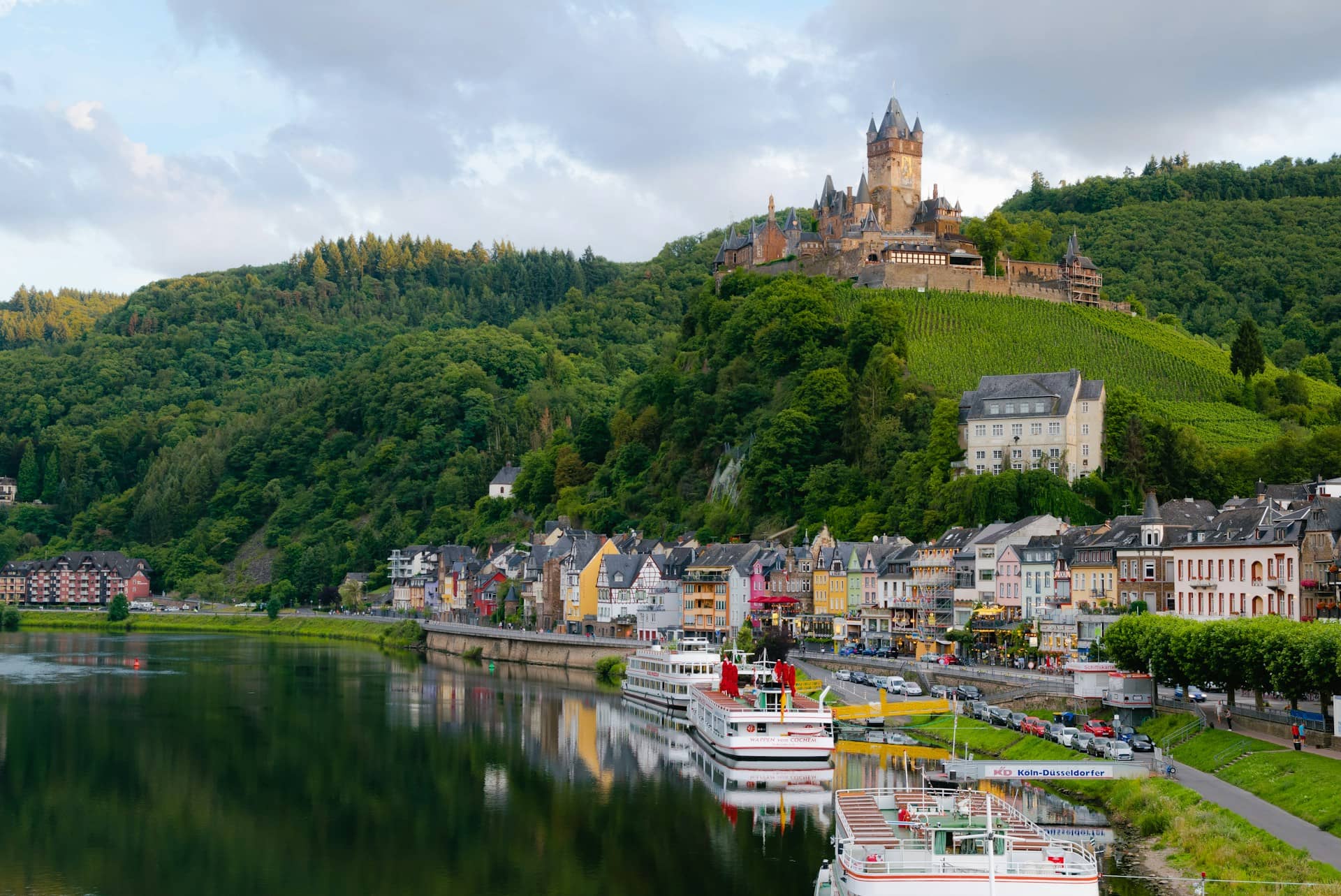
Germany holds far more than its famous cities and postcard landmarks. Beyond the well-known Alpine views and big capital attractions, there are corners of the country packed with dramatic landscapes, old stone towns, forgotten castles, and quiet valleys that rarely make travel lists. Many of these spots sit outside major tour routes and stay off the radar even for locals who have lived there for years.
Some of these locations feel almost cinematic — cliffside bridges over misty forests, medieval streets frozen in time, and rock formations that look carved by giants. Small villages guard centuries-old churches and towers, while remote nature areas offer deep gorges, colored lakes, and strange geological shapes. If you’re drawn to places that feel lifted from a storybook, you might also enjoy exploring even more fairytale-style landscapes across the country in our guide to Germany’s most magical scenic spots. You won’t find heavy crowds in most of these areas, which makes the experience feel more personal and slow-paced.
What makes these lesser-known German destinations stand out is their mix of history and terrain. You might walk through a town with timber-framed houses in the morning, then stand on a high ridge or beside a roaring river by afternoon. Each region has its own character, local food, and building style, giving every stop a different mood.
If you’re ready to look past the usual guidebook picks, these overlooked places show another side of Germany — bold, quiet, and full of surprises waiting off the main map.
1. Externsteine: Germany’s Striking Sandstone Towers with a Complex Past
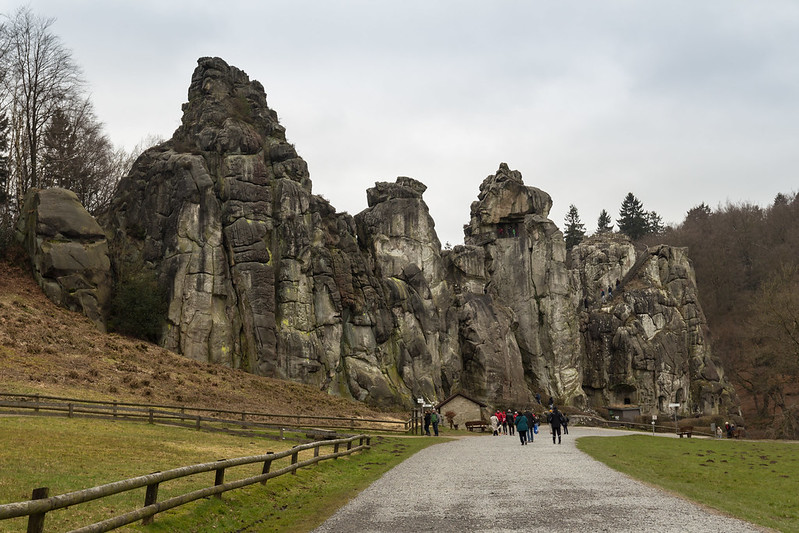
Germany is often linked with Alpine peaks and mountain panoramas, but the country’s geology tells a broader story. One of the most striking rock sites stands far from the Alps — the Externsteine in the Teutoburg Forest of North Rhine–Westphalia. These tall sandstone pillars rise sharply from the ground, forming a dramatic natural monument that feels almost unreal when seen up close.
The formation consists of massive vertical rocks split by narrow passages, carved stairs, and historic chambers. Archaeologists and historians have debated their early cultural and spiritual role for decades. Carvings and relief structures cut into the stone show that people interacted with this site many centuries ago. Today, visitors can climb certain sections and walk across a high bridge that links the rocks, offering wide forest views.
The area also carries a difficult historical layer. During the period of Nazi rule in Germany, the regime promoted the Externsteine as a symbolic heritage location for propaganda purposes. Because of that past, the site still attracts some extremist visitors, though it is now managed as a protected cultural and natural landmark with educational context provided on site.
Despite the complicated history, the Externsteine remains one of the country’s most visually powerful rock formations — a place where geology, legend, and recorded history meet in one unforgettable setting.
2. Obersee Lake: A Quiet Alpine Water Escape Near the Austrian Border
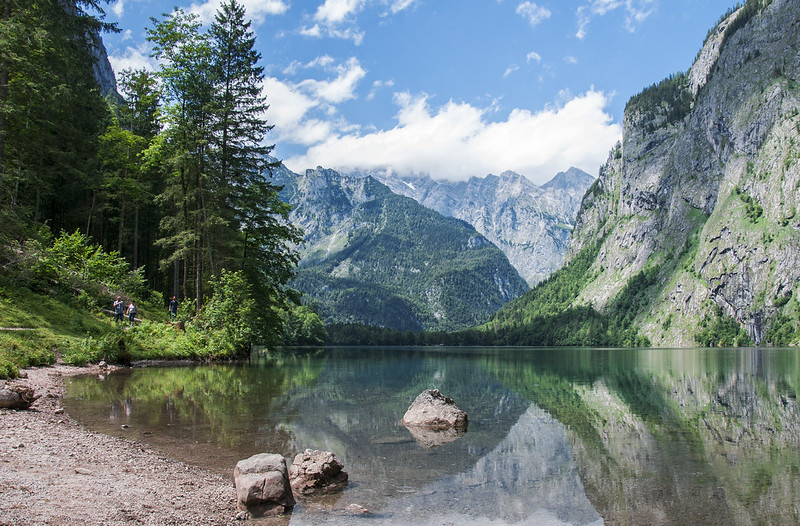
Even in southern Germany’s famous Alpine belt, there are lesser-known spots that many travelers pass by. Obersee Lake in Bavaria is one of those quieter locations that rewards the extra effort. It sits inside Berchtesgaden National Park, close to the Austrian border, and feels far removed from busy resort towns and crowded viewpoints.
The lake is known for its glass-like surface and clean mountain water. On calm days, the surrounding peaks appear mirrored so clearly that the shoreline almost disappears from view. The walking path along the edge is fairly gentle, with open views, grassy patches, and wooden huts scattered along the route. Early morning brings low clouds and soft light across the water, while late afternoon gives stronger contrast across the rock faces.
Access usually begins with a boat ride across nearby Königssee, followed by a short hike. The journey itself becomes part of the appeal — boat, trail, then lake. Visitors who make the trip often stay longer than planned, simply sitting by the shore and watching the changing light across the slopes. It’s a calm Alpine stop that feels raw and grounded without heavy tourist buildup.
3. Gorge Walkway at Partnach Gorge: A Dramatic Rock Corridor in Bavaria
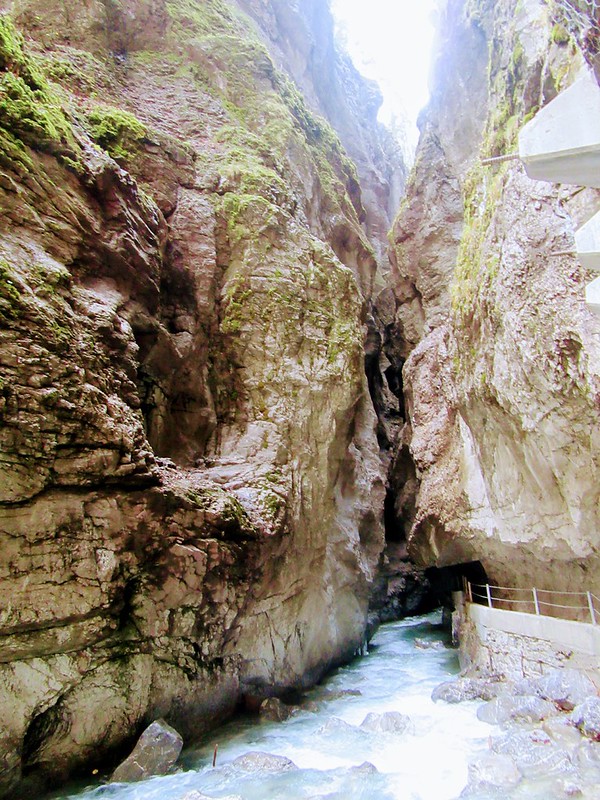
Germany’s natural terrain offers far more than open trails and wide mountain views. Deep ravines, river cuts, and stone corridors add a different kind of hiking experience. One of the most striking examples is the Gorge Walkway at Garmisch-Partenkirchen in Bavaria, a town widely known for winter sports but also home to one of the country’s most dramatic canyon routes.
This path runs through Partnach Gorge, where a fast creek has carved a tight channel through towering rock walls. The trail threads along the side of the gorge, sometimes through short tunnels, sometimes on ledges fixed directly into the stone. Water rushes below while cliffs rise sharply on both sides, turning the walk into a narrow passage of sound, spray, and shadow.
The setting often reminds visitors of fantasy film scenery. Mist hangs in the air, light drops through cracks above, and the sound of water echoes from wall to wall. In colder months, ice forms along the rock edges and transforms the corridor into a frozen gallery. It’s a short route overall, but the atmosphere feels intense and immersive from start to finish.
4. Meersburg: A Medieval Lakeside Town with Storybook Streets
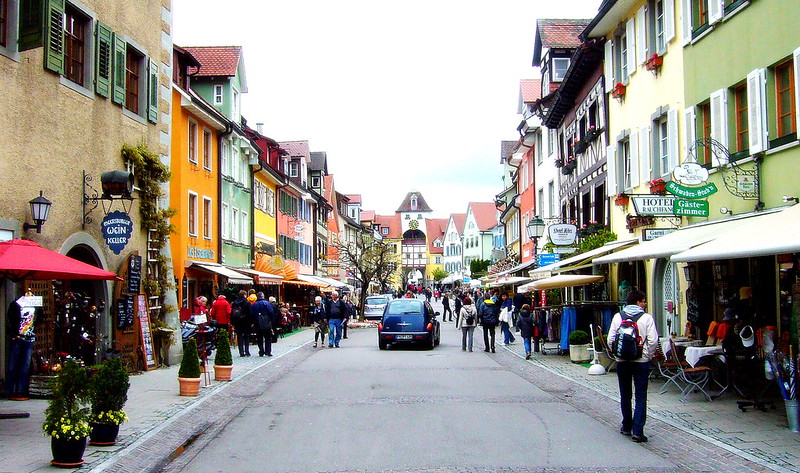
Meersburg in Baden-Württemberg feels like a town paused in an earlier century. Timber-frame houses, stone lanes, and fortress walls still shape daily life here. Much of the old center is reserved for foot traffic, which keeps the streets calm and easy to wander. You can move slowly, look up at carved facades, and hear church bells instead of traffic noise.
The town dates back to medieval times and still carries that structure in its layout. A hilltop castle overlooks rows of tightly packed buildings and small squares. Cafés and wine taverns line the slopes, while stairways connect upper terraces to the waterfront below. Visitor numbers stay moderate compared with larger German destinations, so the atmosphere remains relaxed through most of the year. If towns like Meersburg capture your interest, you’ll likely appreciate other charming communities with preserved historic cores and quiet streets featured in our roundup of Germany’s most captivating smaller towns.
Meersburg sits directly on the shore of Lake Constance (Bodensee), near the meeting area of Germany, Switzerland, and Austria. Ferries cross the lake daily, making it an easy side stop during a broader Central Europe trip. Between the water views, historic towers, and compact walkable core, the town works well as both a short visit and an overnight base.
5. Blautopf: Germany’s Deep Blue Spring Surrounded by Forest
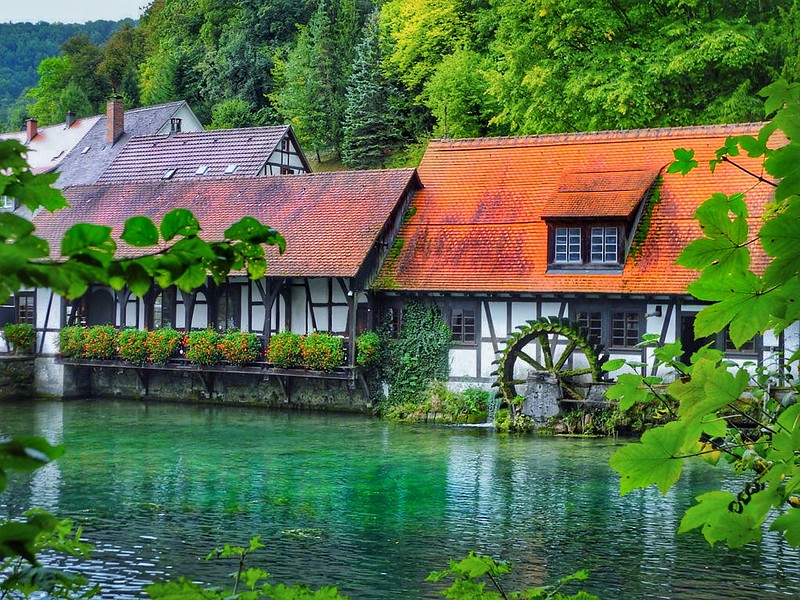
Germany may not be widely linked with beaches and swim spots, yet the country holds several striking natural water sites. One of the most eye-catching is the Blautopf in Blaubeuren in southern Germany. Rather than mountain reflections or wide shorelines, this spring is known for its intense blue color, which gives the pool an almost unreal appearance.
The Blautopf is a karst spring where underground water rises from a deep cave system. Minerals and light refraction create the strong blue tone, which can shift slightly depending on season and sunlight. A stone path circles the water, and nearby historic buildings add extra character to the setting. The surface often looks still, but the depth below is extensive and linked to long underwater cave routes explored by divers.
Fall is an especially strong time to visit. Leaves turn gold and copper around the edges, and the color contrast against the blue water becomes more dramatic. It’s a compact stop, easy to reach, and memorable without requiring a long hike or complex route.
6. Linderhof Palace: King Ludwig II’s Finished Summer Residence
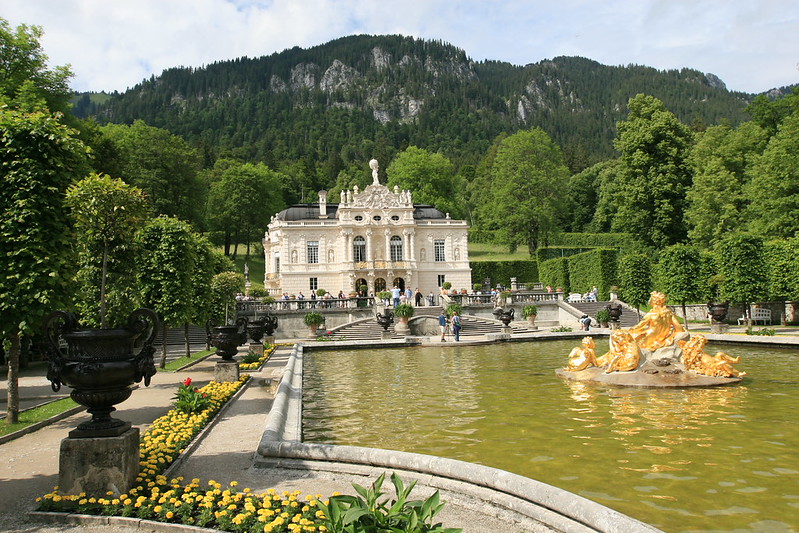
Travelers in southern Bavaria often head straight to Neuschwanstein Castle, but there is another royal site nearby that deserves equal attention. Linderhof Palace, commissioned by Ludwig II of Bavaria, served as his summer residence and reflects his taste for theatrical design and private luxury. Smaller in size, yet rich in detail, it offers a more intimate royal setting.
The palace follows a baroque-inspired style, filled with ornate rooms, mirrored halls, and heavy decorative work. Outside, the grounds feature formal gardens, sculpted figures, and patterned terraces. Water basins and fountain displays add movement and sound across the park, while walking paths connect pavilions and viewing points around the estate.
Historically, this residence holds special weight because it was the only major palace project by Ludwig II completed during his lifetime. He saw it finished and used it regularly before his sudden and mysterious death. That fact alone gives the property a different emotional tone compared with his other grand builds that remained unfinished.
7. Burg Neuleiningen: A Castle Ruin That Still Commands the Hill
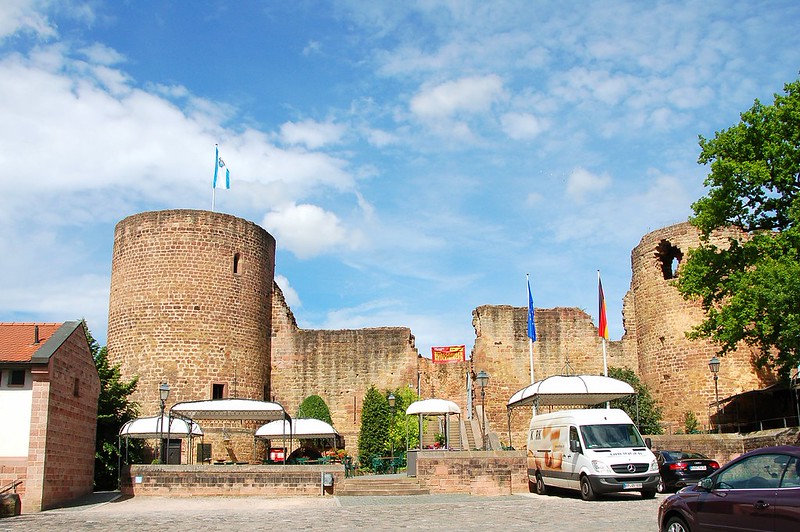
Across Germany, many regions feature remarkably preserved castles and palace complexes dating back to the Middle Ages. Still, broken walls and partial towers can leave just as strong an impression as fully restored buildings. Burg Neuleiningen in southwest Germany stands as a prime example, where surviving stonework and open sky combine into a dramatic historic scene.
The fortress sits above the village of Neuleiningen and once served as a defensive stronghold for the area. Thick perimeter walls, gate remains, and sections of inner structures are still visible today. From the upper edges, visitors get wide views over vineyards and rolling countryside, which adds extra impact to the visit.
The castle met its fate in 1690 during conflict with French forces, when much of it was destroyed by fire and attack. Instead of being fully rebuilt, the remains were left in place. What stands now is a powerful reminder of regional wars and shifting borders — raw stone, weathered lines, and history written in fragments rather than polished halls.
8. Rothenburg ob der Tauber: A Storybook Town of Towers and Cobblestones
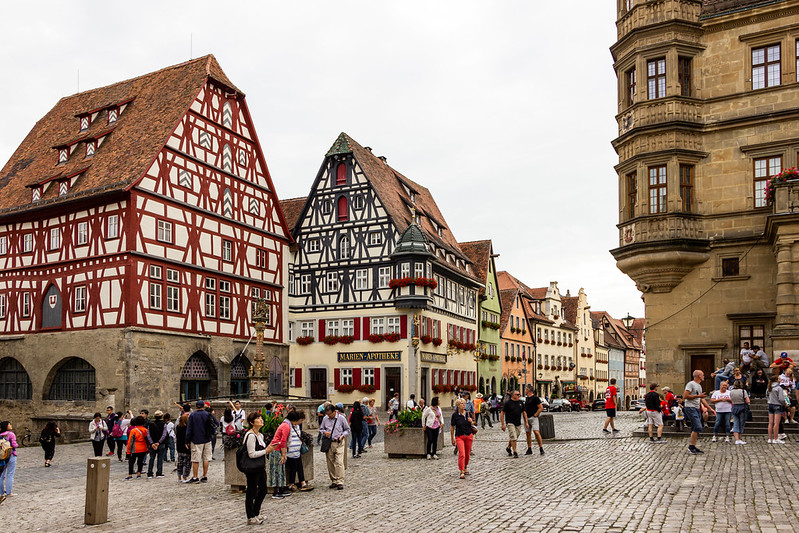
For travelers who admire the fairytale look of old German towns, several places still hold their historic character in everyday life. Rothenburg ob der Tauber ranks high on that list. Walking through the town feels like stepping into a painted scene — timber-framed houses, steep gabled roofs, and winding stone streets set the tone from the first turn.
The town layout remains largely intact from earlier centuries. Defensive walls circle the center, with towers and gatehouses still standing guard. Landmarks such as St. Jakob’s Church, Rothenburg ob der Tauber add architectural weight, while small squares and fountains break up the narrow lanes. Many buildings have been carefully maintained, so the historic atmosphere reads clearly without heavy reconstruction gloss.
Winter brings a special mood. During the holiday season, snow often covers rooftops and market stalls fill the squares with lights, crafts, and seasonal food. Festive bazaars and choirs give the town a warm, old-style celebration feel. Visitors often pair a stop here with time in nearby Munich and other Bavarian cities to experience several seasonal markets within a short trip window. During the colder months, many historic towns transform with seasonal stalls and glowing lights, and you can find more festive destinations worth visiting in our guide to Germany’s top holiday markets.
9. Schrecksee: A Remote Alpine Lake That Feels From Another Age
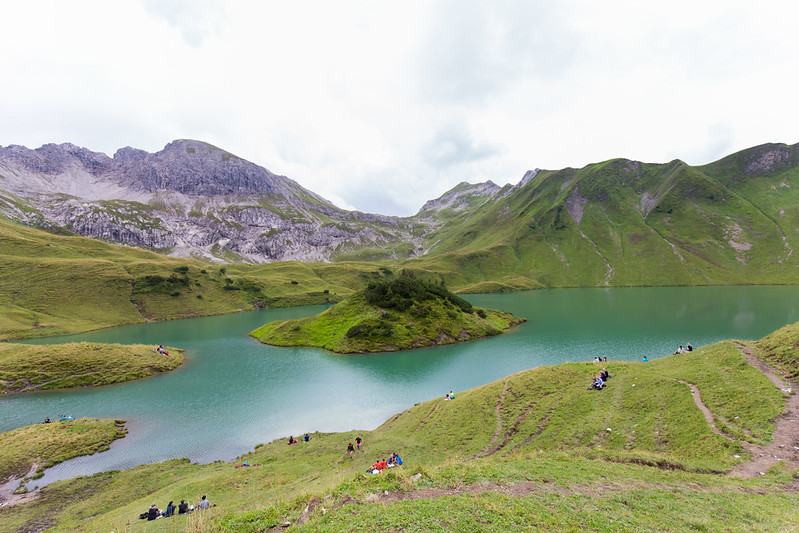
Schrecksee may sound like it belongs to a cartoon world, but the name has no link to fictional characters. Instead, it refers to one of the most isolated high-altitude lakes in the Bavarian Alps. The area around it is filled with green slopes, rocky ridges, and open sky, giving the whole basin a raw, untouched look.
The lake sits far from major roads and requires a long hike to reach. That distance has helped keep the setting largely unchanged by modern construction. Small grassy islands dot the water, and the shoreline shifts between stone and alpine meadow. Weather moves quickly here, so the scene can change from bright sun to drifting cloud within minutes.
Photos of Schrecksee often look almost prehistoric — like a landscape from an ancient Earth rather than present-day Europe. With no large buildings, lifts, or resort structures nearby, the view feels stripped back and elemental. For hikers willing to make the climb, it offers silence, scale, and a strong sense of separation from city life.