
Scenic Drive in Zion National Park is one of the easiest ways to take in the canyon’s scale. The road moves through the main valley, passing huge rock walls and quiet stretches of the Virgin River, with 13 key stops and viewpoints you won’t want to miss.
Planning a trip? Take a look at “Complete Guide to Zion National Park – 13 Tips for First Visit” before you go so you know how access and timing work, especially during busy seasons.
Zion is also a top pick for hikers. If you want something more demanding, check “15 Great Hikes in Zion National Park You Need to Explore.”
Map of Top Stops Along Scenic Drive in Zion National Park
What is the Zion National Park Scenic Drive?
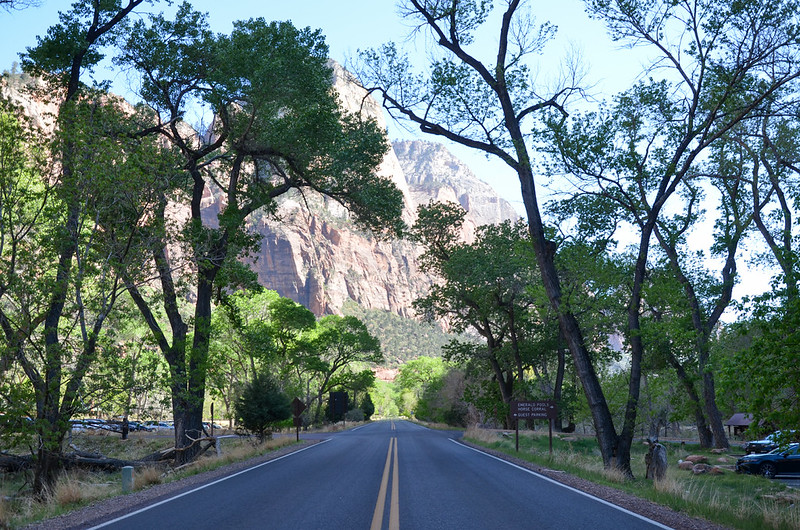
The Scenic Drive in Zion National Park runs through Zion Canyon along the Floor of the Valley Road. It follows the path of the Virgin River, cutting between steep canyon walls and passing some of the park’s most well-known viewpoints.
The drive is about 8 miles one-way, making it fairly short in distance but packed with stops along the route. Each section offers a slightly different view, so even a simple drive through feels varied from start to finish.
Good to know: without stopping, the full drive usually takes around 20–30 minutes. If you plan to pull over at viewpoints, take short walks, or spend time at key spots, it can easily stretch to 6–8 hours.
Where to Begin Your Scenic Drive in Zion National Park
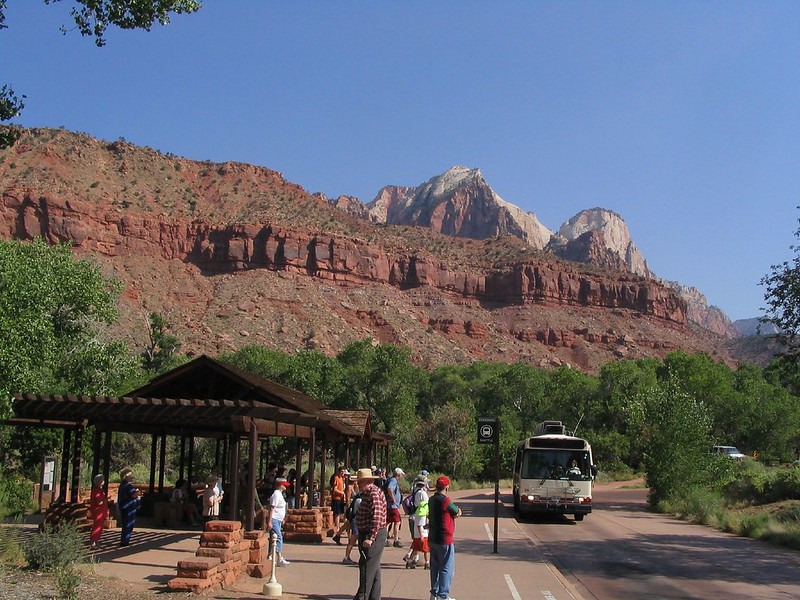
The starting point for the Scenic Drive in Zion National Park can feel a bit unclear at first, especially if it’s your first visit. The route begins near the main entrance and quickly connects to the canyon road, but a few key landmarks make it easier to follow.
Good to know: begin at the Zion National Park Visitor Center (Map Stop #1), located along Zion–Mount Carmel Highway (UT-9). From there, follow the road toward the Zion Human History Museum (Map Stop #2), which sits just ahead along the same highway.
Keep driving until you reach the South Entrance area, then continue toward Canyon Junction Bridge Viewpoint (Map Stop #3). At this point, go straight ahead instead of turning. You’ll now be on the Floor of the Valley Road, which marks the official start of the Scenic Drive through Zion Canyon.
When is the Best Time for Zion Scenic Drive?
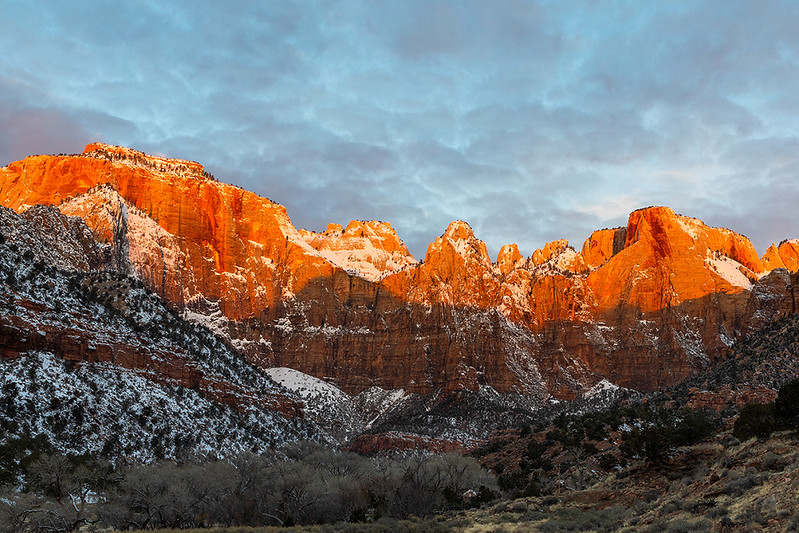
The best time to start the Scenic Drive in Zion National Park is early in the morning. Getting there first gives you quieter viewpoints, easier parking, and softer light across the canyon walls before the crowds build up.
Zion is one of the most visited parks in the U.S., with millions of visitors each year. Because of that, expect busy stops and full shuttle lines as the day goes on, especially during peak seasons.
Good to know: the Scenic Drive is closed to private vehicles from March through November. During this period, visitors must use the park shuttle, which is included with your entrance pass and runs frequently along the route.
The shuttle system is simple to follow and stops at all major viewpoints. A helpful option is to park in the nearby town of Springdale and catch the shuttle from there. There are multiple stops in town, making it easy to hop on and off throughout the day.
If you visit between December and February, you can usually drive your own car along the Scenic Drive. Snow rarely reaches the canyon floor, so access remains open most of the time, though conditions can still change depending on weather.
How to Reach Zion National Park

Closest International Airports: Las Vegas, Nevada (LAS) and Salt Lake City, Utah (SLC). In the case of a smaller aircraft, those wanting shorter flights can fly from regional airports in St. George (SGU) and Cedar City (CDC), Utah.
To access the park by car: If you are flying into one of these airports, renting a vehicle will provide the necessary transportation.
- Las Vegas, Nevada – 160 miles or about 2.5 hours
- Salt Lake City, Utah – 308 miles (4.5 hours)
- Cedar City, Utah – About 1 hour and some change/ roughly about 58 miles
- St. George, Utah – 41 miles away; 1 hour
During a Tour: When visiting from Las Vegas, there are multiple tour options. Have you considered the Zion National Park Day Tour from Las Vegas There is also a small group tour option for those more interested in visiting both Zion and Bryce Canyon National Parks, which does it to be possible all within 1 day.
Read more : Best Way to Drive from Las Vegas to Zion National Park (Route + Itinerary)
What to See on Zion National Park’s Scenic Drive
Along the Scenic Drive in Zion National Park, you’ll pass a mix of wide canyon views, towering rock walls, and striking geological formations shaped over time. The road follows the valley floor, so you’re always close to the cliffs, river, and changing landscape around you.
At the top of this post, you’ll find a map with 11 points of interest marked along the route. It may feel like a lot to cover in one visit. If you’re short on time, head to the end of this guide where I’ve listed the three stops that stand out the most and are worth prioritizing.
Where to Stay in and Around Zion National Park
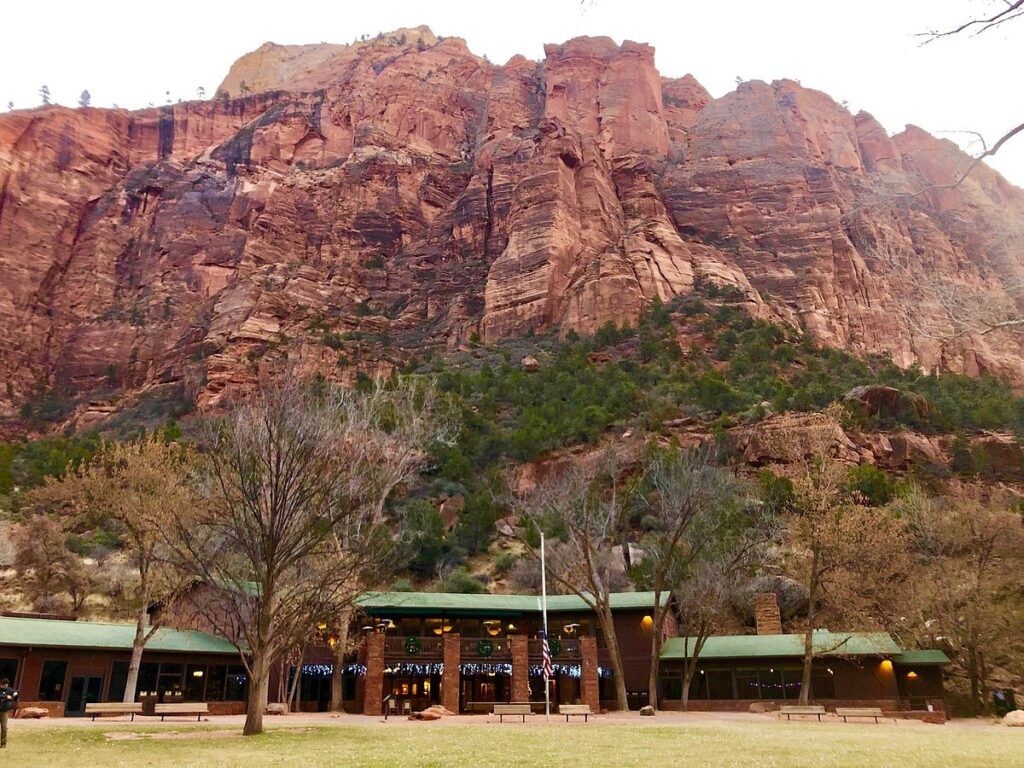
Looking for a place to stay in or near Zion National Park? There are plenty of options close to the park entrance, as well as inside the park itself, depending on your budget and travel style.
You’ll find everything from park lodges and campgrounds to hotels and vacation rentals in nearby areas like Springdale. Prices vary widely, so whether you’re keeping things simple or going for more comfort, there’s a solid range to choose from.
Take a look at the recommendations to find a stay that fits your trip.
Read : Best 10 Places to Stay Near Zion National Park Surrounded by Nature
13 Must-Visit Stops Along Zion National Park’s Scenic Drive
1. Zion National Park Visitor Center
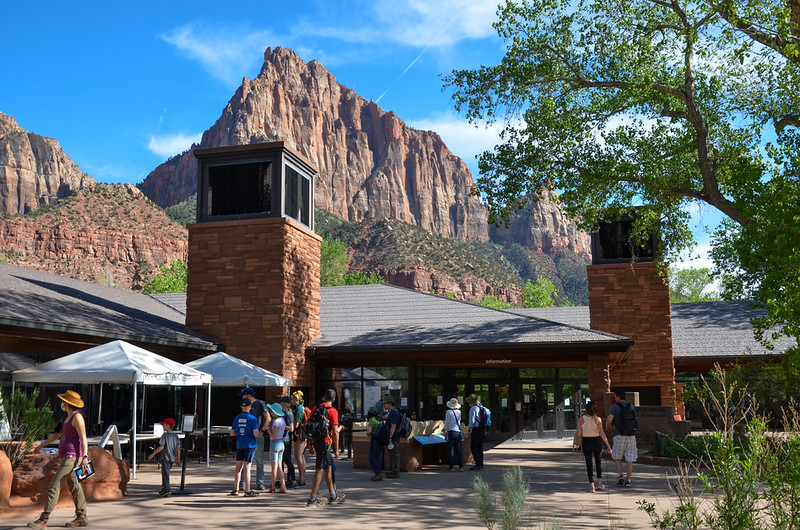
Hands down, the Zion National Park Visitor Center should be your first stop before heading onto the Scenic Drive in Zion National Park. It sits right near the South Entrance, close to the town of Springdale, making it a clear and convenient starting point.
You don’t need the shuttle to reach the Visitor Center. There’s parking nearby, though it can fill up quickly during busy times. Shuttle Stop #1 is just outside, so once you’re ready, you can hop on and ride through the canyon, getting off at each stop along the way.
Inside and around the center, you’ll find exhibits covering the park’s history, geology, plants, and wildlife. It’s a quick way to get a better sense of what you’re seeing once you’re out on the road.
HELPFUL INFO: Ranger-led programs are offered daily, and the schedule is posted near the entrance. These talks cover topics like local history, rock formations, and the area’s plant and animal life. The Visitor Center is open year-round, except on December 25.
QUICK TIP: Stop by the bookstore before you leave. It’s stocked with maps, guidebooks, and small souvenirs that are actually useful during your visit.
2. Zion Human History Museum
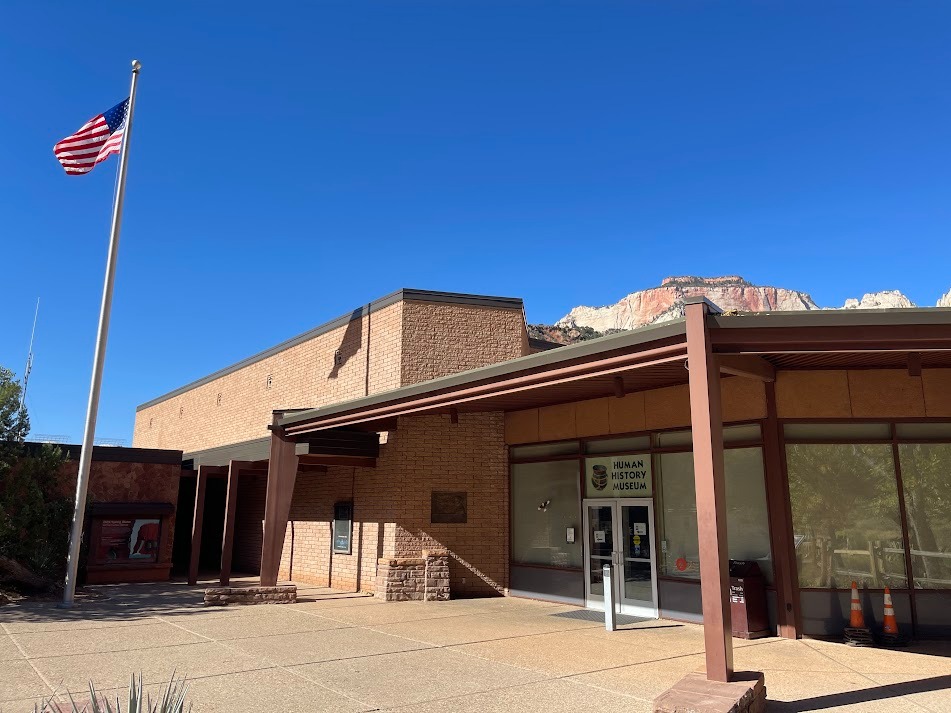
The Zion Human History Museum is the second stop along the Scenic Drive in Zion National Park. It sits about 1.5 miles north of the South Entrance along the main park road, making it an easy and quick stop early in your route.
Inside, the museum covers the human story of Zion, from early American Indian communities to pioneer settlements and the park’s development over time. The exhibits also explain how water has shaped the canyon—cutting through rock, forming the valley, and drawing people to this area for generations.
A short 22-minute film is shown here, giving a clear overview of the park and its landscape. It’s a good way to get context before continuing deeper into the canyon.
QUICK TIP: Walk around to the back of the museum for a wide view of the Towers of the Virgin. This group of peaks includes the West Temple, the Sundial, the Altar of Sacrifice, and the Meridian Tower. Early morning light often gives the best look at these formations, with shadows adding more depth to the cliffs.
3. Canyon Junction Bridge Viewpoint
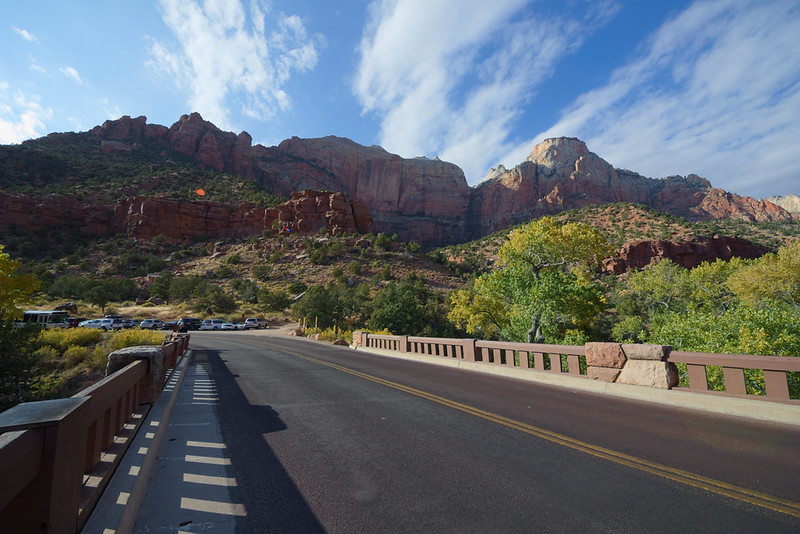
Canyon Junction Bridge is the third stop along the Scenic Drive in Zion National Park and one of the most photographed spots in the park.
From the bridge, you get a clear line of sight toward Watchman Mountain, with the Virgin River running below. The mix of water, rock, and open sky creates a strong view that stands out compared to other stops along the route. It’s also an easy place to pause, take a short walk, and spend a few minutes just taking in the surroundings without needing to hike far.
HELPFUL INFO: This area fills up quickly near sunset, as many visitors gather here for photos. If your schedule allows, plan a second stop later in the day when the lower light adds more depth and warmer tones to the cliffs and river, making the view even more striking.
4. Court of the Patriarchs Viewpoint
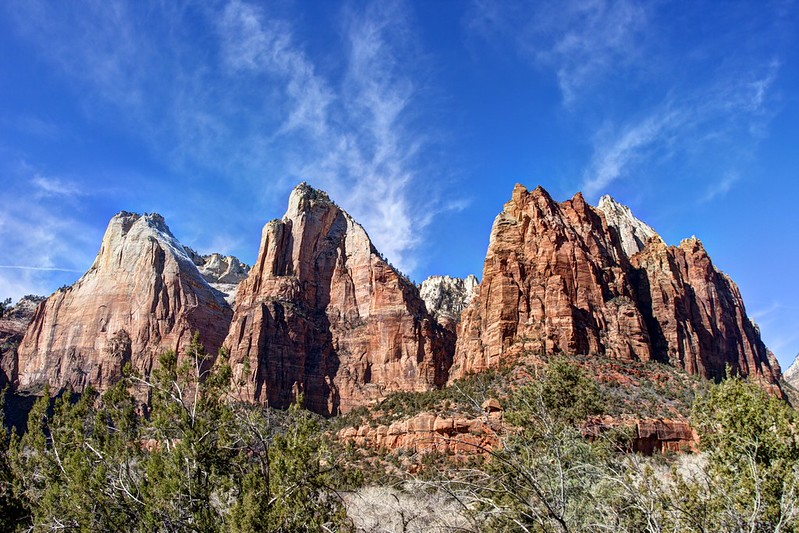
Court of the Patriarchs is stop number four along the Scenic Drive in Zion National Park and one of the most striking landmarks you’ll pass on this route.
This viewpoint highlights three massive sandstone peaks—Abraham, Isaac, and Jacob—rising sharply above the canyon floor. Their size and shape make them easy to recognize, and the open viewing area gives you a clean angle to take it all in without obstruction.
HELPFUL INFO: Right at Shuttle Stop #4, a short path leads up to the viewpoint. It takes around 5 minutes to reach the top, and that small bit of elevation gives you a wider and more complete view of the Court of the Patriarchs.
5. Zion Lodge (Time for Lunch!)
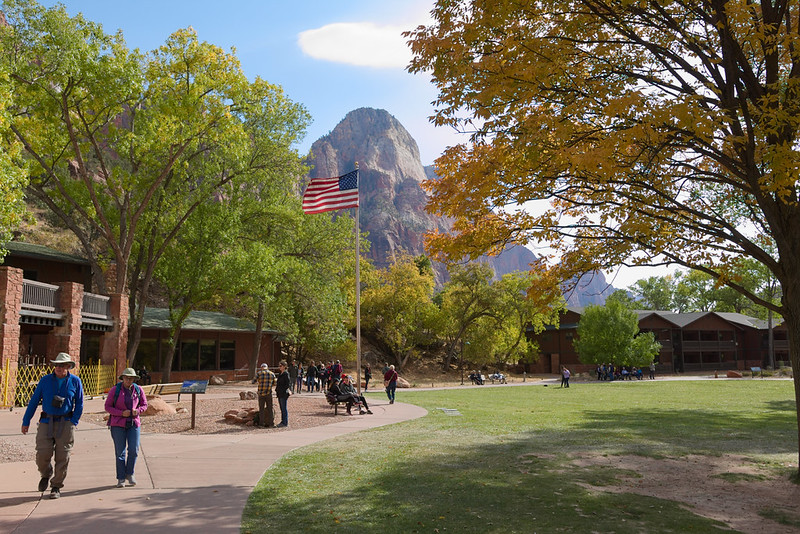
Zion Lodge is stop number five along the Scenic Drive in Zion National Park and a great place to take a break during your drive.
This is a convenient spot to grab lunch, pick up snacks, or just sit down for a bit. If you’re in the mood for something simple, you can even stop for ice cream and relax before continuing. There are a couple of dining options here, including the Red Rock Grill and the Castle Dome Café, along with a spacious outdoor patio where you can sit or have a quick picnic.
The open lawn area around the lodge also gives you a chance to stretch your legs, with views of the surrounding cliffs that feel more relaxed compared to some of the busier stops along the drive.
HELPFUL INFO: Zion Lodge is also one of the most popular places to stay inside the park. If you’re thinking about spending the night in or near Zion, it’s worth looking into accommodation options ahead of time so you have a better idea of what fits your trip.
6. Emerald Pools Hike
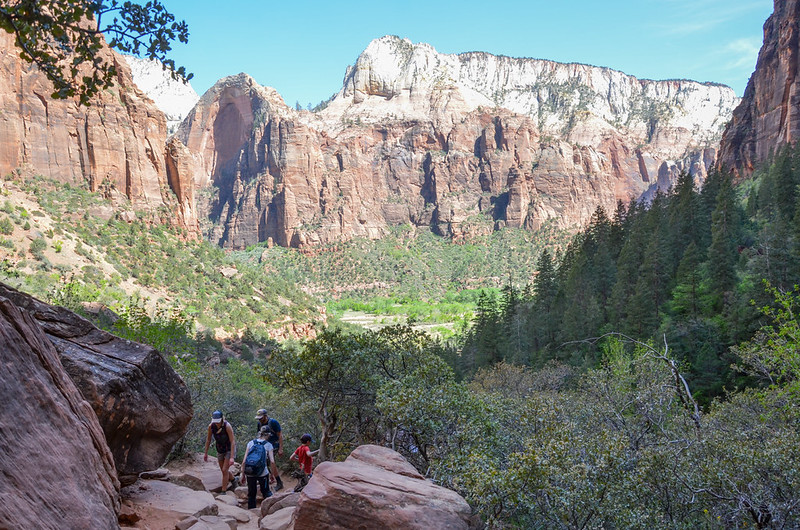
Emerald Pools Trail is a short and easy hike located just across from Zion Lodge, making it a convenient add-on at stop number 5A along the Scenic Drive in Zion National Park.
To reach the trail, cross the main road and walk over the small bridge. From there, the path leads you into a calm section of the canyon where you’ll pass waterfalls and small pools along the way. It’s a quick hike, but it still offers a nice change from the road.
One of the highlights here is walking beneath a large rock alcove, where water flows over the edge above you. It’s a simple route with a bit of variety, making it a good stop if you want to stretch your legs without taking on a longer trail.
7. The Grotto Stop
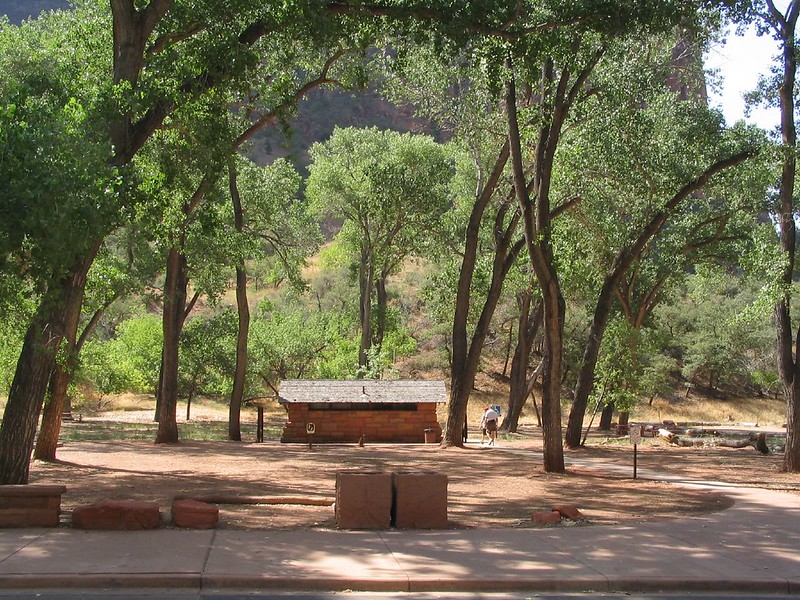
The Grotto is stop number six along the Scenic Drive in Zion National Park and a solid place to slow down for a bit.
The Grotto Trail is a short and easy walk that leads to a shaded picnic area near the Virgin River. It’s a quiet spot compared to some of the busier viewpoints, with trees providing cover and open space to sit, eat, or just take a break before continuing your drive.
If you’re planning to hike, this is also where the trail to Angels Landing begins. It’s one of the park’s most well-known hikes, so you’ll likely see groups preparing for the climb or returning from it. Even if you’re not doing the full hike, this stop still offers a nice place to pause and reset during your trip.
8. Weeping Rock Trail
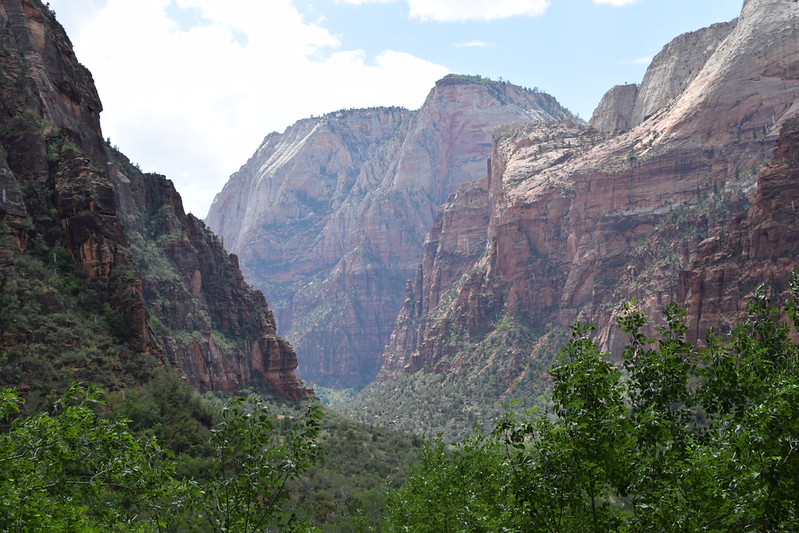
Weeping Rock Trail is one of the most rewarding short hikes along the Scenic Drive in Zion National Park. No matter the season, it’s a stop that’s easy to fit into your route.
The trail itself is short and simple, at about 0.5 miles round trip. It doesn’t take long, which makes it a great option if you want a quick walk without committing to a longer hike.
What makes this trail stand out is the setting along the way. You’ll pass rock walls where water slowly drips down, along with small streams depending on recent weather. Patches of greenery hang from the cliffs, adding a different feel compared to the drier parts of the canyon.
At the end, the path leads into a large alcove where water flows over the rock above. Standing underneath it gives you a closer look at how water shapes the canyon over time, making this short stop feel more engaging than expected.
9. Big Bend Viewpoint
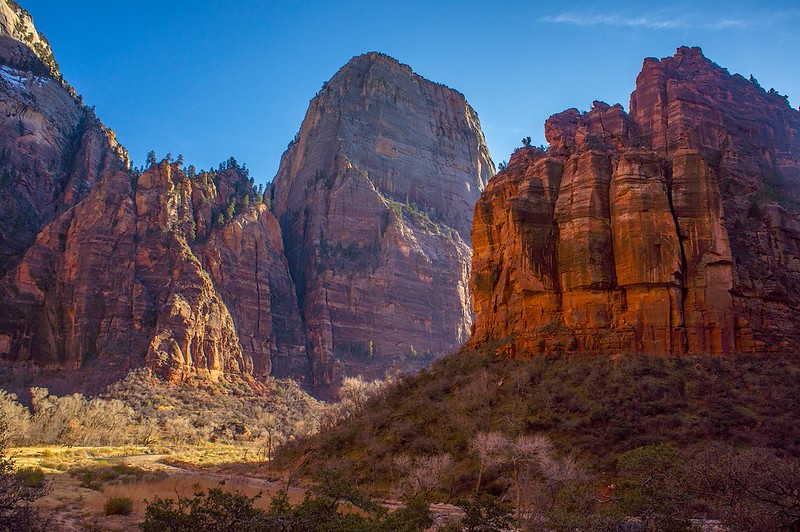
Big Bend is stop number eight along the Scenic Drive in Zion National Park, where the Virgin River makes a sharp curve around a massive rock formation known as the Organ.
From this bend, you get a wide look at several key features in the canyon. The Great White Throne rises in the distance, partly visible above the ridge near Angels Landing. You can also spot Observation Point and Cable Mountain, along with other cliffs that frame the valley from different angles.
The open space at this stop gives you room to step out, look around, and take in the scale of the canyon without feeling crowded by tight rock walls. It’s a spot where the landscape feels more spread out compared to earlier sections of the drive.
QUICK TIP: If you can time it right, come here closer to sunset. The light tends to hit the Great White Throne and surrounding cliffs at a lower angle, adding warmer tones and stronger contrast across the rock.
10. Temple of Sinawava: Gateway to Riverside Walk and Zion Narrows
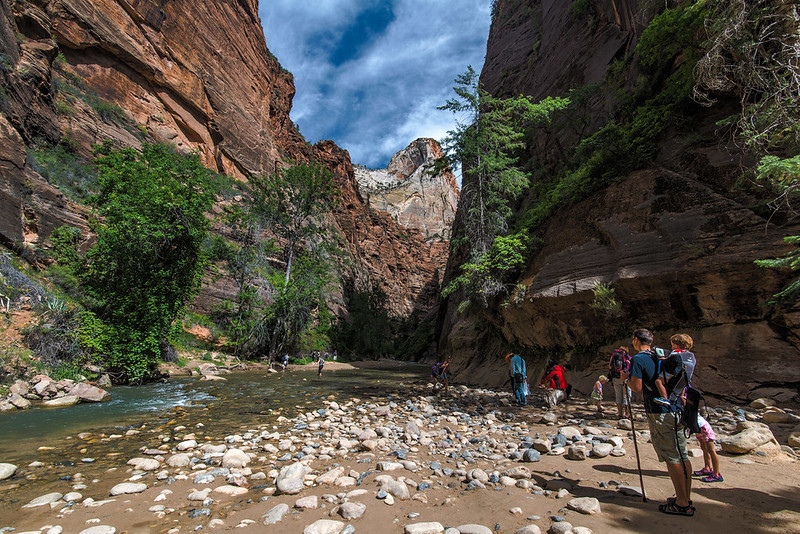
Temple of Sinawava is stop number nine along the Scenic Drive in Zion National Park and marks the end of the road through Zion Canyon.
This is where two well-known trails begin—the Riverside Walk and the The Narrows. Both start from the same area, making it a popular stop for visitors who want to stretch their legs or continue deeper into the canyon on foot.
Right from the starting point, the surroundings feel more enclosed, with tall canyon walls rising on both sides. The Virgin River runs alongside the trail, adding movement and sound as you begin your walk. Even if you don’t go far, the setting here makes this stop worth your time.
11. Riverside Walk Trail
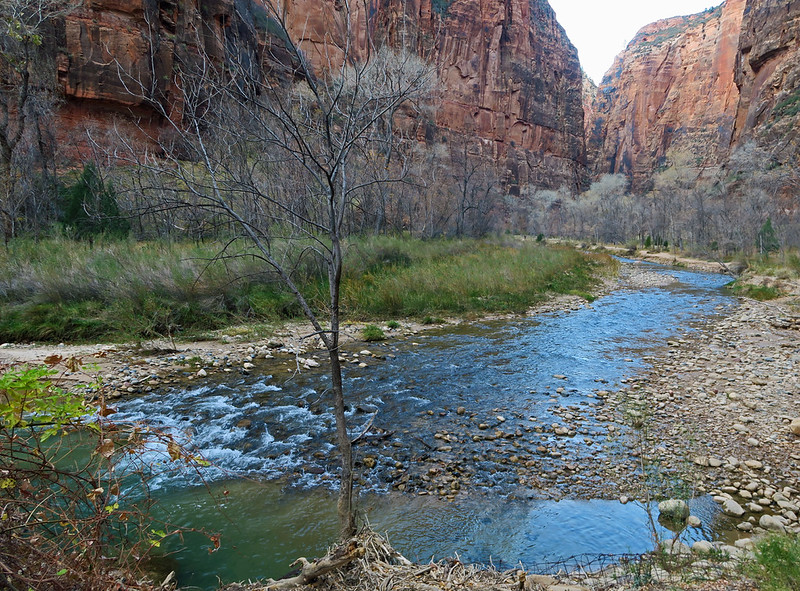
Riverside Walk is an easy, paved trail with very little elevation change, making it one of the most accessible walks in Zion National Park. The trail stretches about 1.1 miles one way, following the Virgin River with canyon walls rising high on both sides.
As you walk, the path stays close to the river, with plenty of spots to pause and take in the surroundings. The route feels calm and steady, with the sound of flowing water alongside you the entire way.
At the end of the trail, you reach the start of The Narrows. From here, the route continues through the river itself, where the water becomes the trail. Even if you don’t go further, reaching this point is a highlight.
HELPFUL INFO: After finishing the Riverside Walk and getting a look at the Narrows, head back the same way to Temple of Sinawava. From there, take the shuttle or your vehicle back to Canyon Junction Bridge (Stop #3). This sets you up for the next part of the drive through the Zion–Mount Carmel Tunnel.
12. Zion-Mount Carmel Tunnel
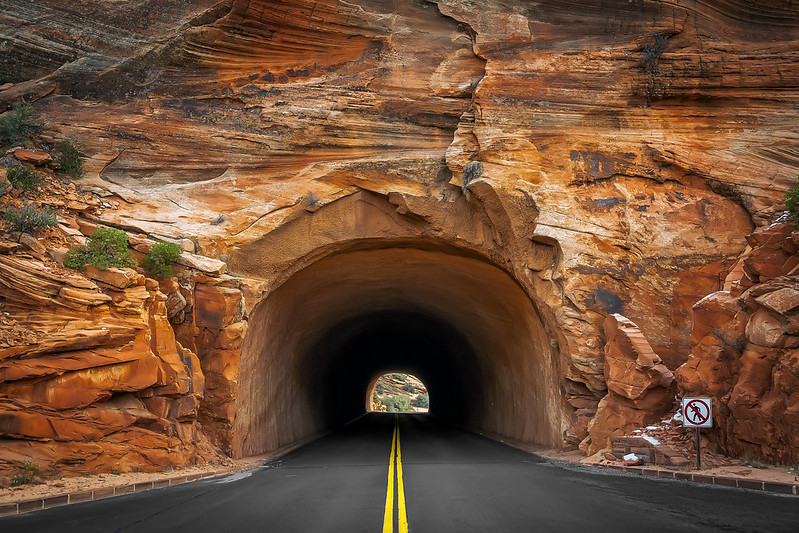
The Zion-Mount Carmel Tunnel is stop number ten on the map and one of the most impressive features along the Scenic Drive in Zion National Park.
This 1.1-mile tunnel was built between the late 1920s and 1930. At the time of its opening on July 4, 1930, it was the longest tunnel of its kind in the United States. It was created to connect Zion with nearby destinations like Bryce Canyon and the Grand Canyon, making travel between these parks far more direct.
The tunnel rises about 289 feet from west to east with a steady grade, cutting through solid sandstone high above the canyon floor. Workers drilled from both ends, moving through rock and darkness, and managed to meet almost perfectly in the middle—an impressive result considering the tools available at the time.
Driving through it feels different from the open canyon sections. The road narrows, light shifts, and small window openings briefly reveal views outside before you exit on the other side.
HELPFUL INFO: Vehicles wider than 7 feet 10 inches or taller than 11 feet 4 inches require a tunnel permit. The permit costs $15 in addition to the park entrance fee, and traffic inside the tunnel is controlled by park rangers.
13. Canyon Overlook Trail
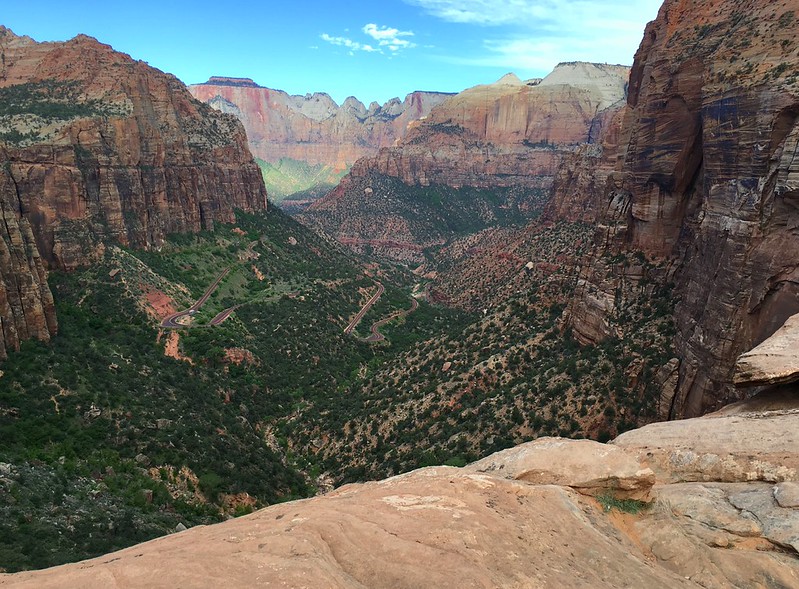
Canyon Overlook Trail is stop number eleven and one of the best viewpoints for a wide look over Zion Canyon in Zion National Park.
The hike to the overlook is about 1 mile one way. It’s a moderate walk with some uneven sections, but nothing too technical. Along the way, you’ll pass through narrow rock gaps and open ledges before reaching the viewpoint.
At the top, the view opens up across the canyon, with a clear look at the switchbacks below the west end of the Zion–Mount Carmel Tunnel, along with formations like the West Temple, Towers of the Virgin, Streaked Wall, and the Beehives. It’s a rewarding stop that gives you a different angle compared to the canyon floor.
HELPFUL INFO: There is no shuttle service in this section of the park, so you’ll need to use your own vehicle to reach the trailhead. Parking is on the south side of the road, while the trail begins across the street on the north side.
Short on Time? 3 Must-See Stops on Scenic Drive
That’s a long list, right? If you only have time for a few stops in Zion National Park, here are three that stand out and are worth prioritizing:
- Emerald Pools – A short and easy hike where you can see waterfalls and small pools along the trail
- Weeping Rock – A great spot to view hanging gardens and water dripping down rock walls
- Canyon Overlook – One of the best viewpoints for a wide look over Zion Canyon
Safety matters while driving through the park. Always use designated pullouts if you want to stop for photos, and avoid stopping in the middle of the road. If you’re driving later in the evening, take it slow and watch for wildlife, as animals may cross or step onto the road without warning.
If you’re planning to extend your trip, Zion pairs well with nearby parks like Bryce Canyon National Park, Grand Staircase-Escalante National Monument, Canyonlands National Park, and Capitol Reef National Park.
You may also like :