Ghana sits along the western edge of Africa, a compact country with a strong cultural identity and a steady political record. Over the years, it has gained respect for democratic stability and gradual economic growth. For many travelers, that sense of order adds comfort to the adventure.
Often ranked among the most peaceful nations globally, Ghana carries an easygoing rhythm. Days unfold under bright sunshine, whether you are walking along Atlantic beaches or moving through energetic city streets. The people are open and warm, and transport options—from domestic flights to shared minibuses—make moving between regions fairly simple.
The country is divided into 16 administrative regions, generally grouped into Northern and Southern Ghana. Each side offers something different. Coastal towns in the south bring palm-lined shores and historic landmarks, while the north opens up wide savannah landscapes and traditional villages.
In the south, Kakum National Park is known for its canopy walkway suspended high above the forest floor. The coastal city of Cape Coast also draws visitors to its historic castles and ocean views. Meanwhile, the capital, Accra, blends modern life with deep-rooted traditions.
Travel north and you reach Mole National Park, where elephants roam freely across open plains. It is a different pace—quieter, raw, and wide.
From rainforests to savannah, beaches to wildlife reserves, Ghana offers variety across a relatively small map. Keep reading and you’ll see how each region adds its own flavor to the journey.
1. Kakum National Park
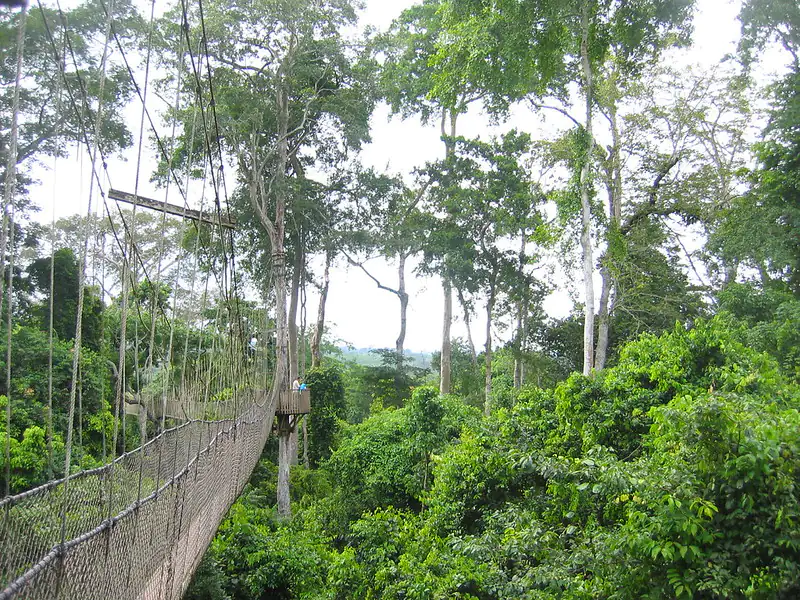
Kakum National Park is often described as Ghana’s national park in spirit. Covering about 145 square kilometers in the southern coastal belt, it protects a large stretch of tropical rainforest in the Central Region. The park shelters a range of wildlife, including forest elephants, antelopes, and several rare species that thrive under its thick green canopy.
The highlight for most visitors is the canopy walkway, suspended roughly 30 meters above the forest floor. Walking across the narrow bridges can feel intense at first, especially if heights are not your thing. Still, the reward comes quickly. From above, the treetops stretch in every direction, and the forest sounds seem closer and sharper.
Beyond the walkway, guided trails take you deeper into the park’s ecosystem. Tall trees filter the sunlight into scattered beams, and the air carries that damp forest scent. Kakum is more than a quick stop—it’s a place where you pause, look around, and feel how vast a rainforest can be.
2. Boti Falls
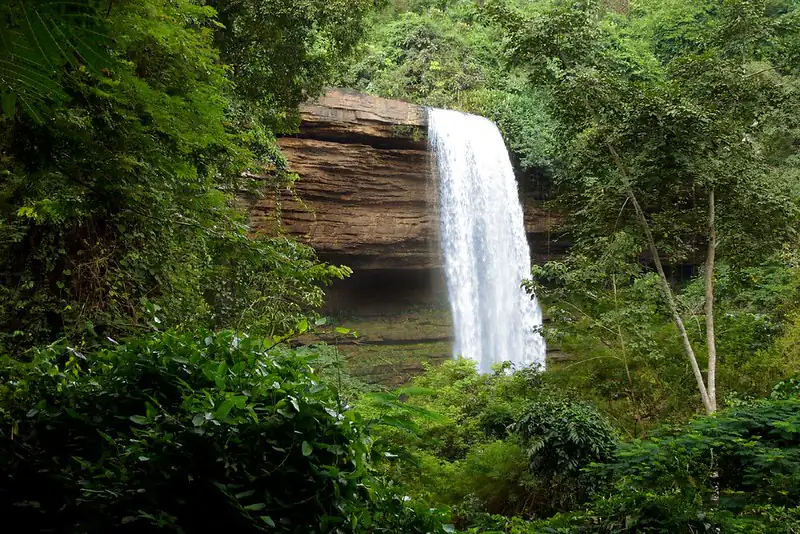
Waterfalls pull crowds from every direction, and Boti Falls is no exception. Set in Ghana’s Eastern Region, about 17 kilometers northeast of Koforidua, this natural site blends scenery with long-held tradition. The drive itself hints at what’s ahead—green hills, rocky paths, and the distant echo of rushing water.
Boti Falls is known as a twin waterfall. Locals describe the two streams as male and female, representing the upper and lower falls. During the rainy season, when water levels rise and both streams flow strongly side by side, the sight becomes far more dramatic.
There is also a cultural belief tied to this moment. Community members say that when the volume increases, the twin falls are “meeting.” At such times, a small ceremony may be held. With water crashing onto the rocks below, fine mist fills the air, and a rainbow often forms across the spray—brief, bright, and unforgettable.
3. The Volta Region and Lake Volta
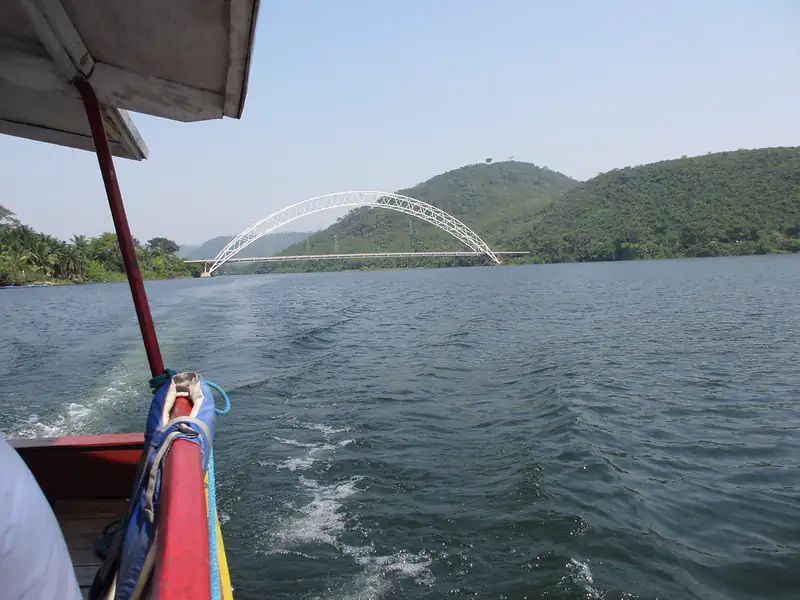
The Volta Region remains one of Ghana’s less-traveled corners, yet it holds a wide range of natural landmarks. Rolling mountains rise behind rural towns, waterfalls spill through forested slopes, and open landscapes stretch toward the horizon. It is quieter than many other parts of the country, which gives it a different pace.
At the center of it all lies Lake Volta, recognized as the largest artificial lake in the world by surface area. Covering about 8,502 square kilometers, it winds across a large portion of Ghana, touching multiple regions along its path. From above, the lake looks like a vast inland sea branching into long inlets.
The lake is held back by the Akosombo Dam, a major engineering project that plays a key role in the country’s power supply. Beyond electricity generation, the lake supports fishing, transport, and local livelihoods. Spend time along its shores and you’ll notice how open the setting feels—wide water, distant hills, and a calm atmosphere that invites you to slow down.
4. Exploring the Northern Region: Mole National Park
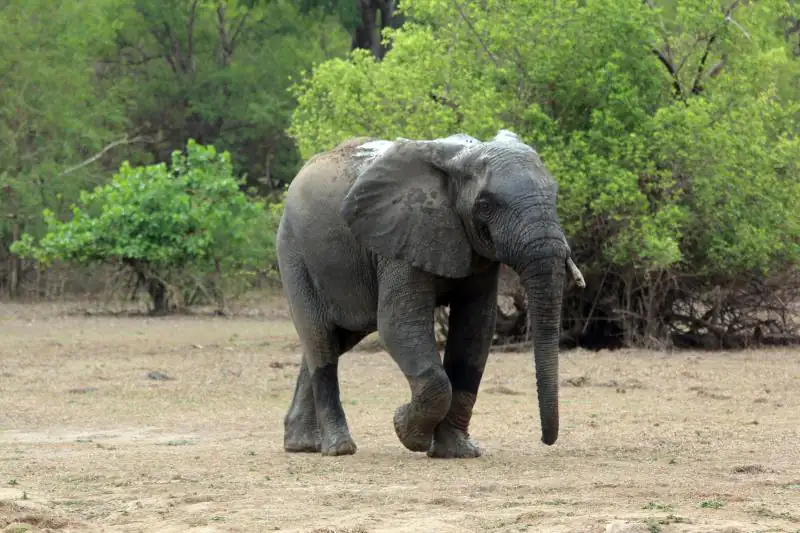
Ghana’s Northern Region offers a landscape that feels wide and untamed. At its center stands Mole National Park, a vast protected area known for its wildlife and open savannah scenery. The park serves as a refuge for endangered animals, including elephants and roan antelope, along with several rare bird species that move across the plains.
Covering approximately 4,840 square kilometers, Mole is the largest wildlife reserve in Ghana. The size alone gives it a sense of scale—long stretches of grassland, scattered trees, and quiet watering spots where animals gather during the heat of the day.
Historically, this was Ghana’s first national park set aside for conservation. Today, it safeguards more than 300 bird species and around 94 mammal species, alongside reptiles and other creatures that thrive in the dry woodland environment. A visit here feels expansive and grounded, with wildlife encounters unfolding at their own pace.
5. Agumatsa Falls (Wli Waterfalls)
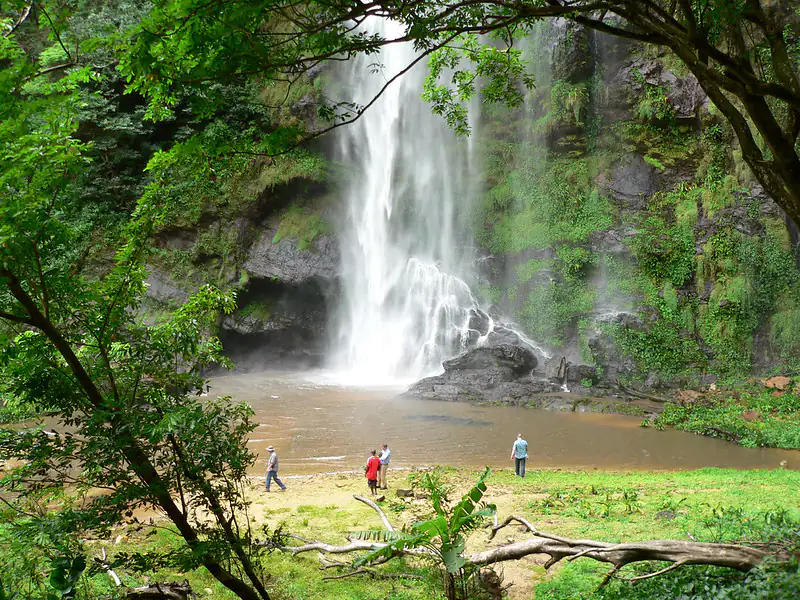
For travelers who want a calm setting to unwind, a waterfall often does the trick. In Ghana’s Volta Region, about a five-hour drive from Accra, you’ll find Wli Waterfalls, also known as Agumatsa Falls. It is widely recognized as the tallest waterfall in Ghana and even in West Africa, which places it high on many travel lists.
The falls drop in two main sections, surrounded by green hills and forest paths. The lower level is easier to reach and offers a cool pool where visitors can swim or sit nearby and listen to the steady rush of water hitting the rocks below.
For those ready for a tougher walk, a guided hike leads to the upper falls. The trail climbs through thicker vegetation and uneven ground before opening to a higher viewpoint. Near the top stands a shrine linked to local beliefs, said to have origins tracing back to Togo. The mix of natural power and cultural history gives this site depth beyond its height.
6. Kintampo Falls
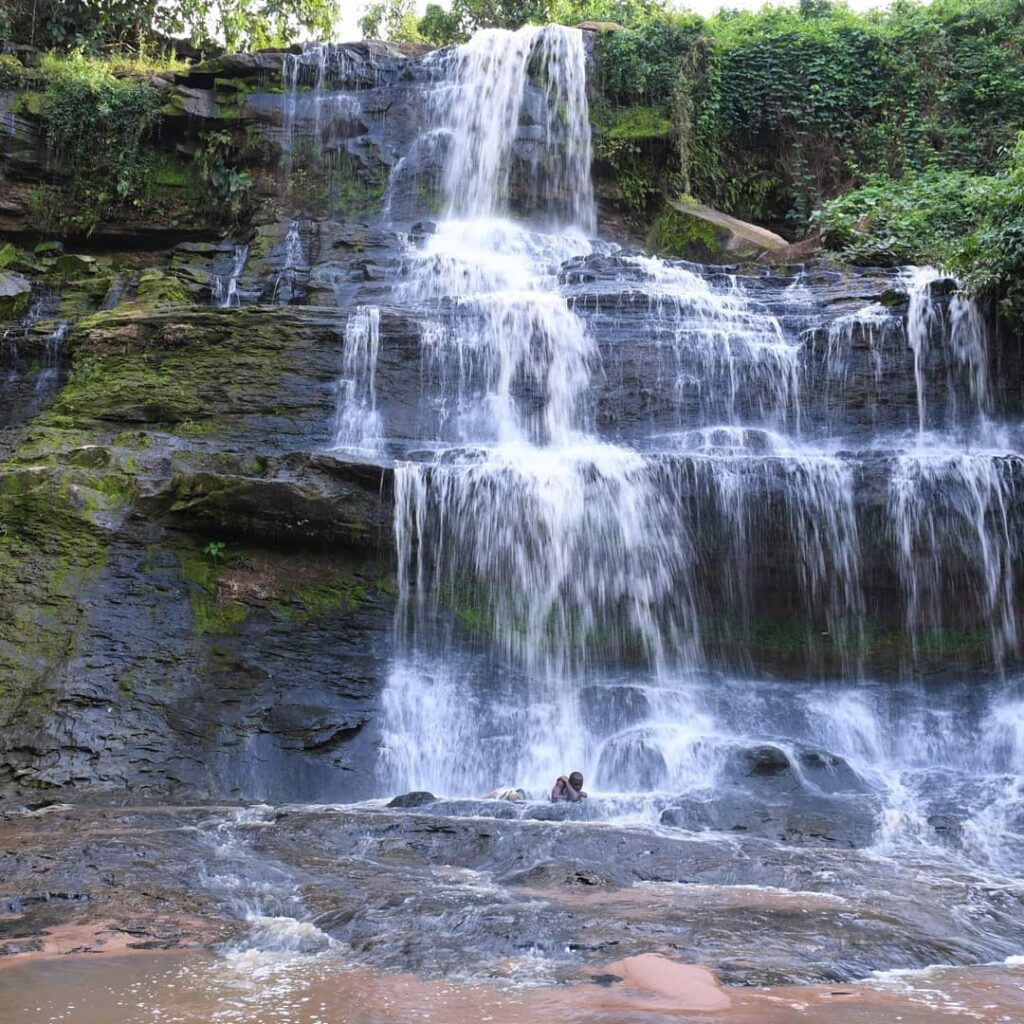
Another waterfall that draws steady attention is Kintampo Falls. It sits about 4 kilometers from Kintampo Township, along the road linking Kumasi to the Bono East area, formerly part of the Brong Ahafo Region. The setting feels tucked away from city noise, with tall trees framing the falling water.
Kintampo Falls spreads out in a stair-like formation. Instead of one straight drop, the water flows over several rocky steps. At one point, it seems to vanish beneath the surface, only to reappear roughly 200 meters away. That shifting flow gives the site a slightly dramatic character, especially after rainfall.
Climb to the upper section and the view opens wide. From there, you can see the layered cascade and the surrounding forest canopy. Many visitors come for the outlook alone. Afterward, a short drive takes you to Boabeng Fiema Monkey Sanctuary, where sacred monkeys move freely through the trees, adding another stop to your trip in the same area.
7. Lake Bosomtwe
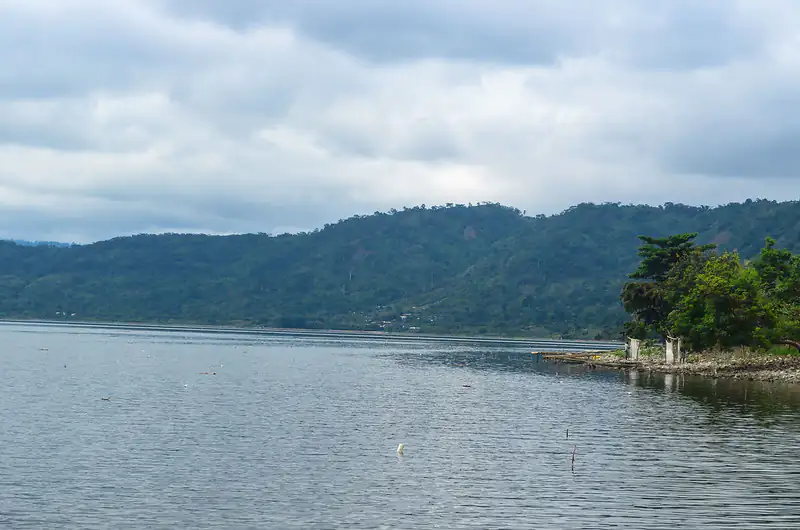
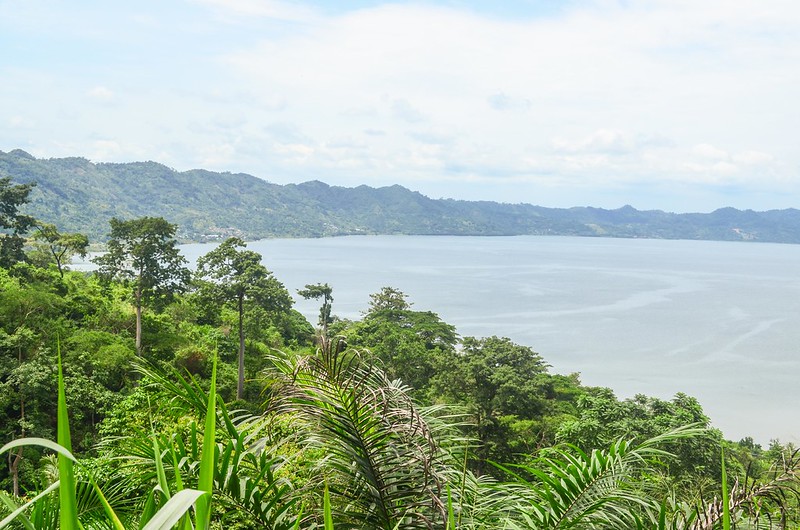
The Ashanti Region draws large numbers of visitors each year, and Kumasi, its capital, stands at the center of that interest. Just outside the city lies Lake Bosomtwe, the only natural lake in Ghana. It holds cultural value for local communities and remains one of the country’s most talked-about landscapes.
Lake Bosomtwe covers roughly 49 square kilometers and reaches depths between 70 and 74 meters. A ring of hills surrounds the water, creating a bowl-like setting. The lake supports several fish species and plays an important role in nearby villages. According to local tradition, the lake formed after a meteorite struck the area many years ago.
Visitors rarely run out of things to do here. Boating and swimming are common, while others prefer kayaking or simply sitting by the shore. For those who enjoy movement, hiking trails along the surrounding hills offer higher viewpoints across the water. Whether you choose activity or rest, the lake offers space to spend your time your own way.
8. Larabanga Mosque
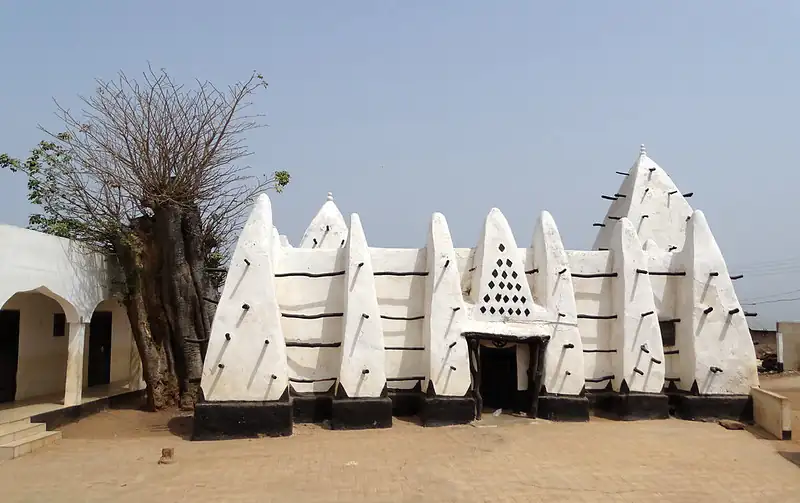
Larabanga Mosque is widely regarded as the oldest mosque in Ghana. Located in the village of Larabanga in the Savannah Region, it dates back to 1421. Many people refer to it as the “Mecca of West Africa” because of its religious and historical value.
The mosque appears on the World Monuments Fund Watch List of 100 Most Endangered Sites, a sign of its age and fragile structure. Built in the Sudanese architectural style, it was constructed using mud and sticks, with wooden beams extending from the walls. Its simple form and earth-toned surface give it a strong presence despite its modest materials.
The story behind its origin carries a sense of legend. It is said that a Muslim traveler named Ayuba passed through the area and stopped to rest. During the night, he dreamed of building a mosque on that very spot. When he awoke, the foundation had already been laid, and he completed the structure from there. Today, the mosque stands as one of Ghana’s most significant sacred sites, drawing visitors who wish to witness its long-standing spiritual and cultural importance.
9. Manhyia Palace and the Role of the Asantehene
Ghana is home to many traditional communities where chieftaincy still carries real influence. In these areas, chiefs are not symbolic figures; they play a part in social order, land matters, and community leadership. Respect for tradition remains strong, especially in the Ashanti Region.
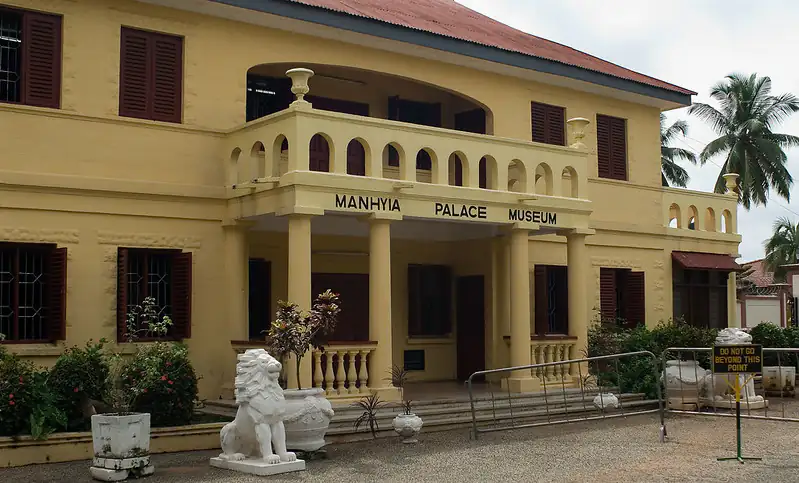
Among the several chiefs in this region, the most respected is the Asantehene, the ruler of Asanteman. His official residence is the Manhyia Palace, located in Kumasi. The palace stands as a political and cultural center, reflecting the authority of the Ashanti Kingdom.
A visit to Manhyia Palace offers insight into Ashanti customs, royal regalia, and historical records. On certain occasions, visitors may witness traditional ceremonies or durbars where the Asantehene appears in full regalia. Ghanaians take their heritage seriously, so learning basic cultural etiquette—such as greetings and respectful conduct—can make interactions smoother and more meaningful during your stay.
10. St. George’s Castle (Elmina Castle)
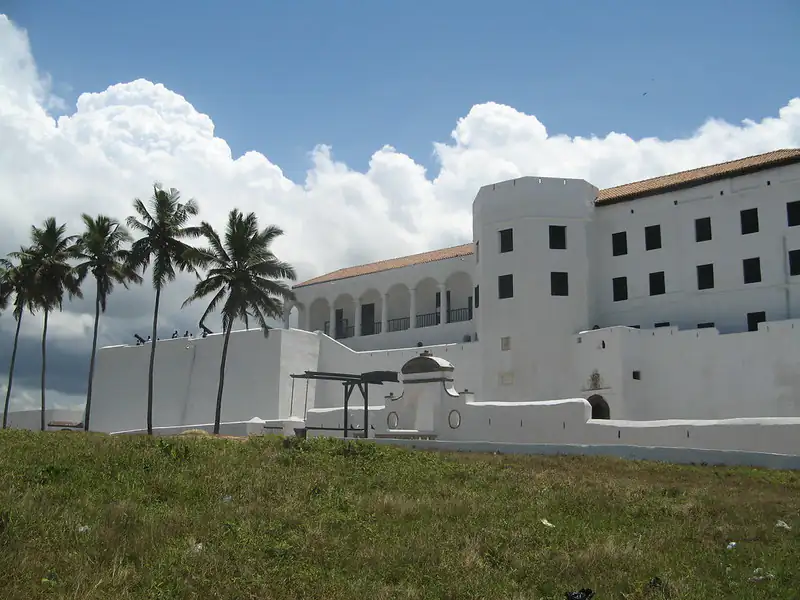
Elmina Castle, also known as St. George’s Castle, stands along the coast in Ghana’s Central Region. It is one of the country’s most recognized landmarks and can be seen when traveling from Accra toward Elmina. The white walls rise above the shoreline, facing the Atlantic Ocean.
The structure was first built by the Portuguese in 1482, making it the earliest European building in sub-Saharan Africa. Construction lasted about two years and was completed in 1486. At the time, it served as a trading post for gold and other valuable resources.
Over time, the castle’s purpose changed. It became a major center in the transatlantic slave trade, where enslaved Africans were held in dungeons before being shipped across the ocean. Today, a visit to Elmina Castle reveals the physical traces of that painful period—narrow cells, heavy doors, and dark chambers that reflect the suffering endured there. Walking through the site offers a direct encounter with a difficult chapter in Ghana’s history.
11. Cape Coast Castle
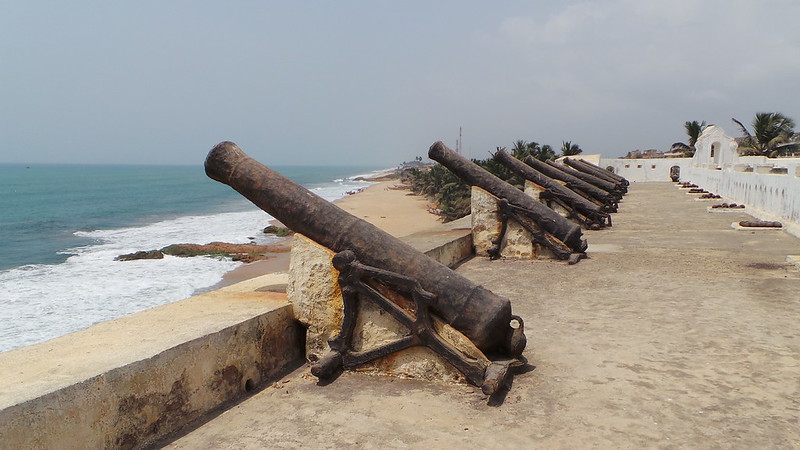
Another major historic site in Ghana is Cape Coast Castle, located in the Central Region. Like Elmina Castle, it was first established by the Portuguese, with early structures dating back to the 16th century around 1555. It began as a trading post for gold and other resources before its role shifted over time.
In those days, Ghana was known as the Gold Coast because of the large quantities of gold found across the land. That wealth attracted European powers, first the Portuguese and later the British, who expanded and fortified the castle. What started as a commercial hub eventually became a center in the transatlantic slave trade.
One of the most powerful sections of the castle is the “Door of No Return.” Through this narrow exit, enslaved Africans were led from the dungeons to waiting ships on the Atlantic. For many, that door marked the final moment on their homeland’s soil. Touring Cape Coast Castle today brings visitors face to face with the physical spaces tied to that history, offering a deeper understanding of slavery’s lasting impact on Ghana and beyond.
12. Kwame Nkrumah Memorial Park and Mausoleum
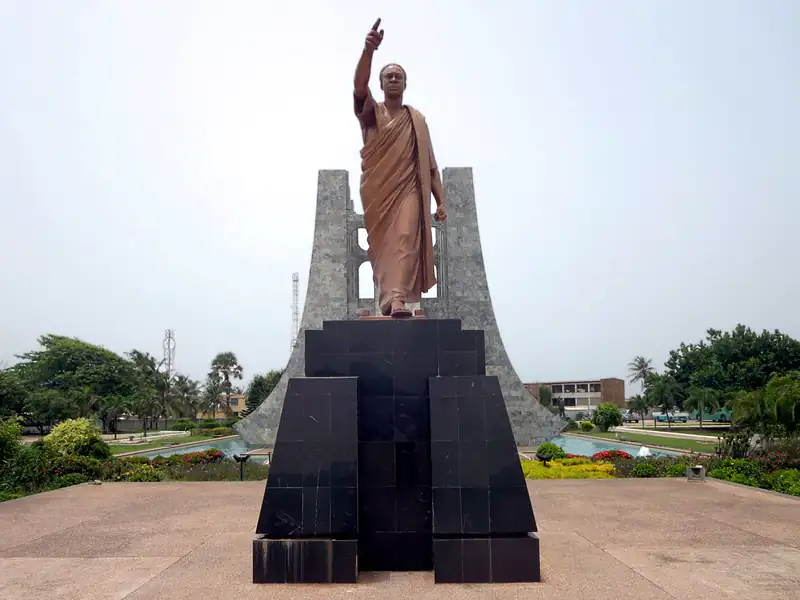
Kwame Nkrumah is widely recognized as one of Africa’s most influential leaders. He guided Ghana to independence from Britain on March 6, 1957, marking a turning point in the nation’s history. His leadership also inspired independence movements across the continent.
The Kwame Nkrumah Memorial Park and Mausoleum, opened in 1992, honors his life and achievements. Located in Accra, the site has become one of the capital’s most visited landmarks. The tall mausoleum structure stands out with its simple yet striking design.
The park serves as the final resting place of Dr. Nkrumah and his wife, Fathia Nkrumah. Inside the museum section, visitors can view photographs, personal items, and rare artifacts linked to Ghana’s independence struggle. Walking through the memorial grounds offers a clearer picture of how the country moved from colonial rule to self-governance, making it a meaningful stop for anyone interested in Ghana’s political past.
13. Accra
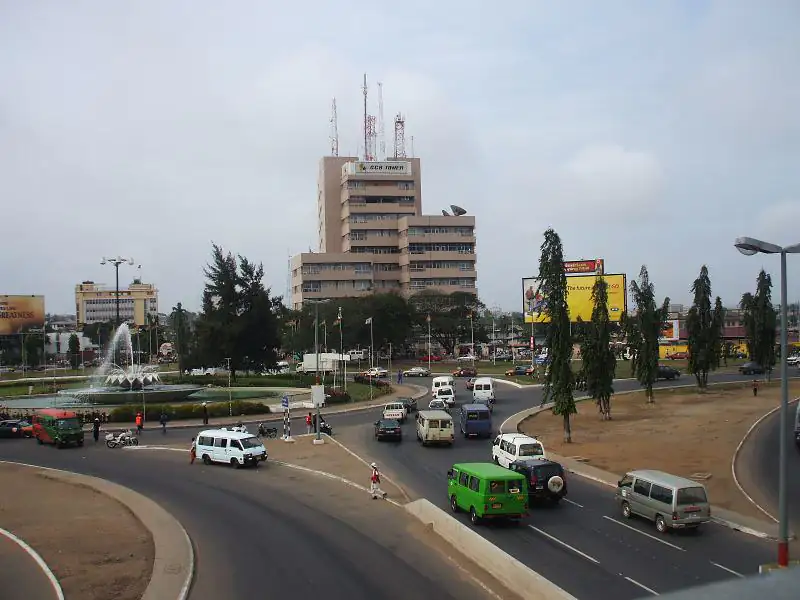
Accra is Ghana’s capital and one of its most active urban centers. With a population of over two million people, the city moves at a steady rhythm from morning to night. Traffic, music, street vendors, and conversations all blend into a constant pulse.
Accra mixes old and new in a way that feels direct rather than polished. Colonial-era buildings stand beside modern offices and apartment blocks. In Jamestown, you’ll find historic streets and a lighthouse that looks out over the Atlantic. Markets fill the air with noise and color, especially at Makola Market, where traders sell everything from fabrics to fresh produce. The Ghana National Museum adds context with exhibits focused on art, archaeology, and cultural heritage.
The coastline offers another side of the city. Beaches such as Labadi Beach and Coco Beach draw both locals and visitors looking for sea air and open space. Beyond these well-known stops, Accra has many smaller corners worth exploring, making it a key starting point for any trip across Ghana.
14. Kumasi
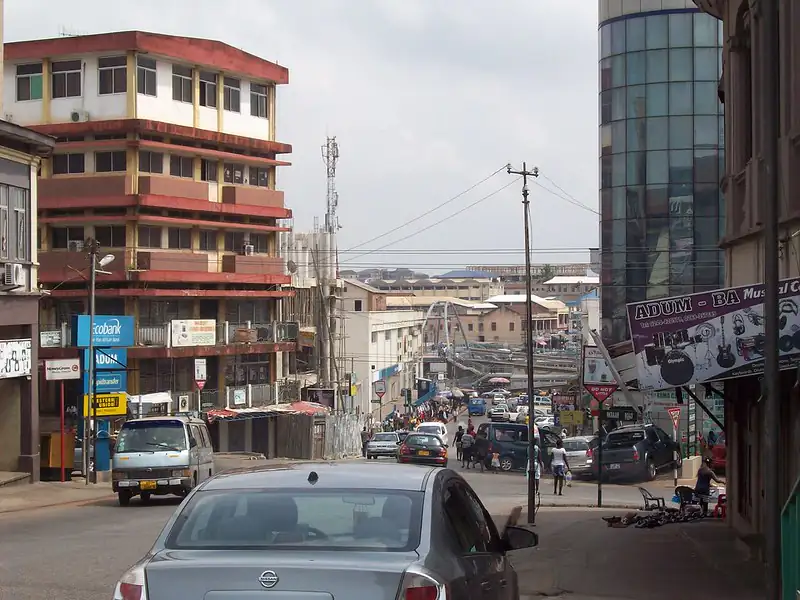
Kumasi once served as the capital of the Ashanti Kingdom and remains Ghana’s second-largest city today. It carries strong historical weight while still functioning as a busy commercial center. Streets stay active, and markets stretch across wide sections of the city.
Kumasi is especially known for gold jewelry, handwoven kente cloth, and carved wooden stools that hold cultural meaning. Shopping here feels direct and lively, particularly around Kejetia Market, where traders fill the stalls with fabrics, beads, and crafts. Anyone interested in traditional art will find plenty to explore.
For a deeper look into Ashanti history, a visit to the Manhyia Palace Museum is worthwhile. The museum presents royal artifacts, photographs, and records connected to the Ashanti Kingdom. Together, these elements give Kumasi a strong identity rooted in heritage and craftsmanship.
15. Busua Beach Coastal Escape Experience
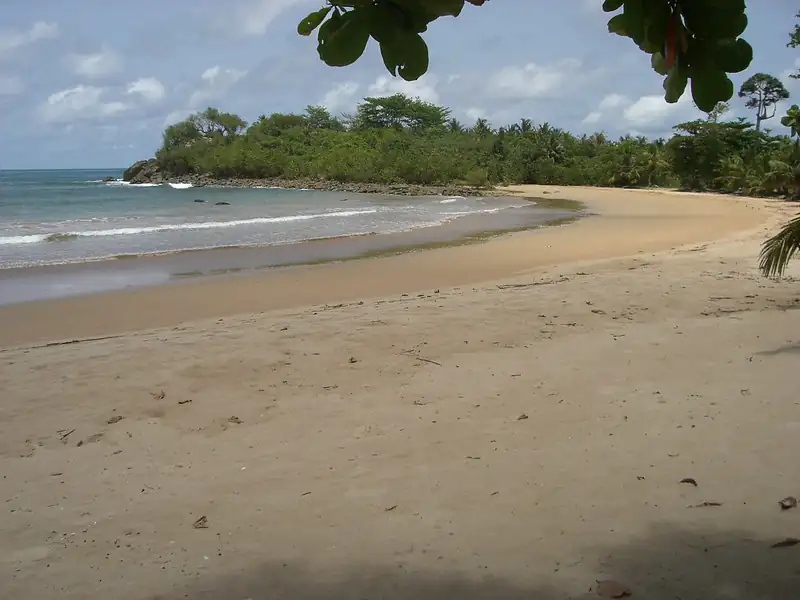
Ghana’s southern coastline stretches along the Atlantic, and Busua Beach stands out as one of its most inviting seaside spots. The shoreline runs wide and open, with soft sand and rolling waves that draw both locals and travelers.
Busua is well known for its relaxed beach atmosphere. Visitors can lie under the sun, enjoy freshly prepared lobster, or take part in surfing lessons offered along the shore. For many first-time surfers in Ghana, this is where they begin. The steady waves make it a suitable location to try something new without feeling overwhelmed.
Accommodation options range from simple guesthouses to higher-end resorts located steps from the water. Small restaurants and beachside vendors serve grilled seafood and local dishes throughout the day. Choosing Busua as part of your trip adds a slower coastal rhythm to your Ghana journey.
16. Nzulezo Stilt Village Lagoon Settlement
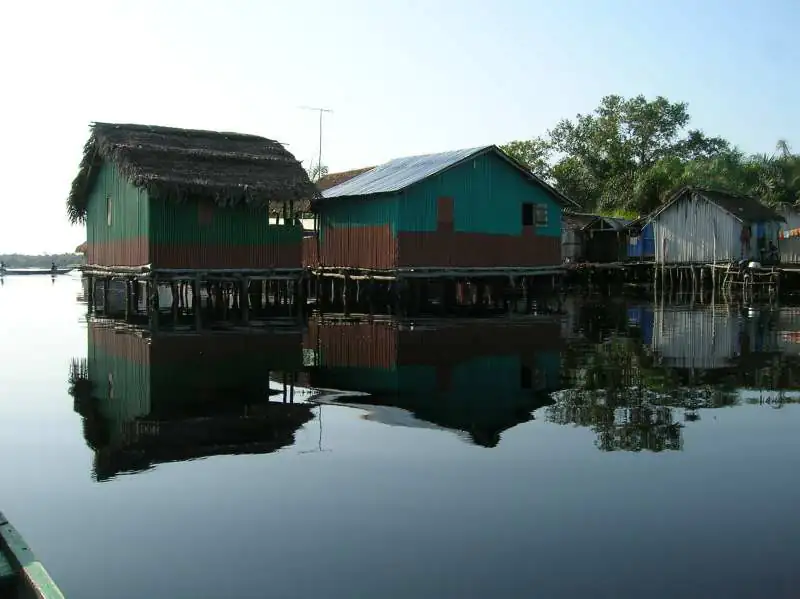
One of Ghana’s most distinctive settlements is Nzulezo, a village built entirely over water. The name translates to “surface of water,” which fits its setting perfectly. Wooden homes stand on stilts above a lagoon, connected by narrow walkways and canoe routes.
Life here moves differently. Boats replace cars, and daily activities unfold above the waterline. Visiting Nzulezo offers insight into how local residents adapted their homes and routines to their environment. The construction style reflects practical thinking shaped by generations.
In recent years, small guesthouses have allowed visitors to stay overnight above the lagoon. Activities include swimming, canoeing, and short boat trips through nearby waterways. Wildlife sightings are also possible; crocodiles and monkeys are sometimes seen around the area. The combination of water, architecture, and village life makes Nzulezo one of Ghana’s most memorable stops.
- Location: Western Region, Ghana
17. Kokrobite Beach Cultural Music Retreat
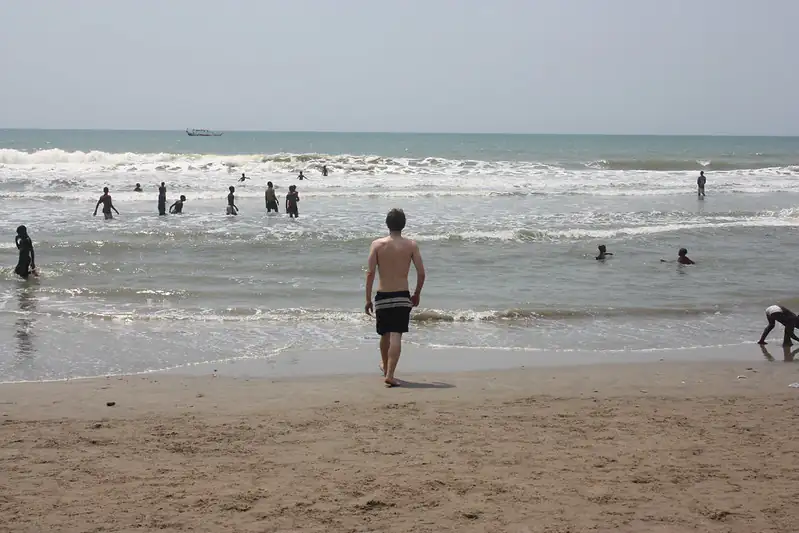
Kokrobite Beach is another coastal stop that draws attention when visiting Ghana. Located about 30 kilometers from Accra, it is close enough for a combined city and beach outing. Many travelers plan it as a short escape from the capital’s fast pace.
One of the main attractions here is the Academy of African Music and Arts, which brings together music, dance, and traditional performance. Workshops and live shows often take place, making the area popular among those interested in creative expression and cultural exchange.
Visitors can book beachside resorts overlooking the Atlantic or simply come for a day trip to relax by the water. The annual Homowo festival, usually held in May, adds another layer of energy to the area. During this period, crowds gather for traditional celebrations, music, and community events along the coast.
18. Paga Crocodile Pond Cultural Sanctuary Experience
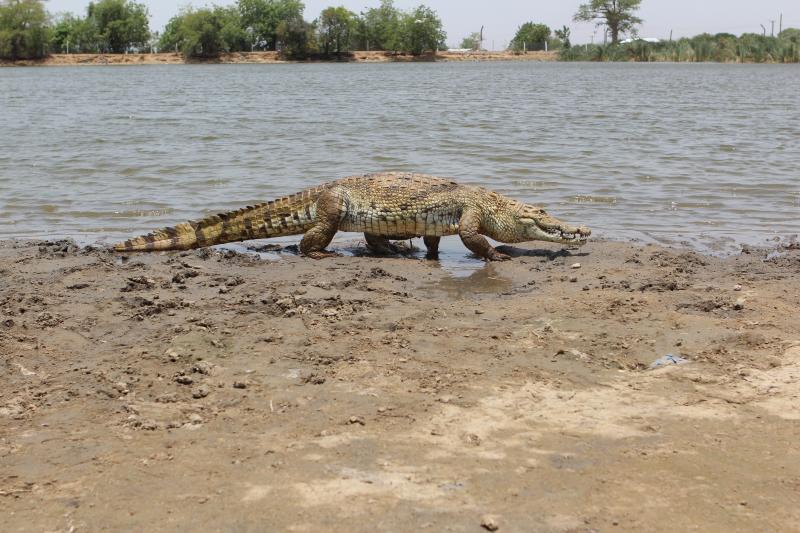
Many people keep their distance from crocodiles, often out of fear or simple caution. At Paga Crocodile Pond, however, the experience is different. This site in Ghana’s Upper East Region serves as a protected area where crocodiles live under the care of the local community.
The crocodiles here are known for their calm behavior around visitors. Under the supervision of trained guides, tourists can approach them closely and even touch or feed them. The interaction happens in a controlled setting, with safety instructions clearly explained beforehand.
The community treats the crocodiles with deep respect, and harming them is strictly forbidden. Guides also share stories and beliefs connected to the animals, helping visitors replace fear with understanding. A visit to Paga offers an unusual encounter that blends wildlife, tradition, and community values in one setting.
19. Labadi Beach Lively Weekend Coastal Spot
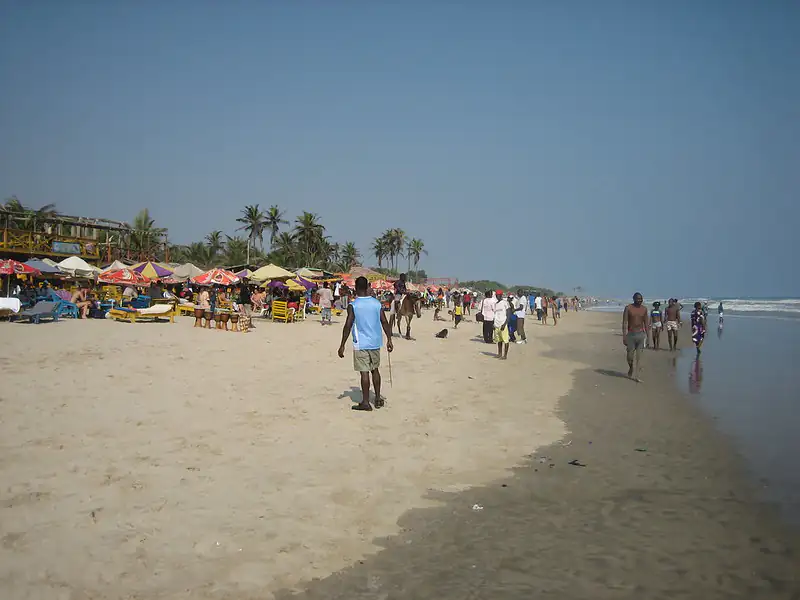
Often described as Accra’s favorite shoreline, Labadi Beach draws both residents and travelers throughout the week. The stretch of sand stays active, especially during weekends when the crowd grows and the energy shifts.
Visitors come to relax under the sun, walk along the water, or sit with friends while enjoying grilled seafood and chilled drinks from nearby eateries. Because the beach area is managed by surrounding hotels, a small entrance fee is usually required at the gate.
Weekends bring added excitement. Live drumming, reggae bands, dance performances, and street-style music often fill the air. The mix of traditional Ghanaian rhythms with hip hop and other Western influences creates an atmosphere that feels dynamic and open.
- Location: Accra, Ghana
- Entry Fee: Approximately INR 68/-
20. Okomfo Anokye Sword Historic Landmark Site
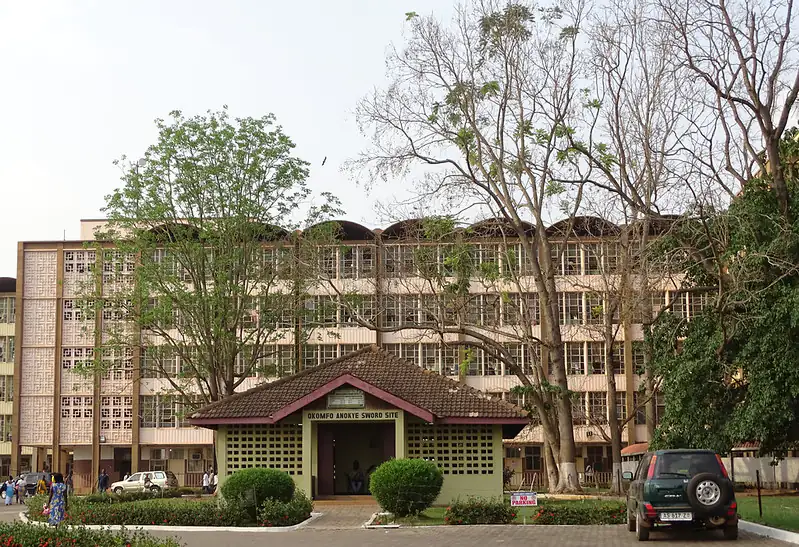
Okomfo Anokye remains one of the most respected figures in the history of the Ashanti Kingdom. As the kingdom’s first chief priest, he played a major role in unifying the Ashanti states and strengthening their power during times of conflict. His name is still closely linked to the foundation of the kingdom.
Around 300 years ago, before his death, he is said to have driven a sword into the ground and declared that no one would be able to remove it. That sword still stands today at the Okomfo Anokye Sword Site in Kumasi. Over the years, many people have tried to pull it out, but none have succeeded.
For visitors exploring Kumasi, this landmark offers more than a simple stop. It connects directly to the origins of the Ashanti Kingdom and the spiritual authority that shaped its early years. Including this site in your itinerary provides a clearer understanding of Ashanti history and leadership traditions.
21. Aburi Botanical Gardens Peaceful Green Escape
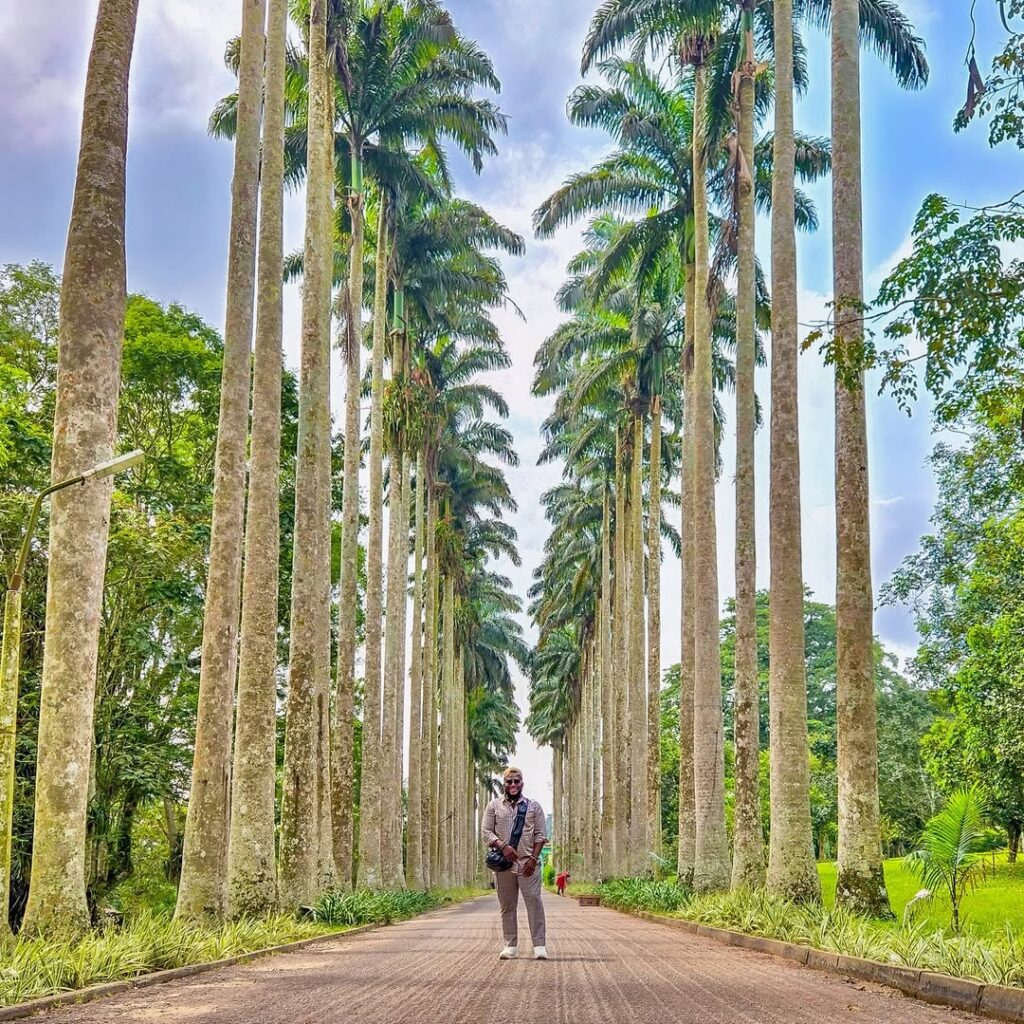
Located in the hills of the Eastern Region, Aburi Botanical Gardens remains one of Ghana’s most refreshing outdoor spaces. The country’s warm climate supports a wide variety of plant life, which makes this garden an appealing stop for those who enjoy open green surroundings.
The gardens officially opened in March 1890 and sit about 30 kilometers north of Accra, in the town of Aburi. Covering roughly 160 acres, most of the land is preserved as natural greenery, while a smaller section contains roads, rest areas, and basic facilities for visitors.
A trip to Aburi offers a slower pace compared to city life. Many people come for quiet walks, simple picnics, or time with family under tall trees and shaded lawns. Since the drive from Accra takes around 45 minutes, it works well as a short getaway without leaving the capital region for long.
Related Posts:
- 21 Stunning Beaches to Travel for Sun, Sand, and Relaxation
- 21 Best Places for Couples to Travel for a Romantic Escape
- 21 Stunning Places to Travel in Egypt for a Once-in-a-Lifetime Trip
- 21 Magical Places to Visit in December for the Holiday Season
Must-Visit Destinations in Ghana: Your Next Adventure
Ghana offers a variety of destinations, each providing a distinct experience. From historic sites to natural wonders, every place has its own story to tell. These locations are not just tourist attractions but are essential parts of the cultural fabric that make Ghana a truly remarkable destination.
The internet is an excellent tool to explore more about these places, giving you valuable insights and tips to make your trip smoother. Whether you’re seeking adventure, relaxation, or cultural immersion, Ghana promises something for everyone. Make sure to include it in your travel plans and experience the rich history, landscapes, and hospitality it offers.
Consider planning your trip with TravelTriangle, and let Ghana be one of the memorable chapters in your travel journey.