
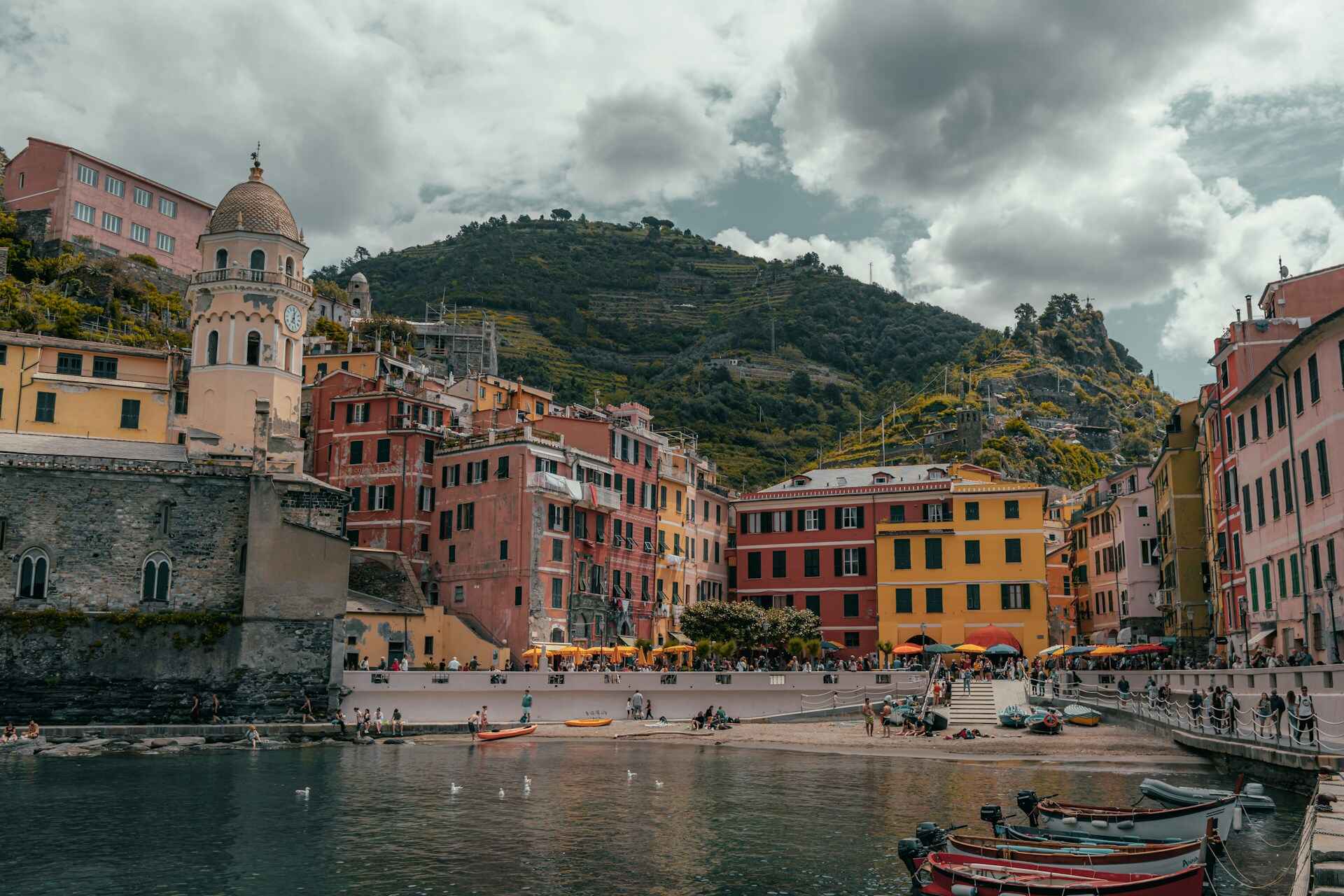
Rome is iconic. Florence draws art lovers. Venice feels unlike anywhere else. But Italy stretches far beyond its headline names, and its lesser-known cities reveal a different rhythm of life.
If you’re picturing a trip filled with distinctive landmarks, remarkable galleries, regional dishes, and even a few UNESCO-listed treasures—without squeezing through dense crowds—these quieter urban centers offer that balance. You can linger in piazzas, claim a café table without hovering, and step into museums where silence still exists.
We’ve spent a decade traveling back and forth across Italy, with extended stays that total more than a year. While the classics still impress us, we now lean toward places where daily life unfolds at a slower pace and conversations last longer than a quick photo stop.
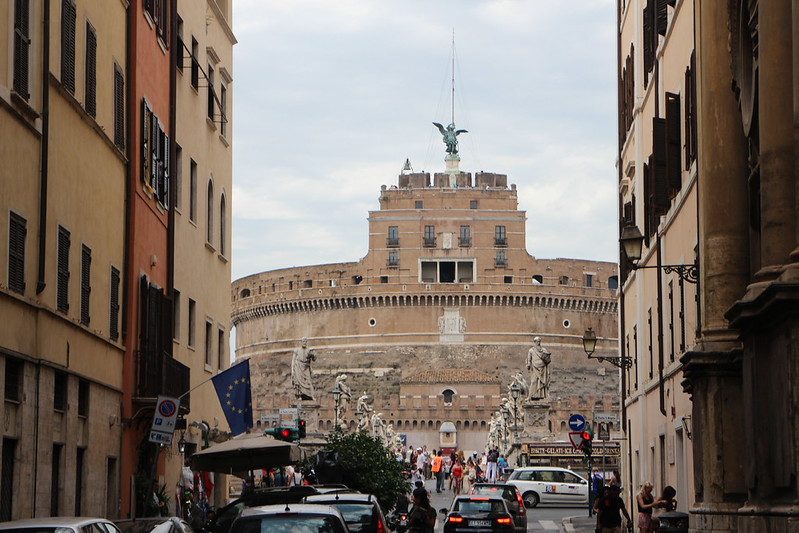
We’ve rented apartments for a month at a time in Rome, Florence, and Bologna. Yet if we were to settle into one Italian city again for an extended stay, odds are it would be somewhere on this list—cities that feel grounded, lived-in, and refreshingly local.
Every destination here has more than 50,000 residents. Italy’s smaller villages and wild landscapes deserve their own feature, so this guide keeps its focus on mid-sized cities that combine culture with convenience.
For context, we’ve paired each pick with a better-known comparison city—purely as a reference point. Still, each place stands on its own character.
And because accessibility matters, nearly all of these cities connect easily by train. You can step off the platform and start exploring within minutes, no complicated transfers required.
Lesser-Known Northern Italian Cities Worth the Detour
1. Parma: Emilia-Romagna’s Quiet Culinary Powerhouse
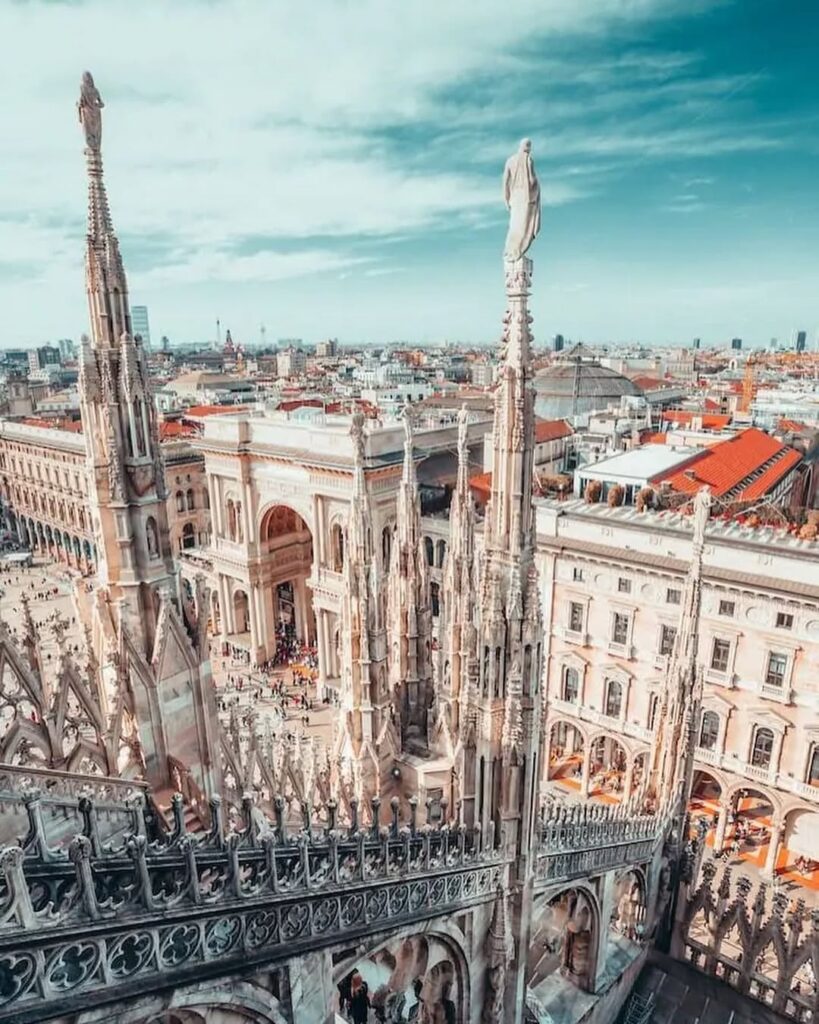
In Emilia-Romagna, Bologna usually gets the spotlight—and we understand why. It was our first love in the region, too. But over time, Parma became something deeper for us.
This university city carries itself with quiet confidence. Its historic center feels made for daily life: walkable streets, lively piazzas, and cafés that fill without ever feeling overwhelming. The cathedral and baptistery stand side by side in pale stone, commanding attention without theatrics. Inside, frescoes and carved details reward a slow visit.
Then there’s the food. Parma is the birthplace of Parmigiano Reggiano and Prosciutto di Parma, two staples that have shaped Italian cuisine worldwide. Tasting them where they are produced changes your perspective. Touring aging rooms stacked with cheese wheels or stepping into a curing facility fragrant with air-dried ham remains one of our most memorable culinary experiences in Italy.
Parma also works beautifully as a base for western Emilia-Romagna. From here, you can branch out to smaller towns, rolling countryside, and lesser-known corners of the region. Even tiny Castell’Arquato, perched on a hilltop, makes for a rewarding outing.
Consider Parma if you’re drawn to food-focused cities like Florence or Bologna but prefer a place that moves at a steadier, more grounded pace.
2. Bolzano: Alpine Italy with a Central European Accent
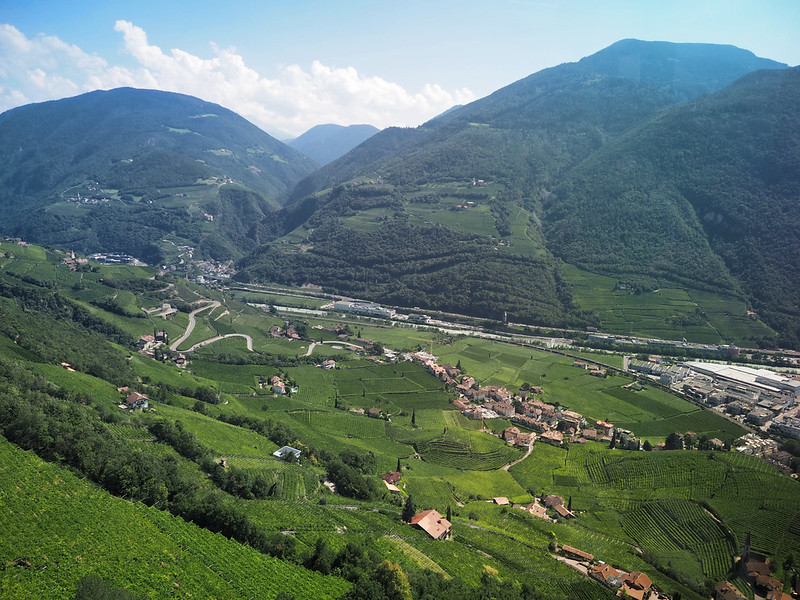
Positioned along the Great Dolomites Road, Bolzano often appears on Alpine itineraries—yet many travelers pass through without pausing, drawn straight toward jagged peaks and high-altitude trails.
That’s a missed opportunity. Bolzano rewards a slower stay.
Encircled by vineyard-covered hills, medieval castles, and the dramatic silhouettes of the Dolomites, the city feels distinctly different from much of Italy. As the capital of South Tyrol—once part of the Austro-Hungarian Empire until 1918—Bolzano (Bozen in German) carries its layered history in everyday life. You’ll hear two languages spoken on the street. Menus shift between pasta and dumplings. Architecture blends Alpine lines with Italian elegance.
One of the city’s most compelling stops is the South Tyrol Museum of Archaeology, home to Ötzi, the 5,000-year-old “Iceman” discovered in the Alps. Seeing him in person is unexpectedly moving and offers a rare glimpse into prehistoric Europe.
Beyond the museum, wander through Castel Roncolo for its medieval frescoes, step inside the Duomo, browse the daily market at Piazza delle Erbe, or ride one of the town’s funiculars up to villages like Soprabolzano. From there, hiking trails stretch outward in every direction.
Before you leave, make time for the view from Santa Maria Maddalena Church. The vineyards, church spire, and mountain backdrop come together in a scene that lingers long after the trip ends.
Consider Bolzano if you’re drawn to midsize Alpine cities like nearby Innsbruck but want that blend of Italian and Central European character in one place.
3. Bergamo: Beyond the Airport Runway
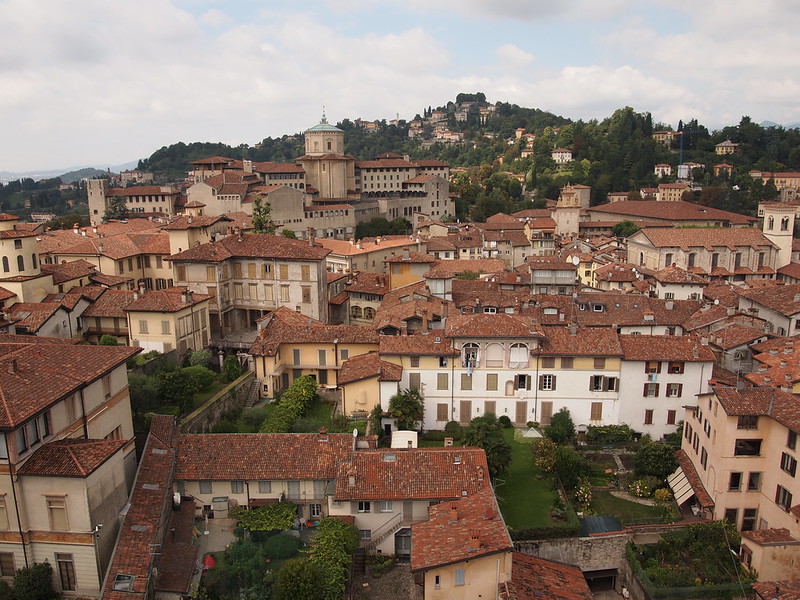
If the name Bergamo sounds familiar, it may be because many travelers land here on their way to Milan. Yet treating it as a transit point misses the point entirely.
The city splits into two distinct halves. Città Alta, the Upper Town, rises above the plains and holds most of the historic treasures. Città Bassa spreads below, where you’ll find the train station, shops, and the rhythms of daily life. Most visitors spend their time climbing upward—and for good reason.
Start with a walk along the Venetian Walls, now part of a UNESCO World Heritage Site. The views stretch across rooftops and distant hills, especially near the San Giacomo Gate. In the heart of the Upper Town, Piazza Vecchia gathers palaces and cafés into a compact stage set. Climb the Civic Tower for a sweeping look over terracotta roofs and church domes.
Step inside the Basilica di Santa Maria Maggiore and the Bergamo Cathedral, then wander through Palazzo Moroni for a glimpse of aristocratic life. For wider panoramas, head to Castel di San Vigilio. The vantage point from its grounds makes the climb worthwhile.
Funiculars connect the layers of Bergamo, turning the journey between upper and lower town into part of the experience itself.
Consider Bergamo if you’re drawn to Verona or other cities defined by stone walls, sloping streets, and elevated views.
4. Ravenna: A City Written in Mosaics
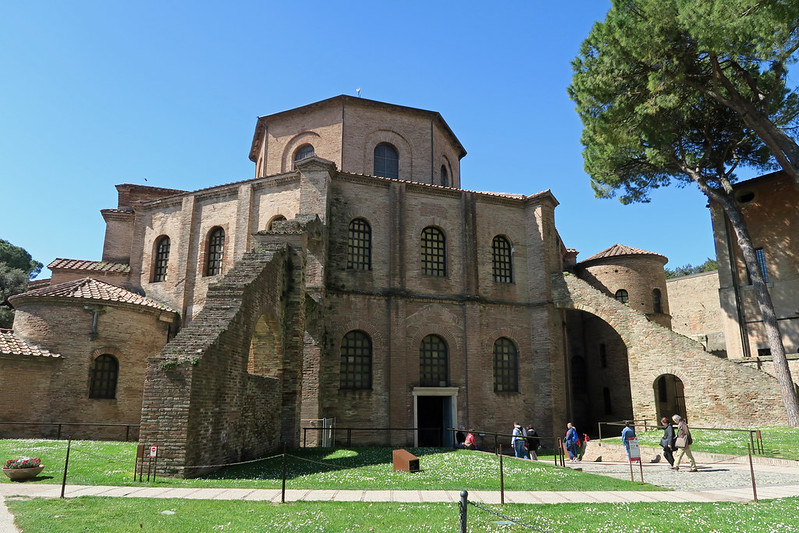
If your ideal stop includes extraordinary art, layered history, and streets that don’t feel overrun, head east to Ravenna.
Much of the city’s fame rests on its 5th- and 6th-century mosaics, officially grouped as the “Early Christian Monuments of Ravenna,” a UNESCO World Heritage Site. Gold backgrounds shimmer. Figures seem to float. Entire ceilings glow with color. The mosaics aren’t tucked into one corner, either—they are spread across eight churches, chapels, and mausoleums throughout the city.
Walking into the Basilica of San Vitale or the Mausoleum of Galla Placidia feels almost surreal. The scale is intimate, yet the detail is astonishing. We joined a guided tour for context and were glad we did; once someone points out the symbolism and tiny design elements, it’s hard to look away. Later, we visited the Arian Baptistery on our own and noticed even more.
If time is tight, prioritize San Vitale and the Mausoleum of Galla Placidia. They leave a lasting impression.
Beyond the mosaics, Ravenna offers other worthwhile stops. Visit Dante’s tomb, wander through the National Museum of Ravenna, and settle into a relaxed meal—Emilia-Romagna’s cooking shines here. We enjoyed Osteria dei Battibecchi for a classic, no-frills dinner.
Traveling with kids? Mirabilandia, one of Italy’s major amusement parks, sits just outside town.
Consider Ravenna if you’re drawn to Byzantine-style art like St. Mark’s Basilica in Venice or Hagia Sophia in Istanbul. And if Rome is on your itinerary as well, make time for the Basilica of Santa Cecilia in Trastevere—it pairs beautifully with what you’ll see here.
5. Turin: Piedmont’s Elegant Powerhouse at the Foot of the Alps
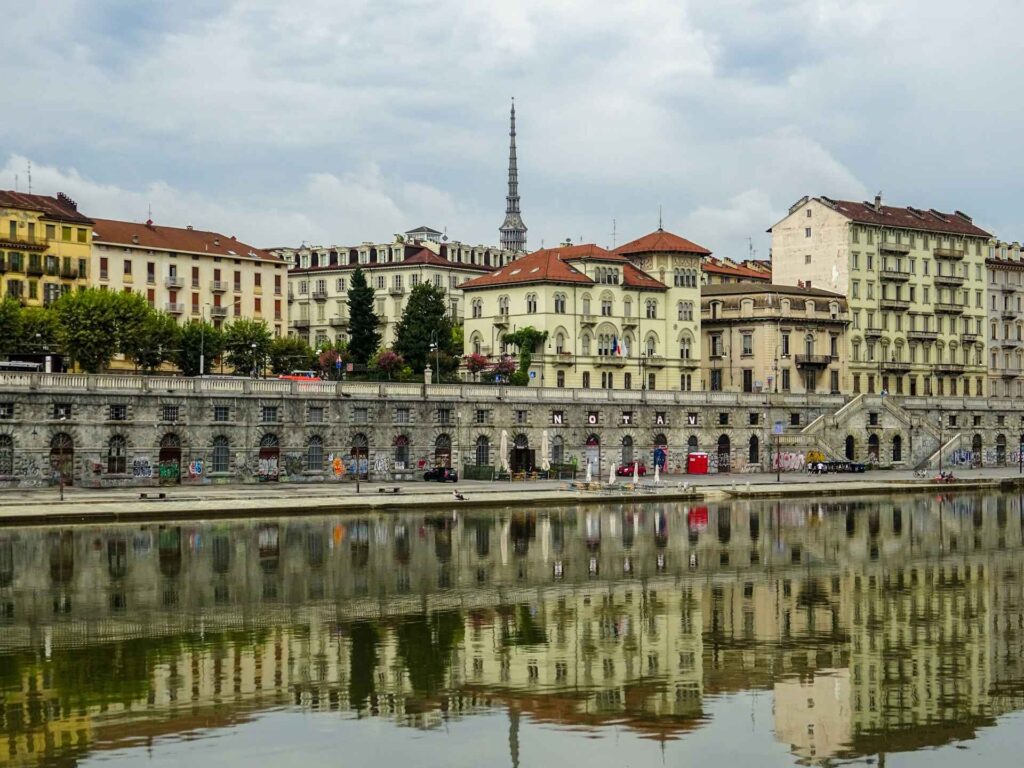
As the capital of Piedmont and the first capital of a unified Italy, Turin (Torino) rarely gets the attention it merits. Wide boulevards, grand arcades, and Alpine backdrops give the city a composed, almost regal presence.
Food alone could justify the trip. Piedmont ranks among Italy’s top culinary regions, and Turin reflects that reputation at every meal. Being close to France shapes the cuisine in subtle ways—rich sauces, fine pastries, and careful technique sit alongside familiar pasta dishes. The result feels refined yet comforting.
Culturally, Turin delivers depth. Tour the Baroque Palazzo Reale for a look at royal life, then step into the Egyptian Museum, often considered second only to Cairo in importance. The National Museum of Cinema, housed inside the soaring Mole Antonelliana, adds a modern counterpoint and offers sweeping views from the top.
For one of the best panoramas in the city, head up to Monte dei Cappuccini. From there, rooftops stretch toward the Alps, making clear why the region’s name translates to “foot of the mountains.”
Those with a sweet tooth will feel right at home. Piedmont gave the world hazelnut chocolate and, eventually, Nutella. Local artisan versions taste richer and more complex than mass-produced bars. And before you leave, order a Bicerin—a layered mix of espresso, hot chocolate, and cream that has fueled Turinese conversations for generations.
Consider Turin if you’re drawn to mountain-side cities with polished style and serious cuisine, such as nearby Lyon. It’s often called the “Paris of Italy,” though in truth, Turin stands firmly on its own character.
6. Arezzo: Tuscany Without the Rush
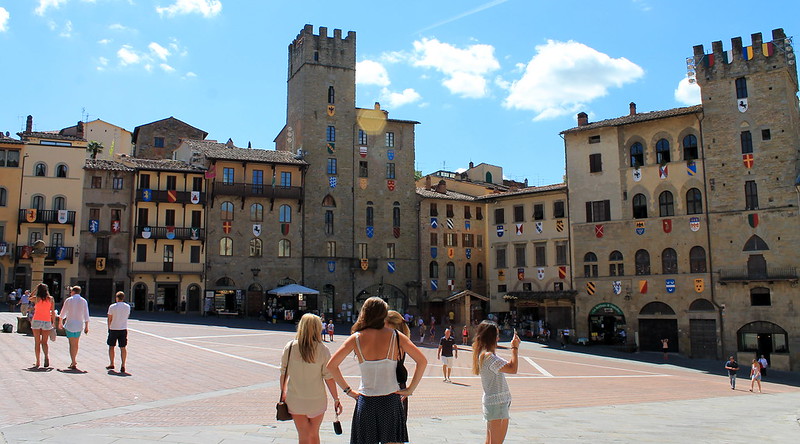
Arezzo carries everything people praise about Tuscan cities—excellent food, sweeping views, striking churches, and layered history—yet it rarely draws the same attention as Siena. With roughly 100,000 residents, it feels substantial without feeling packed.
If Tuscany is on your list but heavy foot traffic gives you pause, take the train straight to Arezzo. The city center unfolds easily on foot, with Piazza Grande anchoring much of the action.
Climb the clock tower at the Palazzo della Fraternita dei Laici for wide views over the square. Step inside the Basilica of San Francesco to see Piero della Francesca’s fresco cycle, then continue on to the archaeological museum, the house of Giorgio Vasari, the Medici Fortress, and the Duomo. Each stop adds another layer to the story of the city.
Arezzo is also known for antiques. On the first Sunday of every month—and the Saturday before—Piazza Grande transforms for the Arezzo Antiques Fair. Stalls fill the square with furniture, silver, paintings, and curiosities. Even outside fair weekend, antique shops line the streets year-round.
Visiting in winter? While South Tyrol often claims Italy’s most traditional Christmas markets, Arezzo sets up its own Tyrolean-style village each season, bringing wooden stalls and festive décor to Tuscany.
Consider Arezzo if you love Tuscan cities for their food, art, and architecture—but would rather skip the heavier crowds found in Siena.
7. Perugia: Umbria’s Hilltop Labyrinth
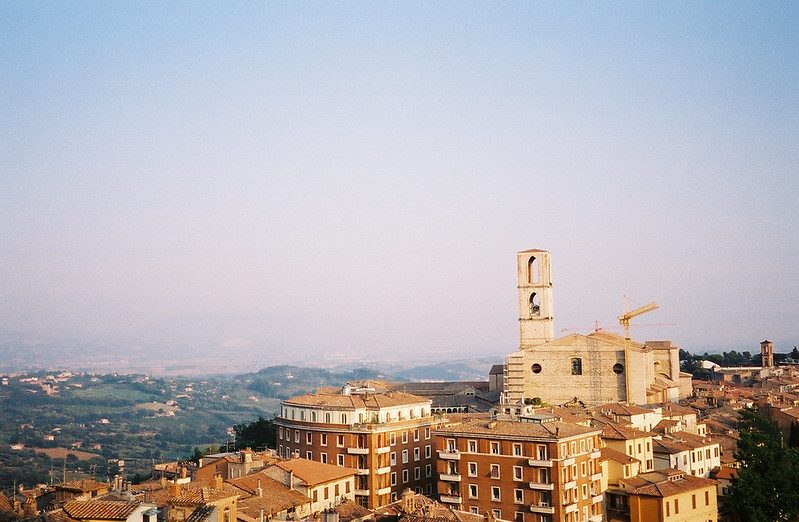
For sweeping hilltop views, winding medieval lanes, and noticeably lighter crowds, head to Perugia.
As the capital of Umbria and a long-standing study-abroad hub, Perugia has energy year-round—yet it still feels slightly removed from Italy’s busiest circuits. That contrast is part of its appeal.
The city unfolds like a maze. Restaurants hide along narrow stone alleyways. Staircases connect unexpected corners. Arches frame sudden outlooks over the countryside. In one of its most surprising twists, you can ride a modern escalator straight into the 16th-century Rocca Paolina fortress, where vaulted corridors run beneath the streets above.
Sightseeing here moves in layers. Climb high for panoramic views, wander at street level through churches and piazzas, then head underground to trace older foundations. The Cathedral of San Lorenzo and the Basilica of San Domenico both merit a stop, each offering a different perspective on the city’s religious art and architecture.
Walk along the medieval aqueduct for one of the best vantage points in town. Pause at Porta Sole and the Giardini Carducci, then follow whichever lane catches your eye. Perugia rewards curiosity.
Below ground, explore the Rocca Paolina, peer into the Etruscan Well, or join a guided visit through the Perugia Underground to see remnants of earlier eras layered beneath today’s city.
Consider Perugia if you’re drawn to university cities with elevated views and historic character—places like Bologna—but prefer something a little quieter.
8. Lucca: Tuscany Within the Walls
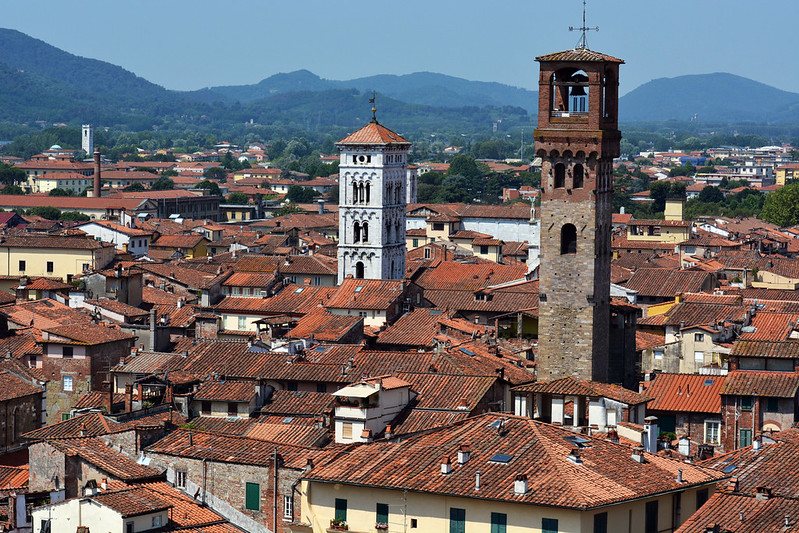
Lucca may not be as overlooked as some Tuscan cities, but it still receives far fewer overnight guests than it warrants.
Set in northwestern Tuscany, Lucca is often called the City of 100 Churches. Step inside a few and you’ll see why the nickname stuck—Romanesque façades, quiet chapels, and, in more than one case, an unexpected mummy preserved within.
The entire historic center sits inside intact Renaissance walls. Today, those ramparts function as a broad pedestrian promenade. Locals jog, families cycle, and visitors circle the city from above. Down below, Piazza dell’Anfiteatro curves in a perfect oval, tracing the outline of a former Roman arena.
For something different, climb Torre Guinigi. At the top, a small grove of trees grows from the tower’s summit, forming what feels like a suspended garden with views across terracotta rooftops.
Lucca strikes a comfortable balance. It’s livelier than a quiet hilltop village yet calmer than Florence. Many travelers pass through on a Pisa-and-Lucca day trip, staying only a few hours. After basing ourselves here multiple times, we’d argue it rewards a longer stay.
As a home base, Lucca works well. Cinque Terre, for instance, makes an easier day trip from here than from Florence.
Consider Lucca if you enjoy compact, walkable cities with enough landmarks, cafés, and nearby excursions to fill several relaxed days.
9. Tivoli: Grand Villas and Roman Echoes Above Rome
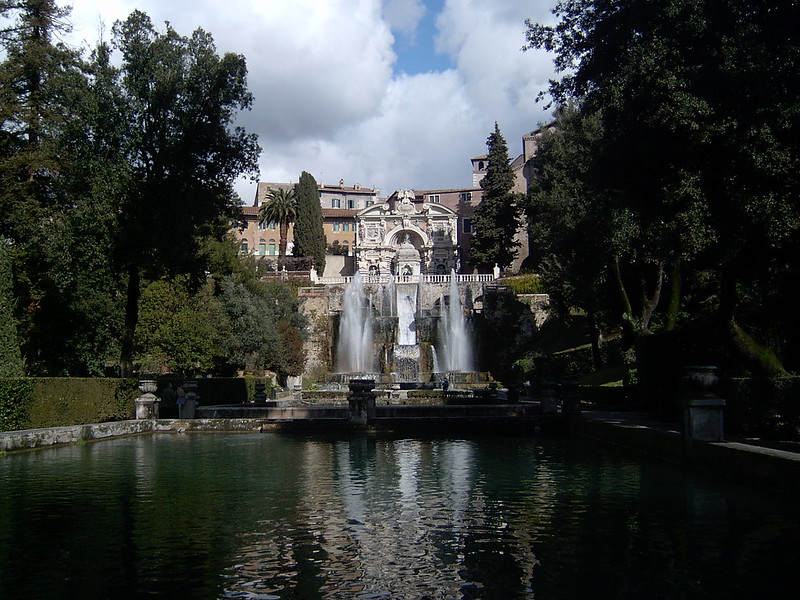
For layered Roman history, multiple UNESCO sites, and sweeping hilltop views in central Italy, head to Tivoli.
Often suggested as a day trip from Rome, Tivoli receives only a small share of the capital’s visitors—and very few stay overnight. Those who do are rewarded with time to absorb its remarkable villas without rushing.
Villa d’Este reads like a Renaissance fantasy. Fountains cascade in every direction, frescoed rooms open onto manicured terraces, and water becomes architecture. Just beyond town lies Villa Adriana—Hadrian’s Villa—a vast archaeological complex that once functioned as an imperial retreat. Sprawling across hundreds of acres, it feels more like a small city than a “villa.” Both are recognized as UNESCO World Heritage Sites.
Closer to the center, Villa Gregoriana offers a different experience. This 19th-century park weaves through a deep valley, guiding visitors past waterfalls, grottoes, and fragments of ancient structures. The walk dips down and climbs back up, trading stone walls for rushing water and shaded paths.
Tivoli itself adds more to the mix: quiet churches, Roman remnants tucked between buildings, and streets that invite slow wandering.
Consider Tivoli if you’re drawn to expansive Roman sites like Pompeii or Ostia Antica—or if ornate palaces and dramatic gardens are high on your list.
Related Post:
- 21 Stunning Places to Travel in Italy You Won’t Want to Miss.
- 15 Charming Small Towns in Italy for a Romantic Getaway.
- 7 Best Towns to Visit in South Italy for an Unforgettable Trip.
- 14 Scenic Road Trips in Italy for Your Next Adventure.
Continue Planning Your Italy Trip
If this guide to Italy’s lesser-known cities sparked ideas, there’s plenty more to explore.
We’ve written nearly 150 detailed posts about traveling in Italy, covering everything from major highlights to quieter corners. Whether you’re shaping your first itinerary or refining your fifth, you’ll find practical advice, route ideas, and deep dives into specific regions.
Want to look beyond the main attractions in Florence, Venice, and Rome? We share alternative neighborhoods, overlooked landmarks, and slower-paced ways to experience each city.
Interested in coastal drives? Our Puglia road trip itinerary traces southern shorelines far from the Amalfi Coast and Cinque Terre. It includes stops in Matera, Otranto, and the dramatic Cave of Poetry, balancing sea views with historic towns.
Drawn to northern flavors like Parma and Ravenna? Our Emilia-Romagna road trip plan connects both cities, along with additional stops that don’t always make standard lists.
Prefer small-town charm mixed into your schedule? We’ve also rounded up Italian villages that reward a short detour and a slower afternoon.
However you shape your journey, Italy offers far more than its headline destinations—and there’s always another corner waiting to be added to your route.
Map of These Lesser-Known Italian Cities
Planning routes is easier when you can see everything laid out in one place. This map highlights each city mentioned in this guide, so you can visualize distances, regional clusters, and possible travel loops.
Click on any marker to reveal the destination name. From there, you can zoom in, check nearby train lines, or see how close each city sits to your existing itinerary.
To save the map for later, tap the star next to the title. It will automatically appear under the “Maps” tab in your Google Maps account, making it simple to access on your phone while traveling.
If you’d prefer to view the map in a separate browser tab, use the expand button in the top-right corner of the map window.