
From forest-wrapped hilltop hamlets to weathered fishing villages that grew into early trading hubs, Europe offers an endless parade of beautiful small towns. Many of the most spellbinding share one trait: medieval beginnings. And I’m endlessly drawn to them.
Half-timbered houses lean at odd angles, thick stone ramparts still trace old boundaries, and Romanesque chapels stand beside Gothic spires that have pierced the skyline for centuries. There’s something magnetic about streets laid long before cars or guidebooks existed. Each year, travelers flock to these timeworn quarters, pulled in by crooked lanes, market squares, and architecture that refuses to fade into the past.
Places like Carcassonne, Bruges, Edinburgh, and Prague often dominate conversations about Europe’s medieval standouts. And for good reason—their preserved centers are astonishing. Yet they are unmistakably cities, alive with traffic, tour buses, and modern rhythms layered over ancient stones.
What I crave instead are the smaller places—towns where you can cross from one gate to another in ten minutes, where church bells still set the tempo of the day, and where twilight settles softly over tiled roofs. In these compact settlements, history feels close enough to touch. You don’t just observe the past; you walk through it.
This list celebrates those lesser-known medieval towns—quiet contenders alongside the continent’s celebrated names. Some perch above river valleys; others cling to cliffs or gather around sheltered harbors. All carry fragments of the Middle Ages in their walls, towers, and town squares. If you’re after storybook streets without the scale of a major metropolis, these small towns might be exactly what you’re searching for.
1. Laguardia, Spain: Wine, Walls, and Whispering Tunnels
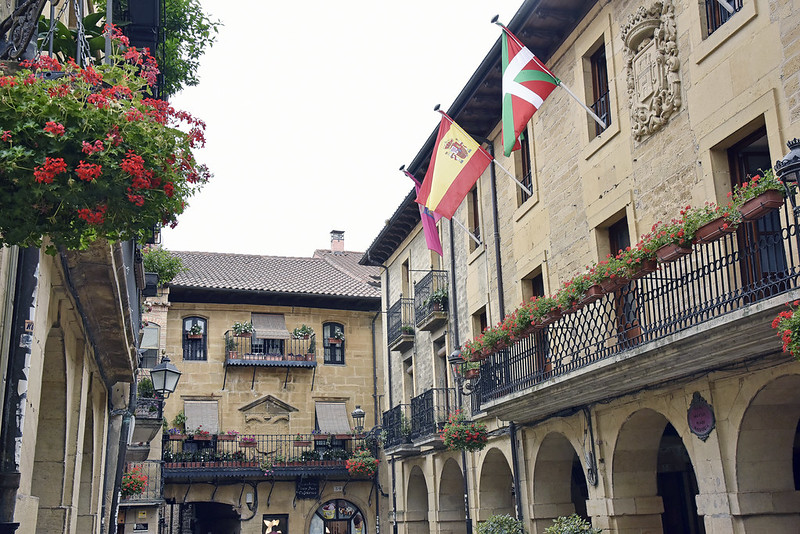
Perched above rolling vineyards in Spain’s celebrated La Rioja region, Laguardia traces its origins to the 10th century. Raised as a fortified settlement for the Kingdom of Navarre—today part of the Basque Country—this compact town still carries the air of a frontier outpost. Though sections of its original ramparts have faded with time, the medieval outline remains clear.
Step through one of the heavy stone gateways and the mood shifts instantly. Cars vanish. Lanes tighten. Balconies almost meet overhead. The layout feels like a maze drawn centuries ago, with quiet squares opening unexpectedly between tightly packed houses. It’s easy to slow your pace here; the town seems to insist on it.
Beneath the cobbles lies another chapter. Roughly 200 tunnels thread below the streets, carved long ago as part of the town’s defensive system. Today, these vaulted cellars serve a different purpose: ageing the region’s bold red Rioja wines. Oak barrels line the dim chambers, and the cool air carries the scent of fermenting grapes.
One of the most atmospheric stops is Bodega El Fabulista, where traditional production methods are still explained with pride. Tastings take place below ground, in rooms lit softly against stone walls. It’s a fitting finale—wine drawn from the earth, enjoyed beneath a town that has guarded its story for over a thousand years.
Read More: 15 Budget-Friendly Places to Travel in Spain for an Amazing Trip.
2. Frohnleiten, Austria: Riverside Facades and Alpine Calm
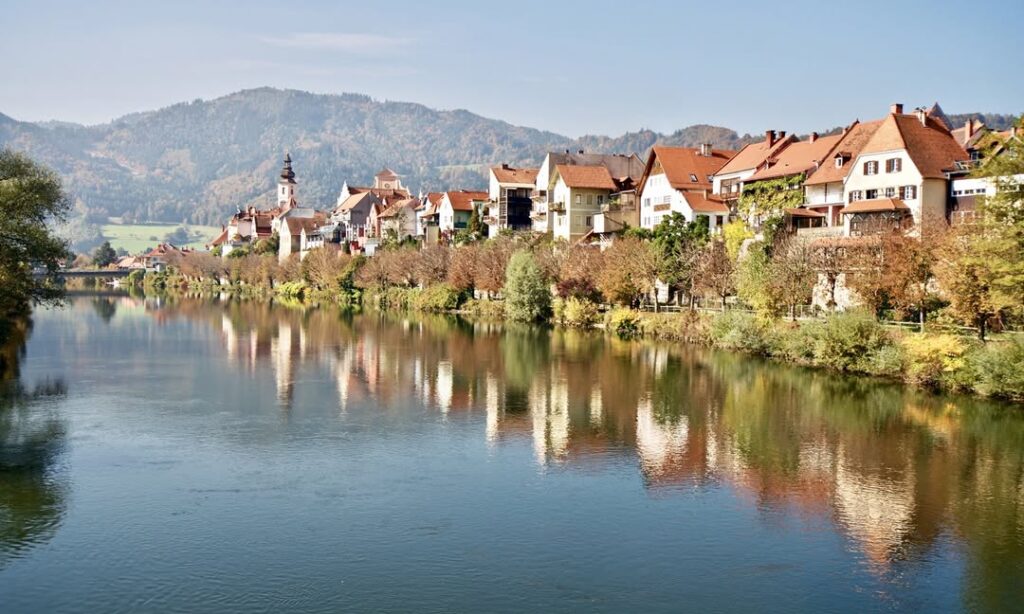
Only half an hour by train north of Graz, this small medieval town rests along the River Mur at the fringe of the Graz Region. Frohnleiten matured during the Middle Ages, and its historic center still reflects that period. Many façades date to the 15th and 16th centuries, later joined by Baroque gables that lend a gentle theatrical touch to the main square.
Landmarks appear almost casually: the Tabor gate marking an old entrance, a timeworn well at the center of town life, and even a Roman bridge lingering on the outskirts. The setting feels compact and composed, framed by wooded hills and the steady flow of the Mur.
Reaching Frohnleiten is simple. It sits along the Vienna–Graz railway line and connects neatly to the Mur Cycle Path for those arriving by bike. A couple of hours is enough to wander the lanes, pause for coffee, and trace the riverbank. Yet the surroundings reward a longer stay.
Nearby, the Austrian Open-Air Museum Stübing gathers historic wooden buildings relocated from across the country, forming a walk-through archive of rural life. Above the valley, the 12th-century Rabenstein Castle surveys the landscape from its hilltop perch.
In winter, Frohnleiten takes on another character. Strings of festive lights outline rooftops and reflect on the still river, turning the skyline into a quiet glow. From here, it’s an easy continuation south to Graz, where seasonal markets add warmth and bustle to the colder months.
3. Monsanto, Portugal: Stone, Sky, and Silence
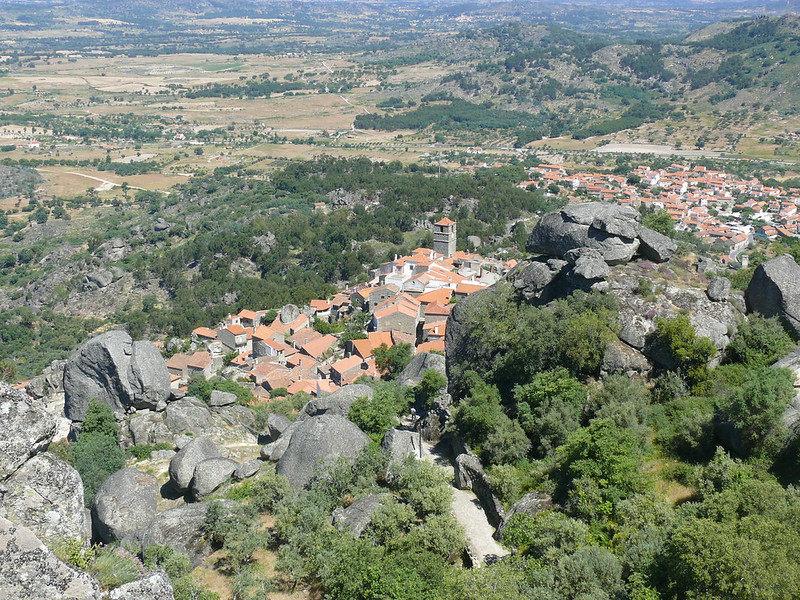
In Portugal’s dry interior, historic hamlets scatter the landscape, yet few compare to Monsanto. Rising above a volcanic massif with wide views stretching toward Spain’s border, this small town has long carried a reputation as one of the country’s most singular settlements. It was once crowned the “most Portuguese village,” though its character feels far removed from postcard clichés.
Here, architecture bends to geology. Massive granite boulders dominate the slopes, and homes have been fitted around them with striking ingenuity. Some walls lean directly against stone giants; others sit wedged between rocks or even tuck beneath overhanging slabs. The result is a skyline that looks almost improvised, shaped as much by nature as by human hands.
Monsanto moves at its own rhythm. You won’t find packed itineraries or a long checklist of attractions. Instead, there are sweeping viewpoints, narrow lanes worn smooth by time, and the remnants of a fortified castle crowning the summit. The mood is unhurried, a contrast to Portugal’s increasingly busy travel circuit.
Closer to Coimbra, the Serra da Lousã shelters additional Schist Villages worth seeking out. One standout is Cerdeira, carefully restored and now home to creative workshops and quiet retreats. Together, these villages offer a different side of Portugal—less about spectacle, more about stone, landscape, and lingering stillness.
Read More: 15 Beautiful Small Towns in Portugal Worth Adding to Your List.
4. Eguisheim, France: Circular Lanes and Alsatian Color
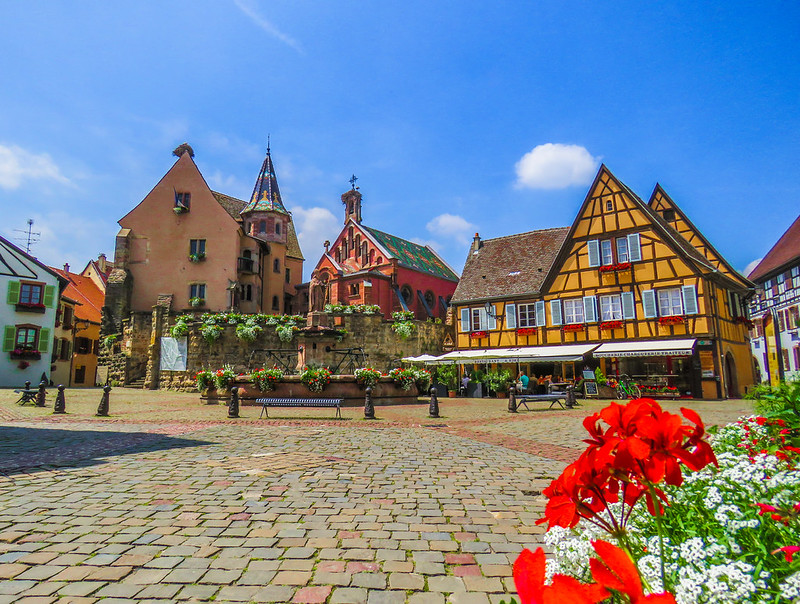
A short drive from Colmar, Eguisheim may be compact, yet it leaves a lasting impression. The village is arranged in concentric circles, with winding lanes looping around a central square. That unusual layout gives every turn a sense of gentle surprise.
Half-timbered houses painted in soft pinks, yellows, and blues line the streets. Flower boxes spill from windowsills, and carved wooden doors hint at centuries past. The main square, with its fountain and clustered façades, feels almost theatrical—like a setting waiting for a story to unfold.
For those inclined to stretch their legs, trails lead up to the ruins known collectively as the Three Castles of Eguisheim. The remains sit above the vineyards, offering broad views over the Alsatian plain. It’s a short but rewarding climb.
Back in town, wine bars pour local Rieslings and other regional varieties. You can linger at a small table, watch the slow rhythm of village life, and let the colors and curved streets settle in. Eguisheim doesn’t need grandeur; its appeal lies in detail and atmosphere.
Read More: 15 Enchanting Small Towns in France for Your Next Getaway.
5. Castelmezzano, Italy: Stone Houses Beneath the Lucanian Dolomites
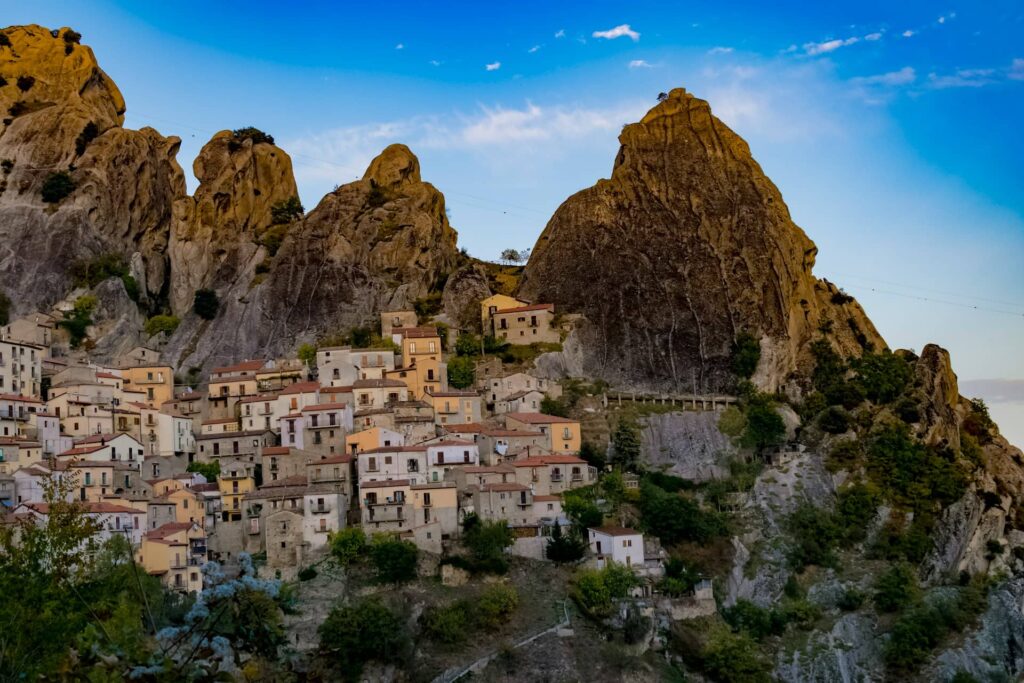
Hidden in the rugged interior of Basilicata, Castelmezzano clings to the mountains with quiet confidence. The town rises beneath the jagged spires of the Lucanian Dolomites, their sharp silhouettes cutting into the southern Italian sky. It feels remote, almost secretive, far from the country’s busier routes.
Founded in the 10th century, Castelmezzano still carries its medieval imprint. Stone houses cluster tightly along steep lanes, and remnants of the Norman stronghold—once central to the town’s defense—remain etched into the rock. A staircase carved directly into a towering cliff once formed part of the fortress walls. Climb it, and the valley spreads wide below.
Across the gorge, the village of Pietrapertosa mirrors Castelmezzano’s dramatic stance. The two settlements face one another like watchful neighbors perched on opposing peaks.
For a quicker connection, there’s Il Volo dell’Angelo—known in English as the Angel’s Flight. This zip line sends riders soaring between the villages, suspended high above the ravine. It’s a burst of adrenaline in an otherwise tranquil setting. From here, the road south leads naturally to Matera, famed for its ancient cave dwellings and weathered stone quarters.
Read More: 15 Enchanting Small Towns in Italy for Couples to Enjoy.
6. Český Krumlov, Czech Republic: A Storybook on the Vltava
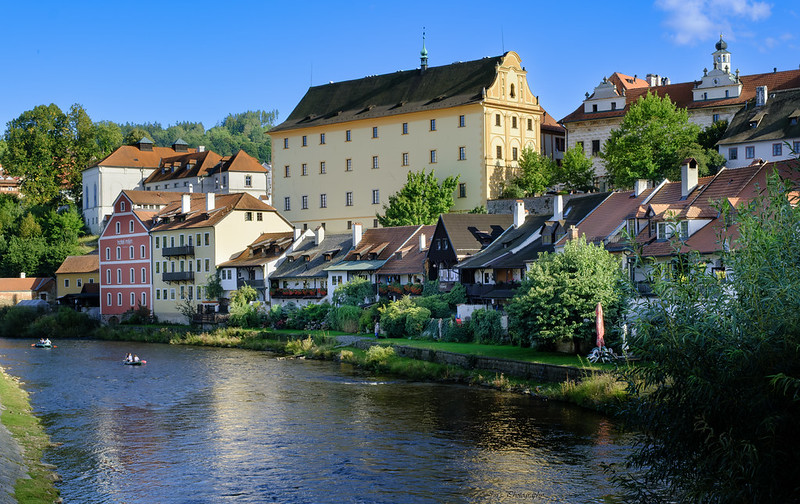
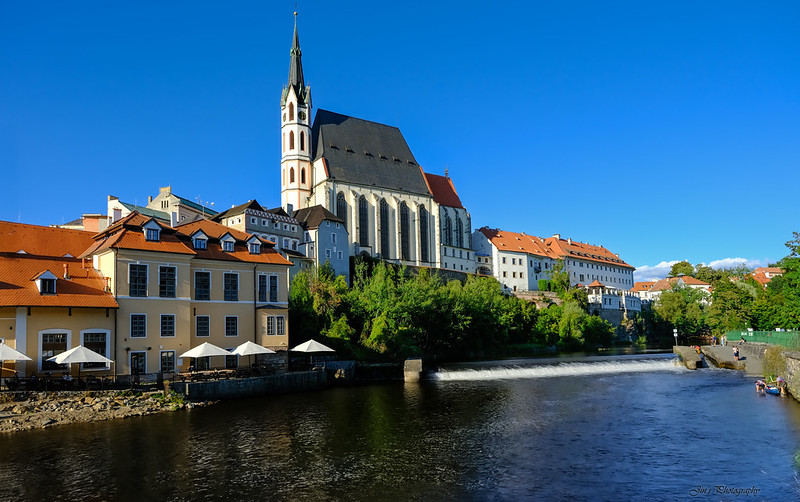
Close your eyes and picture a medieval European town—arched gateways, red roofs, a castle rising above a bend in the river—and chances are you’re imagining Český Krumlov. The pride of South Bohemia and one of the Czech Republic’s most celebrated destinations beyond Prague, it feels lifted from the pages of a fairy tale.
The Old Town unfolds in a sweep of painted façades and winding cobbled lanes. Above it all stands the vast 13th-century Český Krumlov Castle, its tower striped in soft colors and visible from almost every corner. The scale alone is striking; it anchors the town like a stone crown.
Roam between small museums—some focused on medieval relics, others on modern art—and it becomes clear that this is more than a quick stop. The layers of history reward time and patience. Each alley seems to shift perspective, revealing a new archway or courtyard.
Threading through the center is the Vltava River. The river curves tightly around the town, reflecting towers and rooftops in its slow current. In summer, flat wooden rafts and canoes drift downstream, echoing the trade routes of centuries past. In Český Krumlov, water, stone, and skyline merge into one enduring scene.
7. Vipavski Križ, Slovenia: Walled Streets Above a Valley of Wine
Slovenia’s Vipava Valley has long tempted wine lovers. Beneath its fertile fields lie hundreds of family-run cellars, many carved into the earth generations ago. Hosts pour with pride, often guiding visitors through tastings that feel personal rather than polished. The valley’s reputation rests as much on hospitality as on the quality of the wine.
Above ground, the landscape shifts to rolling vineyards, cycling routes, and hilltop silhouettes. Castles punctuate the horizon, and sustainability projects have taken root across the region. Close to the Italian border, small towns dot the countryside, easily linked by quiet roads and bike paths.
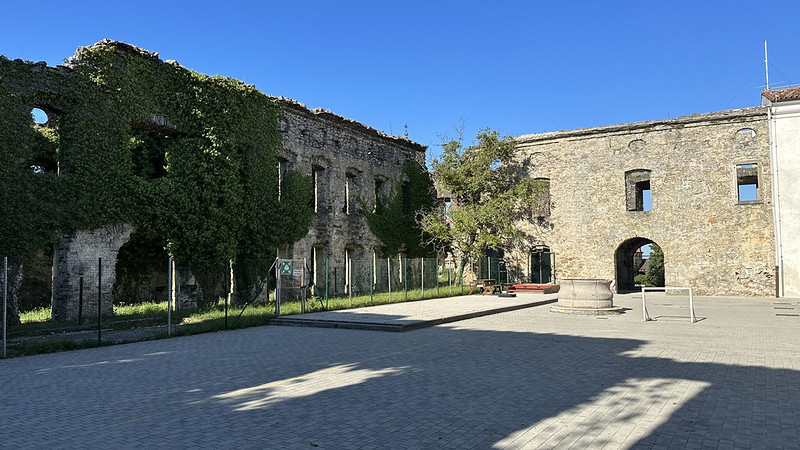
Among them, the 15th-century fortified settlement of Vipavski Križ stands apart. Once positioned along a key trading corridor during Ottoman incursions, the town still carries sections of its defensive walls. Parts of the historic core remain strikingly intact, while other buildings have entered a one-euro purchase program aimed at careful restoration rather than neglect.
True to its setting, Vipavski Križ also maintains its own underground cellar. Today, the vaulted space doubles as a venue for concerts and tastings, where music and local vintages share the same stone chamber. It’s a small place with a layered past—vineyards below, watchtowers above, and a steady sense of continuity holding it all together.
8. Meissen, Germany: Porcelain, Spires, and the Elbe
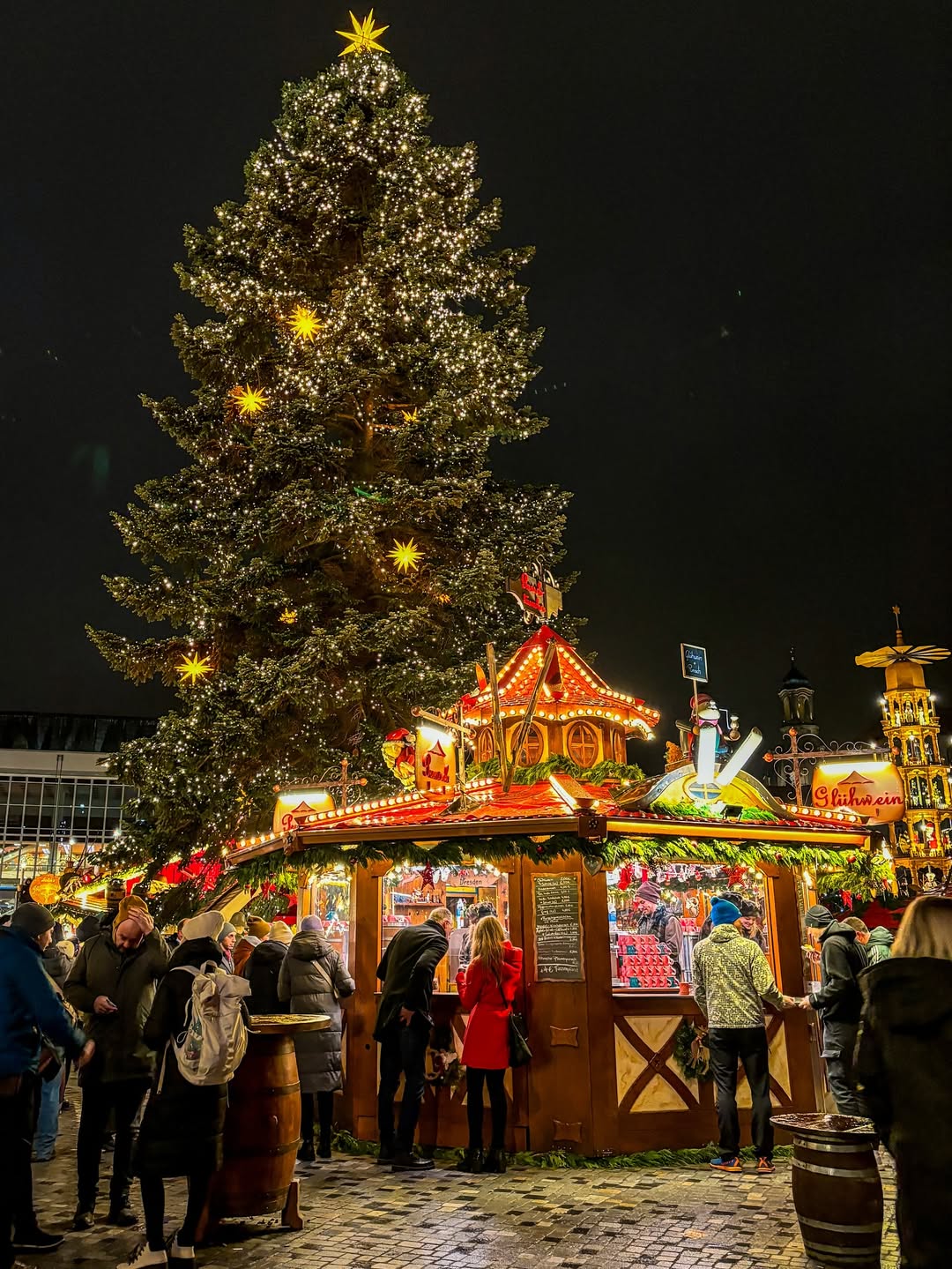
Germany has no shortage of medieval towns, and Saxony adds several standouts to the list. While many travelers focus on Dresden and its reconstructed Baroque grandeur, smaller places nearby often leave a deeper impression. Meissen is one of them.
December gives the town a special glow. Market stalls, candlelight, and decorated windows make the old streets feel almost theatrical. Still, Meissen holds its appeal long after the festive season fades. The skyline alone—clustered towers rising above the Elbe—makes a strong first impression.
The town’s name is closely tied to porcelain. In the early 18th century, Europe’s first porcelain manufactory opened here, turning delicate ceramics into prized “white gold.” The legacy continues today, with craftsmanship that reshaped European decorative arts.
Rewind further and you’ll find the imposing Albrechtsburg Castle, widely regarded as Germany’s oldest castle. Beside it stands the twin-spired Meissen Cathedral, anchoring the hilltop above the river. Below, cobbled lanes curve past whitewashed façades and intimate restaurants. In Meissen, river views, Gothic forms, and centuries of artistry come together in one compact setting.
Read More: 15 Charming Small Towns in Germany Worth Adding to Your List.
9. Kotor, Montenegro: Fortresses Above a Shimmering Bay
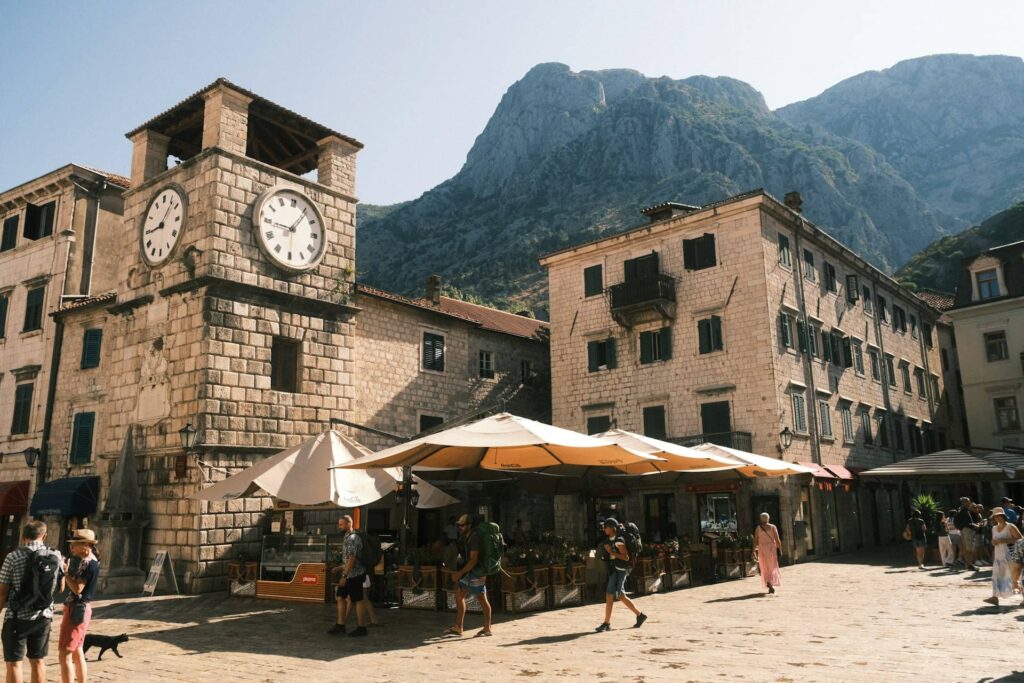
Cats linger in shaded squares, stone lanes twist beneath shuttered windows, and the bay glints just beyond the walls. Kotor has become one of the Adriatic’s most talked-about medieval towns. Its rising fame, fueled in part by cruise traffic, has even prompted UNESCO to reconsider the standing of the Bay of Kotor as a World Heritage Site. Yet outside peak months, the town regains its older rhythm.
Within the walls, Romanesque and early medieval landmarks anchor the scene. The 12th-century Cathedral of Saint Tryphon stands as a reminder of Kotor’s long maritime and religious history, while the modest Church of St. Luke adds another layer to the architectural mix. Small cafés spill onto quiet courtyards, and laundry flutters between stone façades.
To grasp Kotor fully, though, you have to climb. A steep path zigzags up the mountainside to the remnants of San Giovanni Fortress, part of the original defensive system. The ascent is demanding, but the reward is expansive.
From above, the Bay of Kotor curves like a ribbon of blue, framed by rugged green peaks. Rooftops cluster tightly below, dwarfed by the surrounding landscape. In that high perch, away from the harbor’s bustle, medieval Kotor feels less like a headline destination and more like a place suspended between mountain and sea.
10. St Ives, UK: Sea Air and Medieval Echoes in Cornwall
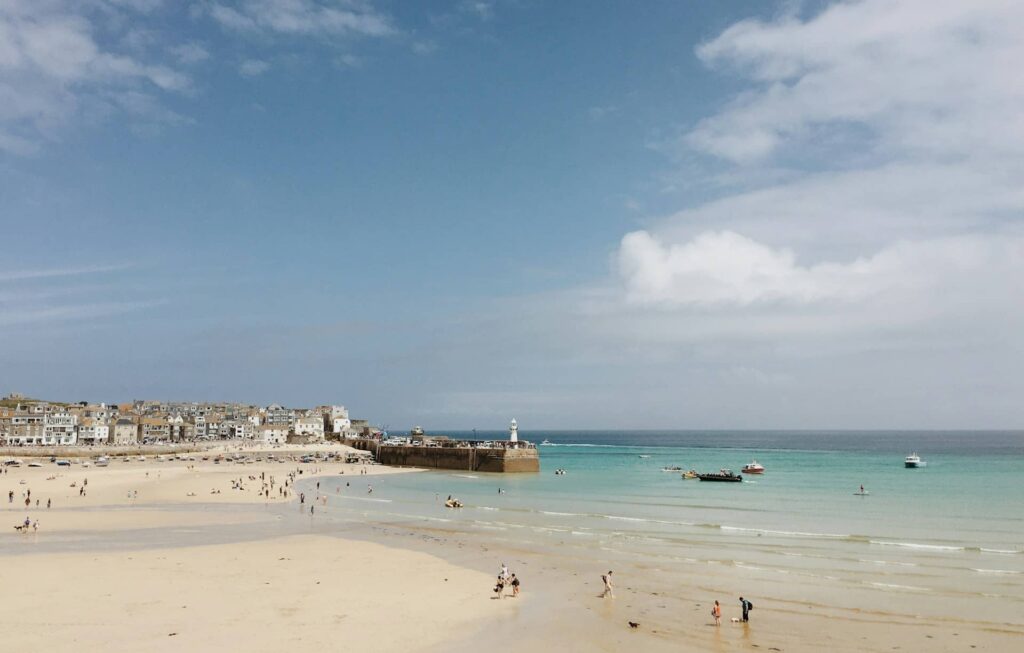
For generations, St Ives has drawn visitors to Cornwall’s Atlantic edge. The town pairs wide sandy beaches with a tangle of tight cobbled lanes painted in soft pastels. Fishing boats still bob in the harbor, a reminder of the settlement’s working roots beneath its holiday appeal.
Its medieval past hasn’t faded. The parish church, dating in part to the 15th century, rises above the rooftops, linking present-day life to earlier market town days when it was known as Saint Ives. Each year, the community nods to that heritage with a lively medieval fair, bringing costumes, music, and old customs back into the streets.
Between beach swims and paper-wrapped fish and chips, there’s plenty to trace in the older quarters. Seek out the Vernon la Well, once used by fishermen, and the modest stone form of St Leonard’s Fisherman’s Chapel. These quiet corners speak softly of the town’s maritime history.
For a broader view, climb the grassy headland known simply as “The Island.” At its summit stands the 15th-century St Nicholas Chapel. Once a lookout for smugglers and sailors, it now offers sweeping views over sea and sand. From this perch, St Ives feels balanced between tide and time, part seaside retreat, part medieval survivor.
11. Potes, Spain: Stone Towers Beneath the Picos de Europa
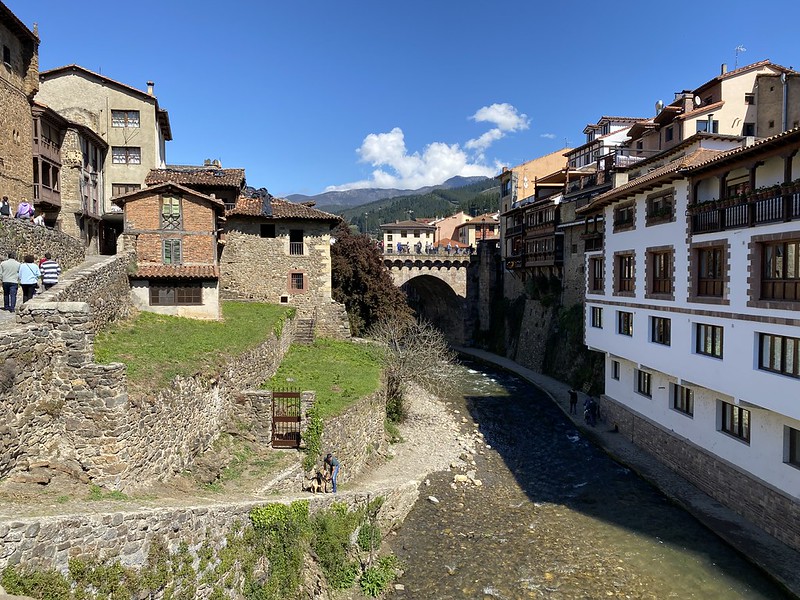
Tucked into the foothills of northern Spain, Potes offers a quieter side of Cantabria, far from the busy coastline. The town sits where rivers meet, framed by the rising forms of Picos de Europa National Park. Mountain air, slow afternoons, and market stalls stacked with local cheeses set the tone.
The old quarter feels pleasantly worn. Timber-framed houses lean over narrow streets, their balconies almost touching. From small bridges, you can watch the water slip past stone embankments while cafés hum softly nearby. Life here moves at a measured pace, guided more by daylight than deadlines.
Among the medieval landmarks, the solid bulk of Torre del Infantado stands guard over the town. Its thick stone walls hint at a defensive past. A short walk away, the 14th-century Church of San Vicente adds another historic layer, its form simple yet enduring.
Still, Potes is less about ticking off monuments and more about lingering. Trails begin at the edge of town, leading into hills alive with birdsong. In this corner of Green Spain, traditions hold firm, and the rhythm of daily life feels grounded in something older than tourism.
12. Brisighella, Italy: Three Hills and a Hidden Walkway
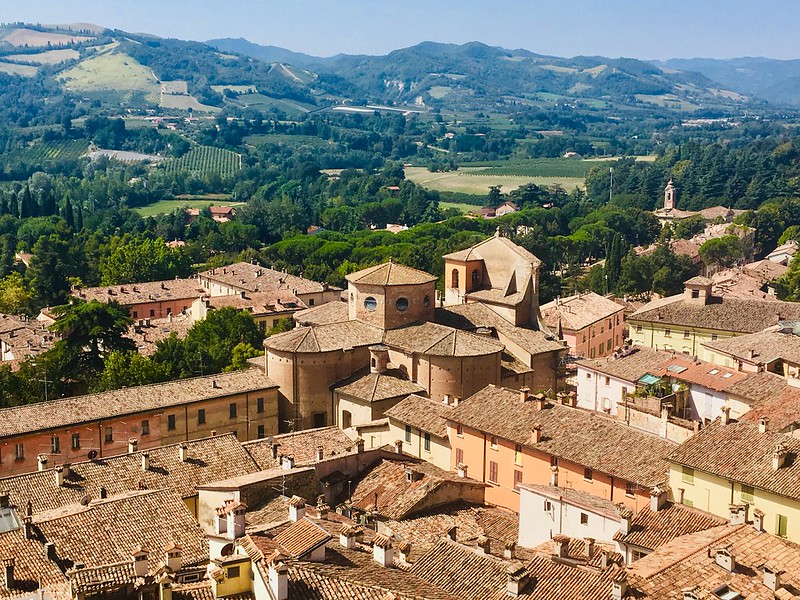
In the rolling countryside of Emilia-Romagna, Brisighella rises around three distinct hills, each marked by its own landmark. A clocktower keeps watch from one crest, a church crowns another, and the 14th-century Rocca Manfrediana anchors the third. Together, they shape a skyline that feels almost cinematic, set against soft green slopes reminiscent of nearby Tuscany.
The town remains largely under the radar. Spend a night here, and the streets grow quiet after sunset, leaving stone façades and arched doorways to glow under low light. Without crowds, the medieval layout becomes easier to read—tight alleys, stepped lanes, and houses built close for protection.
Among its historic features, the standout is the Via degli Asini. This elevated, enclosed walkway once allowed traders and mule drivers to move goods through town under cover. Thick wooden beams support the passage, and small windows cut into the wall frame glimpses of the street below. The worn stone floor still bears the marks of centuries of use.
Brisighella doesn’t demand a checklist. It invites slow wandering—up to the fortress for a wide view, along the covered path for a brush with the past, and back down into the quiet squares where daily life continues much as it has for generations.
13. Assisi, Italy: Stone Streets and Sacred Horizons
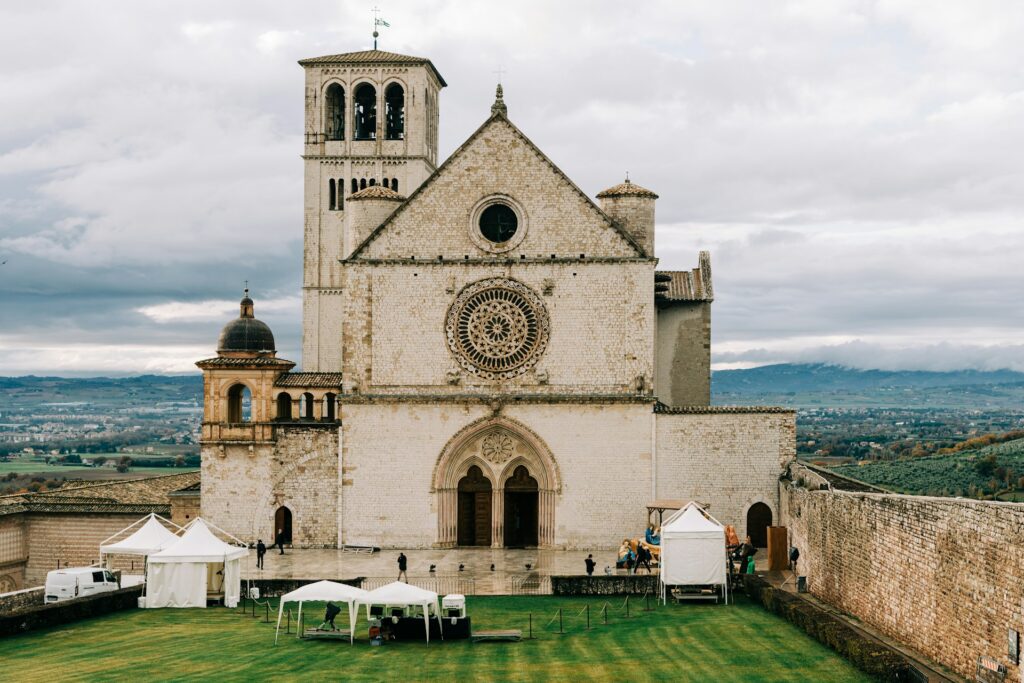
Set high above the Umbrian plain, Assisi carries centuries of faith and memory in its pale stone walls. The town is closely tied to Saint Francis of Assisi, founder of the Franciscan Order, whose life reshaped Catholic devotion across Europe. Pilgrims still arrive year-round, yet Assisi appeals just as strongly to travelers drawn by history, art, and wide-open views.
Dominating the skyline is the Basilica of Saint Francis of Assisi. Its layered structure—one church built above another—holds frescoes that mark turning points in medieval art. Step inside, and the cool interior contrasts with the bright Umbrian sun outside. The scale is impressive, but the atmosphere remains reflective rather than overwhelming.
Beyond the basilica, Assisi unfolds in narrow lanes paved with worn stone. Flower boxes soften medieval façades, and small shops tuck into archways. From the town’s edges, the countryside rolls outward in soft greens and golds, shifting with the seasons. Sunrise and late afternoon cast a warm tone over rooftops and bell towers.
Assisi is easy to admire on a first visit, yet it lingers in the mind. I returned on my second trip to Italy for that very reason. Some places impress; others stay with you. Assisi belongs firmly in the latter group.
14. Dinan, France: Ramparts and River Views in Brittany
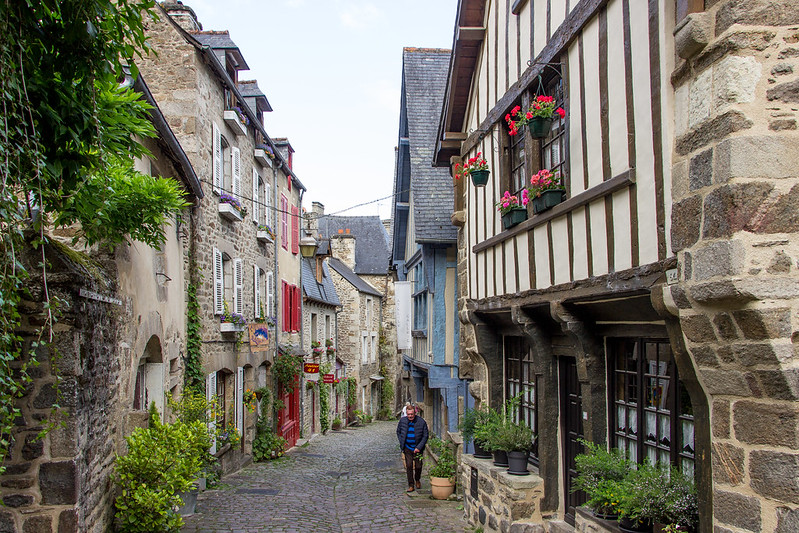
In the Brittany region of northwestern France, Dinan rises above the River Rance with a skyline shaped by towers and slate roofs. Brittany once stood as its own kingdom, and that independent spirit still lingers in its towns. Reaching Dinan by public transport can take some effort, but the reward quickly outweighs the journey.
The historic center feels suspended in another era. Stone façades sit beside leaning half-timbered houses, their upper floors jutting over narrow lanes. Sections of the defensive walls, first built centuries ago, continue to trace the town’s perimeter, offering elevated walks with views across rooftops and countryside.
At the heart of it all stands the Château de Dinan, a reminder of the town’s strategic past. From its ramparts, you can look down toward the port and imagine merchant ships once moving goods along the river. The cobbled streets slope steeply in places, turning a simple stroll into a small adventure.
Dinan doesn’t rush you. It invites wandering—through arched gateways, along medieval lanes, and down to the quiet riverside below. By the time you leave, the climb and the travel time feel like part of the experience rather than an obstacle.
15. Edam, the Netherlands: Canals, Gables, and Quiet Corners
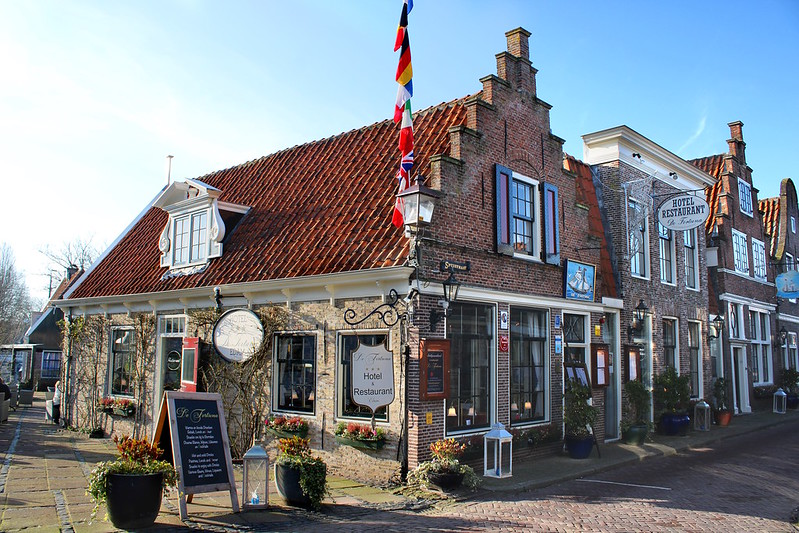
Edam came as a genuine surprise. Just a short trip from Amsterdam, this compact Dutch town carries a history stretching back nearly a thousand years. In its early days, shipbuilding and trade powered local life, shaping the canals and warehouses that still define the layout.
Today, the rhythm feels slower. Narrow waterways cut between neat rows of gabled houses, their reflections trembling on the surface. Brick façades lean slightly with age, and small bridges connect streets that seem largely unchanged. Walking here feels like crossing into an earlier chapter rather than another suburb.
Though globally known for its cheese, Edam’s appeal runs deeper than market stalls. The old square, modest church towers, and tidy lanes offer a sense of continuity that larger cities sometimes lose. It remains calm even during busier months, rarely overwhelmed.
Edam may not headline every Netherlands itinerary, yet that’s part of its charm. While crowds gather in bigger destinations, this town keeps its composure—canals intact, architecture preserved, and history quietly present in every corner.