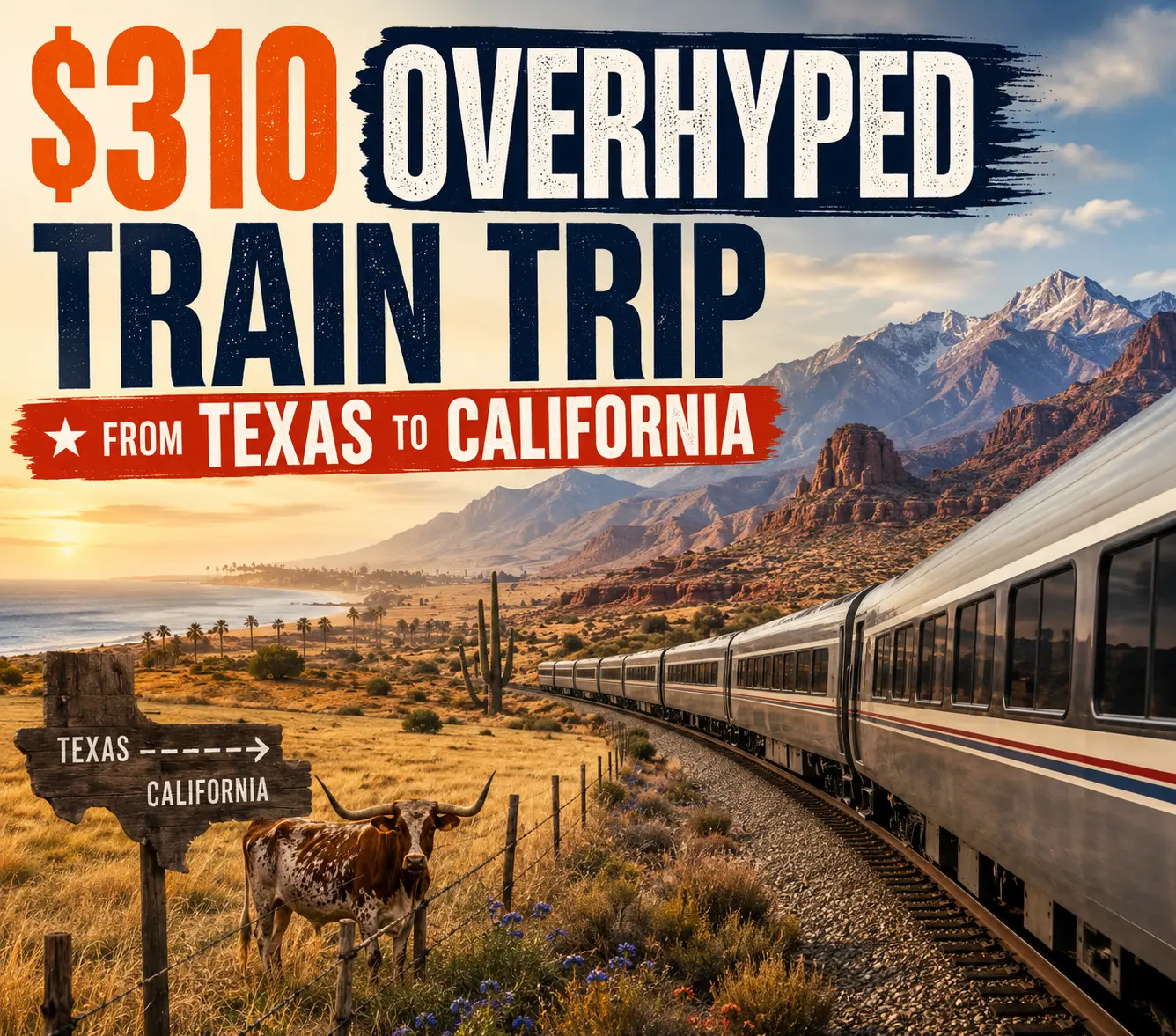
A train journey from Texas to California sounds almost too good to question. For around $310, you can leave the Lone Star State behind, cross the desert Southwest, and arrive in Los Angeles without driving a single mile.
The idea sells itself through images of wide observation windows, glowing desert sunsets, distant mountains, and quiet hours spent watching America pass by. Compared with airports and interstate traffic, the train appears calmer, simpler, and far more memorable.
Yet the Texas-to-California train trip has a less glamorous side that promotional photos rarely capture. The ride can take nearly two days from Dallas, coach passengers must sleep upright, delays can stretch the journey, and the cheapest advertised fare does not include every expense.
This does not make the trip terrible. It makes it misunderstood.
The Texas Eagle and Sunset Limited can provide a remarkable rail experience, but travelers should know exactly what the $310 journey involves before treating it as an unbeatable bargain.
The Real Route Behind the $310 Train Journey
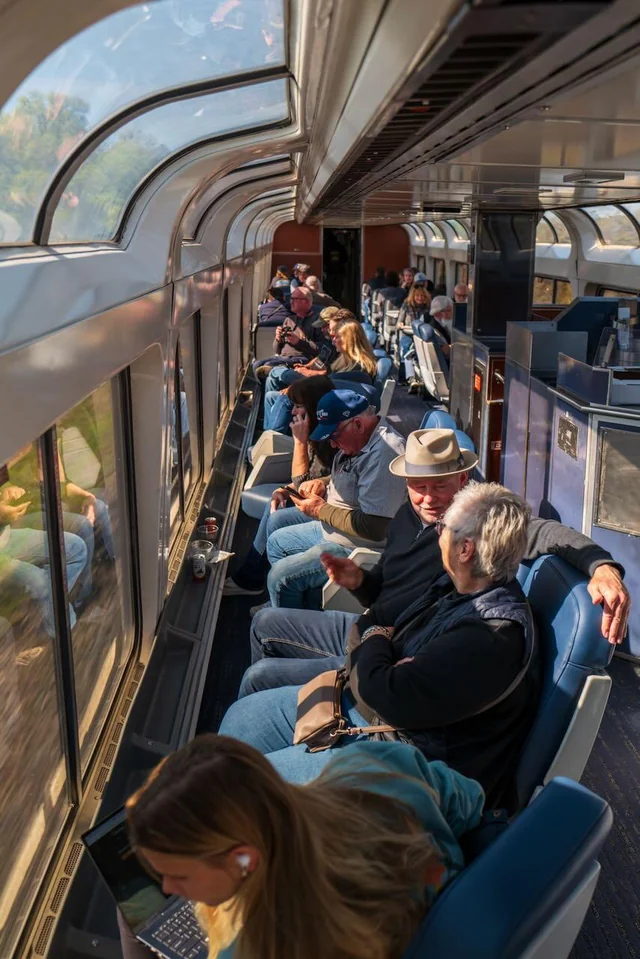
The most practical version of this Texas-to-California journey begins in Dallas and ends at Los Angeles Union Station. Passengers travel aboard Amtrak’s Texas Eagle, which runs through Fort Worth, Austin, and San Antonio before continuing west with the Sunset Limited.
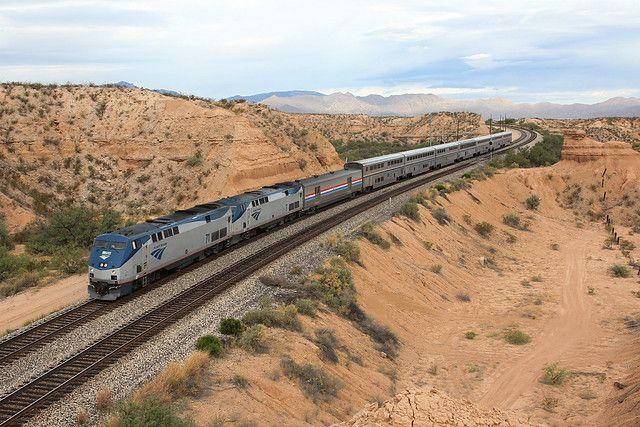
The route crosses a large portion of Texas before entering New Mexico, Arizona, and Southern California. Major stops include San Antonio, Del Rio, Alpine, El Paso, Tucson, Maricopa, Palm Springs, and Los Angeles.
Travelers beginning in Dallas should expect the journey to last roughly 43 hours under the published schedule. Starting in Austin or San Antonio shortens the ride, while boarding farther east in Texas adds more time.
This is not a quick overnight train. It is an extended journey that takes up most of two days and two nights. That detail matters because the experience changes once the first afternoon of scenery gives way to hours of sitting, sleeping, eating, and waiting inside the same railcar.
Why the Trip Looks Better Online
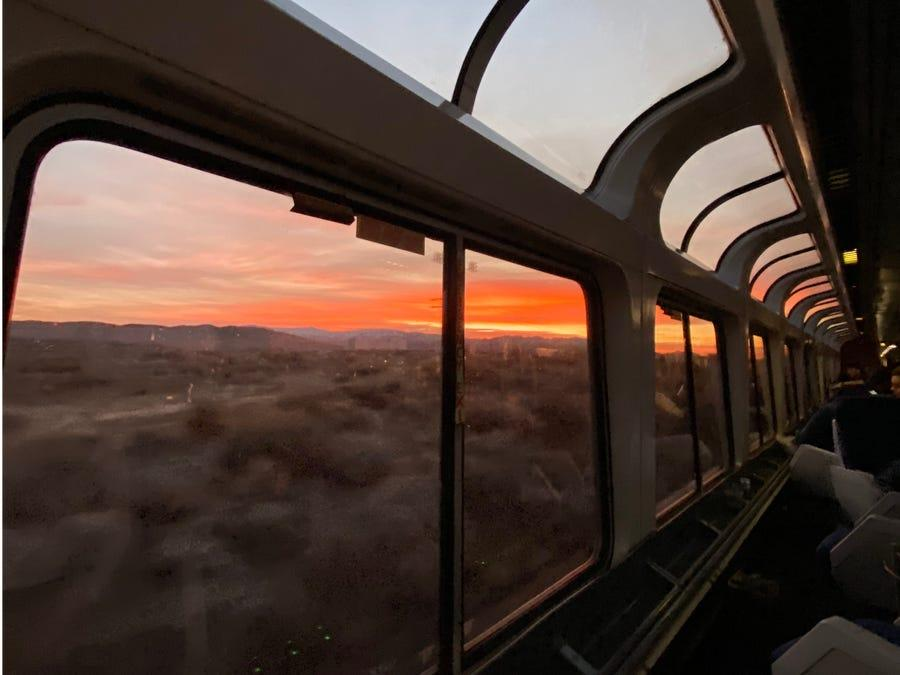
Few forms of travel photograph as well as a long-distance train. A camera can capture an empty lounge seat, a glowing Arizona sunset, or a quiet window overlooking the desert. It does not show the passenger who slept badly, the crowded restroom, the late arrival, or the hours when darkness hides the landscape.
Social media often reduces the trip to its strongest moments. The scenery near Alpine, El Paso, southern Arizona, and Palm Springs can be striking, but much of the route passes through flat land, industrial areas, rail yards, suburbs, and darkness.
The result is a journey that may look continuously dramatic online but feels far more uneven in person. Beautiful scenes appear in bursts rather than through every mile.
That does not remove their value. It simply means travelers should expect a real transportation route rather than a moving luxury viewing platform.
Is the Texas-to-California Train Really $310?
A $310 coach fare may be available for certain travel dates, but it should never be treated as a permanent ticket price. Amtrak uses changing fares based on demand, availability, departure date, and accommodation type.
A traveler booking far ahead may find a lower fare. Someone booking close to departure could see a much higher price. Holiday periods, school breaks, and popular travel dates can push the cost upward.
The headline price also covers transportation rather than the complete journey. Meals, drinks, station transportation, extra snacks, and accommodation after arrival may raise the final amount. A coach passenger who buys several café meals during a 43-hour trip can spend considerably more than expected.
The $310 figure is therefore better understood as a starting price for the seat. It is not the guaranteed cost of the entire experience.
Coach Is Affordable but Far From Luxurious
The cheapest way to make this trip is usually in coach. Amtrak coach seats are wider and provide more legroom than many airline seats. Passengers can recline, use a tray table, charge devices, and walk between permitted areas of the train.
Those comforts feel generous during the day. At night, their limits become obvious.
A coach seat does not turn into a flat bed. Travelers must sleep at an angle while surrounded by other passengers, announcements, station stops, doors, hallway movement, and changing temperatures. Some people sleep reasonably well. Others arrive in Los Angeles feeling as though they never truly rested.
There is also no private shower included with a coach ticket. After spending close to two days aboard the train, that missing feature can become more important than it seemed during booking.
A neck pillow, light blanket, eye mask, earplugs, and comfortable clothing can improve the night. They cannot turn a reclining seat into a bedroom.
The San Antonio Layover Changes the Experience
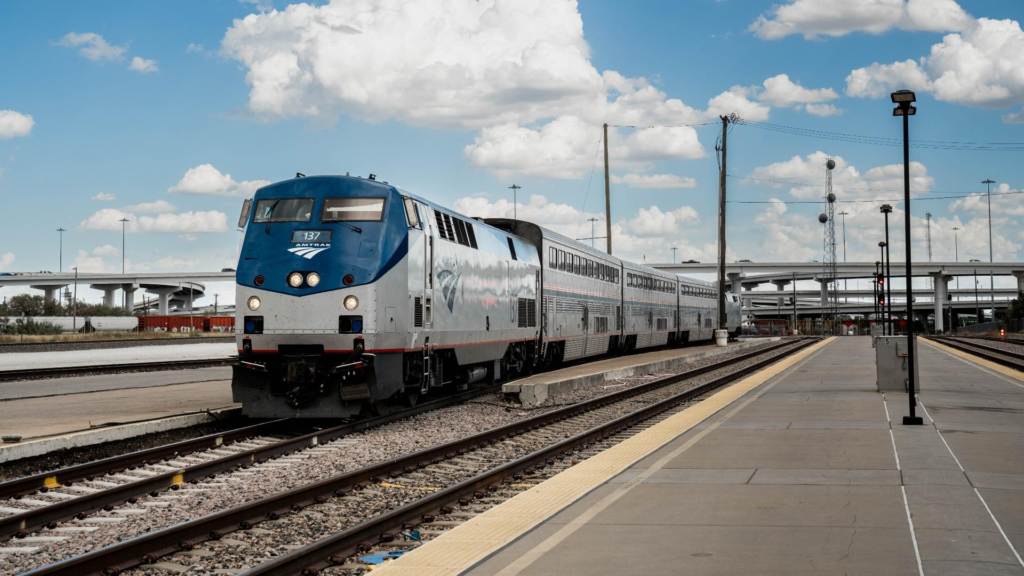
Passengers continuing toward California remain connected to the Sunset Limited through San Antonio. This is where the Texas Eagle cars are handled as part of the westbound operation.
The layover can last several hours while train cars are coupled and prepared. Passengers may be allowed to remain aboard, but access to certain areas can be restricted. Temporary power interruptions may also occur during the process.
This is one of the least discussed parts of the journey. A traveler imagining constant movement toward California may instead spend part of the night sitting at the San Antonio station while railway work takes place outside.
For rail enthusiasts, the process may be interesting. For tired coach passengers, it can feel like a long pause placed directly in the middle of an already lengthy trip.
The Scenery Is Impressive but Inconsistent
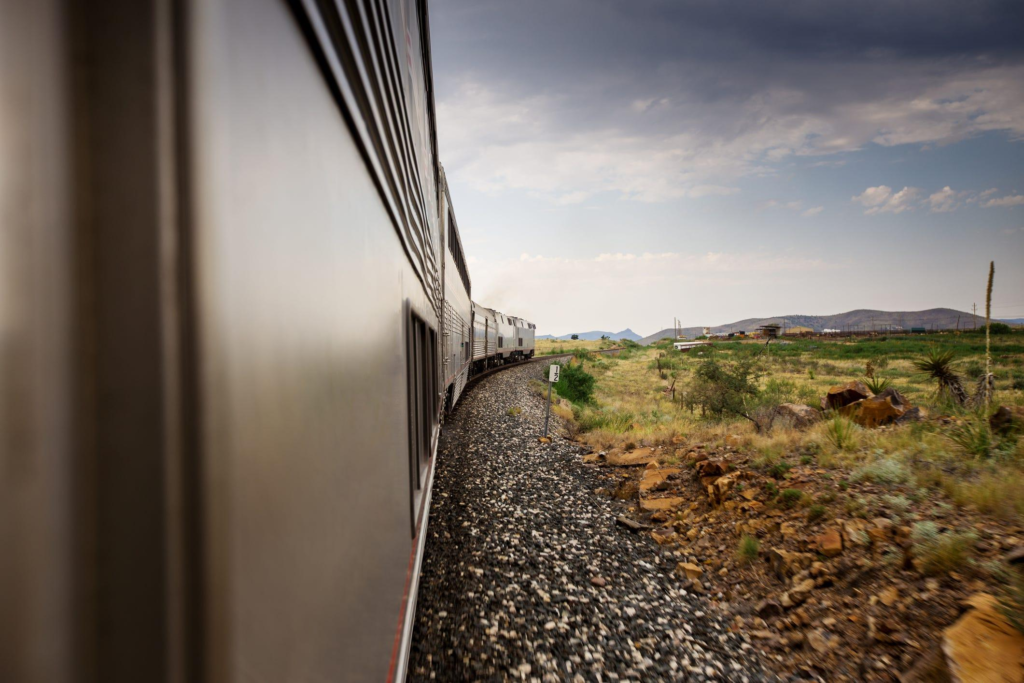
The strongest reason to take this train is the landscape. West Texas presents enormous skies, dry plains, rugged hills, and isolated settlements that are difficult to appreciate from an airplane.
The area around Alpine offers some of the journey’s most memorable views. Farther west, the train reaches El Paso and follows a corridor shaped by desert terrain, mountain ridges, rail infrastructure, and communities near the border.
New Mexico and Arizona bring broad horizons, cactus-filled land, distant peaks, and colors that shift with the hour. Approaching Southern California introduces another change as the route passes through Palm Springs and heads into the Los Angeles region.
Still, timing controls what passengers actually see. Some scenic sections may pass after sunset or before sunrise. Seasonal daylight differences can completely change the view from the window.
Paying for a scenic rail trip does not guarantee that every major landscape will appear in daylight.
Food Can Quietly Raise the Total Cost
Long-distance travelers need more than one snack and a bottle of water. A journey lasting around 43 hours includes several normal meal periods, and relying entirely on food sold aboard the train can increase the cost.
Café selections are convenient, but they may feel limited after the first day. Prices can also add up when a passenger buys breakfast, lunch, dinner, drinks, and snacks.
Bringing personal food can reduce spending and make the journey easier. Shelf-stable meals, fruit, crackers, sandwiches, and refillable water bottles are practical choices. Strong-smelling food is best avoided because coach is a shared space.
Travelers should also remember that access to food service can change during portions of the trip. Arriving prepared is safer than assuming every preferred item will remain available.
The train fare may be $310, but the trip will not necessarily remain a $310 experience.
Delays Are More Than a Minor Possibility
Long-distance Amtrak trains often travel on tracks owned and controlled by freight railroads. Passenger trains can lose time when they wait for other rail traffic, encounter operational problems, or face weather-related disruptions.
A delay of several hours matters differently on this route than it would on a short regional train. It can affect hotel check-in, airport connections, rental car reservations, family pickups, and planned activities in California.
Travelers should avoid building a tight schedule around the published arrival time. Booking an important flight shortly after the train reaches Los Angeles creates unnecessary risk.
The timetable should be treated as the intended schedule rather than an absolute promise. Anyone who needs precise arrival timing may find that flying offers greater practical value, even when the train ticket costs less.
A Roomette Fixes Comfort but Breaks the Budget
A private room changes the Texas-to-California journey. Roomette passengers receive sleeping accommodations, greater privacy, access to shower facilities, and meals included with the ticket.
That version of the trip comes much closer to the experience shown in polished travel videos. A passenger can close the door, lie down at night, and arrive with more energy.
The problem is cost.
A roomette can raise the price far beyond the $310 coach figure. Depending on the date and availability, the difference may be several hundred dollars or more. At that point, the trip is no longer a simple budget alternative to flying.
The most appealing version of the journey is therefore not the version promoted by the low headline price. The cheap version requires endurance, while the comfortable version requires a larger travel budget.
Why Flying May Be the Better Deal
A flight from Texas to California takes only a few hours. Even after adding airport security, boarding, and ground transportation, the total travel time remains far shorter than the train.
Airfare can sometimes compete with or beat a $310 coach ticket, especially when sales or basic economy fares are available. The train may offer more legroom and fewer airport procedures, but it also consumes nearly two full days.
Time has value. A traveler using vacation days could lose a large part of the trip simply reaching California. Someone who flies may spend those same hours visiting beaches, museums, neighborhoods, restaurants, or national parks.
The train only becomes the better value when the journey itself is treated as part of the vacation. It makes little sense as a fast or efficient method of transportation.
Who Will Actually Enjoy This Train Trip?
This route works best for travelers who enjoy slow movement and have flexible schedules. Rail fans, writers, photographers, retirees, solo travelers, and people curious about the American Southwest may find the long hours rewarding.
It can also suit travelers who dislike flying or prefer to avoid driving across several states. The freedom to stand, walk, read, watch the scenery, and talk with other passengers gives the train a social quality that airplanes rarely provide.
The trip is less suitable for travelers who need strong Wi-Fi, private space, reliable sleep, or an exact arrival time. Families with very young children may also find two nights in coach difficult without careful preparation.
Enjoyment depends less on the destination than on personal tolerance for stillness, uncertainty, and shared space.
How to Make the Journey Feel Worth the Price
The best way to approach this trip is to stop treating it as a bargain flight replacement. It is closer to a slow-moving travel experience with transportation included.
Booking early can improve the chance of finding a reasonable coach fare. Flexible dates can also help because westbound service beyond San Antonio does not operate every day.
A seat near the middle of the car may reduce noise from doors and connecting areas. Downloaded entertainment is important because mobile service and Wi-Fi can be inconsistent. Food, water, hygiene supplies, warm layers, and basic sleep accessories should remain within easy reach.
Travelers should also leave breathing room after arrival. A flexible first day in Los Angeles prevents a delay from damaging the rest of the itinerary.
Realistic preparation does more for this trip than romantic expectations.
Is the $310 Texas-to-California Train Overhyped?
Yes, but mostly because it is promoted without enough context.
The journey is often framed as a cheap, scenic escape across the Southwest. That description is true, yet incomplete. It leaves out the two nights in coach, the San Antonio wait, the unpredictable arrival, the uneven scenery, and the extra money spent on food and comfort.
The trip can still be memorable. Watching West Texas fade into the desert, crossing Arizona by rail, and arriving at Los Angeles Union Station offers a sense of distance that flying removes.
However, the train is not automatically comfortable because it is scenic. It is not automatically cheap because one fare appears near $310. It is not automatically relaxing because passengers avoid driving.
This is an adventure for people who understand the trade-offs before boarding.
Final Thoughts
The $310 train trip from Texas to California is neither a hidden travel miracle nor a complete disappointment. It sits somewhere between budget transportation and an endurance-based sightseeing journey.
Coach passengers receive generous seating, changing landscapes, and the rare chance to cross the Southwest at ground level. They also face long hours, interrupted sleep, possible delays, and expenses that extend beyond the ticket.
Travelers who expect speed, privacy, or luxury may leave convinced the route was badly overhyped. Those who arrive prepared and value the passage as much as Los Angeles may remember it as one of their most unusual American journeys.
The secret is not finding the cheapest ticket. It is understanding what that ticket actually buys.