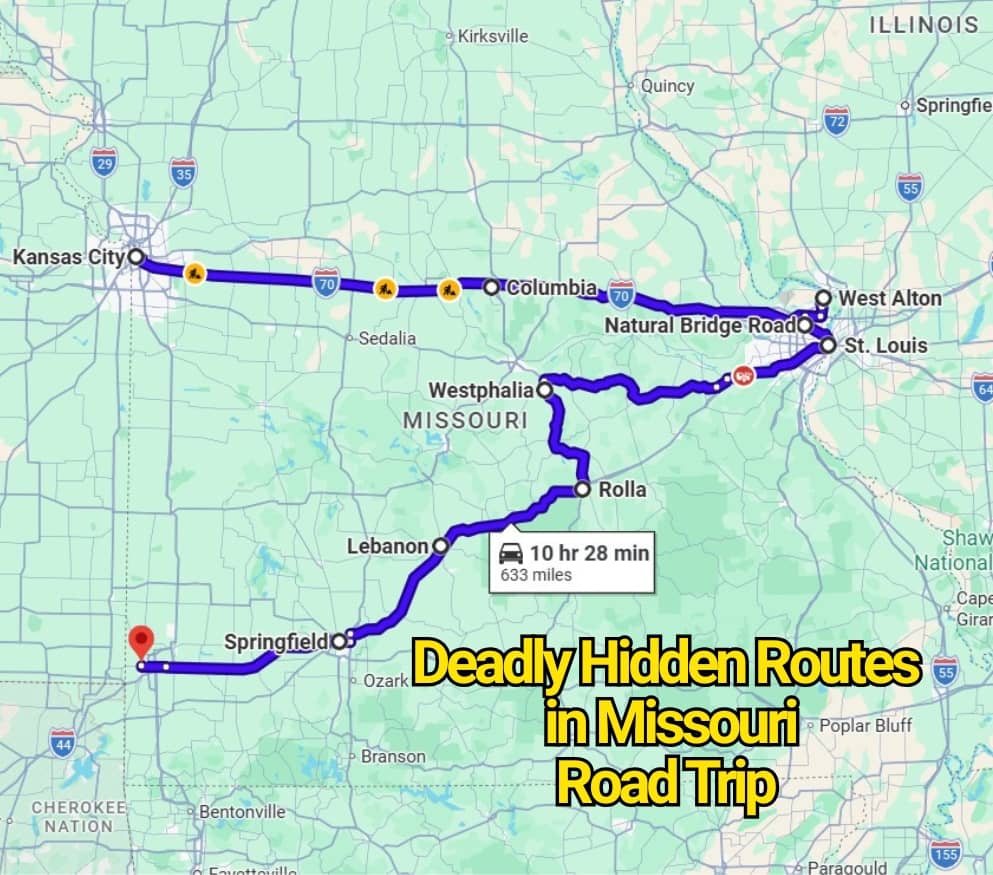
Missouri looks easy on a map. A few interstates, rolling farm roads, Ozark curves, river crossings, college-town drives, and long stretches where the scenery can make the danger feel smaller than it is. That is the trap.
The riskiest Missouri road trips are not always the scary-looking ones. Some are ordinary routes locals use every week. Some pass through peaceful towns. Some are major highways where the real issue is speed, heavy trucks, old design, sharp curves, crowded junctions, or drivers getting too comfortable behind the wheel.
MoDOT reported 911 preliminary roadway fatalities in Missouri for 2025, down from 955 in 2024, but the number still shows how serious driving risk remains across the state. Missouri’s safety plans also point to speed, aggressive driving, distracted driving, impaired driving, and seat belt use as major factors behind fatal and serious crashes.
Interstate 70: The Road Everyone Knows But Still Underestimates
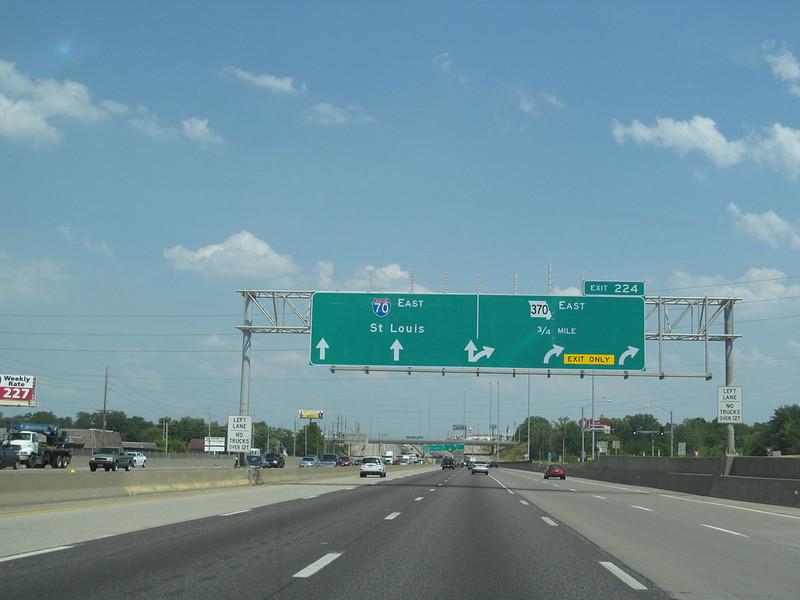
Interstate 70 between Kansas City, Columbia, and St. Louis may be Missouri’s most familiar long drive, but familiar does not mean forgiving. This is the road many travelers treat like a straight shot across the state. Locals know better.
The danger comes from the mix. Commuters, students, freight traffic, weekend travelers, and out-of-state drivers all meet on the same high-speed corridor. MoDOT has long studied I-70 safety needs between Kansas City and St. Louis, including the need to reduce crash severity and improve road design features across the corridor.
The contrarian truth is simple: I-70 does not need spooky curves to be risky. It is dangerous because drivers relax. They push speed, drift near trucks, cut across lanes near exits, and underestimate how fast traffic patterns change near Columbia, Wentzville, and the edges of both major metro areas.
Interstate 44: The Ozark Route With Big-Rig Pressure
Interstate 44 is often sold as a classic Missouri drive, especially for travelers crossing the state through St. Louis, Rolla, Lebanon, Springfield, and Joplin. Yet the same route that feels like a simple road trip is also one of the state’s serious freight corridors.
MoDOT describes I-44 as a vital east-west link and a key freight route. The agency also notes that many parts of the corridor were built more than 50 years ago, before today’s safety standards and traffic demands.
The Franklin County section shows why locals stay alert. Between 2018 and 2022, MoDOT reported 1,600 crashes along I-44 in Franklin County, with 550 involving tractor-trailers and 70 resulting in fatalities or serious injuries.
This is not a road to treat like background scenery. The hills, curves, truck volume, and sudden slowdowns can turn a normal drive into a tense one fast.
U.S. Route 63 in Osage County: The Two-Lane Stretch With a Serious Record
U.S. Route 63 through Osage County may not sound like a famous danger road, and that is exactly why it belongs here. It has the kind of rural Missouri feel that can make drivers lower their guard.
MoDOT says the corridor saw 190 crashes from 2014 to 2024, including seven fatalities, 12 serious injuries, and 80 minor injuries. The agency is designing a new alignment for this part of U.S. 63 because of the high rate of fatal and serious injury crashes.
This route is a classic Missouri warning story. Two-lane roads can feel slower and safer than interstates, but curves, hills, access points, passing pressure, and limited reaction time can make them more unforgiving than travelers expect.
U.S. Route 67 Near West Alton: The River-Crossing Corridor Locals Watch Closely
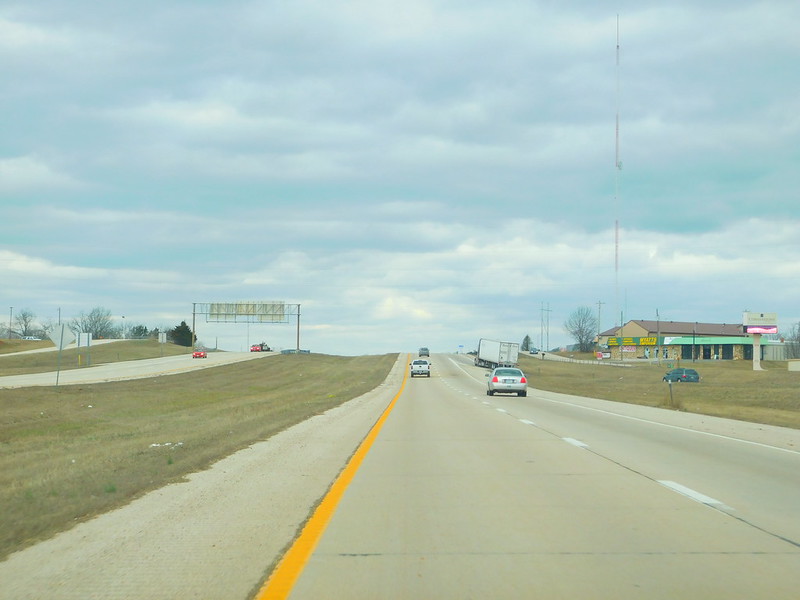
U.S. Route 67 near West Alton in St. Charles County is one of those roads that may not look dramatic at first glance. It has open space, river-area traffic, intersections, and fast-moving vehicles. That mix has created a serious safety concern.
MoDOT reported 227 crashes in the study area from 2017 to 2022, including seven fatal injury crashes and 11 serious injury crashes. The agency also found several wrong-way crashes and noted that prevailing speeds were 12 to 15 mph above the posted 55 mph limit.
That last detail matters. A road can look calm and still be dangerous if drivers treat the speed limit like a suggestion. Locals who know this corridor understand that intersections, wrong-way movement, and higher speeds are a bad combination.
U.S. Route 60 at Missouri Route 125: The Small Junction With a Big Safety Reason
A dangerous road trip route is not always a long stretch of highway. Sometimes the trouble sits at one junction. U.S. Route 60 at Missouri Route 125 is a good example.
MoDOT moved forward with a safety project there because the traffic signal had been the scene of many crashes, including severe crashes and one fatality crash. The project aimed to remove the signal and improve safety along Route 60.
This is the kind of spot road-trippers miss because it does not sound famous. But locals know that rural highway intersections can be more stressful than they appear, especially when high-speed traffic meets turning vehicles.
Missouri Route 115 / Natural Bridge Road: The Urban Route That Breaks the Road-Trip Myth

Some drivers think “deadly road trip route” has to mean mountains, forests, or remote backroads. Missouri Route 115, also known as Natural Bridge Road in the St. Louis area, proves that urban corridors deserve attention too.
A MoDOT safety audit found that the four-mile corridor carried about 16,000 vehicles daily and had a crash rate higher than the state average for similar roadways, with some sections significantly higher.
This road is different from the open-highway routes above, but the lesson fits the same pattern. Dense traffic, frequent access points, pedestrians, turning vehicles, and driver impatience can make a short stretch feel more dangerous than a long rural drive.
The Real Missouri Road Warning Is Not Where You Think It Is
The easy headline would blame Missouri’s danger on hidden backroads alone. That would be too simple. The real warning is broader: Missouri’s risk is spread across interstates, freight corridors, rural two-lane highways, river crossings, and busy urban roads.
MoDOT’s traffic safety information says crash summaries come from law-enforcement crash reports and are used to guide safety work across the state highway system. The agency also points out that human factors play a major part in crashes, which means the road is only part of the story.
So yes, locals warn about these Missouri routes. But the better warning is this: do not let a normal-looking road fool you. The most dangerous drive is often the one that feels routine right up until it is not.